Category: Cancer

Bouts of Exercise Could Help in the Fight Against Cancer

Photo by John Arano on Unsplash

A single bout of either resistance or high intensity interval training could help in the cancer battle, new research from Edith Cowan University (ECU) has found.

ECU PhD student Mr Francesco Bettariga found that a single bout of exercise increased the levels of myokines, a protein produced by muscles which has anti-cancer effects, and which could reduce the proliferation of cancer growth by 20 to 30 per cent.

“Exercise has emerged as a therapeutic intervention in the management of cancer, and a large body of evidence exists that shows the safety and effectiveness of exercise as medicine, either during or post cancer treatment,” Mr Bettariga said, first author of the study which appears in Breast Cancer Research and Treatment.

His research with survivors of breast cancer measured myokine levels before, immediately after and 30 minutes post a single bout of either resistance of high intensity interval training and found that both sets of exercise had a resultant increase in myokine levels.

While higher levels of myokines were expected in a healthy population, post a vigorous workout, Mr Bettariga investigated whether breast cancer survivors would see the same results, given the impact that cancer treatments and cancer itself often has on the body.

“The results from the study show that both types of exercise really work to produce these anti-cancer myokines in breast cancer survivors. The results from this study are excellent motivators to add exercise as standard care in the treatment of cancer,” Mr Bettariga said.

He added that the long-term implications of elevated myokine levels should be further investigated, particularly in relation to cancer recurrence.

Further research by Mr Bettariga investigated how changes in body composition, following consistent exercise, could impact inflammation, which plays a key role in breast cancer recurrence and mortality by promoting tumour progression.

Persistent inflammation not only promotes tumour progression by influencing cell proliferation, survival, invasiveness, and metastasis, but also inhibits immune function. Given that the cancer itself and the side-effects of treatments can elevate levels of inflammatory biomarkers, survivors of breast cancer are at increased risk of cancer progression, recurrence and mortality.

“Strategies are needed to reduce inflammation which may provide a less supportive environment for cancer progression, leading to a lower risk of recurrence and mortality in survivors of breast cancer,” Mr Bettariga said.

The new research found that by reducing fat mass and increasing lean mass, through consistent and persistent exercise, cancer survivors had a better chance at reducing inflammation.

“If we are able to improve body composition, we have a better chance of decreasing inflammation because we are improving lean mass and reducing fat mass, which is responsible for releasing anti and pro-inflammatory markers,” Mr Bettariga said.

Unfortunately, quick fixes to reduce fat mass would not have the same beneficial effects, Mt Bettariga stressed.

“You never want to reduce your weight without exercising, because you need to build or preserve muscle mass and produce these chemicals that you can’t do through just diet alone.”

Source: Edith Cowan University

Decoding How Immune Cells Communicate in Autoimmune Disease and Cancer

Squamous cancer cell being attacked by cytotoxic T cells. Image by National Cancer Institute on Unsplash

By measuring interactions between cells, the method offers insights into how the human body fights viral infections, how malfunctions can lead to autoimmune diseases and why immunotherapies work for some people but not others.    

A healthy immune system is trained to detect and destroy infections and cancer cells. This defence is based on a complex communication system at cellular level, in which different immune cells each perform a specialised task: recognising infectious agents, alerting other immune cells, and eliminating harmful cells or pathogens. Problems arise when communication between different cell types is disrupted, potentially leading to a variety of diseases.  

For example, cancer cells often develop strategies to specifically disrupt or circumvent the exchange of information in the immune system – this allows them to evade immune surveillance and grow unhindered. “Modern immunotherapies have fundamentally changed the treatment of certain types of cancer by restoring or specifically strengthening communication between immune cells,” explains Prof Simon Haas, one of the leaders of the study.  

Dr Daniel Hübschmann, also head of the study, adds: “However, not all patients respond equally well to these therapies and reliable methods for predicting which patients will benefit most are still lacking.”   

Decoding immune cell communication for personalised cancer therapies    

Scientists have now developed a technology that overcomes many of these hurdles through a better understanding of immune cell communication. With this method, made possible by interdisciplinary collaboration, millions of cell-cell interactions can be measured quickly and cost-effectively, both in research laboratories and in the clinic.   

The scientists are using the newly developed technology to investigate the behaviour and kinetics of immunotherapies and to gain insights into how these therapies work at the level of cell-cell interactions. They were able to show that the approach enables the prediction of individual therapy responses and can thus create a central basis for personalised immunotherapies and targeted therapy decisions.   

In addition, the researchers were able to use their new technology to visualise, in high resolution, how cells of the immune system interact with each other during viral infections and autoimmune diseases. The results allow them to develop dynamic maps of immune cell networks, illustrating for the first time how the immune defence is coordinated in different tissues.   

Together with clinical partners, the team is now working on translating these findings from research into practice, for example to better predict treatment success and utilise immunotherapies in a more personalised manner.   

The study was published in Nature Methods.  

Source: Queen Mary University London

Pembrolizumab–Axitinib Duo Extends Survival in Advanced Kidney Cancer

Photo by Robina Weermeijer on Unsplash

A two-drug combination for treating advanced kidney cancer had sustained and durable clinical benefit in more than five years of follow-up, according to a study published August 1 in Nature Medicine

The study reports final clinical data and biomarker analyses from the Phase 3 KEYNOTE-426 trial, which compared the drug combination pembrolizumab plus axitinib versus the single drug sunitinib for patients with previously untreated advanced clear cell renal cell carcinoma, the most common type of kidney cancer.

“KEYNOTE-426 was the first trial to combine a PD-1 inhibitor immunotherapy (pembrolizumab) with a VEGF receptor inhibitor antiangiogenic drug (axitinib) in the first-line setting for advanced renal cell carcinoma. It therefore has the longest follow-up duration among the various trials comparing these types of drug combinations,” said Brian Rini, MD, a medical oncologist at Vanderbilt-Ingram Cancer Center, Professor of Medicine and the study’s lead and corresponding author. 

Immunotherapy drugs like pembrolizumab stimulate the immune system to kill tumour cells. VEGF receptor inhibitors like axitinib and sunitinib block angiogenesis — the development of blood vessels that tumours need to grow and spread. Pembrolizumab plus axitinib and other immunotherapy-antiangiogenic drug combinations are now standard first-line treatments for advanced kidney cancer. 

“Before the development of antiangiogenic drugs and immunotherapies, advanced renal cell carcinoma had a very poor prognosis. These drug combinations have dramatically improved treatment options and outcomes for patients,” said Rini. 

The first interim analysis of outcomes from KEYNOTE-426, published Feb. 16, 2019, in the New England Journal of Medicine, demonstrated that trial participants treated with pembrolizumab plus axitinib had longer overall and progression-free survival, and higher objective response rates compared to those taking sunitinib. The median follow-up was 12.8 months. 

Now, with a median follow-up of 67.2 months, the current analysis confirms and extends the interim analysis and provides valuable information about biomarkers that could help guide treatment decisions. 

The study in Nature Medicine reports that pembrolizumab plus axitinib had longer overall survival (47.2 months versus 40.8 months for sunitinib) and longer progression-free survival (15.7 months versus 11.1 months for sunitinib). The objective response rate was 60.6% for pembrolizumab plus axitinib and 39.6% for sunitinib. 

The researchers reported a variety of associations between the expression of biomarkers and outcomes (overall survival, progression-free survival, objective response rate). The biomarkers they evaluated included an 18-gene T-cell-inflamed expression profile, angiogenesis signature, and PD-1 ligand expression. 

“There is an unmet need for biomarkers that are predictive of patient outcomes following treatment with available first-line therapies for advanced renal cell carcinoma,” Rini said. “Although our analysis showed potential clinical utility of some RNA signatures in identifying patients who are likely to benefit the most from each treatment, further prospective clinical studies are needed.” 

Pembrolizumab plus axitinib is a first-line treatment option for patients with advanced renal cell carcinoma regardless of biomarker subtypes, he noted. 

Source: Vanderbilt University Medical Center

When Should Preventive Mastectomy be Offered in High Breast Cancer Risk?

Photo by National Cancer Institute on Unsplash

More women at higher risk of breast cancer should be offered a mastectomy, according to researchers at Queen Mary and London School of Hygiene and Tropical Medicine.

A new analysis, published in JAMA Oncology, has found that the surgical technique was a cost-effective way of reducing the likelihood of developing breast cancer compared to breast screening and medication. Current guidelines on who is offered mastectomy may need to be revised to reflect these new findings. 

Clinicians currently use personalised risk prediction models which combine genetic and other data to identify those women who are at a higher risk of developing breast cancer (BC). Subsequent treatment options – including mammograms, MRI screening, surgery, and medication – are then offered dependent on each woman’s level of risk. 

Risk reducing mastectomy (RRM) is recommended for women at high risk, but in practice this surgery is only clinically offered to those carrying faults (called pathogenic variants) in genes that are known to increase the likelihood they will develop the disease (BRCA1/ BRCA2/ PALB2 PV). 

Professor Ranjit Manchanda from Queen Mary University of London, Dr Rosa Legood from London School of Hygiene and Tropical Medicine, along with colleagues from Manchester University and Peking University created a new economic evaluation model to accurately predict the level of risk that would make RRM a more cost-effective treatment. 

For their model, researchers used guidelines from the National Institute for Health and Care Excellence (NICE) to determine whether a treatment is considered cost-effective. Their model showed that mastectomy was a cost-effective treatment for women aged 30 or above who have a lifetime breast cancer risk greater than or equal to 35%. Offering RRM to women in this cohort could potentially prevent 6,500 of the 58,500 cases of breast cancer that are diagnosed every year in the UK. 

Professor Manchanda, Professor of Gynaecological Oncology at Queen Mary and  Consultant Gynaecological Oncologist, said: “We for the first time define the risk at which we should offer RRM. Our results could have significant clinical implications to expand access to mastectomy beyond those patients with known genetic susceptibility in high penetrance genes- BRCA1/ BRCA2/ PALB2 – who are traditionally offered this. This could potentially prevent can potentially prevent ~6500 breast cancer cases annually in UK women. We recommend that more research is carried out to evaluate the acceptability, uptake, and long-term outcomes of RRM among this group”.. 

Dr Legood, Associate Professor in health economics at the London School of Hygiene & Tropical Medicine, said: “Undergoing RRM is cost-effective for women 30-55 years with a lifetime breast cancer risk of 35% or more. These results can support additional management options for personalized breast cancer risk prediction enabling more women at increased risk to access prevention.”  

Dr Vineeth Rajkumar, Head of Research at Rosetrees, said: “Rosetrees is delighted to fund this truly groundbreaking research that could have a positive impact on women worldwide.” 

The researchers used data from women aged between 30 and 60 with varying lifetime breast cancer risks between 17% and 50%, and who were either undergoing RRM or receiving screening with medical prevention according to currently used predictive models. 

NICE deems a treatment cost-effective if it typically brings one additional year of health for no more than £20 000–£30 000 per patient (known as the ‘willingness to pay’ threshold, or WTP). The researchers’ model used a threshold of £30 000/Quality Adjusted Life Year. 

Source: Queen Mary University London

Less Is More: Low-Dose Olanzapine Curbs Chemo-Induced Nausea Without the Sedation

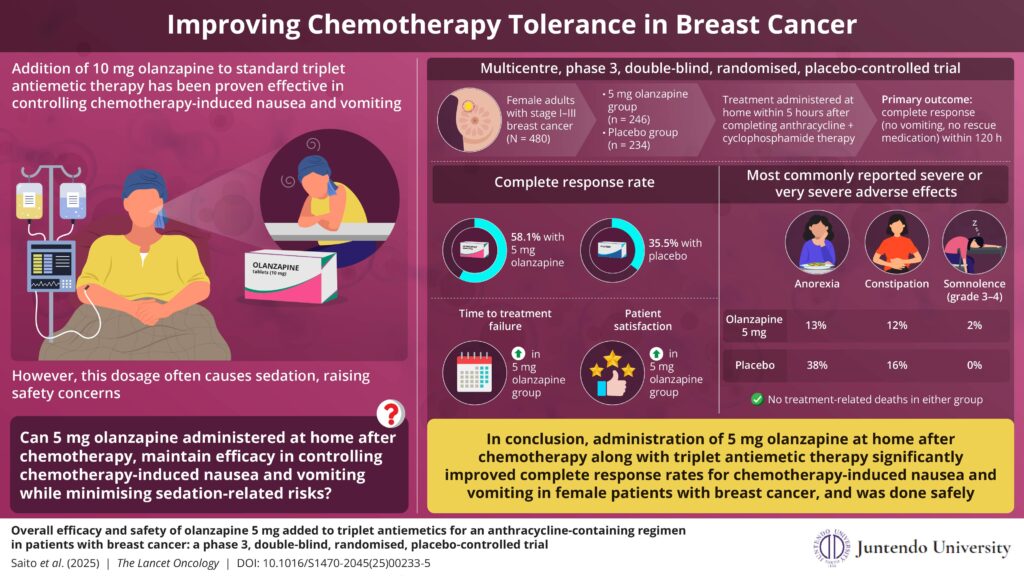
A recent clinical trial demonstrates 5mg olanzapine’s safety and efficacy for chemotherapy-induced nausea and vomiting

Researchers from Japan found that a 5mg dose of olanzapine, taken after chemotherapy, significantly reduces nausea and vomiting in breast cancer patients, while minimising sedation and cutting costs. This patient-centred approach could reshape global standards for antiemetic care. Credit: Prof Mitsue Saito from Juntendo University, Japan

Chemotherapy-induced nausea and vomiting can severely impact patients’ quality of life and treatment adherence. In a major clinical trial, researchers from Japan tested whether a low, 5mg dose of olanzapine taken at home after chemotherapy could reduce these side effects without causing heavy sedation. The study found that this approach significantly improved outcomes compared to placebo, offering a safer, more affordable strategy that could reshape supportive cancer care, especially in outpatient and resource-limited settings.

Chemotherapy-induced nausea and vomiting are among the most distressing side effects of anti-cancer treatment, particularly for those receiving highly emetogenic regimens such as anthracycline plus cyclophosphamide combinations. This major side effect compromises a patient’s quality of life and willingness to continue therapy. Therefore, there is a crucial need to devise an effective antiemetic management approach for optimizing cancer care and patient well-being.

Against this backdrop, a new study, led by Professor Mitsue Saito and Dr. Hirotoshi Iihara from Japan, was made available online on June 17, 2025, and published in Volume 26, Issue 7 of the journal The Lancet Oncology on July 1, 2025, examined whether a 5mg dose of olanzapine taken at home after chemotherapy could reduce nausea and vomiting in patients with breast cancer while minimising the sedative effects associated with the standard 10mg dose.

“While multiple studies have examined 10mg of olanzapine and confirmed its effectiveness for nausea control, at this dose it often causes sedation, raising safety concerns,” explains lead author Prof Saito. “Beyond the commonly observed sedation, olanzapine at the 10 mg dose can cause serious adverse effects, including sedative effects such as daytime sleepiness and loss of consciousness.”

“The study was inspired in part by three patients with breast cancer who attended an antiemetic guideline meeting at MASCC 2015 in Copenhagen. They spoke about the burdensome sedative side effects of olanzapine, a concern that helped shape the trial’s patient-centred design,” says Prof Saito.

This phase 3, double-blind, placebo-controlled trial enrolled 500 female patients with breast cancer in Japan receiving outpatient anthracycline plus cyclophosphamide-based chemotherapy. Participants were randomly assigned to receive either olanzapine 5mg or placebo in combination with standard triplet antiemetic therapy (palonosetron, dexamethasone, and an NK-1 receptor antagonist). The olanzapine 5mg was taken at home after chemotherapy to help avoid sedation during hospital travel or treatment.

“This study uniquely investigates the timing of olanzapine 5mg administration, given within 5 hours post-chemotherapy administration and before the evening meal, to reduce sedation during hospital visits and transportation. This approach takes into account the onset of nausea and vomiting reported in previous studies. Among highly emetogenic chemotherapies, there is a significant difference between cisplatin, which usually requires hospitalisation for treatment, and other chemotherapies such as anthracycline-based regimens that are typically administered on an outpatient basis,” says Dr Iihara. The primary endpoint of the study was to investigate the proportion of patients achieving complete response, defined as no vomiting and no rescue medication use during the overall phase (0–120 hours post-anthracycline plus cyclophosphamide initiation).

The results demonstrated significant improvement, with 58.1% of patients in the olanzapine 5mg group achieving a complete response during the first 5 days after chemotherapy, compared to only 35.5% in the placebo group. Benefits also extended to delayed nausea and vomiting across a 7-day observation period.

While some patients reported drowsiness, the incidence of severe or very severe concentration impairment was low, occurring in 10% of patients in the olanzapine 5mg group vs 14% in the placebo group. Additionally, no major adverse events were observed in either group, indicating that there were no treatment-related deaths in either group.

The olanzapine 5mg dose offers an important financial and clinical advantage over the commonly used 10mg. By reducing side effects and cost, this strategy may make antiemetic treatment more accessible, particularly in lower-resource settings.

These new findings suggest that an olanzapine 5mg regimen, especially when administered after chemotherapy, can be just as effective, with fewer side effects. Although the study focused on Japanese women with breast cancer, the results are expected to influence international practices and future guideline updates.

In addressing both physical and financial toxicity and putting patients’ voices at the centre of the research, this trial represents more than a treatment tweak. It’s a step toward more humane, equitable cancer care.

Source: Juntendo University

New CANSA and ALVI ARMANI Partnership Offers Hair Restoration Support for Cancer Survivors

Restorative programme helps post-cancer treatment patients regain hair, confidence, and quality of life after facing cancer 

Photo by Natasha Brazil on Unsplash

The Cancer Association of South Africa (CANSA) has partnered with internationally renowned hair restoration clinic Alvi Armani South Africa, with head offices in Beverly Hills Los Angeles, to launch an initiative offering complimentary consultations and assessments to those recovering or recovered from cancer.

For many, completing cancer treatment is an experience that brings immense relief. However, it doesn’t always mark the end of the emotional journey. While chemotherapy and radiation often save lives, they can leave lasting reminders – and hair loss is among the most visible.

Cindy Pretorius, a cancer survivor who was diagnosed with basal cell carcinoma, an invasive skin cancer knows firsthand how the impact of the disease affects not just self-confidence but self-worth. After the cancer was removed, the surgery left lasting and visible scarring on her hairline. A hairline that was subsequently treated and restored through a minimally invasive hair transplant at Alvi Armani South Africa. “The team at Alvi Armani restored not only my hairline, but also my confidence,” said Pretorius.

Launching in August 2025, the initiative will offer CANSA-affiliated patients in recovery access to complimentary, in-depth, and personalised consultations. This may include scalp density and mapping assessments, as well as checks for lingering treatment effects. Where needed, survivors will receive advice and support with restorative hair treatments or transplants at Alvi Armani South Africa – offering significant financial relief and a renewed sense of hope.

“This isn’t about vanity. It’s about healing the whole person,” notes Dr Kashmal Kalan, Medical Director of Alvi Armani South Africa. “Unfortunately, even when cancer treatments end, the physical and emotional recovery continues. Many individuals in remission are confronted with reminders every time they look in the mirror and see someone who still looks like a patient, often making it difficult to reconnect with the person they were before cancer.”

For those recovering from cancer, the devastation of hair loss can continue to weigh heavily on their mental well-being. Studies show that persistent thinning, patchiness, or recession after treatment can fuel anxiety, depression, and social withdrawal. Even when remission is achieved, hair regrowth can be slow, and this gap between survival and self-image can take a heavy toll.

“Hair plays an important role in how we express identity; by restoring it, we help people feel like themselves again – more confident to re-enter public life, apply for jobs, or socialise without feeling marked by illness,” he explains.

In cases where hair loss is permanent, transplants using Alvi Armani’s minimally invasive Vitruvian or Maximus follicular unit extraction (FUE) technique may also be performed. Recognised as global leaders in hair transplant procedures, Alvi Armani’s network – spanning Beverly Hills, Salt Lake City, Phoenix, San Diego, Buenos Aires, Montevideo, and Johannesburg – all use state of the art protocols, ensuring that South African patients receive the same world-class standard of care they would get at any other Alvi Armani clinic globally.

“People who’ve overcome cancer deserve more than just a life saved. They deserve the chance to live it fully, with confidence and joy. We’re extremely proud to walk this journey with them, and to help them reclaim their full sense of self.”

Alvi Armani are committing extensive financial and medical resources to support the initiative. A patient referral and screening process is in place to ensure clinical suitability, but any CANSA-affiliated person in remission may apply directly and will be guided accordingly.

CANSA and Alvi Armani will also collaborate at national events such as CANSA Relay For Life, and the CANSA High Tea, where participants will receive expert advice on scalp health, treatment options, and realistic expectations around regrowth.

“When you’ve fought so hard to stay alive, the last thing you want is to be reminded daily of what you lost. This partnership is ultimately about giving people that final piece of the puzzle back, so they can look in the mirror and not only see what they’ve overcome, but truly see themselves again,” concludes Dr Kalan.

“At CANSA, we understand that the cancer experience doesn’t end with treatment – healing also means restoring dignity, self-confidence, and quality of life. Our partnership with Alvi Armani South Africa reflects our commitment to holistic survivorship care. By offering complimentary consultations and access to world-class restorative hair solutions, we’re helping survivors reclaim not only their appearance but also their sense of self,” says Makoma Raolane, CANSA’s Sustainability Manager.

Individuals affected by cancer who are interested in the initiative can contact Alvi Armani South Africa directly, referencing their affiliation with CANSA, to schedule a complimentary consultation.

For more information, visit https://cansa.org.za/ and https://alviarmani.co.za/

Oral Cancer Risk is Greatly Elevated in Cannabis Use Disorder

Photo by Elsa Olofsson on Unsplash

A recent study by researchers at the University of California San Diego School of Medicine has found that individuals with cannabis use disorder (CUD) are more than three times more likely to develop oral cancer within five years compared to those without CUD. The study, published in Preventive Medicine Reports, highlights the potential long-term health risks associated with problematic cannabis use.

In 2022, 17.7 million people in the US reported daily or near-daily cannabis use. Though CUD requires a formal diagnosis and not all cannabis users develop the disorder, recent research suggests that as many as 3 in 10 cannabis users will develop CUD.

“Cannabis smoke contains many of the same carcinogenic compounds found in tobacco smoke.”

As cannabis becomes more widely available and socially accepted, it is essential to understand its potential health risks. While many consider cannabis to be safer than other drugs, such as tobacco and alcohol, there are still many unknowns about the health impacts of cannabis, particularly how the drug influences cancer risk. The new study sought to determine the relationship between CUD and oral cancer, for which tobacco smoking is known to be a significant risk factor.

“Cannabis smoke contains many of the same carcinogenic compounds found in tobacco smoke, which have known damaging effects on the epithelial tissue that lines the mouth,” said Raphael Cuomo, PhD, associate professor in the Department of Anesthesiology at UC San Diego School of Medicine and member of UC San Diego Moores Cancer Center. “These findings add to a growing body of evidence suggesting that chronic or problematic cannabis use may contribute to cancer risk in tissues exposed to combustion products.”

By analysing the electronic health records from over 45 000 patients, of whom 949 developed CUD, Cuomo found:

  • After adjusting for age, sex, body mass index and smoking status, people had a 325% higher likelihood of contracting oral cancer within five years compared to those without CUD.
  • Tobacco smokers with CUD were 624% more likely to contract oral cancer within five years compared to tobacco smokers without CUD.

Because the association between CUD and oral cancer remained even after controlling for smoking status, and because CUD was associated with greater oral cancer risk even when the analysis was restricted to smokers, the researchers hypothesise that there may be other factors underlying this risk in addition to smoke inhalation. For example, THC, the active compound in cannabis, is known to have immune-suppressing effects, which may contribute to increased cancer risk.

While more research is needed to fully explain the association between cannabis and oral cancer, the study’s results have immediate implications for cancer screening practices and public health messaging. In particular, the findings emphasise the need for further research on the long-term effects of cannabis use and the importance of integrating oral health awareness into substance use disorder treatment and counselling.

Source: University of California – San Diego

Research Supports Continued Use of Nasogastric Tube After Oesophageal Cancer Surgery

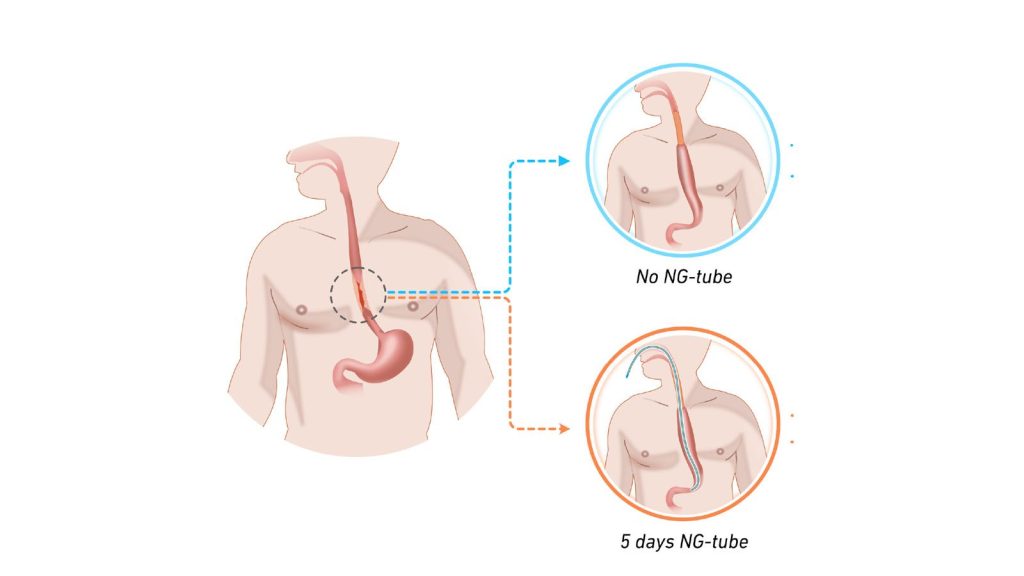
To the researchers’ surprise, it was not without risk to omit the tube after this surgery. Illustration: Jakob Hedberg

In the largest Nordic study to date concerning oesophageal cancer surgery, the researchers found clear evidence that decompression with a nasogastric tube is associated with less serious complications. Their results challenge a trend of declining use of the nasogastric tube after major surgical procedures. The study was led from Uppsala University and has now been published in Lancet Regional Health Europe.

A number of small studies had previously suggested that it is safe to abandon the tradition of leaving in a decompressing – but for many patients unpleasant – nasogastric tube after surgery to remove oesophageal cancer (gullet cancer). The tube is plastic and runs from the nose down to the stomach, and its use in this particular context is to relieve and reduce pressure in this newly operated area. When the question was discussed in a Nordic research collaboration, it was concluded that these smaller studies lacked sufficient statistical power to justify a change in care. Subsequently, a randomised trial was carried out at 12 university hospitals across Sweden, Norway, Denmark and Finland, where patients were randomised to have or not have a decompressing nasogastric tube in their oesophagus following this type of surgery.

Patients without the tube experienced leakage

To the researchers’ surprise, it was not without risk to omit the tube after this surgery, as more patients without the tube experienced leakage in the anastomosis created during the operation. Leakage must be treated immediately, often with interventions under general anaesthesia, resulting in suffering for the patient and a longer length of hospital stay.

Although no differences in survival rates or other complications were found, this new knowledge may help to reduce suffering for patients in the future.

“Oesophageal cancer is an uncommon form of cancer, with only about 200 operations of this type being performed per year in Sweden. National and international cooperation is therefore absolutely necessary in order to conduct sufficiently large trials to answer the research questions we have. The fact that in just over two years, almost 450 patients have been recruited for the trial surpassed our expectations and represents a great success for this network,” says Jakob Hedberg, surgical oncologist, associate professor at Uppsala University and consultant surgeon at Uppsala University Hospital who is also principal investigator for the study.

“Strong interest has been shown at international conferences where our preliminary results have been presented, and the principle of building surgical care on solid evidence has allowed us to provide the best care to our patients. Another important effect of this successful collaboration is that we can build more clinical trials within the Nordic network which has now been consolidated. In fact, the next clinical trial is already under development,” says Jakob Hedberg.

Source: Uppsala University

Good Prognosis for Men with Prostate Cancer Treated According to Guidelines

Credit: Darryl Leja National Human Genome Research Institute National Institutes Of Health

Most men who are treated for prostate cancer according to modern guidelines have good survival rates and the majority of these men will die of causes other than prostate cancer. This is revealed in a new study from Uppsala University published in the Journal of the National Comprehensive Cancer Network.

“We were surprised by how much life expectancy affected the prognosis. This shows the importance of a thorough assessment of the general health of a man with newly diagnosed prostate cancer. The patient’s life expectancy has a substantial impact on the choice of appropriate treatment strategy,” says Marcus Westerberg, researcher at the Department of Surgical Sciences at Uppsala University, who led the study.

In prostate cancer, the disease progression often takes decades and the risk of dying from prostate cancer therefore depends on both the characteristics of the cancer and life expectancy based on the man’s age and other diseases at the time of diagnosis. Recommendations in guidelines and care programmes are therefore also based on both cancer characteristics and life expectancy. This means that the recommended initial treatment can range from active monitoring for low-risk cancer to combinations of local and systemic treatment for high-risk cancer.

High average age at disease onset

As the average age at diagnosis of prostate cancer is often high and the cancer often progresses very slowly, it is particularly important to know the long-term risk of death from prostate cancer in order to choose the best treatment for patients. Previously, not much has been known about this.

“We wanted to fill that knowledge gap, so we looked at outcomes up to 30 years after the men were diagnosed. In all cases, we had information about the characteristics of the cancer, treatment and the patient’s life expectancy based on age and comorbidity,” says Westerberg.

The researchers used data from the Prostate Cancer Database Sweden (PCBase), which contains information from the National Prostate Cancer Register (NPCR) and other health data registers. They focused on men who had received the recommended treatment for prostate cancer that had not spread in the body. Using statistical modelling, the researchers estimated the lifetime risk of dying from prostate cancer and other causes.

11 per cent risk of dying of cancer

For men with low-risk cancer and short life expectancy (less than 10 years), the risk of dying from prostate cancer was 11% and the risk of dying from other causes was 89% within 30 years of diagnosis.

For men with high-risk cancer (eg stage T3, PSA 30ng/mL and Gleason score 8) and long life expectancy (over 15 years), the risk of dying from prostate cancer was 34% and the risk of dying from other causes was 55% within 30 years of diagnosis.

“We hope that our results will be used to provide a realistic picture of the prognosis for men with prostate cancer. Our study shows that most men who receive the recommended treatment have a good prognosis,” Westerberg concludes.

Life expectancy was based on age and comorbidity. Examples of low-risk cancers are stage T1, PSA 5ng/mL and Gleason score 6. Examples of high-risk cancers are stage T3, PSA 30ng/mL and Gleason score 8.

Source: Uppsala University

Women of African Ancestry May Be Biologically Predisposed to Early-onset or Aggressive Breast Cancers

Photo by National Cancer Institute

While the incidence of breast cancer is highest for white women, Black women are more likely to have early-onset or more aggressive subtypes of breast cancer, such as triple-negative breast cancer. Among women under 50, the disparity is even greater: young Black women have double the mortality rate of young white women.

Now, research from the University of Notre Dame is shedding light on biological factors that may play a role in this disparity. The study published in iScience found that a population of cells in breast tissues, dubbed PZP cells, send cues that prompt behavioural changes that could promote breast cancer growth.

Funded by the National Cancer Institute at the National Institutes of Health, the study set out to explore what biological differences in breast tissue could be related to early onset or aggressive breast cancers. Most breast cancers are carcinomas, or a type of cancer that develops from epithelial cells. In healthy tissue, epithelial cells form linings in the body and typically have strong adhesive properties and do not move.

The researchers focused on PZP cells as previous studies had shown that these cells are naturally and significantly higher in healthy breast tissues of women of African ancestry than in healthy breast tissues of women of European ancestry. While PZP cell levels are known to be elevated in breast cancer patients in general, their higher numbers in healthy, African ancestry tissues could hold clues to why early-onset or aggressive breast cancers are more likely to occur in Black women.

“The disparity in breast cancer mortality rates, particularly among women of African descent, is multifaceted. While socioeconomic factors and delayed diagnosis may be contributing factors, substantial emerging evidence suggests that biological and genetic differences between racial groups can also play a role,” said Crislyn D’Souza-Schorey, the Morris Pollard Professor of Biological Sciences at Notre Dame and corresponding author of the study.

The study showed how PZP cells produce factors that activate epithelial cells to become invasive, where they detach from their primary site and invade the surrounding tissue.

For example, a particular biological signaling protein known as AKT is often overactive in breast cancers. This study showed that PZP cells can activate the AKT protein in breast epithelial cells, which in part allows them to invade the surrounding environment. PZP cells also secrete and deposit certain proteins outside the cell that guide the movement of breast epithelial cells as they invade.

Overall, the results of the study emphasize multiple mechanisms by which PZP cells may influence the early stages of breast cancer progression and their potential contribution to disease burden.

The researchers also looked at how a targeted breast cancer drug, capivasertib, which inhibits the AKT protein, impacted PZP cells and found it markedly reduced the effects of the PZP cells on breast epithelial cells.

“It’s important to understand the biological and genetic differences within normal tissue as well as tumours among racial groups, as these variations could potentially influence treatment options and survival rates. And consequently, in planning biomarker studies, cancer screenings or clinical trials, inclusivity is important,” said D’Souza-Schorey, also an affiliate of Notre Dame’s Berthiaume Institute for Precision Health and Harper Cancer Research Institute.

Source: University of Notre Dame