Category: Antibiotics

Which is Better? Prolonged vs Intermittent Infusion of β-Lactams in Sepsis

Photo by Anna Shvets on Pexels

In adults with sepsis or septic shock, β-lactams are recommended by Surviving Sepsis Campaign guidelines, in a prolonged (after an initial bolus) rather than intermittent infusions – but owing to only moderate quality of evidence this is currently a weak recommendation. Now, a new systematic review and meta-analysis comparing the two approaches across multiple clinical trials has found a survival benefit for prolonged infusion The findings appear in JAMA.

To address whether prolonged infusions of β-lactams improve clinically important outcomes in critically ill adults with sepsis or septic shock, the study investigators searched medical databases for relevant randomised controlled trials comparing β-lactam infusion types in critically ill adults with sepsis or septic shock. The primary outcome was 90-day mortality, with secondary outcomes including intensive care unit (ICU) mortality and clinical cure.

In all, they found 18 eligible trials that included 9108 critically ill adults with sepsis or septic shock (median age, 54 years; 5961 men [65%]), 17 trials (9014 participants) contributed data to the primary outcome.

The pooled estimated risk ratio for all-cause 90-day mortality for prolonged infusions of β-lactam antibiotics compared with intermittent infusions was 0.86, with high certainty and a 99.1% posterior probability that prolonged infusions were associated with lower 90-day mortality. There was high certainty that prolonged infusion of β-lactam antibiotics was associated with a reduced risk of ICU mortality (risk ratio, 0.84) and moderate certainty of an increase in clinical cure (risk ratio, 1.16).

The findings were tempered with the authors’ understanding that, “Potential challenges associated with prolonged infusion administration, including drug instability and incompatibility with other intravenous medications, the need for a dedicated intravenous portal, and the potential effect on clinical workload, require some considerations before broad implementation. Future studies should determine the optimal duration of infusion when β-lactam antibiotics are administered as prolonged infusions.”

The authors concluded that, “Among adults in the intensive care unit who had sepsis or septic shock, the use of prolonged β-lactam antibiotic infusions was associated with a reduced risk of 90-day mortality compared with intermittent infusions. The current evidence presents a high degree of certainty for clinicians to consider prolonged infusions as a standard of care in the management of sepsis and septic shock.”

Temperature may be a New Weapon in the Battle against Antibiotic Resistance

Scientists from the University of Groningen in the Netherlands, together with colleagues from other European universities, have tested how a fever could affect the development of antimicrobial resistance. In laboratory experiments, they found that a small increase in temperature from 37 to 40 degrees Celsius drastically changed the mutation frequency in E. coli bacteria, which facilitates the development of resistance. If these results can be replicated in human patients, fever control could be a new way to mitigate the emergence of antibiotic resistance.

There are two ways to fight the threat of antimicrobial resistance: by developing new drugs, or by preventing the development of resistance. ‘We know that temperature affects the mutation rate in bacteria’, explains Timo van Eldijk, co-first author of the paper published in JAC-Antimicrobial Resistance. ‘What we wanted to find out was how the increase in temperature associated with fever influences the mutation rate towards antibiotic resistance.’

‘Most studies on resistance mutations were done by lowering the ambient temperature, and none, as far as we know, used a moderate increase above normal body temperature,’ Van Eldijk reports. Together with Master’s student Eleanor Sheridan, he cultured E. coli bacteria at 37 or 40 degrees Celsius, and subsequently exposed them to three different antibiotics to assess the effect. ‘Again, some previous human trials have looked at temperature and antibiotics, but in these studies, the type of drug was not controlled.’ In their laboratory study, the team used three different antibiotics with different modes of action: ciprofloxacin, rifampicin, and ampicillin.

The results showed that for two of the drugs, ciprofloxacin and rifampicin, increased temperature led to an increase in the mutation rate towards resistance. However, the third drug, ampicillin, caused a decrease in the mutation rate toward resistance at fever temperatures. ‘To be certain of this result, we replicated the study with ampicillin in two different labs, at the University of Groningen and the University of Montpellier, and got the same result,’ says Van Eldijk.

The researchers hypothesized that a temperature dependence of the efficacy of ampicillin could explain this result, and confirmed this in an experiment. This explains why ampicillin resistance is less likely to arise at 40 degrees Celsius. ‘Our study shows that a very mild change in temperature can drastically change the mutation rate towards resistance to antimicrobials,’ concludes Van Eldijk. ‘This is interesting, as other parameters such as the growth rate do not seem to change.’

If the results are replicated in humans, this could open the way to tackling antimicrobial resistance by lowering the temperature with fever-suppressing drugs, or by giving patients with a fever antimicrobial drugs with higher efficacy at higher temperatures. The team concludes in the paper: ‘An optimized combination of antibiotics and fever suppression strategies may be a new weapon in the battle against antibiotic resistance.’

Source: University of Groningen

New Antibiotic Kills Pathogenic Bacteria but Spares Healthy Gut Microbes

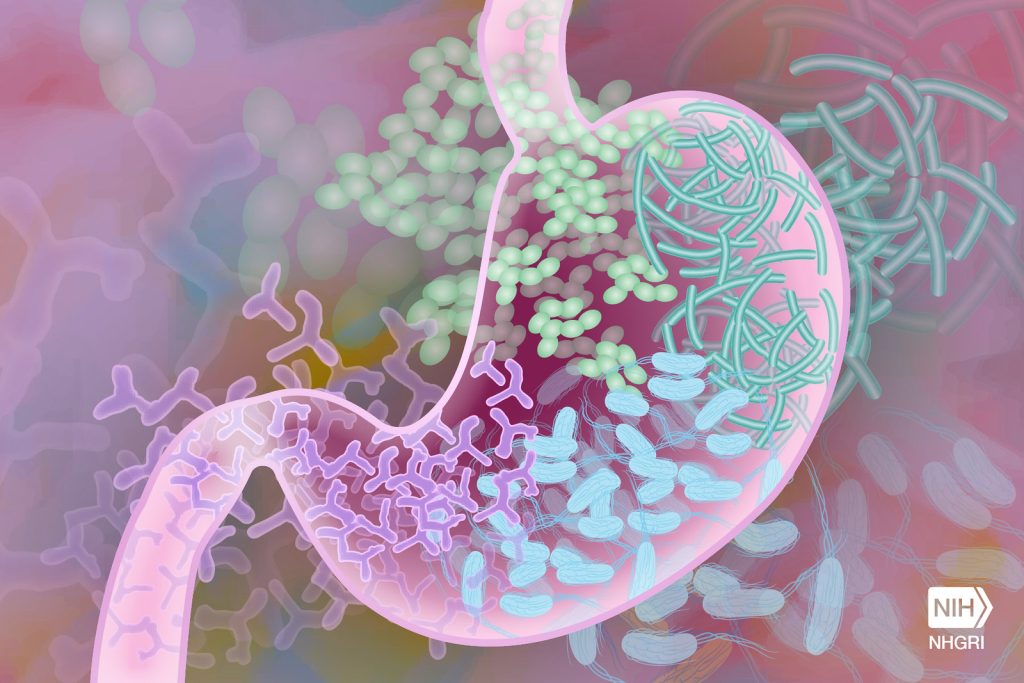
Gut Microbiome. Credit Darryl Leja National Human Genome Research Institute National Institutes Of Health

Researchers have developed a new antibiotic that reduced or eliminated drug-resistant bacterial infections in mouse models of acute pneumonia and sepsis while sparing healthy microbes in the mouse gut. The drug, called lolamicin, also warded off secondary infections with Clostridioides difficile, and was effective against more than 130 multidrug-resistant bacterial strains in cell culture.

The findings are detailed in the journal Nature.

“People are starting to realise that the antibiotics we’ve all been taking – that are fighting infection and, in some instances, saving our lives – also are having these deleterious effects on us,” said University of Illinois Urbana-Champaign chemistry professor Paul Hergenrother, who led the study with former doctoral student Kristen Muñoz. “They’re killing our good bacteria as they treat the infection. We wanted to start thinking about the next generation of antibiotics that could be developed to kill the pathogenic bacteria and not the beneficial ones.”

“Most clinically approved antibiotics only kill gram-positive bacteria or kill both gram-positive and gram-negative bacteria,” Muñoz said.

The few drugs available to fight gram-negative bacteria, which are protected by their double cell walls, also kill other potentially beneficial gram-negative bacteria. For example, colistin, one of the few gram-negative-only antibiotics approved for clinical use, can cause C. difficile-associated diarrhoea and pseudomembranous colitis, a potentially life-threatening complication. The drug also has toxic effects on the liver and kidney, and “thus colistin is typically utilised only as an antibiotic of last resort,” the researchers wrote.

To tackle the many problems associated with indiscriminately targeting gram-negative bacteria, the team focused on a suite of drugs developed by the pharmaceutical company AstraZeneca. These drugs inhibit the Lol system, a lipoprotein-transport system that is exclusive to gram-negative bacteria and genetically different in pathogenic and beneficial microbes. These drugs were not effective against gram-negative infections unless the researchers first undermined key bacterial defenses in the laboratory. But because these antibiotics appeared to discriminate between beneficial and pathogenic gram-negative bacteria in cell culture experiments, they were promising candidates for further exploration, Hergenrother said.

In a series of experiments, Muñoz designed structural variations of the Lol inhibitors and evaluated their potential to fight gram-negative and gram-positive bacteria in cell culture. One of the new compounds, lolamicin, selectively targeted some “laboratory strains of gram-negative pathogens including Escherichia coliKlebsiella pneumoniae and Enterobacter cloacae,” the researchers found. Lolamicin had no detectable effect on gram-positive bacteria in cell culture. At higher doses, lolamicin killed up to 90% of multidrug-resistant E. coliK. pneumoniae and E. cloacae clinical isolates.

When given orally to mice with drug-resistant septicemia or pneumonia, lolamicin rescued 100% of the mice with septicemia and 70% of the mice with pneumonia, the team reported.

Extensive work was done to determine the effect of lolamicin on the gut microbiome.

“The mouse microbiome is a good tool for modeling human infections because human and mouse gut microbiomes are very similar,” Muñoz said. “Studies have shown that antibiotics that cause gut dysbiosis in mice have a similar effect in humans.”

Treatment with standard antibiotics amoxicillin and clindamycin caused dramatic shifts in the overall structure of bacterial populations in the mouse gut, diminishing the abundance several beneficial microbial groups, the team found.

“In contrast, lolamicin did not cause any drastic changes in taxonomic composition over the course of the three-day treatment or the following 28-day recovery,” the researchers wrote.

Many more years of research are needed to extend the findings, Hergenrother said. Lolamicin, or other similar compounds, must be tested against more bacterial strains and detailed toxicology studies must be conducted. Any new antibiotics also must be assessed to determine how quickly they induce drug resistance, a problem that arises sooner or later in bacteria treated with antibiotics.

The study is a proof-of-concept that antibiotics that kill a pathogenic microbe while sparing beneficial bacteria in the gut can be developed for gram-negative infections – some of the most challenging infections to treat, Hergenrother said.

Source: University of Illinois at Urbana-Champaign, News Bureau

Milk Samples From the 1940s Reveal Antibiotic Resistance in the Pre-antibiotic Era

Photo by Robin Worrall on Unsplash

Using stored milk samples as a kind of time capsule, veterinary researchers at the University of Connecticut have uncovered insights about the presence of antibiotic resistance even in the pre-antibiotic era.

Sometime in the 1940s or so, someone in what is now the Department of Pathobiology and Veterinary Science got a lyophiliser, a piece of equipment that freeze-dries samples, says Director of the Connecticut Veterinary Medical Diagnostic Laboratory (CVMDL) Dr Guillermo Risatti. Risatti explains that at that time, the microbiology lab was very active in testing milk for the dairy farms in the region. With an exciting new piece of equipment, it seems they started lyophilising hundreds of samples.

The samples have been in storage ever since. Beyond the scant details that these are milk samples containing Streptococcus bacteria from the 1940s, Risatti explains that he and his colleagues – CVMDL Research Associate Dr. Zeinab Helal, Ji-Yeon Hyeon and Dong-Hun Lee – were interested in exploring their microbial history.

Risatti says that over the years, the data was lost, so researchers don’t have precise details of the provenance of the samples. But knowing a bit of history about the department, they can deduce some information.

“We believe that most of them came from Connecticut or perhaps from cases from the region, but we cannot say which parts,” Risatti says. “Most likely, this lab provided a testing service to locals, as this was mainly a pathology lab. Now it’s more like a diagnostic lab, and we receive samples from all over the region, including New York and New Jersey.”

Learning about what these historical samples hold could help with research in unexpected ways, but the first step is piecing together the lost details. To do this, Risatti explains that the team established a workflow using standard techniques to streamline processes to analyse the visual characteristics, called phenotype, and to analyse their genotype with genomic sequencing.

Different species of Streptococcus use different strategies to inflict disease in the organisms they infect. These virulence factors are used to differentiate one species of Streptococcus from another and are one way to distinguish samples through phenotypic analysis. Another phenotypic analysis includes testing bacteria for their susceptibility to antibiotics.

The researchers started with 50 samples collected from 1941 to 1947, and they found that the samples contained seven different Streptococcus species, including two subspecies of S. dysgalactiae. Interestingly, the researchers found some of the samples were resistant to the antibiotic tetracycline and did not carry antibiotic resistance genes typically seen in today’s antibiotic-resistant bacterial strains. Since these samples were collected prior to the antibiotic era, the results add to a growing body of literature showing that antibiotic resistance occurred naturally before humans discovered and began to use antibiotics.

“Antibiotic resistance is a very big area of research, and it has been for many years,” says Risatti. “We did not go any further with our analysis because we don’t have the tools here, but we hope to bring this information to the public. I think it could be the jumpstart for somebody to study further.”

Risatti explains the hope is to partner with large agencies like the CDC and the Department of Public Health to help bolster antibiotic resistance research.

Supply Shortage Reveals that a Common Antibiotic has Unintended Consequences

Photo by Marcelo Leal on Unsplash

Clinicians often have to make split-second decisions about which antibiotics to give a patient when a life-threatening infection is suspected. By taking advantage of a shortage of a common antibiotic, researchers at U-M found that antibiotic selection may have unintended consequences for patient outcomes.

Beginning in 2015, a 15-month national shortage of a commonly prescribed antibiotic, piperacillin/tazobactam (Zosyn), provided a unique opportunity to compare rates of death in hospitalised patients with sepsis who were administered two different types of antibiotics – one that spares the gut microbiome and one that profoundly alters it.

Piperacillin/tazobactam is a broad-spectrum antibiotic that is commonly administered for sepsis, a life-threatening complication from infection. In its absence, clinicians commonly instead use another antibiotic, cefepime, which has similar activity against common sepsis pathogens but, unlike piperacillin/tazobactam, has minimal effects on anaerobic gut bacteria. The results, published in JAMA Internal Medicine, were surprising.

“We saw this Zosyn shortage as a one-of-a-kind opportunity to ask whether this antibiotic, which we know depletes the gut of anaerobic bacteria, makes a difference in terms of patient outcomes,” said Robert Dickson, MD of the Department of Medicine’s Division of Pulmonary & Critical Care Medicine and Deputy Director of the Weil Institute for Critical Care Research & Innovation.

In health, the gut microbiome is largely populated by anaerobic bacteria that rarely cause disease. Prior work by the study team has revealed that even a single dose of piperacillin/tazobactam kills most of these anaerobic gut bacteria, which play important roles in the body’s metabolism, immunity, and prevention of infections.

Dickson, Rishi Chanderraj, MD of the Division of Infectious Disease, Michael Sjoding, MD of the Division of Pulmonary & Critical Care Medicine and their multidisciplinary team at U-M and the VA Ann Arbor used patient record data to look at outcomes in 7569 patients. The team compared 4523 patients who were treated were piperacillin/tazobactam with 3046 patients who received cefepime.

They found marked differences: treatment with piperacillin-tazobactam was associated with a 5 percent increase in 90-day mortality, more days on a ventilator, and more time with organ failure.

“These are powerful antibiotics that are administered to patients every day in every hospital nationwide,” said Chanderraj. “Clinicians use them because they are trying to treat every possible pathogen that might be causing their patients’ illness. But our results suggest that their effects on the microbiome might also have important effects on patient outcomes.”

The study builds on previous work by the researchers that suggested critically ill patients may do worse when given antibiotics that deplete the gut of anaerobes. They have also seen similar effects when studying animal models.

“Our prior work suggested that there might be harm with piperacillin/tazobactam, but it was an observational study that had some limitations,” said Sjoding, the study’s senior author. “That’s why the drug shortage was such an amazing opportunity. It created an almost perfect natural experiment that let us test the difference between these two drugs on patient outcomes in a very rigorous manner.”

A recent clinical trial pitted these two antibiotics against each other and compared side effects and mortality after two weeks. That trial did not find any differences in the short term – a finding that the U-M team also observed in their analysis.

“When we looked at two-week outcomes in our study, we didn’t find differences either,” said Chanderraj. “But the differences at three months were dramatic.”

Overall, the new findings suggest that treatment with piperacillin/tazobactam instead of cefepime may contribute to one additional death per every 20 septic patients treated.

“A 5% mortality difference has enormous implications because sepsis is so common,” said Dickson. “Every day, thousands of clinicians are deciding which of these drugs to use in septic patients.”

Physicians should give more thought about whether anti-anaerobic antibiotics are warranted before prescribing them, added Chanderraj. “We need to think about antibiotics like chemotherapy. In the right context, treatment can be lifesaving, but in the wrong context, it can be quite harmful.”

Source: Michigan Medicine – University of Michigan

First-line Antibiotic for C. Diff may be Weakening

Clostridioides difficile. Credit: CDC

The antibiotic vancomycin, recommended as first-line treatment for infection caused by the deadly superbug Clostridioides difficile, may not be living up to its promise, according to new US-based research.

C. diff infection is the leading cause of death due to gastroenteritis in the US. It causes gastrointestinal symptoms ranging from diarrhoea and abdominal pain to toxic megacolon, sepsis and death.

Based on 2018 clinical practice guidelines, the use of oral vancomycin has increased by 54% in the past six years, but the clinical cure rates have decreased from nearly 100% in the early 2000’s to around 70% in contemporary clinical trials.

“Despite the increasing prevalence of data showing reduced effectiveness of vancomycin, there is a significant lack of understanding regarding whether antimicrobial resistance to these strains may affect the clinical response to vancomycin therapy,” reports Anne J. Gonzales-Luna, research assistant professor in the Department of Pharmacy Practice and Translational Research, UH College of Pharmacy, in the journal Clinical Infectious Diseases. “In fact, the prevailing view has been that antibiotic resistance to these strains are unlikely to impact clinical outcomes, given the high concentrations of vancomycin in stools.”

But the University of Houston College of Pharmacy team arrived at a different conclusion after sifting through research included in a multicentre study, which included adults treated with oral vancomycin between 2016-2021 for C. diff infection.

“We found reduced vancomycin susceptibility in C. difficile was associated with lower 30-day sustained clinical response and lower 14-day initial cure rates in the studied patient cohort,” said Gonzales-Luna.

The finding is cause for concern.

“It’s an alarming development in the field of C. diff as there are only two recommended antibiotics,” said Kevin Garey, professor of pharmacy practice and translational research. “If antimicrobial resistance increases in both antibiotics, it will complicate the management of C. diff infection leading us back to a pre-antibiotic era.”

Source: University of Houston

Useless Antibiotic Prescriptions are Getting out of Hand

Photo from Pixabay CCO

According to a massive new medical insurance database study, the U.S. is going the wrong way with antibiotic stewardship, with 1 in 4 prescriptions going to patients who have conditions that the drugs simply won’t work on. In fact, the percentage of all antibiotic prescriptions given to treat conditions they’re useless against was even higher in December 2021 than it was before the pandemic began, the study shows – increasing the rate of antibiotic resistance development.

The percentage inappropriate prescriptions actually fell slightly in the early months of the pandemic, when far fewer people sought medical care for infectious or non-infectious reasons, the new research shows. But this trend was soon reversed.

The study, published in the journal Clinical Infectious Diseases by a team from the University of Michigan, Northwestern University and Boston Medical Center, is based on data from more than 37.5 million children and adults covered by private insurance or Medicare Advantage plans from 2017 to 2021. Patients received antibiotic prescriptions from both in-person and telehealth visits.

The team looked back at any new diagnosis given to each patient on the day they received a prescribed antibiotic or in the three days before getting the prescription. If none of these diagnoses justified the use of antibiotics, they classified the prescription as inappropriate.

Key findings:

  • In all, 60.6 million antibiotic prescriptions were dispensed in the five years of the study period from January 2017 to December 2021. The share that were inappropriate rose from 25.5% to 27.1% during this period.
  • The proportion of people getting inappropriate antibiotics was 1.7% in December 2019, dipped to 0.9% in April 2020 – largely because fewer people get antibiotics in general – and returned to 1.7% by December 2021.
  • Some groups of people were more likely to receive inappropriate antibiotics. At the end of 2021, 30% of antibiotics for older adults with Medicare Advantage coverage were inappropriate, compared with 26% of antibiotics for adults with private health insurance and 17% of antibiotics for children with private insurance.
  • Among the diagnoses listed for people who received antibiotics for inappropriate reasons, “contact with and suspected exposure to COVID-19” was one of top two most common reasons from March 2020 through December 2021. There is no evidence that taking antibiotics after an exposure can reduce risk of developing COVID-19.
  • Of all the inappropriately prescribed antibiotics dispensed in the last half of 2021, 15% were for a COVID-19 infection. And COVID-19 infections accounted for 2% of all antibiotic prescribing – regardless of appropriateness – from March 2020 through December 2021.
  • Telehealth appointments accounted for 9% of all inappropriate antibiotic prescriptions in the latter half of 2021, down somewhat from 2020. There were almost no telehealth-based antibiotic prescriptions before March 2020.
  • For 28% to 32% of the antibiotic prescriptions filled by patients in the study period, there was no diagnosis available to judge appropriateness, potentially because the patient received the prescription at an appointment that didn’t get billed to their insurance, or it was a refill of a past prescription. The percentage was especially high in the first months of the pandemic.
  • 45% of all the patients in the study received antibiotics at least once in the five years, and 13% received them four or more times.

Source: University of Michigan

Large Study Finds Antibiotics are Ineffective for Most Lower Respiratory Tract Infections

Photo by Robina Weermeijer on Unsplash

Use of antibiotics provided no measurable impact on the severity or duration of coughs, even if a bacterial infection was present, finds a large prospective study of people seeking care for lower-respiratory tract infections. The study by researchers at Georgetown University Medical Center and colleagues appeared in the Journal of General Internal Medicine.

“Upper-respiratory tract infections usually include the common cold, sore throat, sinus infections and ear infections and have well established ways to determine if antibiotics should be given,” says the study’s lead author, Dan Merenstein, MD, professor of family medicine. “Lower-respiratory tract infections tend to have the potential to be more dangerous, since about 3% to 5% of these patients have pneumonia. But not everyone has easy access at an initial visit to an X-ray, which may be the reason clinicians still give antibiotics without any other evidence of a bacterial infection. Plus, patients have come to expect antibiotics for a cough, even if it doesn’t help. Basic symptom-relieving medications plus time brings a resolution to most people’s infections.”

The antibiotics prescribed in this study for lower-tract infections were all appropriate, commonly used antibiotics to treat bacterial infections. But the researchers’ analysis showed that of the 29% of people given an antibiotic during their initial medical visit, there was no effect on the duration or overall severity of cough compared to those who didn’t receive an antibiotic.

“Physicians know, but probably overestimate, the percentage of lower-tract infections that are bacterial; they also likely overestimate their ability to distinguish viral from bacterial infections,” says Mark H. Ebell, MD, MS, a study author and professor in the College of Public Health at the University of Georgia. “In our analysis, 29% of people were prescribed an antibiotic, while only 7% were given an antiviral. But most patients do not need antivirals, as there exist only two respiratory viruses where we have medications to treat them: influenza and SARS-CoV-2. There are none for all of the other viruses.”

To determine if there was an actual bacterial or viral infection present, beyond the self-reported symptoms of a cough, the investigators confirmed the presence of pathogens with advanced lab tests to look for microbiologic results classified as only bacteria, only viruses, both virus and bacteria, or no organism detected. Very importantly, for those with a confirmed bacterial infection, the length of time until illness resolution was the same for those receiving an antibiotic versus those not receiving one –about 17 days.

Overuse of antibiotics can result in dizziness, nausea, diarrhoea and rash, along with about a 4% chance of serious adverse effects including anaphylaxis, which is a severe, life-threatening allergic reaction; Stevens-Johnson syndrome, a rare, serious disorder of the skin and mucous membranes; and Clostridioides difficile-associated diarrhoea. The World Health Organization considers antibiotic resistance to be a major an emerging threat.

“We know that cough can be an indicator of a serious problem. It is the most common illness-related reason for an ambulatory care visit, accounting for nearly 3 million outpatient visits and more than 4 million emergency department visits annually,” says Merenstein. “Serious cough symptoms and how to treat them properly needs to be studied more, perhaps in a randomized clinical trial, as this study was observational and there haven’t been any randomized trials looking at this issue since about 2012.”

Source: Georgetown University School of Medicine

New Enzymatic Cocktail can Kill Tuberculosis-causing Mycobacteria

Mycobacterium tuberculosis drug susceptibility test. Photo by CDC on Unsplash

With resistance to chemical antibiotics on the rise, the world needs entirely new forms of antibiotics. A new study published in Microbiology Spectrum, a journal of the American Society for Microbiology, shows that an enzymatic cocktail can kill a variety of mycobacterial species of bacteria, including those that cause tuberculosis. The research was carried out by scientists at Colorado State University and Endolytix Technologies.

“We have a mycobacterial drug that works for Nontuberculous Mycobacteria and M. tuberculosis that is biological, not phage therapy, and not small molecule antibiotics,” said Jason Holder, Ph.D., a study coauthor and Founder and Chief Science Officer at Endolytix Technology.

“Mycobacterial infections are particularly hard to treat due to poor efficacy with standard of care drugs that are used in multidrug regimens resulting in significant toxicities and treatments lasting 6 months to years. This is often followed up by reemergence of the bacterial infection after a year of testing negative.”

In the new proof of principle study, the researchers took a biological approach instead of a chemical one to develop a cocktail of enzymes that attack the cell envelope of mycobacteria.

The cocktail of enzymes contains highly specific biochemical catalysts that target and degrade the mycobacteria cell envelope that is essential for mycobacterial viability.

To increase efficacy, the researchers delivered the enzymatic drug inside of host macrophages where mycobacteria grow. In laboratory experiments, the drug was effective against M. tuberculosis and Nontuberculous Mycobacteria (NTMs), both lethal pulmonary lung diseases (PD). TB kills roughly 1.5 million people per year.

“We characterised the mechanism of bactericide as through shredding of the bacterial cells into fragments,” Holder said.

“We’ve shown we can design and develop biological antibiotics and deliver them to the sites of infection through liposomal encapsulation. By combining drug delivery science with enzymes that lyse bacteria, we hope to open up treatment options in diseases such as NTM pulmonary disease, tuberculosis pulmonary disease and others.”

According to study coauthor Richard Slayden, PhD, a professor in the Department of Microbiology, Immunology and Pathology at Colorado State University, the new therapy complements current standard-of-care drugs and does not have many of the drug-drug interactions that are problematic with many anti-mycobacterial drugs in use. “Endolytix enzymes work powerfully with standard-of-care antibiotics to kill bacteria with lower drug concentrations,” Holder said. “This has the potential to reduce the significant toxicities associated with multi-drug regimens that are the standard for mycobacterial infections and hopefully lead to more rapid cures.”

Source: American Society for Microbiology

Rise in Global Fungal Drug-resistant Infections

In a recent study published in Pathogens and Immunity, researchers issue a call to action over how rising antifungal resistance is worsening the problem of invasive fungal infections.

Fungal infections have become more than just Epidemiological data published in Microbial Cell indicates that a rise in severe fungal infections has resulted in over 150 million cases annually and almost 1.7 million fatalities globally.

Skin contact with microorganisms found in soil or on hard surfaces, such as common shower facilities, or exposure to infected pets, can result in fungal infections known as dermatomycoses. Rashes, itching, burning and skin irritation are among the symptoms of fungal infection.

Thomas McCormick and Mahmoud Ghannoum, professors of dermatology at the Case Western Reserve University School of Medicine and affiliated with University Hospitals Cleveland Medical Center, explained extent of the problem. “This is not just an issue that affects individual patients,” McCormick said.

“The World Health Organization has recognised it as a widespread threat that has the potential to impact entire healthcare systems if left unchecked.”

Based on their findings, the researchers issued precautions and a “call to action” for the medical community to help protect people from multidrug-resistant fungi, starting with awareness and education.

“Healthcare providers must prioritise the use of diagnostic tests when faced with an unknown fungal infection,” Ghannoum said.

“Early detection can make all the difference in improving patient outcomes.”

Patients treated with medications to protect the immune system after cancer and transplant procedures are more vulnerable to fungal infections – making them especially more vulnerable to infections from drug-resistant fungi, the researchers said.

The emergence of multidrug-resistant fungal species, such as Candida auris and Trichophyton indotineae, is especially troubling and requires urgent attention, they reported.

In a study recently published in Emerging Infectious Diseases, Ghannoum’s research team and the Centers for Disease Control and Prevention (CDC), detailed a case that demonstrated Trichophyton indotineae, in addition to becoming drug-resistant, was also sexually transmissible.

To address the growing health concern, McCormick and Ghannoum suggest several measures:

  • Increased awareness and education: Raising awareness in the general healthcare setting to obtain a more accurate understanding of the rise of antifungal-resistant infections.
  • Diagnostic Testing: Routine use of diagnostic tests can guide appropriate treatment strategies.
  • Antifungal Susceptibility Testing (AST): Improving insurance reimbursement rates for AST and increasing the number of qualified laboratories with the capacity to perform these tests.
  • Call to Action: Addressing the emerging challenge of antifungal resistance involves concerted efforts from healthcare professionals, researchers, policymakers and the pharmaceutical industry to develop and implement strategies for managing and preventing antifungal resistance.

“The ultimate goal of these measures,” Ghannoum said, “is to improve the quality of patient care by ensuring effective treatment and preventing further escalation of the problem.”

Source: Case Western Reserve University