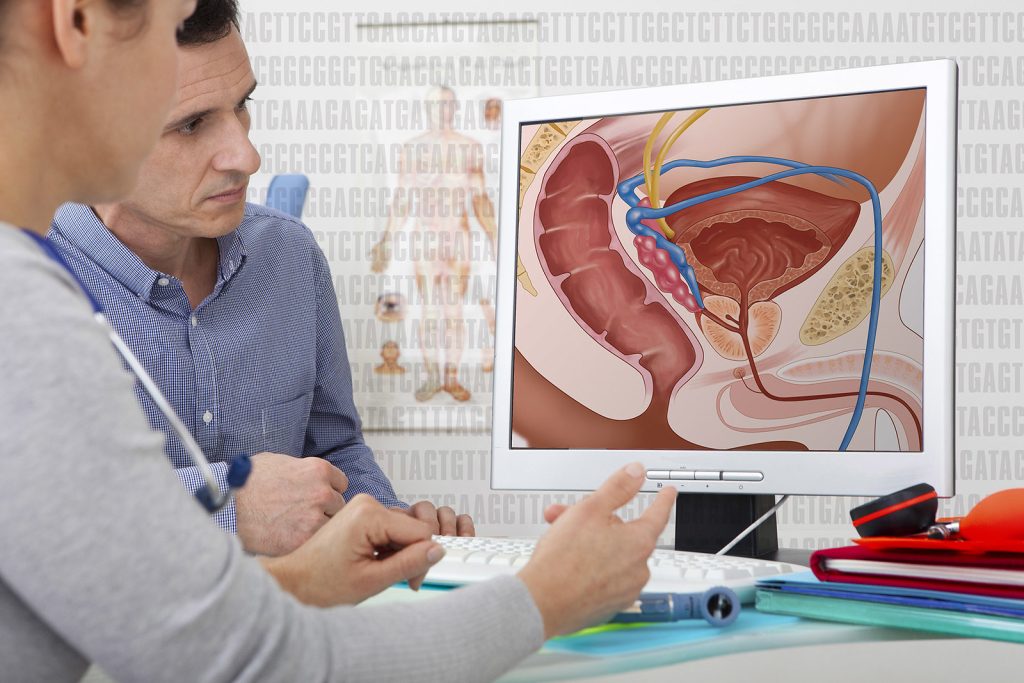

Why MRI is Changing Prostate Cancer Diagnoses
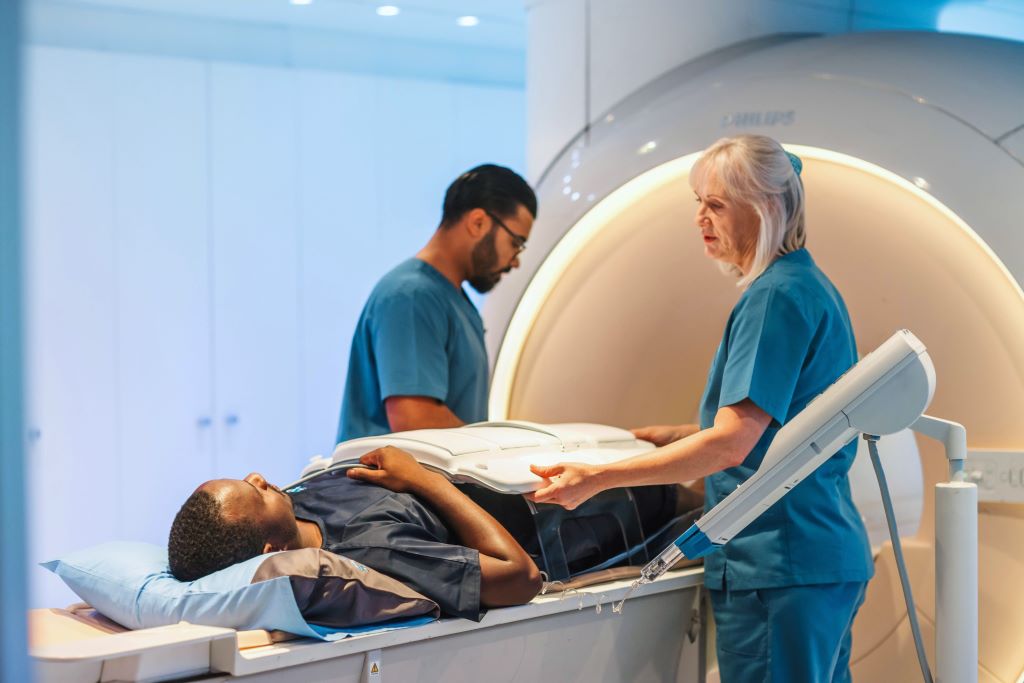
As we approach Movember with a focus on men’s health, we talk to Dr Hein Els, a radiologist specialising in abdominal imaging at SCP Radiology and Dr Louw-Waldi Vlok, a urologist at Mediclinic Panorama, about why MRI has become such an important tool in detecting prostate cancer and guiding diagnosis.
It’s often not the man who notices something first. His partner may mention noticing he has been up three or four times a night. He’ll put it down to getting older or having a cup of tea too late in the evening. What happens next is usually a visit to your GP…
How common is prostate cancer in the first place?
“Prostate cancer is the top invasive cancer reported in men in South Africa and also one of the most treatable, when it’s caught early,” says Dr Vlok. “Knowing what to look out for and understanding how far diagnosis and treatment have come, can reduce the fear and uncertainty around the disease. Today’s imaging technology means men get answers faster, treatment only when necessary and fewer invasive procedures than they would have a decade ago.”
What are the symptoms of prostate cancer?
“It is very important to realise that in the early stages of prostate cancer the patient will often have no symptoms at all”, says Dr Vlok. “Some men may have symptoms of an enlarging prostate which can include: Needing to urinate more often, particularly at night, a weak or interrupted urine flow and even an inability to urinate and difficulty starting or stopping urination.
As the disease progress and grows beyond the prostate the symptoms will increase:
- Blood in urine or semen
- Pain in the pelvis or lower back
Are there any unusual or less obvious signs?
“Yes,” says Dr Vlok, “and these are the ones men are least likely to connect to the prostate.” In more advanced cases, prostate cancer can cause:
• Unexplained pain in the lower back, hips or pelvis
• New or worsening erectile difficulties
• Unexplained weight loss or persistent fatigue
• Swelling in the legs or feet
‘These signs can point to the cancer having spread beyond the prostate, most often to the bones. They can also have entirely unrelated causes, so the sensible response is to get checked rather than to worry. Catching a change early is exactly what makes modern diagnosis so effective.
These symptoms don’t automatically mean cancer. An enlarged prostate or inflammation of the prostate is common with age and usually benign, but any of these changes are worth mentioning to your doctor.
How was prostate cancer diagnosed before MRI?
For decades, the standard path was a physical examination and a PSA blood test. In many cases this is still the standard workup. The test measures the amount of prostate-specific antigen (PSA) in your blood. PSA is a protein produced by both cancerous and noncancerous tissue in the prostate, a small gland that sits below the bladder in males. If either raised concern, a biopsy followed.
This approach had/has a real drawback: Without imaging to guide it, a biopsy could miss cancer that was there or flag concern in men who didn’t actually need treatment. The biopsy itself was usually systematic. A urologist took a set number of tissue samples from across the prostate using ultrasound guidance, without being able to see whether any specific area actually looked suspicious. It worked but was something of a blind search. Some cancers were missed simply because the needle didn’t pass through them, while other men went through an invasive procedure and a period of anxious waiting, for a result that turned out to be low risk or clear. If the result was clear and symptoms carried on, only then would an MRI be ordered.
How does MRI fit into prostate cancer diagnosis now?
“This reactive approach was certainly not ideal,” says Dr Els. The international standard has fundamentally changed and the sequence is different. After a raised PSA result, the patient is usually sent to radiology for a multiparametric MRI of the prostate, before any biopsy is considered”, says Dr Els.
“This is a detailed scan that maps the prostate and identifies areas that look suspicious,’ Dr Els explains. ‘It’s non-invasive: No incisions, just a detailed set of images generated using magnetic fields rather than radiation. We review the scan and score any area of concern, so the urologist has a clear picture of where and how likely, anything significant might be. If there’s a concerning lesion, a targeted, MRI-US fusion guided biopsy is performed.”
The major advantage is that many men with a clear or low-risk MRI avoid a biopsy altogether. When an area does need sampling, the biopsy can be targeted precisely, which means fewer samples, a more accurate result and a much shorter path to an answer.
This shift is supported by the PRECISION and MRI-FIRST trials and endorsed by the European Association of Urology and the American Urological Association.
What does the MRI tell the specialist?
‘Once the prostate is imaged, we don’t just report whether something looks suspicious but we give it a score, says Dr Els. ‘This is called PI-RADS, short for Prostate Imaging Reporting and Data System and it runs from 1 to 5. The number tells your doctor how likely it is that what’s showing on the scan is aggressive cancer and whether a biopsy is worth doing at all.’
- Scores 1 and 2: Usually mean no dangerous cancer is seen. Your doctor may simply monitor you over time
- Score 3: The scan cannot give a clear answer either way. Doctors will look at other information, such as your PSA blood test, before deciding on a biopsy
- Scores 4 and 5: Mean a high chance of cancer and a biopsy is usually recommended
This shift, from a blind search to a targeted, image-led approach, is one of the most significant improvements in prostate cancer care in the last 15 years and it’s an area in which SCP Radiology has invested heavily to get right.
Prostate cancer, when found early, has excellent outcomes. The combination of a simple blood test and non-invasive, expert-led imaging means most men now get a clear, accurate picture of their prostate health with far less uncertainty than in the past.
‘Our radiologists work closely with urologists across the circle of care, to make sure every scan is read with the depth of experience this diagnosis deserves,’ explains Dr Els.
And, if you’re reading this because you’ve noticed a change in someone else, not yourself: Raising it is worth the slightly awkward conversation. It’s often exactly what starts the process early.
FAQs
Is a prostate MRI painful or invasive?
No. It uses magnetic fields and involves no incisions.
If my PI-RADS score is low, do I still need a biopsy?
Usually not. A low score, 1 or 2, generally means your doctor will monitor you over time, rather than proceed to biopsy.
How long does the process take, from a raised PSA result to an answer?
This varies because the MRI is done before any biopsy. Many men reach a clear answer or avoid a biopsy altogether, in far fewer steps than under the older approach.
Is prostate cancer treatable if caught early?
Yes. It’s one of the most treatable cancers in men when detected early, which is why regular check-ups matter, even in the absence of symptoms.