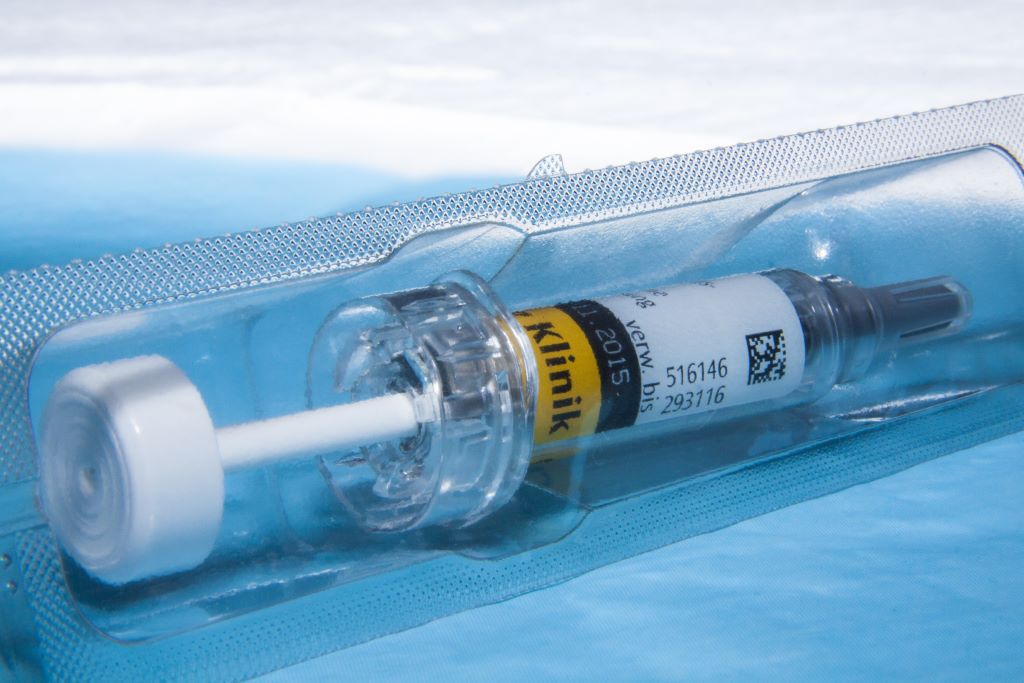
Disposable syringe of Clexane (enoxaparin), a low molecular weight heparin (LMWH). CC0
Researchers at McMaster University have discovered that a rare but dangerous reaction to heparin is caused by a single antibody – overturning decades of medical misunderstanding and opening the door to more precise ways of diagnosing and treating this medical complication.
The study, published in the New England Journal of Medicine, focused on heparin-induced thrombocytopenia (HIT), a serious immune complication that affects approximately one per cent of hospitalised patients treated with the blood thinner heparin. Nearly half of those who develop HIT experience life-threatening blood clots, which can lead to strokes, heart attacks, amputations, and even death, making early detection and treatment critically important.
Until now, scientists believed that the immune response causing HIT involved many different types of antibodies working together. But this research has revealed something surprising: in every patient studied, only one antibody was causing the disease, while the rest created what the researchers describe as a kind of “smokescreen,” making it harder to identify the true culprit. This discovery helps pinpoint the exact source of the problem, opening the door to more accurate diagnosis and better-targeted treatments.
“This study not only challenges our existing understanding of HIT but also revolutionises how we think about the immune response overall,” said Ishac Nazy, senior author of the study and scientific director of the McMaster Platelet Immunology Laboratory and co-director of the Michael G. DeGroote Center for Transfusion Research (MCTR).
“This work corrects decades of misunderstanding in HIT. This status quo was a key reason behind the high rate of false-positive test results and frequent misdiagnoses in HIT, which can lead to severe consequences for patients, including unnecessary treatment or avoidable complications. Our findings lay the groundwork for more accurate diagnostics and targeted treatments,” said Nazy, a professor in the Department of Medicine and the Department of Biochemistry and Biomedical Sciences at McMaster.
The research team was comprised of scientists from the McMaster Platelet Immunology Laboratory (MPIL) within MCTR as well as collaborators from the University of Massachusetts Amherst.
They analysed blood samples from nine patients diagnosed with HIT. In each case, they found that the antibodies targeting platelet factor 4 (PF4) – a protein involved in blood clotting – were monoclonal. This suggests that HIT may be driven by a highly specific immune reaction, rather than a generalised one.
“This discovery could reshape how we diagnose HIT and eventually how we treat it,” said Jared Treverton, first author of the study and a PhD candidate at McMaster. “Knowing that HIT is caused by a monoclonal antibody will allow us to develop improved tests specific to patients with this disorder and design better targeted therapies. This is a major step towards making diagnostics more accurate and treatments much safer.”
The findings are expected to have immediate relevance for haematologists, laboratory specialists, and researchers in immunology, as well as for patients receiving heparin in hospitals across Canada and around the world.
Study reveals that 1 in 10 will initiate opioid prescriptions long term.
Photo by Anna Shvets on Pexels
New research indicates that many patients who undergo surgery with the intent to cure early-stage cancer continue or start opioid prescriptions in the year following surgery. The findings are published by Wiley online in CANCER, a peer-reviewed journal of the American Cancer Society.
Pain management is essential during cancer care, but prescription opioid practices associated with cancer treatment may lead to unsafe long-term opioid use and adverse outcomes such as opioid use disorder and opioid overdose. To assess the situation, investigators examined rates of new persistent opioid use in the year following surgery for stage 0 to 3 cancers among 9213 U.S. Veterans who were opioid-naïve (not on prescribed opioids the year prior to their cancer diagnosis).
The team found that potentially dangerous co-prescription of opioid and benzodiazepine (a central nervous system depressant that treats anxiety, insomnia, and seizures and should not be combined with opioids) medications occurred in 366 (4.0%) Veterans during follow-up. Persistent opioid use occurred in 981 (10.6%). A higher intensity of exposure to opioid prescriptions during treatment was associated with these outcomes. People with a prior history of chronic pain, greater comorbidities, lower socioeconomic status, and who received adjuvant chemotherapy were at especially high risk of opioid use in the year after surgery.
“Minimising opioid exposure associated with cancer treatment while providing effective pain control will decrease long-term health risks among cancer survivors,” said lead author Marilyn M. Schapira, MD, MPH, of the University of Pennsylvania. “This is important as many patients are living longer after a cancer diagnosis and treatment.”
Study has implications beyond medical education, suggesting other fields could benefit from AI-enhanced training
Artificial intelligence (AI) is becoming a powerful new tool in training and education, including in the field of neurosurgery. Yet a new study suggests that AI tutoring provides better results when paired with human instruction.
Researchers at the Neurosurgical Simulation and Artificial Intelligence Learning Centre at The Neuro (Montreal Neurological Institute-Hospital) of McGill University are studying how AI and virtual reality (VR) can improve the training and performance of brain surgeons. They simulate brain surgeries using VR, monitor students’ performance using AI and provide continuous verbal feedback on how students can improve performance and prevent errors. Previous research has shown that an intelligent tutoring system powered by AI developed at the Centre outperformed expert human teachers, but these instructors were not provided with trainee AI performance data.
In their most recent study, published in JAMA Surgery, the researchers recruited 87 medical students from four Quebec medical schools and divided them into three groups: one trained with AI-only verbal feedback, one with expert instructor feedback, and one with expert feedback informed by real-time AI performance data. The team recorded the students’ performance, including how well and how quickly their surgical skills improved while undergoing the different types of training.
They found that students receiving AI-augmented, personalised feedback from a human instructor outperformed both other groups in surgical performance and skill transfer. This group also demonstrated significantly better risk management for bleeding and tissue injury – two critical measures of surgical expertise. The study suggests that while intelligent tutoring systems can provide standardised, data-driven assessments, the integration of human expertise enhances engagement and ensures that feedback is contextualised and adaptive.
“Our findings underscore the importance of human input in AI-driven surgical education,” said lead study author Bianca Giglio. “When expert instructors used AI performance data to deliver tailored, real-time feedback, trainees learned faster and transferred their skills more effectively.”
While this study was specific to neurosurgical training, its findings could carry over to other professions where students must acquire highly technical and complex skills in high-pressure environments.
“AI is not replacing educators – it’s empowering them,” added senior author Dr Rolando Del Maestro, a neurosurgeon and current Director of the Centre. “By merging AI’s analytical power with the critical guidance of experienced instructors, we are moving closer to creating the ‘Intelligent Operating Room’ of the future capable of assessing and training learners while minimising errors during human surgical procedures.”
Schizophrenia and bipolar disorder are serious mental illnesses that affect both males and females, but research in Acta Psychiatrica Scandinavica indicates that sex may influence the characteristics and course of these conditions.
The research included 1516 individuals from the multicentre PsyCourse Study: 543 with bipolar disorder, 517 with schizophrenia, and 456 healthy controls.
Several differences between groups and sexes were identified in age at diagnosis, age at treatment, illness duration, illicit drug use, and smoking. For example, females in the schizophrenia group were older than males at first outpatient treatment compared with females in the bipolar disorder group. Moreover, those who were older at first outpatient treatment presented a longer duration of illness. Regarding substance use, the highest rates were observed in males with schizophrenia. People with bipolar disorder showed better functioning and neurocognitive performance than those with schizophrenia. Among individuals with bipolar disorder, females reported better performance in verbal memory and psychomotor speed than males. Both females and males with serious mental illnesses showed higher rates of thyroid alterations than healthy controls.
“Our findings reveal a clear message: sex-sensitive treatment is essential for improving clinical outcomes, promoting healthy habits, and managing comorbidities,” said corresponding author Anabel Martinez-Arán, PhD, of the Hospital Clinic of Barcelona.
Preventing and managing high blood pressure with healthy lifestyle behaviours combined with early treatment with medication to lower blood pressure if necessary are recommended to reduce the risk of heart attack, stroke, heart failure, kidney disease, cognitive decline and dementia, according to a new clinical guideline published in the American Heart Association’s peer-reviewed journals Circulation and Hypertension, and in JACC, the flagship journal of the American College of Cardiology.
The “2025 AHA / ACC / AANP / AAPA / ABC / ACCP / ACPM / AGS / AMA / ASPC / NMA / PCNA / SGIM Guideline for the Prevention, Detection, Evaluation, and Management of High Blood Pressure in Adults” replaces the 2017 guideline and includes new or updated recommendations for blood pressure management based on the latest scientific evidence to achieve the best health outcomes for patients.
The new guideline reflects several major changes since 2017, including use of the American Heart Association’s PREVENTTM (Predicting Risk of cardiovascular disease EVENTs) risk calculator to estimate cardiovascular disease risk. It also provides updated guidance on medication options, including the early treatment for high blood pressure to reduce the risk of cognitive decline and dementia; use of specific medications including the possible addition of newer therapies such as GLP-1 medications for some patients with high blood pressure and overweight or obesity, and recommendations for managing high blood pressure before, during and after pregnancy.
High blood pressure (including stage 1 or stage 2 hypertension) affects nearly half (46.7%) of all adults in the U.S., is the leading cause of death in the U.S. and around the world. The blood pressure criteria remain the same as the 2017 guideline:
normal blood pressure is less than 120/80 mm Hg;
elevated blood pressure is 120-129 mm Hg and <80 mm Hg;
stage 1 hypertension is 130-139 mm Hg or 80-89 mm Hg; and
stage 2 hypertension is ≥140 mm Hg or ≥90 mm Hg.
“High blood pressure is the most common and most modifiable risk factor for heart disease,” said Chair of the guideline writing committee Daniel W. Jones, M.D., FAHA, dean and professor emeritus of the University of Mississippi School of Medicine in Jackson, Mississippi, and was a member of the writing committee for the 2017 high blood pressure guideline. “By addressing individual risks earlier and offering more tailored strategies across the lifespan, the 2025 guideline aims to aid clinicians in helping more people manage their blood pressure and reduce the toll of heart disease, kidney disease, Type 2 diabetes and dementia.”
“This updated guideline is designed to support health care professionals – from primary care teams to specialists, and to all clinicians across health systems – with the diagnosis and care of people with high blood pressure. It also empowers patients with practical tools that can support their individual health needs as they manage their blood pressure, whether through lifestyle changes, medications or both,” Jones said.
Importance of healthy lifestyle
The new guideline reaffirms the critical role healthy lifestyle behaviours play in preventing and managing high blood pressure, and it encourages health care professionals to work with patients to set realistic, achievable goals. Healthy behaviours such as those in Life’s Essential 8, the American Heart Association’s metrics for heart health, remain the first line of care for all adults.
Specific blood pressure-related guidance includes:
limiting sodium intake to less than 2,300 mg per day, moving toward an ideal limit of 1,500 mg per day by checking food labels (most adults in the U.S. get their sodium from eating packaged and restaurant foods, not the salt shaker);
ideally, consuming no alcohol or for those who choose to drink, consuming no more than two drinks per day for men and no more than one drink per day for women;
managing stress with exercise, as well as incorporating stress-reduction techniques like meditation, breathing control or yoga;
maintaining or achieving a healthy weight, with a goal of at least a 5% reduction in body weight in adults who have overweight or obesity;
following a heart healthy eating pattern, for example the DASH eating plan, which emphasizes reduced sodium intake and a diet high in vegetables, fruits, whole grains, legumes, nuts and seeds, and low-fat or nonfat dairy, and includes lean meats and poultry, fish and non-tropical oils;
increasing physical activity to at least 75-150 minutes each week including aerobic exercise (such as cardio) and/or resistance training (such as weight training); and
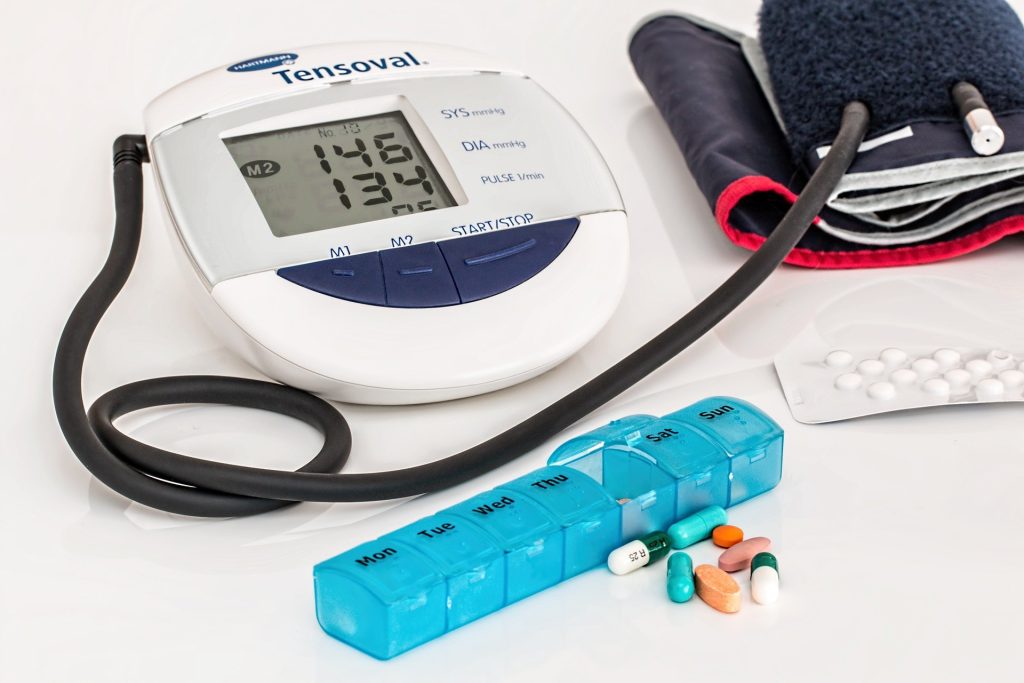
home blood pressure monitoring is recommended for patients to help confirm office diagnosis of high blood pressure and to monitor, track progress and tailor care as part of an integrated care plan.
Addressing each of these lifestyle factors is especially important for people with high blood pressure and other major risk factors for cardiovascular disease because it may prevent, delay or treat elevated or high blood pressure.
New risk calculator and earlier intervention
The new guideline recommends that health care professionals use thePREVENTTM risk calculator to estimate a person’s risk of a heart attack, stroke or heart failure. Developed by the American Heart Association in 2023, PREVENTTM is a tool to estimate 10- and 30-year risk of cardiovascular disease in people ages 30-79 years. It includes variables such as age, sex, blood pressure, cholesterol levels and other health indicators, including zip code as a proxy for social drivers of health. It is the first risk calculator that combines measures of cardiovascular, kidney and metabolic health to estimate risk for cardiovascular disease. More precise risk estimates can help guide treatment decisionspersonalized for each individual.
In addition to the use of the PREVENTTM risk assessment tool, the new guideline recommends two important changes to laboratory testing for initial evaluation.
The ratio of urine albumin and creatinine (a test that assesses kidney health) is now recommended for all patients with high blood pressure. It was recommended as an optional test in the 2017 guideline.
The guideline also expands the indication for use of the plasma aldosterone-to-renin ratio test as a screening tool for primary aldosteronism in more patients including those with obstructive sleep apnea. (Primary aldosteronism is a condition that occurs when the adrenal glands make too much aldosterone, leading to high blood pressure and low potassium levels.)
Screening for primary aldosteronism may also be considered in adults with stage 2 hypertension to increase rates of detection, diagnosis and targeted treatment.
Association of high blood pressure with cognitive decline and dementia
While high blood pressure is a leading cause of heart attack and stroke, the new guideline highlights other serious risks. More recent research confirms that blood pressure affects brain health, including cognitive function and dementia. High blood pressure can damage small blood vessels in the brain, which is linked to memory problems and long-term cognitive decline. The guideline recommends early treatment for people diagnosed with high blood pressure with a goal of systolic blood pressure (top number) goal of <130 mm Hg for adults with high blood pressure to prevent cognitive impairment and dementia.
Tailored approaches to medication for high blood pressure
For many people with high blood pressure, especially those who have Type 2 diabetes, obesity or kidney disease, more than one medication may be needed to lower blood pressure to meet the <130/80 mm Hg criteria. The guideline highlights several types of blood pressure medications to initiate treatment, including angiotensin-converting enzyme (ACE) inhibitors, angiotensin II receptor blockers (ARBs), long-acting dihydropyridine calcium channel blockers and thiazide-type diuretics. If blood pressure remains high after one medication, clinicians may individualize treatment to either increase the dose or add a second medication from a different medication class.
The guideline maintains the recommendation to begin treatment with two medications at once – preferably in a single combination pill – for people with blood pressure levels 140/90 mm Hg or higher (stage 2 hypertension). The guideline also suggests possible addition of newer therapies such as GLP-1 medications for some patients with high blood pressure and overweight or obesity.
High blood pressure and pregnancy
High blood pressure during pregnancy can have lasting effects on the mother’s health, including an increased risk of future high blood pressure and cardiovascular conditions. Without treatment, high blood pressure during pregnancy can lead to serious complications, such as preeclampsia, eclampsia, stroke, kidney problems and/or premature delivery. Women with high blood pressure who are planning a pregnancy or are pregnant should be counselled about the potential benefits of low-dose aspirin (81 mg/day) to reduce the risk of preeclampsia.
For pregnant women with chronic hypertension (high blood pressure before pregnancy or diagnosed before 20 weeks of pregnancy), the new guideline recommends treatment with certain medications when systolic blood pressure reaches 140 mm Hg or higher and/or diastolic blood pressure reaches 90 mm Hg or higher. This change reflects growing evidence that tighter blood pressure control for some individuals during pregnancy may help to reduce the risk of serious complications.
In addition, postpartum care is especially important because high blood pressure can begin or persist after delivery. The guideline urges continued blood pressure monitoring and timely treatment during the postpartum period to help prevent complications. Patients with a history of pregnancy-associated high blood pressure are encouraged to have their blood pressure measured at least annually.
“It is important for people to be aware of the recommended blood pressure goals and understand how healthy lifestyle behaviours and appropriate medication use can help them achieve and maintain optimal blood pressure. Prevention, early detection and management of high blood pressure are critical to long-term heart and brain health, which means longer, healthier lives,” said Jones.
By Fatima Hassan, Leena Menghaney, and Bellinda Nkoana
A new HIV prevention jab has the potential to bring an end to the AIDS epidemic. But a lack of ambition and unjustifiable secrecy over pricing is holding it back, argue three leading health activists.
Imagine a new HIV prevention tool existed that could – if it reached the right people – flick the switch to prevent almost all new HIV cases across the world. You would expect every health system and government to be doing all they can to roll it out to everyone as quickly as possible, regardless of the challenges, right?
The good news is that this scenario is not merely in our imagination because we actually have that tool today. The bad news? The rollout of this breakthrough HIV prevention jab is moving at a glacial pace.
Lenacapavir, a twice-yearly antiretroviral-containing injection, is one of the most promising tools yet in the fight to end AIDS. Data from two major trials released last year showed it offers near-complete protection against HIV infection for some of the most vulnerable groups: young women, men who have sex with men, sex workers, and transgender and gender-diverse people. Trials that test the effectiveness of the jab as prevention in people who inject drugs are also underway. For communities still bearing the brunt of new infections, it could be a game-changer.
Take South Africa as a case in point. Modelling studies suggest the impact could be transformative. If two to four million HIV-negative people here used lenacapavir annually over the next eight years, new infections could dramatically fall, with rates low enough that experts would consider it significant enough to end AIDS.
And yet, the current rollout targets look worryingly timid, particularly for vulnerable communities.
According to the National Department of Health, South Africa’s projected initial target for the first two years of the roll out (April 2026 – March 2028 and subject to registration or interim approval by the South African Health Products Regulatory Authority) of just under 500 000 people, includes the general population and certain vulnerable or key risk population groups – for the latter, the targets are woefully low: 69 799 sex workers, 37 857 transgender people, and 155 946 gay, bisexual, and other men who have sex with men.
This barely scratches the surface of the actual need in vulnerable populations. At this rate, access will be severely rationed, and the epidemic will continue to outpace us.
One reason the roll out cannot be on a mass scale, is not just due to an absent political will, but also because the company that holds the patent, Gilead Sciences, is rationing access. And until a sufficient number of generics come on to the market, voluntarily or through compulsory measures, Gilead will call the shots.
The Trump administration’s funding cuts earlier this year left ambitious plans to roll out lenacapavir in several countries in the Global South in the dust. In response, South Africa, in consultation with the Global Fund for AIDS, Tuberculosis, and Malaria (Global Fund) and indirectly with Gilead, announced plans to repurpose R520-million from an existing Global Fund grant to buy lenacapavir for HIV prevention.
But despite South Africa being asked by the Global Fund to budget $30 per dose ($60, roughly R1 050, per person per year) as its contribution, no one knows the total price the Global Fund is paying Gilead.
Such pricing secrecy is unacceptable, especially when health ministries in low- and middle-income countries are already squeezed by the massive US government funding cuts and debt crises.
Countries excluded from the Global Fund’s supply agreement and Gilead’s inadequate mechanisms for allowing generic competition (they exclude several countries and only a few companies were licensed) will be left to negotiate directly with Gilead, facing the prospect of unaffordable “tiered” prices designed to maximise profit – eerily similar to the COVID vaccine inequitable access debacle. Millions who need HIV prevention could face rationing, with health providers forced to leave the most vulnerable populations behind.
The Global Fund’s willing decision to shield Gilead’s pricing from public disclosure undermines accountability and risks reversing years of hard-won progress towards transparency in medicine pricing in the Global South and elsewhere. This is a dangerous precedent for the global HIV movement as pharmaceutical multinational companies are finding new ways to normalise price secrecy – and the Global Fund has just approved that tactic. While civil society in Global South countries such as South Africa are defending the right to know how public funds are spent, global institutions like the Global Fund in Geneva, are enabling practices that give pharmaceutical corporations a free pass.
The push to normalise secrecy, particularly when public or donor money is involved, should ring alarm bells. If international actors are serious about equitable access, then price transparency must be non-negotiable. Anything less erodes public trust and hands undue power to pharmaceutical companies at the expense of public health. Transparency is also necessary to ensure that the price we pay is fair and justified, because public money should not subsidise Gilead’s profiteering.
All this comes at a time when global health financing is under severe strain. Deep cuts in HIV/AIDS funding have already cost tens of thousands of lives across multiple countries. But rationing prevention is a false economy because the cost of new infections, in lives and long-term treatment, will far outweigh the investment required to scale up prevention now.
As delegates convene this week at the SA AIDS Conference, they must publicly call out the demand for price secrecy from Gilead and the Global Fund for what it is: bullying. It must also raise the funds, domestically and internationally, to pay for lenacapavir for all who need it. Two million people at minimum should be the national target – four times the glacial rollout pace the Global Fund is proposing at present.
The lesson from history is clear: When lifesaving HIV treatment was delayed, millions died needlessly. We cannot afford the same mistake with HIV prevention.
*Hassan, Menghaney, and Nkoana are all part of the global LEN-LA for All Coalition, a grouping that includes the organisations Health GAP, Health Justice Initiative, Sankalp Rehabilitation Trust, Just Tx, and ABIA.
Note: Spotlight aims to deepen public understanding of important health issues by publishing a variety of views on its opinion pages. The views expressed in this article are not necessarily shared by the Spotlight editors.
A research team at Saarland University has demonstrated in a clinical study that a widely used anti-allergy nasal spray containing the active ingredient azelastine can significantly reduce the risk of infection with the SARS-CoV-2 virus. The results of the placebo-controlled trial involving 450 healthy participants have now been published in JAMA Internal Medicine.
The trial, led by Professor Robert Bals, Director of the Department of Internal Medicine V at Saarland University Medical Center and Professor of Internal Medicine at Saarland University, divided the 450 participants into two groups. The treatment group of 227 individuals used an azelastine nasal spray three times a day over a 56-day period. During that same period, the 223 participants in the control group used a placebo spray three times a day. Robert Bals summarised the key finding as follows: ‘During the observation period, 2.2% of the participants in the azelastine group became infected with SARS-CoV-2; in the placebo group, it was 6.7%—three times as many.’ All infections were confirmed by PCR testing.
In addition to showing a marked reduction in coronavirus infections, the azelastine group also displayed fewer symptomatic SARS-CoV-2 infections, a lower overall number of confirmed respiratory infections, and, unexpectedly, a reduced incidence of rhinovirus infections, another major cause of respiratory illness. In the treatment group, 1.8% developed a rhinovirus infection, compared to 6.3% in the placebo group—a proportion similar to that seen for SARS-CoV-2.
Azelastine nasal spray has been available for decades as an over-the-counter treatment for hay fever. Previous in vitro studies on azelastine had already suggested antiviral effects against SARS-CoV-2 and other respiratory viruses. ‘This clinical trial is the first to demonstrate a protective effect in a real-world setting,’ says Professor Bals.
For Robert Bals, the results suggest practical applications: ‘Azelastine nasal spray could provide an additional easily accessible prophylactic to complement existing protective measures, especially for vulnerable groups, during periods of high infection rates, or before travelling.’ But Professor Bals also stressed the importance of further research: ‘Our results highlight the need for larger, multicentre trials to continue exploring the use of azelastine nasal sprays as an on-demand preventive treatment, and to examine its potential effectiveness against other respiratory pathogens.’
Besides Professor Bals, the randomised, double-blind phase 2 study ‘CONTAIN’ also involved the Institute of Clinical Pharmacy (Professor Thorsten Lehr, Dr. Dominik Selzer), the Institute of Virology (Professor Sigrun Smola), and the Saarbrücken-based pharmaceutical company URSAPHARM Arzneimittel GmbH, which sponsored the study and manufactured the investigational product. The Helmholtz Institute for Pharmaceutical Research Saarland (HIPS) contributed through the research groups of Professor Smola and Professor Bals. The project serves as an excellent example of successful collaboration between academic research, industry partners and public health initiatives in the Saarland region.
Blood pressure matters at all ages. Children with higher blood pressure at age 7 may be at an increased risk of dying of cardiovascular disease by their mid-50s, according to preliminary research presented at the American Heart Association’s Hypertension Scientific Sessions 2025. The study is simultaneously published in JAMA.
“We were surprised to find that high blood pressure in childhood was linked to serious health conditions many years later. Specifically, having hypertension or elevated blood pressure as a child may increase the risk of death by 40% to 50% over the next five decades of an individual’s life,” said Alexa Freedman, Ph.D., lead author of the study and an assistant professor in the department of preventive medicine at the Northwestern University’s Feinberg School of Medicine in Chicago. “Our results highlight the importance of screening for blood pressure in childhood and focusing on strategies to promote optimal cardiovascular health beginning in childhood.”
Previous research has shown that childhood blood pressure is associated with an increased risk of cardiovascular disease in adulthood, and a 2022 study found that elevated blood pressure in older children (average age of 12 years) increased the risk of cardiovascular death by middle age (average age of 46 years). The current study is the first to investigate the impact of both systolic (top number) and diastolic (bottom number) blood pressure in childhood on long-term cardiovascular death risk in a diverse group of children. Clinical practice guidelines from the American Academy of Pediatrics recommend checking blood pressure at annual well-child pediatric appointments starting at age 3 years.
“The results of this study support monitoring blood pressure as an important metric of cardiovascular health in childhood,” said Bonita Falkner, MD, FAHA, an American Heart Association volunteer expert. “Moreover, the results of this study and other older child cohort studies with potential follow-up in adulthood will contribute to a more accurate definition of abnormal blood pressure and hypertension in childhood.” Falkner, who was not involved in this study, is emeritus professor of paediatrics and medicine at Thomas Jefferson University.
The researchers used the National Death Index to follow up on the survival or cause of death as of 2016 for approximately 38,000 children who had their blood pressures taken at age 7 years as part of the Collaborative Perinatal Project (CPP), the largest US study to document the influence of pregnancy and post-natal factors on the health of children. Blood pressure measured in the children at age 7 years were converted to age-, sex-, and height-specific percentiles according to the American Academy of Pediatrics clinical practice guidelines. The analysis accounted for demographic factors as well as for childhood body mass index, to ensure that the findings were related to childhood blood pressure itself rather than a reflection of children who were overweight or had obesity.
After follow-up through an average age of 54 years, the analysis found:
Children who had higher blood pressure (age-, sex-, and height-specific systolic or diastolic blood pressure percentile) at age 7 were more likely to die early from cardiovascular disease as adults by their mid-50s. The risk was highest for children whose blood pressure measurements were in the top 10% for their age, sex and height.
By 2016, a total of 2,837 participants died, with 504 of those deaths attributed to cardiovascular disease.
Both elevated blood pressure (90-94th percentile) and hypertension (≥ 95th percentile) were linked with about a 40% to 50% higher risk of early cardiovascular death in adulthood.
Moderate elevations in blood pressure were also important, even among children whose blood pressure was still within the normal range. Children who had blood pressures that were moderately higher than average had a 13% (for systolic) and 18% (for diastolic) higher risk of premature cardiovascular death.
Analysis of the 150 clusters of siblings in the CPP found that children with the higher blood pressure at age 7 had similar increases in risk of cardiovascular death when compared to their siblings with the lower blood pressure readings (15% increase for systolic and 19% for diastolic), indicating that their shared family and early childhood environment could not fully explain the impact of blood pressure.
“Even in childhood, blood pressure numbers are important because high blood pressure in children can have serious consequences throughout their lives. It is crucial to be aware of your child’s blood pressure readings,” Freedman said.
The study has several limitations, primarily that the analysis included one, single blood pressure measurement for the children at age seven, which may not capture variability or long-term patterns in childhood blood pressure. In addition, participants in the CPP were primarily Black or white, therefore the study’s findings may not be generalisable to children of other racial or ethnic groups. Also, children today are likely to have different lifestyles and environmental exposures than the children who participated in the CPP in the 1960s and 1970s.
Study details, background and design:
38 252 children born to mothers enrolled at one of 12 sites across the U.S. as part of the Collaborative Perinatal Project between 1959-1965. 50.7% of participants were male; 49.4% of mothers self-identified as Black, 46.4% reported as white; and 4.2% of participants were Hispanic, Asian or other groups.
This analysis reviewed blood pressure taken at age 7, and these measures were converted to age-, sex-, and height-specific percentiles according to the American Academy of Pediatrics Clinical Practice Guideline for Screening and Management of High Blood Pressure in Children and Adolescents.
Survival through 2016 and the cause of death for the offspring of CPP participants in adulthood were retrieved through the National Death Index.
Survival analysis was used to estimate the association between childhood blood pressure and cardiovascular death, adjusted for childhood body mass index, study site, and mother’s race, education and marital status.
In addition, the sample included 150 groups of siblings, and the researchers examined whether the sibling with higher blood pressure was more likely to die of cardiovascular disease than the sibling with lower blood pressure. This sibling analysis allowed researchers to ask how much shared family and early childhood factors might account for the mortality risk related to blood pressure.
The health department has plans to roll out lenacapavir, a twice-yearly HIV prevention injection, in a select group of public sector clinics by April 2026. Meanwhile, little progress has been made towards rolling out a two-monthly prevention injection, despite the four-year head start this product had on lenacapavir.
Injections that provide months of protection at a time against HIV infection have been hailed by several leading experts as game-changers with the potential to help end the HIV epidemic.
The two antiretroviral-containing injections leading the field are long-acting cabotegravir (CAB-LA) and lenacapavir. Both have been shown to effectively eliminate the risk of contracting HIV in large clinical trials. The main difference between the two shots is that CAB-LA provides two months of protection at a time, while lenacapavir provides six.
CAB-LA captured global attention back in 2020 when pivotal trial results showed that the two-monthly injection was more effective than daily prevention pills in preventing HIV infection. Lenacapavir was thrust into the spotlight four years later in 2024 when two large trials demonstrated that the twice-yearly injection provided almost perfect protection against HIV.
There are still no clear plans for providing CAB-LA in South Africa’s public sector clinics, despite the four-year head start that it had on lenacapavir. By contrast, lenacapavir injections could be available in some select public sector clinics by April of next year, according to reporting by Bhekisisa.
How CAB-LA fell behind
In July 2022, the World Health Organization (WHO) recommended CAB-LA as a tool to prevent HIV and by December 2022 it was registered for use in South Africa.
In February 2023 though, South Africa’s National Essential Medicines Committee stated that it could not recommend the use of CAB-LA in the country because the medicine’s manufacturer, ViiV Healthcare, had yet to share how much it would charge the country for the shots.
It was only in late 2023 that ViiV provided pricing details for public sector procurement in certain low-and middle- income countries, including South Africa. That price was around R540 ($30) per dose or R3 240 ($180) per person per year, which the health department said was unaffordable for the country.
The price has since dropped slightly to around R2 880 ($160) per person per year, Mitchell Warren, from the US-based HIV advocacy organisation AVAC, told Spotlight.
In 2024, the health department requested further details from ViiV on its CAB-LA pricing but there is no indication that any progress has been made towards securing a lower price and enabling local procurement of CAB-LA for public sector facilities.
Khadija Jamaloodien, the top official for health products procurement in the National Department of Health, told Spotlight the department could not comment on whether there have been any developments towards local procurement of CAB-LA.
A spokesperson for ViiV told Spotlight: “We have not received any orders to date for CAB-LA for PrEP to supply to South Africa”. PrEP, or pre-exposure prophylaxis, refers to taking an injection to prevent HIV infection.
What about CAB-LA in the private sector?
For those using private healthcare in South Africa, CAB-LA also remains inaccessible. ViiV has not launched CAB-LA in the private sector or disclosed the price at which it will sell CAB-LA through private pharmacies.
ViiV did not respond to Spotlight’s questions regarding its plans and timelines for launching CAB-LA in the country’s private sector.
PEPFAR steps in, but doesn’t deliver
After the health department balked at ViiV’s CAB-LA price for the public sector, the United States President’s Emergency Plan for AIDS Relief (PEPFAR) announced plans to kick start the rollout of CAB-LA in South Africa and some other African countries.
PEPFAR pledged to buy CAB-LA from ViiV for donation to ten African countries during 2024 and 2025. The largest donation of 231 000 CAB-LA doses was designated for South Africa.
While some of the PEPFAR-donated stock began reaching countries before the Trump administration halted foreign aid on 20 January, according to Warren, South Africa never received any of the promised doses.
These donations are no longer expected, given cuts to the agency’s capacity and budget under the Trump administration.
The US State Department did not respond to Spotlight’s questions seeking confirmation that the CAB-LA donations would no longer be delivered, but our health department told Spotlight it doesn’t expect to receive this donation.
Gilead leapfrogs ViiV
Amid the delays and uncertainty surrounding CAB-LA’s pricing and rollout, Gilead, the company that manufactures lenacapavir, has positioned their product to become the first long-acting injectable form of HIV prevention available at any real scale in South Africa.
While lenacapavir is not yet registered in South Africa, Hasina Subedar, the senior technical advisor for HIV prevention in the National Department of Health, told Bhekisisa that it plans to start rolling out lenacapavir in 300 public clinics by April 2026 – less than 10% of the well over 3000 clinics in the country.
SAHPRA authorisation is expected to be granted in the coming months, as lenacapavir has already been recommended for marketing authorisation through the EU medicines for all (EU-M4All) initiative – a process which includes regulators from South Africa. In addition to securing local registration, lenacapavir must also receive a positive recommendation from South Africa’s National Essential Medicines List Committee to enable its rollout.
Gilead has secured a deal with the Global Fund for HIV, TB and Malaria, as well as private donors, that will allow lenacapavir to be rolled out in eight African countries, including in South Africa at a cost to country of R1080 ($60) per person per year.
Under this deal, private donations from the Children’s Investment Fund Foundation (CIFF) will also contribute toward procurement of lenacapavir. CIFF contributions will be above and beyond the $60 contributed by countries per person per year.
While the amount that Gilead will recoup for a year’s supply of lenacapavir under the deal has not been disclosed, it is speculated to be between R1800 ($100) and R2 160 ($120), according to Warren.
He added that Gilead’s deal with the Global Fund will allow countries to begin budgeting and planning for lenacapavir’s rollout using Gilead’s product while they await availability of more affordable generic products in a few years’ time.
The lack of transparency around Gilead’s pricing is uncommon in South Africa, which has strong legal requirements for medicine price transparency. Despite transparency concerns, the National Department of Health has indicated that they will participate in Gilead’s Global Fund arrangement.
By keeping the price secret, two advocacy groups, the Health Justice Initiative and Health Gap, have argued that the deal will undermine efforts in countries not included in the arrangement to negotiate and secure affordable pricing of lenacapavir.
Are HIV prevention injections cost effective for South Africa?
Local researchers have crunched the numbers to establish whether CAB-LA and lenacapavir offer good value for money.
These analyses compared the cost-effectiveness of HIV injections to the widely available prevention pills in public clinics, Lise Jamieson, senior researcher at WITS HE2RO, told Spotlight
The prevention pills provided by the National Department of Health are purchased for R1000 per person per year, said Jamaloodien.
Jamieson said that, according to modelling, prevention injections will avert more HIV infections than prevention pills. Generally speaking, products that provide protection for longer periods are more effective since their efficacy is less dependent on people regularly taking pills or going to the clinic to get an injection. We can thus accept a higher price for lenacapavir (providing six month of protection) than for CAB-LA (only two months of protection) because modelling indicates that this product will avert more HIV infections and delivers more treatment cost savings over time.
Jamieson said according to the latest iteration of their cost-effectiveness modelling, which has not yet been published, CAB-LA needs to be capped around R1800 ($100) per person per year to be cost effective, while lenacapavir needs to be capped around R3600 ($170) per person per year.
Based on this analysis, for South Africa to roll out lenacapavir at $60 per person per year is highly cost-effective, while buying CAB-LA at $160 per person per year is not cost-effective.
Lenacapavir use also requires fewer clinic visits per year than CAB-LA (two versus six) which places less of a strain on health facilities and providers.
Cheaper generic versions of lenacapavir and CAB-LA are expected to become available in 2027.
Lenacapavir generics, Warren said, are expected to enter the market around the same time as generic CAB-LA despite CAB-LA’s initial head start. This is because Gilead was quicker to license generic manufacturers and used a faster licensing approach than ViiV, he added.
Compared to CAB-LA, Warren said it would be faster to show that the generic version of lenacapavir works the same as the original – a necessary step before generic products can be approved. Added to this, he noted that generic companies would likely move faster to bring lenacapavir to market because buyers showed more interest in it.
How will procurement of lenacapavir be funded?
While lenacapavir is cost effective for South Africa at $60 per person per year, purchasing it may nevertheless be challenging given the country’s tight healthcare budget.
HIV prevention pills are procured domestically in South Africa, but Jamieson said the country will need additional funds or donor support to roll out lenacapavir.
The National Department of Health and the Global Fund agreed to allocate R520 million of the country’s Global Fund grant towards buying lenacapavir, Bhekisisa reported in July. This allocation will allow more than 450 000 people in the country to access lenacapavir over the next three years.
Can lenacapavir turn the tide on the epidemic?
In addition to looking at the cost-effectiveness of long acting injectables, Jamieson and her colleagues have modelled how the rollout of injectable HIV prevention options will impact new HIV infections in the country.
Jamieson said if South Africa initiates roughly 1 million people on lenacapavir over the next year and then increase access to reach 4 million people in the next 20 years, HIV incidence could fall below 0.1% by 2038 – with a projected 3.5 million people on lenacapavir by then. At this level, the country would effectively end the HIV epidemic.
Scaling up lenacapavir to this level will require significant political will and additional investment above and beyond what has already been committed by the Global Fund.
Meanwhile, researchers are working on new versions of lenacapavir and CAB-LA that could double the length of protection offered by each.
As Spotlight previously reported, there are promising signs for a lenacapavir formulation that could provide 12 months of protection as opposed to the current six, and a CAB-LA formulation that could provide four months of protection rather than two. HIV prevention tablets that provide a month of protection at a time are also under development. It however remains to be seen whether these new formulations will succeed in the pivotal clinical trials testing their safety and effectiveness.
AI-based medicine will revolutionise care including for Alzheimer’s and diabetes, predicts a technology expert, but it must be accessible to all patients
AI image created with Gencraft
Healing with Artificial Intelligence, written by technology expert Daniele Caligiore, uses the latest science research to highlight key innovations assisted by AI such as diagnostic imaging and surgical robots.
From exoskeletons that help spinal injury patients walk to algorithms that can predict the onset of dementia years in advance, Caligiore explores what he describes as a ‘revolution’ that will change healthcare forever.
Economically, the market for AI in healthcare is experiencing rapid growth, with forecasts predicting an increase in value from around USD 11 billion in 2021 to nearly USD 188 billion by 2030, reflecting an annual growth rate of 37%. AI is already being used in some countries, for example to search through genetic data for disease markers, or to assist with scheduling and other administrative tasks – and this trend is set to continue.
However, the author caveats his predictions of progress by warning these technologies may widen existing inequality. Caligiore suggests that AI-based medicine must be available to all people, regardless of where they live or how much they earn, and that people from low-income nations must not be excluded from cutting-edge care which wealthier nations can access.
Other challenges posed by the advancement of AI in healthcare includes who takes responsibility for treatment decisions, especially when a procedure goes wrong. This is a particular challenge given widespread concerns around explainable AI, as many advanced AI systems operate as black boxes, making decisions through complex processes that even their creators cannot fully understand or explain.
Caligiore says AI should support doctors and patients, not replace doctors who, says the author, have a ‘unique ability to offer empathy, understanding, and emotional support’.
“AI should be viewed as a tool, not a colleague, and it should always be seen as a support, never a replacement,” writes Caligiore.
“It is important to find the right balance in using AI tools, both for doctors and patients. Patients can use AI to learn more about their health, such as what diseases may be associated with their symptoms or what lifestyle changes may help prevent illness. However, this does not mean AI should replace doctors.”
Despite his warnings, Caligiore is largely optimistic about the impact of AI in healthcare: “Like a microscope detecting damaged cells or a map highlighting brain activity during specific tasks, AI can uncover valuable insights that might go unnoticed, aiding in more accurate and personalized diagnoses and treatments,” he says.
In any case, Caligiore predicts the healthcare landscape will look ‘dramatically different’ in a few years, with technology acting as a ‘magnifying glass for medicine’ to enable doctors to observe the human body with greater precision and detail.
Examples of where AI will make profound impacts in healthcare include, regenerative medicine, where gene and stem cell therapies repair damaged cells and organs. Spinal cord injury patients are among those who could benefit.
AI may also provide personalised therapies, suggesting treatments tailored to specific individuals often based on their unique genetic profile. Studies are being conducted into targeting different tremor types in Parkinson’s and breast cancer subtypes
The convergence of regenerative medicine, genetically modified organisms (GMOs), and AI is the next frontier in medicine, Caligiore suggests. Genetically modified organisms (GMOs), living organisms whose genetic material has been altered through genetic engineering techniques, have already paved the way for personalised gene therapies.
Blending real and virtual worlds may also prove useful to healthcare, for example the ‘metaverse’ – group therapy where patients participate with an avatar, or ‘digital twins’ – AI simulations of a patient’s body and brain on a computer so doctors can identify underlying causes of disease and simulate the effects of various therapies for specific patients to help doctors make more informed decisions.
These advances and others will reshape the doctor-patient relationship, according to Healing with Artificial Intelligence, but the author suggests the key is for patients and clinicians to keep a critical mindset about AI.
Caligiore warns that role of physicians will evolve as AI becomes more integrated into healthcare but the need for human interactions will remain ‘central to patient care’.
“While healthcare professionals must develop technical skills to use AI tools, they should also nurture and enhance qualities that AI cannot replicate – such as soft skills and emotional intelligence. These human traits are essential for introducing an emotional component into work environments,” he explains.