Author: ModernMedia

Allergy Season Linked to an Increase in Suicide Risk

Photo by Andrea Piacquadio on Pexels

Beyond the sneezing and itchy eyes, high pollen seasons are now linked to a significant increase in suicide risk. A new University of Michigan study found a 7.4% jump in deaths, suggesting the physical discomfort of allergies may trigger a deeper, more dangerous despair, an overlooked factor in suicide prevention.

The study indicates that allergies’ physiological effects, such as poor sleep and mental distress, may contribute to this increased risk.

“A small shock could have a big effect if you’re already in a vulnerable state,” said Joelle Abramowitz, associate research scientist at U-M’s Institute for Social Research. “We looked specifically at pollen from all different kinds of plants, including trees, weeds and grasses.”

The effect is incremental. Researchers divided pollen levels into four tiers and found the suicide risk rose with each group: it increased by 4.5% in the second level, 5.5% in the third and peaked at 7.4% in the fourth and highest category.

The study, funded by the American Foundation for Suicide Prevention and U-M ISR, combines daily pollen data from 186 counties of 34 metropolitan areas across the United States, with suicide data from the National Violent Death Reporting System between 2006 and 2018.

Abramowitz and co-authors Shooshan Danagoulian and Owen Fleming of Wayne State University said that while structural factors for suicide are well-researched, short-term triggers are less understood. Pollen allergies are an ideal subject for this research, considering they are an exogenous shock – meaning they are external and not caused by an individual’s mental health status.

“During our study period, there were nearly 500 000 suicides in the US,” Abramowitz said. “Based on our incremental data, we estimate that pollen may have been a contributing factor in up to 12 000 of those deaths over the period, or roughly 900 to 1200 deaths per year.”

Vulnerable populations

Published in the Journal of Health Economics, the study also found that individuals with a known mental health condition or who had received prior mental health treatment had an 8.6% higher incidence of suicide on days with the highest pollen levels. White men strongly drive the effect, but the study also found an unexpectedly high vulnerability among Black individuals.

“While our study’s data comes from the U.S., our findings likely apply globally,” Abramowitz said. “This is supported by earlier research that found similar relationships in locations like Tokyo and Denmark. Our results, therefore, provide crucial new evidence that this phenomenon is a consistent, worldwide trend.”

Public health and awareness

The focus should be on public health and education, as reducing the number of pollen-producing plants isn’t a viable option, the researchers suggest. This includes more accurate pollen forecasting and better public communication. Providing people with clear, timely information about high-pollen days allows them to take proactive steps. Additional recommendations are limiting outdoor activities, wearing a mask or having antihistamines on hand.

There is also a need for a broader approach to mental health awareness, the authors said. Health care providers, particularly those in primary care, can benefit from understanding the connection between environmental factors, such as pollen, and patient well-being. This knowledge could help them tailor care more effectively, especially for vulnerable patients, and serve as a prompt to discuss mental health and stress management during high-pollen seasons or other periods of environmental stress.

“We should be more conscious of our responsiveness to small environmental changes, such as pollen, and our mental health in general,” Abramowitz said. “Given our findings, I believe medical providers should be aware of a patient’s allergy history, as other research has also established a connection between allergies and a higher risk for suicide. I hope this research can lead to more tailored care and, ultimately, save lives.”

The authors predict that as climate change extends and intensifies the pollen season, the impact of allergies on suicide rates could more than double by the end of the century.

Source: University of Michigan

Combination of Diet and Medication Reprograms Paediatric Neuroblastoma

Credit: National Cancer Institute

Researchers at Children’s Hospital of Philadelphia (CHOP) found that combining a specialised diet with an approved medication interrupts the growth of high-risk neuroblastoma, a deadly paediatric cancer, by reprogramming tumour behaviour. The findings were published in the journal Nature.

Neuroblastoma originates from primitive cells meant to form nerve tissues but that remain “undifferentiated,” indicating cancer cells that haven’t specialized, often suggesting a more aggressive and unfavourable prognosis. These tumours rely on a steady supply of chemicals called polyamines that are essential for rapid cell growth and tumour progression. A medicine called difluoromethylornithine (DFMO) was approved by the Food and Drug Administration (FDA) to treat children with high-risk neuroblastoma, as DFMO blocks polyamine production. However, researchers sought to improve the effectiveness of the drug by using it at high doses and combining it with a diet that is depleted of the nutrients used by the body to make polyamines (arginine). This two-step approach was anticipated to lower polyamines substantially more than low dose DFMO alone.

“Our findings show that this treatment reduced polyamines in tumours to roughly 10% of their usual levels. This reduction greatly slowed tumour growth, and in many cases, completely eliminated the tumours,” said Michael D. Hogarty, MD, a lead author and an Attending Physician in the Division of Oncology at Children’s Hospital of Philadelphia. “Notably, the treatment altered the way the tumour cells make proteins, making it harder for them to grow and easier for them to mature, or differentiate.”

Hogarty and his team used a preclinical model to mimic MYCN-driven neuroblastoma, directly addressing the strong association between extra MYCN gene copies and aggressive neuroblastoma with poor prognosis. Animal models with tumours were divided into groups: one fed a normal diet and the other lacking amino acids for polyamine production. Each group either received DFMO in their drinking water or did not. The special diet or DFMO alone partially lowered polyamines and extended survival, but the combination had the most significant impact on tumours due to the profound polyamine depletion it caused.

The researchers plan to conduct additional preclinical studies, followed hopefully by clinical trials in children to determine the safety and efficacy of targeting this specific metabolic dependency of neuroblastoma cells. By complementing existing treatments, they hope to substantially improve patient outcomes, and because the therapy targets polyamines it may be effective in many other types of cancer that have frequent MYC gene activation. 

Source: Children’s Hospital of Philadelphia

‘Alarming’ Rise in Newborn Babies with Antibiotic-resistant Infections, Researchers Find

Photo by Christian Bowen on Unsplash

Researchers are calling for an urgent overhaul of diagnostic and treatment guidelines for infections in newborn babies, after a University of Sydney-led study revealed frontline treatments for sepsis are no longer effective to treat the majority of bacterial infections. 

The study, published in The Lancet Regional Health – Western Pacific, analysed almost 15 000 blood samples collected from sick babies in 2019 and 2020 at 10 hospitals across five countries in Southeast Asia, including Indonesia and the Philippines. 

It found that most infections were caused by bacteria unlikely to respond to the currently applied WHO recommended treatments. These were developed using data from high-income countries, instead of using localised data which could be more accurate and therefore effective. 

“Our study highlights the causes of serious infections in babies in countries across Southeast Asia with high rates of neonatal sepsis, and reveals an alarming burden of AMR that renders many currently available therapies ineffective for newborns,” said senior author Associate Professor Phoebe Williams, a Senior Lecturer and NHMRC Fellow in the Sydney School of Public Health.

“Guidelines must be updated to reflect local bacterial profiles and known resistance patterns. Otherwise, mortality rates are only going to keep climbing.”

The problem is further compounded by a lack of new antimicrobial medications in development for infants and babies, added co-author Michelle Harrison, PhD candidate and Project Coordinator of NeoSEAP in the Sydney School of Public Health. 

“It takes about 10 years for a new antibiotic to be trialled and approved for babies,” Harrison said.

“With so few new drug candidates in the first place, we need a significant investment in antibiotic development.”

Gram-negative bacteria responsible for 80% of infections

For the samples which tested positive for fungal or bacterial infections, the team analysed whether they were caused by gram-positive or gram-negative bacteria – referring to the structure of the bacteria’s cell wall which influences how likely it is to develop and acquire antibiotic resistance. 

Gram-negative bacteria like E. coli, Klebsiella and Acinetobacter were responsible for nearly 80% of infections and are more likely to develop (and spread) antibiotic resistance.

“These bugs have long been considered to only cause infections in older babies, but are now infecting babies in their first days of life,” said Associate Professor Williams. 

When treating babies, doctors don’t have time to wait for lab tests to confirm the exact cause of the infection, and often make an educated guess from published data, most often based on high-income populations, to guide treatment. These tests are also frequently delayed or falsely negative due to the difficulty of collecting blood samples.

Harrison explained that the findings showcase the importance of locally relevant data to guide routine medical decision-making.

“We need more region-specific surveillance to guide treatment decisions. Otherwise, we risk reversing decades of progress in reducing child mortality rates,” she said.

“Our results also revealed fungal infections caused nearly one in 10 serious infections in babies – a much higher rate than in high-income countries. 

“We need to ensure doctors are prescribing treatments that have the best chance at saving a baby’s life.”

Source: University of Australia

International Healthcare Workers Report on War Related Injuries Among Civilians in Gaza

Findings suggest patterns of harm that exceed those reported in previous modern-day conflicts and provide critical insights to tailor humanitarian response

Photo by Mohammed Ibrahim on Unsplash

A British led study published by The BMJ provides detailed data on the pattern and severity of traumatic injuries and medical conditions seen by international healthcare workers deployed to Gaza during the ongoing military invasion.

Healthcare workers describe “unusually severe” traumatic injuries including complex blast injuries, firearm related injuries, and severe burns. Many respondents with previous experience of conflicts reported that the pattern and severity of injuries in Gaza were greater than those they had encountered in previous warzones.

It’s thought to be the first study to provide such detailed data from frontline clinicians during the conflict, which the authors say offers critical insights into the injuries and conditions most relevant to immediate management, rehabilitation, and long term health planning.

Since October 2023, Gaza has faced high intensity Israeli bombardment and ground military incursions. Publicly reported figures show that more than 59,000 Palestinians have been killed and over 143,000 wounded during the conflict, but other analyses suggest these figures may be higher.

To address this gap, healthcare workers were invited to take part in a survey about the nature and pattern of injuries and medical conditions they managed while in Gaza, ranging from explosive and firearm injuries to infections and chronic diseases.

A total of 78 doctors and nurses completed the survey using logbooks and shift records between August 2024 and February 2025, within 3 months of their deployment end date.

Participants represented 22 non-governmental organisations (NGOs) and were mainly from the US, Canada, the UK and European Union member states working in trauma surgery, emergency medicine, paediatrics, or critical care and anaesthesia.

Almost two thirds (65%) had prior experience working in an active conflict zone and their deployment to Gaza ranged from 2-12 weeks, contributing to a total of 322 weeks of frontline clinical care.

Overall, 23,726 trauma related injuries and 6,960 injuries related to weapons were reported. The most common traumas were burns (4,348, 18%), leg injuries (4,258, 18%), and arm injuries (3,534, 15%).

There were 742 obstetric cases reported, of which more than a third (36%) involved the death of the fetus, mother or both. Psychological trauma was also reported, with depression, acute stress reactions, and suicidal ideation being most common.

Some 70% of healthcare workers reported managing injuries across two or more anatomical regions and experiences of mass casualties were widespread, with 77% reporting exposure to 5-10 events and 18% managing more than 10 such scenarios.

Explosive injuries accounted for the majority of weapon related trauma (4,635, 67%), predominantly affecting the head (1,289, 28%) whereas firearm injuries targeted the legs (526, 23%).

The most common general medical conditions reported were malnutrition and dehydration, followed by sepsis and gastroenteritis. Healthcare workers also reported 4,188 people with chronic disease requiring long term treatment.

In free text responses, healthcare workers frequently described injuries as unusually severe, including multi-limb trauma, open skull fractures, and extensive injuries to internal organs. Severe burns were also emphasised, particularly in children.

Respondents with previous experience of deployment in other conflict zones commented that the severity and pattern of injuries encountered in Gaza were greater than those they had previously managed.

Despite the strength of this data, the authors acknowledge limitations. For instance, relying on logbooks and shift records inevitably introduces uncertainty, especially during periods of large influxes of injured people. Nor can they rule out the possibility of duplication, although further analyses indicated minimal impact on overall estimates.

However, they say the volume, distribution, and severity of injuries seem to indicate patterns of harm that exceed those reported in previous modern-day conflicts.

“These findings highlight the urgent need for resilient, context specific surveillance systems, designed to function amid sustained hostilities, resource scarcity, and intermittent telecommunications, to inform tailored surgical, medical, psychological, and rehabilitation interventions,” they conclude.

Source: BMJ Group

Semaglutide and Tirzepatide Reduce Heart Failure Risk by More than 40%

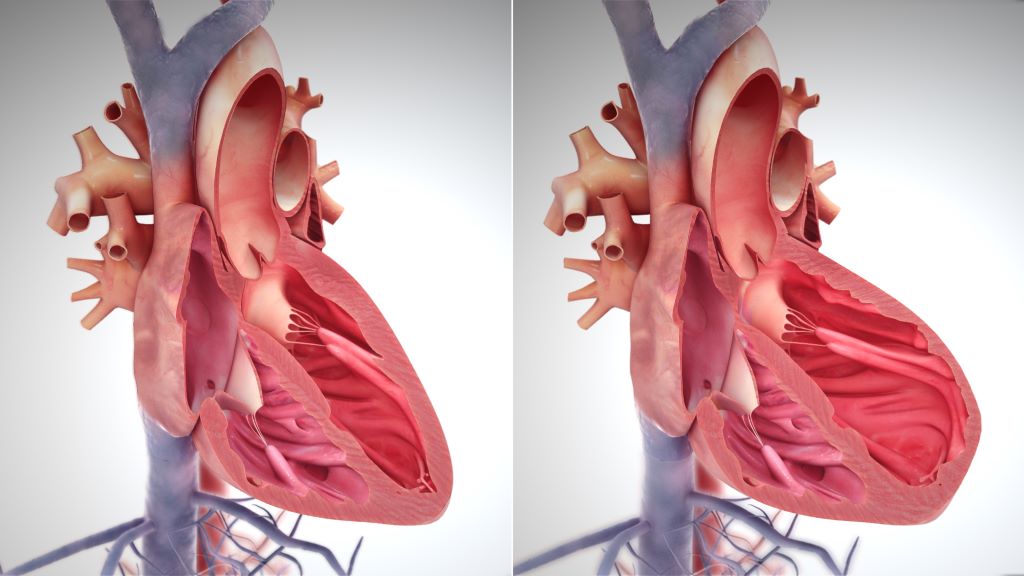
Right side heart failure. Credit: Scientific Animations CC4.0

Treatment with semaglutide or tirzepatide can reduce health risks for patients with heart failure by more than 40%. These finding come from a study by researchers at the Technical University of Munich (TUM). The medication can drastically reduce the risk of being hospitalised for heart failure or dying.

Semaglutide and related medications are widely used to treat diabetes and obesity. Their potential effects beyond weight loss are now being closely studied. Still, professional societies and regulatory authorities have urged caution. With regard to treating heart failure, cardiology societies have noted that the existing evidence base remains limited.

“Together with our colleagues at Harvard Medical School, we have created a solid evidence base for using these weight-loss medications in heart failure,” says Professor Heribert Schunkert, Director of the Department of Cardiovascular Diseases at the TUM University Hospital German Heart Center. “In patients with heart failure with preserved ejection fraction, both drugs have shown a clear protective effect that supports their use. Our analysis of around 100 000 patients provides a robust basis for reassessing an indication expansion and new indication approval in heart failure.“

The study focused on heart failure with preserved ejection fraction or HFpEF, in which the heart’s ability to pump remains intact but the stiffened heart muscle does not fill properly with blood. HFpEF affects more than 30 million people worldwide. To date, there are only a few effective treatment options for this form of the disease.

Large-scale database study provides solid evidence for use in heart failure

Published in JAMA, the study examined the effects of the drugs semaglutide and tirzepatidein patients with this specific form of heart failure. The researchers analysed three national US insurance claims databases. Their models first confirmed findings from earlier trials in patients with obesity or diabetes, then extended the analysis to populations excluded from clinical trials and to additional outcomes, such as hospitalisation for heart failure and mortality.

Treatment with both drugs led to a more than 40% reduction in the risk of hospitalisation for heart failure or death compared with another diabetes drug that had shown no effect on heart failure outcomes in previous studies.

“Currently, HFpEF can be treated with a few drugs only. At the same time, an increasing number of patients suffers from obesity and diabetes, which further worsens outcomes. In Germany, heart failure is the leading cause for hospitalizations and a major driver of health care expenditure. Our study shows that these drugs are highly effective, which expands treatment options and could prevent many hospital admissions,” says Dr Nils Krüger, resident physician at the TUM University Hospital German Heart Center and lead author of the study.

Data-driven approaches to drug approval

The study drew on patient populations nearly 20 times larger than those in traditional clinical trials. This allowed researchers to capture clinical practice and demonstrate that the benefits seen in pivotal trials also apply to broader patient groups. “The future belongs to such data‑driven approaches – alongside traditional trials, they can help ensure that findings from basic research feed into patient care more quickly,” explains Prof Schunkert.

From the researchers’ perspective, such analyses are also becoming increasingly relevant for Germany. The Health Data Utilization Act provides that anonymized health insurance data will in future be made systematically available for such research projects, while strictly protecting sensitive personal data. “We use these large data to investigate the safety and effectiveness of medications in clinical practice,” says Dr Krüger.

Source: Technical University Munich

Pocket Ultrasound Reduces Hospital Stays for Patients with Shortness of Breath

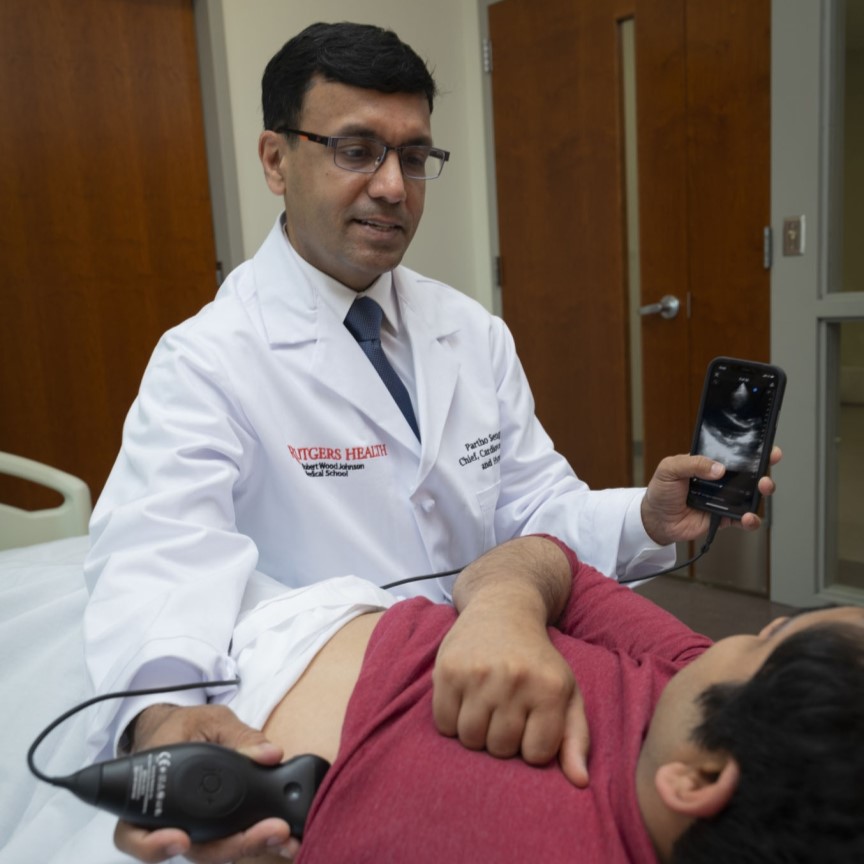
Credit: Rutgers Health/RWJBarnabas Health

When hospitalised patients struggle to breathe, doctors typically reach for their stethoscopes, but results from a clinical study in JAMA Network Open suggest they should diagnose the problem with portable ultrasounds instead.

The study, by Rutgers Universitty and RWJBarnabas Health, found initial exams with portable ultrasounds led to better diagnoses, shorter hospital stays and big cost savings. However, the findings revealed a need for additional training and workflow integration to help clinicians transition from traditional tools to this promising new technology.

“The study clearly shows that ultrasound is the superior diagnostic technology, even for long-time stethoscope users who get a few hours of ultrasound training,” said senior study author Partho Sengupta, Henry Rutgers professor and chief of cardiology at Rutgers Robert Wood Johnson Medical School (RWJMS), chief of cardiology at Robert Wood Johnson University Hospital (RWJUH) and member of the RWJBarnabas Health Medical Group.

The explanation here is simple. Ultrasound gives you more information, and more concrete information, about what’s going on

Partho Sengupta, Henry Rutgers professor

The study enrolled 208 patients admitted with shortness of breath to Robert Wood Johnson University Hospital in New Brunswick. About half of them underwent diagnosis via point-of-care ultrasound devices that attach to smartphones. The rest underwent diagnosis via existing standards of care. 

Initial diagnosis with ultrasound trimmed a patient’s average length of hospital stay from 11.9 days to 8.3 days. In all, initial diagnosis with ultrasound saved 246 bed-days and about $751 000 in direct costs across the cohort, while 30-day readmissions were similar between groups.

“The explanation here is simple. Ultrasound gives you more information, and more concrete information, about what’s going on,” Sengupta said.  “When clinicians can see fluid in the lungs, a failing heart or a stiff inferior vena cava in minutes, they can target therapy sooner or rule out a cardiopulmonary cause and look elsewhere.”

To keep things simple and encourage buy-in, scans focused on a handful of cardiac views and a six-zone lung sweep. The exam was designed to be quick and binary: signs of congestion or not, systolic function reduced or not.

The study provided several hours of ultrasound training to participating hospitalists (doctors who oversee and coordinate hospital patient care) so that each could perform and interpret the ultrasound exam in 10 to 15 minutes. 

Nevertheless, most hospitalists who underwent the training let sonographers perform the exams and cardiologists interpret them. Only 20% of patients received an ultrasound diagnosis from one of the hospitalists.

Sengupta said time pressure on rounds and a lack of incentives make it hard to add a 10-minute procedure, even if it changes care.

“This is consistent with what we observe in day-to-day clinical practice,” Sengupta said. “Although the ultrasound probe fits in your pocket and attaches to the back of a smartphone, its use in clinical settings remains inconsistent. This study overcame those barriers by leveraging a multidisciplinary framework.”

Kameswari Maganti, professor of cardiology at RWJMS and section chief for non-invasive cardiology at RWJUH, led the image interpretation with the sonography team that worked closely with the RWJUH hospitalist team, led by RWJMS faculty Catherine Chen and Payal Parikh, as well as the engineering and data science team, headed by Naveena Yanamala. 

“This coordinated team effort was key to developing and delivering a streamlined protocol that significantly reduced hospital stays and healthcare costs,” Sengupta said.

The researchers reported that ultrasound findings altered medical decisions in roughly a third of cases, including new diagnoses and changes in therapy. They also noted that longer-stay patients appeared to benefit the most, a hint that ultrasound-guided triage and treatment may pay particular dividends when cases are complex.

As with most single-center implementations, caveats apply. The model relied on trained sonographers and cardiology reads, which may not be available everywhere. Broader studies across multiple hospitals will be needed to confirm the cost and length-of-stay benefits, and to test strategies that make adoption stick.

Still, the argument for seeing more and guessing less is gaining ground. A bedside view of the heart and lungs, delivered early in admission, may help the right treatments arrive sooner.

Source: Rutgers University

Artificial Light Changes Menstrual Synchronisation with the Moon

There is no question that the moon has a significant influence on Earth. Its gravitational pull affects the planet and moves water masses in the daily rhythm of ebb and flow (tides) – this point is undisputed. More difficult to answer is the question of whether the same gravitational force also affects life on Earth, especially the human organism. And the discussion becomes even more complicated when it comes to how the fluctuating brightness of the Earth’s satellite between full and new moon affects humans.

A research team led by Julius-Maximilians-Universität Würzburg (JMU) has now presented new findings on this topic. Its conclusion: “We show that synchronisation with the moon has decreased significantly since the introduction of LEDs and the increasing use of smartphones and screens of all kinds,” explains Charlotte Förster. The Würzburg chronobiologist recently headed the Department of Neurobiology and Genetics; she now conducts research there as a senior professor.

Comparing Records from two Centuries

For their study, now published in the journal Science Advances, Förster and her team analysed long-term menstrual records of women from the past 50 years. “The results showed that the menstrual cycles of women whose records were made before the introduction of light-emitting diodes in 2010 and the widespread use of smartphones were significantly synchronised with the cycle of the full and new moon,” says Förster, describing the key finding. After 2010, the cycles were mostly only synchronized in January, when the gravitational forces between the moon, sun, and Earth are at their highest.

The scientists therefore hypothesize that humans have an internal moon clock that can be synchronised to the lunar cycle by natural night light and gravitational forces. However, the coupling of the moon clock to the lunar cycle in humans is impaired by increasing nighttime illumination from artificial light.

Other Studies Support the Moon Clock Hypothesis

“Moon clocks are widespread in marine organisms, but have not yet been proven in humans,” explains Charlotte Förster. In fact, many species synchronize their reproductive behaviour with a specific phase of the lunar cycle in order to increase reproductive success. The human menstrual cycle also has a similar duration to the lunar cycle, at approximately 29.5 days, and recent studies also suggest at least temporary synchronicity between the menstrual and lunar cycles.

The influence of the moon on the female cycle remains controversial. “It is completely unclear how such a lunar clock can be synchronised by the small cyclical changes in gravity between the Earth and the moon,” says Förster. The findings now published are consistent with results from sleep research and psychiatry.

For example, studies by two chronobiologists, Basel researcher Christian Cajochen and Washington biologist Horacio de la Iglesia, show that people sleep significantly less around the full and new moon than at other times. “Interestingly, this also applies to city dwellers, where nighttime city lighting is much brighter than the light of the full moon,” says the chronobiologist. And US psychiatrist Thomas Wehr has concluded that people with bipolar disorder are more likely to switch between mania and depression around the full and new moon.

Artificial Light Disrupts Synchronisation

Taken together, these findings suggest that humans can respond not only to moonlight, but also to the gravitational cycles caused by the moon, according to the Würzburg research team. “However, our study shows that increased exposure to artificial light severely impairs the synchrony between the menstrual cycle and the lunar cycle,” explains Charlotte Förster.

According to this, artificial light at night not only “outshines” the natural moonlight cycles, but also shortens the length of the menstrual cycle. However, since continuous synchronization is only possible if the length of the cycle is close to the lunar cycle, this shortening in turn reduces the likelihood of synchronization.

A High Proportion of Blue Light Increases the Effect

Anyone wondering why the introduction of LEDs and the increasing use of smartphones have this effect – after all, artificial lighting has been around for a long time, from gas lanterns to incandescent light bulbs – will find an explanation in Charlotte Förster’s words: “LEDs have much higher energy than gas lanterns and light bulbs. In addition, they have a high proportion of blue light, to which our photoreceptors in the eye are particularly sensitive.” That is why LED light has a much stronger effect on humans than previous light sources.

And even though Charlotte Förster and her team were able to clearly demonstrate that the synchronization of the female menstrual cycle with the moon is weakened by LEDs, smartphones, and screens of all kinds, there is one small caveat when interpreting these results: “Our findings show a correlation between these two phenomena. We were unable to establish a causal link,” says the scientist.

In principle, the study now published is basic research. Nevertheless, a potential benefit emerges from the evaluation of the data: “Since period length appears to be a possible age-dependent marker for female fertility, our findings could be relevant not only for human physiology and behaviour, but also for fertility and contraception,” says Charlotte Förster.

Source: University of Würzburg

New Research Calls for Global Action on Micro- and Nanoplastics in the Atmosphere

Photo by FLY:D on Unsplash

Scientists at The University of Manchester are calling for the creation of a global network of air monitoring stations to track the movement of airborne plastic pollution, which may be travelling further and faster around the planet than previously thought.

In a new review, published in the journal Current Pollution Reports, the researchers have examined the current scientific research on how tiny plastic fragments – called micro and nanoplastics – enter the air, where they come from, and the mechanisms that transport them across vast distances.

The study reveals significant gaps in knowledge and understanding of airborne plastic pollution, driven by inconsistent measurement techniques, limited data, oversimplified simulations, and gaps in understanding atmospheric cycling mechanisms.

One key uncertainty is the scale of plastic entering the atmosphere. Current estimates vary wildly – from less than 800 tonnes to nearly 9 million tonnes per year – making it difficult to assess the true global impact. It also remains unclear whether the dominant contributors are land-based, such as road traffic, or marine based, such as sea spray.

Such large uncertainties raise the concern that airborne plastics, which pose potential risks to human and environmental health, may have a more extensive presence and influence than previously captured by current monitoring and simulation systems.

“The scale of uncertainty around how much plastic is entering our atmosphere is alarming. Plastic pollution can have serious consequences for human health and ecosystems, so in order to assess the risks, we need to better understand how these particles behave in the atmosphere. If we want to protect people and the planet, we need better data, better models, and global coordination.”

Lead author Zhonghua Zheng, Co-Lead for Environmental Data Science & AI at Manchester Environmental Research Institute (MERI) and Lecturer in Data Science & Environmental Analytics at The University of Manchester

Each year, the world produces over 400 million tonnes of plastic, with a significant proportion ending up as waste. Over time, these plastics breaks down into microscopic particles called microplastics (less than 5mm) and nanoplastics (smaller than 1 micron), which are increasingly being found in the air we breath, oceans and soil. These particles can move thousands of miles within days and have even remote regions like polar ice zones, desserts and remote mountain peaks.

While our understanding of the problem has grown rapidly, limited real-world data, inconsistent sampling methods, and computer models that oversimplify how plastic behaves in the air, means that key questions remain unanswered.

To address these concerns, the authors are calling for future research efforts to focus on three critical areas:

  • Expanding and standardising global observation networks
  • Improving and refining atmospheric modelling
  • Harnessing the power of artificial intelligence (AI)

They say this integrated approach could transform how we understand and manage the plastic pollution crisis.

“By adopting this integrated approach, we can fundamentally transform how we understand and manage this emerging threat. AI can play a powerful role in analysing data and simulating plastic movement, it can help make sense of fragmented datasets, detect hidden patterns, and integrate information from multiple sources – but it needs good quality data to work with. All of these areas must work hand in hand to manage this emerging threat and shape effective global pollution strategies.”

Fei Jiang, PhD researcher at The University of Manchester

Source: University of Manchester

Inhaling Cannabis May Greatly Increase Risk of Lung Disease

Photo by Rodnae Productions on Pexels

For those looking to reduce their chances of developing lung disease, say experts at UC San Francisco, then it may be smart to avoid inhaling cannabis.

A new study in the Journal of General Internal Medicine found that inhaling marijuana every day is associated with a 44% increased chance of developing asthma. It also increases the odds of developing a common set of lung diseases known as chronic obstructive pulmonary disease (COPD) by 27%.

The risk of COPD, which includes emphysema and chronic bronchitis, may be understated. The disease takes decades to develop, and the researchers did not have detailed information on how long people in the study had been using cannabis.

Researchers defined “inhaling” as smoking, vaping, and so-called “dabbing,” which involves breathing in the vapors of concentrated marijuana. The study found an association between elevated risks to a person’s lungs and doing any of those things with cannabis even for those who had never smoked cigarettes.

For those who never smoked cigarettes, inhaling marijuana every day was linked to a 51% increased likelihood of developing asthma. The association with COPD was also elevated, but it was not statistically significant.

The study is the largest yet to examine the association between inhaling cannabis and risks to respiratory health among people who have not smoked cigarettes. Of the 380 000 adult participants, nearly 222 000 had never smoked tobacco. The data comes from the Behavioral Risk Factor Surveillance System, a national survey by the Centers for Disease Control and Prevention (CDC).

Experts say the broad legalization of marijuana across much of the country and the perception that it is healthier than tobacco has led people to minimize the risks.

“The message about smoking tobacco being bad for you has gotten out there, but for cannabis, it’s much less clear,” said Alison Rustagi, MD, PhD, assistant professor at UCSF and first author of the paper.

“If people are looking to reduce their likelihood of developing a chronic lung disease, they should not start using cannabis,” she said. “And if they already smoke cannabis, they should do it less often.”

Source: University of California – San Francisco

Untangling the Argument Around Prenatal Paracetamol and Autism

Photo by SHVETS production

On Monday 22 September, US President Donald Trump made a widely-publicised announcement that paracetamol (acetaminophen/Tylenol) during pregnancy was confirmed as causing autism spectrum disorder (ASD). The claim – backed by a single, rather dodgy study – brings to a head long-standing concerns about the apparent, well-documented increase in ASD rates. QuickNews dives into the controversy to find out if there is any validity to the claims.

President Trump said, “With Tylenol, don’t take it. Don’t take it. And if you can’t live, if your fever is so bad, you have to take one because there’s no alternative to that, sadly,” adding that other medicines such as aspirin were also “proven bad”.

The announcement had been expected for some time and doctors, scientists and medical organisations were quick to respond. The president of the American College of Obstetricians and Gynecologists stated that the paracetamol–ASD claim “is not backed by the full body of scientific evidence and dangerously simplifies the many and complex causes of neurologic challenges in children”.

At the very least, such an announcement will causing pregnant women to second-guess their taking one of the few over-the-counter pain medications widely regarded as safe during pregnancy. In 2017, the X account for Tylenol stated “We actually don’t recommend using any of our products while pregnant.” But a major pharmaceutical manufacturer would want to protect itself from liability as broadly as possible. The politically-charged nature of the announcement has also seen pregnant women making TikTok videos of themselves apparently taking paracetamol (often with no reason to).

It is generally accepted that ASD is caused by a combination of genetics and environmental factors. About 1000 genes are believed to be related to ASD. And there is a very long list of possible risk factors, with an uncertain risk contribution: “Non-genetic factors mediating ASD risk could include parental age, maternal nutritional and metabolic status, infection during pregnancy, prenatal stress, and exposure to certain toxins, heavy metals, or drugs.”

Study validity questioned

To date, paracetamol during pregnancy had generally been linked by a number of poorly powered studies to a wide variety of outcomes: in addition to ASD, asthma, lower performance intelligence quotient (IQ), shorter male infant anogenital distance (predicting poor male reproductive potential), neurodevelopmental problems (gross motor development, communication), attention-deficit/hyperactivity disorder, poorer attention and executive function, and behavioural problems in childhood. A study of nearly 2.5 million children, the largest and most comprehensive do date, found a slight link for paracetamol exposure and autism – which vanished when controlled for sibling exposure (representing shared environment).

Before President Trump’s announcement, news releases on a review making the link were published some weeks before – QuickNews even covered it. The review, published in Environmental Health, selected certain related studies using the ‘Navigation Guide’ methodology – a non-quantitative methodology for the narrow use of inferring health impacts from environmental toxins, but was nevertheless used for pharmaco-epidemiology and teratology. According to Nathan A. Schacthman, legal counsel for scientific matters, the study has serious conflicts of interest: for example, last author Andrea A. Baccarelli is an environmental epidemiologist who has been involved with a lawsuit against manufacturers and sellers of paracetamol. In that lawsuit, his claims were thrown out on the basis of not having sufficient validity, including cherry-picked data and over-generalisation to distinct disorders (such as grouping attention-deficit hyperactivity disorder [ADHD] and other neurodevelopmental disorders). In addition, the study also made misleading claimed about being funded by the National Institutes for Health (NIH). Finally, although this is not mentioned by Schacthman, Robert F. Kennedy Jr. is also an environmental lawyer.

What’s this about a ‘cure’ for autism?

The bombshell announcement by President Trump came with an another bombshell announcement that there was ‘cure’ for autism. The cure is allegedly leucovorin – which sounds very impressive to the non-medical public. But leucovorin is merely folinic acid, which is a vitamer of plain old folic acid – aka vitamin B9. Folinic acid is on the World Health Organization’s essential medicines list. On the same Monday, the US Food and Drug Administration approved it for the treatment of ASD in children – bypassing the normal review process.

Can a simple medication – or rather, supplement – really ‘cure’ ASD, an extremely complex neurological disorder? The NIH funds about $300 million in ASD research annually, nearly double the amount in 2011. If anything, this has echoes of President Trump’s touting of hydroxychloroquine as a now-discredited cure for COVID in the height of the pandemic. It might indeed be beneficial if a patient had a bout of malaria and COVID at the same time, but was rapidly discredited.

The largest controlled study for the use of folinic acid supplementation plus usual care found only a modest ~1 point increase in the Childhood Autism Rating Scale (CARS) compared to usual care plus placebo.

There are also concerns about potential conflicts of interest. One of the manufacturers of folinic acid, iHerb, had the celebrity heart doctor Mehmet Oz as an investor, and is now the administrator for the Centers for Medicare & Medicaid Services (CMS), served until recently. CMS has however denied that Dr Oz will receive any financial reward from this.

But why are autism rates on the rise?

There are a few good explanations about why the rate of autism diagnoses is increasing, which do not depend on the addition of some new environmental variable. The first and most obvious is that there is increased awareness of this, and more referrals for assessment. A second reason is that the guidelines for diagnosis have become a lot less stringent. The definition of autism diagnoses, unlike schizophrenia, has drifted over time, with more “normal” people being likely to be diagnosed. The DSM-III of 1980 had more stringent criteria, for example, an individual needed to exhibit “a pervasive lack of responsiveness to other people” [emphasis added].

Introduced from 1994, the DSM-IV had broader criteria, and folded Asperger disorder into ASD. With the introduction of the DSM-V, new diagnoses were curbed – for a time. This is because about 20% of the children diagnosed with ASD under DSM-IV-TR would not have received one under the DSM-V. The DSM-V relaxed the criteria for language delay, co-occurrence, and IQ, making it easier for borderline cases to qualify for a diagnosis.

Another underappreciated element is that of social contagion. If parents know a family with a child with ASD, they may be more likely to seek a diagnosis. One study from California showed that ASD diagnoses were more likely the more other ASD diagnoses under one kilometre away.

Back to square one

Considering the weakness of the cited studies, the difficulty of explaining ASD, the underlying social phenomenon of shifting diagnostic thresholds and increased awareness, it seems as though these announcements are mostly without substance. In amidst the headline-grabbing news, the NIH quietly announced the launch of a $50 million initiative into the causes of ASD.

According to the news release, the NIH will fund 13 projects “that draw on genomic, epigenomic, metabolomic, proteomic, clinical, behavioral and autism services data. These projects will integrate, aggregate and analyze existing data resources, generate targeted new data and validate findings through independent replication hubs.”

With this in mind, it really doesn’t look like paracetamol is the singular, mysterious controllable risk factor for ASD rates that President Trump and Robert F. Kennedy Jr have made it out to be. Maybe paracetamol use simply reflects infection, or some other related factor.