Author: ModernMedia

Researchers Are Now One Step Closer to Developing a Universal Influenza Vaccine

The new vaccine, tested in primates against the 1918 flu virus, would be a “one and done” shot

Photo by Mika Baumeister on Unsplash

New research led by Oregon Health & Science University reveals a promising approach to developing a universal influenza vaccine – one that also confers lifetime immunity against an evolving virus. The study, published in Nature Communications, tested an OHSU-developed vaccine platform against the virus considered most likely to trigger the next pandemic.

Researchers reported the vaccine generated a robust immune response in nonhuman primates that were exposed to the avian H5N1 influenza virus. But the vaccine wasn’t based on the contemporary H5N1 virus; instead, the primates were inoculated against the influenza virus of 1918 that killed millions of people worldwide.

“It’s exciting because in most cases, this kind of basic science research advances the science very gradually; in 20 years, it might become something,” said senior author Jonah Sacha, PhD, professor and chief of the Division of Pathobiology at OHSU’s Oregon National Primate Research Center. “This could actually become a vaccine in five years or less.”

Researchers reported that six of 11 nonhuman primates inoculated against the 1918 flu virus survived exposure to one of the deadliest viruses in the world today, H5N1. In contrast, a control group of six unvaccinated primates exposed to the H5N1 virus succumbed to the disease.

Sacha said he believes the platform “absolutely” could be useful against other mutating viruses, including SARS-CoV-2.

“It’s a very viable approach,” he said. “For viruses of pandemic potential, it’s critical to have something like this. We set out to test influenza, but we don’t know what’s going to come next.”

A senior co-author from the University of Pittsburgh concurred.

“Should a deadly virus such as H5N1 infect a human and ignite a pandemic, we need to quickly validate and deploy a new vaccine,” said co-corresponding author Douglas Reed, Ph.D., associate professor of immunology at the University of Pittsburgh Center for Vaccine Research.

Finding a stationary target

This approach harnesses a vaccine platform previously developed by scientists at OHSU to fight HIV and tuberculosis, and in fact is already being used in a clinical trial against HIV.

The method involves inserting small pieces of target pathogens into the common herpes virus cytomegalovirus, or CMV, which infects most people in their lifetimes and typically produces mild or no symptoms. The virus acts as a vector specifically designed to induce an immune response from the body’s own T cells.

This approach differs from common vaccines – including the existing flu vaccines – which are designed to induce an antibody response that targets the most recent evolution of the virus, distinguished by the arrangement of proteins covering the exterior surface.

“The problem with influenza is that it’s not just one virus,” Sacha said. “Like the SARS-CoV-2 virus, it’s always evolving the next variant and we’re always left to chase where the virus was, not where it’s going to be.”

The spike proteins on the virus exterior surface evolve to elude antibodies. In the case of flu, vaccines are updated regularly using a best estimate of the next evolution of the virus. Sometimes it’s accurate, sometimes less so.

In contrast, a specific type of T cell in the lungs, known as effector memory T cell, targets the internal structural proteins of the virus, rather than its continually mutating outer envelope. This internal structure doesn’t change much over time – presenting a stationary target for T cells to search out and destroy any cells infected by an old or newly evolved influenza virus.

Success with a century-old template

To test their T cell theory, researchers designed a CMV-based vaccine using the 1918 influenza virus as a template. In a highly secure biosafety level 3 laboratory at the University of Pittsburgh, they exposed the vaccinated nonhuman primates to small particle aerosols containing the avian H5N1 influenza virus – an especially severe virus that is currently circulating among dairy cows in the US.

Remarkably, six of the 11 vaccinated primates survived the exposure, despite the century-long period of virus evolution.

“It worked because the interior protein of the virus was so well preserved,” Sacha said. “So much so, that even after almost 100 years of evolution, the virus can’t change those critically important parts of itself.”

The study raises the potential for developing a protective vaccine against H5N1 in people.

“Inhalation of aerosolised H5N1 influenza virus causes a cascade of events that can trigger respiratory failure,” said co-senior author Simon Barratt-Boyes, PhD, professor of infectious diseases, microbiology and immunology at Pitt. “The immunity induced by the vaccine was sufficient to limit virus infection and lung damage, protecting the monkeys from this very serious infection.”

By synthesising more up-to-date virus templates, the new study suggests CMV vaccines may be able to generate an effective, long-lasting immune response against a wide suite of new variants.

“I think it means within five to 10 years, a one-and-done shot for influenza is realistic,” Sacha said.

Source: Oregon Health & Science University

SAHPRA Counters ‘Falsehoods’ Circulating over Its Draft B-BBEE Policy

Photo by Tingey Injury Law Firm on Unsplash

In a press release, the South African Health Products Regulatory Authority (SAHPRA) has hit back over what it terms “unfounded fallacies and misrepresentation” that has been “churned out by some media organisations without verification” over its draft B-BBEE Policy.

SAHPRA states that this policy “is proposed in order to comply with requirements of the Broad-Based Black Economic Empowerment Act, 53 of 2003, in particular Section 10(1)(a), which demands of all state entities to enact policy that can encourage inclusive economic participation.”

It states that the draft B-BBEE policy does not set “racial requirements” for the registration of medicines, as the first falsehood suggests, stating that it is not reflected in any of the documents.

The second falsehood is that “SAHPRA will use the B-BBEE to assess medicine registration applications and thus affect access to medicines”, which it says is a deliberate misrepresentation. The product registration processes “would continue to solely rely on the safety, quality, efficacy, and performance of the health products.”

The third falsehood is that the draft policy is aligned with NHI, seeking to exclude certain persons from state procurement. SAHPRA says that the policy is a move develop sector codes and/or criteria to comply with the B-BBEE Act, as has been done in other sectors of the economy.

SAHPRA states that the fourth and final falsehood is that the policy will deny participation by pharmaceutical SMEs as they may be unable to get B-BBEE certificates. The agency contends that compliance affidavits will be an acceptable alternative, and that in any case, the B-BBEE level of a business does not affect the medicines registration process – which will remain the case even after policy implementation.

Cystic Fibrosis Drug Improves Outcomes in Severe COVID Pneumonia

Photo by engin akyurt on Unsplash

In a new clinical trial, a drug commonly used to treat cystic fibrosis, dornase alfa, improved outcomes for patients with severe COVID pneumonia. The results, published in the journal eLife, also suggest that the drug could be used to treat other respiratory infections.

The study, found that the drug reduced hyper-inflammation in COVID pneumonia patients, which occurs when the body’s immune system reacts too strongly and can lead to tissue damage and death.

The next step will be to conduct larger clinical trials, with the ultimate goal of approving dornase alfa for wider use. As well as COVID, dornase alfa has the potential to treat other respiratory infections such as those caused by influenza or bacterial pneumonia, and even other lung diseases such as pulmonary fibrosis.

Since the beginning of the COVID pandemic, the proportion of SARS-CoV-2 infections that result in death has fallen, partly due to increased immunity from prior infection or vaccination, as well as improved treatments such as the steroid dexamethasone, which helps to tackle the hyper-inflammation that was a key factor in many COVID deaths. But this treatment isn’t suitable for some patients and is not always successful in severe cases.

In this study, researchers from UCL, UCLH and the Francis Crick Institute set out to assess whether dornase alfa could be used to improve outcomes for patients admitted to hospital with severe COVID pneumonia who required oxygen.

Out of a total of 39 participants, 30 were randomised to receive twice-daily treatment with nebulised dornase alfa in addition to best available care (BAC) which included dexamethasone, with nine patients randomised to BAC only.

Patients treated with dornase alfa had a 33% reduction in systemic inflammation on top of the reduction provided by dexamethasone, as measured by C-reactive protein (CRP) levels in the blood over seven days or until they were discharged from hospital.

Dr Venizelos Papayannopoulos, senior author of the study from the Francis Crick Institute, said: “Dexamethasone has been highly successful in treating patients with severe COVID-19 pneumonia and is now standard care in the UK. But it isn’t suitable for some patients, such as those with diabetes, those that do not require oxygen, and in very severe cases it may not be enough. Dornase alfa can be used to treat a wider variety of patients and gets right to the heart of the inflammatory response. Based on these results, we think it will be a valuable tool for tackling severe COVID-19 illness.”

Patients treated with dornase alfa were also more likely to need less oxygen and be discharged sooner compared to patients who received BAC. These additional benefits could help to free up beds and resources in the UK’s busy hospitals.

The next step will be to conduct larger clinical trials to ensure dornase alfa is safe and effective for treating severe COVID pneumonia. There is also potential for the drug to be trialled for other respiratory infections and conditions, such as acute exacerbations of pulmonary fibrosis, where inflammation of already scarred lung tissue affects how well oxygen can be absorbed.

Source: University College London

Probe Clears Most Gauteng Care Organisations

Handful of organisations remain under investigation

Photo by Scott Graham on Unsplash

By Daniel SteynJoseph Bracken and Raymond Joseph

Most of the non-profit organisations that were flagged in a forensic audit by the Gauteng Department of Social Development have been cleared of all findings and have started to receive subsidies from the department again.

The forensic audit, announced by Gauteng Premier Panyaza Lesufi during his 2023 State of the Province Address, was a key intervention by former social development MEC Mbali Hlophe and aimed to uncover fraud and corruption in the non-profit sector. The department pays about R1.9-billion in subsidies to more than 700 non-profit organisations every year.

In a list circulated to affected organisations on Wednesday by the department, which GroundUp has seen, 34 of the more than 50 organisations that had audit findings against them, have been cleared after they rejected the findings. The organisations, which include drug rehabs and women’s shelters, have had to endure three months without any funding since the start of the new financial year on 1 April.

Read the list

According to the list, six organisations are yet to receive the final outcome of their submissions. These include the training academies Daracorp and Beauty Hub, which collectively received R114-million in funding in 2022 and 2023. There are still unanswered questions about why these two organisations received so much in subsidies while budgets were cut for other organisations that care for people with HIV and older persons.

Social work organisation Kitso Lesedi Community Development, which has rejected the findings against them, is also still awaiting the final outcome of their submission.

The department has decided to “uphold” the decision not to fund two organisations, according to the list. These are Life Healthcare’s non-profit drug rehab in Randfontein and Tembisa Society for the Care and Welfare of the Aged. GroundUp understands that Tembisa is taking steps to appeal the decision.

Also, eight organisations are part of a Hawks investigation, according to the list. These include several foodbanks and Godisang Development, which has historically played a key role in the department’s Welfare to Work programme.

The department has not responded to GroundUp’s questions on the Hawks’ investigation, and the Hawks told us that it will be difficult to answer questions without a case number.

According to the department, 14 officials have been suspended since the forensic audit was launched, but their identities, the allegations against them, and the status of their disciplinary processes remain unknown.

Total Organisations on List51
Organisations cleared34
Hawks Investigation8
Organisations yet to receive outcome6
Organisations that did not make submissions
(But one of these organisations, Carroll Shaw,
claims it made a submission)
2
Organisations that remain unfunded due to
investigation (decision upheld after submissions)
2

The forensic audit caused catastrophic delays in this year’s funding adjudication process, forcing hundreds of organisations to survive the first two months of the 2024/25 financial year without any funding. Some organisations retrenched staff, scaled down services or even shut down.

The department decided to centralise the process of allocating funds and appointed external adjudication panels. The department claimed this was because of findings by the Auditor-General, but the Auditor-General told GroundUp no such findings or recommendations were made.

The centralisation delayed the allocation of funds and the whole process ultimately collapsed, with the department deciding to simply extend contracts with organisations already signed in 2023.

The department did not respond to GroundUp’s questions.

Organisations vindicated

Organisations that have been cleared and have received findings told GroundUp that they feel vindicated and relieved.

Derick Matthews, CEO of Freedom Recovery Centre, which provides in-patient drug rehabilitation, told GroundUp that they have started admitting patients again and ordering supplies.

“Crazy days, but super excited,” Matthews said.

Mpule Lenyehelo, director of A Re Ageng, which runs women’s shelters and gender-based violence care centers, says it will take time to repair the relationship with the department.

“I am very angry and disappointed with the department,” Lenyehlo said. “Their allegations were unfounded and could not be substantiated as we have always received positive feedback from their monitoring and evaluation team. What the department seems to conveniently forget is that the organisation is providing essential services to the most vulnerable people in the community as well as 114 staff members in terms of job creation.”

One organisation caught in the cross fire was MES. The organisation never appeared on the list of organisations under investigation but nevertheless received a letter saying that there was a finding against them and that they would not be receiving funding. The finding was that they had not spent their full subsidies.

Leona Pienaar, CEO of MES, said she was confused because there was no money left over. She wrote to the department asking for clarity but received no reply. She then wrote to FSG Africa, the forensic auditing firm that was appointed to conduct the probe. FSG Africa told Pienaar that they made no findings against MES. After meeting with the department, MES finally had their funding for 2024/25 reinstated.

Lisa Vetten, chair of the Gauteng Care Crisis Committee, which has led litigation against the department and organised pro-bono legal assistance for affected organisations, says that she appreciates recent efforts by the new MEC Faith Mazibuko and some officials in the department to resolve the issues faced by the nonprofit sector.

“Corruption deprives people of services and has no place in the social care sector. But serious questions should be asked about the value of this audit, which not only came at great cost to organisations and their beneficiaries, but also, up to this point, hasn’t yielded much of substance,” said Vetten.

Heparin Could be a New Cobra Venom Antidote

Cheap, available drug could help reduce impact of snakebites worldwide

Photo by Nivedh P on Unsplash

More than 100 000 people die from snake bites every year. Cobra antivenom is expensive and doesn’t treat the necrosis of flesh caused by the bite, which can lead to amputations. Now, Scientists at the University of Sydney and Liverpool School of Tropical Medicine have made a remarkable discovery: a commonly used blood thinner, heparin, can be repurposed as an inexpensive antidote for cobra venom.

“Our discovery could drastically reduce the terrible injuries from necrosis caused by cobra bites – and it might also slow the venom, which could improve survival rates,” said Professor Greg Neely, a corresponding author of the study from the University of Sydney.

Using CRISPR gene-editing technology to identify ways to block cobra venom, the team, which consisted of scientists based in Australia, Canada, Costa Rica and the UK, successfully repurposed heparin and related drugs and showed they can stop the necrosis caused by cobra bites.

The research is published on the front cover of Science Translational Medicine.

PhD student and lead author, Tian Du, also from the University of Sydney, said: “Heparin is inexpensive, ubiquitous and a World Health Organization-listed Essential Medicine. After successful human trials, it could be rolled out relatively quickly to become a cheap, safe and effective drug for treating cobra bites.”

The team used CRISPR to find the human genes that cobra venom needs to cause necrosis that kills the flesh around the bite. One of the required venom targets are enzymes needed to produce the related molecules heparan and heparin, which many human and animal cells produce. Heparan is on the cell surface and heparin is released during an immune response. Their similar structure means the venom can bind to both. The team used this knowledge to make an antidote that can stop necrosis in human cells and mice.

Unlike current antivenoms for cobra bites, which are 19th century technologies, the heparinoid drugs act as a ‘decoy’ antidote. By flooding the bite site with ‘decoy’ heparin sulfate or related heparinoid molecules, the antidote can bind to and neutralise the toxins within the venom that cause tissue damage.

Joint corresponding author, Professor Nicholas Casewell, Head of the Centre for Snakebite Research & Interventions at Liverpool School of Tropical Medicine, said: “Snakebites remain the deadliest of the neglected tropical diseases, with its burden landing overwhelmingly on rural communities in low- and middle-income countries.

“Our findings are exciting because current antivenoms are largely ineffective against severe local envenoming, which involves painful progressive swelling, blistering and/or tissue necrosis around the bite site. This can lead to loss of limb function, amputation and lifelong disability.”

Snakebites kill up to 138 000 people a year, with 400 000 more experiencing long-term consequences of the bite. While the number affected by cobras is unclear, in some parts of India and Africa, cobra species account for most snakebite incidents.

Working in the Dr John and Anne Chong Laboratory for Functional Genomics at the Charles Perkins Centre, Professor Neely’s team takes a systematic approach to finding drugs to treat deadly or painful venoms. It does this using CRISPR to identify the genetic targets used by a venom or toxin inside humans and other mammals. It then uses this knowledge to design ways to block this interaction and ideally protect people from the deadly actions of these venoms.

This approach was used to identify an antidote to box jellyfish venom by the team in 2019.

Source: University of Sydney

Angry Doctors Write to Minister About Unpaid Road Accident Fund Bills

“We implore you to intervene,” medical experts say to Barbara Creecy

By Tania Broughton

A group of more than 70 experts from all branches of medicine say they are all owed money for professional services from the Road Accident Fund – some for as long as seven years.

They have now written to Minister of Transport Barbara Creecy asking for her urgent intervention in what they say is a “disastrous situation”.

“We implore you to intervene and install a leadership in the RAF which is able to carry out its proper functioning with integrity and honesty … we are hopeless and tired,” they said in a letter to the minister.

The letter to Minister Creecy, dated 12 July, was a follow-up to one written in early June to the previous minister Sindisiwe Chikunga. There was no response to that.

Since then, dozens more specialists, including surgeons, psychologists and occupational therapists – who are collectively owed more than R150-million – have added their signatures to the document.

But the fund says it owes them nothing.

“The same people rehash this topic every time there’s a new Minister of Transport,” RAF head of corporate communications, McIntosh Polela said.

He said the experts had not been appointed by the fund but “allegedly by its former panel of attorneys”. The Service Level Agreement with the attorneys specifically stated that medical experts could only be engaged upon written authorisation of the fund. And the fund would not be liable for any fees charged without this authorisation.

He said the vast majority of the experts’ unpaid claims had not been authorised by the fund. This was due to the negligence of former panel attorneys.

In the letter to Creecy, clinical psychologist Monique Kok said the expert appointments were legal.

And, she said, their reports were being used in courts to assist in settling matters.

The fund, she said, was “finding new and cunning ways of explaining and nullifying the expert’s authority to have performed such assessment”.

She said each assessment had been done after some form of written instruction, either from the RAF directly or their panel of attorneys.

“The experts have never acted on their own accord and gone out and somehow magically found the current claimants and performed assessments that cost time and resources without instruction from the RAF or their attorneys.”

Kok said the fund’s refusal to pay their invoices had had a dire impact with some going out of business and losing their homes.

In the follow-up letter to Creecy, psychologist Chris Sampson said the experts wanted a meeting with the minister.

“We have diligently serviced the public for many years by assisting the RAF and the courts in determining appropriate compensation for claimants who were injured in serious motor vehicle accidents.

“It would appear that the organisation (and its leader’s) treatment of its own appointed experts gives us the impression that it has been allowed to become a law unto itself and from court cases it further appears that it refuses to pay claimants, experts or abide by court orders.”

Sampson said the experts conducted “painstaking investigations” and did extensive reports which were being used by the fund and yet were waiting seven years later to be paid.

They had paid out of their own pockets the significant costs of translators, transcribers, equipment and testing material.

“We believe that the state and specifically, your ministry, has a duty to intervene in what has become a well-documented failure, where this statutory body has not carried out its stipulated functions due to either, incompetence, poor leadership, arrogance and/or a fundamental evasion of responsibility and fiduciary duties,” he said.

Speaking to GroundUp, Sampson said he personally was owed about R3-million. Payments had become sporadic since about 2017, and after the Covid pandemic, had completely dried up.

“They come up with a multitude of excuses. They claim we didn’t deliver the reports on time. They repeatedly lose invoices. They say the payments are not loaded on their system , and so there must be something wrong but they don’t tell us what’s wrong. They also accuse us of charging above the tariff when they set the tariff.”

Sampson said litigation, for most, was not an option. “We don’t have deep pockets. And because we have not been paid there is nothing rattling in them.

“But we cannot throw away seven years of hard slog. We have nothing left to lose and we just hope the new minister has the zeal and energy to finally deal with the problems at the fund.”

Creecy’s office has acknowledged receipt of the two letters but attempts by GroundUp to get comment from were unsuccessful.

Republished from GroundUp under a Creative Commons Attribution-NoDerivatives 4.0 International License.

Read the original article

“We Were the First Ones to Do It”: Innovative SA Study Takes TB Testing to People’s Homes

Tuberculosis bacteria. Credit: CDC

By Tiyese Jeranji

Most tuberculosis (TB) tests still require a trip to the clinic. Now, new technology has made it possible to test people at home. This could be a big deal for South Africa, where much TB goes undiagnosed. We unpack the findings and implications of a recent study into such TB home testing.

One of the biggest challenges in combatting TB in South Africa is that many people who fall ill with the disease are diagnosed late, or not diagnosed at all.

The World Health Organization (WHO) estimates that 280 000 people fell ill with TB in the country in 2022. Of these, roughly 66 000 were not diagnosed, and accordingly also not treated. Apart from the damage to the health of the people who are not diagnosed and treated, this also has implications for the further spread of TB since untreated TB is often infectious TB – people become non-infectious within a few weeks of starting TB treatment.

Typically, people who fall ill with TB only get diagnosed once they turn up at clinics with TB symptoms – this is called passive case-finding. In recent years, there has been a growing recognition that passive case-finding alone is not good enough if we want to diagnose more people more quickly. As a result, many people in South Africa considered to be at high risk of TB are now offered TB tests whether or not they have symptoms – an approach called targeted universal testing. Screening for TB using new mobile X-ray technology has also been piloted in the country.

Now, in the latest such active case-finding innovation, researchers have been offering people TB tests in the comfort of their own homes.

Dr Andrew Medina-Marino, a senior investigator at the Desmond Tutu Health Foundation (DTHF), tells Spotlight no one in the world was testing for TB at home until they recently started doing so at the DTHF’s new research site in the Eastern Cape.

The testing is done using a molecular testing device, roughly the size of a two litre Coke bottle, called the GeneXpert Edge. The GeneXpert Edge is a portable version of the GeneXpert machines that have been used in labs across the country to diagnose TB for over a decade.

The GeneXpert Edge is a standardised testing device that detects TB DNA in sputum. (Photo: Nasief Manie/Spotlight)

One challenge with the device was that it needed to be plugged into a power outlet in a wall and not all homes in the area have power. “So what we did is, we hooked up a car-like battery to the device and we were able to take it into people’s homes,” says Medina-Marino.

‘Acceptable and feasible’

A study lead by Medina-Marino, and recently published in Open Forum Infectious Diseases, set out to determine the acceptability and feasibility of in-home testing of household contacts of people with TB.

The study was conducted among 84 households in Duncan Village, a township in the Buffalo City Metropolitan Municipality in the Eastern Cape. The Metro had an estimated TB incidence of 876 cases per 100 000 population in 2019, according to the National Institute for Communicable Diseases. This number is much higher than the latest WHO estimate of 468  per 100 000 for South Africa as a whole.

From July 2018 to May 2019, people diagnosed with pulmonary TB were recruited from six government health clinics in the area. They were asked for permission to visit their homes to screen their household contacts for TB. Household contacts were verbally assessed for signs or symptoms of TB, including night sweats, weight loss, persistent cough and a fever.

Households where people had any signs or symptoms of TB were randomised to either be referred to a local clinic for TB testing or tested immediately in their home. Of the eighty-four randomised households, 51 household contacts were offered in-home testing. Everyone accepted the offer for in-home testing.

For the test with the GeneXpert Edge, Medina-Marino says household contacts had to produce a sputum sample. About 47% (24/51) were able to produce sputum. This was then mixed with a reagent containing the required components for a polymerase chain reaction test. This solution was then loaded into a disposable cartridge/test module and inserted into the Edge device. Results were available in about 90 minutes. Anyone who received a positive test result in their home were immediately referred to a clinic for TB treatment.

Regarding the 47 household contacts referred for testing at the clinic, only 15% (7 people) presented for clinic-based TB evaluation, 6 were tested, and 4 out of 6 returned for their results.

Ultimately, the study found that in-home testing of household contacts for TB was acceptable and feasible.

“It’s feasible. If you compare the rate of uptake of treatment versus the rate of uptake for testing, it looks like it’s performing much better when you do home based testing versus referral for testing at the clinic,” says Medina-Marino.

Risk of stigma?

Similar to when HIV home-based testing studies were carried out, Medina-Marino says prior to their study, community members expressed concerns about stigmatising houses that were visited. “[A] lot of people were saying: ‘If you go to people’s houses, you’re going to stigmatise the household.’”

But what they actually found was that people didn’t feel stigmatised. Household contacts of people with TB felt that coming to the house to test people brought a sense of security in the home. He adds that it was easy for people to believe the results because everything was done in front of them.

In instances where people didn’t have TB, Medina-Marino says household contacts were comforted that they didn’t have to be scared of the person tested. In instances where people did have TB, he says the attitude of household contacts was supportive to start treatment.

How the test compares to other tests

Apart from testing for TB, the GeneXpert Edge can also detect whether someone’s TB is resistant to rifampicin. This is one of the medicines in the standard four-drug combination used to treat TB.

Unlike the latest lab-base GeneXpert tests, the GeneXpert Edge does not detect resistance to any TB medicines other than rifampacin. “It is hard to fit the probes needed to detect other forms of resistance into the cartridge,” says study co-author Professor Grant Theron, head of the Clinical Mycobacteriology and Epidemiology Research group at Stellenbosch University’s Molecular Biology and Human Genetics Unit.

Theron notes that the sensitivity and specificity of GeneXpert Edge is similar to that of lab-based GeneXpert machines if the tests are done on specimens from the same type of patient and the same test cartridge. (High sensitivity means the likelihood of false negatives is low wile high specificity means the likelihood of false positives is low.)

Performance may however differ because of differences between people who test at home and people who test at the clinic. Theron explains that in their study they tested people who did not yet feel sick enough to go to get tested at the clinic. People who are sicker, and who are accordingly more likely to go to the clinic, are likely to have more pathogen in their sputum samples and be easier to diagnose.

‘A breakthrough for TB’

Home-based tests is a significant breakthrough in TB because of its crucial role in detecting cases early and enabling timely tracing and testing of household contacts, says Dr Ntokozo Mzimela, a lecturer in integrated pathology in the Faculty of Health Sciences at Nelson Mandela University.

She tells Spotlight it also offers several advantages over clinic-based tests. “They are highly accessible, facilitate mass testing, reduce the risk of disease transmission, and address patient reluctance by allowing testing in the comfort and privacy of one’s home.”

Mzimela adds the GeneXpert Edge and portable X-ray screening serve complementary roles in TB diagnosis. “While the X-ray reveals lung abnormalities, the Edge confirms the presence of TB bacteria. Both tools are essential and should be used in conjunction to provide comprehensive diagnostic insights and ensure accurate and timely treatment for patients,” she says.

Professor Keertan Dheda agrees that home-based testing could link up neatly with portable X-ray, but adds it is still too early to determine where home-based TB testing will fit into the country’s TB testing programme. Dheda heads up the Division of Pulmonology at Groote Schuur Hospital and the University of Cape Town.

“We don’t yet know whether testing everyone is the right approach or whether reflex testing based on chest x-ray abnormalities is the right approach,” Dheda says. “Now that feasibility has been established, it means that more studies can be undertaken, and operational research can be commenced.”

Further studies are already underway, Medina-Marino tells Spotlight.

He says the study in Duncan Village found that about 60% of household contacts who had TB symptoms could not cough up a sputum sample. His team therefore decided to combine in-home testing with an oral swab.

“So in the study that we’re doing now in households, we found an additional 12 people who cannot produce sputum but on their swab test, they showed a positive swab result. Tongue swabs increase yield of case finding among those unable to produce sputum,” he says.

Republished from Spotlight under a Creative Commons licence.

Read the original article

Autoantibodies Cause a Lifelong Vulnerability to Viruses

Creative artwork featuring colourised 3D prints of influenza virus (surface glycoprotein hemagglutinin is blue and neuraminidase is orange; the viral membrane is a darker orange). Note: Not to scale. Credit: NIAID

A new study shows that about one in 50 people develop autoantibodies against type 1 interferons, mostly later in life, rendering them more susceptible to viral diseases like COVID-19. The study, published in the Journal of Experimental Medicine, is based on an analysis of a large collection of historical blood samples.

Virus infections trigger the cells of the immune system to release type 1 interferons. These proteins act as early messengers that warn uninfected cells and tissues that a virus is spreading. This allows cells to prepare themselves so that they are ready to fight the virus when it reaches them.

In individuals with a compromised type 1 interferon system, severe viral infections can occur because the body cannot mount a full defense. Recent research has shown that about 5 to 15% of people who are in hospital with severe COVID or influenza have a deficiency in their type 1 interferon response. This is because their blood contains autoantibodies – antibodies that target a person’s own structures – that bind type 1 interferons and stop the messenger from functioning.

Unique samples for blood analysis

“With our study, we wanted to find out what causes the immune systems of some people to turn against themselves and to also understand the consequences of having autoantibodies against type 1 interferons,” says study head Benjamin Hale, professor at the Institute of Medical Virology of the University of Zurich (UZH).

His research team utilized a very large collection of frozen blood samples from the Swiss HIV Cohort Study, originally donated for research on HIV infection. They analysed the samples of around 2000 adults who had donated blood samples twice a year for several decades. “This study was only possible because of this unique biobank of stored longitudinal blood samples and well-curated clinical data,” says Hale. The fact that the donors were people living with HIV had no relevance for the results, because in this cohort the virus was suppressed by treatment.

Ageing population is vulnerable

First, the UZH team analysed the blood samples for the presence of autoantibodies against type 1 interferons to find out who had developed the autoantibodies, when this occurred, and how long these autoantibodies lasted in the blood.

The analysis revealed that around 2% of individuals produced autoantibodies against type 1 interferons in their lifetime and that this typically occurred between the ages of 60 to 65. This confirms prior studies that reported that the prevalence of autoantibodies against type 1 interferons might increase with age.

Next, by studying clinical data, researchers at the Department of Infectious Diseases and Hospital Epidemiology of the University Hospital Zurich (USZ) were also able to understand which factors contributed to the development of autoantibodies against type 1 interferons. The individuals who developed them appeared to be prone to also producing antibodies against other proteins formed by their own bodies. This so-called loss of self-tolerance can occur in some people as they age. “These individuals may produce antibodies against their own type 1 interferons because they are both prone to making autoantibodies and are exposed to high levels of type 1 interferons, for example because their immune system produces interferons against other infections at the time,” supposes Hale.

Lifelong consequences of autoantibodies

Importantly, the study found that once developed, these autoantibodies remained detectable in the blood of individuals for the rest of their lives. People with autoantibodies against type 1 interferons, even when they had developed them as far back as in 2008, were more likely to suffer from severe COVID in 2020. “These autoantibodies have consequences for individuals decades later, leading to a compromised type 1 interferon system and reduced immunity against viruses,” says Hale.

Understanding these risk factors might lead to future diagnostic tests that can identify older individuals who are more prone to developing this deficiency, and therefore help with measures to prevent autoantibodies ever developing. Identifying individuals with autoantibodies against type 1 interferons could also help to prioritize these people for vaccines or antivirals to prevent severe viral infections.

Source: University of Zurich

In New Study, Supplements Slow Late-stage Age-related Macular Degeneration

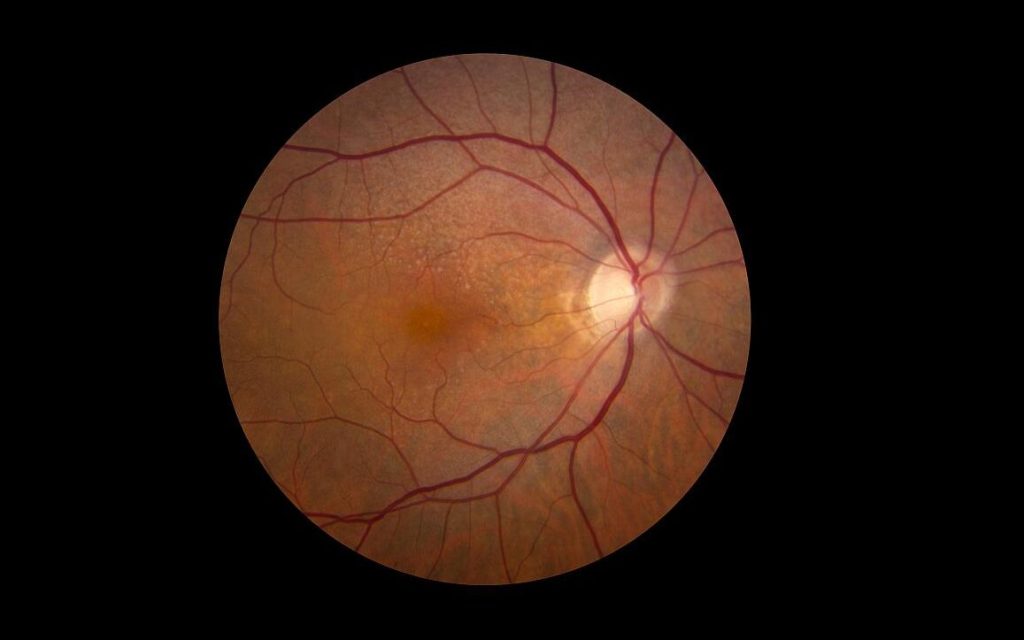
Retina showing reticular pseudodrusen. Although they can infrequently appear in individuals with no other apparent pathology, their highest rates of occurrence are in association with age-related macular degeneration (AMD), for which they hold clinical significance by being highly correlated with end-stage disease sub-types, choroidal neovascularisation and geographic atrophy. Credit: National Eye Institute

In a new analysis of data, researchers at the National Institutes of Health (NIH) have found that taking a daily supplement containing antioxidant vitamins and minerals slows progression of late-stage dry age-related macular degeneration (AMD), potentially helping people with late-stage disease preserve their central vision.

Age-related macular degeneration affects the macula, the part of the retina that provides central vision.

Researchers reviewed the original retinal scans of participants in the Age-Related Eye Diseases Studies (AREDS and AREDS2) and found that, for people with late-stage dry AMD, taking the antioxidant supplement slowed expansion of geographic atrophy regions towards the central foveal region of the retina. The study was published in the journal Ophthalmology.

“We’ve known for a long time that AREDS2 supplements help slow the progression from intermediate to late AMD. Our analysis shows that taking AREDS2 supplements can also slow disease progression in people with late dry AMD,” said Tiarnan Keenan, MD, PhD, of NIH’s National Eye Institute (NEI) and lead author of the study. “These findings support the continued use of AREDS2 supplements by people with late dry AMD.”

In their new analysis, the researchers reviewed the original retinal scans of participants in the AREDS (total 318 participants, 392 eyes) and AREDS2 (total 891 participants, 1210 eyes) trials who developed dry AMD, calculating the position and expansion rate of their regions of geographic atrophy. For those people who developed geographic atrophy in their central vision, the supplements had little benefit. But for the majority who developed geographic atrophy far from the fovea, the supplements slowed the rate of expansion towards the fovea by approximately 55% over an average of three years.

In early and intermediate AMD, the light-sensing retina at the back of the eye develops small yellow deposits of fatty proteins called drusen. When the disease progresses to the late stage, people can develop leaky blood vessels (“wet” AMD) or can lose regions of light-sensitive cells in the retina (“dry” AMD). The geographic atrophy in these regions slowly expands over time, causing people to progressively lose their central vision.

The original AREDS trial found that a supplement formula containing antioxidants (vitamin C, E, and beta-carotene), along with zinc and copper, could slow progression of intermediate to late-stage AMD. The subsequent AREDS2 trial found that substituting the antioxidants lutein and zeaxanthin for beta-carotene improved the efficacy of the supplement formula and eliminated certain risks. At the time, neither trial detected any further benefit once participants had developed late-stage disease.

However, that original analysis did not account for a phenomenon in the dry form of late AMD called “foveal sparing.”  While all regions of the retina are sensitive to light, the region that gives us the highest acuity central vision is called the fovea. Many people with dry AMD first develop geographic atrophy outside this foveal region, and they only lose their central vision when the geographic atrophy regions expand into the foveal area.

“Our high acuity central vision is essential for tasks like reading and driving. Given that there are few therapeutic options for people with late-stage dry AMD to retain or restore their vision, antioxidant supplementation is a simple step that may slow central vision loss, even for those with late disease,” Keenan said. “We plan to confirm these findings in a dedicated clinical trial in the near future.”

Learn more about AREDS and AREDS2

Source: NIH/National Eye Institute

Researchers Create a Hydrogel Implant to Treat Endometriosis

Photo by Andrea Piacquadio on Pexels

Researchers from ETH Zurich and Empa have developed a hydrogel implant that can help prevent endometriosis. This innovation, which is described in Advanced Materials, also acts as a contraceptive.

A hydrogel is a gel made of a type of plastic that can bind water. Hydrogels have a variety of use cases, including contact lenses, delivering doses of medication within the body, moisturisers, water storage in soil, cleaning polluted water and as gelling and thickening agents. Now, the researchers have developed the first hydrogel implant designed for use in fallopian tubes. This innovation performs two functions: one is to act as a contraceptive, the other is to prevent the recipient from developing endometriosis in the first place or to halt the spread if they do.

Around four years ago, Inge Herrmann made a new addition to her research group at the Department of Mechanical and Process Engineering at ETH and Empa. The new member was a senior physician specialising in gynaecology who was keen to pursue clinically-inspired research. This kind of interdisciplinary collaboration was an experiment for the whole team. Their initial goal had been to turn a hydrogel into a new kind of contraceptive for women. However, after the research team began talking to the gynaecologist, they realised that implanting a hydrogel to occlude the fallopian tubes could also help prevent endometriosis.

Preventing endometriosis by occluding the fallopian tubes

Around 10 percent of women suffer from endometriosis. However, it is still unclear exactly what causes this condition. The assumption is that during menstruation, blood flows back along the fallopian tubes and into the abdominal cavity. This blood contains cells from the uterine lining (endometrium), which settle in the abdominal cavity and as a result can cause inflammation, pain and the formation of scar tissue.

The researchers found a way to create a hydrogel implant capable of successfully occluding the fallopian tubes and thus preventing retrograde menstruation. “We discovered that the implant had to be made of an extremely soft gel – similar in consistency to a jelly baby – that does not impact native tissue and is not treated and rejected as a foreign body,” explains Alexandre Anthis, lead author of the study.

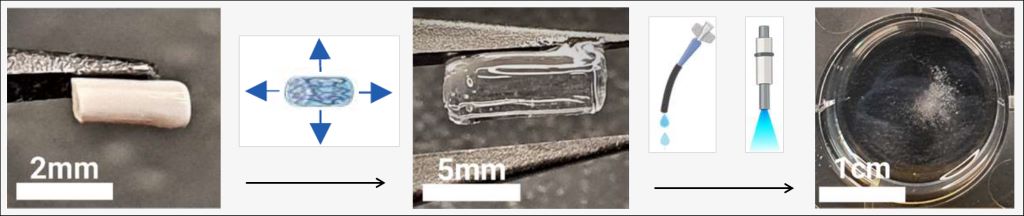
The hydrogel implant swells to around twice its original size when it comes into contact with liquid (arrow 1 left to centre) and can be easily and painlessly destroyed using UV light or a special solution (arrow 2 centre to right). (Graphic: adapted from Anthis AHC et al., Advanced Materials, 2024)

An advantage of hydrogels is that they swell when brought into contact with liquid. As a result, this new implant starts off at approximately 2mm in length. But once implanted in the fallopian tubes as part of a non-surgical procedure using a hysteroscope – an instrument for inspecting the uterine cavity – the implant swells to more than double its original size. The hydrogel then acts as a barrier to both sperm and blood. “Our hydrogel implant can be easily and quickly destroyed, either with UV light or a special solution, so that recipients don’t have to have an invasive and risky operation should they decide to reverse the procedure,” Herrmann says.

Source: ETH Zurich