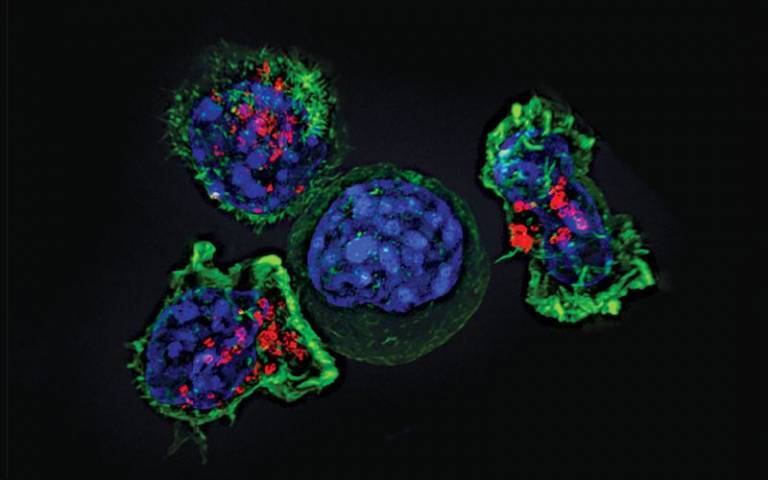
Killer T cells surround a cancer cell. Credit: Alex Ritter, Jennifer Lippincott Schwartz and Gillian Griffiths, National Institutes of Health (CC BY 2.0).
Molecules called reactive oxygen species, which include so-called ‘free radicals’, have long been viewed as damaging byproducts of our body’s metabolism – a reason why antioxidant supplements have been considered as a potential way of reducing cancer risk.
We’ve found a new way by which cancers shut down the immune system. When we block this process, tumours that don’t respond to some immunotherapies start responding to treatmentRahul Roychoudhuri
Now, scientists have discovered that certain immune cells depend on these very molecules to activate and destroy cancer cells, and that tumours exploit this dependency by releasing natural antioxidants to shut down the immune attack.
The findings, published today in Science, could help improve the effectiveness of cancer immunotherapies.
Our immune system keeps us healthy by hunting down and destroying harmful material, including invading bacteria and viruses, but also cancer cells. It does so by deploying a number of different types of immune cells, including specialised cells known as T cells. These T cells hunt down and destroy tumour cells, but T cells need small amounts of reactive oxygen species to activate and switch on their killing ability.
A team at the University of Cambridge, UK, and Oregon Health & Science University, USA, analysed the fluid surrounding cells within tumours grown in mice and found that cancers chemically ‘smother’ T cells, stopping their activation and preventing them from destroying cancer cells. Tumours do this by releasing large amounts of a protein that is a natural antioxidant, Peroxiredoxin 1 (PRDX1), which mops up reactive oxygen species and deprives T cells of the activating signals they need to perform cancer killing.
Next, the team used CRISPR gene-editing technology to create mouse cancer cells that could no longer make the antioxidant protein. They found that removing the capacity for the cancer cells to produce the antioxidant promoted immune-cell activity and limited tumour growth.
Finally, the team looked for the same mechanism in people. They analysed published data on the proteins released by human cancer cell lines, examined gene activity across thousands of human tumours, and isolated the fluid surrounding tumours removed from patients. All three approaches pointed the same way: human cancers also release PRDX1 into their surroundings, where it can strip away the reactive oxygen species that T cells depend on.
Dr Xan Wesolowski from the Department of Pathology at the University of Cambridge, one of the lead authors, said: “We tend to think of reactive oxygen species purely as damaging byproducts of metabolism. But we are increasingly understanding they have important functions within cells, and T cells need them to activate. Our study develops this picture, revealing that tumours can exploit this very dependency to evade elimination.”
The treatment of cancer is increasingly moving towards leveraging the immune system to eradicate the disease. However, while immunotherapies can be incredibly effective, they are only effective in some patients. Removing the ability of cancer cells to produce PRDX1 enhanced the cancer’s response to immunotherapy.
Professor Rahul Roychoudhuri, also from Cambridge’s Department of Pathology, said: “We’ve found a new way by which cancers shut down the immune system. When we block this process, tumours that don’t respond to some immunotherapies start responding to treatment. That tells us this is a pathway worth targeting therapeutically, and there are several ways we might be able to achieve this.”
Dr Robert Eil from the School of Medicine at Oregon Health & Science University said: “Our study suggests a possible way to boost T cell immunotherapies. Rather than using antioxidants, it could be that prooxidants can kickstart the T cells into action against tumour cells.”
The findings also carry broader implications. Several large randomised clinical trials have found that antioxidant supplements fail to reduce cancer risk, and in some cases worsen outcomes. The discovery that T cells depend on reactive oxygen species to fight tumours may help to explain why: antioxidants could inadvertently blunt the immune system’s ability to attack cancer. However, the team stresses that as its findings are in preclinical laboratory models, and people living with cancer should not change their treatment or diet without medical advice.
The research was largely funded by the Medical Research Council, European Research Council, Wellcome and the National Institutes of Health/National Cancer Institute.
Reference
Wesolowski, AJ, et al. Tumor-derived antioxidants suppress immunity by depriving T cells of reactive oxygen species. Science; 3 Sept 2026; DOI: 10.1126/science.adz8203
By Dianne Boyd – Chief Operating Officer Frail Care at Allmed
Photo by Kampus Production on Pexels
There is a quiet shift happening in homes across South Africa. As the population ages and hospitals grapple with packed wards and immense strain, families are looking closer to home for answers. More seniors are choosing to stay right where they are, surrounded by their own memories, familiar furniture, and beloved pets, rather than moving into frail care or assisted living facilities. At the same time, because hospitals are discharging patients much faster following surgery, strokes, or cancer treatments, expert recovery support right in the living room has never been more important.
For most people, the thought of healing or growing older in a familiar space brings an unmatched sense of comfort and dignity. But for someone navigating the fog of dementia or the daily weight of a chronic illness, holding onto familiar routines is life changing. It reduces anxiety, keeps confusion at bay, and gives patients a deep-seated feeling of control that a clinical institution simply cannot match.
The hidden trap of doing it alone
As the need for home care grows, it becomes easy to see why some families turn to online platforms or informal word-of-mouth recommendations to find help. On the surface, hiring a caregiver directly feels simpler, quicker, and perhaps cheaper. But it often masks a maze of hidden responsibilities and risks that families are rarely prepared for.
Society tends to think of home care as simple companionship or a helping hand with daily tasks. In reality, caring for a vulnerable loved one safely requires a tremendous amount of unseen work. When individuals hire someone independently, they suddenly step into the role of an employer. Managing contracts, payroll, UIF contributions, and leave becomes an immediate reality. Worse still, what happens when a caregiver wakes up sick or resigns unexpectedly? Without a reliable agency behind the household, finding cover at 4am in the morning falls entirely on the family.
Even more concerning are the clinical visibility gaps in such an arrangement. Without professional oversight, missing the subtle early warning signs of trouble is remarkably easy; a tiny pressure sore starting to form, the early stages of dehydration, a missed medication, or a silent infection.
Why professional care changes everything
Treating home-based care as a true healthcare partnership rather than a domestic arrangement completely changes the experience for a family. Reputable, registered providers shoulder the heavy burden of care, so relatives do not have to carry it alone.
Instead of crossing fingers and hoping for the best, a professional approach brings real clinical governance into the home. Experienced clinical facilitators step in to assess patient needs, create tailored daily care plans, and check in regularly. They ensure that caregivers are thoughtfully matched to the individual, such as pairing someone with specialised dementia training with a patient who needs calm, skilled behavioural guidance.
Partnering with an established provider also puts a safety net around the entire household. Professional agencies cover personnel with medical liability insurance while handling all statutory requirements like workmen’s compensation, keeping families legally and financially protected from unforeseen accidents.
Finding peace of mind and financial relief
One of the greatest barriers families face with home care can be the financial weight. This is where working with a registered provider can make a profound difference. Because established agencies hold an official practice number, families can often submit claims directly to their medical aid schemes, subject to scheme rules and a specialist’s clinical motivation. This can be a powerful way to ease the financial strain of long-term support.
Bringing care into the home should bring peace of mind rather than sleepless nights. Leaning on a professional team for the vetting, the legalities, and the clinical oversight allows relatives to step back from being managers and return to being sons, daughters, or partners. That leaves space to focus on what truly matters: sharing meaningful, comfortable moments with a loved one, right where they belong.
As we age, our episodic memory gets weaker. Sensory details of life’s moments – such as where we parked our car in a busy parking lot – become harder to recall, though scientists don’t yet know why. This is true for almost all of us, but for some people, including those who are developing Alzheimer’s disease, the scale of memory loss can be devastating.
New research by UC Berkeley neuroscientist Omer Sharon and colleagues, directed by former Berkeley sleep researcher Matthew Walker, may help explain why. The researchers identified a link between changes in brain wave patterns during non-REM sleep, poorer episodic memory formation and buildup of the protein tau, a known marker for development of Alzheimer’s disease, in the brain’s frontal cortex.
“This is the first time we’ve shown this relationship between tau and how it messes with memory consolidation by attenuating traveling slow waves that originate in the frontal cortex,” said Sharon, a postdoctoral researcher at UC Berkeley’s Center for Human Sleep Science. The findings were published in the journal Nature Neuroscience on Sept 11.
Many of us are familiar with the rapid eye movement phases of sleep, when slumbering people’s eyes flicker back and forth under their lids and most dreaming occurs. But non-REM sleep – a deeper form of sleep with little, if any, dreaming – is crucial for brain health.
During non-REM sleep, neurons shut down in slow, synchronised waves that move across the brain, beginning in the frontal cortex.
This coordinated shutdown has been observed only during deep sleep, and may be one reason why we sleep.
Omer Sharon, UC Berkeley Postdoctoral Researcher
“Each slow wave reflects an enormous population of neurons switching off and back on together,” Sharon said. “Our study shows that for memory, it’s critical that these events cascade in sequence across large parts of the brain. This coordinated shutdown has been observed only during deep sleep, and may be one reason why we sleep.”
As we age, tau proteins build up in many people’s brains. For them, these waves become irregular and less synchronised and travel shorter distances. This slow-wave breakdown is in turn linked to dwindling memory consolidation, cognitive decline and the development of Alzheimer’s disease.
To study this correlation, the researchers used electroencephalograms (EEGs) to measure brain waves during sleep. They compared results from cognitively healthy participants in their early 20s to those from their mid-60s to mid-70s. In the younger adults, clusters of slow brain waves traveled roughly the length of a handspan across the scalp during non-REM sleep. In the older adults, the waves traveled shorter distances and were more solitary.
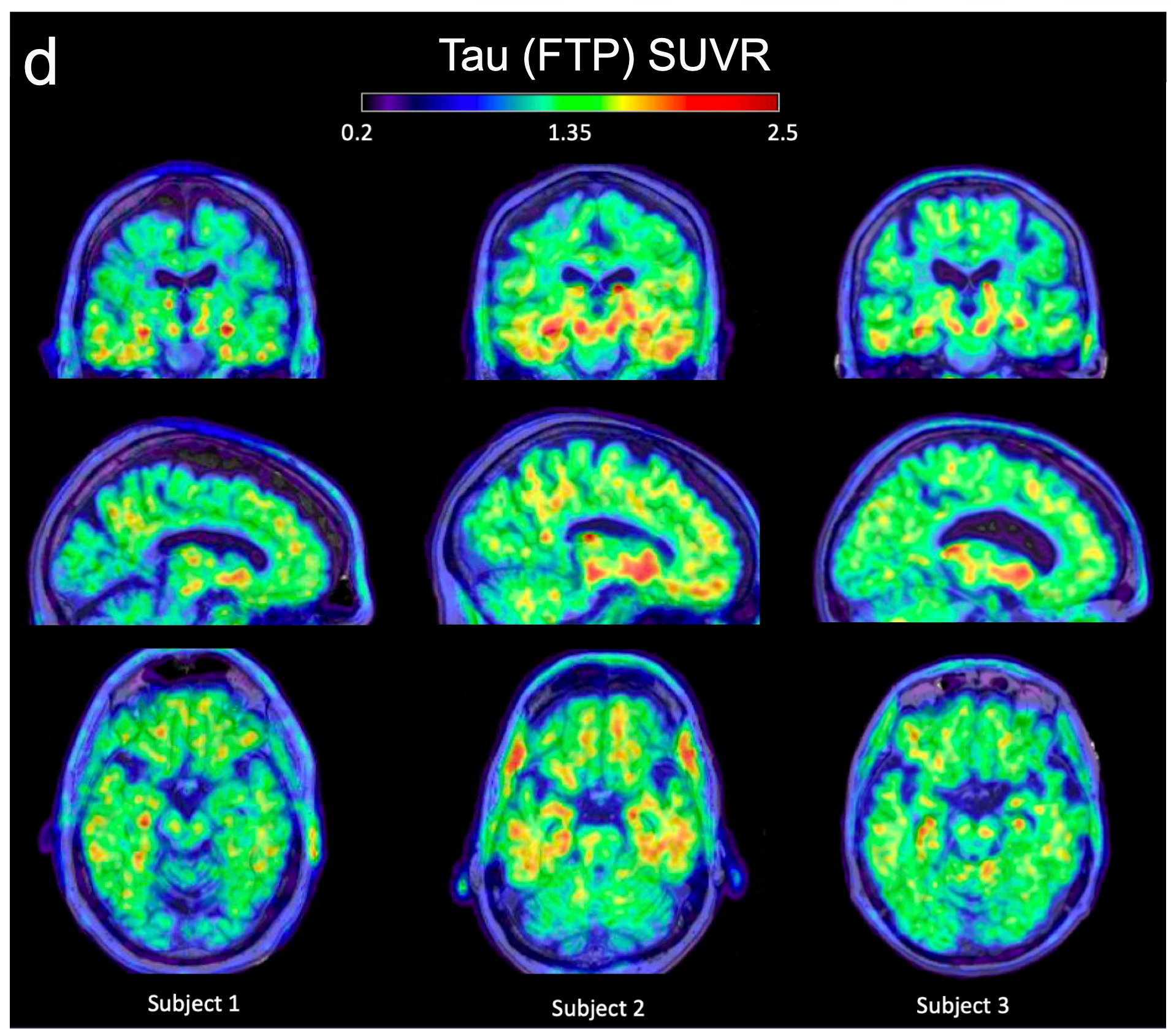
Using positron emission tomography (PET) scans conducted with Dr. William Jagust, a professor emeritus in public health and neuroscience at Berkeley, the researchers traced radioactive markers injected into the bloodstream to measure brain function. The scans confirmed that the buildup of tau in the frontal cortex of older participants correlated with those long wave breakdowns.
In healthy older study participants, PET scans revealed the protein tau building up over time in their frontal cortices. This buildup correlates with shortened, isolated slow brain waves during sleep and with memory loss.Courtesy of Omer Sharon/UC Berkeley Department of Psychology
This interference with slow brain waves shows up even before patients develop Alzheimer’s disease. “These people did not have Alzheimer’s,” Sharon said. “They had tau in their brains, but with subclinical impacts. Their memory decline was within the normal range for their age.” Indeed, Alzheimer’s symptoms appear along a spectrum at first, Sharon said, with the amount of tau in a person’s brain correlating to cognitive performance.
The researchers also measured corresponding changes in memory consolidation by giving participants word associations at night, then testing how well they remembered them the next day. People with more solitary, shorter-reaching slow waves – what the researchers called “lonely waves” – remembered less material.
After several years, a subset of participants was retested. Those whose frontal tau had increased over the years had worsened slow-wave coordination and lessened overnight memory retention. While this does not prove that frontal cortex tau buildup causes memory loss, it indicates that there is a connection between the protein and episodic memory loss that is related in some way to brain wave changes.
PET scans are expensive and require specialised equipment, making them hard to arrange, so the researchers worked with neurologist Yo-El Ju at Washington University in St. Louis to measure tau levels in the spinal fluid of a different group of elderly people. Although this test didn’t reveal tau buildup specifically in the frontal cortex, a similar pattern emerged: The spinal fluid from participants whose brains had more solitary slow waves during sleep contained higher ratios of tau to another Alzheimer’s disease linked protein, amyloid.
Sharon found it convincing to see these different methods arrive at converging results. “It’s collected in a totally different place and in a different cohort, so I think that adds to the strength of the evidence,” he said.
Altogether, the multiple measures led the researchers to connect tau buildup, a known form of Alzheimer’s pathology, with a specific kind of brain function. “This longitudinal correlation suggests that Alzheimer’s disease pathology is associated with a disruption of this main sleep feature,” Sharon said.
And though it remains unclear to researchers why memory loss is correlated with aging, the findings suggest that the connection is more complex than previously thought. “It’s not just about age,” Sharon said. “It’s how much pathology you have in frontal areas where global waves originate.” It’s also about sleep quality – a hard-to-define concept for which slow waves seem to be proxies.
“We can see tau and lonely waves rising together over time,” Sharon said. “What we cannot yet say is which leads – and that question will shape how we design interventions.”
A sore that refuses to heal. A mole that starts changing. A small patch of skin that repeatedly bleeds or crusts. These changes can be easy to dismiss, but skin cancer is a potentially serious and life-threatening disease, and delaying assessment can allow even a small lesion to become considerably more difficult to treat.
In September, South Africa observes Albinism Awareness Month, raising awareness of the health and social challenges faced by people living with albinism. Albinism is a genetic condition impacting the production of melanin, the pigment responsible for colour in the skin, hair, and eyes. Melanin also provides some natural protection against ultraviolet radiation, meaning people with albinism, who produce very little or no melanin, face a particularly high risk of sun damage and skin cancer.
Professor Chrysis Sofianos, a triple board-certified plastic surgeon and Academic Head of the Division of Plastic and Reconstructive Surgery at the University of the Witwatersrand, says this makes ongoing sun protection and vigilance especially important.
“Albinism Awareness Month rightly draws attention to the greater vulnerability of people with albinism when it comes to sun exposure and skin cancer. The important message is to protect your skin and know what is normal for you so that you can have any concerning changes assessed early.”
Early recognition can, however, be more challenging in people with albinism. Some skin cancers may lack the pigmentation people commonly associate with suspicious lesions, making it especially important not to rely on colour alone when deciding whether a change needs medical attention.
He says the month can also challenge the broader assumption that skin cancer is exclusively a disease of fairer skin. While darker skin and higher levels of melanin offer greater natural protection, this does not mean immunity. Certain forms of skin cancer can further occur in areas not typically exposed to the sun, including the soles of the feet, palms, and underneath the nails.
“Everyone should be familiar with their skin and pay attention when something changes, including in less obvious areas. If something doesn’t seem right, have it checked rather than dismissing it or trying to diagnose it yourself.”
Nearly 27 000 skin cancer cases recorded
Demonstrating just how common skin cancers are, South Africa’s National Cancer Registry recorded 26,967 cases across three major skin cancer categories in 2024. These included basal cell carcinoma (BCC), squamous cell carcinoma (SCC) of the skin, and melanoma.
Additionally, the NCR ranked BCC as the second most common cancer among men and third among women, while SCC of the skin ranked third among men and fourth among women.
“The numbers matter because skin cancer can still be perceived as relatively uncommon or as something that will always be obvious when it develops. In reality, many lesions begin as something very small and seemingly insignificant. People may watch a lesion for months because it’s small, painless, or seems like an ordinary mole, sore, or sign of ageing. But the absence of pain doesn’t mean there’s nothing to worry about,” explains Sofianos.
Warning signs can include a new growth, a sore that repeatedly fails to heal, a lesion that bleeds or crusts, and changes in the size, shape or colour of an existing mole.
When removing the cancer is only part of the treatment
Skin cancers affecting the nose, eyelids, ears, scalp and other areas of the face may require the removal of enough tissue to treat the disease. Depending on the size and position of the resulting defect, reconstructive surgery may then be required to preserve function and appearance.
“People often think of plastic surgery purely in aesthetic terms, but reconstruction after cancer treatment is a significant part of the speciality. When cancer is removed from somewhere such as the nose, eyelid, or ear, we are not only considering how the wound closes. We have to think about restoring form and function, and achieving the best possible outcome for that patient.”
For people with albinism, their ongoing vulnerability to UV damage can compound their treatment burden. Some patients may develop more than one cancerous or precancerous lesion over time, and treatment is not always a once-off event. Careful follow-up, continued skin protection, and early assessment of new lesions remain important even after one cancer has been successfully treated.
As a plastic and reconstructive surgeon, Sofianos regularly manages patients requiring reconstruction after cancer removal, and he notes that the consequences of delayed diagnosis are clearly visible. Larger lesions may require wider removal and reconstruction, with greater potential for visible scarring or prolonged wound healing. This is another reason why fear of a scar should never deter someone from seeking assessment early.
“The earlier we can identify and appropriately treat a cancer, the better our chance of limiting how much tissue needs to be removed and how extensive the reconstruction may need to be.”
Albinism Awareness Month should therefore reinforce the special protection required by people with albinism while reminding all South Africans of the importance of identifying any suspicious skin changes early.
“For people with albinism, careful sun protection and regular attention to the skin are critically important. More broadly, if a lesion is changing, bleeding, repeatedly crusting, or failing to heal, don’t ignore it. Have it assessed.”
First-line treatment with trastuzumab deruxtecan (T-DXd) significantly improved progression-free survival compared with pembrolizumab plus platinum-based chemotherapy in patients with advanced or metastatic HER2-mutant non-small cell lung cancer (NSCLC), according to primary results from the phase 3 DESTINY-Lung04 trial presented at the International Association for the Study of Lung Cancer (IASLC) 2026 World Conference on Lung Cancer (WCLC).
DESTINY-Lung04 is the first global phase 3 trial to demonstrate a statistically significant and clinically meaningful improvement in progression-free survival with first-line single-agent T-DXd compared with standard-of-care pembrolizumab plus platinum doublet chemotherapy in this patient population. Median progression-free survival by blinded independent central review was 14.3 months with T-DXd versus 8.3 months with pembrolizumab plus chemotherapy, representing a 6-month improvement (HR 0.63; 95% CI, 0.50–0.79; P<0.0001).
HER2-mutant NSCLC is an aggressive form of lung cancer associated with a poor prognosis. According to the study investigators, many patients do not respond to first-line standard-of-care immunotherapy plus chemotherapy, underscoring the need for effective HER2-directed treatment options.
The global, open-label, randomised phase 3 DESTINY-Lung04 trial enrolled treatment-naïve patients with unresectable locally advanced or metastatic NSCLC harbouring HER2 exon 19 or exon 20 mutations. A total of 454 patients were randomised 1:1 to receive T-DXd 5.4mg/kg intravenously every three weeks or pembrolizumab plus platinum chemotherapy and pemetrexed. The primary endpoint was progression-free survival by blinded independent central review, with secondary endpoints including overall survival, objective response rate, progression-free survival 2, duration of response and safety.
T-DXd also produced a higher objective response rate than pembrolizumab plus chemotherapy. The objective response rate was 70.0% with T-DXd compared with 44.5% with pembrolizumab plus chemotherapy. Median duration of response was 13.4 months and 9.7 months, respectively.
“These results demonstrate substantial improvements in progression-free survival and response with first-line trastuzumab deruxtecan for patients with advanced or metastatic HER2-mutant NSCLC,” said Julia Rotow, MD, of the Dana-Farber Cancer Institute, Boston, Mass. “The findings support T-DXd as a new first-line treatment option for this patient population, for whom more effective HER2-directed approaches are needed.”
Median overall survival was 29.3 months with T-DXd and 33.1 months with pembrolizumab plus chemotherapy (HR 1.15; 95% CI, 0.88–1.52). Investigators noted that subsequent therapies were imbalanced between the treatment groups, primarily involving HER2-directed and immunotherapy-based treatments, which confounded interpretation of the overall survival results.
The safety profile of T-DXd was generally consistent with its known profile. Adjudicated drug-related interstitial lung disease (ILD)/pneumonitis occurred in 20.8% of patients treated with T-DXd, with most events classified as grade 1 or 2 (78.7%), compared with 2.3% of patients receiving pembrolizumab plus chemotherapy. The study’s safety analysis also reported grade 3 or higher drug-related adverse events in 34.1% of patients receiving T-DXd and 33.6% receiving pembrolizumab plus chemotherapy.
The investigators concluded that T-DXd improved progression-free survival, response rates and durability of response compared with pembrolizumab plus chemotherapy, supporting T-DXd as a new first-line option for patients with advanced or metastatic HER2-mutant NSCLC.
Cystic fibrosis promotes chronic bacterial infections by impairing the protective barrier of the airways. Scientists at the University of Geneva (UNIGE) have discovered that this dysfunction is caused by the abnormal activation of a protein, connexin 43, which disrupts cellular organisation and compromises the integrity of the airways.
The team has not only shed light on this molecular mechanism using 3D models of cells derived from human lungs, but has also succeeded in correcting the defect using molecules already undergoing clinical trials in dermatology and oncology. Preventing pathogenic bacteria from attaching to the airways of people with cystic fibrosis could therefore help limit serious complications. These findings are published in the journal Communications Biology.
Despite significant therapeutic advances, chronic pulmonary infections persist in many patients with cystic fibrosis. Eradicating respiratory pathogens therefore remains a major challenge. In previous work, the team of UNIGE professor Marc Chanson, discovered that this vulnerability to infection stemmed from abnormal adhesion sites on the surface of respiratory cells – true “anchor points” to which bacteria attach firmly. “But to develop treatments, we first needed to understand the underlying mechanisms,” explains Marc Chanson.
A protein at the origin of bacterial anchor points
Connexin 43 is a protein known for its role in communication between cells, a process essential to the functioning of tissues and organs. In the airways, it is normally active only when cells need to regenerate. In people with cystic fibrosis, however, it remains abnormally active, triggering a cascade of dysfunctions.
“Using 3D models of cells derived from human lungs, we discovered that prolonged connexin 43 activity alters cell communication, disrupts cell orientation, and progressively disorganises tissue integrity,” says Mehdi Badaoui, senior lecturer in the Department of Cell Physiology and Metabolism at the UNIGE Faculty of Medicine and first author of the study. “It then promotes the formation of the anchor points to which the bacteria responsible for respiratory infections attach.”
Restoring the integrity of the airways
By blocking connexin 43 activity in their 3D models, the research team was able to restore cell orientation, re-establish the spatial organisation of cells, and prevent the formation of anchor points. “Mimetic peptides – short synthetic molecules already used to promote wound healing – drastically reduced the ability of bacteria to colonise respiratory cells,” explains Mehdi Badaoui.
“These findings demonstrate that the regulation of cell communication by connexin 43 is a fundamental element in maintaining pulmonary defence,” concludes Marc Chanson. “By targeting the deep mechanisms underlying airway dysfunction, our results could offer an additional treatment approach.”
Cryptococcal meningitis is a serious fungal infection causing inflammation of the lining of the brain. (Photo: Pixabay)
By Elri Voigt for Spotlight
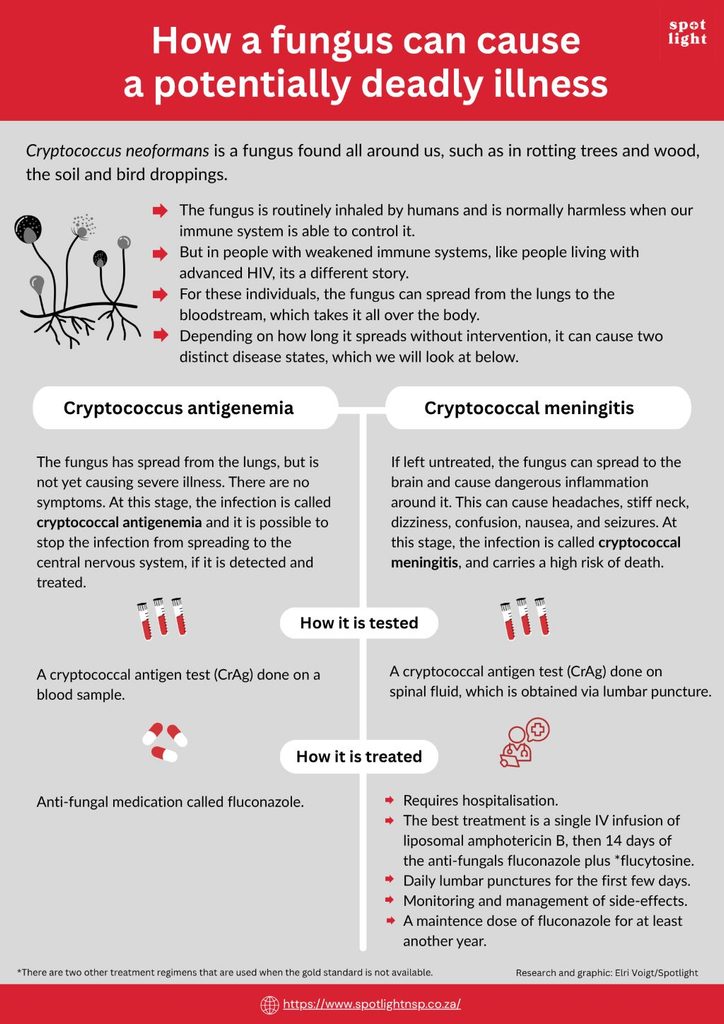
One of the top killers of people living with HIV in South Africa is a fungal infection. In this Spotlight special briefing, we unpack what we know about this dangerous disease called cryptococcal meningitis, why it remains so deadly, and what we can do about it.
Someone who is diagnosed with HIV today could live a relatively healthy and normal life. That is providing that they are consistently taking the antiretroviral treatment that successfully suppresses the virus in their bodies.
Roughly four out of every five people living with HIV in South Africa are on treatment. The remaining one in five, or 20%, represents around 1.6 million people who could potentially get very ill from a virus that is attacking their immune system, leaving them at risk of complications and opportunistic infections.
The best-known HIV-related opportunistic infection is tuberculosis, comfortably the top killer of people with HIV in South Africa. The second top killer of people with HIV, at least according to most estimates, originates from the environment around us. Around 19% of HIV-related deaths were attributed to this illness in a 2022 modelling study. Despite the many lives this illness has claimed, it has lurked chronically under the radar, much more so than TB, which itself has been somewhat in the shadows.
A fungus that is all around us
“Cryptococcal meningitis is a serious fungal infection causing inflammation of the lining of the brain (meninges),” explains Dr Richard Lessells. He is an infectious diseases clinical researcher at the KwaZulu-Natal Research Innovation and Sequencing Platform (KRISP) at the University of KwaZulu-Natal (UKZN).
Cryptococcal meningitis is caused by one of two fungi – Cryptococcus neoformans or Cryptococcus gattii. The former is responsible for most infections in people. The fungus is found all around us, particularly in rotting trees and wood, the soil and bird droppings. The tiny fungal spores are routinely inhaled by humans.
In most people, the immune system takes care of the spores and eventually controls it, explains Lessells. The fungus only starts causing problems when the immune system is weakened and not able to contain it. When that happens, the fungus spreads to the bloodstream, from where it can spread all over the body. While it can cause disease in other places, like in the lungs or on the skin, the most common place the fungus heads to is the brain and its lining. This lining, which consists of three membrane layers that cover and protect the brain and spinal cord, is called the meninges.
Classic symptoms of cryptococcal meningitis include headache, stiff neck, light sensitivity, fever, confusion, and nausea and vomiting. The symptoms can eventually be debilitating, with one patient quoted in literature saying that a previous gunshot wound hurt less than his headache. The inflammation in the meninges causes a dangerous build-up of pressure in the skull – called raised intracranial pressure – which explains the severity of the headaches.
Two disease states
When the fungus spreads from the lungs to the rest of the body, it doesn’t immediately cause inflammation in the brain or lead to severe illness. At this early stage, it is possible to stop the infection from spreading to the central nervous system, if it is detected and treated.
The key is a blood test, explains Professor Graeme Meintjes, an infectious diseases specialist based at the University of Cape Town and Clinical Professor of Infectious Diseases at Queen Mary University of London. The test, called a cryptococcal antigen test (CrAg), looks for a complex sugar molecule found in the cell wall of the fungus. When the test detects the sugar molecule in the blood, that person has what is called cryptococcus antigenemia – meaning the antigen is present in the body.
“They would then be treated pre-emptively with antifungal medication, essentially to prevent them from progressing from the antigenemia to the meningitis,” Meintjes says. Fluconazole, the drug used for this early treatment, is cheap, widely available, and works well.
If someone is not treated in time, the fungus spreads to the central nervous system – specifically the brain – and causes dangerous inflammation in the lining of the brain. When it gets to this stage, the infection is called cryptococcal meningitis. It is diagnosed by doing a CrAG test on spinal fluid obtained through a lumbar puncture, explains Lessells.
The key difference between the two disease states is that symptoms only manifest once cryptococcus antigenaemia has progressed to cryptococcal meningitis.
Someone who has cryptococcal meningitis needs to be admitted to hospital. This is because the drugs used to treat it will only start helping to control the dangerous inflammation after a few days. In the meantime, the build-up of intracranial pressure needs to be reduced through daily lumbar punctures during the first few days in hospital, says Lessells. The drugs themselves can also cause some dangerous side effects that need to be monitored closely and managed.
“Cryptococcal meningitis is associated with very high early mortality. GERMS-SA surveillance in South Africa has shown in-hospital mortality in routine care to be between 30-40% for the past 20 years,” points out Lessells. GERMS-SA is a national, population-based laboratory surveillance programme led by the National Institute for Communicable Diseases (NICD). It monitors bacterial, fungal, and parasitic infections across South Africa through a network of laboratories and sentinel hospital sites.
Screening the right people
Since waiting for cryptococcal meningitis symptoms to appear is a losing strategy, the focus has been on proactively identifying and offering CrAg screening to people at high risk of the condition.
In South Africa, says Lessells, cryptococcal meningitis most commonly affects people living with HIV, especially those with advanced HIV disease. This is a state where the virus is not under control in the body and the number of important immune cells called CD4 cells are dangerously low, at less than 200 cells/mm3. CD4 cells are a type of white blood cell important for a well-functioning immune system. A CD4 count above 500 is generally considered to be healthy.
But cryptococcal meningitis can also affect organ transplant recipients, people undergoing cancer treatment or those taking steroids. “Very occasionally, it can affect people with no apparent immunocompromising condition,” adds Lessells.
Either way, people with advanced HIV are the most obvious group to target with screening efforts. In 2025, there were about 7.8 million people living with HIV in South Africa, according to estimates from Thembisa, the leading mathematical model of HIV in the country. Of those, roughly 530 000 had advanced HIV, with a CD4 count of less than 200. This group of around half-a-million people are at highest risk of cryptococcal meningitis.
The National HIV treatment guidelines recommend that people living with HIV should be offered CrAg screening if they present with a blood test showing a CD4 count of less than 200. But the catch is that often people with advanced HIV disease are not accessing healthcare services or only accessing services once they are already very ill. In 2025, around 42 000 of the adults living with HIV who started taking treatment that year had a CD4 count of less than 200, according to Thembisa. This is over 20% of the total number of people who started taking treatment that year.
“Cryptococcal meningitis is essentially a marker for the gaps in our HIV programme,” says Liliwe Shuping, an epidemiologist at the NICD.
“If a patient gets cryptococcal meningitis, it usually means they fell through the cracks of the healthcare system; either they were never tested for HIV, they were lost to follow-up, or their treatment failed without being caught,” she says.
She describes cryptococcal meningitis as “almost exclusively a disease of advanced HIV, untreated HIV, or failed HIV care”.
There are thus two layers to the problem: First, too many people with HIV are not in care and end up developing advanced HIV, and second, even when people are visiting health facilities, they are not always screened in time.
“At the primary healthcare level, there are still challenges with implementation of the CrAg screening programme,” says Lessells. The laboratory component works well, but then he says there are the usual problems of a healthcare worker seeing the result, acting on the result, being able to contact the patient to recall them to the facility, and then referral to a higher level of care for lumbar puncture.
Unfortunately, people do fall through the cracks. Similarly, he suggests there are sometimes avoidable delays at hospital level when it comes to doing lumbar puncture. For example, some doctors might wait for a CT scan of the brain, which is not always necessary and can lead to delays.
At least some of these challenges should be reduced with the latest National HIV treatment guidelines, which address these issues with more information and clarified referral pathways, Lessells says. For example, the guidelines include a chapter on managing advanced HIV, among others covering how to screen for, diagnose and manage cryptococcal meningitis. It also spells out the requirement for automatic CrAg testing for people with CD4 counts below 200.
The big picture – what the data tells us
Some good news from the GERMS-SA report is that there has been a decline of about 11% in reported cryptococcal meningitis cases from 2023 to 2024. There has also been a drop in cryptococcal meningitis incidence over the last six years, says Shuping.
The annual number of recorded cases dropped from about 6 000 in 2018 to 4 000 in 2023, decreasing by about one third overall, says Shuping. This is based on the Public Health Bulletin study on data from 2018 to 2023. The authors caution that the decline in cases could be due to the potential impact of strengthening public health interventions or may reflect an under-detection of cases. Either way, these numbers reflect only confirmed cases. Modelling suggests real cryptococcal meningitis incidence may be several times what is being reported.
Shuping cautions that despite the reduction in reported cases, cryptococcal meningitis is still killing many people living with HIV.
The in-hospital mortality rate for cryptococcal meningitis “has not meaningfully improved,” she points out. Despite treating fewer cases over time, she says that a patient who develops cryptococcal meningitis today has roughly the same high risk of dying in hospital as they did six years ago.
In general, Meintjes explains that brain infections have a high mortality. Even with the best treatment options and under clinical trial settings, around a quarter of patients die despite treatment.
Quality of care matters. Lessells says that while drug treatment generally receives the most attention, it is only one component of the clinical management of cryptococcal meningitis. Monitoring and reducing intracranial pressure and preventing and monitoring side effects from the drugs are vital. In a setting where resources are stretched thin, healthcare workers are overwhelmed and facilities don’t always follow the best practises, he says quality of care can fall, contributing to “stubbornly high mortality rates”.
High mortality despite new drug
Given the serious side effects associated with some medicines used to treat cryptococcal meningitis, there was great optimism in 2022 when an old anti-fungal medicine called flucytosine was approved for use in the country to the treat the illness.
This followed the AMBITION trial, where researchers found that combining flucytosine with two other powerful drugs (liposomal amphotericin B – an IV infusion and fluconazole – an oral medication) improved patient treatment. Meintjes explains that the combination of the three drugs was not “better” than the previous regimen as there were similar mortality rates between the two arms, but it was safer and had far fewer side effects.
Meintjes says that today the first choice for the treatment of cryptococcal meningitis is a single infusion of liposomal amphotericin B, then 14 days of fluconazole plus flucytosine.
The second choice, that has similar mortality outcomes to the first but has more side effects, is seven days of another form of amphotericin B plus flucytosine and fluconazole.
The third-choice regimen is 14 days of amphotericin B plus fluconazole. Meintjes says that the outcomes for this regimen are not as good as with the first two.
After the initial treatment, regardless of which regimen was used, patients then have to take a maintenance dose of fluconazole for at least another year to completely eradicate the fungus. If the fungus is not entirely gone from the body, it can cause disease again in the future. Patients living with HIV also need to be started on antiretroviral therapy around four weeks after the meningitis diagnosis, which helps prevent a relapse.
Best drugs not always in stock
One reason the approval of flucytosine, and the improved treatment regimens it enables together with liposomal amphotericin B, hasn’t yet resulted in better outcomes is that patients simply aren’t always getting the drugs.
“[O]ften we’re in a situation where we have to use the third choice because neither liposomal amphotericin B nor flucytosine are available and that’s associated with worse outcomes,” says Meintjes.
Jessica Burry, a pharmacist and technical officer working on advanced HIV with Unitaid, concurs. “I think what it comes down to is if you don’t have access to liposomal amphotericin B and flucytosine, then you don’t have the gold standard of treatment…and it’s shown quite clearly that mortality rates are much higher in those groups [that don’t have access to these drugs],” she says.
There are several reasons why a drug might not be in stock at the clinic or hospital where it is needed. Often in South Africa, medicines have been in stock in central depots, but not available at all health facilities. A further challenge with medicines for cryptococcal meningitis is that the volumes are comparatively low, and pharmacies may thus be reluctant to hold onto too much stock for fear it might expire.
While such distribution problems have no doubt played a role in limiting access to cryptococcal meningitis medicines, sourcing a reliable supply from manufacturers appears to have been a greater stumbling block in recent years. In this regard, public health imperatives are up against some tough economic realities.
Lessells says that, because flucytosine is an anti-fungal mainly used to treat cryptococcal meningitis, there isn’t much demand for the drug across the world, since many countries very rarely deal with the illness. This, he says, ties into the systemic problem with global drug supplies for rare diseases or rare conditions, where you’ve got a small number of manufacturers and problems in the manufacturing process that then lead to global supply chain problems.
How such dynamics have played out with flucytosine and liposomal amphotericin B is worth a closer look. As often is the case with such questions of medicines access, the picture gets fuzzier before it becomes clearer.
Flucytosine shortages
“During 2026, the availability of flucytosine has been constrained, requiring available stock to be carefully managed and distributed to facilities based on clinical need,” Foster Mohale, spokesperson for the National Department of Health tells Spotlight. He says that there was a global supply problem and that the stockouts were not due to procurement issues at the department. A shortage of flucytosine has also affected several other countries.
Flucytosine is on the Essential Medicines List (EML), which is a list of medicines that are considered vital for the health of the country, like antiretrovirals or insulin. The health department undertakes to supply medicines on the EML to the public health sector, normally via tenders.
Two pharmaceutical companies, Viatris and Macleods, have registered flucytosine with the South African Health Products Regulatory Authority (SAHPRA) for use in South Africa.
Flucytosine was previously procured by the state in terms of a tender awarded to Viatris in 2023. According to Mohale, uptake from provincial health departments was poor, and in July 2024 some expired stock had to be written off. A few months later, the department issued a notice to confirm there was stock and that healthcare facilities should place orders based on their needs.
A new tender was advertised in 2025, but according to Mohale, no “responsive bids” were received. The health department then approached Viatris to supply flucytosine via a Request for Quotation (RFQ). The RFQ process is when the state obtains a quotation on a price when an essential medicine is not available from a contracted tenderer, either because no tender was awarded or the product is out of stock, explains UKZN pharmaceutical sciences expert Dr Andy Gray. This form of procurement, he says, is not unusual.
Viatris initially accepted the RFQ but then informed the department in March 2026 that it was “unable to supply due to manufacturing and global supply constraints”. Macleods was then approached by the health department and is now supplying the drug in terms of a new RFQ. The plan is to issue a new tender when it makes sense to do so. (You can read the health department’s full response here).
Price fluctuations
There have also been challenges with access to another important cryptococcal meningitis medicine. Historically, many low-and-middle income countries have struggled to access liposomal amphotericin B because of the price, says Burry.
Gilead Sciences, the pharmaceutical company that owned the patent for liposomal amphotericin B (which it acquired when purchasing a company called NeXstar Pharmaceuticals) had made it available at an access price for some low-and-middle income countries starting in 2018. It has also taken steps to make the drug more widely available to treat another infection called leishmaniasis through a long-standing partnership with the World Health Organization (WHO).
Initially, it appeared that South Africa was exempt from this access price due to an exclusive distributor agreement Gilead had with some companies. In South Africa, the distributor was Key Oncologics, which at the time had priced the drug for sale in the private healthcare sector at just under $200 a vial (about R2 880 at the time) – a price the health department could not afford when Spotlight first reported on the issue in 2022.
When asked about access to the drug and this agreement, both Gilead and Key Oncologics provided short statements which you can read here and here.
Key Oncologics then did end up supplying the health department with the drug in 2023, through the Gilead Access Programme, explains Mohale, when it was contracted to supply an estimated 5 860 vials at around R600 per vial over two years. That R600 price tag was used to support the inclusion of the drug on the EML and Adult Hospital Level Standard guidelines. There were initially some supply issues as demand for the drug increased, but Mohale says that was resolved when production and supply volumes were adjusted.
Under the current three-year tender, Key Oncologics is contracted to supply an estimated 166 056 vials at R1 167.48 per vial. Although, Mohale adds that following engagements with Gilead and Key Oncologics, the price has been reduced to R1 035 per vial. This is still substantially higher than the previous price of R600. Mohale says the department’s understanding is that South Africa is no longer eligible for the lower access price since a generic alternative has been registered in the country. (You can read the health department’s full response here.)
How outcomes can be improved
As we’ve seen in this Spotlight special briefing, South Africa has made substantial progress against cryptococcal meningitis, but the fungal infection nevertheless continues to cause suffering and death. The reasons for the disease’s continued toll on people living with HIV are varied and complex, but three issues stand out.
First, there is the fact that far too many people living with HIV in South Africa are not on antiretroviral treatment and are thus at increased risk of developing cryptococcal meningitis. As with our HIV response more generally, the priority here must simply be to help more people with HIV to start and stay on antiretroviral treatment. Special attention needs to be paid to finding and supporting the subset of people who don’t go to the clinic or the hospital until they are very ill.
Second, we need to get better at diagnosing infection early, ideally before the development of full-on cryptococcal meningitis. Automatic CrAg testing for people with low CD4 counts is the right move – it needs to be backed up with a push for greater healthcare worker awareness to respond quickly to a positive test.
And third, there is the question of having the best treatments available where they are needed. There was much optimism a few years ago over the introduction of new safer treatments with fewer side effects, but issues with drug supply has dampened the mood considerably since then. The good news, for now at least, is that the national supply of the most important medicines seems to have stabilised. As we know from experience, however, having the medicines in the country does not always mean they are available in the right health facilities when needed.
Ultimately, in all three of these areas much will depend on how well our public healthcare system is, or is not, functioning. As Lessells puts it: “We have the right approach to prevention, diagnosis and management of cryptococcal meningitis. Our guidelines are informed by the best evidence (including clinical trial evidence generated in Africa by African research teams). It’s really about broader health systems strengthening so that we can realise the benefits of this.”
*Reviewed by Professor Graeme Meintjes and Dr Richard Lessells. Spotlight takes full responsibility for any errors.
Dr Thembisile Xulu is the newly-appointed Director General of the National Department of Health. (Photo: Denvor de Wee/Spotlight)
By Marcus Low
Dr Thembisile Xulu is South Africa’s sixth permanent Director-General of health since the dawn of democracy. How will she measure up against her predecessors?
In recent months, we’ve been keeping an especially close eye on the media statements following the twice-monthly meetings of South Africa’s cabinet. Then last week, we finally spotted the line we had been waiting for – the announcement of South Africa’s new Director-General (DG) for Health.
The name of the country’s sixth permanent DG since 1994 was a familiar one. Back in 2020, Spotlight interviewed Dr Thembisile Xulu when she was appointed CEO of the South African National AIDS Council (SANAC) – the national body established by Cabinet to coordinate South Africa’s response to HIV, Tuberculosis, and Sexually Transmitted Infections.
In moving from the job of SANAC CEO to health DG, Xulu follows in the footsteps of Dr Sandile Buthelezi, who was CEO of SANAC from 2017 to 2020 and DG for Health from 2020 to early 2026, when he was suspended along with two other senior officials in the department.
Prior to her time at SANAC, Xulu worked at the non-profit Right to Care for around a decade and a half. She is a medical doctor and has a master’s degree in public health. As far as we can tell, she is well liked in healthcare circles.
A huge task
The job facing Xulu is a daunting one.
First, she will have to sort out problems within the department itself. As we pointed out in an editorial published in April, the department hasn’t gotten a clean audit in any of the last five years. The Digital Vibes scandal and the suspension of several senior officials earlier this year relating to another matter paints a bleak picture. While we know there are several committed and capable people working in the department, organisationally it seems to be exhibiting all the classic signs of chronic dysfunction and a lack of effective leadership.
Maybe the most urgent task facing Xulu then is simply to turn the health department into a more professional organisation. This will require strong leadership and management skills, but it will also require her to more effectively protect the department from whatever the political whims of the day may be. Ultimately, a DG that always says, “yes Minister”, isn’t actually doing the Minister, or the public, any favours.
But it won’t be easy. When the DG job was advertised back in March, the advert did not open by referencing the Constitution or the National Health Act, as one might expect, but by stating that the DG will be responsible for implementing the Presidential Social Compact for transformation of the health sector. The last health compact, signed in 2024, was a controversial document that did not get buy-in from several key business and healthcare worker organisations. That the job advert starts by referencing the compact rather than the relevant laws, seems an ominous sign for the DG’s chances of building a more capable, less politicised, department.
Second, getting the department’s house in better order will help with what is of course Xulu’s main job – helping to address the country’s many health challenges. Top of the list is the chronic shortages of healthcare workers in the public sector. We have seen an important policy document and some extra funds for healthcare workers, but the incisive leadership and sustained commitment and planning needed to really get on top of the problem has been absent.
There is a worrying pattern whereby government looks into a problem, maybe a committee of some sort is set up, the intentions are all good, but then everything stalls once some implementation challenge or political complication arises. We need a DG who does not allow important health issues to drift in this way, but who has the focus and determination to find workable solutions and to see them through.
And then there is NHI
The NHI Act might currently be tangled up in a thicket of litigation, but whatever happens in the courts, NHI will be a big part of the DG’s work in the coming years (DGs are appointed for five years at a time). This may take the form of implementing some elements of the current NHI Act, or working with a revised Act, we just don’t know at this stage.
But there will be many other bread and butter issues besides NHI demanding Xulu’s attention. In our analysis, the department has badly dropped the ball on urgent issues such as healthcare worker shortages, the regulation of private healthcare, and improving the quality of public healthcare services in areas such as mental health, diabetes, and hypertension. Hopefully under the new DG, the department will find ways of better addressing these issues in parallel with its work on NHI.
A chance at renewal
There is some reason for optimism. With the appointment of Xulu as DG, and that of Dr Nonhlanhla Ndlovu before that as the department’s HIV czar, new people are now in two of the most important positions in the department. Such leadership changes offer a unique opportunity for organisational renewal.
Spotlight has requested an interview with Xulu and we hope to get some time with her once she’s been in the job for a few weeks. We will ask her the tough questions, but we will also be fair and give her time. After all, we all want to see a health department and a health system that works.
A new Ontario-wide study reveals that common medications, from statins to iron supplements, are quietly setting off prescribing cascades that leave older adults unknowingly taking drugs to treat side effects of other drugs.
The research, published in BMJ and led by Paula Rochon, a clinician scientist at Sinai Health and professor of medicine at the University of Toronto’s Temerty Faculty of Medicine, has revealed that certain drug combinations are a common but unrecognised contributor to drug related harm at the population level and add unnecessary costs to the healthcare system.
A potentially inappropriate prescribing cascade (PIPC) happens when a medication’s side effect gets mistaken for a new health problem, leading to another prescription that may not have been needed in the first place. One common example flagged in the study involves non-steroidal anti-inflammatory drugs (NSAIDs). Commonly prescribed for pain, these drugs are associated with a rise in blood pressure, which can lead to a new prescription for high blood pressure, rather than a second look at the original pain medication. Older adults are especially vulnerable to this pattern because they’re more likely to be on multiple medications at once, due to having multiple conditions, making it harder for both patients and clinicians to trace a new symptom back to an existing drug.
“These sequences of events are common but often missed in clinical practice,” says Rochon, who serves as the director of research at the Weston and O’Born Centre for Mature Women’s Health at Sinai Health. “Knowing what medications you are taking, when they were started and for what indication is important in order to identify possible prescribing cascades that may be problematic.”
The study brought together an interdisciplinary, international team of collaborators and leaders in drug prescribing and geriatric medicine research from the United States, Belgium, Italy, Israel and Ireland, along with Sinai Health researchers and U of T professors Vasily Giannakeas and Nathan Stall, geriatrician Christina Reppas-Rindlisbacher and research staff Wei Wu and Joyce Li.
With the expertise of 12 international panellists specialising in internal medicine, geriatric medicine and clinical pharmacology, the research team previously created a list of 65 PIPCs. Using this list and population-level prescription data from ICES, Ontario’s health data institute, the researchers examined each PIPC against three factors: how common the initial drug was in the population, how often it was followed by the second drug, and how strong the link was between the two. That analysis allowed them to pinpoint the 24 potentially inappropriate prescribing cascades most commonly seen in the population and with a potential to cause harm.
Seeing the pattern behind every prescription
For Rochon, the findings highlight a gap that opens quietly, one prescription at a time. “Our concern is that so often these conversations between the health care prescriber and the patient are being missed, so people don’t recognise the sequences of events and that they are connected to one another,” she said.
Closing that gap means physicians need to think about medication history at every visit, not just what a patient is currently taking, but why each drug was started in the first place, and whether the next one was really needed.
The work also carries a particular weight for mature women, as they tend to live with more chronic conditions than men over their lifetime. Mature women are prescribed more drug therapies, and experience more adverse drug events. By being on multiple medications at once, they are more exposed to the risk that a drug’s side effect gets mistaken for a new diagnosis rather than traced back to its source.
The team’s findings point to promising next steps.
The first involves technology. Automated clinical decision support tools could flag a prescribing cascade in real time and prompt a second look before a new prescription is added. This information could be leveraged in one of several automated ways to help clinicians be aware of these potentially inappropriate prescribing cascades at the point of care.
Next is optimising the role of pharmacists as part of the care team and more directly integrating them into the prescribing process alongside physicians. Their expertise can help identify these potentially inappropriate prescribing cascades for further evaluation.
A new report in the New England Journal of Medicine by researchers at Baylor College of Medicine, Texas Children’s Hospital and Seattle Children’s describes a complete regression of hepatoblastoma, the most common paediatric liver cancer, in a 3-year-old treated with a novel immunotherapy. The patient is enrolled in the CARE study (NCT04715191), a first-in-human, Phase 1 trial evaluating glypican-3-specific chimeric antigen receptor (GPC3-CAR) T cells armed with interleukin-15 and -21 (IL15 and IL21).
The child initially presented with a large primary liver tumour and metastases in the lungs. Prior to enrolment in the CARE study, the patient was treated with three lines of chemotherapy and underwent complete resection of the primary liver tumour and two lung metastases. His cancer was no longer responsive to chemotherapy, and a new lung metastasis recurred after surgery when he was enrolled on the CARE study.
The immunotherapy was engineered from the patient’s own cells at the Good Manufacturing Practices laboratories at the Center for Cell and Gene Therapy using two vectors: one encoding the second-generation GPC3-CAR and the second encoding IL15, IL21 and the inducible caspase 9 safety switch, which Center for Cell and Gene Therapy investigators previously showed controlled CAR T expansion.
Two infusions were administered eight weeks apart in the outpatient setting. A partial response was observed after the first infusion, and imaging showed complete resolution of the metastatic disease after the second infusion. No dose-limiting toxicities or cytokine release syndrome occurred. Complete regression continues one year after treatment.
“This case demonstrates that a durable complete response in a chemotherapy-resistant solid tumour can be achieved entirely in the outpatient setting without systemic toxicity,” said first author Dr David Steffin, associate chief of cellular therapy and bone marrow transplant at Texas Children’s and associate professor of paediatrics – haematology and oncology in the Center for Cell and Gene Therapy at Baylor.
“This study provides evidence that these novel CAR T cells may be a safe and effective modality for hepatoblastoma and highlights the need for further assessment in patients with GPC3+ solid tumors,” said corresponding author Dr Andras Heczey, principal investigator at Seattle Children’s and professor of pediatrics in hematology-oncology at the University of Washington School of Medicine. Heczey was at Baylor and Texas Children’s at the time of research.