A randomised trial published in Obesity indicates that interrupting prolonged sitting with frequent brisk walks can improve blood glucose regulation to a greater extent than the same amount of walking performed as a single continuous bout.
In the trial, 30 adults with overweight or obesity who were sedentary (self-reporting > 6 hours/day of sitting) were randomized to 45 minutes/day of brisk walking, 5 days/week for 6 weeks, performed either as short bouts throughout the day or as a single bout.
Compared with the continuous walking group, the short bouts group experienced greater improvements in glucose regulation during an intravenous glucose tolerance test, as well as increased time spent within the target glucose range and reduced glycemic variability during daily living, as measured by continuous glucose monitors.
“Our findings suggest that how we distribute physical activity throughout the day may be just as important as how much we do,” said corresponding author Audrey Bergouignan, PhD, Director of Research at the French National Centre for Scientific Research (CNRS) and Associate Professor at the University of Colorado Anschutz Medical Campus. “Rather than relying solely on a single exercise session, regularly interrupting prolonged sitting with short walks may offer additional benefits for blood glucose regulation, especially in people at risk of developing type 2 diabetes.”
In people with chronic kidney disease (CKD), oral sodium bicarbonate is a standard treatment for metabolic acidosis, but results from a recent clinical trial indicate that dietary acid reduction with base producing fruits and vegetables may be a better option. The findings were presented at ASN Kidney Week 2026 October 22–25.
In the trial, 108 adults with stage 3 CKD and metabolic acidosis were randomised to receive fruits and vegetables (to reduce dietary acid by half), oral sodium bicarbonate (also to reduce dietary acid by half), or usual care (36 patients in each group). Participants were followed annually for 10 years.
During follow-up, there were 115 hospitalisations, 166 emergency department visits, and 34 patients needed dialysis. Compared with the usual care group, the fruits and vegetables group had fewer hospitalisations (14 versus 64), fewer emergency department visits (20 versus 88), and less progression to dialysis (4 versus 16). There was no difference between those given sodium bicarbonate compared with usual care regarding these outcomes.
“Treatment of metabolic acidosis with fruits and vegetables was associated with more favourable long-term clinical outcomes and health care utilisation than standard treatment with sodium bicarbonate or usual care, without increasing overall health-system or societal costs,” said corresponding author Nimrit Goraya, MD, of Baylor Scott and White Health. “These findings support evaluating dietary interventions in chronic kidney disease not only at the individual-patient level but also at the population level, where the cumulative clinical and economic benefits may be substantial. They also highlight the potential quality-of-life and health-system value of investing in fruits and vegetables as a treatment strategy, particularly when favourable clinical outcomes can be achieved without increasing overall costs.”
Study: “Long-Term Outcomes and Health Care Costs of Fruits and Vegetables vs. Sodium Bicarbonate or Usual Care for Metabolic Acidosis in CKD: Post Hoc Analysis of a 10-Year Randomized Trial”
Gadolinium is a component of contrast agents used in MRI examinations, which can be released into the environment through patients’ urine. Scientists at the German Cancer Research Center (DKFZ) have now developed a sensor capable of detecting even the smallest amounts of gadolinium.
Magnetic resonance imaging, or MRI for short, provides detailed images of the inside of the body. It is an indispensable procedure for the diagnosis and treatment planning of many types of cancer, and it does not expose the body to radiation because it uses magnetic fields and low-energy radio waves. Pathological changes, such as tumours, can be clearly distinguished from healthy tissue in MRI images.
The element gadolinium provides the necessary contrast in MRI images; it is safely enclosed in the contrast agents within a so-called chelate molecule, much like a molecular cage. Through its magnetic properties, gadolinium interacts with water molecules in the body inside the MRI scanner. Certain tissues with a high water content thus appear brighter in the images, which creates contrast in the imaging.
Gadolinium-based contrast agents are used in just under half of all MRI scans. After the scan, these are excreted via the kidneys in the urine and end up in wastewater. There, gadolinium remains bound within its chelate cage in the long term. “Nevertheless, we see an urgent need to lay the foundations for new and sensitive analytical methods that will enable us to track gadolinium in the environment – not only from contrast agents but also from industrial processes,” explains Leif Schröder, Head of the Department of Translational Molecular Imaging at the DKFZ, who led the study.
Measuring Gadolinium Down to the Micromolar Range
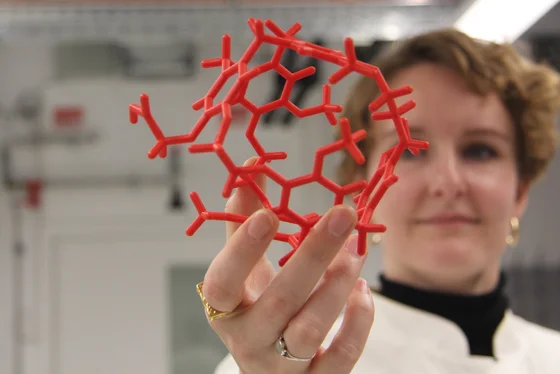
The scientists combined two effects. Firstly, they used hyperpolarised xenon, a strongly magnetised noble gas enclosed within a different type of cage, which produces signals in MRI. Here, the nuclear spin of the xenon acts as a quantum sensor and produces two distinct signals: one for the xenon bound within the cage molecules and one for the free xenon in the solution. Secondly, gadolinium displaces the xenon from its cage, causing the corresponding xenon signal to diminish and eventually disappear altogether.
“From the reduction in the xenon signal, we were able to determine the concentration of gadolinium outside the cage,” says Hannah Gerbeth, lead author of the study. The DKFZ research team found that gadolinium concentrations in the micromolar range can be measured. This makes the cage molecule a highly sensitive sensor for gadolinium under the conditions of the experiment. “This discovery shows that the unique properties of the interaction between gadolinium, xenon and the cage enable more sensitive detection than was possible in previous research using MRI,” says Leif Schröder.
The method for distinguishing free gadolinium from chelated forms could help improve its clinical application and the detection of gadolinium-containing substances in the environment. In future, the scientists plan to test the sensor’s suitability for measuring gadolinium in other concentration ranges as well. They also intend to investigate whether other ions are selectively bound by the cage and could therefore interfere with the gadolinium sensor.
Original Publication Detection of Gd³⁺ via HyperCEST NMR in a Competition Assay Using Cryptophane-A Monoacid. Sens. Diagn. (2026) 5 (10): 1195–1203, doi.org/10.1039/d6sd00053c.
Doctors’ prescribing habits are heavily influenced by payments, gifts, and free meals from pharmaceutical companies, leading to more expensive, less appropriate and more drugs being prescribed, a new Cochrane review finds. This can seriously harm both individual patients and health systems.
Pharmaceutical companies use a variety of strategies to market and promote their drugs. This can include one-on-one visits by sales reps to doctors’ offices and hospitals, gifts and payments including for example paid meals, travel costs to conferences, entertainment, consulting fees, honoraria for participation in advisory boards, and advertising.
For all new medicines, pharmaceutical companies target prescribers with offers of free meals and other gifts and payments. These payments and gifts lead to prescribing of the company’s promoted drug, which may not always be needed or be the most appropriate or affordable medicine for each patient.
Less appropriate prescribing and higher medicine costs
The review included 93 studies involving a number of different study types. Almost all of these studies observed real-world prescribing patterns rather than running controlled experiments. The majority of the studies (88%) came from the United States, in part because the Physician Payments Sunshine Act (2010) requires pharmaceutical companies to publicly report details of all payments to doctors, which are compiled in a publicly searchable and analyzable database.
Analyzing millions of prescribers, the authors grouped industry interactions into three distinct categories to examine how each one affects a doctor’s prescribing habits. These were advertising and education, gifts and payments, and free samples. The authors also looked at conflict-of-interest policies as a mitigation strategy.
Advertising and education, such as sales rep visits, seemed linked to prescribing that was less clinically suitable and pricier, with fairly strong evidence that it also drove up prescription volume.
The largest and most consistent body of evidence covered gifts and payments. Gifts and payments were also linked to less appropriate prescribing, more prescriptions, and probably increased costs.
The evidence was too sparse to draw clear conclusions on free drug samples and whether promotion affects hospitals’ approved formularies, although what little exists suggests it might.
Overall, when doctors have more contact with drug company promotion, prescribing tends to become less appropriate, more frequent, and more expensive.
–Dr Lisa Bero, University of Colorado Anschutz
“This is problematic for a number of reasons and it matters because it directly affects patient care,” says study author Dr Lisa Bero from the University of Colorado Anschutz, USA. “These less appropriate, more expensive drugs can have fewer benefits or more side-effects than alternatives, or simply be unnecessary in the clinical context.”
The overprescription of opioids is the most infamous example of pharmaceutical companies’ promotion exaggerating benefits and minimising harms. This review found that even inexpensive meals increased opioid prescribing and that the more payments a doctor received from opioid manufacturers, the more likely they were to prescribe dangerously high opioid doses. The widespread inappropriate overprescribing of opioids has led to an epidemic of addiction and deaths from overdoses.
“Patients should be offered the most appropriate treatment for their condition, based on clinical evidence not industry marketing,” adds Dr Bero. “The opioid crisis in North America was perhaps the most egregious example of inappropriate over-prescribing, but this was not an isolated incident. It was high-profile due to the significant harms involved, but the systems that enabled it are unfortunately considered business-as-usual within the industry. Interactions between pharmaceutical companies and prescribing physicians are widespread, and the harms they cause are rarely so visible.”
More meals paid for, more drugs prescribe
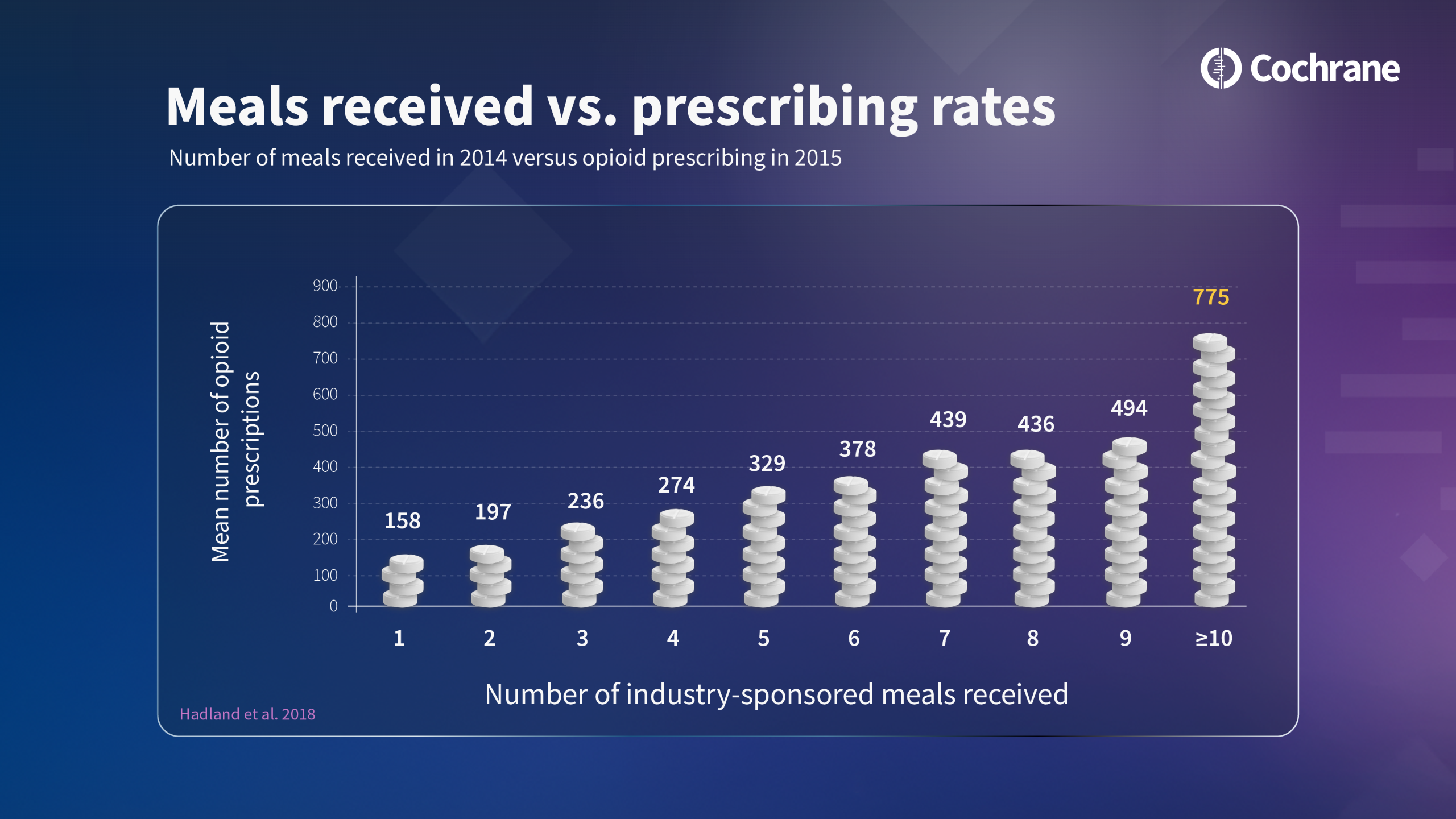
Notably, the research shows a clear dose-response relationship between paid-for meals and inappropriate prescriptions. The more meals a doctor received from a company, the more of the company’s drug they prescribed. This was true for a range of different types of drugs, from drugs for high blood pressure and cholesterol to antidepressants and opioid painkillers.
This infographic details the number of meals received in 2014 versus opioid prescribing in 2015, based on Hadland et al. (2018). It visualises the meals received by physicians and the subsequent prescribing rates.
The authors also point out that this practice is seen as normal and unproblematic in the medical field.
“It’s very common for doctors to receive free meals from companies,” says lead author, Dr Barbara Mintzes from the University of Sydney, Australia. “Doctors often think that this is trivial and doesn’t influence them, that they ‘can’t be bought for the price of a sandwich’, but the data shows this is an effective marketing strategy. The more free meals a doctor receives, the more likely they are to prescribe less appropriate or more expensive drugs.”
Restricting industry interactions may improve prescribing
Some hospitals and medical centres have rules or institutional restrictions in place, also known as conflict-of-interest policies, to limit how much contact industry reps can have with doctors or what gifts or samples they are allowed to provide. The review found that these can mitigate the negative impact of pharma strategies on doctors’ prescribing habits.
It’s encouraging to see that robust conflict-of-interest policies in place tended to be effective. The data shows that they probably improve prescribing appropriateness and possibly reduce the number of prescriptions.
–Dr Barbara Mintzes, University of Sydney
While this review found that drug promotion negatively influences prescribing within a broad range of drugs and clinical settings, the authors wish to emphasizs that this is not about a few “bad apples”, but about improving the system and a key positive finding is that strict conflict-of-interest policies are a way forward.
Wednesday, 18 November 2026:Since it became legal for South Africans to use cannabis in private, it has become tricky to ensure safety at work. This is particularly important in jobs where impaired judgement, slower reactions or poor coordination could have serious consequences.
Adding to the complexity, workplace drug tests are limited because a positive cannabis test does not necessarily mean that an employee is currently under the influence or unable to do their job safely.
Dr Robin George, Senior Occupational Medicine Practitioner at Workforce Healthcare, explains, “A positive cannabis test tells you that cannabis was used, or that cannabis metabolites are present in the body. It does not tell you that the person is currently intoxicated or impaired,” says George.
Unlike alcohol, cannabis metabolites can remain detectable in the body days or even weeks after use, and the user may not necessarily be impaired at the time of the test.
“This is where employers can get into difficulty if they treat a positive test as automatic proof of impairment,” says George. “The important question is whether the employee is fit to perform their duties safely.”
“An employee could, for instance, take a Valium or cough mixture, both legal substances, and be at work in no condition to operate machinery or properly complete their work. I advise companies to use experts to help formulate their company policy and avoid the minefield of complications around substance abuse in the workplace,” he adds.
Cannabis can affect concentration, judgement, reaction time, balance, coordination, and other functions important for safe work performance. The risks are particularly significant for people who drive, operate machinery, work at heights, or perform other safety-critical tasks. The key, says George, is to take a risk-based approach rather than treating every positive test in the same way.
Employers should ideally have policies that define what it means to be fit for duty and explain the organisation’s approach to cannabis use and impairment. Supervisors should also be able to recognise and objectively document possible signs of impairment, such as slowed responses, poor coordination, confusion, reduced alertness, or difficulty following instructions.
Where there is a concern, a fitness-for-duty assessment by a health professional may be appropriate.
“Workplace substance policies need to move beyond a simple ‘positive test equals misconduct’ approach,” says George. “The nature of the job, the potential safety risks and evidence of actual impairment all need to be considered.”
He adds that employers should also remember that problematic cannabis use can be a health issue. Where appropriate, employee assistance, counselling, rehabilitation, and other wellness interventions can form part of a responsible substance management programme. For employers, the message is to interpret testing carefully.
“Employers have to balance two important responsibilities: protecting the health and safety of everyone in the workplace while also dealing fairly with employees,” says George.
Workforce Healthcare has helped several organisations prepare policies and can conduct the necessary random periodic testing countrywide.
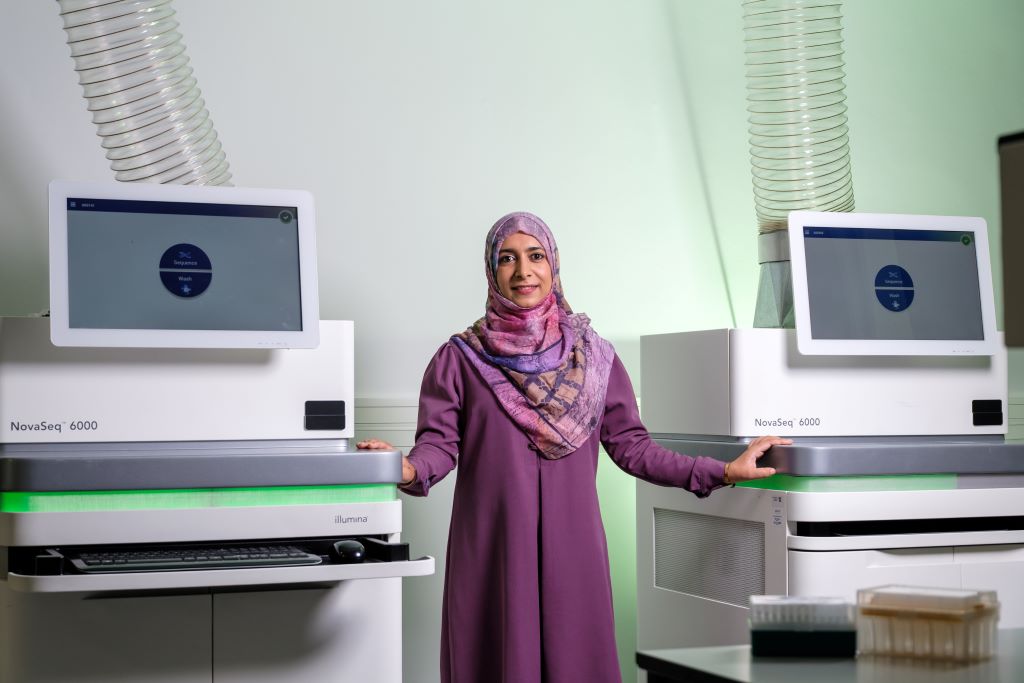
Professor Shahida Moosa, who is one of about a dozen medical geneticists in South Africa, helps families around the country discover their rare genetic diseases. She tells Spotlight about the first genetic condition she diagnosed, the lack of basic genetic testing in the public service, and furthering the field through teaching and research.
While most doctors are busy, few have as big a smile while juggling several positions as Shahida Moosa. The medical geneticist, lecturer and researcher jokes that she has three jobs but only gets paid for one.
Officially, she is the Head of Medical Genetics at Tygerberg Hospital, and Professor of Medical Genetics at Stellenbosch University, as well as co-lead of the cluster of research excellence called Genomics for Health in Africa. In essence, Moosa helped pioneer human genomics – the study of the entire genome – in South Africa, and is one of its premier rare disease specialists.
“A lot of my friends, even those I studied with at medical school, still don’t know what a medical geneticist does because there are only about 12 or 13 of us in the country, and it’s a relatively new specialisation,” she says.
Moosa jokes that her colleagues might imagine that she spends most of her time holed up in a lab, but that is far from her reality. Her “real” job, she quips, is to be a full-time clinician as a medical geneticist.
That means she sees everyone from pregnant women and their unborn babies all the way through to elderly patients, including whole families. She helps them identify rare or genetic diseases and sets them up on a treatment plan. She works on both genetics, meaning specific parts of the DNA, and genomics, which refers to the DNA as a whole.
Living with a “secret” for 20 years
For instance, she remembers a teenage boy being one of the first patients she encountered at Tygerberg. His mother had been looking for answers about her child his entire life, about why he had dysmorphic features and significant developmental delays, such as not having learned to speak. Moosa ran a whole-exome sequencing, which tests the parts of the human genome that hold a lot of the disease-forming variants, and was able to give a clear diagnosis. She recalls this distinctly, not because of the variant of disease, but because the mother suddenly broke down in tears, much later in the appointment.
“She told me that she really believed for the last 19 or 20 years that her son had all of these medical issues and developmental problems, because she had eaten stinky French cheese during the pregnancy,” Moosa says.
The woman had kept this firm belief completely secret, and only felt safe to tell Moosa once she realised she had not caused the illness. “That kind of information was transformative to her, and freed her from the guilt that she carried for 20 years.”
It’s this power of genomics and genetics to impact people that Moosa loves, and that drives her to research. For instance, she was recently involved in a project with the Bonn University in Germany, called GestaltMatcher. Her human expertise was used as a benchmark for an AI tool to detect disease characteristics in facial features, which will help triage patients, establish referral pathways, and improve the patient journey for people with rare genetic disorders.
Moosa added her unique understanding of birth defects and body differences, called dysmorphology, to the project. “The reason I was interested in this project is because we are never going to be able to train as many medical geneticists with dysmorphology expertise that are needed for the country or for the continent, and so we need to find innovative and other ways to be able to serve our patients better,” Moosa says.
She says her involvement in the project has contributed to the diversity of patients that the tool is able to process correctly. While it was originally trained mostly on European populations, Moosa has helped add more African and diverse examples. Now she’s noticed that it works more effectively for her own patients.
No more six hours of genetics in six years
In the third realm of her work, academics, Moosa teaches a wide spectrum of students. She is particularly proud to have been part of a curriculum overhaul around 2022 that included genetics and genomics throughout the years of study at Stellenbosch University. The first group of students on this new curriculum will graduate in the next few years.
“It cannot be that medical students only have six hours of genetics in the six years,” she says. “Medicine is also changing, and genetics is becoming a lot more integrated into every single speciality and sub-speciality.”
She says she loves seeing how medical genetics is changing “in leaps and bounds, not baby steps”.
“I think I’m somebody who needs novelty and for every day to be different, and that really is something that I found in medical genetics,” she says. “Each of my patients is different, even if they have the same condition.”
A path into genetics
Moosa’s discovery of genetics took a few twists and turns. At first, as a medical student at Wits University, she didn’t find a particular speciality that spoke to her, but this changed after her first day of fifth year was in the paediatric rotation at Rahima Moosa Mother and Child Hospital in Johannesburg. “I walked in there, and I just felt instantly at home,” she recalls.
She found herself gravitating towards complex patients that needed deeper digging and investigating to find a diagnosis.
For instance, she describes a moment where she was the most junior person on a ward round, and was scared to bring up her observations. Eventually, she told the professor in charge that she had noticed that the baby being discussed was crying differently. “I described it as the other babies crying more like sheep, and this baby cried more like a cat,” she says. Moosa laughs, remembering how the neonate was suspiciously silent in this moment, when she wanted to demonstrate it.
Her instincts proved to be right and led to a positive genetic test for the chromosomal disorder Cri du chat syndrome, meaning ‘cry of the cat’. “That was my first genetic condition that I diagnosed,” Moosa says.
She says the professor then encouraged her to consider the genetic aspects of patients more and would make sure to discuss interesting cases with her during ward rounds.
The timing was perfect. From 2008, South African doctors no longer had to become a paediatrician, internal medicine specialist or obstetrician before doing a two-year fellowship in medical genetics.
It now became a primary speciality of its own, and Moosa nabbed one of the three positions in the first group. She calls herself one of “the first guinea pigs to train in this new programme.
She later had to leave the country to complete her PhD at the University of Cologne, Germany. But Moosa is thrilled that she is now able to supervise local PhD students in Cape Town.
The challenges of a nascent field
Being a medical genetics pioneer comes with challenges.
Firstly, patients themselves may not understand the discipline and its helpfulness. “We have a lot of patients who still have a very cultural understanding of what the condition is in the family,” Moosa says.
She says she has worked with a family in Limpopo for several decades, whom she met during an outreach as a registrar. Multiple women across generations had a particularly short stature, and Moosa helped diagnose skeletal dysplasia, which is a group of rare genetic conditions affecting bone development.
Several family members still believe the symptoms are because a curse was placed on the great-grandmother during her pregnancy. They hold on to this belief even while accepting medical interventions like surgery or orthopaedic aids.
“It’s really gratifying for me to find a genetic answer so that I can go back to them and say no, it definitely isn’t something that mom did during the pregnancy or that granny said about the pregnancy. This is genetic,” Moosa says. At the same time, she says she does not fight against patients’ interpretations if they do not directly hinder the process.
Unfortunately, the field’s challenges are systematic, not just individual. Moosa laments the lack of basic genetic testing in the public service, even where it was previously available. For instance, she says she has not had access to a basic test like chromosomal microarray- a high-resolution scan for missing or duplicated parts of someone’s DNA to determine genetic causes of illness and developmental problems – for almost three years and does not know when it will be available again.
In the public sector, these tests are done through the National Health Laboratory Service (NHLS). The NHLS told Spotlight that this testing was interrupted from November 2023 at its Groote Schuur Hospital branch due to problems with the external processing platform the laboratory uses. They say a new service provider started during 2025, while the NHLS works on long-term solutions. However, the reality on the ground has not changed for Moosa. She says microarrays are not available to her despite communication with the NHLS.
“We also have not had access to any of what we call the next-generation sequencing (NGS) type techniques,” she says. She explains that only limited ‘in-house’ tests are available for certain local institutions, and that they are mostly not diagnostic, therefore not particularly helpful for identifying genetic diseases. “So, a lot of the tests that are available to us in the public service are still based on work that was done in the ’90s and on specific populations.”
The NHLS maintains that only some NGS technologies are available within their network and associated academic laboratories for “selected clinical indications”, particularly for cancer and public health surveillance purposes. They also say that they have established a national working group to focus on NGS.
The lack of testing frustrates Moosa not only for her own service, but because it limits the wider medical community’s use of genomic testing, including for diseases like TB and HIV. Spotlight previously reported on how whole genome sequencing might be used to determine which medicines someone’s specific strain of TB is sensitive to. Moosa says these structural problems go beyond restricted budget to a lack of understanding of the power of genomic testing and what it could do for a patient and their family.
“I would love for us to have the policy change in place that would make it possible for us also to bring those tests into public service; genetics and genomics cannot be sort of like a fringe science or a fringe area of medicine.”
Standing strong
Despite these challenges, Moosa would not want to work in a different field and already has more planned for the future. “My next adventure is trying to see how we can use this really new technology called long-read whole genome sequencing in a meaningful clinical way within our undiagnosed disease programme,” she says.
Moosa explains that they have been trying to solve undiagnosed patient cases using long-read sequencing methods, which look at a particularly long piece of DNA in one pass. She is utilising methods called PacBio and Oxford Nanopore Technologies (ONT).
Moosa knows that she takes on a lot. She jokes that some colleagues call her very enthusiastic. “That’s code for them thinking I’m dreaming too big,” she says with a laugh. “But you need to have enthusiasm and dream big if you want to make change and so that’s just how I live my life and how I approach every day.”
Regardless, the professor does joke that her future includes a vacation. When not at work, she enjoys arts and crafts to recharge and, if possible, relaxing on a beach.
“Sometimes it feels like we need three or four people to do this one job. But I really think that when I decided to come back to South Africa, I made the right choice to come back to this particular hospital and this particular university.”