
Day: November 12, 2026

Jolting Awake Often is Associated with Poorer Sleep and Higher Anxiety, Survey Finds

An online survey of 194 adults in Austria and Germany compared those who startle awake at least weekly with those who never or only rarely do.

Photo by Andrea Piacquadio

People who frequently startle awake while falling asleep – a phenomenon researchers call ‘sleep starts’ or hypnic jerks – report poorer sleep quality, greater insomnia severity, and higher anxiety than those who do not, according to a new study published this week in the open-access journal PLOS Mental Health by Tanja Grünberger and Manuel Schabus of Paris Lodron University Salzburg, Austria, and colleagues.

Sleep starts are sudden jolts that occur in the moments between wakefulness and sleep, most often felt as an abrupt muscle jerk or twitch, sometimes strong enough to jolt a person fully awake. The experience can also involve a sudden sensation of falling or loss of balance, electric-shock-like feelings, tingling or numbness, flashes of light, or brief, dream-like imagery. These experiences are frequently accompanied by a rush of emotion – alarm, confusion, fear, or panic – and physical signs of a startle response, such as a racing heart or rapid breathing. Afterward, most people fall back asleep quickly.

In the new study, researchers conducted an online survey of 194 adults in Austria and Germany who answered questions about their sleep quality, insomnia severity, daytime sleepiness, dysfunctional sleep-related beliefs, and symptoms of anxiety and depression. 96 of the participants experienced abrupt awakenings and at least one other symptom weekly, while the other 98 were used as a control group.

Compared with the control group, the sleep-starts group reported poorer sleep quality, greater insomnia severity, more dysfunctional sleep-related beliefs, and higher anxiety and depressive symptoms than those in the control group (all statistically significant). How often people experienced sleep starts was also linked to sleep quality, sleep beliefs, and anxiety, but not depression. Together, these factors, along with age and gender, were associated with about a quarter of the differences between people in sleep start frequency (26.9%). Participants also reported more frequent sleep starts during periods of psychological stress and emotional strain, whereas sleep deprivation was less influential on the frequency of sleep starts.

“These findings support the view that sleep starts should be considered within broader frameworks of sleep-related hyperarousal and cognitive-emotional activation,” the authors write. “Although causality cannot be inferred from these cross-sectional self-report data, the results highlight potentially relevant links between sleep starts and sleep-related cognitive-emotional processes.”

“These findings support the view that sleep starts should be considered within broader frameworks of sleep-related hyperarousal and cognitive-emotional activation,” the authors write. “Although causality cannot be inferred from these cross-sectional self-report data, the results highlight potentially relevant links between sleep starts and sleep-related cognitive-emotional processes.” First author Tanja Grünberger says: “Because there is no established questionnaire for sleep starts, we developed our own items based on the clinical literature. This allowed us to capture a broad range of experiences – but it also means that our findings now need to be confirmed with validated instruments and objective sleep recordings.” 

Dr Grünberger adds: “Sleep starts are much more than a simple muscle twitch when falling asleep. Participants described not only jerks, but also sensations of falling, a racing heart, flashes of light or loud bangs, and strong feelings of alarm or fear – and those who reported sleep starts at least once a week also reported poorer sleep quality, more unhelpful beliefs about sleep and more anxiety symptoms.”

She continues: “What we found most interesting was how closely sleep starts are linked to how people think and feel about sleep. The more strongly participants held unhelpful beliefs about sleep and the more anxious they were, the more often they reported sleep starts – and in the moment itself, many described a strong pressure to finally fall asleep. Our data cannot show what causes what, but this pattern resembles what we know from insomnia.”

 Senior author Manuel Schabus explains prospective next steps for their research: “For most people, sleep starts are a harmless feature of falling asleep. For a subgroup, however, they go along with distress and a longer time to fall asleep. Whether approaches that reduce arousal and sleep-related worry also help with distressing sleep starts has not yet been tested – that is an important next step.”

Provided by PLOS

Health Coverage Linked More to Income than World Region

WHO and UN data from 194 countries analysed links between health coverage and the human development index.

Photo by Kyle Glenn on Unsplash

Higher levels of human development are associated with better universal health coverage worldwide, and disparities in coverage between income groups are generally larger than disparities between world regions. Those are two of the conclusions of a new study published this week in the open-access journal PLOS Global Public Health by Akira Hayasaka of Yokohama City University, Japan, Yasuhiro Nakanishi of the National Institute of Public Health, Japan, and colleagues.

Universal health coverage (UHC) is a core target of the Sustainable Development Goals, tracked using the UHC Service Coverage Index (SCI), a composite score built from four domains: reproductive, maternal, newborn, and child health; infectious diseases; noncommunicable diseases; and service capacity and access. UHC and human development are closely linked because of how greater access to health care leads to better health outcomes in general (due to preventative care, screenings, vaccinations, etc). However, how this relationship varies across coverage domains, income groups, and world regions over time has not been systematically examined.

In the new study, researchers conducted a retrospective, country-level longitudinal analysis using 7 different years of publicly available World Health Organization and United Nations data spanning 2000-2021. The dataset allowed them to compare the UHC Service Coverage Index and its four sub-indices with the Human Development Index (HDI) and its components across World Bank income groups and WHO regions.

After adjusting for other variables, low-income countries had significantly lower UHC coverage than high-income countries (21% lower overall), with the largest gaps in the infectious disease domain (31% lower). These income-group disparities were generally larger than differences between WHO regions. A 0.1-unit increase in HDI was associated with a 6.8-point higher overall UHC score (95% CI 5.6–8.1), with the strongest association for service capacity and access (11.7 points) and the weakest for noncommunicable diseases (2.2 points).

The study measured countries, not individuals, so it could not capture inequalities in coverage within countries, and changes to the index’s underlying indicators over time limit comparisons across different report editions. However, the researchers concluded that higher levels of human development were associated with better UHC coverage, and that persistent disparities exist across income groups. 

“These findings may help policymakers interpret the UHC SCI and its sub-indices in the context of their country’s broader development trajectory,” the authors say.

The authors add: “Higher levels of human development were associated with better health service coverage, although the strength of this relationship differed across domains. We believe that our findings, which demonstrate that development in sectors beyond healthcare is associated with access to healthcare services, can provide valuable insights into strategies for creating a healthier world.”

Provided by PLOS

Only 1 in 4 Stem Cell Donors in South Africa Are Men

Men make up just 28% of potential blood stem cell donors on a registry of more than 210 000 in South Africa, despite growing evidence that younger male donors can play an important role in successful transplant outcomes.

Women outnumber men by more than two to one on the registry, highlighting a significant need for greater male representation. Young men aged 17 to 25 account for just 11% of registered donors. Although men’s share of new registrations has risen from 19% in 2021 to 31% in 2025, they remain significantly underrepresented. Yet men accounted for 40% of the 42 stem cell donations collected from the registry in 2025.

Research suggests that donor age and sex can influence transplant outcomes. A study of more than 10,000 unrelated donor transplants found that male and younger donors were associated with improved event-free survival, with researchers recommending male donors aged 18 to 30 when several suitable donors in that age group were available. A separate analysis of 452 transplant patients also linked male donors to better overall survival and faster platelet recovery. Other research has revealed that men also tend to yield larger numbers of stem cells.

Yet, despite being underrepresented on the registry, men accounted for 40% of the 42 stem cell donations facilitated through the registry in 2025.

“When a transplant team searches the registry, age and other characteristics can influence which suitable donor they select,” says Palesa Mokomele, Head of Community Engagement and Communications at DKMS Africa. “On International Men’s Day, we’re encouraging more men to register and learn about what’s involved in donating stem cells.”

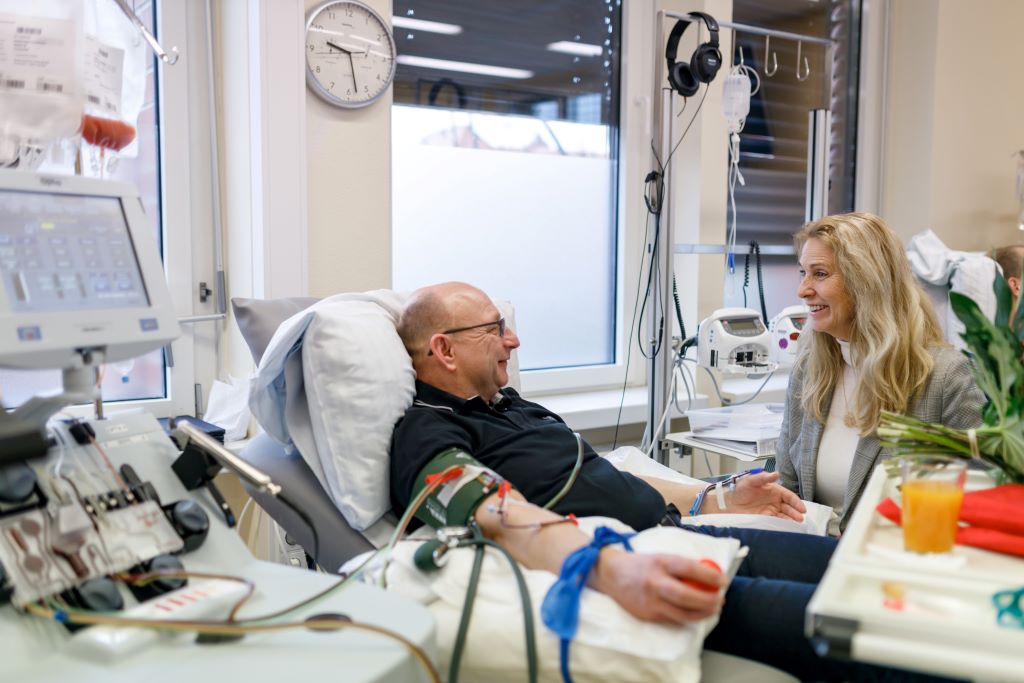
She says misconceptions about the process, along with concerns about taking time off work, can discourage potential donors. “Some men assume that donating stem cells means undergoing surgery, or worry that they can’t afford to take time off work. In most cases, stem cells are collected from the bloodstream through a procedure similar to donating blood, and DKMS Africa covers the costs associated with donation.”

Former Springbok Jaco Pretorius once shared some of these misconceptions. He registered as a donor in 2018 after watching his best friend’s life being saved by a stem cell transplant. Four years later, he was identified as a match for a patient.

“My experience is that people are not aware of the great need in our country and the simplicity of the process,” he explains. “The perception is that it is a painful procedure which carries personal risk. My personal experience was the complete opposite, which I try my best to communicate as far as possible to potential donors.”

After blood tests and medical checks, Pretorius donated through peripheral blood stem cell collection. The procedure took a few hours, and he experienced no side effects. He later learned through DKMS Africa that the transplant had been successful, and that the recipient was healthy.

“That was one of the best feelings, to know that through such a simple action, someone else’s life was saved,” he recalls.

Pretorius now hosts donor registration drives along with DKMS Africa to encourage others to join the registry. However, Mokomele stresses that signing up is only the beginning. “Joining the registry is incredibly important, but it doesn’t end there. If you’re identified as a potential match, we need to be able to reach you. Keeping your contact details up to date and being willing to donate when the time comes could make all the difference to someone waiting for a transplant.”

South Africans aged 17 to 55 who meet the health requirements can register at www.dkms-africa.org/register-now, while existing donors can update their contact details here.

For more information, contact DKMS Africa on 0800 12 10 82.