Day: January 12, 2026

Microbes May Hold the Key to the Brain’s Evolution

First-of-its-kind study offers evidence that microbes from different primate species influence physiology in ways linked to brain size and function

Source: Pixabay

Humans have the largest relative brain size of any primate, but little is known about how mammals with larger brains evolved to meet the intense energy demands required to support brain growth and maintenance.

A new study from Northwestern University provides the first empirical data showing the direct role the gut microbiome plays in shaping differences in the way the brain functions across different primate species.

“Our study shows that microbes are acting on traits that are relevant to our understanding of evolution, and particularly the evolution of human brains,” said Katie Amato, associate professor of biological anthropology and principal investigator of the study, which was published in PNAS

The study builds upon previous findings from Amato’s lab that showed the microbes of larger-brained primates, when introduced in host mice,  produced more metabolic energy in the microbiome of the host – a prerequisite for larger brains, which are energetically costly to develop and function. This time, the researchers wanted to look at the brain itself to see if the microbes from different primates with different relative brain sizes would change how the brains of host mice functioned. 

What they found

In a controlled lab experiment, the researchers implanted gut microbes from two large-brain primate species (human and squirrel monkey) and one small-brain primate species (macaque) into microbe-free mice.  

Within eight weeks of making changes to the hosts’ microbiomes, they observed that the brains of mice with microbes from small-brain primates were indeed working differently than the brains of mice with microbes from large-brain primates. 

In the mice with large-brain primate microbes, the researchers found increased expression of genes associated with energy production and synaptic plasticity, the physical process of learning in the brain. In the mice with smaller-brain primate microbes, there was less expression of these processes. 

“What was super interesting is we were able to compare data we had from the brains of the host mice with data from actual macaque and human brains, and to our surprise, many of the patterns we saw in brain gene expression of the mice were the same patterns seen in the actual primates themselves,” Amato said. “In other words, we were able to make the brains of mice look like the brains of the actual primates the microbes came from.”

Another surprising discovery the researchers made was a pattern of gene expression associated with ADHD, schizophrenia, bipolar and autism in the genes of the mice with the microbes from smaller-brained primates. 

While there is existing evidence showing correlations between conditions like autism and the composition of the gut microbiome, there is a lack of data showing the gut microbes contribute to these conditions. 

“This study provides more evidence that microbes may causally contribute to these disorders —specifically, the gut microbiome is shaping brain function during development,” Amato said. “Based on our findings, we can speculate that if the human brain is exposed to the actions of the ‘wrong’ microbes, its development will change, and we will see symptoms of these disorders, i.e., if you don’t get exposed to the ‘right’ human microbes in early life, your brain will work differently, and this may lead to symptoms of these conditions.” 

Implications and next steps

Amato sees clinical implications for further exploration of the origins of some psychological disorders and for taking an evolutionary perspective on the way microbes affect brain physiology.

“It’s interesting to think about brain development in species and individuals and investigating whether we can look at cross-sectional, cross-species differences in patterns and discover rules for the way microbes are interacting with the brain, and whether the rules can be translated into development as well.

Primate gut microbiota induce evolutionarily salient changes in mouse neurodevelopment” was published by the Proceedings of the National Academy of Sciences on Jan. 5.

Source: Northwestern University
Post-stroke Injection of Nanomaterials Protects the Brain in Preclinical Study

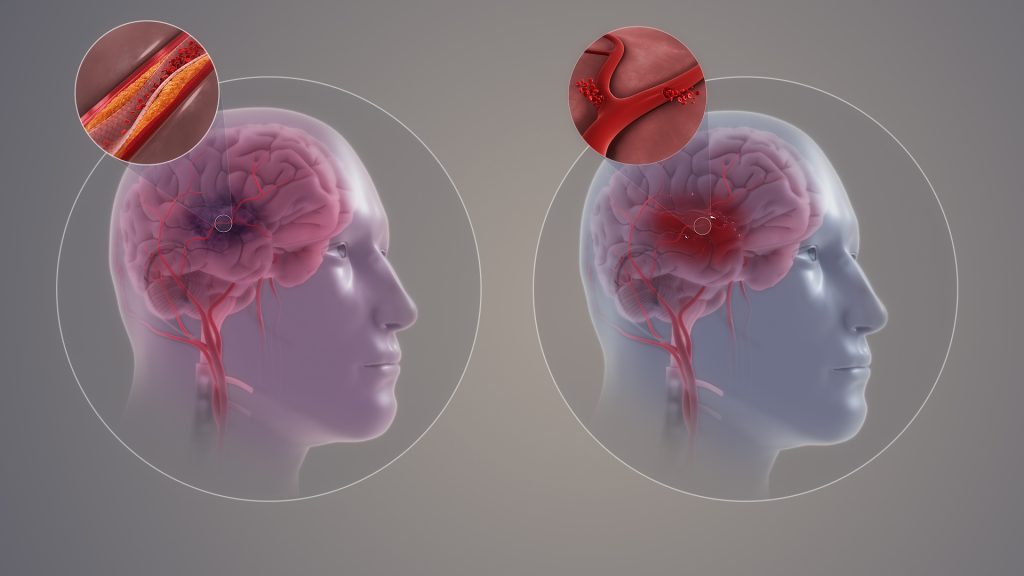
Ischaemic and haemorrhagic stroke. Credit: Scientific Animations CC4.0

When a person suffers a stroke, physicians must restore blood flow to the brain as quickly as possible to save their life. But, ironically, that life-saving rush of blood can also trigger a second wave of damage — killing brain cells, fuelling inflammation and increasing the odds of long-term disability.

Now, Northwestern University scientists have developed an injectable regenerative nanomaterial that helps protect the brain during this vulnerable window.

In a new preclinical study, the team delivered a single intravenous dose, immediately after restoring blood flow, in a mouse model of ischemic stroke, the most common type of stroke. The therapy successfully crossed the blood-brain barrier — a major challenge for most drugs — to reach and repair brain tissue. The material significantly reduced brain damage and showed no signs of side effects or organ toxicity.

Published in the journal Neurotherapeutics, the findings suggest the new therapy could eventually complement existing stroke treatments by limiting secondary brain injury and supporting recovery.

“Current clinical approaches are entirely focused on blood flow restoration,” said co-corresponding author Dr Ayush Batra, associate professor  at Northwestern and a neurocritical care physician with Northwestern Medicine. “Any treatment that facilitates neuronal recovery and minimises injury would be very powerful, but that holy grail doesn’t yet exist. This study is promising because it’s leading us down a pathway to develop these technologies and therapeutics for this unmet need.”

The injectable therapy is based on supramolecular therapeutic peptides (STPs), a platform developed by Northwestern’s Samuel I. Stupp. A study published in 2021 in the journal Science demonstrated the use of an STP technology — nicknamed “dancing molecules” — because of the highly dynamic nature of its therapeutic agents that could reverse paralysis and repair tissue in mice after a single injection at the site of severe spinal cord injury. The new study found scientists can administer similar dynamic assemblies of molecules intravenously, without requiring surgery or an invasive injection directly into the brain.

“One of the most promising aspects of this study is that we were able to show this therapeutic technology, which has shown incredible promise in spinal cord injury, can now begin to be applied in a stroke model and that it can be delivered systemically,” said Stupp, co-corresponding author. “This systemic delivery mechanism and the ability to cross the blood-brain barrier is a significant advance that could also be useful in treating traumatic brain injuries and neurodegenerative diseases such as ALS.”

Study mimicked real-world stroke treatment

Acute ischaemic stroke is a devastating condition and is one of the leading causes of morbidity and mortality worldwide, Batra said, severely impacting a patient’s quality of life and engagement in society.

“It has not only a significant personal and emotional burden on patients, but also a financial burden on families and communities,” he said. “Reducing this level of disability with a therapy that could potentially help in restoring function and minimising injury would really have a powerful long-term impact.”

The findings are highly relevant for future clinical applications because the scientists tested the approach in a mouse model that closely mimics real-world ischemic stroke treatment, Batra said. They first blocked blood flow to simulate a major ischaemic stroke and then restored it (a process called reperfusion), just as whem doctors restore blood flow acutely for ischaemic stroke patients.

The scientists monitored the mice for seven days and didn’t observe any significant side effects or biocompatibility issues such as toxicity or immune system rejection. They used advanced imaging techniques, such as real-time intravital intracranial microscopy seen in this video, to confirm the therapy localised to the stroke injury site. Compared to untreated mice, those treated with the “dancing molecules” had significantly less brain tissue damage, reduced signs of inflammation and reduced signs of excessive, damaging immune response.

Stupp said the therapy has pro-regenerative and anti-inflammatory properties, both of which contributed to the positive results.

“You get an accumulation of harmful molecules once the blockage occurs and then suddenly you remove the clot and all those ‘bad actors’ get released into the bloodstream, where they cause additional damage,” Stupp said. “But the dancing molecules carry with them some anti-inflammatory activity to counteract these effects and at the same time help repair neural networks.”

Dynamic ‘dancing molecules’ can be dialed down in concentration

The secret behind Stupp’s “dancing molecules” breakthrough therapeutic is tuning the collective motion of molecules, so they can find and properly engage constantly moving cellular receptors. The treatment sends signals that encourage nerve cells to repair themselves. For example, it can help nerve fibres (called axons) grow again and reconnect with other nerve cells, restoring lost communication through neural plasticity.

In previous studies, scientists injected the dancing molecules as a liquid, and when used to treat spinal cord injury, the therapy immediately gels into a complex network of nanofibres that mimic the dense, extracellular matrix of the spinal cord. By matching the matrix’s structure, mimicking the motion of biological molecules and incorporating signals for receptors, the synthetic materials are able to communicate with cells.

In the new study, the scientists dialled down the concentration of supramolecular peptide assemblies to prevent possible clotting as the therapy enters the bloodstream. Smaller aggregates of peptides easily crossed the blood-brain barrier. Once enough molecules cross, larger nanofibre assemblies can form in brain tissue to produce a more potent therapeutic effect, Stupp said.

“We chose for this stroke study one of the most dynamic therapies we had in terms of its molecular structure so that supramolecular assemblies would have a better probability of crossing the blood-brain barrier,” Stupp said.

Optimiaing therapeutic targeting

The fact that seemingly effective therapies cannot cross the blood-brain barrier has plagued the neuroscience field for decades, Batra said. This new therapy could change that.

When a physician acutely restores blood flow to a region of the brain in a stroke patient, the blood-brain barrier permeability is locally increased, naturally creating a transient opening and opportunity for therapeutic intervention, Batra said.

“Add to that a dynamic peptide that is able to cross more readily, and you’re really optimising the chances that your therapy is going where you want it to go,” Batra said.

Next steps

Further studies will need to assess whether this treatment can support longer-term, functional recovery, Batra said. For instance, many stroke patients suffer from significant cognitive decline throughout the subsequent year after a stroke. The new therapy is primed to address that secondary injury, Batra said, but the studies will require a longer follow-up period and more sophisticated behavioral testing.

In addition, the team is interested in testing whether additional regenerative signals could be incorporated into the therapeutic peptides to produce even better results.

Source: Northwestern University

Trial Suggests Simple Treatment Change for HIV-related Sepsis

Mycobacterium tuberculosis drug susceptibility test. Photo by CDC on Unsplash

A University of Virginia-led team of researchers has made a discovery that may change sepsis treatment for patients in Africa.

Over the course of five years, the researchers studied patients with HIV-related sepsis in eastern Africa, discovering that the most common cause of sepsis was tuberculosis and that treating it immediately, even before a tuberculosis diagnosis was made, significantly improved survival rates. 

Sepsis, or critical illness due to infection, is the leading global cause of death, responsible for an estimated one-fifth of deaths worldwide.

“We designed a trial with colleagues in Tanzania and Uganda to look specifically at people living with HIV, who suffer higher rates of sepsis and are more likely to die when they contract it,” said Dr Scott Heysell, director of the UVA Center for Global Health Equity and the co-lead investigator of the study. “Over half of the people enrolled in this trial were ultimately found to have tuberculosis and, if they immediately received tuberculosis treatment, they were significantly more likely to survive.”

Funded by a grant from the National Institutes of Health, the research, dubbed the “ATLAS study,” was done by a team of nearly 30 doctors, nurses, pharmacists, study coordinators and statisticians, including leading HIV and tuberculosis physician-scientists, Dr Stellah Mpagama from Kibong’oto Infectious Diseases Hospital in Tanzania, and Dr Conrad Muzoora, from the Mbarara University of Science and Technology in Uganda.

“The trial is the culmination of almost 20 years of collaborative work with colleagues in Uganda and Tanzania to better understand, diagnose and manage sepsis,” said co-lead investigator Dr Christopher Moore, professor of medicine and global health equity at the UVA School of Medicine. “The results of ATLAS have broad and significant implications for the treatment of sepsis in Africa, an all too common and deadly illness, which sadly is likely to become even more common with the advent of global public health funding cuts.”

It is often difficult to diagnose tuberculosis, so the team had to use newer and more exhaustive testing, according to Heysell.

“It is a tragedy to be on the front lines and witness the excessive mortality and morbidity from sepsis and tuberculosis, particularly among people with HIV,” said Dr Tania Thomas, a contributing researcher and associate professor of infectious diseases and international health at UVA. “These are treatable conditions, but time is rarely on our side. Until we have more accurate rapid diagnostic tests for tuberculosis, we are pleased to demonstrate that the strategy of immediate tuberculosis treatment can improve survival.”

The team has received additional NIH funding this year to continue its work through a new trial at four hospitals in Tanzania and Uganda to test whether the use of hydrocortisone to reduce inflammation and improve blood pressure, and/or an immediate treatment for tuberculosis and other bacterial pathogens, will improve 28-day mortality from HIV-related sepsis.

“In programmatic settings, tuberculosis treatment was mostly the same as for people without HIV, even though their health needs are more complex,” said Dr Mpagama. “Many of these patients have multiple infections at the same time, which makes their care more challenging.”

The research is part of UVA’s Center for Global Health Equity’s effort to establish meaningful, two-sided research partnerships in Eastern Africa, according to Heysell, who is working to increase educational and research opportunities outside of the US for UVA students. This includes coordinating clinical electives for medical students and other health science students in hospitals and clinics abroad.

To that end, emergency medicine professor Dr Amita Sudhir has been promoted to inaugural director for global health training within the center. Her goal will be to increase abroad opportunities for medical students within existing partnering organisations.

Source: University of Virginia

Opinion Piece: Can We Trust What Comes out the Tap?

South Africa’s water quality monitoring gap explained

By Robert Erasmus, Managing Director at Sanitech

Source: Unsplash CC0

Access to safe and clean water remains a critical concern in South Africa. Recent incidents, including a highly contaminated water sample from Secunda that showed extreme levels of E. coli, have highlighted the urgent need for faster and more reliable water quality monitoring across the country. Public health depends on the safety of the water flowing through our rivers, dams and municipal systems, yet current monitoring processes often struggle to detect contamination before it reaches communities. Improving these systems will require a combination of practical testing methods, independent oversight and community involvement.

Why traditional testing cannot keep up
South Africa’s public water testing framework is accurate but slow. When contamination is suspected, samples must be collected, couriered to an accredited laboratory and cultured to detect biological threats such as E. coli. While potential of Hydrogen (pH) and chlorine levels can be measured quickly on site, biological tests take one to two weeks because the organisms must be grown before results can be confirmed. This delay leaves a dangerous gap in which water quality could deteriorate without immediate detection.

The process is also costly. A single accredited test, including logistics, can cost around R5 000, which makes frequent testing inaccessible for households and many community organisations. As a result, many people rely on the assumption that water from the tap is safe. When contamination does occur, individuals may fall ill without realising the cause because there is no real time feedback on water quality.

How in-house testing can speed up detection
Although accredited labs are still required for official reporting, new approaches are emerging that can help organisations identify risks earlier. Some companies are now investing in equipment that allows them to carry out basic testing in house. These tests are not accredited but they give fast, useful readings that act as early warning indicators. If an organisation detects abnormal results, it can immediately escalate the matter to an accredited lab instead of waiting for contamination to spread.

Routine pH and chlorine monitoring also plays a valuable role. These tests are inexpensive, easy to perform and can be carried out continuously within businesses or local facilities. While they cannot detect biological contamination, they help ensure that the chemical balance of the water stays within safe limits. When combined with monthly or cyclical biological testing, this creates a more proactive monitoring system.

This approach recently proved critical in Secunda, where a business conducting its own branch-level testing discovered that municipal water entering the site was contaminated with sewage. The in-house test flagged the issue quickly, prompting further investigation. Without this internal programme, the problem might have gone unnoticed for far longer.

Why collaboration improves water safety
A stronger water monitoring system cannot rely on public authorities alone. Partnerships between municipalities, private companies and communities can help improve both the speed and reliability of responses. Independent testing at business level introduces greater transparency and can highlight water quality issues that may otherwise go unreported. When patterns of poor quality emerge, communities gain evidence to push for corrective action.

Transparency also drives accountability. If businesses in a region consistently report poor water quality, it becomes more difficult for the problem to remain hidden. Public pressure increases and municipalities have a clearer picture of where urgent interventions are needed. This type of shared visibility is essential for strengthening trust and promoting faster action.

Communities have an important role as well. Residents are often the first to notice discolouration, odour or unusual cloudiness in their tap water. Reporting these signs to employers or organisations with the means to test can lead to early detection. Raising issues solely through political channels may not always lead to immediate investigation, but involving local businesses can create quicker pathways to testing and response.

A path toward safer and more reliable water
A safer water future for South Africa will depend on strengthening both formal and informal monitoring systems. Accredited labs remain vital for official results, yet in house testing, routine checks and community reporting can highlight risks long before formal samples are processed. When contamination is confirmed, solutions like filtration, Ultraviolet (UV) treatment or proper chlorination can be deployed quickly to restore safety.

What this shows is simple: the safety of tap water cannot be taken at face value. Consistent monitoring and transparent reporting are key to safeguarding public health. With better coordination between public bodies, private organisations and communities, South Africa can build a water monitoring system that identifies problems early and protects every household.