Year: 2025

New Research Finds that Ivermectin Reduces Malaria Transmission

Photo by Ekamelev on Unsplash

A collaborative new study involving KEMRI-Wellcome Trust researchers has highlighted a new way to control malaria transmission. The study found that ivermectin, a drug normally used for neglected tropical diseases, led to a 26% reduction in new malaria infections among children aged 5-15 by killing feeding mosquitoes.

Malaria remains a global health challenge, with 263 million cases and 597 000 deaths reported in 2023. Current vector control methods, such as long-lasting insecticidal nets and indoor residual spraying, have become less effective due to insecticide resistance and behavioural adaptations in mosquitoes to bite outdoors and during dusk or dawn, when people are not protected by these measures. This underscores the urgent need for innovative solutions to combat malaria.

The BOHEMIA trial, the largest study on ivermectin for malaria to date, showed a 26% reduction in new malaria infection on top of existing bed nets,providing strong evidence of ivermectin’s potential as a complementary tool in malaria control. Coordinated by the Barcelona Institute for Global Health (ISGlobal) – an institution supported by the “la Caixa” Foundation – in collaboration with the Manhiça Health Research Centre and the KEMRI-Wellcome Trust Research Programme, the study has been published in The New England Journal of Medicine.

Ivermectin is a drug traditionally used to treat neglected tropical diseases like onchocerciasis which causes river blindness and lymphatic filariasis which causes elephantiasis. It has now been shown to reduce malaria transmission by killing the mosquitoes that feed on treated individuals. Given the rising resistance to conventional insecticides, ivermectin could offer an effective new approach totackle malaria transmission, especially in regions where traditional methods have become less effective.

The Unitaid-funded BOHEMIA project (Broad One Health Endectocide-based Malaria Intervention in Africa) conducted two Mass Drug Administration (MDA) trials in the high-burden malaria regions: Kwale County (Kenya) and Mopeia district (Mozambique). The trials assessed the safety and efficacy of a single monthly dose of ivermectin (400mcg/kg) given for three consecutive months at the start of the rainy season in reducing malaria transmission. In Kenya, the intervention targeted children aged 5–15, while in Mozambique it focused on children under five.

In Kwale County, Kenya, children who received ivermectin experienced a 26% reduction in malaria infection incidence compared to those who received the control drug. The trial involved over 20 000 participants and more than 56 000 treatments, demonstrating that ivermectin significantly reduced malaria infection rates – particularly among children living further from cluster borders or in areas where drug distribution was more efficient. Moreover, the safety profile of ivermectin was favourable, with no severe drug-related adverse events and only mild, transient side effects already seen with ivermectin in campaigns against neglected tropical diseases.

Professor Marta Maia, Associate Professor at the Centre for Tropical Medicine and Global Health and Medical Entomologist based at the KEMRI-Wellcome Trust Research Programme, said: ‘The findings suggest that ivermectin MDA could be a valuable complementary strategy for malaria control, particularly in areas where mosquito resistance to insecticides is a growing concern.’

Dr Joseph Mwangangi, Senior Principal Research Scientist at the KEMRI-Wellcome Trust Research Programme, added: ‘These results align with the World Health Organization’s (WHO) criteria for new vector control tools.’

Carlos Chaccour, co-principal investigator of the BOHEMIA project said: ‘We are thrilled with these results. Ivermectin has shown great promise in reducing malaria transmission and could complement existing control measures. With continued research, ivermectin MDA could become an effective tool for malaria control and even contribute to elimination efforts.’

In contrast, the implementation of the Mozambique trial in the rural district of Mopeia faced severe disruptions due to Cyclone Gombe in 2022 and a subsequent cholera outbreak, which significantly disrupted operations.

Francisco Saúte, director of the Manhiça Health Research Centre said: ‘One of the most important lessons we learned from the trial in Mopeia is thatstrong community engagement is essential. Building trust with local communities and fostering close collaboration with the Health Ministry, National Malaria Control Program, and local authorities was key to ensuring acceptance of the ivermectin MDA.’

In addition to reducing malaria transmission, ivermectin MDA offers significant collateral benefits. The BOHEMIA team found an important reduction in the prevalence of skin infestations such as scabies and head lice in the ivermectin group in Mozambique, and the community reported a major reduction in bed bugs in Kenya. These effects are particularly valuable when ivermectin is integrated into existing delivery systems, maximising its impact on public health.

The study is part of a larger global effort to assess ivermectin’s potential in malaria control. The findings have been reviewed by the WHO vector control advisory group, which concluded that the study had demonstrated impact and recommended further studies. Findings were also shared with national health authorities as they evaluate the potential inclusion of ivermectin in malaria control programmes.

Regina Rabinovich, BOHEMIA PI and Director of ISGlobal’s Malaria Elimination Initiative said: ‘This research has the potential to shape the future of malaria prevention, particularly in endemic areas where existing tools are failing. With its novel mechanism of action and proven safety profile, ivermectin could offer a new approach using a well-known, safe drug that can add to the effect of other mosquito control tools available today.’

Source: Nuffield Department of Medicine, University of Oxford

Beetroot Juice Lowers Blood Pressure in Older People by Changing Oral Microbiome

Pic by Jim Wileman – University of Exeter images

The blood pressure lowering effect of nitrate-rich beetroot juice in older people may be due to specific changes in their oral microbiome, according to the largest study of its kind.

Researchers at the University of Exeter conducted the study, published in the journal Free Radical Biology and Medicine, comparing responses between a group of older adults to that of younger adults. Previous research has shown that a high nitrate diet can reduce blood pressure, which can help reduce risk of heart disease.

Nitrate is crucial to the body and is consumed as a natural part of a vegetable-rich diet.  When the older adults drank a concentrated beetroot juice ‘shot’ twice a day for two weeks*, their blood pressure decreased – an effect not seen in the younger group.

The new study, funded by a BBSRC Industrial Partnership Award, provides evidence that this outcome was likely caused by the suppression of potentially harmful bacteria in the mouth.  An imbalance between beneficial and harmful oral bacteria can decrease the conversion of nitrate (abundant in vegetable-rich diets) to nitric oxide. Nitric oxide is key to healthy functioning of the blood vessels, and therefore the regulation of blood pressure.

Study author Professor Anni Vanhatalo, of the University of Exeter, said: “We know that a nitrate-rich diet has health benefits, and older people produce less of their own nitric oxide as they age. They also tend to have higher blood pressure, which can be linked to cardiovascular complications like heart attack and stroke. Encouraging older adults to consume more nitrate-rich vegetables could have significant long term health benefits. The good news is that if you don’t like beetroot, there are many nitrate-rich alternatives like spinach, rocket, fennel, celery and kale.”

The study recruited 39 adults aged under 30, and 36 adults in their 60s and 70s through the NIHR Exeter Clinical Research Facility. The trial was supported by the Exeter Clinical Trials Unit. Each group spent two weeks taking regular doses of nitrate-rich beetroot juice and two weeks on a placebo version of the juice with nitrate stripped out. Each condition had a two week “wash out” period in between to reset. The team then used a bacterial gene sequencing method to analyse which bacteria were present in the mouth before and after each condition.

In both groups, the make-up of the oral microbiome changed significantly after drinking the nitrate-rich beetroot juice, but these changes differed between the younger and older age groups.

The older age group experienced a notable decrease in the mouth bacteria Prevotella after drinking the nitrate rich juice, and an increase in the growth of bacteria known to benefit health such as Neisseria. The older group had higher average blood pressure at the start of the study, which fell after taking the nitrate-rich beetroot juice, but not after taking the placebo supplement.

Co-author Professor Andy Jones, of the University of Exeter, said: “This study shows that nitrate-rich foods alter the oral microbiome in a way that could result in less inflammation, as well as a lowering of blood pressure in older people. This paves the way for larger studies to explore the influence of lifestyle factors and biological sex in how people respond to dietary nitrate supplementation.”

Dr Lee Beniston FRSB, Associate Director for Industry Partnerships and Collaborative Research and Development at BBSRC, said: “This research is a great example of how bioscience can help us better understand the complex links between diet, the microbiome and healthy ageing. By uncovering how dietary nitrate affects oral bacteria and blood pressure in older adults, the study opens up new opportunities for improving vascular health through nutrition. BBSRC is proud to have supported this innovative partnership between academic researchers and industry to advance knowledge with real-world benefits.”

Source: University of Exeter

Teen Smokers and Vapers Have Higher Rates of Depression and Anxiety, Study Finds

Study analysed data from the US National Youth Tobacco Survey on more than 60 000 middle and high school students.

Photo by Nery Zarate on Unsplash

Adolescents who use either e-cigarettes or conventional tobacco products (CTP) – like cigarettes, cigars, hookah and pipes – are significantly more likely to report symptoms of depression and anxiety than teens who don’t use tobacco products at all, according to a study published this week in the open-access journal PLOS Mental Health by Noor Abdulhay of West Virginia University, USA, and colleagues.

Tobacco use and mental health challenges are known to have a complex, bidirectional relationship. Understanding the interplay between adolescent tobacco use and mental health is particularly important, since adolescence is a critical developmental period during which many health-related risk-taking behaviors begin. Moreover, there are increasing rates of anxiety, depression, and suicide among adolescents in the U.S. as well as shifting patterns of tobacco use.

A white screen with black dotsAI-generated content may be incorrect.

In the new study, researchers used data on tobacco use, depression and anxiety symptoms, among different demographics, from the 2021-2023 National Youth Tobacco Survey. Among the 60,072 middle and high school students who had completed all questionnaires in full, 21.37% had used tobacco products, with 9.94% using only e-cigarettes, 3.61% using only CTPs, and 7.80% using both.

Overall, 25.21% of respondents reported symptoms associated with depression and 29.55% reported anxiety symptoms. Compared to adolescents who had not used any tobacco products, users of e-cigarettes or CTPs displayed a potentially heightened risk of depression and anxiety, whilst those who used both CTPs and e-cigarettes had the highest odds of reporting mental health struggles

The authors conclude that “while causality cannot be determined, the results from this study showed that all forms of tobacco use were significantly associated with mental health issues. There is a need to continue promoting mental health support and implementing tailored interventions to combat all forms of tobacco use among adolescents”.

Provided by PLOS

Intermittent Energy Restriction May Improve Outcomes in People with Obesity and Type 2 Diabetes

Photo by I Yunmai on Unsplash

Intermittent energy restriction, time-restricted eating and continuous energy restriction can all improve blood sugar levels and body weight in people with obesity and type 2 diabetes, according to a study being presented Sunday at ENDO 2025, the Endocrine Society’s annual meeting in San Francisco, Calif.

“This study is the first to compare the effects of three different dietary interventions intermittent energy restriction (IER), time-restricted eating (TRE) and continuous energy restriction (CER) in managing type 2 diabetes with obesity,” said Haohao Zhang, PhD, chief physician at The First Affiliated Hospital of Zhengzhou University in Zhengzhou, China.

Although researchers identified improved HbA1c levels, and adverse events were similar across the three groups, the IER group showed greater advantages in reducing fasting blood glucose, improving insulin sensitivity, lowering triglycerides, and strengthening adherence to the dietary interventions.

“The research fills a gap in directly comparing 5:2 intermittent energy restriction with a 10-hour time-restricted eating in patients with obesity and type 2 diabetes. The findings provide scientific evidence for clinicians to choose appropriate dietary strategies when treating such patients,” Zhang says.

Zhang and colleagues performed a single-centre, randomised, parallel-controlled trial at the First Affiliated Hospital of Zhengzhou University from November 19, 2021 to November 7, 2024.

Ninety patients were randomly assigned in a 1:1:1 ratio to the IER, TRE or CER group, with consistent weekly caloric intake across all groups. A team of nutritionists supervised the 16-week intervention.

Of those enrolled, 63 completed the study. There were 18 females and 45 males, with an average age of 36.8 years, a mean diabetes duration of 1.5 years, a baseline BMI of 31.7kg/m², and an HbA1c of 7.42%.

At the end of the study, there were no significant differences in HbA1c reduction and weight loss between the IER, TRE and CER groups. However, the absolute decrease in HbA1c and body weight was greatest in the IER group.

Compared to TRE and CER, IER significantly reduced fasting blood glucose and triglycerides and increased the Matsuda index, a measure of whole-body insulin sensitivity. Uric acid and liver enzyme levels exhibited no statistically significant changes from baseline in any study group.

Two patients in the IER group and the TRE group, and three patients in the CER group, experienced mild hypoglycemia.

The IER group had the highest adherence rate (85%), followed by the CER group at 84% and the TRE group at 78%. Both the IER and CER groups showed statistically significant differences compared with the TRE group.

Zhang said these findings highlight the feasibility and effectiveness of dietary interventions for people who have obesity and type 2 diabetes.

Source: The Endocrine Society

Common Sugar Substitute Shown to Impair Brain Cells, Boost Stroke Risk

Photo by Towfiqu barbhuiya

New University of Colorado Boulder research shows the popular sugar substitute erythritol comes with serious downsides, impacting brain cells in numerous ways that can boost the risk of stroke. The study was published in the Journal of Applied Physiology.

“Our study adds to the evidence suggesting that non-nutritive sweeteners that have generally been purported to be safe, may not come without negative health consequences,” said senior author Christopher DeSouza, professor of integrative physiology and director of the Integrative Vascular Biology Lab.

First approved by the Food and Drug Administration in 2001, erythritol is a sugar alcohol, often produced by fermenting corn, and found in hundreds of products made by various brands. It has almost no calories, is about 80% as sweet as table sugar, and has a negligible impact on insulin levels, making it a favourite for people trying to lose weight, keep their blood sugar in check or avoid carbohydrates.

But recent research has begun to shed light on its risks.

One recent Cleveland Clinic study involving 4000 people in the US and Europe found that men and women with higher circulating levels of erythritol were significantly more likely to have a heart attack or stroke within the next three years.

DeSouza and first author Auburn Berry, a graduate student in his lab, set out to understand what might be driving that increased risk.

To test impacts of erythritol on cells, researchers in the lab treated human cerebral microvascular endothelial cells (hCMECs)  for three hours with about the same amount of erythritol contained in a typical sugar-free beverage.

They observed that the treated cCMEVs were altered in numerous ways: 

They expressed significantly less nitric oxide, a molecule that relaxes and widens blood vessels, and more endothelin-1, a protein that constricts blood vessels. Meanwhile, when challenged with thrombin, cellular production of the natural clot-busting compound t-PA was “markedly blunted.” The erythritol-treated cells also produced more reactive oxygen species (ROS), aka “free radicals,” metabolic byproducts which can age and damage cells and inflame tissue.

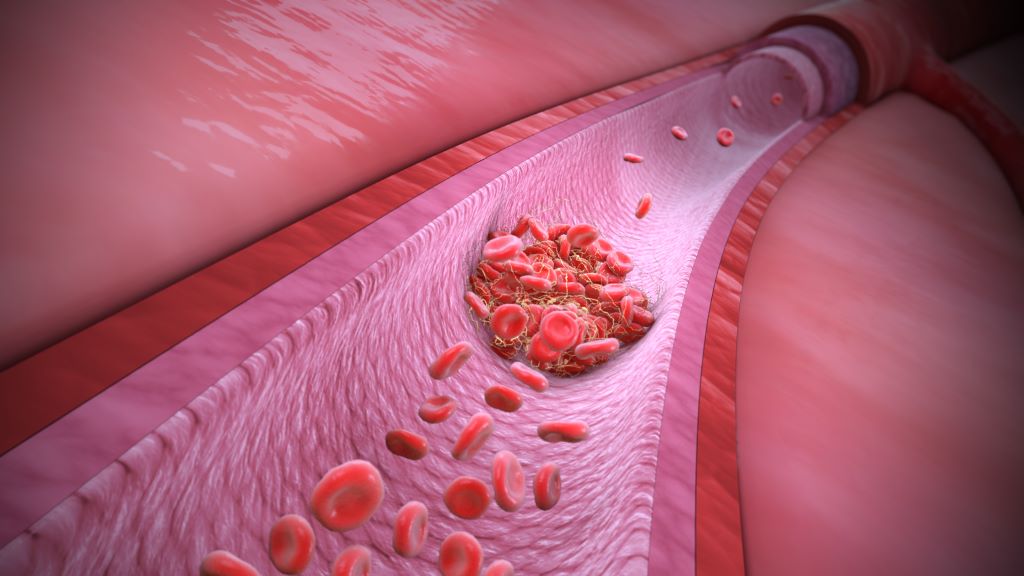
Thrombophilia. Credit: Scientific Animations CC4.0.

Previous research has shown that as little as 30g of erythritol (about as much as you’d find in 600mL of sugar-free ice cream) can also cause platelets to clump together, potentially forming clots.

“Big picture, if your vessels are more constricted and your ability to break down blood clots is lowered, your risk of stroke goes up,” said Berry. “Our research demonstrates not only that, but how erythritol has the potential to increase stroke risk.”

DeSouza notes that their study used only a serving-size worth of the sugar substitute.
For those who consume multiple servings per day, the impact, presumably, could be worse.

The authors caution that their study was a laboratory study, conducted on cells, and larger studies in people are now needed.

That said, De Souza encourages consumers to read labels, looking for erythritol or “sugar alcohol” on the label.

“Given the epidemiological study that inspired our work, and now our cellular findings, we believe it would be prudent for people to monitor their consumption of non-nutrient-sweeteners such as this one,” he said.

Source: University of Colorado Boulder

RSV Vaccination of Pregnant Mothers Reduces Infant Hospitalisations by 72%

Source: Pixabay CC0

Researchers found the respiratory syncytial virus (RSV) vaccine, introduced across the UK in late summer 2024, led to a 72% reduction in babies hospitalised with the virus if the pregnant parent was vaccinated.

The findings, published in The Lancet Child and Adolescent Health, are the first to show the real-world effectiveness of the vaccine during pregnancy in the UK.

Uptake of the jab among those who are pregnant could help to limit the number of sick babies each winter, reducing hospital pressures, experts say. 

Virus protection

RSV is a common virus that causes coughs and colds but can lead to a severe lung infection called bronchiolitis, which can be dangerous in babies, with some requiring admission to intensive care. The virus is the main infectious cause of hospitalisation for babies in the UK and globally.

Receiving the vaccine during pregnancy helps to protect both parent and baby. Antibodies produced by the parent in response to the vaccine are passed to the foetus, providing protection from severe RSV for the first six months after birth.

Hospital admissions

The research team, led by the Universities of Edinburgh and Leicester, recruited 537 babies across England and Scotland who had been admitted to hospital with severe respiratory disease in the winter of 2024-2025, the first season of vaccine implementation. 391 of the babies tested positive for RSV. 

Parents of babies who did not have RSV were two times more likely to have received the vaccine before delivery than the parents of RSV-positive babies – 41% compared with 19%.

Vaccinate early

Receiving the vaccine more than 14 days before delivery offered a higher protective effect, with a 72% reduction in hospital admissions compared with 58% for infants whose pregnant parent was vaccinated at any time before delivery. 

Experts recommend getting vaccinated as soon as possible from 28 weeks of pregnancy to provide the best protection, as this allows more time for the parent to generate and pass on protective antibodies to the baby, but the jab can be given up to birth.

With the availability of an effective RSV vaccine shown to significantly reduce the risk of hospitalisation in young infants in the UK, there is an excellent opportunity for pregnant women to get vaccinated and protect themselves and their infants from RSV bronchiolitis this coming winter.

Dr Thomas Williams, Institute for Regeneration and Repair, Paediatric Consultant at the Royal Hospital for Children and Young People

Improve uptake

Previous research has found that only half of expectant parents in England and Scotland are currently receiving the RSV vaccine, despite its high success at preventing serious illness.

The findings highlight the importance of raising awareness of the availability and effectiveness of the new vaccine to help protect babies, experts say.

Source: The University of Edinburgh

A New Era for Employment Equity in the Health Sector: Sectoral Targets Now in Force

Photo by cottonbro studio

By Dhevarsha Ramjettan, Partner, Nivaani Moodley, Associate Director and Kanyiso Kezile, Trainee Attorney from Webber Wentzel

The Department of Employment and Labour (the Department) has ushered in a decisive moment for transformation in South Africa’s human health and social work activities sector (the health sector). With the publication of the national economic sectors and sectoral numerical targets, now in effect as of 15 April 2024, employers in this sector face new legal and ethical responsibilities to accelerate transformation and inclusion across all occupational levels.

In line with section 15A (2) of the Employment Equity Act, 1998 (EEA), numerical targets have been introduced to promote the equitable representation of suitably qualified individuals from designated groups across all occupational levels. For a sector so deeply connected to the nation’s wellbeing, the implementation of sector-specific employment equity targets marks more than just regulatory change; it signals a foundational shift toward greater inclusion and accountability. The health sector, as classified by the Department, encompasses three key sub-sectors: human health activities, residential care activities, and social work activities without accommodation. Each plays a vital role in delivering healthcare and social support services across South Africa.

The newly gazetted targets place designated groups, namely black people, women, and persons with disabilities, at the centre of a new equity framework. Designated groups are defined as citizens of the Republic of South Africa by birth or descent, or those who became citizens by naturalisation. Designated employers in this sector are now legally required to integrate clearly defined sector-specific numerical targets into their Employment Equity Plans (EEPs), with accountability measures to track progress and enforce compliance.

What are the targets for the health sector?

The targets are as follows:

Occupational LevelTarget % (Designated Groups)Male (%)Female (%)
Top Management71.3%27.6%43.7%
Senior Management85.9%39.8%46.1%
Professionally Qualified & Middle Management95.9%49.8%46.1%
Skilled Technical Workers95.9%49.8%46.1%
All Levels (Disability Inclusion)Minimum 3%

As illustrated above, the targets are set for the top four occupational levels. Employers may elect to use either national or regional Economically Active Population (EAP) data, depending on the geographic spread of their operations, as a benchmark when setting their numerical targets.

These targets are legally binding, not aspirational. Designated employers must actively report progress towards these thresholds in their annual submissions to the Department. Failure to meet or demonstrate sustained progress may result in increased scrutiny, the withholding of employment equity compliance certificates, and disqualification from doing business with the State. These figures therefore provide a compliance yardstick for designated employers.

Key implications for health sector designated employers

Designated employers must update their EEPs to reflect the numerical targets applicable to their workforce size and sector classification. These targets are legally binding and will inform compliance assessments and the issuing of compliance certificates, without which employers may be barred from doing business with the State.

All designated employers in the health sector are required to prepare and implement EEPs for the period 1 September 2025 to 31 August 2030. This plan must outline the employer’s strategy to achieve equitable representation across occupational levels, in line with the newly introduced sectoral targets.

Employers who become designated after 1 April 2025 will still be required to develop an EEP that covers the remainder of the five-year cycle, up to 31 August 2030. In drafting these plans, employers must refer to the relevant Codes of Good Practice issued under section 54 of the EEA.

The 3% disability target is a mandatory sector-wide requirement. Given the health sector’s role in driving inclusive care, employers are now expected to model disability-friendly workplaces and proactively recruit and retain persons with disabilities.

What should employers in the health sector do now?

Employers in the health sector should act swiftly to align with the new sectoral targets by reviewing and updating their existing EEPs. This includes conducting workforce audits to identify representation gaps and barriers that hinder the attainment of an equitable, non-discriminatory workplace.

Meaningful engagement with Employment Equity Committees is essential to developing practical implementation strategies. Employers should also invest in targeted skills development, retention, and succession programmes that support the advancement of designated groups in both clinical and administrative roles.

Finally, senior leadership must be equipped with the necessary training and held accountable for driving and sustaining transformation across all levels of the organisation. Transformation within the health sector is not just about meeting targets, it is about building a more inclusive and responsive health system. Employers must lead decisively and ensure that their employment practices reflect both the spirit and the letter of the law. Employers should conduct a thorough analysis of their workforce, policies, and procedures to identify and address any barriers to employment equity compliance.

Provided by Weber Wentzell

Opinion Piece: The Strategic Importance of Caregiving Agency Partnerships for Frail Care Facilities

Photo by Kampus Production

By Dianne Boyd, Branch Manager at Allmed Healthcare Professionals

The demands placed on South African frail care and retirement villages are tougher than ever. These establishments must consistently provide high-quality care, while addressing persistent staffing issues and adapting to an increasingly complex regulatory environment.

The limitations of traditional care models heavily reliant on individually employed caregivers can no longer be ignored. In response, a strategic shift towards collaborating with experienced healthcare professional service agencies is gaining momentum, providing a welcome pathway for facilities to greatly enhance care provision, optimise operational workflows, and mitigate potential liabilities.

Addressing the shortcomings of traditional models

Modern senior care facilities face growing challenges that necessitate efficient resource management. Rising operating costs, stricter regulatory demands, and persistent staffing shortages (particularly for specialised roles) create significant operational burdens. To maintain high standards of care and ensure resident well-being, facilities must adopt innovative solutions that address both operational and care-related needs.

Exceptional care can only be built on in personalised attention, and outsourcing allows facilities to raise their care standards by accessing a pool of highly trained and compliant caregivers in collaboration with a reputable healthcare professional staffing services provider. The right agency partner makes it possible for facilities to prioritise personalised care, ensuring each resident receives the attention required for the best outcomes.

Putting personalised care at the top of the quality scale

Caregiving agencies have an important role to play in implementing robust care plans in collaboration with doctors. By placing caregivers that work under the instructions of the facility’s matron or registered nurse, agencies assume responsibility for ensuring care plans are followed diligently, while clinical facilitators provide continuous training that ensures caregivers are competent and confident in their roles. Such a collaborative approach greatly enhances resident wellbeing and safety. With the expertise of such specialist agencies, retirement villages and frail care facilities can be assured that consistent, high-quality care will be delivered, a critical factor in building trust with residents and their families.

Ensuring competency, continuity of care and flexibility

Traditional work models, where facilities directly recruit and employ caregivers, often struggle with operational logistics in continuity of care and training. Here, staffing shortages due to unforeseen absences can greatly disrupt daily routines. In contrast, partnering with a staffing solutions organisation provides access to a reliable pool of caregivers on-demand.

A professional agency partner handles all scheduling requirements, while ensuring extra caregivers are oriented to the facility. This enables quick replacements (often within two hours) to minimise disruptions and maintain consistent care, while such flexibility also gives the facility the room to scale up or down on caregiving resources in direct response to the changing needs of residents without significant cost.

Critically, a key benefit of partnering with a staffing provider is the comprehensive administrative relief they offer. Agencies manage the entire recruitment process, onboarding, payroll, and continuous training, freeing facilities from these burdens. Here, the agency steps in to simplify processes and mitigate risk by handling everything from start to finish, with thorough criminal and reference checks to minimise security risks and comprehensive recruitment processes that ensure caregivers are proficient in English and possess the necessary skills and attributes for the job.

Outsourcing to continually enhance personalised care standards

One of the most compelling advantages to partnering with a staffing services agency is the fact that the facility has guaranteed access to pre-screened, trained, and compliant caregivers who have been through a rigorous upskilling course to ensure they are well-prepared for the frail care environment. The right staffing partner takes time to understand each facility’s unique needs and matches caregivers accordingly, with business unit managers actively participating in the selection process to ensure the perfect fit.

Equipped with comprehensive training on essential skills, including dementia care, palliative care and rehabilitation, these caregivers can address the specific needs of residents with confidence and compassion. Their specialised training relieves pressure on facilities and ensures residents receive appropriate care, which enhances family satisfaction.

The right partner also employs clinical facilitators designated to provide on-site training and support, so that the facility is assured caregivers are up to date with the latest care practices and technologies to continuously enhance the overall quality of care. Facilities benefit from collaborative training opportunities, further upskilling their own staff at no additional cost. Significantly, these specialised care services can supplement the core offerings of the facility to better meet the diverse needs of residents, attract a broader clientele and strengthen their market position.

An essential shift toward high-quality care

For the future of senior care, strategic partnerships with healthcare staffing providers are no longer optional, but essential. These collaborations ensure the long-term success of retirement villages and frail care facilities by optimising staffing, enhancing care, and mitigating risks. They are the foundation for delivering exceptional resident experiences and building a culture of safety and trust. These partnerships will allow facilities to meet the demands of today, while building a forward-thinking model for the dignified and compassionate senior care of tomorrow.

Radiotherapy Overcomes Resistance to Immunotherapy in Some Cancers

By sparking the immune system into action, radiation therapy makes certain tumours that resist immunotherapy susceptible to the treatment, leading to positive outcomes for patients, according to new research published July 22 in Nature Cancer. Investigators dove deep into the molecular biology of non-small cell lung cancer to pinpoint what happens on a cellular and molecular level over time when the cancer is treated with either radiation therapy followed by immunotherapy or immunotherapy alone.

They found that radiation plus immunotherapy induced a systemic anti-tumour immune response in lung cancers that do not typically respond to immunotherapy. The combination therapy also yielded improved clinical response in patients whose tumours harbour features of immunotherapy resistance. 

Clinically, the results suggest that radiation therapy can help overcome immunotherapy resistance in certain patients. Researchers at the Johns Hopkins Kimmel Cancer Center Bloomberg~Kimmel Institute for Cancer Immunotherapy and the Netherlands Cancer Institute conducted the study, which was supported by the National Institutes of Health. 

“For a fraction of lung cancers where we aren’t expecting therapy responses, radiation may be particularly effective to help circumvent primary resistance to immunotherapy; this could potentially be applicable to acquired resistance, too,” says senior study author Valsamo “Elsa” Anagnostou, MD, PhD, co-director of the Upper Aerodigestive Malignancies Program, director of the Thoracic Oncology Biorepository, leader of Precision Oncology Analytics, co-leader of the Johns Hopkins Molecular Tumor Board and co-director of the Lung Cancer Precision Medicine Center of Excellence at Johns Hopkins. 

Researchers have long sought to better understand why some tumours grow resistant to immunotherapy and how to intercept that resistance. 

Radiation therapy has been proposed as one possible way to induce a systemic immune response because of a unique phenomenon called the abscopal effect. Radiation at the site of a primary tumour typically causes tumour cells to die and release their contents into the local microenvironment. Sometimes, the immune system discovers those contents, learns the tumour’s molecular footprint, then activates immune cells around the body to attack cancer cells at tumour sites that were not the targets of the radiation, including some far away from the primary cancer in the body. 

Because of this effect, radiation therapy could potentially improve how well an immunotherapy works against a cancer, even far from the original radiation site. Yet little has been known about the molecular biology behind the abscopal effect, or how to predict when and in which patients it will occur. 

To study this phenomenon, Anagnostou and colleagues obtained samples from patients with lung cancer at different times throughout their treatment journey and from various locations in the body, not just at the primary tumour site. They collaborated with Willemijn Theelen and Paul Baas at the Netherlands Cancer Institute, who were running a phase II clinical trial on the effect of radiation therapy followed by immunotherapy, specifically the PD-1 inhibitor pembrolizumab. 

With help from Theelen and Baas, Anagnostou’s team analysed 293 blood and tumour samples from 72 patients, obtained at baseline and after three to six weeks of treatment. Patients in the control group received immunotherapy alone, while the experimental group received radiation followed by immunotherapy. 

The team then performed multiomic analyses on the samples (combining different “omics” tools, including genomics, transcriptomics and various cell assays) to deeply characterise what was happening to the immune system systemically and in the local microenvironment at tumour sites that were not directly exposed to radiation. 

In particular, the team focused on immunologically “cold” tumours — those that typically do not respond to immunotherapy. These tumours can be recognised by particular biomarkers: a low mutation burden, no expression of a protein called PD-L1, or the presence of mutations in a signalling pathway called Wnt. 

Following radiation and immunotherapy, the team found that “cold” tumors far from the site of radiation experienced a prominent reshaping of the tumor microenvironment. Anagnostou describes this shift as the tumors “warming up,” transitioning from little or no immune activity to inflamed sites with strong immune activity, including the expansion of new and pre-existing T cells. 

“Our findings highlight how radiation can bolster the systemic anti-tumor immune response in lung cancers unlikely to respond to immunotherapy alone,” says lead study author Justin Huang, who led the multiomic analyses. “Our work underscores the value of international, interdisciplinary collaboration in translating cancer biology insights to clinical relevance.” Huang was awarded the 2025 Paul Ehrlich Research Award in recognition of groundbreaking discoveries by young investigators and their faculty mentors at the Johns Hopkins University School of Medicine.     

With Kellie Smith, PhD, an associate professor of oncology at the Johns Hopkins Kimmel Cancer Center and a Bloomberg~Kimmel Institute for Cancer Immunotherapy researcher, Anagnostou’s team focused on patients who attained long-term survival with combination radiotherapy and immunotherapy, and performed a functional test to find out what the patients’ own T cells were doing in the body. In cell cultures, they confirmed that the T cells expanding in patients who received radiation and immunotherapy were indeed recognizing specific mutation-associated neoantigens from the patients’ tumours. 

Finally, by tracking patient outcomes from the clinical trial, the team observed that patients with immunologically cold tumours that “warmed up” due to radiation therapy had better outcomes than those who did not receive radiation therapy. 

“It was super exciting, and truly made everything come full circle,” says Anagnostou. “We not only captured the abscopal effect, but we linked the immune response with clinical outcomes in tumours where one would not expect to see immunotherapy responses.” 

Using specimens from the same cohorts of patients, the team has recently been working to capture the body’s response to immunotherapy by detecting circulating tumour DNA (ctDNA) in the blood. That work was presented April 28 at the annual meeting of the American Association for Cancer Research in Chicago. 

Source: Johns Hopkins Medicine

Carte Blanche “Gagging” Order Overturned

Photo by Bill Oxford on Unsplash

A “gagging order” preventing Carte Blanche from broadcasting a programme about a Durban-based cardiologist accused of malpractice has been set aside.

Pietermaritzburg High Court Judge Siphokazi Jikela has ruled that the finalisation of the interdict, granted in early June by another judge, would “amount to an unjustified prior restraint and would undermine the essential role of the media in a democratic society”.

The matter came before Judge Jikela for determination on whether or not the interim order should be made final.

She has now dismissed the application and ordered cardiologist Dr Ntando Peaceman Duze to pay the costs.

Duze was accused by some of his patients of inserting stents unnecessarily, which resulted in them lodging complaints with the Health Professions Council of South Africa (HPCSA).

Carte Blanche interviewed them and got independent experts to corroborate their claims.

While Carte Blanche gave him multiple opportunities over two weeks to respond to questions, Duze turned to the courts, claiming “defamation” and preventing the airing of the segment. He wanted the interdict to be made final until the HPCSA had ruled on the complaints against him.

The matter was argued before Judge Jikela the following week. She handed down her ruling on Monday.

Read the judgment

Read GroundUp editorial: Judges should respect press freedom

Duze, in his initial application, also cited two other cardiologists as respondents but did not persist with his claims against them.

However, he said the complaints against him were instigated by them because of “professional jealousy”, a “conspiracy” and a “smear campaign”, because of the success of his practice at Westville Life Hospital.

He said he had elected not to respond to Carte Blanche because the questions were “defamatory” and sub judice as the issues were under consideration by the HPCSA.

Carte Blanche opposed the application.

Advocate Warren Shapiro argued that both the Constitutional Court and the Supreme Court of appeal had determined that a “prior restraint” was a drastic interference with freedom of expression, which was only granted in narrow circumstances.

Judge Jikela said that while Duze claimed the broadcast would infringe on his right to dignity and may cause reputational harm, she was mindful that “any restriction on media reporting warrants careful and cautious consideration”.

“Several defences may be raised in response to an allegation of defamation. In this matter, [Carte Blanche] sets out the defences that directly address the core grounds on which [Duze] has based his case.

“Notably they contend that the broadcast in question centres on the personal accounts of his former patients, which are supported by medical records and independent expert opinion. Duze himself states that he consults, on average, 50 patients a day and he treats nearly every heart patient at Westville Life Hospital.

“In these circumstances, there is a compelling public interest in the dissemination of information concerning the conduct of a medical professional whose actions may pose a risk to the health and safety of current and future patients,” Judge Jikela said.

Carte Blanche had also said the intended broadcast included comments made honestly and in good faith which fell within the ambit of protected fair comment.

“It is trite that media publications on matters of public interest enjoy protection, provided they are made reasonably, without malice, and after taking reasonable steps to verify the information prior to publication,” the judge said.

Judge Jikela said Duze’s right to protect his reputation and professional standing was not absolute and it did not trump Carte Blanche’s constitutionally protected right to freedom of expression which includes the freedom of the press.

“Importantly, the public also has a legitimate interest in being informed about matters that concern public health and potential risks to patient safety.”

She said Duze had only made “vague references” to pending hearings and investigations. Duze had to show a real and demonstrable risk of substantial prejudice “as opposed to a remote possibility”.

“The HPCSA is not a court of law. The sub judice rule does not apply automatically to its processes.

“I do not believe that the broadcast will improperly influence the panel of medical professionals tasked with adjudicating the complaints against him, particularly where those complaints are supported by scientific and clinical evidence.”

Turning to the issue of the balance of competing rights, Judge Jikela said Carte Blanche had sought external objective opinions and had given Duze the right to reply.

“Media reports are vital in ensuring transparency, accountability and the protection of the public, particularly in sectors as essential as health care,” she said.

Medical practitioners had a duty to act in the best interests of patients. Where there were breaches of these obligations, the public had a constitutionally protected right to be informed.

“While the right to dignity and reputation must be respected, it cannot be invoked to shield conduct that may endanger lives or compromise patient care,” Judge Jikela said.

She said prior restraint had a “chilling effect” on the right to freedom of expression.

If the broadcast was indeed unlawful or defamatory, Duze could claim damages from Carte Blanche.

“The inconvenience of pursuing a damages claim does not outweigh the importance of safeguarding freedom of expression, particularly where the applicant [Duze] has not demonstrated irreparable harm or the falsity of the statements,” she said.

Republished from GroundUp under a Creative Commons Attribution-NoDerivatives 4.0 International License.

Read the original article.