Year: 2023

Study Reveals Global Differences in Sleep Patterns

Photo by Cottonbro on Pexels

Using data from a consumer sleep tracker, a new study has shown that not only do people in Asia go to sleep later and have shorter sleep, they also have lower sleep quality than those in other parts of the world. The study, published in Sleep Medicine, also showed that South Africans, Australians and New Zealanders went to bed and rose earlier than the other parts of the world included in the research, but also got the most sleep.

This finding surfaced after a team of researchers from the Centre for Sleep and Cognition at the Yong Loo Lin School of Medicine, National University of Singapore (NUS Medicine) in partnership with Oura Health Oy (Finland), analysed 50 million nights of anonymised sleep data, contributed by over 220 000 users of the “Oura Ring”, a consumer sleep tracker, from across 35 countries. Most of the users were working adults, aged between 30 and 55 years. To provide a comprehensive analysis of sleep measures for each user, the team gathered sleep data from multiple nights across a whole year – on average, each user contributed 242 nights of data. Weekday and weekend sleep were analysed separately to assess the impact of the working week on sleep patterns.

The results showed that people in Asia have shorter sleep, and display higher variability in both sleep timing and duration on weekdays. They also fall asleep later than those living in Europe, Oceania and North America. Previous studies have shown that shorter sleep duration is usually associated with higher sleep efficiency as people try to make the most of their sleep opportunity; however, in this study, despite sleeping less, people in Asia also had lower sleep efficiency. This may be because factors that result in short sleep (eg, work-related anxiety) also lead to lower quality sleep.

People often sleep for longer at the weekends than during the week, a phenomenon known as weekend sleep extension. While there was a clear association between shorter weekday sleep and longer weekend sleep extension, suggesting that people caught up on sleep at the weekend, even after accounting for this, people in Asia had the shortest weekend sleep extension.

While there are many socio-cultural factors that affect sleep patterns, the team hypothesises that because it plays such a fundamental role in our lives, work (and the broader work culture) is one of the most influential factors affecting how we sleep. Previous evidence from time use studies have demonstrated a strong association between long work hours and short sleep. Additionally, there is evidence that preoccupation with work demands and the inability to stop thinking about work contribute to sleep disturbances.

Dr Adrian Willoughby, Senior Research Fellow at NUS Medicine’s Centre for Sleep and Cognition, said, “In Europe, weekends are generally considered time for relaxation, and engaging in social activities with friends and family. In Asia, however, people may use the weekends to catch up on work, do the things they didn’t have time for during the week or attend to more family responsibilities. We think that longer working hours and the difference in work culture in Asia means that people don’t catch up on sleep as much at the weekends, but try to catch up whenever they have the opportunity over the course of the week.”

Prof Michael Chee, Director of the Centre for Sleep and Cognition at NUS Medicine said, “Sleep is a significant issue to address, especially for people living in Asia, who seem to sleep less than other global regions. Access to such a large dataset has allowed us to have unique insights into global sleep patterns. This research enables us to work towards our goal of giving customised sleep advice that considers individual sleep needs, environment factors and larger socio-cultural pressures that affect sleep. We want people to practise sleep routines that fit different contexts, but also promote health, well-being and performance.”

Source: National University of Singapore, Yong Loo Lin School of Medicine

Antioxidants Boost Tumour Growth by Stimulating Blood Vessel Formation

In this image from a genetically engineered mouse model, lung cancer driven by the Kras oncogene shows up in purple. As a key driver in many types of cancer, the Kras gene makes a promising target for new cancer therapies. Credit: National Cancer Institute, National Institutes of Health

A new study from Karolinska Institutet shows that vitamin C and other antioxidants stimulate the formation of new blood vessels in lung cancer tumours. Published in The Journal of Clinical Investigation, this discovery corroborates the idea that dietary supplements containing antioxidants can accelerate tumour growth and metastasis.

“We’ve found that antioxidants activate a mechanism that causes cancer tumours to form new blood vessels, which is surprising, since it was previously thought that antioxidants have a protective effect,” says study leader Martin Bergö, professor and vice president of Karolinska Institutet in Sweden. “The new blood vessels nourish the tumours and can help them grow and spread.”

Antioxidants neutralise free oxygen radicals, which can damage the body, and are therefore commonly found in dietary supplements. But overly high doses can be harmful.

“There’s no need to fear antioxidants in normal food but most people don’t need additional amounts of them,” says Professor Bergö. “In fact, it can be harmful for cancer patients and people with an elevated cancer risk.”

Previously unknown mechanism

Professor Bergö’s research group has previously shown that antioxidants like vitamin C and E accelerate the growth and spread of lung cancer by stabilising a protein called BACH1. BACH1 is activated when the level of free oxygen radicals drops, which happens, for example, when extra antioxidants are introduced via the diet or when spontaneous mutations in the tumour cells activate endogenous antioxidants. Now the researchers have been able to show that the activation of BACH1 induces angiogenesis, the formation of new blood vessels .

While hypoxia is known to be required for angiogenesis to occur in cancer tumours, the new mechanism identified by the researchers demonstrates that tumours can form new blood vessels in the presence of normal oxygen levels as well. The study also shows that BACH1 is regulated in a similar way as the HIF-1α protein – a mechanism that was awarded the 2019 Nobel Prize in Physiology or Medicine and that allows cells to adapt to changes in oxygen levels. HIF-1α and BACH1 work together in the tumours, the new research shows.

Hoping for more effective drugs

“Many clinical trials have evaluated the efficacy of angiogenesis inhibitors, but the results have not been as successful as anticipated,” says Ting Wang, doctoral student in Professor Bergö’s group at Karolinska Institutet. “Our study opens the door to more effective ways of preventing angiogenesis in tumours; for example, patients whose tumours exhibit high levels of BACH1 might benefit more from anti-angiogensis therapy than patients with low BACH1 levels.”

The researchers used a range of cell-biological methods and concentrated most of their work on lung cancer tumours by studying organoids, as well as mice and samples of human breast and kidney tumours. Tumours in which BACH1 was activated, either via ingested antioxidants or by overexpression of the BACH1 gene, produced more new blood vessels and were highly sensitive to angiogenesis inhibitors.

“The next step is to examine in detail how levels of oxygen and free radicals can regulate the BACH1 protein, and we will continue to determine the clinical relevance of our results,” says Ting Wang. “We’ll also be doing similar studies in other cancer forms such as breast, kidney and skin cancer.”

Source: Karolinska Institute

Fathers Who Smoked as Young Teens Pass Epigenetic Changes to Offspring

A new study suggests boys who smoke in their early teens risk damaging the genes of their future children, increasing their chances of developing asthma, obesity and low lung function.

This research, published in Clinical Epigenetics, is the first human study to reveal the biological mechanism behind the impact of fathers’ early teenage smoking on their children.

Researchers from the University of Southampton and the University of Bergen in Norway investigated the epigenetic profiles of 875 people, aged 7 to 50, and the smoking behaviours of their fathers.

They found epigenetic changes at 19 sites mapped to 14 genes in the children of fathers who smoked before the age of 15. These changes in the way DNA is packaged in cells (methylation) regulate gene expression (switching them on and off) and are associated with asthma, obesity and wheezing.

“Our studies in the large international RHINESSA, RHINE and ECRHS studies have shown that the health of future generations depends on the actions and decisions made by young people today – long before they are parents – in particular for boys in early puberty and mothers/grandmothers both pre-pregnancy and during pregnancy,” says Professor Cecilie Svanes from the University of Bergen and Research Director of the RHINESSA study. “It is really exciting that we have now been able to identify a mechanism that explains our observations in the cohorts.”

‘Unique markers’

“Changes in epigenetic markers were much more pronounced in children whose fathers started smoking during puberty than those whose fathers had started smoking at any time before conception,” says co-lead author of the paper Dr Negusse Kitaba, Research Fellow at the University of Southampton. “Early puberty may represent a critical window of physiological changes in boys. This is when the stem cells are being established which will make sperm for the rest of their lives.”

The team also compared the paternal preconception smoking profiles with people who smoked themselves and those whose mothers smoked before conception.

“Interestingly, we found that 16 of the 19 markers associated with fathers’ teenage smoking had not previously been linked to maternal or personal smoking,” says Dr Gerd Toril Mørkve Knudsen from the University of Bergen and co-lead author of the study. “This suggests these new methylation biomarkers may be unique to children whose fathers have been exposed to smoking in early puberty.”

Teenage vaping ‘deeply worrying’

The number of young people smoking has fallen in the UK in recent years. But co-author Professor John Holloway, from the University of Southampton and the NIHR Southampton Biomedical Research Centre, is concerned about children taking up vaping.

“Some animal studies suggest that nicotine may be the substance in cigarette smoke that is driving epigenetic changes in offspring,” says Professor Holloway. “So it’s deeply worrying that teenagers today, especially teenage boys, are now being exposed to very high levels of nicotine through vaping.

“The evidence from this study comes from people whose fathers smoked as teenagers in the 60s and 70s, when smoking tobacco was much more common. We can’t definitely be sure vaping will have similar effects across generations, but we shouldn’t wait a couple of generations to prove what impact teenage vaping might have. We need to act now.”

The new findings have significant implications for public health. They suggest a failure to address harmful exposures in young teenagers today could damage the respiratory health of future generations, further entrenching health inequalities for decades to come.

Source: University of Southampton

Can Taking Statins after an Intracerebral Haemorrhage Reduce the Risk of Another Stroke?

Source: CC0

Patients who have had an intracerebral haemorrhage who take cholesterol-lowering drugs called statins may have a lower risk of having another stroke, especially ischaemic stroke, compared to people who also had an intracerebral haemorrhage but were not taking statins, according to a new study published in Neurology, the medical journal of the American Academy of Neurology.

“Previous research has had mixed results on the risk of stroke in people who are taking statins and have already had a bleeding stroke, so we evaluated this further,” said study author David Gaist, MD, PhD, of the University of Southern Denmark in Odense and a member of the American Academy of Neurology. “We looked at whether use of statins after a bleeding stroke is associated with the risk of any additional stroke, including both those caused by bleeding and by blood clots. We found that those who used statins had a lower risk of stroke, notably ischaemic stroke, while there was no change in the risk of bleeding stroke.”

For the study, researchers looked at health records in Denmark and identified 15 151 people who had a first bleeding stroke.

People were followed from 30 days after their first bleeding stroke until the first occurrence of another stroke, death, or the end of follow-up, which on average lasted 3.3 years. Researchers used prescription data to determine information on statin use.

Researchers then compared 1959 people who had another stroke to 7400 people who did not have another stroke who were similar in age, sex and other factors. Of those who had another stroke, 757 people, or 39%, took statins compared to 3044 people, or 41%, of those who did not have a second stroke.

After adjusting for factors like hypertension, diabetes and alcohol use, statin use was associated with a 12% lower risk of another stroke.

Then they compared 1073 people who had an ischaemic stroke to 4,035 people who did not have another stroke. Of those who had an ischaemic stroke, 427 people, or 40%, took statins compared to 1687 people, or 42%, of those who did not have another stroke.

After adjusting for similar factors, statin use was associated with a 21% lower risk of an ischaemic stroke after the initial bleeding stroke.

They also compared 984 people who had another bleeding stroke to 3755 people who did not have another stroke. Of those who had a recurrent bleeding stroke, 385 people, or 39%, took statins compared to 1532 people, or 41%, of those who did not have another stroke.

After adjustments, researchers did not find a link between statin use and recurrent bleeding stroke.

“The results of our study are good news for people taking statins who have had a bleeding stroke,” Gaist added. “While we did find a lower risk of having another stroke, it is important to note that when looking at the data more closely, that lower risk was for ischaemic stroke. Still, we found no increased risk for bleeding stroke. More studies are needed to confirm our findings.”

A limitation of the study was that it only included the Danish population, which is primarily people of European ancestry, and may not be generalisable to people from other populations.

Source: American Academy of Neurology

High Levels of Metal In Blood and Urine of Exclusive Marijuana Users

Photo by Rodnae Productions on Pexels

Researchers have detected significant levels of metals in the blood and urine among marijuana users, concluding that marijuana may be an important and under-recognised source of lead and cadmium exposure. This is among the first studies to report biomarker metal levels among marijuana users and most likely the largest study to date, that links self-reported marijuana use to internal measures of metal exposure, rather than just looking at metal levels in the cannabis plant. The results are published online in the journal Environmental Health Perspectives.

Measurements reported by participants for exclusive marijuana use compared to nonmarijuana-tobacco had significantly higher lead levels in blood (1.27ug/dL) and urine (1.21ug/g creatinine). 

“Because the cannabis plant is a known scavenger of metals, we had hypothesised that individuals who use marijuana will have higher metal biomarker levels compared to those who do not use,” said first author Katelyn McGraw, postdoctoral researcher. “Our results therefore indicate marijuana is a source of cadmium and lead exposure.”

The researchers, from Columbia University Mailman School of Public Health, combined data from the National Health and Nutrition Examination Survey for the years 2005-2018, a biannual programme of studies designed to assess the health and nutritional status of adults and children in the U.S.

McGraw and colleagues classified the 7254 survey participants by use: non-marijuana/non-tobacco, exclusive marijuana, exclusive tobacco, and dual marijuana and tobacco use. Five metals were measured in the blood and 16 in urine. 

The researchers used four NHANES variables to define exclusive marijuana and tobacco use: current cigarette smoking, serum cotinine levels, self-reported ever marijuana use, and recent marijuana use. Exclusive tobacco use was defined as individuals who either answered yes to ‘do you now smoke cigarettes, or if individuals had a serum cotinine level >10ng/mL.

The study found higher levels of cadmium (Cd) and lead (Pb) in blood and urine among participants reporting exclusive marijuana use compared to non-smokers. Cd and Pb levels were also higher in exclusive marijuana users who reported using marijuana within the last week. Cd biomarker levels were higher in those who smoked only marijuana than , either because of differences in frequency of use or differences in Cd levels in the tobacco and cannabis plants themselves. However, blood and urinary Pb levels among exclusive marijuana users and exclusive tobacco users were similar. Dual marijuana and tobacco users also had higher levels of Cd and Pb compared with non-smokers.

These observations marijuana use is an important and underrecognised source of Cd and Pb exposure independent of tobacco use, the researchers concluded.

Marijuana is the third most commonly used drug in the world behind tobacco and alcohol. As of 2022, 21 states and Washington D.C., covering more than 50 percent of the U.S. population, have legalised recreational use of marijuana; and medical marijuana is legal in 38 states and Washington D.C. However, because marijuana is still illegal at the federal level, regulation of contaminants in all cannabis-containing products remains piecemeal and there has been no guidance from federal regulatory agencies like the FDA or EPA. As of 2019, 48.2 million people, or 18% of Americans, report using marijuana at least once in the last year.

While 28 states regulate inorganic arsenic, cadmium, lead, and total mercury concentrations in marijuana products, regulation limits vary by metal and by state. 

“Going forward, research on cannabis use and cannabis contaminants, particularly metals, should be conducted to address public health concerns related to the growing number of cannabis users,” said Tiffany R. Sanchez, PhD, assistant professor of environmental health sciences at Columbia Public Health, and senior author.

Researchers Discover Stem Cells in the Thymus

Photo by Nhia Moua on Unsplash

Researchers have identified stem cells in the human thymus for the first time. These cells represent a potential new target to understand immune diseases and cancer and how to boost the immune system. Their reported their discovery in the journal Developmental Cell.

The thymus is a gland located in the front part of the chest, the place where thymocytes (the cells in the thymus) mature into T cells, specialised immune cells crucial to fighting disease. The thymus has a unique and complex 3D structure, including an epithelium (a lining of cells able to guide T cell maturation) that forms a mesh throughout the whole organ and around the thymocytes.

Owing to its relatively inaccessible location, comparatively recent discovery and the fact that it shrinks with age, the thymus has only been investigated for a short period of time compared to other organs. Until now, scientists believed it didn’t contain ‘true’ epithelial stem cells, but only progenitors arising in foetal development.

However, these findings from researchers at the Francis Crick Institute, show for the first time the presence of self-renewing stem cells, which give rise to the thymic epithelial cells instructing thymocytes to become T cells. This suggests the thymus plays an important, regenerative role beyond childhood, which could be exploited to boost the immune system.

In the course of their experiments, the researchers examined these stem cells based on the expression of specific proteins in the human thymus. They identified stem-cell niches (areas where stem cells are clustered) in two locations in the thymus: underneath the organ capsule, or outer layer, and around blood vessels in the medulla, the central part.

They demonstrated that thymic stem cells contribute to the environment by producing proteins of the extracellular matrix, which functions as their own support system.

By using state-of-the-art techniques to map gene expression in single cells and tissue sections, they found that these stem cells, named Polykeratin cells, express a variety of genes allowing them to give rise to many cell types not previously considered to have a common origin. They can develop into epithelial as well as muscle and neuroendocrine cells, highlighting the importance of the thymus in hormonal regulation.

The researchers isolated Polykeratin stem cells in a dish and were able to show that thymus stem cells can be extensively expanded. They demonstrated that all the complex cells in the thymus epithelium could be produced from a single stem cell, highlighting a remarkable and yet untapped regenerative potential.

Roberta Ragazzini, postdoctoral research associate at the Crick and UCL, and first author, said: “It’s paradoxical that stem cells in the thymus – an organ which reduces in size as we get older – regenerate just as much as those in the skin – an organ which replaces itself every three weeks. The fact that the stem cells give rise to so many different cell types hints at more fundamental functions of the thymus into adulthood.”

It’s understood that the thymus’ activity is tightly regulated in adults, providing enough immune support to fight infections but not overshooting to the degree of attacking the body’s own cells.

However, in certain people, the thymus isn’t working properly, or their immune system has reduced capacity. Today’s findings suggest it could be helpful in these cases to stimulate the stem cells to regrow the thymus and rejuvenate their immune system.

Paola Bonfanti, senior group leader of the Epithelial Stem Cell Biology and Regenerative Medicine Laboratory at the Crick, said: “This research is a pivotal shift in our understanding of why we have a thymus capable of regeneration. There are so many important implications of stimulating the thymus to produce more T cells, like helping the immune system respond to vaccinations in the elderly or improving the immune response to cancer.”

The researchers will next study thymic stem cell properties throughout life and how to manipulate them for potential therapies.

Source: The Francis Crick Institute

Scientists Snip Muscular Dystrophy Gene, Yielding Shorter but Now-functional Proteins

CRISPR-Cas9 is a customisable tool that lets scientists cut and insert small pieces of DNA at precise areas along a DNA strand. This lets scientists study our genes in a specific, targeted way. Credit: Ernesto del Aguila III, National Human Genome Research Institute, NIH

The most common inherited muscular disorder and one of the most severe, Duchenne muscular dystrophy (DMD) results from mutations of the dystrophin gene. In the journal Stem Cell Reports, researchers used a dual CRISPR RNA method to restore dystrophin protein function in stem cells derived from DMD patients. By removing large sections of the dystrophin gene, the cells were able skip faulty or misaligned sections of the genetic code, yielding shortened but still functional proteins for a wide variety of mutation patterns associated with DMD.

“Dual CRISPR-Cas3 is a promising tool to induce a gigantic genomic deletion and restore dystrophin protein via multi-exon skipping induction,” says senior author Akitsu Hotta of Kyoto University. “We expect this study to enlighten new ways to treat DMD patients and other genetic disorders that require extensive deletions.”

Due to significant variations in the mutation patterns affecting the dystrophin gene, deleting a small section of the gene can only be used for a limited number of DMD patients. For example, the most common mono-exon skipping of exons 51, 53, and 45 can be applied to 13%, 8%, and 8% of DMD patients, respectively.

Multi-exon skipping (MES) has broad applicability to various DMD mutation patterns. By targeting the mutation hotspots in the dystrophin gene, MES from exon 45 to 55 was estimated to benefit more than 60% of DMD patients. Unfortunately, few techniques are available to induce a large deletion to cover the target exons spread over several hundred kilobases.

To overcome this hurdle, Hotta and his team used CRISPR-Cas3 to induce a deletion of up to 340 kilobases at the dystrophin exon 45-55 region in various DMD mutation patterns. Because it was rare to observe a deletion of more than a hundred kilobases using a single CRISPR RNA – which helps to locate the correct segment of DNA – the researchers used a pair of CRISPR RNAs inwardly sandwiching the target genomic region.

Limitations of the dual CRISPR RNA system include is variation in the deletion pattern, and the precise start and end points of the deletion cannot be fully controlled. This could be a drawback when a large but precise deletion is required. The study also did not demonstrate the functionality of the recovered dystrophin protein. Future research should aim to improve the overall genome editing efficiency of the Cas3 system.

“Our dual-Cas3 system might apply to future gene therapies once we’re able to deliver the dual-Cas3 components in vivo to skeletal muscle tissues safely and efficiently,” says Hotta. “The ability to induce several hundred kilobases of DNA deletion itself also has broad applicability for basic research when a large deletion is needed.”

Source: Science Daily

Could a Simple Dietary Change Increase Platelet Counts?

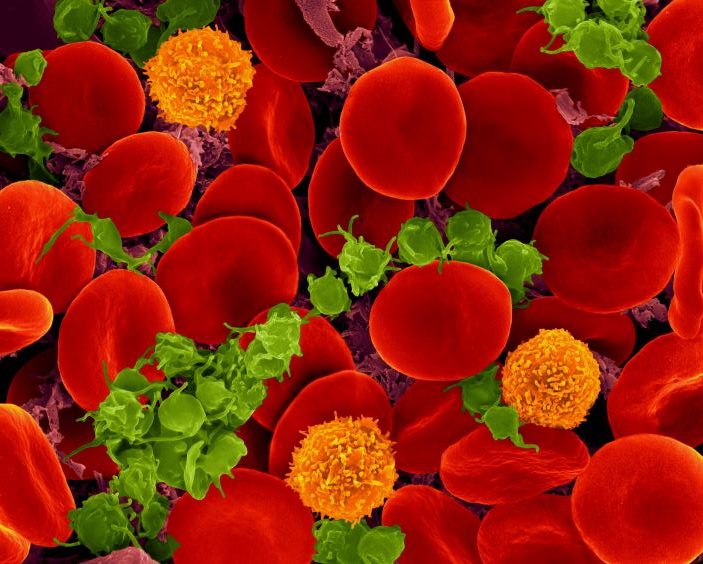
Scanning electron micrograph of red blood cells, T cells (orange) and platelets (green). Source: Wikimedia CC0

Aside from transfusions, there currently is no way to boost people’s platelet counts, which can drop for reasons such as chemotherapy, leaving them at risk for uncontrolled bleeding. But new research published in Nature Cardiovascular Research suggests that there could be a simple alternative: a dietary change in type of fat intake could raise platelet counts in people with low levels.

A study led by Kellie Machlus, PhD, and Maria Barrachina, PhD at Boston Children’s Hospital found that they could raise platelet counts in mice by feeding them polyunsaturated fatty acids (PUFAs) like those found in the Mediterranean diet. In contrast, mice fed a diet high in saturated fatty acids had decreased platelet counts.

“We were honestly surprised at how profound the effects were,” says Machlus, whose lab focuses on studying platelets and their precursor cells, megakaryocytes, and ways to get the body to increase platelet production.

But equally interesting is the apparent reason for the dietary effect.

“What brought me to the idea of diet is that megakaryocytes make these long extensions from their membrane when they form platelets,” Machlus says. “We thought the membrane must have an unusual composition to make it so fluid.”

A fluid megakaryocyte membrane

No one had studied megakaryocyte membranes before, perhaps because megakaryocytes are in the bone marrow and hard to access. Machlus, Barrachina, and their colleagues decided to comprehensively assess the membranes’ fat content with lipidomics.

“We found that PUFAs are enriched in megakaryocytes, especially right before they begin making platelets,” says Machlus. “We think they provide the fluidity necessary for the membrane to move and reshape.”

In culture, the megakaryocytes with higher amounts of PUFAs in their membrane made more platelets. When the cells were instead supplied with saturated fats as their lipid source, platelet production declined. The same thing happened when the team added compounds to inhibit uptake of PUFAs from the blood.

The researchers also identified one of the receptors on megakaryocytes that’s responsible for taking up PUFAs from blood: CD36. When they deleted the gene for CD36 in their mouse model, the animals had low platelet counts.

Serendipitously, the researchers were able to connect the dots to humans. Through a colleague in the U.K., they identified a family in which several members had a mutation in the CD36 gene. Those affected had low platelet counts and, in the mother’s case, bleeding episodes.

An olive oil intervention?

Intrigued by their findings, Barrachina hopes to extend the study by collaborating with a team in her native Spain. The team is studying dietary interventions for cardiovascular disease, including the Mediterranean diet.

“We want to look at platelets from these patients,” she says. She thinks that platelets with more saturated fatty acids in their membranes might be in a more activated state that could lead them to aggregate and form blood clots.

While Machlus thinks it may be worth encouraging patients with thrombocytopenia to consume more olive oil to increase PUFA levels, she recognises that a drug treatment may be more practical.

“Our next steps are to find out the enzymes that create PUFAs,” she says. “Maybe we can target them to make more platelets.”

Source: Boston Children’s Hospital

Male and Female Immune Systems are Trained Differently

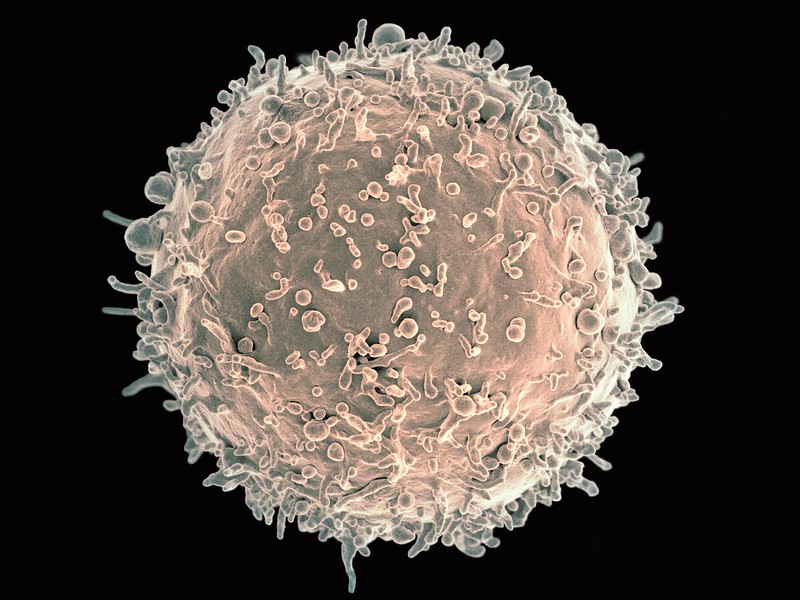
Scanning electron micrograph of a B cell. Credit: NIH

When the immune system is compromised due to various conditions and medicines, patients can experience opportunistic infection. Now, researchers reporting in Cell Reports have uncovered a sex-based variance in the trained immune memory response to infection in mice that might translate to humans.

The researchers, from the University of Missouri School of Medicine, found that female mice were more vulnerable to opportunistic infection from a bacterial pathogen to which they had previously been exposed when progesterone levels were naturally elevated as part of their reproductive cycle.

“Differences in immune response in males and females have been observed before. For instance, males had increased morbidity and severity of COVID-19 from SARS-CoV-2 infections,” said Dr Adam Schrum, associate professor in the Department of Molecular Microbiology and Immunology. “But females are known to suffer other infections worse than males. Our research found that female mice were far more vulnerable to opportunistic bacterial infection than male mice because of a sex-based difference in their trained immunity.”

To understand why the immune systems of female and male mice responded differently to a bacterial pathogen, the researchers examined whether the reproductive cycle affected immune training. They found that elevated progesterone levels correlated with lower trained immune responses. To test this more fully, the researchers gave the female mice progesterone blockers and found that their trained immune response was subsequently enhanced.

“The female mice had significantly restored trained immune response when progesterone was blocked, reaching comparable levels to those of male mice,” said Schrum. “Sex hormone-based modulation of immune function needs more study to be fully understood, but as a first step we can conclude that immune training is influenced by a progesterone-dependent mechanism that results in a sex bias in mice.”

In addition to further study to understand how and why progesterone specifically influences trained immune responses in mice, the researchers pointed out that because mice have shorter estrous cycles than the human menstrual cycle, further research is needed to understand how sex hormones might affect human immune training.

Source: University of Missouri-Columbia

Even Moderate Physical Fitness Protects Against Atrial Fibrillation and Stroke

Photo by Barbara Olsen on Pexels

A study in more than 15 000 people has found that even moderate physical fitness is linked with a lower likelihood of developing atrial fibrillation and stroke. Progressively higher levels of fitness also reduced the risk of cardiovascular events. The research is presented at ESC Congress 2023.

Atrial fibrillation is the most common heart rhythm disorder, and patients with the condition have a five-fold higher risk of stroke than their peers. This study examined whether fitness was related to the likelihood of developing atrial fibrillation.

The study included 15 450 individuals without atrial fibrillation who were referred for a treadmill test between 2003 and 2012. The average age was 55 years and 59% were men. Fitness was assessed using the Bruce protocol, where participants are asked to walk faster and at a steeper grade in successive three-minute stages. Fitness was calculated according to the rate of energy expenditure the participants achieved, which was expressed in metabolic equivalents (METs).

Participants were followed for new-onset atrial fibrillation, stroke, myocardial infarction and death. The researchers analysed the associations between fitness and atrial fibrillation, stroke and major adverse cardiovascular events (MACE; a composite of stroke, myocardial infarction and death) after adjusting for factors that could influence the relationships including age, sex, cholesterol level, kidney function, prior stroke, hypertension and medications.

During a median of 137 months, 515 participants (3.3%) developed atrial fibrillation. Each one MET increase on the treadmill test was associated with an 8% lower risk of atrial fibrillation, 12% lower risk of stroke and 14% lower risk of MACE.

Participants were divided into three fitness levels according to METs achieved during the treadmill test: low (less than 8.57 METs), medium (8.57 to 10.72) and high (more than 10.72). The probability of remaining free from atrial fibrillation over a five-year period was 97.1%, 98.4% and 98.4% in the low, medium and high fitness groups, respectively.

Study author Dr Shih-Hsien Sung of the National Yang Ming Chiao Tung University, Taipei, Taiwan said: “This was a large study with an objective measurement of fitness and more than 11 years of follow up. The findings indicate that keeping fit may help prevent atrial fibrillation and stroke.”

Source: European Society of Cardiology