Year: 2023

A New Model of the Liver Will Help Improve Drug Safety for Women

Improved modelling of male and female livers can help lead to safer drugs

Photo by Danilo Alvesd on Unsplash

Researchers report in PLOS Computational Biology that they developed a powerful new tool to understand how medications affect men and women differently, and that will help lead to safer, more effective drugs in the future.

Women are known to suffer a disproportionate number of liver problems from medications but also usually underrepresented in drug testing. To address this, University of Virginia scientists have developed sophisticated computer simulations of male and female livers and used them to reveal sex-specific differences in how the tissues are affected by drugs.

The new model has already provided unprecedented insights into the biological processes that take place in the liver, the organ responsible for detoxifying the body, in both men and women. But the model also represents a powerful new tool for drug development, helping ensure that new medications will not cause harmful side effects.

“There are incredibly complex networks of genes and proteins that control how cells respond to drugs,” said UVA researcher Jason Papin, PhD, one of the model’s creators. “We knew that a computer model would be required to try to answer these important clinical questions, and we’re hopeful these models will continue to provide insights that can improve healthcare.”

Harmful side effects

Papin, of UVA’s Department of Biomedical Engineering, developed the model in collaboration with Connor Moore, a PhD student, and Christopher Holstege, MD, a UVA emergency medicine physician and director of UVA Health’s Blue Ridge Poison Center. “It is exceedingly important that both men and women receive the appropriate dose of recommended medications,” Holstege noted. “Drug therapy is complex and toxicity can occur with subtle changes in dose for specific individuals.”

Before developing their model, the researchers first looked at the federal Food and Drug Administration’s Adverse Event Reporting System to evaluate the frequency of reported liver problems in men and women. The scientists found that women consistently reported liver-related adverse events more often than did men.

The researchers then sought to explain why this might be the case. To do that, they developed computer models of the male and female livers that integrated vast amounts of data on gene activity and metabolic processes within cells. These cutting-edge liver simulations provided important insights into how drugs (xenobiotics) affect the tissue differently in men and women and allowed the researchers to understand why.

They found that xenobiotic metabolism was more active in untreated males, while pentose and glucoronate interconversions were female-biased, suggesting a difference in pretreatment gene expression, which may result in different initial responses of phase I and phase II metabolism to hepatotoxic drugs. They also observed sex-bias in bile acid biosynthesis, which in combination with xenobiotic metabolism, this result may suggest differences in bacterial deconjugation driven by sex differences in the gut microbiome. Differences were also found in several essential metabolic pathways, such as glycolysis/gluconeogenesis, nucleotide metabolism, and lipid metabolism with supporting evidence in human or rat hepatocytes.

“We were surprised how many differences we found, especially in very diverse biochemical pathways,” said Moore, a biomedical engineering student in Papin’s lab. “We hope our results emphasise how important it is for future scientists to consider how both men and women are affected by their research.”

The work has already identified a key series of cellular processes that explain sex differences in liver damage, and the scientists are calling for more investigation of it to better understand “hepatotoxicity” — liver toxicity. Ultimately, they hope their model will prove widely useful in developing safer drugs.

“We’re hopeful these approaches will be help address many other questions where men and women have differences in drug responses or disease processes,” Papin said. “Our ability to build predictive computer models of complex systems in biology, like those in this study, is truly opening all kinds of new avenues for tackling some of the most challenging biomedical problems.”


Source: University of Virginia Health System

National Health Insurance Bill: Will it Wipe out Medical Insurance?

The NHI Bill does not contain any clarity on how South Africa’s large and complex medical schemes and insurance industry will be affected.

Photo by Bill Oxford on Unsplash

By Lenee Green, Partner, Mateen Memon, Associate & Mariam Ismail, Trainee Attorney at Webber Wentzel

On 12 June 2023, the National Health Insurance Bill (the Bill) was passed by the National Assembly and is currently with the National Council of Provinces for consideration. Its laudable aim is to make primary healthcare widely accessible.

The Bill has been closely scrutinised by various stakeholders in the healthcare sector. Concerns have been raised by medical schemes and insurers about the effect the Bill will have on their current businesses.

The Bill, among other things, covers:

  • who will be able to access health care services;
  • how these services will be funded;
  • the establishment of a board and advisory committees to achieve the objectives of the Bill;
  • general provisions applicable to how the fund will operate;
  • complaints about and appeals of decisions made by the fund; and
  • the source of income of the Fund and transitional arrangements.

Clause 33 of the Bill states that once the National Health Insurance (NHI) is fully implemented, medical schemes can only offer complementary coverage for services not reimbursed by the NHI. Clause 6(o) of the Bill allows individuals to purchase services not covered by the NHI through voluntary medical insurance schemes. This means medical schemes cannot cover services already covered by the NHI, potentially jeopardising their existence. This approach may face constitutional challenges related to the right to access healthcare, property rights of medical schemes, and freedom of trade and profession.

It is contemplated that the Minister of Health will introduce regulations limiting benefits to services not reimbursable by the Fund.  We have not yet seen any indication when these regulations will be published.

Current regime

Broadly, four main categories of business will be impacted by the Bill:

  • business of a medical scheme as defined in the Medical Schemes Act 131 of 1998 (MSA);
  • insurers licensed to conduct insurance business pursuant to the Insurance Act 18 of 2017 (the Insurance Act);
  • insurers who offer products pursuant to section 8(h) of the MSA (the Exemption Framework); and
  • insurers who offer products pursuant to the regulations published under each of the Long-Term Insurance Act 52 of 1998 and the Short-Term Insurance Act 53 of 1998 (the Demarcation Regulations).

Medical schemes

Presently, only medical schemes may carry on the “business of a medical scheme” as defined in the MSA. The “business of a medical scheme” involves undertaking liability for the provision of obtaining “relevant health services”, defraying expenditure for “relevant health services” or rendering health services by the medical scheme itself or by any supplier of a “relevant health service” in return for a premium or contribution.

A “relevant health service” under the MSA is very wide. It includes “any health care treatment of any person by any person registered in terms of any law, which treatment has as its object…” The objects include a broad range of medical services, including the physical or mental examination of a person, the diagnosis, treatment or prevention of any physical or mental defect, illness, or deficiency, ambulance services and hospital or similar accommodation.

Insurers

Medical schemes must be distinguished from medical insurance provided by insurers. Insurers may provide medical insurance under, among other dispensations, the Insurance Act. Schedule 2 to the Insurance Act provides for various classes and sub-classes of insurance business for which life insurance companies and non-life insurance companies may be licensed. Schedule 2 allows insurers to provide health and disability benefits under the risk class of business for life insurance and accident and health and travel insurance under the classes for non-life insurance.

Health insurance is provided upon the happening of a health event. A health event is defined in the Insurance Act as one that relates to the health, mind or body of a person or an unborn, other than a disability event. The disability event is defined and includes circumstances where a person loses a limb or becomes physically or mentally impaired. It is apparent that there is an overlap of products provided for in the Insurance Act and offered under the MSA.

The Demarcation Regulations provide for the demarcation between insurance business and medical schemes business. The regulations provide that a benefit that would otherwise have been a medical scheme benefit, but meets the exact requirements (definitions) set out in the tables in the Demarcation Regulations, is classified as an insurance product.

In March 2017, the Counsel for Medical Schemes (CMS) issued an exemption framework for insurers as a transitional arrangement while the development of a low-cost benefit option (LCBO) for medical schemes was developed (Exemption Framework). To the extent that an exemption was granted to an insurer in terms of section 8(h) of the MSA, and subject to the conditions of the exemption, the insurer was permitted to continue to underwrite those products until the expiry of the exemption. On 25 January 2022, the CMS granted insurers that had previously been granted an exemption in terms of the Exemption Framework an extension of a further two years.

The background to the LCBO is that a ministerial task team on social health insurance launched the low-income medical scheme consultative process in 2005. In 2015, the CMS issued a circular that considered introducing a guideline to allow medical schemes to introduce LCBOs in response to the growing number of working South Africans who did not have medical scheme coverage because they could not afford it. Following various engagement processes, the LCBO Framework Advisory Committee issued a Report in May 2022 (the Report). The Report states that LCBOs still have the potential to “alleviate pressure in the public healthcare system and allow resources to be redirected to the poor”. This process has progressed quite slowly, and it remains to be seen what comes of it if anything.

While the Bill is a piece of framework legislation, it does not provide clarity on what will become of insurance under the current regime. The fate of medical schemes is dealt with in a very cursory manner, without considering the nuances of the current regime.

The LCBO could have been a path to make healthcare more accessible, but the process has become stifled, and it may never come to fruition. What is left in the wake of the Bill is a great deal of uncertainty. Industry participants and stakeholders will have to keep abreast of the process and ensure that their comments are taken into account as the system evolves.

Does the ‘Hygiene Hypothesis’ Still Hold Water?

Photo by Andrea Piacquadio on Unsplash

Over the last few decades, there has been growing popularity for the ‘hygiene hypothesis’, which suggests that some level of microbial exposure helps protects against developing allergy. Now, an article published in Science Immunology by researchers from Karolinska Institutet challenges this hypothesis by showing that mice with high infectious exposures from birth have the same, if not an even greater ability to develop allergic immune responses than ‘clean’ laboratory mice.

Studies have suggested that certain infections might reduce the production of inflammatory antibodies to allergens and alter the behaviour of T cells involved in allergies. It has also been suggested that ‘good’ intestinal bacteria could shut off inflammation elsewhere in the body.

Robust allergic responses

Researchers have now compared the allergic immune response in ‘dirty’ wildling mice to those of typical clean laboratory mice. They found very little evidence that the antibody response was altered or that the function of T cells changed in a meaningful way. Nor did anti-inflammatory responses evoked by good gut bacteria appear to be capable of switching off the allergic immune response. On the contrary, wildling mice developed robust signs of pathological inflammation and allergic responses when exposed to allergens.

“This was a little unexpected but suggests that it’s not as simple as saying, ‘dirty lifestyles will stop allergies while clean lifestyles may set them off’. There are probably very specific contexts where this is true, but it is perhaps not a general rule,” says Jonathan Coquet, co-author of the study and Associate Professor at Karolinska Institutet.

More like the human immune system

The wildling mice are genetically identical to clean laboratory mice but are housed under ‘semi-natural’ conditions and have rich microbial exposures from birth.

“The immune systems of wildling mice better represent the human immune system and so we hope that they can bring us closer to the truth of how microbes act upon the body,” says Jonathan Coquet.

The findings contribute to the general understanding of how allergies may arise and may also have clinical implications. Using experimental infections to treat patients suffering from inflammatory diseases has also been attempted in recent clinical trials. For example, infecting people with worms or performing faecal transplantations has been proposed as a tool to combat inflammatory diseases. Newborns delivered through C-section, have had maternal faecal transplantation and bacterial supplementation with the aim of promoting good bacteria in the baby’s gut and the child’s future health.

Beneficial effects of exposure not clear as we’d like

“This field of research can provide important insights into how infections and microbes can be used to facilitate health, but it is still in its infancy. Our study is a reminder that general and broad exposures to microbes may not have the clear beneficial effects that we wish them to have,” says Susanne Nylén, co-author of the study and Associate Professor at the Department of Microbiology, Tumor and Cell Biology at Karolinska Institutet.

Source:

50 Steps a Day Cuts Heart Disease Risk by 20%

Credit: Pixabay CC0

Forget walking 10 000 steps a day – climbing up at least 50 steps a day could significantly reduce the risk of heart disease, according to a new study from Tulane University.

The study, published in Atherosclerosis, found that climbing more than five flights of stairs daily could reduce risk of cardiovascular disease by 20%.

Atherosclerotic cardiovascular disease (ASCVD) along with coronary artery disease and stroke are the leading causes of morbidity and mortality worldwide.

“Short bursts of high-intensity stair climbing are a time-efficient way to improve cardiorespiratory fitness and lipid profile, especially among those unable to achieve the current physical activity recommendations,” said co-corresponding author Dr Lu Qi, professor at Tulane University. “These findings highlight the potential advantages of stair climbing as a primary preventive measure for ASCVD in the general population.”

Using UK Biobank data collected from 450 000 adults, the study calculated participants’ susceptibility to cardiovascular disease based on family history, established risk factors and genetic risk factors and surveyed participants about their lifestyle habits and frequency of stair climbing. Median follow-up time was 12.5 years.

The study found that climbing more stairs daily especially reduced risk of cardiovascular disease in those who were less susceptible. However, Qi said the increased risk of heart disease in more susceptible people could be “effectively offset” by daily stair climbing.

Qi touted the public availability of stairs as a low-cost, accessible way to incorporate exercise into daily routines.

“This study provides novel evidence for the protective effects of stair climbing on the risk of ASCVD, particularly for individuals with multiple ASCVD risk factors,” Qi said.

Source: Tulane University

Fast-acting Nasal Spray Could Treat Tachycardia Episodes

Photo by Stephen Andrews

A fast-acting drug delivered as a nasal spray may someday allow patients with intermittent tachycardia to treat it themselves as soon as they develop symptoms, according to new research published in the Journal of the American Heart Association. The drug is still under development and awaiting approval in the US by the Food and Drug Administration.

“This is a potential new and exciting option for patients to safely self-treat their rapid heartbeat without direct medical supervision to avoid emergency room visits and medical interventions,” said lead author James E. Ip, MD, an associate professor of clinical medicine at Weill Cornell Medicine at New York-Presbyterian Hospital.

About 1 in 300 people in the United States experience intermittent periods paroxysmal supraventricular tachycardia, a condition characterised by rapid heartbeat (>100bpm, and more typically 150–200 bpm) in the lower chambers of the heart.

The standard treatment during an episode is to perform vagal manoeuvres, one of which is done by trying to bear down, achieved by breathing out with stomach muscles but not letting air out the nose or mouth. This can make the vagus nerve slow electrical conduction through the atrioventricular (AV) node, which regulates the timing of the electrical pulses to the lower portion of the heart. If the self-administered vagal manoeuvres are not effective (which happens about 20–40% of the time), the person should seek immediate treatment of intravenous medication at an emergency room to return the heart rate to normal. In the United States, about 50,000 emergency room visits a year are for paroxysmal supraventricular tachycardia, Ip said.

In a previous study, people with the disorder treated themselves with either etripamil or a placebo nasal spray for a single episode of rapid heartbeat. Participants applied an electrocardiogram (ECG) patch at the onset of symptoms, did a vagal manoeuvre and self-administered the nasal spray if the rapid heartbeat continued – keeping the ECG patch on for at least five hours. In that study, the first time that etripamil was used without direct supervision, normal heart rhythms were restored within 30 minutes in 54% of patients, compared to 35% with placebo, and the medication was found to be safe and well tolerated. The ECG patch is a wearable heart monitor that has a small device with an adhesive that sticks on the chest skin surface and is wirelessly connected to a cell phone to transmit the ECG data.

All people in that randomised trial were invited to participate in the current open-label study that allowed patients to self-treat with etripamil during multiple episodes of paroxysmal supraventricular tachycardia (PSVT). Of the 169 patients enrolled, 105 self-administered at least one dose of etripamil (70mg) during the median 232-day study period.

The new study found:

  • Etripamil restored heart rate to normal within 30 minutes in 60.2% of the 188 verified PSVT episodes, and within an hour in 75.1% of the episodes.
  • Of the 40 participants who self-treated two episodes, 63.2% responded to the medication within 30 minutes. Nine people (23%) did not convert to a normal heart rate on either episode, and 21 (53%) converted to normal heart rate on both episodes.
  • Safety was assessed regardless of whether the episode was confirmed by ECG. Thirty-four participants (32.4%) reported one or more side effects from the medication, most commonly mild-to-moderate nasal congestion or discomfort, or a runny nose. There were no serious heart-related adverse events.

“There are no great options for patients to self-treat paroxysmal supraventricular tachycardia, and this condition can cause significant distress and anxiety,” Ip said. “Similar to an albuterol inhaler for asthma patients or an epinephrine pen for patients that have severe allergies or anaphylaxis, etripamil nasal spray may be a great option for people who have paroxysmal supraventricular tachycardia.

Source: American Heart Association

Opinion Piece: Commemorating Carers Week: Putting the Spotlight on South Africa’s Unsung Heroes

By Donald McMillan, Managing Director at Allmed Healthcare Professionals

Donald McMillan

The caregiving workforce plays a crucial role in our society, but their efforts often go unnoticed. These individuals, known as carers, selflessly care for those in need due to factors such as illness, age, or frailty. Unfortunately, they face numerous challenges that can take a toll on their well-being. It’s important to raise awareness of their struggles and provide them with the necessary support. To bring these issues to the fore, communities are coming together between the 2nd – 6th of October 2023 to commemorate Carers Week.

Caregivers have an enormous responsibility that often goes unnoticed by society. The emotional strain that comes with caregiving can have a direct impact on their mental health and often leads to depression. They often devote their time and interests to the role of voluntary caregivers and face many challenges due to the lack of recognition and support from their professional peers and society in general.

Initiatives in place

In response to these issues, governmental efforts have been put forth to assist both caregivers and non-governmental organisations with the aim of alleviating some of the financial burdens associated with their work. A noteworthy instance of this support is exemplified in the community home-based care program run by The Association for the Aged (TAFTA), which secures government funding to informal caregivers. This initiative and others like it, combined with the Carer’s Grant are part of positive strides being made within this space. However, further support is still needed to ensure that caregivers receive adequate support as they strive to provide high-quality care to their patients.

The government alone cannot be the only one providing support to carers as society and the private sector each have to role to play in alleviating the burden that sits on the shoulders of carers, particularly within impoverished and rural communities. The logical progression is for the government and all stakeholders to channel their resources into a comprehensive framework that encompasses financial aid, training, and support services for carers. Additionally, the pursuit of affordable and inventive caregiving solutions cannot be neglected.

Rising to meet growing demands

As South Africa’s population ages and chronic illnesses surge, the demand for caregiving services has swelled to unprecedented levels. To adequately address these escalating requirements, several measures must be adopted. Establishing community-based networks of support can furnish practical assistance and emotional solace. Carers must also receive enhanced training and upskilling to hone their capabilities, all the while being granted the acknowledgement and admiration they rightfully deserve.

It is imperative for entities that offer caregiving employment to invest in training to equip carers with the tools required for high-quality care provision. The integration of emotional counselling facilitated by clinical experts constitutes another crucial component of the caregivers’ support structure.

Strengthening the system

The symbiotic relationship between government bodies, stakeholders, and relevant associations is pivotal in reshaping the caregiving landscape. The collaboration between the Department of Social Development (DSD) and the South African Association of Homes for the aged- (SAAHA), exemplified by their joint registration of care workers both formal and informal, signifies a significant step toward accountability and much-needed assistance. The synergy of corporate involvement and government funding has the potential to revolutionise the lives of caregivers in both formal and informal capacities.

Upskilling the informal carer workforce stands as a cornerstone for improving the quality of caregiving. Creating and running specialised courses tailored for caregivers is essential, as it not only enriches their knowledge and competencies but also bolsters their confidence, employability, and job satisfaction. These comprehensive courses should span various aspects, from personal care to dementia management, empowering caregivers to confront their daily challenges head-on.

Galvanising society

As mentioned, support for carers should transcend the boundaries of governmental programs and corporate ventures. The broader society has a pivotal role in elevating the status of carers. Displaying empathy, extending practical aid, advocating for improved resources, and propagating awareness about the struggles of caregivers all fall within our capability as members of the public. Initiatives rooted in communities, campaigns, and programs can collectively reshape perceptions and extend tangible support.

Carers are one of the important pillars on which our society relies, and more need for recognition of their contributions and tribulations must be given. By advocating for increased support, enhanced financial backing, and inventive solutions, we can uplift carers and ensure their endeavours do not remain obscured. With the collective resolve of government bodies, stakeholders, businesses, and the populace, we can pave the path to a brighter, more nurturing future for carers and their cherished ones.

Mental Health is Critical when Facing a Dread Disease Diagnosis, Treatment, or Bereavement

Photo by Alex Green on Pexels

A diagnosis of cancer or another dread disease is a devastating blow, not only for the patient but for their family and loved ones. The diagnosis itself, the trauma of going through treatments and the bereavement of losing someone all take their toll on mental wellbeing. Depression, anxiety, and mental illness frequently go hand in hand with physical illnesses like cancer. It is an isolating experience, and often people struggle through these feelings alone, but this does not have to be the case.

There is help available with programmes designed to support families on the cancer journey. There is also financial support available from elements such as gap cover, where value-added benefits may cover items like trauma counselling, which can be a lifeline in times of great need. Looking after your mental health is essential, both for fighting disease and coping with the trauma of diagnosis and subsequent loss.

Evy Michalopoulos is the Founder and CEO of Machi Filotimo Cancer Project, a non-profit organisation that raises awareness about cancer, its symptoms and treatment, and helps to guide cancer patients and their families as they navigate this difficult journey. She believes that sound mental health is absolutely critical, both for patients fighting cancer and for families who are on this journey with a loved one or have already experienced a loss.

“Especially when a diagnosis or a loss is sudden and unexpected, feelings of anger, grief, frustration and guilt are common, and all of these emotions come into play at various stages, often in waves. We often feel the need to be strong, which typically involves locking our feelings away, but this frequently leads to mental health issues like depression and anxiety, and feelings of being overwhelmed,” Michalopoulos says.

“There is also a persisting perception that seeking help means you are weak, but nothing could be further from the truth. Mental strength is essential in fighting diseases like cancer, and developing this strength requires support. Professional help can be hugely valuable in helping you to process grief and give you the tools you need to deal with challenges in a constructive way, whether you have lost a loved one, are going through treatment, or have someone close to you who has received a diagnosis,” she adds. 

In situations like this, it helps to know that you are not alone. Organisations like Machi Filotimo are there to help patients and their families and loved ones, providing a vital support system. Alongside this support, it is also recommended that people in situations like a cancer diagnosis also seek professional mental healthcare treatment. However, often the cost of this can put people off, especially when they are already facing potential medical expense shortfalls relating to cancer treatments.

“This is where gap cover is essential. Not only does gap cover give you peace of mind that many of these shortfalls will be covered, but certain providers also have value-added benefits. For example, Turnberry offers Trauma Care Cover, which covers the cost of trauma counselling consultations with a registered healthcare provider after a critical illness diagnosis or the death of an immediate family member,” explains Tony Singleton, CEO at Turnberry.

Knowing that care is available and that finances will not be a hurdle in receiving the treatment you or a loved one needs, whether for physical or mental health, can significantly reduce the massive stress that critical illness and dread disease create. This then gives more freedom to focus on fighting the disease itself, rather than worrying about paying for treatments.

“The best advice I can give people is to make sure they have the options available to explore, to make better choices that can lead to better outcomes. Having gap cover in place facilitates many more choices, but people need to be open to asking for and receiving help, especially when it comes to mental well-being. Asking for help is not a sign of weakness, and there is help available. Reach out, get as much information as you can, and take advantage of what is there and available. You do not have to walk this journey alone,” Michalopoulos concludes.

About Turnberry Management Risk Solutions

Founded in 2001, Turnberry is a registered financial services provider (FSP no. 36571) that specialises in Accident and Health Insurance, Travel Insurance, and Funeral Cover. With extensive experience across healthcare and insurance industries in South Africa, Turnberry offers unsurpassed service to Brokers and clients. Turnberry’s gap cover products are available to clients on all medical aid schemes, as they are independently provided and are therefore transferable in the event of a change in the client’s medical aid scheme. Turnberry is well represented nationally, with its Head Office based in Bedfordview, Johannesburg with Business Development Managers in Cape Town and Durban. The Turnberry Team’s focus on outstanding client service comes from having extensive knowledge and experience in the financial services sector and is underwritten by Lombard Insurance Company Limited. Lombard Insurance Company Limited is an Authorised Financial Services Provider (FSP 1596) and Insurer conducting non-life insurance business.

Mastering a Third Robotic Arm is Surprisingly Quick

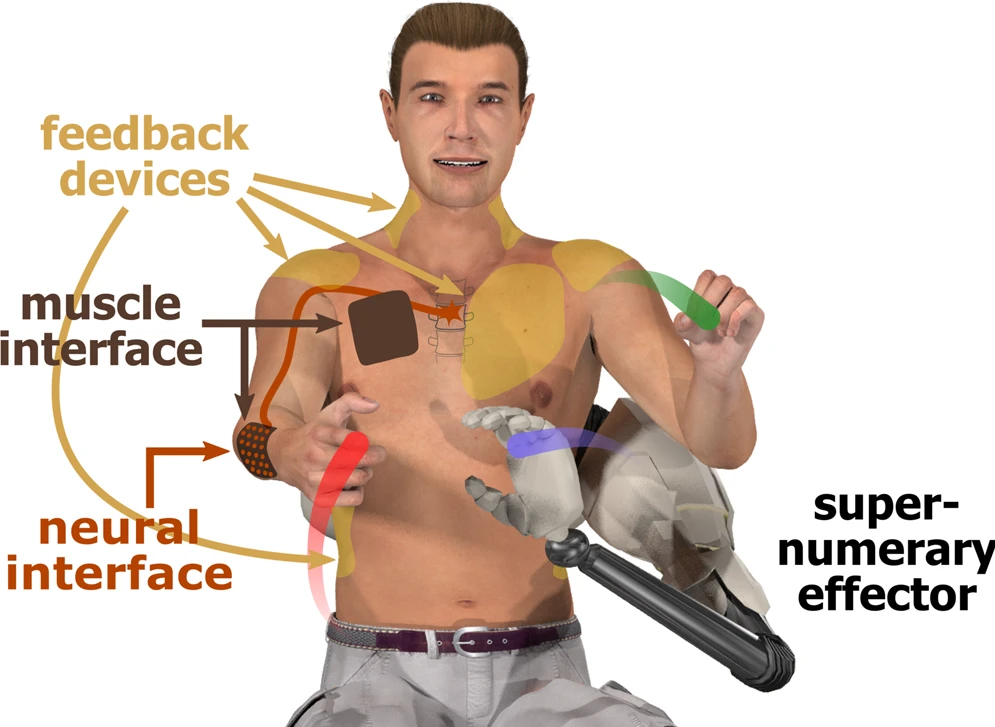
Interfaces for DoF augmentation (figure by Tobias Pistohl). From Eden at al., Nature Communications. 2022

Busy doctors and nurses may have often found themselves wishing they had an extra arm to help with a patient or help with a difficult suture. Researchers around the world are developing supernumerary robotic arms to help workers achieve certain tasks unaided, or with less strain – but how long would it take to master learning an additional limb? The answer is: not long at all. One hour’s worth of training is enough for people to carry out a task with their ‘third arm’ as effectively as with a partner, according to the results of a new study published in IEEE Open Journal of Engineering in Medicine and Biology.

A new study by researchers at Queen Mary University of London, Imperial College London and The University of Melbourne has found that people can learn to use supernumerary robotic arms as effectively as working with a partner in just one hour of training.

The study investigated the potential of supernumerary robotic arms to help people perform tasks that require more than two hands. The idea of human augmentation with additional artificial limbs has long been a staple of science fiction.

Demonstrating performing a suture with an assistant robotic arm.

“Many tasks in daily life, such as opening a door while carrying a big package, require more than two hands,” said Dr Ekaterina Ivanova, lead author of the study from Queen Mary University of London. “Supernumerary robotic arms have been proposed as a way to allow people to do these tasks more easily, but until now, it was not clear how easy they would be to use.”

The study involved 24 participants who were asked to perform a variety of tasks with a supernumerary robotic arm. The participants were either given one hour of training in how to use the arm, or they were asked to work with a partner.

The results showed that the participants who had received training on the supernumerary arm performed the tasks just as well as the participants who were working with a partner. This suggests that supernumerary robotic arms can be a viable alternative to working with a partner, and that they can be learned to use effectively in a relatively short amount of time.

“Our findings are promising for the development of supernumerary robotic arms,” said Dr Ivanova. “They suggest that these arms could be used to help people with a variety of tasks, such as surgery, industrial work, or rehabilitation.”

Source: Queen Mary University of London

Chronic Back Pain may be Easier to Treat if it’s ‘in the Brain’

Photo by Sasun Bughdaryan on Unsplash

One therapy for chronic back pain is to teach patients how to ‘reprocess’ it in the brain. Now, this therapy may become even more effective thanks a study published in JAMA Network Open. The study examined the critical connection between the brain and pain for treating chronic pain. Specifically, they looked at the importance of pain attributions, which are people’s beliefs about the underlying causes of their pain, to reduce chronic back pain severity. Understanding the source of the pain may help some to avoid surgery which may be ineffective or even worsen the pain.

“Millions of people are experiencing chronic pain and many haven’t found ways to help with the pain, making it clear that something is missing in the way we’re diagnosing and treating people,” said the study’s first author Yoni Ashar, PhD, assistant professor of internal medicine at the University of Colorado Anschutz Medical Campus.

Pain is often in the brain

Ashar and his team tested whether the reattribution of pain to mind or brain processes was associated with pain relief in pain reprocessing therapy (PRT), which teaches people to perceive pain signals sent to the brain as less threatening. Their goal was to better understand how people recovered from chronic back pain. The study revealed after PRT, patients reported reduced back pain intensity.

“Our study shows that discussing pain attributions with patients and helping them understand that pain is often ‘in the brain’ can help reduce it,” Ashar said.

To study the effects of pain attributions, they enrolled over 150 adults experiencing moderately severe chronic back pain in a randomised trial to receive PRT. They found that two-thirds of people treated with PRT reported being pain-free or nearly so after treatment, compared to only 20% of placebo controls.

“This study is critically important because patients’ pain attributions are often inaccurate. We found that very few people believed their brains had anything to do with their pain. This can be unhelpful and hurtful when it comes to planning for recovery since pain attributions guide major treatment decisions, such as whether to get surgery or psychological treatment,” said Ashar.

Before PRT treatment, only 10% of participants’ attributions of PRT treatment were mind- or brain-related. However, after PRT, this increased to 51%. The study revealed that the more participants shifted to viewing their pain as due to mind or brain processes, the greater the reduction in chronic back pain intensity they reported.

The role of discussing brain drivers of chronic pain 

“These results show that shifting perspectives about the brain’s role in chronic pain can allow patients to experience better results and outcomes,” Ashar adds.

Ashar says that one reason for this may be that when patients understand their pain as due to brain processes, they learn that there is nothing wrong with their body and that the pain is a ‘false alarm’ being generated by the brain that they don’t need to be afraid of.

The researchers hope this study will encourage providers to talk to their patients about the reasons behind their pain and discuss causes outside of biomedical ones.

“Often, discussions with patients focus on biomedical causes of pain. The role of the brain is rarely discussed,” said Ashar. “With this research, we want to provide patients as much relief as possible by exploring different treatments, including ones that address the brain drivers of chronic pain.”

Source: University of Colorado Anschutz Medical Campus

High Rates of Hyperglycaemia with Alpelisib Treatment for Breast Cancer

Photo by National Cancer Institute on Unsplash

New research has uncovered high rates of hyperglycaemia among breast cancer patients being treated with the oral medication alpelisib. The researchers say that patients receiving this medication should have their blood sugar levels monitored and managed well before treatment with alpelisib. The results are published by Wiley online in CANCER, a peer-reviewed journal of the American Cancer Society.

Alpelisib targets the phosphoinositide 3-kinase (PI3K) protein that is involved in cell growth and when mutated can fuel cancer. In 2019, the US Food and Drug Administration approved the use of this drug in combination with fulvestrant, an oestrogen receptor blocker, for certain cases of metastatic breast cancer that have mutations in the gene that codes for a PI3K subunit.

Unfortunately, targeting PI3K can lead to hyperglycaemia as a side effect which, if severe, can result in dehydration or kidney damage and can require hospitalisation. Sherry Shen, MD, of Memorial Sloan Kettering Cancer Center, and her colleagues set out to describe the incidence, risk factors, and treatment patterns of alpelisib-associated hyperglycaemia in patients with metastatic breast cancer treated in a clinical trial or as standard care at their institution.

Among 147 patients treated with alpelisib as standard care, the rate of hyperglycaemia was 80.3%, and the rate of serious hyperglycaemia was 40.2%. Among 100 patients who were treated during a clinical trial, rates were lower (34.0% any grade and 13.0% serious hyperglycaemia). The median time to onset of hyperglycaemia after initiating alpelisib was 16 days. An initially elevated haemoglobin A1c, an indicator of high blood sugar such as in prediabetes or diabetes, was a risk factor for later developing hyperglycaemia.

Among patients who developed hyperglycemia, 66.4% received treatment, most commonly with the diabetes drug metformin.

“If a patient is identified to have a PI3KCA mutation and thus eligible for treatment with alpelisib, we should be checking haemoglobin A1c level and partnering with the patient’s primary care physician and/or endocrinologist to optimise their blood sugar levels,” said Dr Shen. “This needs to be done months before initiating alpelisib, because once alpelisib is started, hyperglycaemia usually develops within the first two weeks of treatment. Being pre-emptive about improving glycaemic status and treating prediabetes/diabetes will hopefully lower the patient’s risk of developing hyperglycaemia and thus, lower their risk of needing to discontinue a drug that could be effective for their cancer.”

Senior author Neil M. Iyengar, MD noted that optimising a patient’s blood sugar levels often involves changes to dietary and exercise patterns, and potentially introducing certain medications. “Improving metabolic risk factors through lifestyle interventions may also improve dose delivery of alpelisib, and ongoing clinical trials by our group and other groups are testing whether metabolic interventions such as the ketogenic diet or newer medications used to treat diabetes could also improve the treatment efficacy of cancer therapies that target the PI3K pathway,” he said.

Source: Wiley