In APL Bioengineering, researchers report on an injectable hydrogel that treats infections around hip and knee replacement prosthetics without the problems caused by current treatments. Testing showed that the gel inhibits common bacteria and promotes tissue regrowth.
After hip and knee replacement surgeries, pathogenic bacteria can adhere to the surface of the joint prosthesis and form a dangerous biofilm. Gold standard clinical methods use potent antibiotics and further surgery, including removal of infected tissue and transplantation of new tissue, to treat these infections. However, these strategies run into problems with hyper-resistant bacteria caused by the abuse of antibiotics, persistent damage caused by tissue removal, difficulties in obtaining tissue donors, and toxicity and immune system complications.
A team from Shanghai Jiao Tong University School of Medicine created ablack phosphorus-enhanced antibacterial injectable hydrogel to re-establish biological barriers in soft tissue and suppress persistent infections. The gel has a porous structure, excellent injectability, and rapid self-healing properties.
“It is important to explore a new strategy for treatment of infected soft tissue wounds because it is directly related to prognosis,” said author Ruixin Lin. “We aspire to develop a simpler, safer method to help more patients avoid suffering and help more doctors make the right choices.”
In vitro tests showed the hydrogel had good stability and low toxicity to tissue cells. Irradiating the gel with near infrared light causes it to release silver ions. This process was highly efficient at inhibiting the common bacteria S. aureus.
“Furthermore, an in vivo infected wound model showed that the hydrogel could not only inhibit the persistent infection of the wound, but also accelerate the deposition of collagen fibres and angiogenesis, thereby realizing the repair of the natural barrier of soft tissue,” said Lin.
The novel hydrogel provides a safe and feasible synergistic antibacterial strategy for infected soft tissue healing. The team believes that it solves current clinical problems, such as stubborn infections caused by antibiotic resistance, and provides new ideas for minimally invasive treatment. They hope to see it used in the clinic after conducting sufficient studies on its underlying mechanisms.
A nationally representative study published in JAMA found that older adults with greater severity of hearing loss were more likely to have dementia, but the likelihood of dementia was lower among hearing aid users compared to non-users.
The findings are consistent with prior studies showing that hearing loss might be a contributing factor to dementia risk over time, and that treating hearing loss may lower dementia risk.
“This study refines what we’ve observed about the link between hearing loss and dementia, and builds support for public health action to improve hearing care access,” says lead author Alison Huang, PhD, MPH, a senior research associate in the Bloomberg School’s Department of Epidemiology and at the Cochlear Center for Hearing and Public Health, also at the Bloomberg School.
Hearing loss is a critical public health issue affecting two-thirds of Americans over 70. The growing understanding that hearing loss might be linked to the risk of dementia, which impacts millions, and other adverse outcomes has called attention to implementing possible strategies to treat hearing loss.
For the new study, Huang and colleagues analysed a nationally representative dataset from the National Health and Aging Trends Study (NHATS). Funded by the National Institute on Aging, the NHATS has been ongoing since 2011, and uses a nationwide sample of Medicare beneficiaries over age 65, with a focus on the 90-and-over group as well as Black individuals.
The analysis covered 2413 individuals, about half of whom were over 80 and showed a clear association between severity of hearing loss and dementia. Prevalence of dementia among the participants with moderate/severe hearing loss was 61% higher than prevalence among participants who had normal hearing. Hearing aid use was associated with a 32% lower prevalence of dementia in the 853 participants who had moderate/severe hearing loss.
The authors note that many past studies were limited in that they relied on in-clinic data collection, leaving out vulnerable populations that did not have the means or capacity to get to a clinic. For their study, the researchers collected data from participants through in-home testing and interviews.
How hearing loss is linked to dementia isn’t yet clear, and studies point to several possible mechanisms. Huang’s research adds to a body of work by the Cochlear Center for Hearing and Public Health examining the relationship between hearing loss and dementia.
Sixty-three percent of participants who had severe alcohol use disorder who went through a detoxification programme saw improvement within the first ten days, according to the results of a French study. The findings were published in Alcohol and Alcoholism.
Impaired cognition is known to have an impact on the efficacy of substance use rehabilitation programmes, but substance use, such as alcohol, is known to have in impact on cognition. Therefore, in order to better tailor treatment programmes, it is important to know how quickly normal cognitive levels can be restored.
To assess recovery of alcohol-related neuropsychological deficits in a group of patients with pure severe alcohol use disorder (AUD) during a detoxification program using the Brief Evaluation of Alcohol-Related Neuropsychological Impairment (BEARNI) test.
Thirty-two patients admitted to French hospitals with severe AUD using DSM-IV criteria (24 men, mean age = 45.5 ± 6.8 years old) were assessed using the BEARNI 8 ± 2 days after alcohol cessation (T1) and then were reassessed within 18 ± 2 days after alcohol cessation (T2). The primary study endpoint was the number of patients initially impaired at T1 who recovered cognitive functions at T2 assessment.
At T1, 59% (n = 19) patients with pure severe AUD had at least one impaired cognitive function assessed by the BEARNI. At T2, 63% of the patients with AUD with deficits at T1 had normal BEARNI cognitive scores. Among the subtests, the highest percentage of participants with normal subtest scores were 100% in the verbal fluency category, 67% in visuospatial, 63% in the memory category and 60% in alphabetical span.
The researchers also noted that those participants in the present study who recovered within 18 days of abstinence, did so earlier than reported in previous studies.
“Additional studies assessing cognitive improvements during abstinence, and especially earlier in abstinence, are needed,” the authors concluded. “Further studies should also assess the early course of social cognition, attentional bias and inhibition deficits in patient with alcohol use disorder early in abstinence, given their clinical impact.”
Premature birth is the main cause of brain injury and cerebral palsy in babies. Evidence shows that babies can be protected from brain injury by giving magnesium sulfate to women who are at risk of premature birth, reducing the risk of cerebral palsy by a third. From a societal and lifetime perspective, the health gains and cost savings associated with the preventative treatment generated a net monetary benefit of £866 per preterm baby, according to an evaluation published in Archives of Disease in Childhood.
The prevention of cerebral palsy in pre-term labour (PReCePT) programme was developed in 2014 and aimed to support all maternity units in England to increase the use of magnesium sulfate in premature births. It was then piloted in five NHS trusts in the West of England, and this pilot was evaluated by the NIHR Applied Research Collaboration West (NIHR ARC West). It has since been rolled out across England via the AHSN Network as a national programme.
The evaluation of the national programme, also led by NIHR ARC West, found that PReCePT was both effective and cost-effective. The researchers looked at data from the UK National Neonatal Research Database for the year before and year after PReCePT was implemented in maternity units in England.
While use of magnesium sulfate had been increasing before, the study showed that PReCePT was able to accelerate uptake. It increased by 6.3 percentage points on average across all maternity units in England during the first year, over and above the increase that would be expected over time as the practice spread organically. After also adjusting for variations in when maternity units started the programme, the increase in use of magnesium sulfate was 9.5 percentage points. By May 2020, on average 86.4% of eligible mothers were receiving magnesium sulfate.
The researchers also estimated that the programme’s first year could be associated with a lifetime saving to society of £3 million. This accounts for the costs of the programme, administering the treatment and of cerebral palsy to society over a lifetime, and the associated health gains of avoiding cases. This is across all the extra babies the programme helped get access to the treatment during the first year.
In the five pilot sites, the improved use of magnesium sulfate has been sustained over the years since PReCePT was implemented. As the programme costs were mostly in the first year of implementation, longer-term national analysis may show that PReCePT is even more cost-effective over a longer period.
John Macleod, NIHR ARC West Director, Professor in Clinical Epidemiology and Primary Care at the University of Bristol and principal investigator of the evaluation, said: “Our in-depth analysis has been able to demonstrate that the PReCePT programme is both effective and cost-effective. The programme has increased uptake of magnesium sulfate, which we know is a cost-effective medicine to prevent cerebral palsy, much more quickly than we could have otherwise expected.
Professor Lucy Chappell, Chief Executive Officer of the National Institute for Health and Care Research, said: “This important study shows the impact of taking a promising intervention that had been shown to work in a research setting and scaling it up across the country. Giving magnesium sulfate to prevent cerebral palsy in premature babies is a simple, inexpensive intervention that can make such a difference to families and the health service. We look forward to seeing ongoing use of magnesium sulfate across our maternity units so that these benefits continue.”
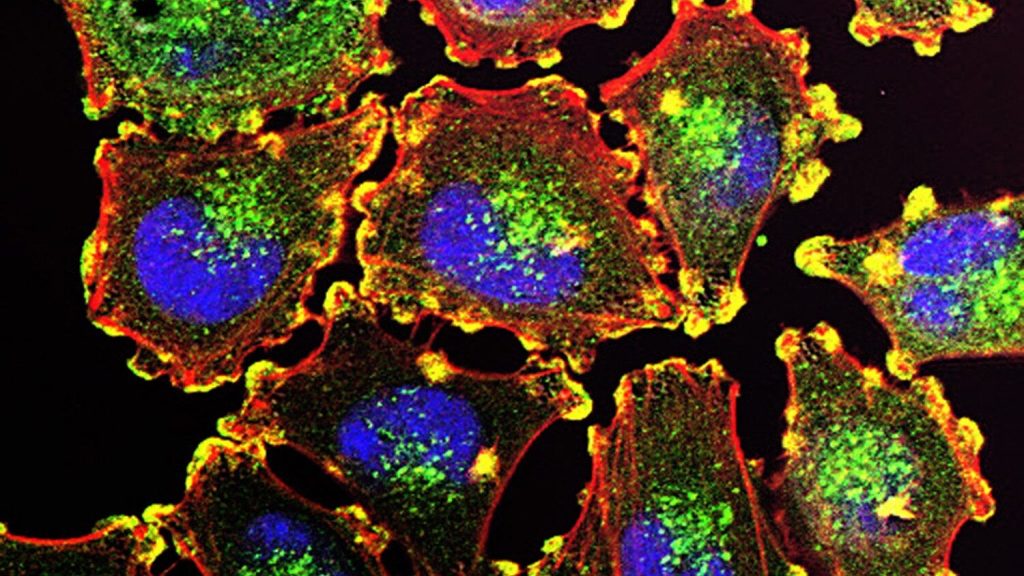
Melanoma cells. Source: National Cancer Institute.
Fewer cases of melanoma were observed among regular users of vitamin D supplements than among non-users, researchers in Finland found. People taking vitamin D supplements regularly also had a considerably lower risk of skin cancer, according to a study of nearly 500 people with increased skin cancer risk, which was published in Melanoma Research.
A key micronutrient, vitamin D may play a role in many diseases. Previous studies investigating the link between vitamin D and skin cancers, have been inconclusive or contradictory, but they mainly focussed on serum levels of calcidiol, which is a metabolite of vitamin D. Serum calcidiol levels have been associated with both a slightly higher or lower risk of different skin cancers. This may be partly due to the fact that serum calcidiol analyses do not provide information on vitamin D metabolism in the human skin, which can express enzymes that generate biologically active vitamin D metabolites or inactivate them.
The new study took a different approach: 498 adult patients with an increased risk of a skin cancer, such as basal cell carcinoma, squamous cell carcinoma or melanoma, were recruited and classified into low risk, moderate risk and high risk. Based on their use of oral vitamin D supplements, the patients were divided into three groups: non-users, occasional users and regular users. Serum calcidiol levels were analysed in half of the patients and found to correspond to their self-reported use of vitamin D.
A key finding of the study is that there were considerably fewer cases of melanoma among regular users of vitamin D than among non-users, and that the skin cancer risk classification of regular users was considerably better than non-users’. Logistic regression analysis showed that melanoma risk among regular users was more than halved compared to non-users.
The findings suggest that even occasional users of vitamin D may have a lower risk for melanoma than non-users. However, there was no statistically significant association between the use of vitamin D and the severity of photoaging, facial photoaging, actinic keratoses, nevus count, basal cell carcinoma and squamous cell carcinoma. Serum calcidiol levels were not significantly associated with these skin changes, either. Since the research design was cross-sectional, the researchers were unable to demonstrate a causal relationship.
Other relatively recent studies, too, have provided evidence of the benefits of vitamin D in melanoma, such as of the association of vitamin D with a less aggressive melanoma.
“These earlier studies back our new findings from the North Savo region here in Finland. However, the question about the optimal dose of oral vitamin D in order to for it to have beneficial effects remains to be answered. Until we know more, national intake recommendations should be followed,” Professor of Dermatology and Allergology Ilkka Harvima of the University of Eastern Finland notes.
A newly published study in iScience sheds light on the biological underpinnings in sex differences in obesity-related disease, with researchers observing “striking” differences in the cells that build blood vessels in the fatty tissue of male versus female mice.
Men are more likely than women to develop conditions associated with obesity such as cardiovascular disease, insulin resistance and diabetes, says study leader Professor Tara Haas at York University.
“People have used rodent models to study obesity, and the diseases that are associated with obesity – like diabetes – but they’ve typically always studied male rodents, because females are resistant to developing the same kinds of diseases,” says Haas. “We were really interested in exploring that difference because, to us, it spoke of something really fascinating happening in females that protects them.”
In earlier work, Haas and her team saw that when mice become obese, females grow a lot of new blood vessels to supply the expanding fat tissue with oxygen and nutrients, whereas males grow a lot less. For this study, Haas and her co-authors focused on differences in the endothelial cells that make up the building blocks of these blood vessels in fat tissue.
The team used software to help sift through thousands of genes to zero in on the ones that would be associated with blood vessel growth. They discovered that processes associated with the proliferation of new blood vessels were high in the female mice, whereas the males had a high level of processes associated with inflammation.
“It was very striking the extent of inflammation-associated processes that were prevalent in the males,” Haas recalls. “Other studies have shown that when endothelial cells have that kind of inflammatory response, they’re very dysfunctional, and they don’t respond to stimuli properly.”
York PhD student Alexandra Pislaru, who works in Haas’ lab and is a co-first author of the study, participated in this project as part of her dissertation.
“It is exciting to observe the continuing resilience that female endothelial cells display even when stressed by a long-term high-fat diet,” Pislaru says. “The findings from our study can help researchers to get a better understanding of why obesity manifests differently in men and women.”
The researchers also examined the behaviour of the endothelial cells when they were taken out of the body and studied in petri dishes.
“Even when we take them out of the body where they don’t have the circulating sex hormones or other kinds of factors, male and female endothelial cells still behave very differently from each other,” Haas explains.
Female endothelial cells replicated faster, while male endothelial cells displayed greater sensitivity to an inflammatory stimulus. By comparing with previously published data sets, the researchers found endothelial cells from aged male mice also displayed a more inflammatory profile compared to female cells.
“You can’t make the assumption that both sexes are going to respond to the same series of events the same way,” says Haas. “This isn’t just an obesity related issue – I think it’s a much broader conceptual problem that also encompasses healthy aging. One implication of our findings is that there will be situations where the treatment that is ideal for men is not going to be ideal for women and vice-versa.”
While humans and mice have different genes that may be turned up or down, Haas believes the general findings would likely apply and is interested studying the same cells in humans in future research.
From Shakespeare’s Macbeth to Star Wars’ Darth Vader, people love fictional villains. No matter how despicable they may be, audiences are still drawn to the dark side. In fact, according to a new behavioural experiment published in the journal Cognition, both adults and children more often reported that villains were inwardly good than that heroes were inwardly bad.
“In other words, people believe there is a mismatch between a villain’s outward behaviours and their inner, true self, and this is a bigger gap for villains than for heroes,” said study lead author Valerie Umscheid, University of Michigan psychology doctoral student.
Inside, villains are a little less evil than they outwardly seem while heroes are fully good guys inside and out.
Umscheid and colleagues conducted three studies with 434 children (ages 4–12) and 277 adults to determine how individuals make sense of antisocial acts committed by evil-doers. They focused on participants’ judgments of both familiar and novel fictional villains and heroes, such as Disney’s Ursula from The Little Mermaid and Pixar’s Woody from Toy Story.
Study 1 established that children viewed villains’ actions and emotions as overwhelmingly negative. This suggests that children’s well-documented tendency to judge people as good does not prevent their appreciation of extreme forms of villainy.
Studies 2 and 3 assessed children’s and adults’ beliefs regarding heroes’ and villains’ moral character and true selves, using an array of converging evidence, including how a character felt inside, whether a character’s actions reflected their true self and whether a character’s true self could change over time.
Across these measures, the research indicated that both children and adults consistently evaluated villains’ true selves to be overwhelmingly evil and much more negative than heroes’. At the same time, researchers also detected an asymmetry in the judgments, wherein villains were more likely than heroes to have a true self that differed from their outward behaviour.
Both children and adults believed characters like Ursula had some inner goodness, despite the bad/immoral actions they regularly engage in, Umscheid said.
Global COVID vaccine acceptance increased from 75.2% in 2021 to 79.1% in 2022, according to a new survey of 23 countries accounting for more than 60% of the world’s population, published today in Nature Medicine. It was not all good news, though: vaccine hesitancy increased in eight countries including South Africa, and nearly one in eight vaccinated respondents were hesitant about receiving a booster dose.
This third annual study reveals a wide variability between countries and suggests a need to tailor communication strategies to effectively address vaccine hesitancy.
“The pandemic is not over, and authorities must urgently address vaccine hesitancy and resistance as part of their COVID prevention and mitigation strategy,” says CUNY Graduate School of Public Health and Health Policy (CUNY SPH) Senior Scholar Jeffrey V. Lazarus. “But to do so effectively, policymakers need solid data on vaccine hesitancy trends and drivers.”
To provide these data, an international collaboration led by Lazarus and CUNY SPH Dean Ayman El-Mohandes performed a series of surveys starting in 2020 in 23 countries which were impacted significantly by the pandemic, including the United States as well as South Africa and Brazil.
Of the 23 000 respondents (1000 per country surveyed), 79.1% were willing to accept vaccination, up 5.2% from June 2021. The willingness of parents to vaccinate their children also increased slightly, from 67.6% in 2021 to 69.5% in 2022. However, eight countries saw an increase in hesitancy (from 1.0% in the UK to 21.1% in South Africa). Worryingly, almost one in eight (12.1%) vaccinated respondents were hesitant about booster doses, and booster hesitancy was higher among the 18–29 age groups.
“We must remain vigilant in tracking this data, containing COVID variants and addressing hesitancy, which may challenge future routine COVID immunisation programs,” says Dean El-Mohandes, the study’s senior author.
The survey also provides new information on COVID treatments received. Globally, ivermectin was used as frequently as other approved medications, despite the fact that it is not recommended by the WHO or other agencies to prevent or treat COVID
Also of note, almost 40% of respondents reported paying less attention to new COVID information than before, and there was less support for vaccine mandates.
In some countries, vaccine hesitancy was associated with being female (for example in China, Poland, Russia), having no university degree (in France, Poland, South Africa, Sweden, or the US), or lower income (in Canada, Germany, Turkey or the UK). Also, the profile of people paying less attention to the pandemic varied between countries.
“Our results show that public health strategies to enhance booster coverage will need to be more sophisticated and adaptable for each setting and target population,” says Lazarus, also head of the Health Systems Research Group at ISGlobal. “Strategies to enhance vaccine acceptance should include messages that emphasise compassion over fear and use trusted messengers, particularly healthcare workers.”
The data provided by these surveys may offer insight to policymakers and public health officials in addressing COVID vaccine hesitancy. The study follows on the heels of aglobal consensus statementon ending COVID as a public health threat that Lazarus, El-Mohandes and 364 co-authors from 112 countries published in Nature in November.
New clinical guidelines from the American Academy of Pediatrics (AAP) advise “immediate, intensive obesity treatment to each patient” upon diagnosis of childhood obesity. Published in the journal Pediatrics, these recommendations stands in marked contrast from other, previous guidelines.
The guidelines are summarised in key action statements, some of which recommend children ages 6 and up (and sometimes 2 to 5) with overweight or obesity to intensive health behaviour and lifestyle therapy.
In children 12 and older, the guidelines advise consideration of weight-loss pharmacotherapy. In case of severe obesity (BMI ≥35 or 120% of the 95th percentile for age and sex, whichever is lower) for adolescents 13 and older, clinicians should offer referrals for evaluation for metabolic and bariatric surgery.
Author Sarah Armstrong, MD, co-director of the Duke Center for Childhood Obesity Research told Medpage Today that “This is one of the most important messages that differentiates our current clinical practice guidelines from the prior recommendations, and that is to say 15 years of data have taught us that ‘watchful waiting’ only leads to greater increase in child BMI, accumulation of comorbidities, and more challenges in trying to reverse some of this.”
The guidelines also recommend regularly screening children ages 2 years and up for obesity, and comprehensively evaluating children and adolescents with overweight and obesity for related comorbidities.
Clinicians are also advised to treat children and adolescents for overweight/obesity and comorbidities concurrently, in line with principles of the chronic care model, using a non-stigmatising approach centred around the family.
The guidelines are based on a comprehensive evidence review of controlled and comparative effectiveness trials and high-quality longitudinal and epidemiologic studies. In a pair of accompanying technical reports, the authors give detailed descriptions of the evidence review behind the development of the guidelines.
By treating skin scars in three volunteers with hair follicle transplants, researchers found that the scarred skin began to behave more like uninjured skin. According to the results published in Nature Regenerative Medicine, the scarred skin harboured new cells and blood vessels, remodelled collagen to restore healthy patterns, and even expressed genes found in healthy unscarred skin.
The findings could lead to better treatments for scarring both on the skin and inside the body, leading to hope for patients with extensive scarring, which can impair organ function and cause disability.
Lead author Dr Claire Higgins, of Imperial’s Department of Bioengineering, said: “After scarring, the skin never truly regains its pre-wound functions, and until now all efforts to remodel scars have yielded poor results. Our findings lay the foundation for exciting new therapies that can rejuvenate even mature scars and restore the function of healthy skin.”
Hope in hair
Scar tissue in the skin lacks hair, sweat glands, blood vessels and nerves, impairing temperature regulation and sensation. Scarring can also hinder movement as well as potentially causing discomfort and emotional distress.
Compared to scar tissue, healthy skin undergoes constant remodelling by the hair follicle. Hairy skin heals faster and scars less than non-hairy skin- and hair transplants had previously been shown to aid wound healing. Inspired by this, the researchers hypothesised that transplanting growing hair follicles into scar tissue might induce scars to remodel themselves.
To test their hypothesis, Imperial researchers worked with Dr Francisco Jiménez, lead hair transplant surgeon at the Mediteknia Clinic and Associate Research Professor at University Fernando Pessoa Canarias, in Gran Canaria, Spain. They transplanted hair follicles into the mature scars on the scalp of three participants in 2017. The researchers selected the most common type of scar, called normotrophic scars, which usually form after surgery.
They took and microscope imaged 3mm-thick biopsies of the scars just before transplantation, and then again at two, four, and six months afterwards.
The researchers found that the follicles inspired profound architectural and genetic shifts in the scars towards a profile of healthy, uninjured skin.
Dr Jiménez said: “Around 100 million people per year acquire scars in high-income countries alone, primarily as a result of surgeries. The global incidence of scars is much higher and includes extensive scarring formed after burn and traumatic injuries. Our work opens new avenues for treating scars and could even change our approach to preventing them.”
Architects of skin
After transplantation, the follicles continued to produce hair and induced restoration across skin layers.
Scarring causes the epidermis to thin out, leaving it vulnerable to tears. At six months post-transplant, the epidermis had doubled in thickness alongside increased cell growth, bringing it to around the same thickness as uninjured skin.
The next skin layer down, the dermis, is populated with connective tissue, blood vessels, sweat glands, nerves, and hair follicles. Scar maturation leaves the dermis with fewer cells and blood vessels, but after transplantation the number of cells had doubled at six months, and the number of vessels had reached nearly healthy-skin levels by four months. This demonstrated that the follicles inspired the growth of new cells and blood vessels in the scars, which are unable to do this unaided.
Scarring also increases the density of collagen fibres, causing them to align and make the scar stiffer. The hair transplants reduced the fibre density, allowing them to form a healthier, ‘basket weave’ pattern, which reduced stiffness – a key factor in tears and discomfort.
The authors also found that after transplantation, the scars expressed 719 genes differently to before. Genes that promote cell and blood vessel growth were expressed more, while genes that promote scar-forming processes were expressed less.
Underling mechanism still unknown
It is not known how exactly the transplants brought about the change. Having of a hair follicle in the scar was cosmetically acceptable for the participants as the scars were on the scalp. The researchers are now working to uncover the underlying mechanisms so they can develop therapies that remodel scar tissue towards healthy skin, without the hair follicle transplant. They can then test their findings on non-hairy skin, or on organs like the heart, which can suffer scarring after heart attacks, and the liver, which can suffer scarring through fatty liver disease and cirrhosis.
Dr Higgins said: “This work has obvious applications in restoring people’s confidence, but our approach goes beyond the cosmetic as scar tissue can cause problems in all our organs.
“While current treatments for scars like growth factors focus on single contributors to scarring, our new approach tackles multiple aspects, as the hair follicle likely delivers multiple growth factors all at once that remodel scar tissue. This lends further support to the use of treatments like hair transplantation that alter the very architecture and genetic expression of scars to restore function.”