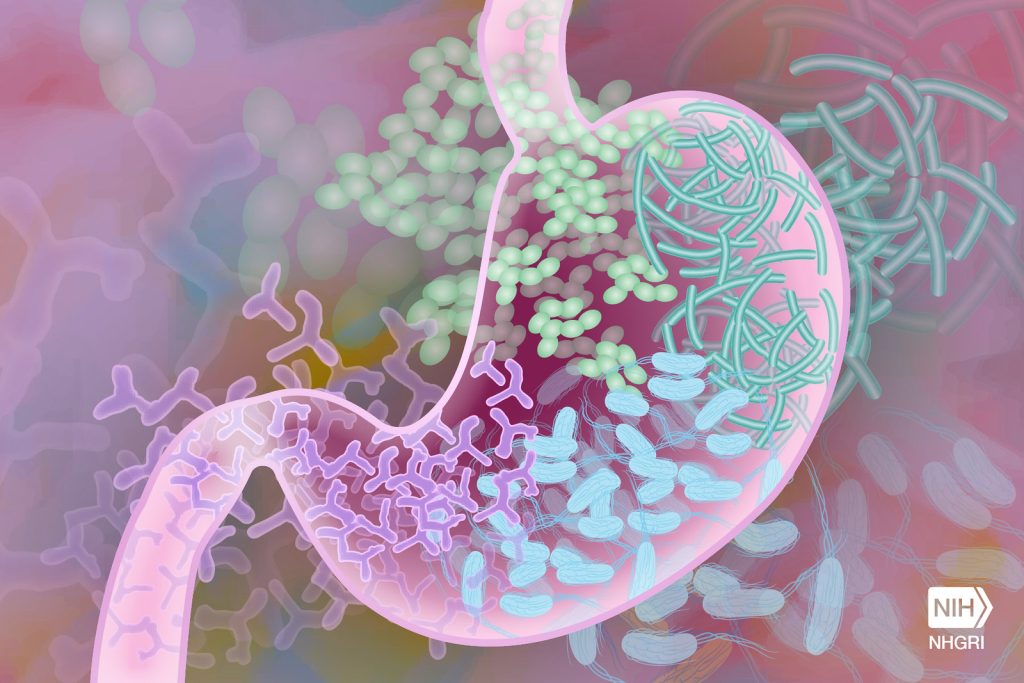
One type of bacteria found in the gut may contribute to the development of Type 2 diabetes, while another may protect from the disease, according to a study published in the journal Diabetes.
The study found people with higher levels of a bacterium called Coprococcus tended to have higher insulin sensitivity, while those whose microbiomes had higher levels of the bacterium Flavonifractor tended to have lower insulin sensitivity.
Studies of the gut microbiome have found that people who don’t process insulin properly have lower levels of a certain type of bacteria that produce a type of fatty acid called butyrate.
Mark Goodarzi, MD, PhD, the director of the Endocrine Genetics Laboratory at Cedars-Sinai, is leading an ongoing study that is following and observing people at risk for diabetes to learn whether those with lower levels of these bacteria develop the disease.
“The big question we’re hoping to address is: Did the microbiome differences cause the diabetes, or did the diabetes cause the microbiome differences?” said Goodarzi, who is the senior author of the study and principal investigator of the Microbiome and Insulin Longitudinal Evaluation Study (MILES).
An earlier cohort study from the MILES trial found that birth by caesarean section is associated with a higher risk for developing prediabetes and diabetes. For the present study, investigators analysed data from 352 people without known diabetes.
Study participants were asked to attend three clinic visits and collect stool samples prior to the visits. Investigators analysed data collected at the first visit. They conducted genetic sequencing on the stool samples, for example, to study the participants’ microbiomes, and specifically look for bacteria that earlier studies have found to be associated with insulin resistance. Each participant also filled out a diet questionnaire and took an oral glucose tolerance test, which was used to determine ability to process glucose.
Investigators found 28 people had oral glucose tolerance results that met the criteria for diabetes. They also found that 135 people had prediabetes, a condition in which a person’s blood-sugar levels are higher than normal but not high enough to meet the definition of diabetes.
The research team analysed associations between 36 butyrate-producing bacteria found in the stool samples and a person’s ability to maintain normal levels of insulin. They controlled for factors that could also contribute to a person’s diabetes risk, such as age, sex, body mass index and race. Coprococcus and related bacteria formed a network of bacteria with beneficial effects on insulin sensitivity. Despite being a producer of butyrate, Flavonifractor was associated with insulin resistance; prior work by others have found higher levels of Flavonifractor in the stool of people with diabetes.
Investigators are continuing to study samples from patients who participated in this study to learn how insulin production and the composition of the microbiome change over time. They also plan to study how diet may affect the bacterial balance of the microbiome.
Goodarzi emphasised, however, that it is too early to know how people can change their microbiome to reduce their diabetes risk.
“As far as the idea of taking probiotics, that would really be somewhat experimental,” said Goodarzi, who is also the Eris M. Field Chair in Diabetes Research at Cedars-Sinai. “We need more research to identify the specific bacteria that we need to be modulating to prevent or treat diabetes, but it’s coming, probably in the next five to 10 years.”
Research published in the Proceedings of the National Academy of Sciences has shown for the first time that the effects of Alagille syndrome, an incurable genetic disorder that affects the liver, could be reversed with a single drug. The study has the potential to transform treatment for this rare disease and may also have implications for more common diseases.
More than 4000 babies each year are born with Alagille syndrome Alagille syndrome (ALGS) is a multisystem autosomal dominant disorder with a wide variety of clinical manifestations. The clinical manifestations are variable, even within the same family, and commonly include hepatic (cholestasis, characterised by bile duct paucity on liver biopsy), cardiac (primarily involving the pulmonary arteries), skeletal (butterfly vertebrae), ophthalmologic (posterior embryotoxon), and facial abnormalities.
“Alagille syndrome is widely considered an incurable disease, but we believe we’re on the way to changing that,” says Associate Professor Duc Dong, PhD, who led the study. “We aim to advance this drug into clinical trials, and our results demonstrate its effectiveness for the first time.”
Children with ALGS frequently require a liver transplant, but donor livers are limited, and not all children with ALGS qualify. Without a transplant, the disease has a 75% mortality rate by late adolescence.
“Duc and his team continue to do thrilling research on Alagille syndrome, and these breakthroughs certainly offer hope for families living with this very complicated and complex disorder,” says Roberta Smith, CNMT, president of the Alagille Syndrome Alliance. “We have been longtime supporters of Duc’s work and have come to know him as a driven, dedicated scientist who is passionate about moving the needle one step closer toward a cure.”
Their new drug, called NoRA1, activates the Notch pathway, a cell-to-cell signaling system present in nearly all animals. Notch signaling helps orchestrate fundamental biological processes and plays a role in many diseases in addition to Alagille syndrome. In children with Alagille syndrome, a genetic mutation causes a reduction in Notch signaling, which results in poor liver duct growth and regeneration.
The researchers found that in animals with mutations in the same gene affected in ALGS, NoRA1 increases Notch signaling and triggers duct cells to regenerate and repopulate in the liver, reversing liver damage and increasing survival.
“The liver is well known for its great capacity to regenerate, but this doesn’t happen in most children with Alagille syndrome because of compromised Notch signaling,” says first author Chengjian Zhao, a postdoctoral researcher in Dong’s lab. “Our research suggests that nudging the Notch pathway up with a drug could be enough to restore the liver’s normal regenerative potential.”
The researchers are currently testing the drug on lab-grown liver orgnelles cultured made with stem cells derived from the cells of ALGS patients.
“Instead of forcing the cells to do something unusual, we are just encouraging a natural regenerative process to occur, so I’m optimistic that this will be an effective therapeutic for Alagille syndrome,” adds Dong.
In China, there are signs that the latest wave of COVID brought about by the easing of lockdown measures alongside a surprisingly low vaccination rate may be more severe than official reports indicate.
A recent spate of suspicious deaths among Chinese celebrity has prompted alarm among citizens, BBC News reports. In December, 40-year-old opera singer Chu Lanlan died, which came as a shock to many, given her young age.
Her family said they were saddened by her “abrupt departure”, but did not give details of the cause of her death.
China’s scrapping of many “zero COVID” regulations has resulted in a surge of cases, and there reports of hospitals and crematoria becoming overwhelmed. Yet China has only reported 22 COVID deaths since December, based on its own strict criteria which now only allow for death from respiratory illnesses such as pneumonia.
The World Health Organization (WHO) on Wednesday warned that the country was under-representing its COVID statistics, especially deaths. Chinese officials denied this.
China’s foreign ministry spokesperson Mao Ning said in a media briefing that China had transparently and quickly shared COVID data with the WHO, adding that China’s “epidemic situation is controllable”.
“Facts have proved that China has always, in accordance with the principles of legality, timeliness, openness and transparency, maintained close communication and shared relevant information and data with the WHO in a timely manner,” Mao said.
While many countries have likely under-represented COVID deaths, including the United States, the extent appears to be much greater in China.
Back in January of 2022, Forbes took a critical look at China’s official figures, with a death rate at the time of 0.32 per 100 000 population compared to the US’ 248 per 100 000 – a rate 800 times lower higher which beggars belief.
China used these figures to position itself as the world leader in the response against COVID, the New York Times noted.
The director of Beijing’s Institute of Respiratory Diseases admitted in a TB interview that the number of deaths among the elderly was “definitely more” so far this winter than in past years, but stressed that critical cases remained in the minority.
This week the People’s Daily, the Communist Party’s official newspaper, urged citizens to work towards a “final victory” over COVID and dismissed criticism of the previous zero-COVID policy.
Acupuncture and acupressure (which stimulates pressure points without the invasive needles) have been suggested as ways to help reduce sleep disturbance in patients with cancer. A recent analysis published in Worldviews on Evidence-Based Nursing finds moderate evidence that acupressure and acupuncture may be effective, with acupressure having a greater effect.
Researchers included 24 randomised controlled trials involving 2002 patients in the analysis. Compared with enhanced supportive care, acupressure had the largest effect size for reducing self-reported sleep disturbance (standardised mean difference [SMD] = −2.67, 95% CrI: −3.46 to −1.90; GRADE = moderate), followed by acupuncture (SMD = −1.87, 95% CrI: −2.94 to −0.81, GRADE = moderate) and electroacupuncture (SMD = −1.60, 95% CrI: −3 to −0.21; GRADE = low).
Based on these findings, the researchers conclude that acupressure can be recommended as the optimal treatment for reducing sleep disturbance in cancer patients. They also suggest further trials to investigate the effects of different acupuncture or acupressure techniques have on sleep in cancer patients, especially alongside other therapies.
“Based on available evidence, acupressure may be a more promising approach than acupuncture for reducing sleep disturbance in patients with cancer,” said corresponding author Denise Shuk Ting Cheung, BNurs, PhD, RN, of the University of Hong Kong. “Future studies should focus on the differential mechanisms of action of acupressure and acupuncture and link them to the multifactorial causes of sleep disturbance in patients with cancer.”
Middle-aged smokers are much more likely to report having memory loss and confusion than nonsmokers, and the likelihood of cognitive decline is lower for those who have quit, even recently, according to a new study appearing in the Journal of Alzheimer’s Disease.
The study is the first to examine the relationship between smoking and cognitive decline using a one-question self-assessment asking people if they’ve experienced worsening or more frequent memory loss and/or confusion.
The findings build on previous research that established relationships between smoking and Alzheimer’s Disease and other forms of dementia, and could point to an opportunity to identify signs of trouble earlier in life, said Jenna Rajczyk, lead author of the study.
It’s also one more piece of evidence that quitting smoking is good not just for respiratory and cardiovascular reasons, but to preserve neurological health, said Rajczyk, a PhD student in Ohio State’s College of Public Health, and senior author Jeffrey Wing, assistant professor of epidemiology.
“The association we saw was most significant in the 45–59 age group, suggesting that quitting at that stage of life may have a benefit for cognitive health,” Wing said. A similar difference wasn’t found in the oldest group in the study, which could mean that quitting earlier affords people greater benefits, he said.
Researchers used data from the 2019 Behavioral Risk Factor Surveillance System Survey to compare subjective cognitive decline (SCD) measures for current smokers, recent former smokers, and those who had quit years earlier. The analysis included 136 018 people 45 and older, and about 11% reported SCD.
The prevalence of SCD among smokers in the study was almost 1.9 times that of nonsmokers. The prevalence among those who had quit less than 10 years ago was 1.5 times that of nonsmokers. Those who quit more than a decade before the survey had an SCD prevalence just slightly above the nonsmoking group.
“These findings could imply that the time since smoking cessation does matter, and may be linked to cognitive outcomes,” Rajczyk said.
The simplicity of SCD, a relatively new measure, could lend itself to wider applications, she said.
“This is a simple assessment that could be easily done routinely, and at younger ages than we typically start to see cognitive declines that rise to the level of a diagnosis of Alzheimer’s Disease or dementia,” Rajczyk said. “It’s not an intensive battery of questions. It’s more a personal reflection of your cognitive status to determine if you’re feeling like you’re not as sharp as you once were.”
Many people don’t have access to more in-depth screenings, or to specialists, making the potential applications for measuring SCD even greater, she said.
Wing said it’s important to note that these self-reported experiences don’t amount to a diagnosis, nor do they confirm independently that a person is experiencing decline out of the normal ageing process. But, he said, they could be a low-cost, simple tool to consider employing more broadly.
Following established guidelines about prescription drugs would seem an obvious choice, especially for the professionals that do the prescribing. Yet doctors – and their family members – are less likely than other people to comply with those guidelines, according to a large-scale study published in the American Economic Review: Insights.
This result could be surprising or else prompt a knowing nod. In any case, the finding flies in the face of past scholarly hypotheses. Previously, it was assumed that greater knowledge and easier communication with medical providers leads patients to follow instructions more closely.
The new study is based on over a decade of population-wide data from Sweden and includes suggestive evidence about why doctors and their families may ignore medical advice. Overall, the research shows that the rest of the population adheres to general medication guidelines 54.4% of the time, while doctors and their families lag 3.8% behind that.
“There’s a lot of concern that people don’t understand guidelines, that they’re too complex to follow, that people don’t trust their doctors,” says Amy Finkelstein, a professor in MIT’s Department of Economics. “If that’s the case, you should see the most adherence when you look at patients who are physicians or their close relatives. We were struck to find that the opposite holds, that physicians and their close relatives are less likely to adhere to their own medication guidelines.”
The paper, “A Taste of Their Own Medicine: Guideline Adherence and Access to Expertise,” is The authors are Finkelstein, the John and Jennie S. MacDonald Professor of Economics at MIT; Petra Persson, an assistant professor of economics at Stanford University; Maria Polyakova PhD ’14, an assistant professor of health policy at the Stanford University School of Medicine; and Jesse M. Shapiro, the George Gund Professor of Economics and Business Administration at Harvard University.
Millions of data points
To conduct the study, the scholars examined Swedish administrative data from 2005 through 2016, for 63 prescription drug guidelines. Doctors and their close relatives were selected. All told, the research involved 5 887 471 people to whom at least one of the medication guidelines applied. Of these people, 149 399 were doctors or their close family members.
Using information on prescription drug purchases, hospital visits, and diagnoses, the researchers could see if people were adhering to medication guidelines by examining whether prescription drug decisions matched these patients’ medical circumstances. In the study, six guidelines pertained to antibiotics; 20 involved medication use by the elderly; 20 focused on medication attached to particular diagnoses; and 17 were about prescription drug use during pregnancy.
Some guidelines recommended use of a particular prescription drug, like a preference of narrow-spectrum antibiotics for an infection; other guidelines were about not taking certain medications, such as the recommendation that pregnant women avoid antidepressants.
Out of the 63 guidelines used in the study, doctors and their families followed the standards less often in 41 cases, with the difference being statistically significant 20 times. Doctors and their families followed the guidelines more often in 22 cases, with the difference being statistically significant only three times.
“What we found, which is quite surprising, is that they [physicians] are on average less adherent to guidelines,” says study author Maria Polyakova PhD, an assistant professor of health policy at the Stanford University School of Medicine. “So, in this paper we are also trying to figure out what experts do differently.”
Ruling out other answers
Since doctors and their close relatives adhere to medical guidelines less often than the rest of the population, what exactly explains this phenomenon? While homing in on an answer, the research team examined and rejected several hypotheses.
First, the lower compliance by those with greater access to expertise is unrelated to socioeconomic status. In society overall, there is a link between income and adherence levels, but physicians and their families are an exception to this pattern. As the researchers wrote, special “access to doctors is associated with lower adherence despite, rather than because of, the high socioeconomic status” of those families.
Additionally, the researchers did not find any link between existing health status and adherence. They also studied whether a greater comfort with prescription medication – due to being a doctor or related to one – makes people more likely to take prescription drugs than guidelines recommend. This does not appear to be the case. The lower adherence rates for doctors and their relatives were similar in magnitude whether the guidelines pertained to taking medication or, alternately, not taking medication.
“There are a number of first-order alternative explanations that we could rule out,” Polyakova says.
Resolving a medical mystery
Instead, the researchers believe the answer is that doctors possess “superior information about guidelines” for prescription drugs – and then deploy that information for themselves. In the study, the largest difference in adherence to guidelines is for antibiotics: Doctors and their families are 5.2% less in compliance than everyone else.
Most guidelines in this area recommend starting patients off with “narrow-spectrum” antibiotics, which are more targeted, rather than “broader-spectrum” antibiotics. The latter might be more likely to eradicate an infection, but greater use of them also increases the chances that bacteria will develop resistance to these valuable medications, which can reduce efficacy for other patients. Thus for things like a respiratory tract infection, guidelines call for a more targeted antibiotic first.
The issue, however, is that what is good for the public in the long run – trying more targeted drugs first – may not work well for an individual patient. For this reason, doctors could be more likely to prescribe broader-spectrum antibiotics for themselves and their families.
“From a public-health perspective, what you want to do is kill it [the infection] off with the narrow-spectrum antibiotic,” Finkelstein observes. “But obviously any given patient would want to knock that infection out as quickly as possible.” Therefore, she adds, “You can imagine the reason doctors are less likely to follow the guidelines than other patients is because they … know there’s this wedge between what’s good for them as a patients and what’s good for society.”
Another suggestive piece of data comes from different types of prescription drugs that are typically avoided during pregnancies. For so-called C-Class drugs, where empirical evidence about the dangers of the drugs is slightly weaker, doctors and their families have an adherence rate 2.3 percentage points below other people (meaning, in this case, that they are more likely to take these medications during pregnancy). For so-called D-Class drugs with slightly stronger evidence of side effects, that dropoff is only 1.2 percentage points. Here too, doctors’ expert knowledge may be influencing their actions.
“The results imply that probably what’s going on is that experts have a more nuanced understanding of what is the right course of action for themselves, and how that might be different than what the guidelines suggest,” Polyakova says.
Still, the findings suggest some unresolved tensions in action. It could be, as Polyakova suggests, that guidelines about antibiotics should be more explicit about the public and private tradeoffs involved, providing more transparency for patients. “Maybe it’s better for the guidelines to be transparent and say they recommend this not because it is [always] the best course of action for you, but because it is the best for society,” she says.
Additional research could also aim to identify areas where lower expert adherence with guidelines may be associated with better health outcomes –to see how often doctors have a point, as it were. Or, as the researchers write in the paper, “An important avenue for further research is to identify whether and when nonadherence is in the patient’s best interest.”
Over the festive season, the South African measles outbreak has now extended to five provinces, including Gauteng as of epidemiological week (epiweek) 51, the National Institute for Communicable Diseases (NICD) has reported.
From samples collected in epiweek 40 (end 8 Oct 2022) to epiweek 51 (end 24 Dec 2022), a total of 297 cases of laboratory-confirmed measles cases have been reported in South Africa. From epiweek 40 to mid-week 51, 2022, a total of 285 laboratory-confirmed cases were reported from five provinces with declared measles outbreaks in Limpopo (128 cases), Mpumalanga (68), North West (69), Gauteng (13), and Free State (7). The NICD classifies a measles outbreak as three or more confirmed laboratory measles cases reported within 30 days of disease onset, within a district.
The number of cases continues to increase daily as blood and throat swabs are submitted to the NICD for measles serology and PCR testing.
The age of laboratory-confirmed cases across the five provinces ranges from two months to 42 years. Of these, 41% were ages 5–9, followed by 28% for ages 1–4 and 15% for ages 10–14 . Vaccination status of 84 cases (29%) was known, of whom 33 (39%) were vaccinated.
Data on hospital admission rates and measles mortality rates are not yet known. Whilst cases that are seen at hospitals may not necessarily be admitted, this figure gives us an indication of the severity of illness, as patients consulted tertiary care facilities. The number of admitted patients will be a subset of these cases.
An explanatory model presented in a thesis from University of Gothenburg may make simplify the understanding of autism development. It provides new insights into how various risk factors give rise to autism and why there is such great variability between individuals.
Autism, a neurodevelopmental condition, affects how people perceive the world around them and how they interact and communicate with others. Among individuals with autism, there are major differences in terms of personal traits and manifestations alike. The disorder is therefore usually described as a spectrum, with numerous subtle variations.
While theoretical, the new explanatory model is also practical in application, since its various components are quantifiable through testing. The model describes various contributing factors and how they combine to prompt an autism diagnosis and cause other neurodevelopmental conditions.
Three contributing factors
The model links three contributing factors. Together, these result in a pattern of behaviour that meets the criteria for an autism diagnosis:
Autistic personality – hereditary common genetic variants that give rise to an autistic personality.
Cognitive compensation – intelligence and executive functions, such as the capacity to learn, understand others, and adapt to social interactions.
Exposure to risk factors – for example, harmful genetic variants, infections, and other random events during gestation and early childhood that adversely affect cognitive ability.
“The autistic personality is associated with both strengths and difficulties in cognition but does not, as such, mean that diagnostic criteria are fulfilled. Still, exposure to risk factors that inhibit people’s cognitive ability may affect their capacity to tackle difficulties, which contributes to individuals being diagnosed with autism,” says Darko Sarovic, physician and postdoctoral researcher at Sahlgrenska Academy, University of Gothenburg, who wrote the thesis.
The model makes it clear that it is the many different risk factors combined that bring about the major differences among individuals on the spectrum. The various components of the model are supported by results from previous research.
Adaptive ability
High executive functioning skills may let people cover up their impairment, reducing their risk of meeting the diagnostic criteria for autism. This may explain why a lower degree of intelligence is observed among people diagnosed with autism, as well as other neurodevelopmental conditions. It also affords an understanding of why intellectual disability is more common among these groups. Thus, the model indicates that low cognitive ability is not part of the autistic personality but, rather, a risk factor that leads to diagnostic criteria being met.
“The autistic personality is associated with various strengths. For example, parents of children with autism are overrepresented among engineers and mathematicians. The parents themselves have probably been able to compensate for their own autistic personality traits and thus not met the criteria for an autism diagnosis. The impact of the disorder has then become more noticeable in their children owing, for instance, to an exposure to risk factors and relatively low cognitive ability,” Sarovic says.
Gender differences affect diagnosis
The diagnosis of autism is more common among boys than girls, and girls often get their diagnosis later in life. Some girls reach adulthood before being diagnosed, after many years of diffuse personal difficulties.
“Girls’ symptoms are often less evident to other people. It’s well known that girls generally have more advanced social skills, which probably means that they’re better at compensating for their own difficulties. Girls also tend to have fewer autistic traits and be less susceptible to the effects of risk factors. Accordingly, the model can help to answer questions about the gender gap,” Sarovic says.
Research and diagnostics
The model also proposes ways of estimating and measuring the three factors, enabling use of the model in research studies. Diagnostics is another conceivable area of use. In a pilot study in which 24 participants had been diagnosed with autism and 22 controls had not, measuring the three factors of the model enabled more than 93% to be correctly assigned to the right category. The model can also be used to explain the inception of other neurodevelopmental disorders, such as schizophrenia.
Analysing magnetic resonance imaging (MRI) brain scans of nearly 2000 children, researchers found children who played video games for three or more hours a day did better in cognitive skills tests involving impulse control and working memory compared to children who had never played video games. Published in JAMA Network Open, this study analysed data from the ongoing Adolescent Brain Cognitive Development (ABCD) Study, which is supported by the and other entities of the National Institutes of Health.
“This study adds to our growing understanding of the associations between playing video games and brain development,” said National Institute on Drug Abuse (NIDA) Director Nora Volkow, MD. “Numerous studies have linked video gaming to behaviour and mental health problems. This study suggests that there may also be cognitive benefits associated with this popular pastime, which are worthy of further investigation.”
Although a number of studies have investigated the relationship between video gaming and cognitive behaviour, the neurobiological mechanisms underlying the associations are not well understood. Only a handful of neuroimaging studies have addressed this topic, and the sample sizes for those studies have been small, with fewer than 80 participants.
To address this research gap, scientists at the University of Vermont, Burlington, analysed data obtained when children entered the ABCD Study at ages 9 and 10 years old. The research team examined survey, cognitive, and brain imaging data from nearly 2000 participants from within the bigger study cohort, comparing those who reported playing no video games at all and those who reported playing video games for three hours per day or more. This threshold was selected as it exceeds the American Academy of Paediatrics screen time guidelines, which recommend limiting videogames to one to two hours per day for older children. Researchers assessed their performance in two tasks that reflected the children’s ability to control impulsive behaviour and to memorise information, as well as brain activity while performing the tasks.
The researchers found that the children who reported playing video games for three or more hours per day were faster and more accurate on both cognitive tasks than those who never played. They also observed that the differences in cognitive function observed between the two groups was accompanied by differences in brain activity. Functional MRI brain scans found that children who played video games for three or more hours per day showed higher brain activity in regions of the brain associated with attention and memory than in never-gamers. At the same time, those children who played at least three hours of videogames per day showed more brain activity in frontal brain regions that are associated with more cognitively demanding tasks and less brain activity in brain regions related to vision.
The researchers think these patterns may stem from practicing tasks related to impulse control and memory while playing videogames, which can be cognitively demanding, and that these changes may lead to improved performance on related tasks. Furthermore, the comparatively low activity in visual areas among children who reported playing video games may reflect that this area of the brain may become more efficient at visual processing as a result of repeated practice through video games.
While prior studies have reported associations between video gaming and increases in depression, violence, and aggressive behaviour, this study did not find that to be the case. The three hours or more group tended to report higher mental health and behavioural issues compared to the non-gaming children, but was not statistically significant. The researchers note that this will be an important measure to continue to track and understand as the children mature.
Further, the researchers stress that this cross-sectional study does not allow for cause-and-effect analyses, and that it could be that children who are good at these types of cognitive tasks may choose to play video games. The authors also emphasise that their findings do not mean that children should spend unlimited time on their computers, mobile phones, or TVs, and that the outcomes likely depend largely on the specific activities children engage in. For instance, they hypothesise that the specific genre of video games, such as action-adventure, puzzle solving, sports, or shooting games, may have different effects for neurocognitive development, and this level of specificity on the type of video game played was not assessed by the study.
“While we cannot say whether playing video games regularly caused superior neurocognitive performance, it is an encouraging finding, and one that we must continue to investigate in these children as they transition into adolescence and young adulthood,” said Bader Chaarani, PhD, assistant professor of psychiatry at the University of Vermont and the lead author on the study. “Many parents today are concerned about the effects of video games on their children’s health and development, and as these games continue to proliferate among young people, it is crucial that we better understand both the positive and negative impact that such games may have.”
Through the ABCD Study, researchers will be able to track these children into young adulthood, looking for gaming-related changes in cognitive skills, brain activity, behaviour, and mental health.
Engineers have designed a system that can remotely measure blood pressure from video of a person’s forehead and using artificial intelligence algorithms to extracting cardiac signals across a range of skin tones. They describe their new technology in a new paper published in Inventions.
Using the same remote-health technology they pioneered for non-contact monitoring of vital health signs, this new technology could replace the existing uncomfortable and cumbersome method of strapping an inflatable cuff to a patient’s arm or wrist, the researchers claim.
The researchers, from the University of South Australia and Baghdad’s Middle Technical University, describe the technique, which involves filming a person from a short distance for 10 seconds and then using AI to extract cardiac signals from two regions in the forehead.
Experiments were performed on 25 people with different skin tones and under changing light conditions, overcoming the limitations reported in previous studies. Compared to a digital sphygmomanometer (itself subject to errors), the systolic and diastolic readings were around 90% accurate.
“Monitoring blood pressure is essential to detect and manage cardiovascular diseases, the leading cause of global mortality, responsible for almost 18 million deaths in 2019,” says UniSA remote sensing engineer Professor Javaan Chahl. “Furthermore, in the past 30 years, the number of adults with hypertension has risen from 650 million to 1.28 billion worldwide.”
“The health sector needs a system that can accurately measure blood pressure and assess cardiovascular risks when physical contact with patients is unsafe or difficult, such as during the recent COVID outbreak,” Prof Chahl continues. “If we can perfect this technique, it will help manage one of the most serious health challenges facing the world today.”
The cutting-edge technology has come a long way since 2017, when the UniSA and Iraqi research team demonstrated image-processing algorithms that could extract a human’s heart rate from drone video.
In the past five years the researchers have developed algorithms to measure other vital signs, including breathing rates from 50 metres away, oxygen saturation, temperature, and jaundice in newborns.
Their non-contact technology was also deployed in the United States during the pandemic for non-contact monitoring of COVID signs.