Month: August 2022

Cancer-associated Fibroblasts Sometimes Aid Certain Drugs
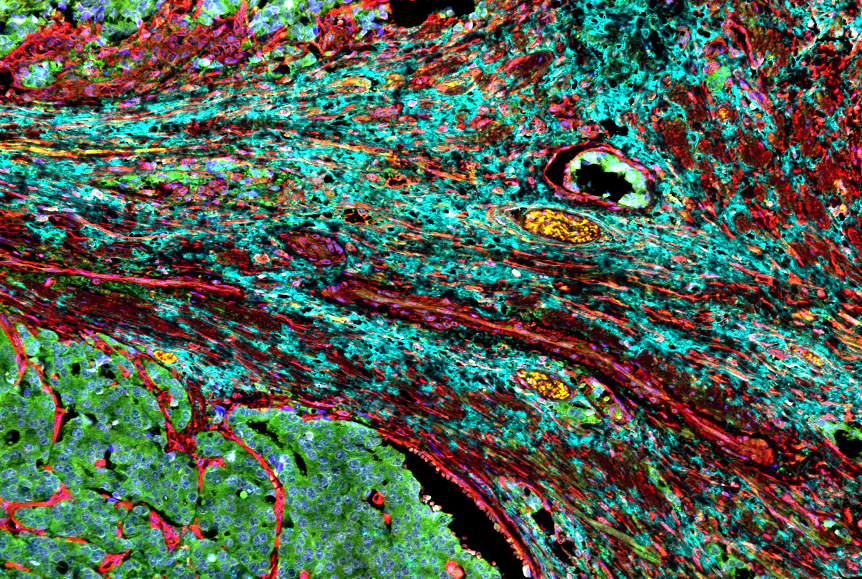
Cancer-associated fibroblasts surrounding a prostate tumour. Credit: Moscat and Diaz Meco labs

Cancer-associated fibroblasts in the tumour environment have typically been linked to tumour progression and therapy resistance, but some studies suggest that these fibroblasts may also sensitise cancer cells to therapy. In a new article published in Science Signaling, researchers shed light on these conflicting studies and demonstrate that cancer associated fibroblasts can promote or inhibit drug sensitivity based on the type of tumour cell and the drug used for treatment.

Through a series of laboratory experiments, the research team from Moffitt Cancer Center determined the impact of cancer associated fibroblasts on drug responses among different non-small cell lung cancer (NSCLC) cell lines. They discovered that the presence of cancer-associated fibroblasts had varying effects on tumour cells based on both the type of NSCLC and the drug used for treatment. For example, the presence of cancer associated fibroblasts induced resistance to two different MEK inhibitors in non-small cell lung cancer cell lines with a mutant KRAS protein. However, cancer associated fibroblasts sensitised NSCLC cell lines with a mutant EGFR protein to EGFR inhibitors. Interestingly, normal lung associated fibroblasts never sensitised cells to drug treatment, suggesting that cancer associated fibroblasts secrete a factor that causes differential responses to drug treatment in a cell-context manner.

The researchers compared cancer associated fibroblasts to normal fibroblasts to identify factors that would produce these disparate effects. They found that cancer associated fibroblasts had alterations in the levels of secreted proteins that are part of the insulin-like growth factor (IGF) signalling pathway, which is involved in cell growth, death and migration. Specifically, cancer-associated fibroblasts secreted higher levels of proteins called IGF binding proteins (IGFBPs), which inhibit IGF signalling, and lower levels of IGFs, which activate IGF signalling. In combination, these alterations result in inhibitory effects on the IGF signalling pathway.

In further analyses, the researchers found that IGFBPs sensitised lung cancer cell lines to EGFR inhibitor treatment, while IGF proteins induced resistance to EGFR inhibitor treatment. They identified that survival signalling in response to EGFR inhibitor treatment was dependent on the proteins IGF1R and FAK, which are both part of the IGFBP signalling pathway. Importantly, they discovered that drugs that blocked the activity of IGF1R and FAK sensitised mutant EGFR lung cancer cells to EGFR inhibitors, suggesting that this combination approach may be effective in the clinic.

“These results highlight tumour suppressive effects competing with otherwise tumour promoting effects of cancer associated fibroblasts and add to the growing evidence that eliminating cancer associated fibroblasts in an undifferentiated way may be detrimental to cancer therapy,” said lead study author Lily Remsing Rix, PhD

“We show that mechanistic understanding not just of cancer associated fibroblast-mediated resistance, but also of their tumour suppressive pathways, can lead to rational design of improved therapeutic approaches that mimic these effects and may delay the onset of drug resistance,” added Uwe Rix, PhD, principal investigator of the study.

Source: H. Lee Moffitt Cancer Center & Research Institute

Act Now to Stop the Bleed on Medical Schemes Industry

By Junior Biola

Last year, fraud and abuse of medical aids resulted in a loss of R22 billion for medical scheme funds according to The Board of Healthcare Funders – a loss which could be avoided with the implementation of fraud mitigation services.

Medical aid fraud is certainly nothing new: for years, medical schemes have railed against members collaborating with medical practitioners – from doctors to pharmacists – for personal gain. There are the members who convince practitioners to admit them to hospital, for example, and pocket the monies received from their hospital cash back plans; the pharmacists who bill their customers for ‘medicine’, when their baskets are in fact filled with non-medicinal items; or even the practitioners who bill patients for treatments which never take place.

Since the advent of the Covid pandemic, such activities have escalated. In fact, it is no longer rogue pharmacists or practitioners taking advantage of medical aids; the industry is now affected by dishonest members and criminals using stolen cards to deplete medical savings accounts or take advantage of benefits.

The results are catastrophic for an industry which is frequently accused of charging members exorbitant fees. In truth, players are under siege from the steeply rising costs of healthcare, and while they are doing their best to limit the impact on members, this is no easy task when those very members are, in effect, stealing from the scheme through fraudulent claims.

The impacts are far-reaching for all stakeholders. Medical funds have no choice but to raise the price of contributions – after all, they need to maintain a steady pool of funds in order to be able to pay out claims, and if members are dipping into that pool for illicit reasons, it needs to be replenished. Naturally, this affects members severely, especially as many are already challenged by the rising cost of living. On the other side of the equation, practitioners also take a hit: when the pool of medical funds decreases, a less profitable practice is inevitable.

The prevalence of fraud is understandable when you consider that few controls are in place to prevent it. Think of the average consumer entering a retail chain pharmacy, for example: they may be asked to present their loyalty card, and while this may be considered a form of identification, the reality is that it is rather ineffective as a verification tool. The absence of an identification photo means that the purchaser could well be someone besides the patient for whom the script was written; nor is there anything to stop them from adding over-the-counter items to purchase and claiming them from their savings.

The good news? Fraud mitigation is both effective, and simple to implement. Establishing a ‘safety net’ of identity and biometric recognition makes it possible for medical schemes to ensure that members claim only for medicines and treatments they have been prescribed, while also protecting against scripts that have been falsified.

The result? A healthier medical aid industry – for the benefit of all.

Junior Biola is CEO of Johannesburg-based fintech company, Bitventure, a provider of state-of-the-art real-time automated verification and payment solutions. www.bitventure.co.za

Spider Silk Woven into New Biomedical Applications

Photo by Anthony Ievlev on Unsplash

Researchers have discovered that spider silk proteins can be fused to biologically active proteins and then converted into a gel at body temperature. This could allow for injectable protein solutions that form a gel inside the body, which could be used in tissue engineering and for drug release. Their study is published in Nature Communications.

“We have developed a completely new method for creating a three-dimensional gel from spider silk that can be designed to deliver different functional proteins,” says Anna Rising, research group leader at the Department of Biosciences and Nutrition, Karolinska Institutet (KI) and professor at the Department of Anatomy, Physiology and Biochemistry, Swedish University of Agricultural Sciences (SLU). “The proteins in the gel are very close together and the method is so mild that it can be used even for sensitive proteins.”

An injectable protein solution

In the future, the researchers hope to develop an injectable protein solution that forms a gel inside the body. The ability to design hydrogels with specific functions opens up for a range of possible applications, for example, achieving a controlled release of drugs into the body. In the chemical industry, it could be fused to enzymes, a form of proteins used to speed up various chemical processes.

“In the slightly longer term, I think injectable gels can become very useful in regenerative medicine,” says the study’s first author Tina Arndt, PhD student in Prof Rising’s research group at Karolinska Institutet. “We have a long way to go, but the fact that the protein solution quickly forms a gel at body temperature and that the spider silk has been shown to be well tolerated by the body is promising.”

Mimics spider silk spinning

The researchers have been particularly interested in the spiders’ ability to keep proteins soluble so that they do not clump together before the spinning of the spider silk. They have previously developed a method for the production of valuable proteins which mimics the process the spider uses to produce and store its silk proteins.

“We have previously shown that a specific part of the spider silk protein called the N-terminal domain is produced in large quantities and can keep other proteins soluble, and we can exploit this for medical applications,” said Anna Rising. “We have let bacteria produce this part of the protein linked to functional proteins, including various drugs and enzymes.”

Transformed into a gel

The new study shows that the N-terminal domain also has the ability to change shape and transition to small fibrils that cause the protein solution to be converted into a gel if incubated at 37 °C. In addition, it can be fused to functional proteins that preserve their function in the gel.

Source: Karolinska Institutet

IV Nutrition is a Growing and Potentially Dangerous Trend among Athletes

Intravenous IV drip
Source: Marcelo Leal on Unsplash

Once a last resort solution, intravenous (IV) nutrition is threatening to become the norm for competitive athletes, despite no scientific evidence that it works or that it is safe, warn experts in an editorial in the British Journal of Sports Medicine.

To halt this trend, the experts urge that ‘food first’ and ‘no needle’ messages need to be amplified among all athletes and their support teams.

The authors, who interact with professional team players in European and American leagues and their support teams on a regular basis, have become increasingly aware of the practice.

While it is not known how common it is, anecdotally, some players are hooked up to IV nutrition drips as often as every week as part of a pre- or post-game routine, they say. 

So-called ‘drip bars’ and concierge IV nutrition services claim to boost health and performance, restore hydration and speed up recovery. These services offer a menu of B vitamins, amino acids, glutathione, vitamin C and electrolytes, which could potentially boost levels beyond any therapeutic range.

These services seemed to have slipped under the regulatory radar despite being quite visible, and there is no guidance on their use for players or practitioners, the authors pointed out.

The principle of reducing needle use in sport and a ‘food first’ approach is taught in sports nutrition courses around the world, and a ban on needle use by athletes at the Olympic Games, except for appropriate medical use, and where a therapeutic use exemption (TUE) is obtained, has been in place for all recent Games, they highlight.

IV nutrition drips have traditionally been reserved for serious clinical conditions, such as anaemia, symptoms caused by nutrient deficiencies, or to correct severe dehydration caused by marathon running in a desert, for example. But they are now being used for tiredness, fatigue, or recovery, say the authors.

“But the evidence is sparse and not supportive. We are aware of just two studies assessing vitamin injections in otherwise healthy participants, neither of which yielded an effect for the injection group,” note the authors.

They add that these drips are risk-free, potentially interfering with the liver and gut microbes with implications for detoxification and immunity.

“Bypassing these mechanisms appears foolhardy unless there is a significant clinical rationale,” they write, adding that IV drips also carry risks of infection at the needle site and of blood clots.

Excessive vitamin B6 is associated with peripheral neuropathy, while athletes regularly receiving IV iron risk liver disease, they point out.

“Given that the long-term effects of supratherapeutic doses of B vitamins and other nutrients are unknown in athletes, it does not appear to be worth the risk, especially given the lack of evidence-based benefits,” they write. 

“More than this is the reputational risk to sport if it is normalised for athletes to regularly partake in self-directed IV [nutrition] use with a worrying shift away from what ‘works’ (according to scientific standards), to that which is unproven. 

“Furthermore, some athletes risk an anti-doping violation by participating in self-directed IV [nutrition] use.”

Figures on the prevalence of IV nutrition need to be gathered in tandem with governing bodies and players’ associations in the professional leagues providing guidance on the potential risks of IV nutrition use, say the authors.

“The ‘food first’ and ‘no needle’ messages need to be amplified among all athletes and multidisciplinary support teams to avoid what was previously a ‘last resort’ treatment becoming normal without scientific evidence of benefit,” they warn.

Source: EurekAlert!

Remove All Secondary Kidney Stones, Study Suggests

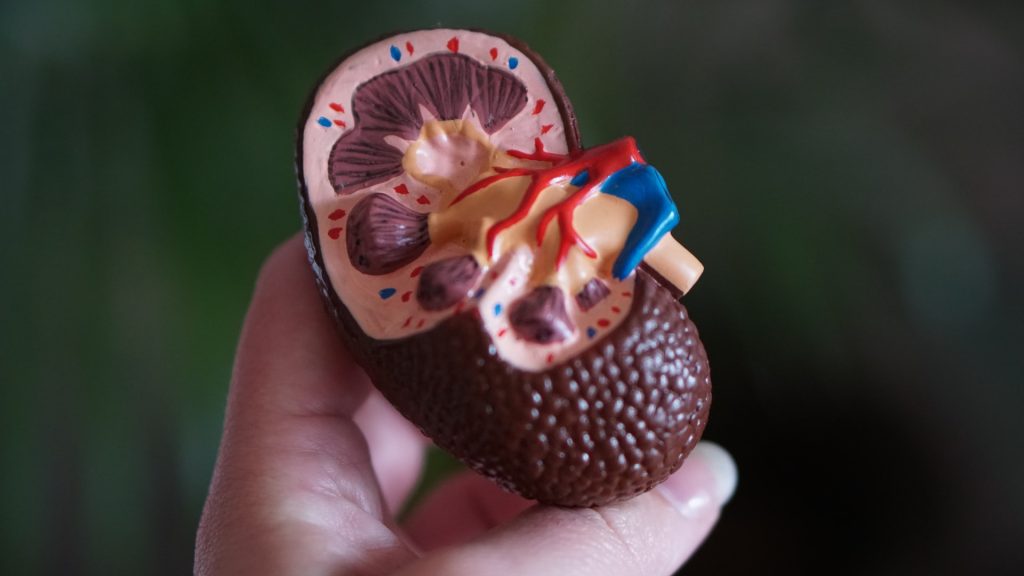
Anatomic model of a kidney
Photo by Robina Weermeijer on Unsplash

A new study showed, during kidney stone removal procedures, leaving small asymptomatic stones behind significantly increases the risk of a patient’s relapse in the following five years. The study findings appear in the New England Journal of Medicine.

Typically, stones < 6mm in diameter that are not a procedure’s primary target are not removed but monitored, since ‘secondary’ stones have high rates of successful passage if they move into the ureter, explained Dr Mathew Sorensen, a urologist at the University of Washington School of Medicine and the study’s lead author.

“Before this study, the clinical views were pretty mixed on whether some of these stones should be treated,” he said. “Most clinicians would decide, based on the size of the stone, whether it hit the bar for treatment, and if it did not, you would often ignore the little stones.”

The researchers studied 75 patients who were treated at multiple institutions over 2015 to 2021. About half of the patients had only their large primary stone treated, while the others had primary and secondary stones removed. Relapse was defined as having to go to the emergency room or undergo an additional procedure due to a recurrence or if a follow-up CT scan showed that the secondary stones grew.

Removal of the secondary stones reduced the relapse rate by 82%, the researchers found, leading the authors to recommend that smaller stones should not be left behind.

“Results of our trial support the removal of small asymptomatic renal stones at the time of surgery with a larger stone,” their paper concluded. The authors noted that while removal of smaller stones could add to the procedure’s duration and cost, those costs would likely be less than those associated with a patient’s repeat procedure or visit to the emergency room. Some patients in the study visited the emergency department multiple times and then required surgery, the report noted.

Dr Sorensen said he would share the study results with colleagues with the hope of changing their sensibility toward smaller stones. Further study is needed to determine whether treatment of small stones alone is justified, as technology improves and the costs and risks of intervention diminish, he said.

“I think we have proven through this rigorous study that removal of the small asymptomatic stones is beneficial when feasible and in patients that are candidates to have all their stones treated in one procedure,” he noted. “Leaving the stones behind risk trouble in the future.”

Source: University of Washington School of Medicine/UW Medicine

The COVID Pandemic has Worsened Antimicrobial Resistance

Photo by Mufid Majnun on Unsplash

The COVID pandemic has set back years of progress against antimicrobial resistance, with resistant hospital-onset infections and deaths increasing by at least 15% in the first year of the pandemic alone, according to a new  report from the US CDC.

About 3 million people in the US are infected with antimicrobial-resistant pathogens, often acquired in healthcare settings, with about 50 000 people dying. Some estimates predict that by 2050, there could be more deaths from antibiotic resistance than from cancer.

Corrie Detweiler, a professor of molecular, cellular, and developmental biology at CU Boulder, has spent her career trying to develop solutions to antimicrobial-resistance. CU Boulder Today spoke with her about why so many antimicrobial drugs won’t work anymore, how COVID made things worse and what can be done to make things better.

Prior to the pandemic, how were we doing in addressing this issue?

“A lot of progress had been made, particularly in hospital-acquired infections, based on a better understanding of the problem and better guidelines about when to use antibiotics. Between 2012 and 2017, for instance, deaths from antimicrobial resistance fell by 18% overall and nearly 30% in hospitals. That all fell apart during COVID.”

Why? How did COVID spawn an uptick?

We didn’t know how to treat COVID, and, understandably, there was a fair amount of chaos in the medical system. People were using antibiotics more, often inappropriately. About 80% of COVID patients received antibiotics. People were given them prophylactically, prior to knowing they had a lung bacterial infection. That’s not to say that none of (the patients) needed them. Some did. But the more you use antibiotics, the more you select for resistance. And that’s how you eventually get a superbug. 

What can society do to address this? 

First, we need to go back to this idea of stewardship in hospitals – to only give out antibiotics when there is a clear need. We were doing the right thing. And then something terrible came along and messed it up, and it demonstrated that what we were doing was working well. That’s a good thing. Second, we need to discover and develop novel classes of antibiotics. The last time a new class of antibiotics hit the market was in 1984. The fundamental problem is that they’re not profitable to develop, compared to say a cancer drug. You can go to the drugstore and get a course of amoxicillin for $8. We need programs that reward industry and academic labs like ours for doing the early research.

What does your lab do?

We’re using basic biology to try to figure out new ways to kill bacteria during an infection and identify compounds that work differently than existing drugs. 

Source: University of Colorado

Battling to Increase Nurse Numbers, SA Looks Abroad

Image by Hush Naidoo from Unsplash

The addition of specialist nurses by the Department of Home Affairs to the critical skills list has drawn renewed attention to and criticism of the chronic shortage of nurses in South Africa.

According to a statement by Life Healthcare last year, the country would need as many 26 000 additional nurses in 2022 to meet growing demand.

“Nurses have been on the frontline of the efforts to combat COVID for over two years. They are understandably exhausted and require our support as they continue to deliver quality care to our patients,” the group said, adding that it was embarking on programme to train an additional 3000 nurses per year.

In an open letter on the situation, the Hospital Association of South Africa (HASA) said that there was considerable training capacity and willingness from private sector hospitals, while also noting that the transition to new nursing qualifications has interrupted nurse training.

Last week, following engagement with the Minister of Health, South African Nursing Council, Health Professions Council of South Africa, public hospital CEOs and other experts, the DHA published an updated critical skills list, which was expanded to include specialist nurses and medical specialists.

The registered nurse specialties are intensive/critical care, psychiatric, peri-operative, trauma and paediatric nursing, as well as midwife specialists.

What many seen as the government’s inaction over the situation has not gone without criticism.

Speaking to the the Sunday Tribune, Sibongiseni Delihlazo of the Democratic Nursing Organisation of SA said that they were “extremely angry that we have to import specialist nurses because of the government’s actions.”

He points to falling numbers of nurses being produced each year and the shutting of nursing colleges as a sign of government neglect. World Health Organization studies showed a worldwide nursing shortage of 10 million positions by 2030, which needed an 8% annual increase in new nurses.

“Our country has not adhered to the warning, but has done the opposite,” he said.

Delihlazo said that most nursing students received government funding which was drying up, yet the population growth continued as did public healthcare system demand.

Public healthcare was not releasing nurses for specialist training, as doing so would cause the system to crumbled, Delihlazo said. In addition, local nurses are being effectively poached by first world nations.

“We could have produced our own nurses in a country with serious unemployment issues. The government doesn’t have a strategy to keep our nurses,” he said.

Research Reveals Many More Epigenetic Influences on Offspring

Pregnant with ultrasound image
Source: Pixabay

New research suggests that epigenetic information, which turns DNA sections on or off, and is normally reset between generations, is more frequently carried from mother to offspring than previously thought. The findings were published in Nature Communications.

Despite not directly altering the DNA sequence, epigenetic mechanisms can regulate gene expression through chemical modifications of DNA bases and changes to the chromosomal superstructure in which DNA is packaged.

These epigenetic changes can be induced through various such as diet and stress. While epigenetic modifications are reversible, it was thought that they rarely remain through generations in humans despite persisting through multiple cycles of cell replication.

Epigenetic changes can be influenced by environmental variations such as our diet, but these changes do not alter DNA and are normally not passed from parent to offspring.

The new research reveals that the supply of a specific protein in the mother’s egg can affect the genes that drive skeletal patterning of offspring. 

Chief investigator Professor Marnie Blewitt said the findings initially left the team surprised.

“It took us a while to process because our discovery was unexpected,” Professor Blewitt said.

“Knowing that epigenetic information from the mother can have effects with life-long consequences for body patterning is exciting, as it suggests this is happening far more than we ever thought.

“It could open a Pandora’s box as to what other epigenetic information is being inherited.”

The research examined the protein SMCHD1, an epigenetic regulator discovered by Prof Blewitt in 2008, and Hox genes, which control the identity of each vertebra during embryonic development in mammals. The epigenetic regulator prevents these genes from being activated too soon.

In this study, the researchers discovered that the amount of SMCHD1 in the mother’s egg affects the activity of Hox genes and influences the patterning of the embryo. Without maternal SMCHD1 in the egg, offspring were born with altered skeletal structures.  

First author and PhD researcher Natalia Benetti said this was clear evidence that epigenetic information had been inherited from the mother, rather than just DNA.

“While we have more than 20 000 genes in our genome, only that rare subset of about 150 imprinted genes and very few others have been shown to carry epigenetic information from one generation to another,” Benetti said.

“Knowing this is also happening to a set of essential genes that have been evolutionarily conserved from flies through to humans is fascinating.”

The research showed that SMCHD1 in the egg, which only persists for two days after conception, has a life-long impact.

SMCHD1 variants are linked to developmental disorder Bosma arhinia microphthalmia syndrome (BAMS) and facioscapulohumeral muscular dystrophy (FSHD), a form of muscular dystrophy. The researchers say their findings could have implications for women with SMCHD1 variants and their children in the future.

Research is underway on using on SMCHD1 to design novel therapies to treat developmental disorders, such as Prader Willi Syndrome and the degenerative disorder FSHD.

Source: The Walter and Eliza Hall Institute of Medical Research

Increased Odds of ADHD Symptoms in Children Born Before 39 Weeks

Photo by Christian Bowen on Unsplash

Among children born at term (37–41 weeks), those born before 39 weeks are more likely to experience symptoms associated with attention-deficit/hyperactivity disorder (ADHD), according to a study published in the Journal of Pediatrics.

ADHD manifests early in childhood with symptoms of hyperactivity, impulsivity or inattention, and has known links to preterm birth (less than 37 weeks gestation). The present study is one of only a handful to investigate the associations between gestational age at term and a diagnosis or symptoms of ADHD. It is the first to include reports from teachers.

“Teachers’ reports, in conjunction with maternal reports and physician evaluations, provide valuable input for the diagnosis of ADHD,” said study author Nancy Reichman, author of the study and a professor of paediatrics at Rutgers Robert Wood Johnson Medical School. “Mother-reported symptoms generally reflect behaviours in the home or in small family or social groups, while teacher-reported symptoms reflect behaviours in a structured educational setting by professionals who work with a large number of children and observe the range of behaviours that students exhibit in classrooms.”

Prof Reichman and her team set out to estimate the link between gestational age at term and 9-year-old children’s teacher-reported ADHD symptoms.

The team analysed data on about 1400 children in a birth cohort study that randomly sampled births from large US hospitals 1998 to 2000 and re-interviewed mothers over nine years as well as teachers’ evaluations using the Conners’ Teacher Rating Scale-Revised Short Form.

The researchers found that children born early-term (37-38 weeks) had significantly higher scores on the teacher rating scales than children who were full-term (39-41 weeks) for hyperactivity, ADHD and cognitive problems or inattention, but that gestational age wasn’t significantly associated with oppositional behaviour.

Specifically, the researchers found that each week of gestational age at term was associated with 6% lower hyperactivity scores and 5% lower ADHD and cognitive problems or inattention scores, and that birth at 37 to 38 weeks was associated with 23% higher hyperactivity scores and 17% higher ADHD scores when compared with birth at 39 to 41 weeks.

“The findings add to growing evidence supporting current recommendations for delaying elective deliveries to at least 39 weeks and suggest that regular screenings for ADHD symptoms are important for children born at 37 to 38 weeks,” Prof Reichman said.

Preterm infants are at greater risk for ADHD because of immature brain development, she said. “Significant growth and development in various kinds of brain cells are observed between 34 and 40 weeks of gestation,” said Reichman. “Infants born at full-term likely benefit from the additional one to two weeks of brain growth in utero compared with those born early-term.”

Source: Rutgers University

Asymptomatic Detection of Monkeypox Suggests it is More Widespread

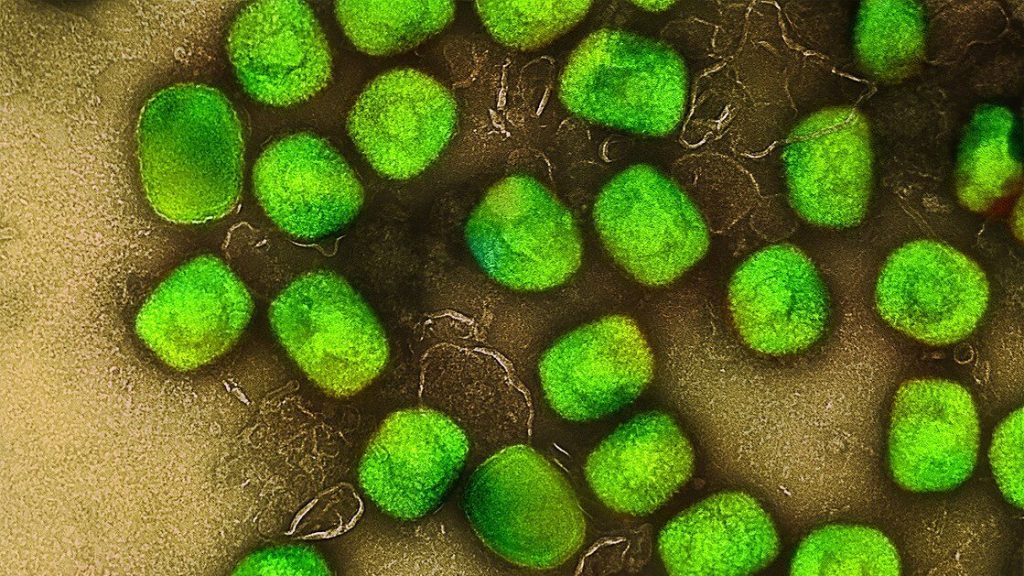
Colourised transmission electron micrograph of monkeypox virus particles (green) cultivated and purified from cell culture. Credit: NIAID

A brief research report in Annals of Internal Medicine documents positive monkeypox virus PCR results found in anal samples taken from asymptomatic MSM (men who have sex with men). These findings suggest that vaccination limited to those with known exposure to the monkeypox virus may not be an effective strategy for preventing infection.

The findings come as the World Health Organization has renamed the variants, or clades, of monkeypox from their previous geographically-derived names to Roman numerals, eg, the former Congo Basin (Central African) clade is now Clade one (I). It is also seeking inputs on a possible new name for the virus in order to avoid stigmatisation.

Researchers from Bichat–Claude Bernard Hospital, Paris, retrospectively performed testing for monkeypox virus on all anorectal swabs that were collected as part of a sexually transmitted infection screening program. This type of screening is performed every three months among MSM with multiple sexual partners who are either taking HIV preexposure prophylaxis (PrEP) or living with HIV and receiving antiretroviral treatment. Of the 200 asymptomatic persons screened that were negative for N. gonorrhoeae and C. trachomatis, 13 (6.5%) samples were PCR positive for monkeypox virus.  Two of the 13 later developed symptoms of monkeypox.

While it is not know whether asymptomatic transmission will play a role in the current worldwide monkeypox epidemic and the mode of human-to-human transmission may provide evidence that asymptomatic or preclinical spread can occur. In an accompanying editorial, Stuart N. Isaacs, MD, at the University of Pennsylvania, suggests that an expanded ring vaccination strategy and other public health interventions in the highest-risk communities are likely needed to help control the outbreak. 

Source: EurekAlert!