Year: 2021

Sunlight-fuelled Chemical Changes Drive Melanomas

Photo by Amy Humphries on Unsplash

Mutations in DNA that lead to melanoma result from a sunlight-fuelled chemical conversion in DNA, not just a DNA copying error as previously believed, according to a new study.

The findings of the study, led by the Van Andel Institute scientists and published in Science Advances, upend long-held beliefs about the mechanisms underlying the disease, reinforce the importance of prevention efforts and offer a path forward for investigating the origins of other cancer types.

“Cancers result from DNA mutations that allow defective cells to survive and invade other tissues,” said corresponding author Gerd Pfeifer, PhD, a VAI professor. “However, in most cases, the source of these mutations is not clear, which complicates development of therapies and prevention methods. In melanoma, we’ve now shown that damage from sunlight primes the DNA by creating ‘premutations’ that then give way to full mutations during DNA replication.”

Melanoma begins in pigment-producing skin cells. Although less common than other types of skin cancer, melanoma is more likely to metastasise, significantly reducing patient survival. Previous studies have shown that melanoma has the most DNA mutations of any cancer. Like other skin cancers, melanoma is linked to sun exposure, specifically UVB radiation which damages cells and DNA.

Most cancers are to arise when damaged DNA causes a mutation that is propagated through subsequent cellular generations. In the case of melanoma, however, Pfeifer and his team found a different mechanism that produces disease-causing mutations – the introduction of a chemical base not normally found in DNA that makes it prone to mutation.

In melanoma, the problem occurs when UVB radiation from the sun hits certain sequences of bases: CC, TT, TC and CT, causing them to chemically link together and become unstable. This resulting instability induces a chemical change to cytosine that transforms it into uracil, a chemical base found in the messenger molecule RNA but not in DNA. This change, called a “premutation,” primes the DNA for mutation during normal cell replication and eventually melanoma.

These mutations may lay dormant for years, not causing disease. More mutations can build up throughout a person’s lifetime exposure to sunlight, resulting in a stubborn cancer that evades many therapeutic options.

“Safe sun practices are very important. In our study, 10–15 minutes of exposure to UVB light was equivalent to what a person would experience at high noon, and was sufficient to cause premutations,” Prof Pfeifer said. “While our cells have built-in safeguards to repair DNA damage, this process occasionally lets something slip by. Protecting the skin is generally the best bet when it comes to melanoma prevention.”

The study used a method developed by Prof Pfeifer’s lab called Circle Damage Sequencing, enabling scientists to ‘break’ DNA at each point where damage occurs. DNA is coaxed into circles and replicated with PCR. With enough DNA, next-generation sequencing then identifies which DNA bases are present at the breaks. Pfeifer and colleagues plan to use this technique going forward to examine other types of DNA damage in different kinds of cancer.

Source: Van Andel Institute (VAI)

Journal reference: Jin, S-G., et al. (2021) The major mechanism of melanoma mutations is based on deamination of cytosine in pyrimidine dimers as determined by circle damage sequencing. Science Advances. doi.org/10.1126/sciadv.abi6508.

The Phenomenon of Radon Gas ‘Health Spas’

Photo by Vladyslav Cherkasenko on Unsplash

While radon is commonly known as a radioactive gas that sometimes builds up in basements, people in pain travel to Montana in the US to be surrounded by it. The visitors view the radon exposure as low-dose radiation therapy for a long list of health issues.

But the Environmental Protection Agency and the World Health Organization, among others, list the gas as the second-leading cause of lung cancer. Though radiation is used to kill cancer cells, in the US, using low doses for other ailments is disputed – one such debated use is treating respiratory conditions. Clinical trials are testing whether low doses of radiation can help treat COVID patients.

But radon gas is not the same as the targeted radiation in radiotherapy. It can be inhaled, making it particularly dangerous. Sitting in a radon-filled room and radiotherapy are as different as “chalk and cheese,” said Brian Marples, a professor of radiation oncology at the University of Rochester.

“In clinical therapy, we know exactly what the dose is, we know exactly where it’s going,” he said.

Prof Marples said much of the argument for radon’s therapeutic use stems from historical reports, unlike evidence-based research on clinical radiation. However, there is debate as to what level of radon gas exposure is harmful. Another concern is that the radon treatment in the mines is largely unregulated, and bodies like the EPA don’t have the power to mandate limits on radon. 

Nonetheless, each year travelers head to western Montana, where four inactive mines with high levels of radon are within 18 kilometres of one another. Radon gas forms from the radioactive decay of naturally occurring uranium in the bedrock and has a short half-life.  In the Merry Widow Health Mine, visitors can bathe in radon-contaminated water or simply sit and work on a puzzle.

For owner Chang Kim, 69, his business helps treat chronic medical conditions such as arthritis or diabetes. Adherents claim radon in low doses creates stress on the body, triggering the immune system to readapt and reduce inflammation.

“The people coming to the mines, they’re not stupid,” Mr Kim said. “People’s lives are made better by them.”

He learned about the mines 14 years ago when his wife, Veronica Kim had developed a connective tissue disease which crumpled her hands and feet. Traditional medicine wasn’t working for her. After takim=ng two sessions a year in the mines ever since, Veronica smiles when she shows her hands.

“They’re not deformed anymore,” she said, adding she’s been able to reduce her use of meloxicam for pain and swelling.

Radon users point to European countries such as Germany, where the controversial radon therapy can still be prescribed for various conditions.

In the US, the EPA maintains that no level of radon exposure is risk-free, noting it is responsible for about 21 000 lung cancer deaths every year. The agency recommends that homes with radon levels of 150 Becquerels (radioactive decays per second) per cubic metre or more should have a radon-reduction system. The EPA derived this value from lower values being subject to false negatives, and it being an achievable level with radon-reduction systems. By contrast, the owners of Montana’s oldest radon therapy mine, Free Enterprise Radon Health Mine, said their mine has an average of about 64 000.

The federal guidelines are “a bunch of baloney” according to Monique Mandali, who lives in Helena, about 40 minutes from the mines, and tries to fit in three sessions at Free Enterprise a year – 25 hours of exposure spread out over 10 days for arthritis in her back.

“People say, ‘Well, you know, but you could get lung cancer.’ And I respond, ‘I’m 74. Who cares at this point?'” she said. “I’d rather take my chances with radon in terms of living with arthritis than with other Western medication.”

Antone Brooks, formerly a scientist at the US Department of Energy and who studied low-dose radiation, is one of those who believes the low dose threshold is excessive.

“If you want to go into a radon mine twice a year, I’d say, OK, that’s not too much,” he said. “If you want to live down there, I’d say that’s too much.”

In the early 1900s, before antibiotics were popularised, small doses of radiation were used to treat pneumonia with reports it relieved respiratory symptoms. Since then, fear has largely kept the therapeutic potential of low-dose radiation untapped, said Dr Mohammad Khan, an associate professor with the Winship Cancer Institute at Emory University. But amid the pandemic, health care providers struggling to find treatments as hospital patients lie dying have been giving clinical radiation another look.

Patients who received low doses of radiation to their lungs were weaned off of oxygen and were discharged from hospital sooner than those without the treatment. Dr Khan said more research is necessary, but it could eventually expand clinical radiation’s role for other illnesses.

“Some people think all radiation is the same thing, that all radiation is like the Hiroshima, Nagasaki bombs, but that’s clearly not the case,” Dr Khan explained. “If you put radiation in the hands of the experts and the right people – we use it wisely, we use it carefully – that balances risk and benefits.”

Source: News-Medical.Net

Intranasal Administration of AstraZeneca Vaccine Reduces Viral Shedding

A multi-institutional team of researchers has found that administering the AstraZeneca COVID vaccine intranasally to infected hamsters and monkeys reduced viral loads in nasal swabs, suggesting reduced shedding.

The group describes the testing they conducted with COVID-infected animals and the possible implications of their work, in their paper published in the journal Science Translational Medicine.

Another COVID surge is occurring in a number of countries where vaccinations are readily available, likely due to the arrival of new variants and wide resistance to the vaccinations. Breakthrough infections have been reported in vaccinated individuals. These has resulted in renewed calls for mask-wearing, even in vaccinated individuals. This is because it is not yet clear if vaccinated people can infect other people, even if they have no symptoms. In this new effort, the researchers suggest that adding intranasal inoculation to vaccination efforts might help.

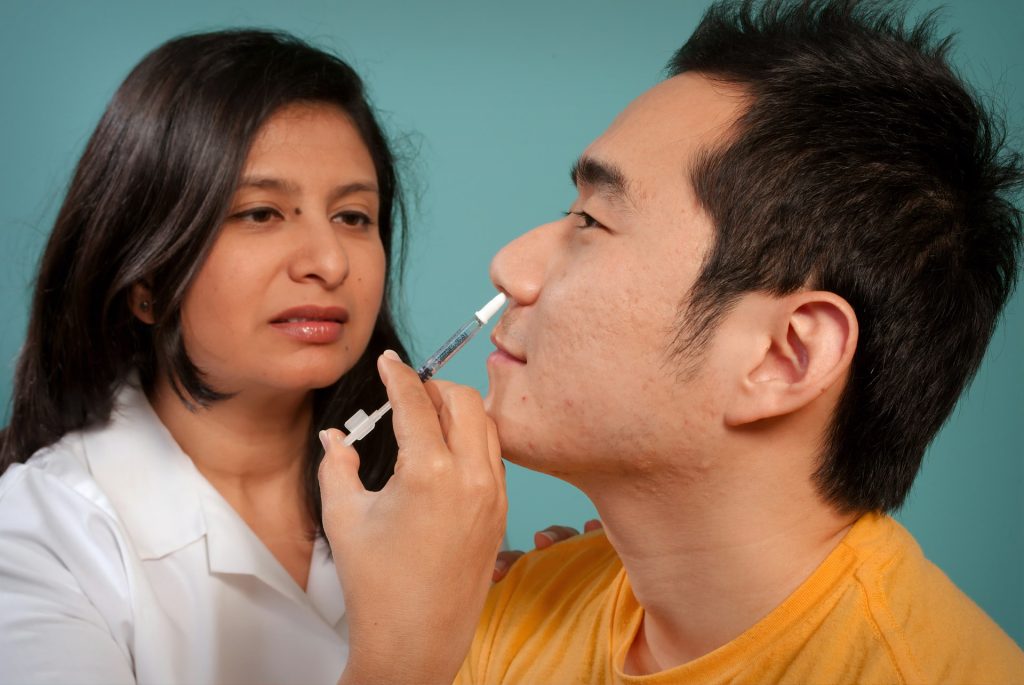
Currently, the vast majority of vaccines developed and in use are intramuscular, given via shots in the arm. Recently, a team at the University of Alabama noted that an intranasal administration of COVID vaccines would seem to make more sense, since COVID is a disease of the nose, throat and lungs. In this new study, the researchers have given an already existing COVID vaccine intranasally to test animals with COVID to see what would happen.

They found that intranasal administration of the AstraZeneca vaccine to infected hamsters and monkeys led to lowered viral loads on nasal swabs, indicating that intranasal administration reduces viral shedding and thereby transmissibility of the virus.

Unfortunately, prior research has also shown that vaccines given intranasally confer immunity for a shorter period of time than intramuscular vaccination. Thus, as the team in Alabama noted, the best approach might turn out to be a combination of a shot in the arm along with a puff of mist up the nose to confer both short-term and long-term protection.

Source: MedicalXpress

Journal information: Neeltje van Doremalen et al, Intranasal ChAdOx1 nCoV-19/AZD1222 vaccination reduces viral shedding after SARS-CoV-2 D614G challenge in preclinical models, Science Translational Medicine (2021). DOI: 10.1126/scitranslmed.abh0755

Over 100 Fast-tracked Drugs Not Confirmed Effective

Of 253 drugs approved via the FDA’s accelerated approval pathway, clinical effectiveness has been confirmed in 112, according to a new investigation by The BMJ.

Clinical reporter Elisabeth Mahase found that, as of the end of last year, 24 of those 112 drugs have been on the market for more than 5 years, and some have been on the market for more than 2 decades — often with a high price tag, according to.

Though the accelerated approval pathway allows drugs onto the market before efficacy has been established, the manufacturer has to perform confirmatory trials or else the approval will be rescinded.

However, Mahase noted that only 16 drugs authorised through the accelerated approval pathway have been withdrawn since its creation in 1992 . Most of those were shown to lack efficacy, but in some cases, confirmatory trials were simply never done. Celecoxib (Celebrex), for example, was given accelerated approval in 1999 for the treatment of familial adenomatous polyposis, a genetic disorder that carries a high risk of bowel cancer if untreated, remained on the market for about 12 years before the FDA asked Pfizer to voluntarily withdraw it for this specific indication because efficacy trials were never completed.

The BMJ asked the manufacturers of 24 drugs that have been on the market for more than 5 years if they had conducted phase IV trials. Six drugs had been withdrawn, approved, or postponed. Of the remaining 18 drugs, relevant trial information was provided for a third. Four manufacturers of those six drugs were recruiting participants, and two reported talking to the FDA about final trial design. Eleven companies representing 12 drugs did not respond.

FDA response

“We are committed to ensuring the integrity of the accelerated approval program, which is designed to bring safe and effective drugs to patients with unmet medical needs as quickly as possible,” an FDA spokesperson said in a statement provided to MedPage Today. “The program allows the FDA to approve a drug or biologic product intended to treat a serious or life-threatening condition based on an outcome that can be measured earlier than survival that demonstrates a meaningful advantage over available therapies.”

The FDA could choose to initiate proceedings to withdraw a drug’s approval should post-marketing trials show no benefit or not be performed in time, added the spokesperson.

“Because the FDA continues to use this pathway to accelerate access to drugs for serious and life-threatening diseases for which there is an unmet medical need, at any point in time there will be drugs that are not converted because the confirmatory trials are ongoing,” the spokesperson said.

“Despite the pathway’s good intentions to accelerate ‘the availability of drugs that treat serious diseases,’ experts are concerned that it is now being exploited, to the detriment of patients — who may be given a drug that offers little benefit and possible harm — and of taxpayers,” she continued.

Fixing the accelerated approval pathway

Concerns about the accelerated approval pathway include a lack of threats from the FDA to withdraw a drug should confirmatory trials not be done, the agency’s use of indirect (or surrogate) measures of clinical benefit in some cases, and the potential for drug manufacturers to take advantage of the pathway when it comes to actual measures of safety and effectiveness, Mahase wrote.

Nevertheless, experts still agree that the accelerated approval pathway is of benefit, she noted. Suggested changes to the pathway include planning or starting confirmatory trials as part of the approval as well as closer examination of surrogate measures.

A recent example is Biogen’s controversial Alzheimer’s disease treatment aducanumab (Aduhelm) received FDA approval via the process last month, which was based on the surrogate endpoint of reduction of amyloid-beta plaque in the brain.

The drug has attracted criticism since its recent fast-track approval, with critics pointing out that the drug has not been proven effective and its $56 000 annual price is unreasonable.

Source: MedPage Today

Journal information: Mahase E “FDA allows drugs without proven clinical benefit to languish for years on accelerated pathway” BMJ 2021; DOI: 10.1136/bmj.n1898.

ACE Inhibitors Reduce Immune Defence against Bacteria

Neutrophil interacting with two pink-colored, rod shaped, multidrug-resistant (MDR), Klebsiella pneumoniae
Neutrophil interacting with two pink-colored, rod shaped, multidrug-resistant (MDR), Klebsiella pneumoniae. Photo by CDC on Unsplash

Scientists have found evidence suggesting that giving patients ACE inhibitors reduces the ability of their immune system to resist bacterial infections.  the group describes testing of multiple ACE inhibitors in mice and human cells.

ACE inhibitors are typically given to patients with hypertension, and some instances to people with heart failure, kidney disease or diabetes. The drugs relaxes the walls of arteries, veins and capillaries, reducing blood pressure. Some prior studies had shown that the drugs also help the immune system by boosting neutrophils, which are produced to fight bacteria. In this new study, published in the journal Science Translational Medicine, the researchers have found the opposite to be true.

In order to see the effects of ACE inhibitors on the immune system, researchers at Cedars-Sinai Medical Center administered different brands of ACE inhibitor such as Zestril and Altace, to mice and then tested their ability to resist bacterial infections. Compared to untreated mice, those with the ACE inhibitors had greater difficulty in recovering from bacterial infections such as staph.

Seven human patients who were taking an ACE inhibitor volunteered blood samples to measure their immune response. The researchers found that the neutrophils were unable to produce the molecules needed to fight off bacteria. They were also found to be in vitro ineffective against bacteria.

The researchers also tested another drug used to treat hypertension, an angiotensin II receptor drug, Cozaar. These drugs work by preventing arterial walls from constricting, which reduces blood pressure. They found no evidence of a negative impact on immunity. They did not test beta-blockers, which work by preventing adrenergic receptors from being stimulated, reducing cardiac action.

The researchers concluded that administering ACE inhibitors to patients puts them at an increased risk of bacterial infections, noting that doctors may want to try alternative drugs to treat their patients.

Source: MedicalXpress

Journal information: Duo-Yao Cao et al, An ACE inhibitor reduces bactericidal activity of human neutrophils in vitro and impairs mouse neutrophil activity in vivo, Science Translational Medicine (2021). DOI: 10.1126/scitranslmed.abj2138

Lambda Variant Might Be The Most Dangerous Yet

Source: CDC

The evolutionary traits of the Lambda variant, giving it both greater transmissibility and immune escape abilities make it possibly the most dangerous variant so far, according to a new study published on the bioRxiv preprint server.

Mutations present in the Spike (S) protein seen in many variants of concern (VOCs) and variants of interest (VOI) allow them to be resistant to the neutralising antibodies (NAbs) from COVID vaccination or infection.

The Lambda variant is predominantly spreading in South American countries. According to the Global Initiative on Sharing All Influenza Data (GISAID) database, the Lambda variant has been reported in 26 countries worldwide. Chile, despite its vaccination rate of 60% saw a surge in COVID cases due to the Lambda variant, due to its immune escape capability.

Lambda variant’s evolutionary traits

In this study, which is awaiting peer review as a preprint, the researchers reported that insertion of the N246-253RSYLTPGD mutation in the NTD of the Lambda S protein is associated with the increased virulence. This mutation is responsible for the rapid spread of the Lambda variant in the Southern American countries.

The authors of this study have indicated two of the critical virological features of the Lambda variant, namely, a) resistance to viral-induced immune responses due to the RSYLTPGD246- 253N, L452Q, and F490S mutations and b) enhancement in transmissibility due to the T76I and L452Q mutations.

This study found that the Lambda S is more resistant to the vaccine-induced antisera compared to the Lambda+N246-253RSYLTPGD S derivative. Another key finding is that RSYLTPGD246-253N mutation overlaps with a component of the NTD “supersite” indicating that it is the immunodominant site. Mutation of this site has therefore enabled the Lambda variant to escape immunity conferred by COVID vaccination.

The comparative study between the parental D614G S strain and the Lambda variant has shown significantly higher infectivity in the latter viral strain.

This study confirms other studies’ finding of increased infectivity of the Lambda, Delta and Epsilon variants is due to the L452Q/R mutation. However, higher infectivity does not guarantee a rapid spread, as seen with the Epsilon variant which failed to spread in the human population despite high infectivity.

This caused the to WHO drop it from the VOC/VOI classification on July 6, 2021. In order to understand if a variant would infect a large number of people, it is essential to determine if it has increased viral infectivity and evasion from the immune response. This study revealed that the Lambda variant possesses both these virological features.

Source: News-Medical.Net

Journal information: “SARS-CoV-2 Lambda variant exhibits higher infectivity and immune resistance,” Izumi Kimura, et al., bioRxiv, 2021.07.28.454085; doi: https://doi.org/10.1101/2021.07.28.454085

Foetal Brain Development Mapped in Great Detail

Image source: Pixabay

Researchers at Karolinska Institute have charted a highly detailed molecular atlas of the foetal development of the brain.

The study, published in Nature, made use of single-cell technology which was performed on mice. In this way, researchers have identified almost 800 different cells that are active during foetal development – far more than previously known.

“Brain development is well described and the main cell types are known. What is new about our atlas is the high resolution and detail,” said Sten Linnarsson, head of research and professor at the Department of Medical Biochemistry and Biophysics, Karolinska Institutet.

In their work, the researchers followed the brain development of the mice from day seven, when the brain is just forming, to the end of pregnancy on day 18.

Using single-cell technology, they were able to identify the detailed composition of the brain during foetal development: what cell types exist, how many cells of each type, and how this changes at the various stages of development.

The researchers also studied gene activity in each individual cell, classifying cells according to these activity patterns.

Creating a molecular atlas

The result is a molecular atlas that accurately illustrates how all cells in the brain develop from the early embryo. The atlas shows, for example, the way early neural stem cells first increase and then decrease in number, being replaced by transitional forms in several waves that eventually mature into ready-made neurons.

The researchers also demonstrated how early stem cell lines branch much like a family tree, giving rise to several different types of mature cells. The next step is mapping out atlases of the human brain, both in adults and during foetal development.

“Atlases like this are of great importance for research into the brain, both to understand brain function and its diseases. Cells are the body’s basic building blocks and the body’s diseases are always expressed in specific cells. Genes that cause serious diseases are found in all of the body’s cells, but they cause disease only in specific cells in the brain,” said Prof Linnarsson.

Source: Karolinska Institute

Journal information: “Molecular Architecture of the Developing Mouse Brain”, Gioele La Manno, et al. Nature, online 28 July 2021, doi:10.1038/s41586-021-03775-x.

Boy Walks With Help of A Robotic Exoskeleton his Father Designed

Photo by Rachel Kuo on Unsplash

Though it’s not quite as fantastic as Iron Man’s super-powered exoskeleton, a robotic exoskeleton designed by his father’s company helps 16 year old Oscar Constanza to walk. Oscar has a genetic neurological condition that means his nerves do not send enough signals to his legs.

Fastened to his shoulders, chest, waist, knees and feet, the exoskeleton enables Oscar to walk across the room and turn around. The exoskeleton is a voice-operated robot, responding to the user’s verbal commands, rather than other designs which respond to user movements or nerve signals.

“Before, I needed someone to help me walk … this makes me feel independent,” said Oscar.

His father Jean-Louis Constanza is one of the co-founders of the company that makes the exoskeleton, which is called Atalante.

“One day Oscar said to me: ‘dad, you’re a robotic engineer, why don’t you make a robot that would allow us to walk?’” his father recounted
“Ten years from now, there will be no, or far fewer, wheelchairs,” he said.

Exoskeletons are being produced around the world, with a wide variety of applications including, the military, industrial work and in healthcare to help nurses move and position patients. During the COVID pandemic, they have even been evaluated for use in the physically taxing task of prone positioning of COVID patients in ICU wards. Some, like Wandercraft’s model, are designed to help people with mobility problems to walk.

Since most are still quite heavy, manufacturers are competing to make them as light and usable as possible.

Wandercraft’s Atalante exoskeleton, which is an outer frame that supports but also simulates the movement of the wearer’s body, has been sold to dozens of hospitals in France, Luxembourg and the United States, with a unit price of about $176 000, said Constanza. The Atalante exoskeleton is currently aimed at use in physical rehabilitation in stroke and spinal cord injury patients.

At the moment, it cannot be bought by private individuals for everyday use – but the Wandercraft engineers are working on this as the design would need to be much lighter.

Source: New York Post

A Fourth Wave in the Festive Season?

Image by Quicknews

Health experts are warning that even while the COVID vaccination programme is speeding up, with vaccinations passing the 7 million mark, a fourth wave of infections could still be possible before the Christmas holidays.

The government’s vaccine rollout has been long delayed, including a false start where one million doses of AstraZeneca vaccine were sold on due its inefficacy against the then-dominant Beta variant. Compounded with vaccine hesitancy, it is only now that the vaccination programme is starting to gain ground. Still, many of these in the most vulnerable group are still awaiting their vaccinations.

Back in January, experts were already warning vaccination delays would result in a deadly third wave – a warning that proved all too true.

“It’s a concern to us and we have to get the herd immunity up as fast as possible, and we also have to protect the most vulnerable people in the community. And that’s why we started with the roll out to older people, and not enough have come forward and that’s why we are now messaging the younger population, please bring the elderly amongst your family and your friends, your community, for vaccination,” said Dr Nicholas Crisp of the Department of Health.

Last month, at the Moseneke inquiry into whether elections could be held under lockdown, Wits University vaccinologist Prof Shabir Madhi and the head of the SA National Aids Council, Dr Fareed Abdullah, also expected a fourth wave to arrive later in the year – putting paid to any election plans. The two experts both predicted a fourth wave in later October.

“The peaks are almost six months apart. We don’t know when exactly the third wave will peak, probably over the next few weeks, and we’ll see that six months regularity and if that continues, then we can expect a fourth wave a bit sooner than earlier suggested,” said Prof Madhi.

Professor Francois Venter, director of Ezintsha at Wits health sciences meanwhile, said he expected a fourth outbreak of the coronavirus could hit South Africa around November. Future COVID waves in South Africa hinge on the vaccine rollout – and who is being vaccinated is important, not just how many.

Meanwhile, the Western Cape is experiencing vaccine shortages as cases spike there. The province’s premier David Winde said in a statement: “The fact that there is such enthusiasm to get vaccinated is great news, but we understand it is also very frustrating when it is not possible to be vaccinated as soon as possible.

“The fact that the demand is far outstripping our current supplies means that we are experiencing pressures at some of our sites. We please ask for your patience and understanding.”

Source: Eyewitness News

Study Finds Testosterone’s Importance for Success Overrated

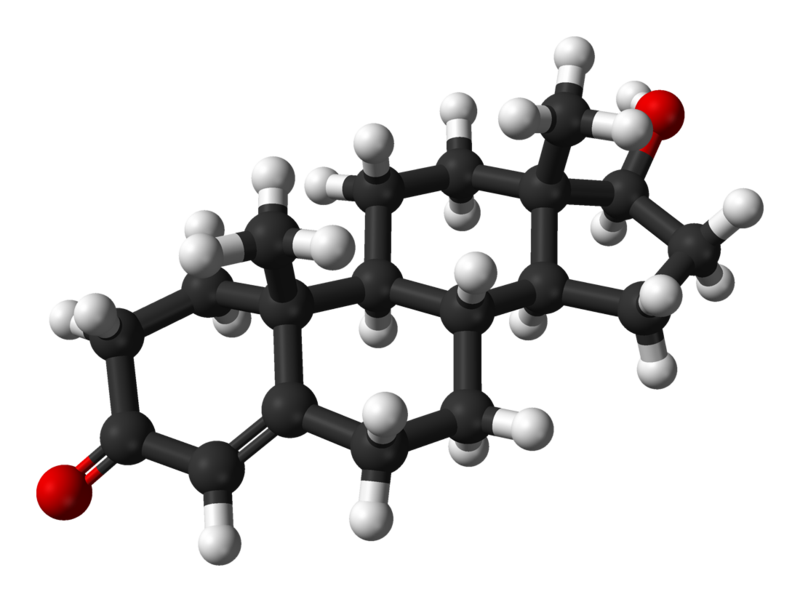
Ball-and-stick model of the testosterone molecule, C19H28O2, as found in the crystal structure of testosterone monohydrate. Credit: Ben Mills, Wikimedia Commons.

With the Olympics underway, testosterone is again in the spotlight over its role in enhancing physical performance, with rules about its natural level being once again debated. It has also been popularly thought to be involved in success in other endeavours – but its importance in this regard may be overrated.

New research has found little evidence that testosterone exerts a meaningful influence on successes in life for men or women. The study in fact suggests that testosterone’s importance outside of physical endeavours could be even less important than previously believed.

In men, it is known that testosterone is linked to socioeconomic position, such as income or educational qualifications.  Researchers from the University of Bristol’s Population Health Sciences (PHS) and MRC Integrated Epidemiology Unit (IEU) set out to determine whether this is because testosterone has an influence on socioeconomic position, as opposed to socioeconomic circumstances affecting testosterone levels, or if it was a case of health affecting both. The findings are published in Science Advances.

To isolate effects of testosterone itself, the investigators used Mendelian randomisation in a sample of 306,248 UK adults from UK Biobank. They explored testosterone’s influence on socioeconomic position, including income, employment status, neighborhood-level deprivation, and educational qualifications; on health, including self-rated health and BMI, and on risk-taking behaviour.  

Dr Amanda Hughes, Senior Research Associate in Epidemiology in Bristol Medical School: Population Health Sciences (PHS), said: “There’s a widespread belief that a person’s testosterone can affect where they end up in life. Our results suggest that, despite a lot of mythology surrounding testosterone, its social implications may have been over-stated.”

First, the team identified genetic variants linked to higher testosterone levels, and explored their links to outcomes. Since genetic variations are essentially fixed throughout a lifetime, it is highly unlikely that they are affected by socioeconomic circumstances, health, or other environmental factors.

In common with prior studies, multivariate analysis showed men with higher testosterone had higher household income, lived in less deprived areas, and were more likely to have a university degree and a skilled job. Higher testosterone in women was linked to lower socioeconomic position, including lower household income, living in a more deprived area, and lower chance of having a university degree. Consistent with previous evidence, higher testosterone was associated with better health for men and poorer health for women, and greater risk-taking behaviour for men.

In contrast, the Mendelian randomisation method showed there was little evidence that the testosterone-linked genetic variants were associated with any outcome for men or women. The research team concluded that there is little evidence that testosterone meaningfully affected socioeconomic position, health, or risk-taking in men or women. The study suggests that – despite the mythology surrounding testosterone – its importance is much less than previously held.

Since the results for women were less precise than the men’s, the influence of testosterone in women could be further explored with larger sample sizes.  

Dr Hughes added: “Higher testosterone in men has previously been linked to various kinds of social success. A study of male executives found that testosterone was higher for those who had more subordinates. A study of male financial traders found that higher testosterone correlated with greater daily profits. Other studies have reported that testosterone is higher for more highly educated men, and among self-employed men, suggesting a link with entrepreneurship.

“Such research has supported the widespread idea that testosterone can influence success by affecting behaviour. There is evidence from experiments that testosterone can make a person more assertive or more likely to take risks – traits which can be rewarded in the labor market, for instance during wage negotiations. But there are other explanations. For example, a link between higher testosterone and success might simply reflect an influence of good health on both. Alternatively, socioeconomic circumstances could affect testosterone levels. A person’s perception of their own success could influence testosterone: in studies of sports matches, testosterone has been found to rise in the winner compared to the loser.”

Source: University of Bristol

Journal information: Testosterone and socioeconomic position: Mendelian Randomization in 306,248 men and women in UK Biobank’, Science Advances (2021).