Tag: smartphone

‘We Cannot Ban Our Way out of a Youth Mental Health Crisis’

Social media bans for teenagers lack evidence and pose risks, scientists say

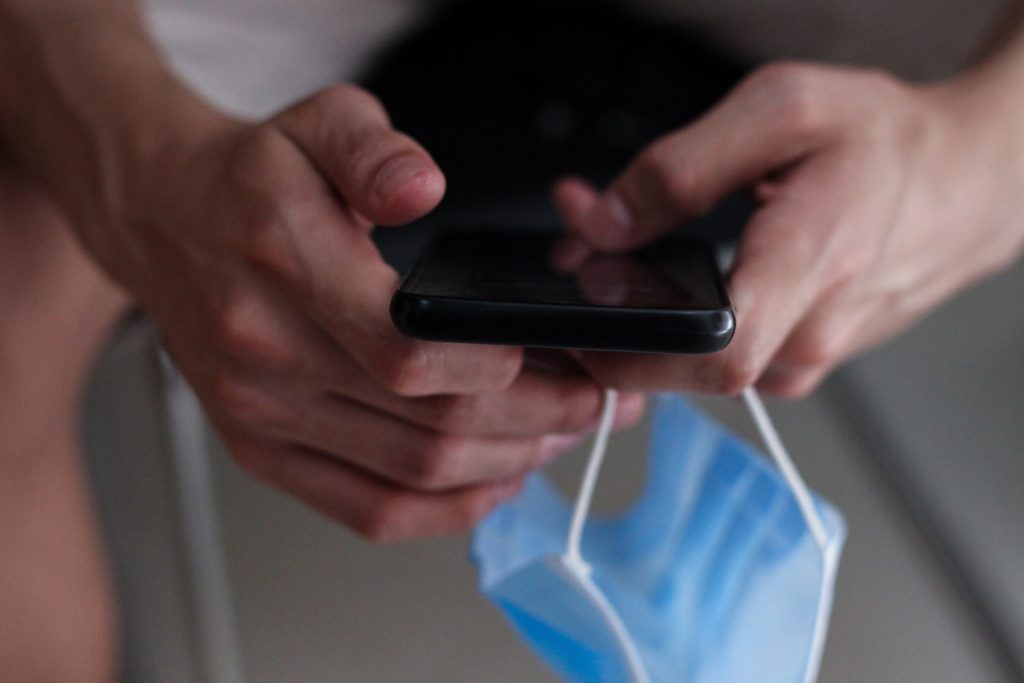
Photo by Vlad Patana on Unsplash

Bans on teenagers’ social media use are gathering pace worldwide. Their proponents claim that social media bans will improve young people’s mental health, but what evidence supports these claims? In their new Frontiers in Developmental Psychology article, Dr Monika Neff Lind and her co-authors argue that there is no solid scientific evidence behind these bans, and reason to believe they could backfire. In this guest editorial, Neff Lind explains why she and her colleagues doubt that social media bans will work, and how bans should be evaluated to determine whether they have any positive effects.

By Monika Neff Lind, PhD

In December 2025, Australia banned young people under 16 from having social media accounts. France, Greece, Spain, Denmark, Malaysia, Norway, India, Egypt, Canada, Türkiye, and the United Kingdom are hot on their heels. French president Emmanuel Macron said, “Banning social media for those under 15: this is what scientists recommend.” American senator Brian Schatz, author of the Kids Off Social Media Act, said, “Studies have revealed that when children and teens reduce or eliminate exposure to social media for longer than a month, their mental health benefits.” Proponents of youth social media bans claim that we have strong scientific evidence showing that bans will improve teenagers’ wellbeing.

As a clinical psychologist and parent, I would be thrilled if this were true, but it is not. We do not know how social media bans will affect youth because we have never studied that question. Let me explain.

Searching for evidence

When we want to test claims like ‘banning social media improves youth wellbeing’, scientific experiments are one of our most powerful tools to figure out what is causing something to happen. In experiments testing the effects of social media restriction on wellbeing, we randomly assign people to at least two groups: one quits using social media for a period of time and the other is the control or comparison group, which continues to use social media as usual. Given the strength of ban proponents’ claims, my co-authors and I were curious to know how strong the experimental evidence supporting their position was. In our new study, we collected and reviewed all of the experiments that have tested whether social media restriction improves wellbeing, and we were shocked by what we found.

Not a single social media restriction experiment has included people under the age of 16. We do not know how social media bans will affect the young people being targeted by them because we have never tested this with them!

To be fair, sometimes strong evidence in adults warrants making the leap to apply the same conclusions to teenagers. But even that leap is not justified here. The experiments with adults show weak, null, and mixed effects, with 40% of experimental studies showing harmful effects (eg, decreased life satisfaction and increased loneliness) or no effects of social media restriction. So even when adults are told repeatedly that social media is bad for their mental health and that giving it up will help, we find, on average, few to no benefits.


Read and download the original article


Unintended consequences?

There is also good reason to believe that bans may backfire. First, enforcing a youth social media ban raises major ethical concerns. Enforcement efforts invade people’s privacy and are likely to hurt marginalized people more. For example, the technology that determines age based on selfie uploads makes more mistakes with young faces and people of color. Banned youth may also miss out on important resources and communications provided via social media, as schools, clubs, and most other youth-serving organizations use social media as a main form of communication.

What happens when enforcement efforts fail? Many young people will circumvent bans by creating fraudulent ‘adult’ accounts or lurking anonymously. They will retain access to social media without any of the benefits of parental controls or content filters enabled by youth accounts. The vast majority of young people oppose youth social media bans, and teens are well known for their defiance of top-down edicts that disregard their needs. Expect more conflict between teens and caregivers, not less.

To recap, we don’t know how social media bans will affect teens, and the bans may backfire. Yet the bans are still happening! Like other policies that consume resources, political capital, and time, it is imperative for governments to evaluate these actions by funding comprehensive assessments of the bans’ impacts.

What next?

The first step in measuring the impact of these bans is to determine if the bans actually change teenagers’ social media habits. Three months in, Australian authorities reported that close to 70% of social media accounts owned by people under 16 remained active.

Second, we need a careful and well-resourced plan to measure both positive well-being and mental health problems from multiple sources, including self-report, caregiver report, and objective behavioral data, to get a full picture of whether and how altered social media use affects youth.

Third, we need creative approaches to capture the real-world impacts of the bans, since true experiments are not possible and effects may be at the community as well as the individual level. For example, we could randomly assign a subset of youth (eg within a certain region) to delayed enactment of the ban. Whatever approach is taken, governments must collaborate with diverse stakeholders – including young people – to rigorously and openly evaluate potential impacts. Rushed or improvised assessment will leave room for politicization and motivated reasoning.

Big Tech has become infamous for ‘moving fast and breaking things’. Policymakers rushing to enact these bans risk repeating Big Tech’s mistakes and compounding the problems the bans are trying to solve. We cannot ban our way out of a youth mental health crisis. Rather than take things away, we should make things better.

About the author

Dr Monika Neff Lind is a clinical psychologist, science communicator, and researcher in digital mental health based at the University of California Irvine. See more of her work here.

Source: Frontiers

Scrolling While on the Toilet Linked to Higher Risk of Haemorrhoids

New study supports anecdotal claims about the risks of using a smartphone during toilet time

Photo by Jan Antonin Kolar on Unsplash

Survey participants who reported using a smartphone while on the toilet had a higher risk of haemorrhoids than non-users. Chethan Ramprasad of Beth Israel Deaconess Medical Center, U.S., and colleagues present these findings in a new study in the open-access journal PLOS One on September 3, 2025.

Every year in the US, haemorrhoids lead to nearly 4 million visits to the doctor or emergency room and more than $800 million in healthcare spending. Haemorrhoids involve swollen veins in the anal or rectal area and can cause pain and bleeding. Anecdotal evidence has linked smartphone use on the toilet with increased risk of haemorrhoids.

However, few studies have explored whether smartphone use on the toilet is actually associated with haemorrhoid risk. To help clarify, Ramprasad and colleagues conducted a study of 125 adults undergoing screening colonoscopy. The participants answered online survey questions about their lifestyle and toilet habits, and endoscopists evaluated them for haemorrhoids.

Among all participants, 66% reported using smartphones on the toilet, and they tended to be younger than non-users. After statistically accounting for other factors thought to possibly be linked with haemorrhoid risk – such as exercise habits, age, and fibre intake – the researchers found that participants who used a smartphone on the toilet had a 46% higher risk of haemorrhoids than non-users.

Time spent on the toilet was significantly higher for smartphone users than non-users; 37% of smartphone users spent more than 5 minutes at a time on the toilet compared to just 7.1% of non-users. Reading news and using social media were the most commonly reported smartphone activities on the toilet. Interestingly, straining while using the toilet was not associated with increased haemorrhoid risk, in contrast to some prior studies.

On the basis of the findings, the researchers suggest that smartphone use may inadvertently prolong toilet time, potentially increasing pressure in anal tissues, which may then lead to haemorrhoids.

This study could help inform clinicians’ recommendations to patients. Future research could also expand on these findings, such as by tracking patients over time and exploring interventions to limit prolonged smartphone use on the toilet. 

Trisha Pasricha, senior author of the study, adds: “Using a smartphone while on the toilet was linked to a 46 per cent increased chance of having haemorrhoids. We’re still uncovering the many ways smartphones and our modern way of life impact our health. It’s possible that how and where we use them – such as while in the bathroom –can have unintended consequences.

“This study bolsters advice to people in general to leave the smartphones outside the bathroom and to try to spend no more than a few minutes to have a bowel movement. If it’s taking longer, ask yourself why. Was it because having a bowel movement was really so difficult, or was it because my focus was elsewhere?

“It’s incredibly easy to lose track of time when we’re scrolling on our smartphones – popular apps are designed entirely for that purpose. But it’s possible that constantly sitting longer on the toilet than you intended because you’re distracted by your smartphone could increase your risk of haemorrhoids. We need to study this further, but it’s a safe suggestion to leave the smartphone outside the bathroom when you need to have a bowel movement.”

Provided by PLOS

Mobile Phone Use Linked to Lower Sperm Count and Concentration

Photo by Ketut Subiyanto on Pexels

While various environmental and lifestyle factors have been proposed to explain the decline in semen quality observed over the last fifty years, the role of mobile phones has yet to be demonstrated. In a major cross-sectional study, researchers in Switzerland showed that frequent use of mobile phones is associated with a lower sperm concentration and total sperm count, although causation cannot be established. No association was seen between mobile phone use and low sperm motility and morphology. Read the results in Fertility & Sterility.

Semen quality is determined by the assessment of parameters such as sperm concentration, total sperm count, sperm motility and sperm morphology. According to the values established by the World Health Organization (WHO), a man will most probably take more than one year to conceive a child if his sperm concentration is below 15 million/mL, with the odds of pregnancy will decrease if the sperm concentration is below 40 million/mL.

Many studies have shown that semen quality has decreased over the last fifty years. Sperm count is reported to have dropped from an average of 99 million sperm/mL to 47 million/mL. This phenomenon is thought to be the result of a combination of environmental factors (endocrine disruptors, pesticides, radiation) and lifestyle habits (diet, alcohol, stress, smoking).

Assessing the impact of mobile phones

Is the mobile phone also to blame? After conducting the first national study (2019) on the semen quality of young men in Switzerland, a team from the University of Geneva (UNIGE) has published the largest cross-sectional study on this topic. It is based on data from 2886 Swiss men aged 18 to 22, recruited between 2005 and 2018 at six military conscription centres.

In collaboration with the Swiss Tropical and Public Health Institute (Swiss TPH), scientists studied the association between semen parameters of 2886 men and their use of mobile phones. ‘‘Men completed a detailed questionnaire related to their lifestyle habits, their general health status and more specifically the frequency at which they used their phones, as well as where they placed it when  not in use,’’ explains Serge Nef, full professor in the Department of Genetic Medicine and Development at the UNIGE Faculty of Medicine and at the SCAHT – Swiss Centre for Applied Human Toxicology, who co-directed the study.

These data revealed an association between frequent use and lower sperm concentration. The median sperm concentration was significantly higher in the group of men who did not use their phone more than once a week (56.5 million/mL) compared with men who used their phone more than 20 times a day (44.5 million/mL). This difference corresponds to a 21% decrease in sperm concentration for frequent users (> 20 times/day) compared to rare users (< once/day).

Is 4G less harmful than 2G?

This inverse association was found to be more pronounced in the first study period (2005-2007) and gradually decreased with time (2008-2011 and 2012-2018). ‘‘This trend corresponds to the transition from 2G to 3G, and then from 3G to 4G, that has led to a reduction in the transmitting power of phones,’’ explains Martin RÖÖsli, associate professor at Swiss TPH.

‘‘Previous studies evaluating the relationship between the use of mobile phones and semen quality were performed on a relatively small number of individuals, rarely considering lifestyle information, and have been subject to selection bias, as they were recruited in fertility clinics. This has led to inconclusive results,’’ explains Rita Rahban, senior researcher and teaching assistant in the Department of Genetic Medicine and Development in the Faculty of Medicine at the UNIGE and at the SCAHT, first author and co-leader of the study.

It doesn’t matter where you put your phone

Data analysis also seems to show that the position of the phone – for example, in a trouser pocket – was not associated with lower semen parameters. ‘‘However, the number of people in this cohort indicating that they did not carry their phone close to their body was too small to draw a really robust conclusion on this specific point,’’ adds Rita Rahban.

This study, like most epidemiologic studies investigating the effects of mobile phone use on semen quality, relied on self-reported data, which is a limitation. By doing so, the frequency of use reported by the individual was assumed to be an accurate estimate of exposure to electromagnetic radiation. To address this limitation, a study funded by the Federal Office for the Environment (FOEN) was launched in 2023. Its aim is to directly and accurately measure exposure to electromagnetic waves, as well as the types of use – calls, web navigation, sending messages – and to assess their impact on male reproductive health and fertility potential. The data will be collected using an application that each future participant will download to their mobile phone. The research team is actively recruiting participants for this study.

The aim is also to better describe the mechanism of action behind these observations. ‘‘Do the microwaves emitted by mobile phones have a direct or indirect effect? Do they cause a significant increase in temperature in the testes? Do they affect the hormonal regulation of sperm production? This all remains to be discovered,’’ concludes Rita Rahban.

Source: University of Geneva

Eyes may be the Window to the Soul, but the Tongue Mirrors Health

Photo by Andrea Piacquadio

A 2000-year-old practice by Chinese herbalists – examining the human tongue for signs of disease – is now being embraced by computer scientists using machine learning and artificial intelligence.

Tongue diagnostic systems are fast gaining traction due to an increase in remote health monitoring worldwide, and a new paper in AIP Conference Proceedings provides more evidence of the increasing accuracy of this technology to detect disease.

Engineers from Middle Technical University (MTU) in Baghdad and the University of South Australia (UniSA) used a USB web camera and computer to capture tongue images from 50 patients with diabetes, renal failure and anaemia, comparing colours with a data base of 9000 tongue images.

Using image processing techniques, they correctly diagnosed the diseases in 94 per cent of cases, compared to laboratory results. A voicemail specifying the tongue colour and disease was also sent via a text message to the patient or nominated health provider.

MTU and UniSA Adjunct Associate Professor Ali Al-Naji and his colleagues have reviewed the worldwide advances in computer-aided disease diagnosis, based on tongue colour.

“Thousands of years ago, Chinese medicine pioneered the practice of examining the tongue to detect illness,” Assoc Prof Al-Naji says.

“Conventional medicine has long endorsed this method, demonstrating that the colour, shape, and thickness of the tongue can reveal signs of diabetes, liver issues, circulatory and digestive problems, as well as blood and heart diseases.

“Taking this a step further, new methods for diagnosing disease from the tongue’s appearance are now being done remotely using artificial intelligence and a camera – even a smartphone.

“Computerised tongue analysis is highly accurate and could help diagnose diseases remotely in a safe, effective, easy, painless, and cost-effective way. This is especially relevant in the wake of a global pandemic like COVID, where access to health centres can be compromised.”

Diabetes patients typically have a yellow tongue, cancer patients a purple tongue with a thick greasy coating, and acute stroke patients present with a red tongue that is often crooked.

2022 study in Ukraine analysing tongue images of 135 COVID patients via a smartphone showed that 64% of patients with a mild infection had a pale pink tongue, 62% of patients with a moderate infection had a red tongue, and 99% of patients with a severe COVID infection had a dark red tongue.

Previous studies using tongue diagnostic systems have accurately diagnosed appendicitis, diabetes, and thyroid disease.

“It is possible to diagnose with 80% accuracy more than 10 diseases that cause a visible change in tongue colour. In our study we achieved a 94% accuracy with three diseases, so the potential is there to fine tune this research even further,” Assoc Prof Al-Naji says.

Source: University of South Australia

Smartphones Could Serve as Pulse Oximeters in the Home

Photo by Asterfolio on Unsplash

Researchers have demonstrated that smartphones are capable of detecting blood oxygen saturation levels down to 70% – the lowest value that pulse oximeters should be able to measure, as recommended by the US Food and Drug Administration. The team published these results in npj Digital Medicine.

The technique involves participants placing their finger over the camera and flash of a smartphone, which uses a deep-learning algorithm to decipher the blood oxygen levels. When the team delivered a controlled mixture of nitrogen and oxygen to six subjects to artificially bring their blood oxygen levels down, the smartphone correctly predicted whether the subject had low blood oxygen levels 80% of the time.

“Other smartphone apps that do this were developed by asking people to hold their breath. But people get very uncomfortable and have to breathe after a minute or so, and that’s before their blood-oxygen levels have gone down far enough to represent the full range of clinically relevant data,” said co-lead author Jason Hoffman, a UW doctoral student in the Paul G. Allen School of Computer Science & Engineering. “With our test, we’re able to gather 15 minutes of data from each subject. Our data shows that smartphones could work well right in the critical threshold range.”

Another benefit of measuring blood oxygen levels on a smartphone is that almost everyone has one.

“This way you could have multiple measurements with your own device at either no cost or low cost,” said co-author Dr. Matthew Thompson, professor of family medicine in the UW School of Medicine. “In an ideal world, this information could be seamlessly transmitted to a doctor’s office. This would be really beneficial for telemedicine appointments or for triage nurses to be able to quickly determine whether patients need to go to the emergency department or if they can continue to rest at home and make an appointment with their primary care provider later.”

The team recruited six participants ranging in age from 20 to 34. Three identified as female, three identified as male. One participant identified as being African American, while the rest identified as being Caucasian.

To gather data to train and test the algorithm, the researchers had each participant wear a standard pulse oximeter on one finger and then place another finger on the same hand over a smartphone’s camera and flash. Each participant had this same set up on both hands simultaneously.

“The camera is recording a video: Every time your heart beats, fresh blood flows through the part illuminated by the flash,” said Assistant Professor Edward Wang, who started this project as a doctoral student.

“The camera records how much that blood absorbs the light from the flash in each of the three color channels it measures: red, green and blue,” said Wang, who also directs the UC San Diego DigiHealth Lab. “Then we can feed those intensity measurements into our deep-learning model.”

Each participant breathed in a controlled mixture of oxygen and nitrogen to slowly reduce oxygen levels. For all six participants, the team acquired more than 10 000 blood oxygen level readings between 61% and 100%.

The researchers used data from four of the participants to train a deep learning algorithm to extract the blood oxygen levels, and the rest of the data was used to validate the method and then test it to see how well it performed on new subjects.

“Smartphone light can get scattered by all these other components in your finger, which means there’s a lot of noise in the data that we’re looking at,” said co-lead author Varun Viswanath. “Deep learning is a really helpful technique here because it can see these really complex and nuanced features and helps you find patterns that you wouldn’t otherwise be able to see.”

The team hopes to continue this research by testing the algorithm on more people.

“One of our subjects had thick calluses on their fingers, which made it harder for our algorithm to accurately determine their blood oxygen levels,” Hoffman said. “If we were to expand this study to more subjects, we would likely see more people with calluses and more people with different skin tones. Then we could potentially have an algorithm with enough complexity to be able to better model all these differences.”

But, the researchers said, this is a good first step toward developing biomedical devices that are aided by machine learning.

“It’s so important to do a study like this,” Wang said. “Traditional medical devices go through rigorous testing. But computer science research is still just starting to dig its teeth into using machine learning for biomedical device development and we’re all still learning. By forcing ourselves to be rigorous, we’re forcing ourselves to learn how to do things right.”

Source: University of Washington

Smartphone Video of Carotid Arteries Predicts Stroke Risk

Credit: American Heart Association

Narrowed arteries in the neck – a major risk factor for stroke – may be detected by analysing smartphone video that picks up the motion of blood flowing just beneath the skin, a small study shows.

The research, published Wednesday in the Journal of the American Heart Association, may be useful in developing a non-invasive, early screening tool for detecting blockages in the carotid arteries that can lead to strokes.

“Between 2% and 5% of strokes each year occur in people with no symptoms, so better and earlier detection of stroke risk is needed,” study author Dr. Hsien-Li Kao said in a news release. He is an interventional cardiologist at National Taiwan University Hospital in Taipei.

“This was an exciting ‘eureka’ moment for us,” he said. “Existing diagnostic methods – ultrasound, CT and MRI – require screening with specialised medical imaging equipment and personnel. Analysis of video recorded on a smartphone is non-invasive and easy to perform, so it may provide an opportunity to increase screening.”

The carotid arteries, found in the neck, can become blocked by a buildup of fatty deposits known as plaque. That condition – carotid artery stenosis – restricts blood flow to the brain and may lead to an ischemic stroke. Nearly 87% of all strokes in the US are this type of stroke.

The carotid artery is just below the skin’s surface. When velocity and blood flow patterns change, those changes are reflected in the motion of the overlying skin, Kao said. However, those differences cannot be detected by the naked eye.

In the study, researchers used motion magnification and pixel analysis to detect subtle changes in pulse characteristics on the skin’s surface captured in 30-second smartphone video recordings. An older-generation smartphone was used to make video clips of the necks of 202 Taiwanese adults, who were an average 68 years old when the study took place between 2016 and 2019. While recordings were being made, participants lay on their backs with their heads tilted back in a custom-made box that restricted movement.

Among participants, 54% had previously been diagnosed with a blockage of 50% or more in the carotid artery. The phone videos were 87% accurate in predicting who had a blockage in the artery. Narrowing in the arteries was confirmed using a Doppler ultrasound test.

Kao said further research could determine whether it is possible to take recordings and perform the motion analysis remotely, in conjunction with a downloadable app.

“More research is needed to determine whether video recorded on smartphones is a promising approach to help expedite and increase stroke screening,” he said. “Carotid artery stenosis is silent until a stroke happens. With this method, clinicians may be able to record a video of the patient’s neck with a smartphone, upload the videos for analysis and receive a report within five minutes. The early detection of carotid artery stenosis may improve patient outcomes.”

Source: American Heart Association