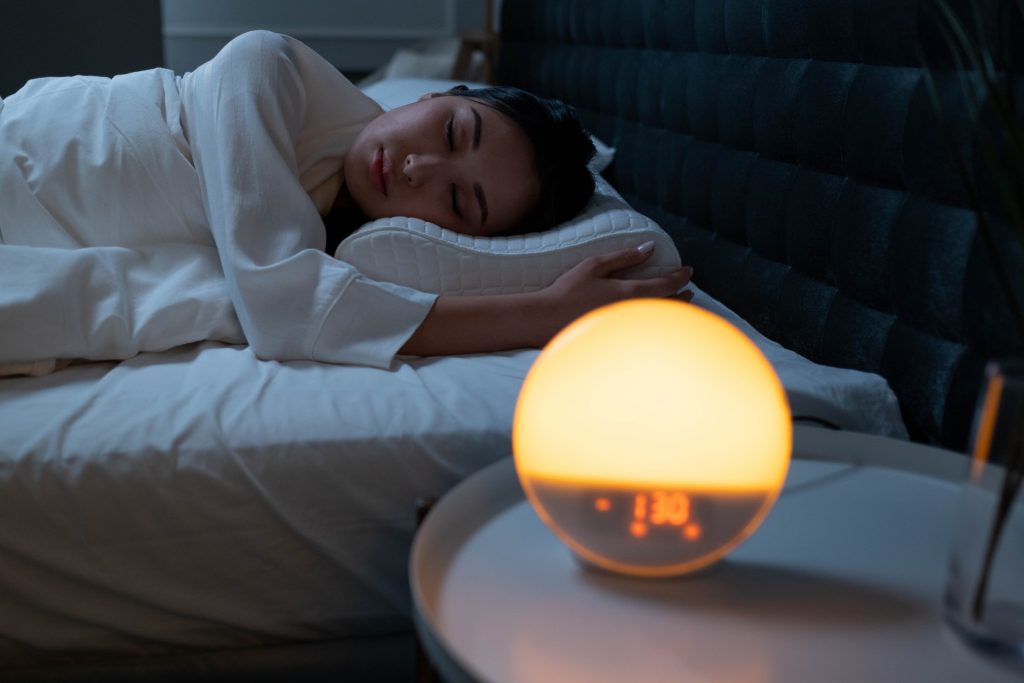
A discovery by researchers in Switzerland reveals that the sleeping body also reacts to the external world during sleep, explaining how some information from the sensory environment can affect sleep quality.
A collaboration between University of Liège and University of Fribourg has investigated whether the body is truly disconnected from the external world during sleep.
To do so, they focused on how heartbeat changes when we hear different words during sleep.
They found that relaxing words slowed down cardiac activity as a reflection of deeper sleep and in comparison to neutral words that did not have such a slowing effect.
This discovery, published in the Journal of Sleep Research, sheds new light on brain-heart interactions during sleep.
Matthieu Koroma (postdoctoral researcher), Christina Schmidt and Athena Demertzi (rsesearch) from the GIGA Cyclotron Research Center at ULiège teamed up with colleagues from University of Fribourg led a previous study analysing brain data (electroencephalogram) showing that relaxing words increased deep sleep duration and sleep quality, showing that we can positively influence sleep using meaningful words.
By that time, the authors hypothesised that the brain also remains able to interpret sensory information in a way that makes our body more relaxed after hearing relaxing words during sleep.
In this new study, the authors had the opportunity to analyse cardiac activity to test this hypothesis and found that the heart slows down its activity only after the presentation of relaxing, but not control words.
Markers of both cardiac and brain activity were then compared to disentangle how much they contributed to the modulation of sleep by auditory information.
Cardiac activity has been indeed proposed to directly contribute to the way we perceive the world, but such evidence was so far obtained in wakefulness.
With these results, the ULiège researchers showed that it was also true in sleep, offering a new perspective on the essential role of bodily reactions beyond brain data for our understanding of sleep.
“Most of sleep research focuses on the brain and rarely investigates bodily activity,” says Dr Schmidt.
“We nevertheless hypothesise that the brain and the body are connected even when we cannot fully communicate, including sleep. Both brain and body information need then to be taken into account for a full understanding of how we think and react to our environment,” explains Dr Demertzi.
“We shared freely our methodology following the principles of Open Science hoping that the tools that helped to make this discovery will inspire other researchers to study the role played by the heart in other sleep functions,” Dr Koroma advocates.
This work offers a more comprehensive approach about the modulation of sleep functions by sensory information. By looking into the cardiac responses to sounds, we may, for example, study in the future the role of the body in the way sounds influence emotional processing of memories during sleep.
With frequent and long stints at their computers, the average gamer is a sedentary night owl, often compromising on sleep – especially quality sleep – and being exposed to too much blue light. The topic has been explored in University of Cape Town (UCT) PhD candidate Chadley Kemp’s doctoral thesis, a meaty study of over 70 000 words.
Kemp’s research into habitual gaming activities is supervised by Associate Professor Dale Rae, a sleep researcher and senior lecturer at the Health Through Physical Activity, Lifestyle and Sport Research Centre (HPALS) in the Faculty of Health Sciences.
This work is founded on Kemp’s 2018 research underpinning a master’s in medical science at UCT’s former Department of Exercise Science and Sports Medicine in the Sports Science Institute of South Africa. This was upgraded to a PhD in 2020.
His research (he is an esports and video game enthusiast) explores adult esports players’ sleep, health status, light exposure patterns and physical activity.
“We know that sleep affects mental functioning in general, but we weren’t sure about the extent to which this applied to esports players,” said Kemp.
Framework for healthier gameplay
Kemp’s goal is to produce objective data that will guide the development of a framework aimed at promoting healthier gameplay standards and encouraging policy reform within the esports industry.
The tests they used to assess neurocognitive performance were intended to serve as proxies for certain aspects of esports performance because they tested specific mental skills important to gaming, he added.
“We gathered it would be a useful addition to compel gamers to adopt better sleep and lifestyle behaviour changes if it meant … that their health would improve, and they would benefit from better in-game performance – and get an edge over their competitors!”
Kemp’s focus is not on professional gamers, but what he calls “the missing middle” of the esports community: the amateur and semi-competitive gamers.
“This group doesn’t have the same infrastructure and support as their professional counterparts,” he explained. “But what makes them particularly interesting is the fact that they have to balance their gaming commitments with holding down a job, studies, or juggling family or household commitments.”
Global attraction
Esports are burgeoning across the globe – and not only among competitive gamers but audiences too. Writing in the South African Journal of Sports Medicine, Kemp and his co-authors noted that globally competitive gaming attracts 532 million fans alone, according to statistics released in 2022.
However, his study wasn’t motivated by an influx of gamers presenting themselves with sleep difficulties at Associate Professor Rae’s sleep consultancy, Sleep Science. Rather, it stemmed from a broader observation and concern within the local esports community about gamers and poor-quality and short-duration sleep, high levels of sedentarism, and excessive exposure to artificial or electronic night at night.
Based on these conversations and endorsed by anecdotal evidence from within the esports industry, Kemp said he and Rae were able to determine that sleep curtailment had seemingly become a “rite of passage” among gamers. Primarily, most gaming takes place at night because of gamers’ daytime commitments.
As there wasn’t much literature on the topic (much of it is focused on the implications of gaming in children and adolescents) and most studies were survey-based and didn’t target esports players or those regularly engaged with gaming, there was significant knowledge gap that needed filling. As a demographic, Kemp is particularly interested in adult esports players because of the greater health risks posed by age and unhealthy lifestyle factors, such as smoking and alcohol consumption.
Because he needed a tool to measure sleep and physical activity concurrently, he validated the Actiwatch, a special research device, to do this. The device also measures light exposure. For his sample group, Kemp recruited eligible esports players and measured variables of interest. These were clinical measures (anthropometry, blood pressure, blood markers) and self-report data (questionnaires on sleep, chronotype, daytime sleepiness and gaming addiction) and their cognitive performance.
“We also included non-gamers in our study, so we could compare our gamers against people who were not gamers. In total, we had 59 male participants (31 gamers; 28 non-gamers). (The females volunteering to participate did not meet the study’s inclusion criteria.) For a week, these individuals wore the Actiwatch to track their sleep, physical activity, and light exposure.”
Key findings
The key findings of his research make for interesting reading:
esports players have comparable sleep duration to non-gamers (control group) but tend to sleep later than others. They hit the middle of their sleep cycle around 04:08 compared to 03:01 for the control group.
A much larger percentage of esports players (45.2%) showed night-oriented habits (or evening chronotypes), ie they are more active and alert at night. This is in contrast to only 7.1% of the control group showing similar evening tendencies.
They nap more during the day, but their night sleep duration is similar to that of the control groups.
There was no significant difference in risks related to heart diseases or metabolic diseases between the two groups, which Kemp speculates might be related to their young age. But most of the health markers were tentatively raised, which could point to worse cardiometabolic health in future.
Esports players smoke more.
Esports players performed better in brain-based tasks, showing better attention and accuracy, and making fewer mistakes.
Esports players are less active than the control group. They sit more (11.2 vs 9.1 hours a day) and are less physically active, whether it’s moderate- or vigorous-intensity activity.
Esports players have specific active and inactive hours. They are less active in the early morning and certain evening hours but are more active around midnight.
Esports players are exposed to dimmer light for a more significant part of their day, and their exposure to bright light happens later at night.
This work is important for several reasons, said Kemp. A key takeaway from the research revolves around chronotypes.
“Esports players seem to have sleep patterns that align with being night owls and this may be influenced both by their natural tendencies and their gaming habits. It’s also possible that a genetic disposition and exposure to artificial light from screens collectively contributes to these sleep patterns.
“The combined effect is thought to create a cycle where their preference for evening activities leads to more gaming, which in turn reinforces the night owl tendencies. This impacts on their sleep quality and quantity.”
He added: “Perhaps more obviously, gaming is a massively popular phenomenon that transcends age, sex, and geography. It’s a dominant form of entertainment and its competitive arm, esports, is progressing towards acceptance as a genuine form of sporting competition.”
From the neurocognitive side, it’s clear that gaming can sharpen several cognitive abilities, such as attention and problem-solving.
“However, the catch is, if you’re not getting enough sleep, these enhanced skills could take a hit,” said Kemp. “Gamers might see slower reactions, flawed decision-making, and even a drop in their in-game stamina. So, while gaming certainly has its merits and can even boost certain mental skills, it doesn’t come without health considerations. “
Kemp’s research is aimed at ensuring that anyone engaged with gaming or esports does so in a healthy way.
“The purpose is to create a steppingstone towards health regulation in gaming and esports,” he said. “By creating awareness and providing evidence-based recommendations to prevent chronic health problems caused by unhealthy gaming behaviour, it supports individual decision making, governments, and policy makers. It’s valuable to anyone involved in or impacted by gaming.”
Kemp’s guidelines for gamers:
Get between seven and nine hours’ sleep a night and keep a regular sleep schedule (on weekends too).
Set fixed waking and sleep times to establish a more robust sleep–wake cycle.
For better sleep, ensure your bedroom is dark, quiet, and cool (16-18°C is optimal).
Limit the amount of light exposure in the hours before bedtime (including light from phones, laptops, TVs, etc).
Limit caffeine to the morning and afternoon. This means no energy drinks during those night-time gaming sessions).
Getting enough sleep is becoming more of a challenge in today’s busy society. New research from investigators in the Channing Division of Network Medicine of Brigham and Women’s Hospital, highlights why getting a good night’s sleep is critical to staying healthy. Their research unveils that women who struggled with getting enough sleep were at greater risk of developing hypertension, or high blood pressure. Results are published in the journal Hypertension.
“These findings suggest that individuals who struggle with symptoms of insomnia may be at risk of hypertension and could benefit from preemptive screening,” explained Shahab Haghayegh, PhD, a research fellow at the Brigham and Harvard Medical School. “Hypertension is associated with many other physical and mental health complications. The sooner we can identify individuals with high blood pressure and treat them for it, the better we can mitigate future health issues.”
Haghayegh and colleagues followed 66 122 participants between 25 and 42 years of age in the Nurses’ Health Study II (NHS2) cohort, all without hypertension at the study’s onset, over sixteen years (from 2001 until 2017). Investigators collected information on participants’ age, race, body mass index (BMI), diet, lifestyle, physical activity, history of sleep apnoea, and family history of hypertension and assessed the incidence of hypertension among the group every two years. They first began measuring sleep duration in 2001, then did so again in 2009, recording the average number of hours slept over a 24-hour period. They also tracked sleeping difficulties, such as having trouble falling or staying asleep or waking up early in the morning, collecting responses at several time points throughout the study.
Data analyses revealed that women with sleeping difficulties had higher BMIs, lower physical activity, and poorer diets, on average. Researcher also found that those who struggled with sleep were more likely to smoke and drink alcohol and have previously gone through menopause.
Among the 25 987 cases of hypertension documented over the follow-up, women who slept less than seven to eight hours a night had a significantly higher risk of developing hypertension, according to the data collected. Similarly, women who had trouble falling asleep and staying asleep were also more likely to develop hypertension. Waking up early in the morning was not associated with this increased risk. Notably, these associations, remained significant after controlling for participant shift work schedules (night versus day shifts) and chronotype (morningness versus eveningness).
While the exact nature of the relationship between sleep and risk of hypertension is unknown, Haghayegh said that sleep difficulties can lead to a chain of events that can increase sodium retention, arterial stiffness, and cardiac output, potentially leading to hypertension. Disruptions to the sleep/wake cycle can also influence blood vessel constriction/relaxation activity and the function of cells that regulate the vascular tone.
One limitation is that the study only looked at the association between sleep and hypertension in women, so researchers hope to expand their work to include men and non-binary participants. A second is that researchers could only collect data on sleep quality at select time points throughout the study. Some of the study’s strengths include the larger number of participants and length of follow-up duration.
Haghayegh emphasises that these findings do not indicate causality. He wants to understand why this association exists and how treating one condition may also treat the other. In future clinical studies, he aims to investigate if sleep medications could have a beneficial effect on blood pressure.
“I hope these findings further underscore the crucial role of quality sleep in our overall well-being. The American Academy of Sleep Medicine recommends sleeping seven or more hours a night, and if you cannot fall or stay asleep, it might be worth exploring why that is,” said Haghayegh. “This study highlights yet another reason why getting a good night’s sleep is so important.”
New mothers can expect sleep deprivation in the first few years of baby’s life. But too little sleep can take a toll on the health of both mother and child. Published in Journal of Developmental & Behavioral Pediatrics, a new study from at maternal and infant sleep patterns, identifying predictors and providing recommendations for instilling healthy habits, such as earlier bedtimes and instilling routines.
“The first two years is a really critical period where a lot of development is going on, and sleep is important for health. We wanted to look at the association of mother and infant sleep and whether it changes over time,” said Tianying Cai, now a postdoctoral researcher at Northwestern University.
“We identified two distinct groups, a low maternal sleep group where the mothers get 5 to 6 hours of sleep per night, and an average maternal sleep group, which meets the national recommended sleep guidelines with 7 to 8 hours per night. Children in the low maternal sleep group also slept less, although the difference wasn’t as large as for the mothers,” Cai stated.
Researchers from the University of Illinois Urbana-Champaign followed parents of 464 infants in the first two years of life. Mothers completed surveys about bedtime routines, their child’s sleep duration, night-time waking, and sleep problems at 3, 12, 18, and 24 months of age.
The families were part of STRONG Kids 2, a program at the U. of I. that promotes nutrition and healthy habits in families with young children. STRONG Kids 2 co-directors Barbara Fiese, professor emerita of HDFS, and Sharon Donovan, professor of food science and human nutrition, also contributed to the study.
Mothers who fit the low maternal sleep profile got an average of 5.74 hours of sleep per night at 3 months and 5.9 hours at 12 to 24 months, while their children got 9.6 and 10.52 hours, respectively. In the average sleep profile, mothers got 7.31 hours at 3 months and 7.28 hours at 12 to 24 months, while child sleep averaged 9.99 hours at 3 months and 11 hours at 12 to 24 months.
The research team also identified factors that influence the amount of sleep a mother gets. Not surprisingly, one of the strongest predictors is infant-signalled night-time waking, which means the infant is more likely to alert the parent at night. This could be either because these infants woke more frequently, or because the mothers were more likely to wake up when infants stirred, Cai noted.
Mothers who had longer employment hours were more likely to be in the low sleep group at 3 months, although that was no longer a factor by 12 months. Furthermore, those who breastfed their infant at 12 months were more likely to be in the average sleep group.
Over time, many families transitioned from the low to the average sleep group as infant sleep patterns consolidated. At 3 months, 60% were in the low maternal sleep group and 40% were in the average group, while at 12 months the numbers were reversed. Most of those who were in the average sleep group at 3 months continued to be so throughout the study period.
The researchers found that an earlier bedtime and consistent routines were associated with better sleep patterns, corroborating a previous study from Fiese and Cai.
“If parents can establish early bedtime routines at three months, it improves sleep duration and reduces sleep problems,” Fiese said. “Parents may feel overwhelmed and don’t realise that they have this in their toolkit. Something as simple as setting a regular bedtime early on and having routines, like reading a story to your child before they go to bed. You may not think they’re understanding, but the rhythm of your voice establishes predictability, and you can expand this bedtime routine over the first few years of life.”
The researchers noted they did not observe any significant differences due to demographic characteristics in the sample.
“Maternal education, income, or ethnicity did not predict sleep group memberships across 3 to 24 months; all parents were facing similar challenges. I think having a baby is a great equaliser for a lot of things, although moms who have to go back to work or work longer hours may have more pressures,” Donovan said.
Even so, there are steps everyone can take to improve bedtime habits and sleep patterns.
“Getting kids to bed earlier and trying to meet the American Academy of Pediatrics guidelines is really important because studies have shown that sleep is associated with a lot of neurocognitive outcomes and health in kids. The parents can be quite proactive even early in life to get their kids off on the right foot,” she concluded.
Compared with seven to eight hours, sleeping less than five hours a night is associated with a 74% raised likelihood of developing peripheral artery disease (PAD) according to a study published in the European Heart Journal – Open.
“Our study suggests that sleeping for seven to eight hours a night is a good habit for lowering the risk of PAD,” said study author Dr Shuai Yuan of the Karolinska Institute.
A Lancet study showed that more than 200 million people globally have peripheral artery disease (PAD), where arteries in the legs are clogged, restricting blood flow and increasing the risk of stroke and heart attack.
Dr Yuan said: “Insufficient night-time sleep and daytime napping have previously been associated with a raised risk of coronary artery disease which, like PAD, is caused by clogged arteries. In addition, sleeping problems are among the top ranked complaints in PAD patients. There are limited data on the impact of sleep habits on PAD and vice versa, and our study aimed to fill that gap.”
The two-part study included more than 650 000 participants. First, the researchers analysed the associations of sleep duration and daytime napping with the risk of PAD. In the second part, the investigators used genetic data to perform naturally randomised controlled trials – called Mendelian randomisation – to examine causality of the associations.
Dr Yuan said: “Observational analyses are limited by reverse causality – meaning that if an association between sleep habits and PAD is found, we cannot be certain if sleep habits caused PAD or having PAD caused the sleep habits. Mendelian randomisation is a robust method for evaluating causality and provides more certainty about the results.”
Taken together, the strongest evidence was for short sleep, where the relationship with PAD went both ways. In an observational analysis of 53 416 adults, sleeping less than five hours a night was associated with a nearly doubled risk of PAD compared with seven to eight hours (hazard ratio [HR] 1.74). This finding was supported by further analyses in 156 582 and 452 028 individuals. In the causal studies, short sleep was associated with an increased risk of PAD and, in addition, PAD was associated with an increased likelihood of short sleep. Dr Yuan said: “The results indicate that brief night-time sleep can raise the chance of developing PAD, and that having PAD increases the risk of getting insufficient sleep.”
Regarding long sleep, in an observational analysis of 53 416 adults, sleeping eight hours or more per night was linked with a 24% higher risk of PAD compared with seven to eight hours (HR 1.24). This finding was supported by analyses in two larger populations of 156 582 and 452,028 individuals. However, no causal relationships were found between long sleep and PAD. Similar results were reported for napping, where daytime nappers had a 32% higher risk of PAD compared to those who did not nap (HR 1.32) but no causal links were found. “More studies are needed on the relationships between lengthy night-time sleep, daytime napping and PAD,” said Dr Yuan. “Although we found associations in the observational studies, we could not confirm causality.”
He concluded: “More research is needed on how to interrupt the bidirectional link between short sleep and PAD. Lifestyle changes that help people get more sleep, such as being physically active, may lower the risk of developing PAD. For patients with PAD, optimising pain management could enable them to have a good night’s sleep.”
Researchers at Northwestern Medicine suggest that pregnant persons should dim the lights in their home and turn off or at least dim their screens (computer monitors and smartphones) a few hours before bedtime to reduce the risk of gestational diabetes mellitus.
In their study published in the American Journal of Obstetrics and Gynecology Maternal Fetal Medicine, women who developed gestational diabetes mellitus in the multi-site study had greater light exposure in the three hours before sleep onset. They did not differ in their light exposure during daytime or sleep or in their activity levels compared to those who did not develop it.
“Our study suggests that light exposure before bedtime may be an under-recognised yet easily modifiable risk factor of gestational diabetes,” said lead study author Dr Minjee, Northwestern Medicine neurologist.
While exposure to light at night before bedtime may be linked to impaired glucose regulation in non-pregnant adults, little is known about the effect of evening light exposure during pregnancy on the risk of developing gestational diabetes.
This is believed to be one of the first multi-site studies to examine light exposure before sleep on the risk of developing gestational diabetes, a serious health complication for mother and child.
‘Alarming’ global rise in gestational diabetes
Gestational diabetes is on the rise in the U.S. and globally. About 4.5% of first-time pregnant women with a baby born between 2011 and 2013 developed gestational diabetes, which has been increasing on average 3.4% per three-year period until 2019. In 2020, the rate of gestational diabetes was 7.8% of all births in the US.
“It’s alarming,” Kim said. “Gestational diabetes is known to increase obstetric complications, and the mother’s risk of diabetes, heart disease and dementia. The offspring also are more likely to have obesity and hypertension as they grow up.”
Data show that women who have gestational diabetes are nearly 10 times more likely to develop type 2 diabetes mellitus compared to those do not have glucose issues during pregnancy, Kim said.
Bright light exposure prior to sleep can come from bright indoor lighting and from device screens.
“We don’t think about the potential harm of keeping the environment bright from the moment we wake up until we go to bed,” Kim said. “But it should be pretty dim for several hours before we go to bed. We probably don’t need that much light for whatever we do routinely in the evening.”
Scientists don’t know which source of bright light causes the problem, but it might all add up, Kim said.
“Try to reduce whatever light is in your environment in those three hours before you go to bed,” Kim said. “It’s best not to use your computer or phone during this period. But if you have to use them, keep the screens as dim as possible,” Kim said, suggesting people use the night light option and turn off the blue light.
If pregnant persons develop gestational diabetes with the first pregnancy, they are more likely to have it with the next pregnancy.
Pre-sleep light exposure increases heart rate, with knock-on effects
Pre-sleep light exposure may affect glucose metabolism through sympathetic overactivity, meaning the heart rate goes up before bed when it should go down. “It seems there is inappropriate activation of the fight or flight response when it is time to rest,” Kim said.
Data shows the sympathetic overactivity may lead to cardiometabolic disease, which is a cluster of conditions including abdominal obesity, insulin resistance, increased blood pressure and an imbalance of lipids, all leading to cardiovascular disease.
The study of 741 women in their second trimester was conducted at eight clinical U.S. sites between 2011 and 2013. The participants’ light exposure was measured by an actigraph worn on their wrists. The women were measured during the second trimester of pregnancy, the time when they receive routine screening for gestational diabetes.
After adjusting separately for age, BMI, race/ethnicity, education, commercial insurance, employment schedule, season, sleep duration, sleep midpoint, sleep regularity index, and daytime light exposure, pre-sleep light exposure remained significantly associated with gestational diabetes.
The growing rate of gestational diabetes has been partially attributed to increasing body mass index and the older age of pregnant persons.
“But even after adjusting for BMI and age, gestational diabetes is still rising,” Kim said. “We have a lot to prove, but my personal worry is that light may be silently contributing to this problem without most people realising the potential harm.”
Losing body weight and exercising also reduce the risk of developing gestational diabetes, which are important but take some effort.
Turning down lights is an easy fix
“Turning down the lights is an easy modification you can make,” Kim said.
“Now I’m the light police at home,” Kim said. “I see all this light I never thought about before. I try to dim the light as much as possible. Just for evening activities such as dinner and bathing the kids, you don’t need bright light.”
“This study highlights the importance of reducing light exposure in the hours before bedtime” said senior author Kathryn Reid, research professor of neurology at Feinberg.
Acupuncture and acupressure (which stimulates pressure points without the invasive needles) have been suggested as ways to help reduce sleep disturbance in patients with cancer. A recent analysis published in Worldviews on Evidence-Based Nursing finds moderate evidence that acupressure and acupuncture may be effective, with acupressure having a greater effect.
Researchers included 24 randomised controlled trials involving 2002 patients in the analysis. Compared with enhanced supportive care, acupressure had the largest effect size for reducing self-reported sleep disturbance (standardised mean difference [SMD] = −2.67, 95% CrI: −3.46 to −1.90; GRADE = moderate), followed by acupuncture (SMD = −1.87, 95% CrI: −2.94 to −0.81, GRADE = moderate) and electroacupuncture (SMD = −1.60, 95% CrI: −3 to −0.21; GRADE = low).
Based on these findings, the researchers conclude that acupressure can be recommended as the optimal treatment for reducing sleep disturbance in cancer patients. They also suggest further trials to investigate the effects of different acupuncture or acupressure techniques have on sleep in cancer patients, especially alongside other therapies.
“Based on available evidence, acupressure may be a more promising approach than acupuncture for reducing sleep disturbance in patients with cancer,” said corresponding author Denise Shuk Ting Cheung, BNurs, PhD, RN, of the University of Hong Kong. “Future studies should focus on the differential mechanisms of action of acupressure and acupuncture and link them to the multifactorial causes of sleep disturbance in patients with cancer.”
People sleep less in mid-adulthood than they do in early and late adulthood, according to a large study published in Nature Communications. The study investigators found that sleep duration declines in early adulthood until age 33, and then picks up again at age 53.
The study, involving 730 187 participants spread over 63 countries, revealed how sleep patterns change across the lifespan, and how they were largely the same across countries.
Study participants were playing the Sea Hero Quest mobile game, a citizen science venture designed for neuroscience research, which was designed to aid Alzheimer’s research by shedding light on differences in spatial navigational abilities. Thus far, over four million people have played Sea Hero Quest, contributing to numerous studies across the project as a whole.
In addition to completing tasks testing navigational ability, anyone playing the game is asked to answer questions about demographic characteristics as well as other questions that can be useful to neuroscience research, such as on sleep patterns.
The researchers, led by Professor Hugo Spiers (UCL Psychology & Language Sciences) and Dr Antoine Coutrot (CNRS, University of Lyon) found that across the study sample, people sleep an average of 7.01 hours per night, with women sleeping 7.5 minutes longer than men on average. They found that the youngest participants in the sample (age 19) slept the most, and sleep duration declined throughout people’s 20s and early 30s before plateauing until their early 50s and increasing again. The pattern, including the newly-identified key time points of age 33 when declining sleep plateaus and 53 for sleep to increase again, was the same for men and women, and across countries and education levels.
The researchers suggest the decline in sleep during mid-life may be from the demands of childcare and working life.
Professor Spiers said: “Previous studies have found associations between age and sleep duration, but ours is the first large study to identify these three distinct phases across the life course. We found that across the globe, people sleep less during mid-adulthood, but average sleep duration varies between regions and between countries.”
People who report sleeping the most are in Eastern European countries such as Albania, Slovakia, Romania and the Czech Republic, reporting 20–40 minutes extra sleep per night and the least in South East Asian countries including the Philippines, Malaysia and Indonesia. People in the United Kingdom reported sleeping slightly less than the average. People tended to sleep a bit less in countries closer to the equator.
The researchers found that navigational ability was unaffected by sleep duration for most of the sample, except for among older adults (aged 54–70) whose optimal sleep duration was seven hours, although they caution that the findings among older adults might be impacted by underlying health conditions.
Many people struggle with feeling groggy in the morning until they get their first coffee, but those who wake up feeling refreshed each day is not just merely a fluke of genetics. Scientists report in the journal Nature Communications that people can wake up each morning without feeling sluggish by paying attention to three key factors: sleep, exercise and the nutritional composition of their breakfast.
The findings come from a study of 833 participants who, over a two-week period, were given a variety of breakfast meals; wore wristwatches to record their physical activity and sleep quantity, quality, timing and regularity; kept diaries of their food intake; and recorded their alertness levels from the moment they woke up and throughout the day. The study included both fraternal and identical twins to disentangle the influence of genes from environment and behaviour.
The researchers found that the secret to alertness is a three-part prescription requiring substantial exercise the previous day, sleeping longer and later into the morning, and eating a breakfast high in complex carbohydrates, with limited sugar. The researchers also discovered that a healthy controlled blood glucose response after eating breakfast is key to waking up more effectively.
“All of these have a unique and independent effect,” said UC Berkeley postdoctoral fellow Raphael Vallat, first author of the study. “If you sleep longer or later, you’re going to see an increase in your alertness. If you do more physical activity on the day before, you’re going to see an increase. You can see improvements with each and every one of these factors.”
Morning grogginess is more than just an annoyance. It has major societal consequences: Many auto accidents, job injuries and large-scale disasters are caused by people who cannot shake off sleepiness. The Exxon Valdez oil spill in Alaska, the Three Mile Island nuclear meltdown in Pennsylvania and an even worse nuclear accident in Chernobyl, Ukraine, are well-known examples.
“Many of us think that morning sleepiness is a benign annoyance. However, it costs developed nations billions of dollars every year through loss of productivity, increased health care utilisation, work absenteeism. More impactful, however, is that it costs lives – it is deadly,” said senior author Matthew Walker, UC Berkeley professor of neuroscience and psychology. “From car crashes to work-related accidents, the cost of sleepiness is deadly. As scientists, we must understand how to help society wake up better and help reduce the mortal cost to society’s current struggle to wake up effectively each day.”
Personalised approach to eating
Walker and Vallat teamed up with researchers in the UK, the US and Sweden to analyse data acquired by a UK company, Zoe Ltd., that has followed hundreds of people for two-week periods in order to learn how to predict individualised metabolic responses to foods based on a person’s biological characteristics, lifestyle factors and the foods’ nutritional composition.
The participants were given pre-prepared meals, with different amounts of nutrients incorporated into muffins, for the entire two weeks to see how they responded to different diets upon waking. A standardised breakfast, with moderate amounts of fat and carbohydrates, was compared to a high protein (muffins plus a milkshake), high carbohydrate or high sugar (glucose drink) breakfast. The subjects also wore continuous glucose monitors to measure blood glucose levels throughout the day.
The worst type of breakfast, on average, contained high amounts of simple sugar; it was associated with an inability to wake up effectively and maintain alertness. When given this sugar-infused breakfast, participants struggled with sleepiness.
In contrast, the high-carbohydrate breakfast was linked to individuals revving up their alertness quickly in the morning and sustaining that alert state.
“A breakfast rich in carbohydrates can increase alertness, so long as your body is healthy and capable of efficiently disposing of the glucose from that meal, preventing a sustained spike in blood sugar that otherwise blunts your brain’s alertness,” Vallat said
“We have known for some time that a diet high in sugar is harmful to sleep, not to mention being toxic for the cells in your brain and body,” Walker added. “However, what we have discovered is that, beyond these harmful effects on sleep, consuming high amounts of sugar in your breakfast, and having a spike in blood sugar following any type of breakfast meal, markedly blunts your brain’s ability to return to waking consciousness following sleep.”
It wasn’t all about food, however. Sleep mattered significantly. In particular, Vallat and Walker discovered that sleeping longer than you usually do, and/or sleeping later than usual, resulted in individuals ramping up their alertness very quickly after awakening from sleep. According to Walker, between seven and nine hours of sleep is ideal for ridding the body of “sleep inertia” – the inability to reach functional cognitive alertness after waking up. Most people need this amount of sleep to remove adenosine, a chemical that accumulates in the body throughout the day and brings on sleepiness in the evening, something known as sleep pressure.
“Considering that the majority of individuals in society are not getting enough sleep during the week, sleeping longer on a given day can help clear some of the adenosine sleepiness debt they are carrying,” Walker speculated.
“In addition, sleeping later can help with alertness for a second reason,” he said. “When you wake up later, you are rising at a higher point on the upswing of your 24-hour circadian rhythm, which ramps up throughout the morning and boosts alertness.”
It’s unclear, however, what physical activity does to improve alertness the following day.
“It is well known that physical activity, in general, improves your alertness and also your mood level, and we did find a high correlation in this study between participants’ mood and their alertness levels,” Vallat said. “Participants that, on average, are happier also feel more alert.”
But Vallat also noted that exercise is generally associated with better sleep and a happier mood.
“It may be that exercise-induced better sleep is part of the reason exercise the day before, by helping sleep that night, leads to superior alertness throughout the next day,” Vallat said.
Walker noted that the restoration of consciousness from non-consciousness — from sleep to wake — is unlikely to be a simple biological process.
“If you pause to think, it is a non-trivial accomplishment to go from being nonconscious, recumbent and immobile to being a thoughtful, conscious, attentive and productive human being, active, awake, and mobile. It’s unlikely that such a radical, fundamental change is simply going to be explained by tweaking one single thing,” he said. “However, we have discovered that there are still some basic, modifiable yet powerful ingredients to the awakening equation that people can focus on — a relatively simple prescription for how best to wake up each day.”
It’s not in your genes
Comparisons of data between pairs of identical and non-identical twins showed that genetics plays only a minor and insignificant role in next-day alertness, explaining only about 25% of the differences across individuals.
“We know there are people who always seem to be bright-eyed and bushy-tailed when they first wake up,” Walker said. “But if you’re not like that, you tend to think, ‘Well, I guess it’s just my genetic fate that I’m slow to wake up. There’s really nothing I can do about it, short of using the stimulant chemical caffeine, which can harm sleep.
“But our new findings offer a different and more optimistic message. How you wake up each day is very much under your own control, based on how you structure your life and your sleep. You don’t need to feel resigned to any fate, throwing your hands up in disappointment because, ‘… it’s my genes, and I can’t change my genes.’ There are some very basic and achievable things you can start doing today, and tonight, to change how you awake each morning, feeling alert and free of that grogginess.”
Walker, Vallat and their colleagues continue their collaboration with the Zoe team, examining novel scientific questions about how sleep, diet and physical exercise change people’s brain and body health, steering them away from disease and sickness.
In the first study of its kind, University of South Australia researchers report that people who reported trouble sleeping were on average more likely to have indicators of poor cardiometabolic health – inflammatory markers, cholesterol and body weight – which can contribute to type 2 diabetes. The study was published in The Science of Diabetes Self-Management and Care.
Type 2 diabetes affects more than 422 million people around the globe.
As the Christmas season starts to ramp up, the UniSA researchers are reminding people to prioritise a good night’s sleep as new research shows that a troubled sleep may be associated with risk factors for type 2 diabetes.
UniSA researcher Dr Lisa Matricciani says different aspects of sleep are associated with risk factors for diabetes.
“Everyone knows that sleep is important. But when we think about sleep, we mainly focus on how many hours of sleep we get, when we should also be looking at our sleep experience as a whole,” Dr Matricciani says.
“How soundly we sleep, when we go to bed and get up, and how regular our sleep habits are, may be just as important as sleep duration.”
“In this study, we examined the association of different aspects of sleep, and risk factors for diabetes, and found a connection between those who had troubled sleep and those who were at risk of type 2 diabetes.”
The study assessed more than 1000 Australian adults* with a median age of 44.8 years. Researchers examined a range of sleep characteristics: self-report trouble sleeping, duration, timing, efficiency, and day-to-day sleep length variability.
“People who reported having trouble sleeping were also more likely to have a higher body mass index, as well as blood markers of cholesterol and inflammation,” Dr Matricciani says.
“When it comes down to the crunch, we know we must prioritise our sleep to help stay in good health. More research is needed, but as this study shows, it’s important to think about sleep as a whole, not just as one aspect.”
Notes
*Most participants (87%) were mothers.
48% of all participants reported that they never had troubled sleep.