

Some Blood Types May Have an Increased Risk of Mortality in Haemodialysis
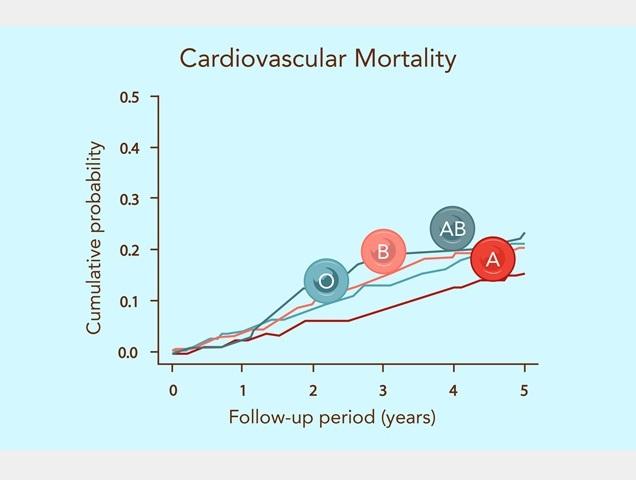
Few realise blood types could also be linked to disease risks. In the general population, people with blood type O have been reported to have a lower risk of cardiovascular disease and cardiovascular mortality. Other non-cardiovascular conditions are also associated with ABO blood types, such as certain cancers and infectious diseases. However, these numbers do not take into consideration the population of haemodialysis patients who face higher risks than the general population.
Cardiovascular disease is the leading cause of death among dialysis patients, but its relationship to blood type has often been overlooked. To address this, a research group, led by Dr Masafumi Kurajoh at Osaka Metropolitan University’s Graduate School of Medicine, conducted a large-scale prospective cohort study to examine whether the association between blood type and cardiovascular risk seen in the general population also exists in patients undergoing haemodialysis. The study included 1671 patients receiving haemodialysis at 17 medical facilities in Osaka Prefecture. Participants’ health was tracked for approximately five years, and the associations between ABO blood type and all-cause, cardiovascular, and non-cardiovascular mortality were analysed.
By follow-up, 464 patients had died, including 278 from cardiovascular disease. The researchers found that patients with blood type A were associated with lower risks of both all-cause and cardiovascular mortality. In contrast, blood type was not associated with non-cardiovascular mortality, including deaths due to infections or malignancies.
“A particularly notable finding is that, while blood type O has been associated with lower cardiovascular risk in the general population, blood type A was associated with lower risk in dialysis patients,” said Dr Kurajoh. “These results suggest that cardiovascular disease may develop through different mechanisms in haemodialysis patients.”
More so, blood type O’s reputation of being at lower risk is partially due to lower plasma von Willebrand factor (VWF), a blood glycoprotein, and factor VIII, a blood-clotting protein. However, the result of blood type A dialysis patients having lower cardiovascular mortality risks shows that differences in VWF and factor VIII levels are unlikely to be the root cause.
“At present, our findings do not support changing treatment or prevention strategies based on blood type,” Dr Kurajoh added. “However, understanding why blood type A was associated with lower cardiovascular mortality may provide new insights into the mechanisms of cardiovascular disease in dialysis patients and help guide future preventive and therapeutic approaches.”
The findings were published in Kidney International Reports.
Source: Osaka Metropolitan University
