A new study has reported that many adolescents and young adults with cancer are suffering high psychological distress during the COVID pandemic. During the pandemic, adolescents and young adults with cancer had an 85% higher odds of experiencing psychological distress compared with a similar group surveyed in 2018.
For the study, which was published in Psycho-Oncology, 805 individuals in Canada who were diagnosed with cancer between 15 and 39 years of age completed an online survey.
More than two‐thirds of the group (68.0%) experienced high psychological distress. Additionally, those whose employment had been disrupted during the pandemic and those with blood cancer were more likely to experience high psychological distress, while those who were older and those with a personal income in 2020 that was less than $40 000 tended to have lower distress.
The survey revealed overarching themes of pandemic experiences that included inferior quality of life, impairment of cancer care, COVID–related concerns, and extreme social isolation.
“The pandemic has adversely impacted the mental health of adolescents and young adults with cancer,” said senior author Sapna Oberoi, MBBS, MD, DM, of the University of Manitoba. “The findings of this study underscore the importance of providing enhanced and tailored interventions to combat psychological distress among these patients. Cancer organisations and policymakers must prioritise mental health supports for adolescents and young adults with cancer to optimise their health outcomes and quality of life.”
Convalescent plasma from COVID patients was likely of benefit to patients early on in the pandemic, before the introduction of remdesivir and corticosteroids as treatments, according to results of a landmark study published in JAMA Internal Medicine.
The randomised clinical trial, CONTAIN COVID-19, was established to evaluate the safety and efficacy of convalescent plasma in hospitalised coronavirus patients. Overall, the trial showed that convalescent plasma was safe and well tolerated. It worked best in the early days of the pandemic, when plasma had higher antibody levels, when it was given early in the disease, and particularly for immunosuppressed people.
“This landmark study shows once and for all that convalescent plasma is an important countermeasure early in a pandemic when no other therapies are available. It was an important finding that lays the foundation for the rapid response to future pandemics,” said Luis Ostrosky, MD, professor and director of the Division of Infectious Diseases at McGovern Medical School at UTHealth Houston. “This trial, the largest of its kind, also showed that with proper funding and structure, researchers across the country were able to come together quickly in the middle of a global crisis to explore this therapeutic intervention.”
Trial results also showed a drop in efficacy after the introduction of remdesivir and corticosteroids, and by the end of the 11-month trial, there was no difference in outcome between plasma and placebo in patients at 14 and 28 days. However, patients on corticosteroids, but not remdesivir, appeared to benefit from convalescent plasma at day 14.
Since the patient characteristics, available treatments, and the virus, all changed over time, subgroup analyses were done, which showed a possible benefit for patients in the first quarter of the trial, a period from April to June 2020.
Participants in that first quarter were older, less severely ill, had a longer duration of symptoms, and received high-titer plasma. Shorter symptom duration can indicate a more severe case of the viral infection.
“Convalescent plasma could be an important early treatment tool in places that don’t have access to monoclonal antibodies, corticosteroids, remdesivir, or other therapies,” said the study’s co-investigator, Professor Bela Patel, MD. “It should also be considered for patients who are immunosuppressed and those whose B cell function is compromised.”
The researchers also suggested that, in addition to the introduction of corticosteroids and remdesivir, the decrease in efficacy over time may have been due to using convalescent plasma that originated from New York City before the emergence of other SARS-Co-V-2 variants .
Wastewater monitoringhas shown that COVID infections are falling in Gauteng, indicating that the Omicron wave may have peaked, while the World Health Organization warns that the variant should not be taken lightly despite its mildness.
The findings align with comments by Health Minister Joe Phaahla on Friday that the Omicron-driven wave may be peaking in the province.
Despite Gauteng’s peaking, cases are on the rise in seven of the nine provinces and last week the country saw a new high in cases. Of the infections confirmed on Thursday, Gauteng accounted for 27%, down from 72% of new infections on December 3.
However, the surge of Omicron will likely not be confined to Gauteng. “Early indications are that we might have reached the peak in Gauteng,” Dr Phaahla said in an online media briefing. “But there is a corresponding, rapid increase of cases in the other big provinces.”
He also noted a 70% increase in hospitalisations, though he stressed that this was off of a low base rate. Meanwhile, the WHO has warned that countries should not take the Omicron variant likely in spite of its apparent low severity.
“Countries can – and must – prevent the spread of Omicron with the proven health and social measures. Our focus must continue to be to protect the least protected and those at high risk,” said Dr Poonam Khetrapal Singh, Regional Director of the WHO South-East Asia Region.
Omicron should not be dismissed as mild, she cautioned, adding that even if it does cause less severe disease, the sheer number of cases could once again overwhelm health systems. Hence, health care capacity including ICU beds, oxygen availability, adequate health care staff and surge capacity need to be reviewed and strengthened at all levels.
The overall threat posed by Omicron largely depends on three key questions – its transmissibility; how well the vaccines and prior SARS-CoV-2 infection protect against it, and how virulent the variant is as compared to other variants.
From what we know so far, Omicron appears to spread faster than the Delta variant which has been attributed to the surge in cases across the world in the last several months, Dr Singh said.
She added that emerging data from South Africa suggests increased risk of re-infection with Omicron, and said that there is still limited data on Omicron’s limited severity. Further information is needed to fully understand the clinical picture of those infected with Omicron, and more information is expected in the coming weeks.
Her statements echo those of WHO chief Tedros Adhanom Ghebreyesus, who earlier last week warned that health systems could still be overwhelmed by cases.
While two doses of a COVID vaccine offered less protection against Omicron, a booster shot restored immunity back to high levels, according to real-world data from the UK.
Two doses of Pfizer vaccine provided just under 40% protection against symptomatic infection with the Omicron variant about 25 weeks after the second dose compared with around 60% protection against Delta, according to a technical briefing released by the UK Health Security Agency. [PDF]
“These early estimates suggest that vaccine effectiveness against symptomatic disease with the Omicron variant is significantly lower than compared to the Delta variant,” the agency noted in the report. However, “moderate to high” vaccine effectiveness was observed in the early period after a booster shot, they added.
The agency found that a Pfizer booster increased vaccine effectiveness to 76%. Among people who received the AstraZeneca series for their initial immunisation (which offered almost no protection against Omicron), vaccine effectiveness jumped to 71% after a Pfizer booster.
The reportcompared vaccine effectiveness against Omicron versus Delta, including 581 people who were infected with the new strain and more than 56 000 infected with Delta from the end of November to December 6.
Omicron’s reinfection rate was also much higher than Delta’s. Of 329 individuals infected with Omicron, 7% had a previous infection, compared with 0.4% of the approximately 85 000 people infected with Delta.
After adjustments for age and area, the risk ratio of reinfection for Omicron was 5.2 (95% CI 3.4-7.6).
The report also found a 20- to 40-fold reduction in neutralising antibody activity compared with the viruses used to develop the vaccines. However, a booster dose significantly improved neutralising antibodies, regardless of which vaccine was given in the initial immunisation.
Katelyn Jetelina, PhD, an epidemiologist at the University of Texas Health Science Center at Houston, said that the study data confirm what researchers have already discovered in lab research: vaccines offer significantly less protection against Omicron, and reinfection rates are expected to be high.
Dr Jetelina noted that it was reassuring to see that “we can curb infection still with a booster, which is really quite phenomenal.” However, she said that cases were likely to increase.
“I think all this data is showing us that we’re going to have a lot of infections with Omicron,” Jetelina told MedPage Today. While a high rate of infection does not necessarily translate to severe illness, Dr Jetelina said that she is concerned about population-level outcomes resulting from a flood of new cases.
“That’s where I get a bit more nervous,” she said. She pointed out that “even if the rate of severe disease is low […] those numbers start adding up real quickly.”
The UK Health Security Agency advised interpreting the results with caution, due to the low number of Omicron cases. Additionally, more data are needed before scientists can determine how well vaccines will work against severe illness, hospitalisation, and death from the Omicron strain.
“It will be a few weeks before effectiveness against severe disease with Omicron can be estimated,” the agency stated. “However, based on this experience, this is likely to be substantially higher than the estimates against symptomatic disease.”
With the COVID test positivity rate climbing above 30%, President Cyril Ramaphosa is widely expected to address the nation in the coming days. Health Minister Dr Joe Phaahla said on Friday that the National Coronavirus Command Council would be meeting on Tuesday or Wednesday to discuss new restrictions in the face of surging infections.
The main concern is centred around the large number of gatherings that will take place over the festive period: under Level 1 lockdown rules, gatherings of up to 750 individuals are permitted indoors. The Bureau for Economic Research issued a report saying that data so far indicates that there are fewer hospitalisations and less severe disease with the Omicron variant, in line with observations made since the start of the variant’s outbreak.
A partial ban on alcohol sales seems likely, according to a source cited by City Press: “He is considering proposing to the NCCC and cabinet a few adjustments, which include banning the sale of alcohol on weekends and public holidays until mid-January. Don’t be surprised when we have a family meeting before Thursday. He is serious about protecting the country.”
He initially had no plans to address the nation, sources said, but was motivated to change his view in light of the increasing rate of transmission.
Meanwhile, the UK appears set to scrap its controversial red list, which had been widely viewed as unfairly targeting South Africa. The red list amounted to a virtual travel ban, with travellers forced to pay £2285 (R48 400) per person for a ten day stay in often substandard quarantine accommodation. However, it will come too late for many people who have cancelled travel plans.
In a windfall for South Africans, the cost of PCR testing has been revised downward to R500 from R850 as of Sunday following a complaint lodged with the Council for Medical Schemes against private pathology laboratories, alleging the pricing for COVID PCR tests was unfairly inflated. Pricing for rapid antigen tests is said to be next on the list for the Competition Commission.
On Sunday, a technical glitch caused the National Health Laboratory Service to delay release of a large portion of test results. The glitch meant that initially 18 035 cases were released initially, which rose to over 37 000 after the correction.
The cause was put down to IT difficulties with various laboratories.
A report in Nature examines why Omicron was such a surprise, and how the possible evolutionary pathways available to SARS-CoV-2 shape future scenarios of the COVID pandemic.
Currently, Delta and its descendants still dominate worldwide, and they were expected to eventually outcompete the last holdouts. But Omicron has undermined those predictions. “A lot of us were expecting the next weird variant to be a child of Delta, and this is a bit of a wild card,” said Aris Katzourakis, a specialist in viral evolution at the University of Oxford, UK.
The Omicron surge in South Africa suggests that the new variant has a fitness advantage over Delta, said Tom Wenseleers, an evolutionary biologist and biostatistician at the Catholic University of Leuven in Belgium. Omicron has some of the mutations associated with Delta’s high infectivity – but if increased infectivity alone explained its rapid growth, it would mean an R0 (reproduction number) in the 30s, said Wenseleers. “That’s very implausible.”
At present, Omicron appears to have an R0 of 1.36, after its initial surge, based on a continually updated estimate by Louis Rossouw, head of research and analytics at Gen Re. Weneseelers and other researchers instead suspect that Omicron’s rise may be due to its re-infection and vaccine evasion ability.
If Omicron is spreading, in part, because of its ability to evade immunity, it fits in with theoretical predictions about how SARS-CoV-2 is likely to evolve, says Sarah Cobey, an evolutionary biologist at the University of Chicago in Illinois.
As SARS-CoV-2’s infectivity gains start to slow, the virus will maintain its fitness by overcoming immune responses, said Cobey. If mutation halved a vaccine’s transmission blocking ability, this could open up a vast number of hosts. It’s hard to imagine any future infectivity gains providing the same boost.
The evolutionary path towards immune evasion and away from infectivity gains, is common among established respiratory viruses such as influenza, said Adam Kucharski, a mathematical epidemiologist at the London School of Hygiene and Tropical Medicine. “The easiest way for the virus to cause new epidemics is to evade immunity over time. That’s similar to what we see with the seasonal coronaviruses.”
Analysis has shown a wealth of Spike protein mutations that weaken the potency of neutralising antibodies resulting from infection and vaccination. Variants like Beta that have such mutations, have degraded – but not destroyed – vaccine effectiveness particularly against severe disease.
Compared with other variants, Omicron contains many more of these mutations, particularly in the region of spike that recognises host cells. Preliminary analysis from evolutionary biologist Jesse Bloom suggests that these mutations might render some portions of Spike unrecognisable to the antibodies raised by vaccines and previous infection with other strains. But lab experiments and epidemiological studies will be needed to fully appreciate the effects of these mutations.
Evolutionary costs and benefits Evolving to evade immune responses such as antibodies could also carry some evolutionary costs. A Spike mutation that dodges antibodies might reduce the virus’s ability to recognise and bind to host cells. The receptor-binding region of Spike, the main target for neutralising antibodies. is relatively small, explained Jason McLellan, a structural biologist at the University of Texas at Austin. Thus, the region might tolerate only small changes if it retains its main function of attaching itself to host cells’ ACE2 receptors.
Repeat exposures to different Spike versions, through infection with different virus strains, vaccine updates or both, eventually might build up a wall of immunity that SARS-CoV-2 will have difficulty overcoming. Mutations that overcome some individuals’ immunity might not work on the whole population, and T-cell-mediated immunity, another arm of the immune response, seems to be more resilient to changes in the viral genome.
SARS-CoV-2’s evasion of immunity might be slowed by these constraints, but they are unlikely to stop it, said Bloom. Evidence shows that some antibody-dodging mutations do not carry large evolutionary costs, said McLellan. “The virus will always be able to mutate parts of the Spike.”
A virus in transition How SARS-CoV-2 evolves in response to immunity has implications for its transition to an endemic virus. There wouldn’t be a steady baseline level of infections, says Kucharski. “A lot of people have a flat horizontal line in their head, which is not what endemic infections do.” Instead, the virus is likely to cause outbreaks and epidemics of varying size, like influenza and most other common respiratory infections do.
To predict what these outbreaks will look like, scientists are investigating how quickly a population becomes newly susceptible to infection, says Kucharski, and whether that happens mostly through viral evolution, waning immune responses, or the birth of new children without immunity to the virus. “My feeling is that small changes that open up a certain fraction of the previously exposed population to reinfection may be the most likely evolutionary trajectory,” said Rambaut.
The best outlook for SARS-CoV-2, but also the least likely, would be for it to follow measles. Lifetime protection results from infection or vaccination and the virus circulates largely on the basis of new births. “Even a virus like measles, which has essentially no ability to evolve to evade immunity, is still around,” said Bloom.
A more likely, but still relatively hopeful, parallel for SARS-CoV-2 is a pathogen called respiratory syncytial virus (RSV). Most people get infected in their first two years of life. RSV is a leading cause of hospitalisation of infants, but most childhood cases are mild. Waning immunity and viral evolution together allow new strains of RSV to sweep across the planet each year, infecting adults in large numbers, but with mild symptoms thanks to childhood exposure. If SARS-CoV-2 follows this path – aided by vaccines that provide strong protection against severe disease – “it becomes essentially a virus of kids,” Rambaut said.
Influenza offers two other scenarios. The influenza A virus, which drives global seasonal influenza epidemics each year, is characterised by the rapid evolution and spread of new variants able to escape the immunity elicited by past strains. The result is seasonal epidemics, propelled largely by spread in adults, who can still develop severe symptoms. Flu jabs reduce disease severity and slow transmission, but influenza A’s fast evolution means the vaccines aren’t always well matched to circulating strains.
But if SARS-CoV-2 evolves to evade immunity more sluggishly, it might come to resemble influenza B. That virus’s slower rate of change, compared with influenza A, means that its transmission is driven largely by infections in children, who have less immunity than adults.
How quickly SARS-CoV-2 evolves in response to immunity will also determine the need for vaccine updates. The current offerings will probably need to be updated at some point, says Bedford. In a preprint5 published in September, his team found signs that SARS-CoV-2 was evolving much faster than seasonal coronaviruses and even outpacing influenza A, whose major circulating form is called H3N2. Bedford expects SARS-CoV-2 to eventually slow down to a steadier state of change. “Whether it’s H3N2-like, where you need to update the vaccine every year or two, or where you need to update the vaccine every five years, or if it’s something worse, I don’t quite know,” he says.
Although other respiratory viruses, including seasonal coronaviruses such as 229E, offer several potential futures for SARS-CoV-2, the virus may go in a different direction entirely, say Rambaut and others. The sky-high circulation of the Delta variant and the rise of Omicron, aided by inequitable vaccine roll-outs to lower-income countries and minimal control measures in certain large developed countries such as the US, offer fertile ground for SARS-CoV-2 to take additional surprising evolutionary leaps.
For instance, a document prepared by a UK government science advisory group in July raised the possibility that SARS-CoV-2 could become more severe or evade current vaccines by recombining with other coronaviruses. Continued circulation in animal reservoirs, such as mink or white-tailed deer, brings more potential for surprising changes, such as immune escape or heightened severity.
It may be that the future of SARS-CoV-2 is still in human hands. Vaccinating as many people as possible, while the jabs are still highly effective, could stop the virus from unlocking changes that drive a new wave. “There may be multiple directions that the virus can go in,” said Rambaut, “and the virus hasn’t committed.”
Scientists have reported identifying a ‘stealth’ version of Omicron that cannot be distinguished from other variants based on standard PCR tests.
The so-called stealth variant has a number of mutations in common with standard Omicron, but it lacks the key genetic change that makes it stand out in PCR tests. This means probable cases are not flagged by routine PCR tests, even though genomic testing can identify it as the Omicron variant.
This distinctive marker had been one of the fortunate features of the new variant, as Tulio de Oliveira, director of the Centre for Epidemic Response and Innovation in South Africa, had explained: “We can detect [Omicron] very quickly, and this will help us to track and understand the spread.”
It is still too early to know whether the new form of Omicron will spread in the same way as the standard Omicron variant, researchers say. However the ‘stealth’ version is genetically distinct and so may behave differently.
The stealth variant was first spotted among recently submitted COVID virus genomes from South Africa, Australia and Canada, but it may already have spread more widely. So far it has been detected in seven individuals.
As a result of this new variant, researchers have split the B.1.1.529 lineage into standard Omicron (BA.1) and the newer variant (BA.2).
“There are two lineages within Omicron, BA.1 and BA.2, that are quite differentiated genetically,” said Professor Francois Balloux, director of the University College London Genetics Institute. “The two lineages may behave differently.”
Whole genome analysis confirms which variant has caused a COVID infection, but PCR tests can sometimes give an indication. About half of the UK’s PCR machines search for three genes in the virus, but Omicron only tests positive for two. This is because Omicron has a deletion in the “S” or spike gene, similar to Alpha before it. This glitch means PCR tests displaying so-called “S gene target failure” strongly suggest Omicron infection.
Informally, some researchers are calling the new variant “stealth Omicron” because it lacks the deletion that allows PCR tests to spot it.
One major unknown is how the new variant emerged. While it falls under Omicron, it is so genetically distinct that it may qualify as a new “variant of concern” if it spreads rapidly. Having two variants arise in quick succession with shared mutations is “worrying” according to one researcher, and suggests public health surveillance “is missing a big piece of the puzzle”.
While Omicron appears to be extremely transmissible and has been shown to have a greater ability to evade immunity from vaccination and prior infection, there is some evidence the Omicron variant may cause less severe disease.
In Gauteng, NICD hospital surveillance data show that 1904 COVID cases were admitted last week, and 177 COVID patients are currently in ICU with 51 ventilated as of yesterday. Nationwide, 13 147 new cases were detected with a positivity rate of 24.86%. While the fourth wave is still in the early stages, with a higher proportion of younger patients who develop less severe disease, anecdotal evidence points to reduced severity with the Omicron variant.
According to the Financial Times, preliminary data from the Steve Biko and Tshwane District Hospital Complex showed that on December 2 only nine of the 42 patients on the COVID ward, all of whom were unvaccinated, were being treated for the virus and were in need of oxygen. The remainder of the patients were COVID positive but asymptomatic and were being treated for other conditions.
“My colleagues and I have all noticed this high number of patients on room air,” said Dr Fareed Abdullah, an infectious disease doctor at the Steve Biko hospital and a director of the South African Medical Research Council.
“You walked into a COVID ward any time in the past 18 months… you could hear the oxygen whooshing out of the wall sockets, you could hear the ventilators beeping… but now the vast majority of patients are like any other ward.”
US chief medical adviser Dr Anthony Fauci remarked that initial South African data was “a bit encouraging regarding the severity”.
“Thus far, it does not look like there’s a great degree of severity to it,” he said. “But we’ve really got to be careful before we make any determinations.” Existing vaccines could provide “a considerable degree” of protection against Omicron, he added.
A small positive note for South Africa was Dr Fauci saying the administration is reevaluating the travel ban on eight southern African countries as more becomes known about Omicron and its spread.
“That ban was done at a time when we were really in the dark – we had no idea what was going on,” he said.
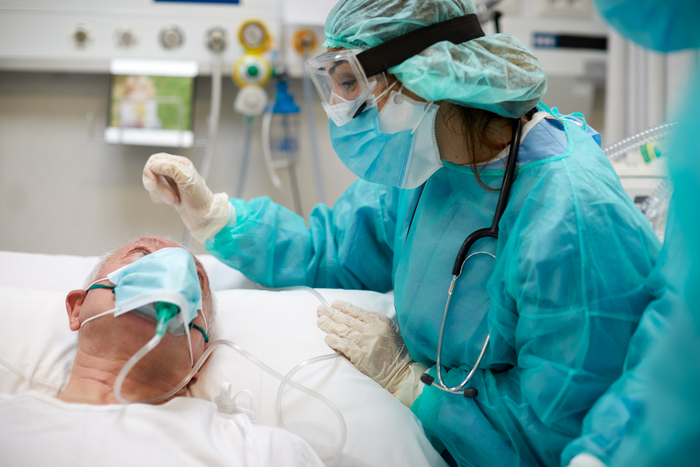
Since March of 2020, the COVID pandemic has put an unprecedented strain on hospitals as large surges of intensive care unit patients overwhelmed hospitals. To meet this challenge, Beth Israel Deaconess Medical Center (BIDMC) expanded ICU capacity by 93% and maintained surge conditions during the nine weeks in the first quarter of 2020.
“As COVID was sweeping through the nation, we at BIDMC were preparing for the projected influx of highly infectious, critically ill patients,” said lead author Sharon C. O’Donoghue, DNP, RN, a nurse specialist in the medical intensive care units at BIDMC. “It rapidly became apparent that a plan for the arrival of highly infectious critically ill patients as well as a strategy for adequate staffing protecting employees and assuring the public that this could be managed successfully were needed.”
After setting up a hospital incident command structure to clearly define roles, open up lines of communication and develop surge plans, BIDMC’s leadership began planning for the impending influx of COVID patients in February 2020.
BIDMC – a 673 licensed bed teaching hospital affiliated with Harvard Medical School – has nine specialty ICUs located on two campuses for a total of 77 ICU beds. Informed by an epidemic surge drill conducted at BIDMC in 2012, it was determined that the trigger to open extra ICU space would be when 70 ICU beds were occupied. When this milestone was met on March 31, 2020, departmental personnel had a 12-hour window to convert two 36-bed medical-surgical units into additional ICU space, providing an additional 72 beds.
“Because the medical-surgical environment is not designed to deliver an ICU level of care, many modifications needed to be made and the need for distancing only added to the difficulties,” said senior author Susan DeSanto-Madeya, PhD, RN, FAAN, a Beth Israel Hospital Nurses Alumna Association endowed nurse scientist. “Many of these rooms were originally designed for patient privacy and quiet, but a key safety element in critical care is patient visibility, so we modified the spaces to accommodate ICU workflow.”
Modifications included putting windows in all patient room doors, and repositioning beds and monitors so patients and screens could be easily seen without entering the room. Lines of visibility were augmented with mirrors and baby monitor systems as necessary. Care providers were given two-way radios to decrease the number of staff required to enter a room when hands-on patient care was necessary. Mobile supply carts and workstations helped streamline workflow efficiency.
Besides stockpiling and managing medical equipment including PPE, ventilators and oxygen, increasing ICU capacity also required redeploying 150 staff trained in critical care. The hospital developed a recall list for former ICU nurses, as well as medical-surgical nurses that could care for critically ill patients on teams with veteran ICU nurses.
Education and support was provided from . In-person, socially-distanced workshops were developed for each group, after which nurses were assigned to shadow an ICU nurse to reduce anxiety, practice new skills and gain confidence.
“Staff identified the shadow experience as being most beneficial in preparing them for deployment during the COVID surge,” said O’Donoghue. “Historically, BIDMC has had strong collaborative relationships with staff from different areas and these relationships proved to be vital to the success of all the care teams. The social work department played a major role in fostering teams, especially during difficult situations.”
One of the redeployment teams was the ICU proning team. Proning is known to improve oxygenation in patients with acute respiratory distress syndrome is a complex intervention, takes time and is not without its potential dangers to the patient and staff alike. The coalition maximised resources and facilitated more than 160 interventions between March and May of 2020.
“Although the pandemic was an unprecedented occurrence, it has prepared us for potential future crises requiring the collaboration of multidisciplinary teams to ensure optimal outcomes in an overextended environment,” O’Donoghue said. “BIDMC’s staff rose to the challenge, and many positive lessons were learned from this difficult experience.”
“We must continue to be vigilant in our assessment of what worked and what did not work and look for ways to improve health care delivery in all our systems,” said DeSanto-Madeya, who is also an associate professor at the College of Nursing at the University of Rhode Island. “The memories from this past year and a half cannot be forgotten, and we can move forward confidently knowing we provided the best care possible despite all the hardships.”
Saliva samples are easy to obtain and useful for measuring antibodies to SARS-CoV-2 in children, which could improve epidemiological surveillance in school settings. The study followed over 1500 children who went to summer schools in Barcelona last year. The results were published in BMC Medicine.
One of the pressing questions during this pandemic has been to understand children’s susceptibility to SARS-CoV-2 infection and how they infect others. An obstacle to answer this question is that most infections in children are mild or asymptomatic, and are therefore missed. To establish whether an individual has been exposed to SARS-CoV-2 in the past, virus-specific antibodies in blood need to be detected. Measuring antibody prevalence over time in a cohort of children can provide very valuable epidemiological information. However, this requires techniques that are both sensitive and minimally invasive.
In this study, performed through the Kids Corona platform, the team led by Carlota Dobaño, from the Barcelona Institute for Global Health (ISGlobal), and Iolanda Jordan, from Hospital Sant Joan de Déu (HSJD), used saliva instead of blood to measure virus-specific antibodies in over 1500 children who attended different summer schools in Barcelona in 2020, as well as around 400 adult staff. Two saliva samples per participant were analysed, one at the beginning and one at the end of the camp stay, and different antibody types (IgG, IgA and IgM) targeting different viral antigens were measured.
The study found that 3.2% of the participants developed antibodies between the first and second sample, indicating new infections. This is six times higher than the infection rate estimated by weekly PCR screening. “It has been reported that some children can be positive for antibodies despite being negative by PCR, which suggests that they can generate an immune response that prevents the establishment of SARS-CoV-2 infection,” explained Dobaño, first author of the study. It could also be because asymptomatic children have lower viral loads or that their viral clearance is faster.
Furthermore, the analysis shows that the percentage of new infections was higher in adults (2.94%) than in children (1.3%), suggesting differences in infection and transmission dynamics. Finally, contrary to blood tests, asymptomatic people had higher levels of anti-Spike antibodies in saliva, suggesting these antibodies play a protective role in respiratory mucosae. “This means that anti-Spike antibodies in saliva could be used to measure protective immunity upon vaccination, especially in the case of intranasal vaccines,” said senior study co-author Gemma Moncunill.
“We previously demonstrated in other Kids Corona studies that saliva is useful for detecting virus by PCR. With this study, we demonstrate that it’s also an effective and much friendlier way to measure antibodies, making it the ideal sample for children, instead of the more invasive nasal swab,” said Jordan.