Tag: Alzheimer's disease

Over 100 Key Alzheimer’s Papers Found To Have Suspicious Data

Photo by National Cancer Institute on Unsplash

An investigation by Science has shown that over 100 key papers on Alzheimer’s research have used falsified data. The papers all have a common author – veteran neuropathologist Eliezer Masliah, a key researcher at the National Institute on Aging (NIA), typically as first or last author.

The investigation has found that scores of Masliah’s lab studies at the University of California San Diego (UCSD) and NIA are riddled with apparently falsified Western blots (images used to show the presence of proteins) and micrographs of brain tissue. Numerous images seem to have been inappropriately reused within and across papers, sometimes published years apart in different journals, under supposedly different experimental conditions.

At UCSD, Masliah had amassed decades of experience researching Alzheimer’s and Parkinson’s disease, amassing 800 papers. Some important topics in them, such as alpha-synuclein (a protein linked to both diseases), continue to have great influence. The US Congress had released a flood of funding for Alzheimer’s research, US$2.6 billion for last year’s budget, far outstripping that for the rest of the NIA, and Masliah was an ideal choice for its neuroscience division director. This was a position which was enormously influential for Alzheimer’s research in the US as well as internationally, allowing him to fund selected research over and above others with better scores form peer-review.

One of the drugs being developed based on his work is prasinezumab, which failed to show benefit over placebo in a trial of 316 Parkinson’s patients – but resulting in a host of adverse effects, though none serious. The drug was based on an idea by Masliah and another scientist (whose papers were also seemingly doctored) that a vaccine-like approach could cause the body to create antibodies against harmful precursors in both Parkinson’s and Alzheimer’s.

Questions began to be raised about his research two years ago. These were assessed by a team of forensic analysts and a neuroscientist, who concluded, “In our opinion, this pattern of anomalous data raises a credible concern for research misconduct and calls into question a remarkably large body of scientific work.” They acknowledge that accidental duplication is a possibility, and that images can acquire artefacts resembling improper manipulation during the publication process.

Columbia University neurobiologist Mu Yang used specialised software to detect similarities and alterations in images. She had previously worked with the team investigating manipulation in Alzheimer’s and stroke data. In her analysis, duplicated sections in certain Western blots that had been “seamlessly blended” quickly floated into view, she said. “It tells me someone put a lot of thought and effort into the image … and usually indicates something is very wrong.”

A team of 11 neuroscientists was less charitable when they viewed the images. Samuel Gandy, a prominent neurologist at the Mount Sinai Alzheimer’s Disease Research Center said that he was “floored” by what he saw, noting that even a “bus driver” could see that two images of a mitochondrion published two years apart were identical. “Hundreds of images,” he said in a video interview. “There had to have been ongoing manipulation for years.”

In response to this latest dossier, the NIH issued a statement stating that there was a finding of “research misconduct” for Masliah over reuse of figures in two papers, further stating that Masliah no longer serves as NIA’s neuroscience division director. The NIH stated that it had started its own investigation in 2023.

Source: Science

Treatment with Dopamine Alleviates Symptoms in Alzheimer’s Disease

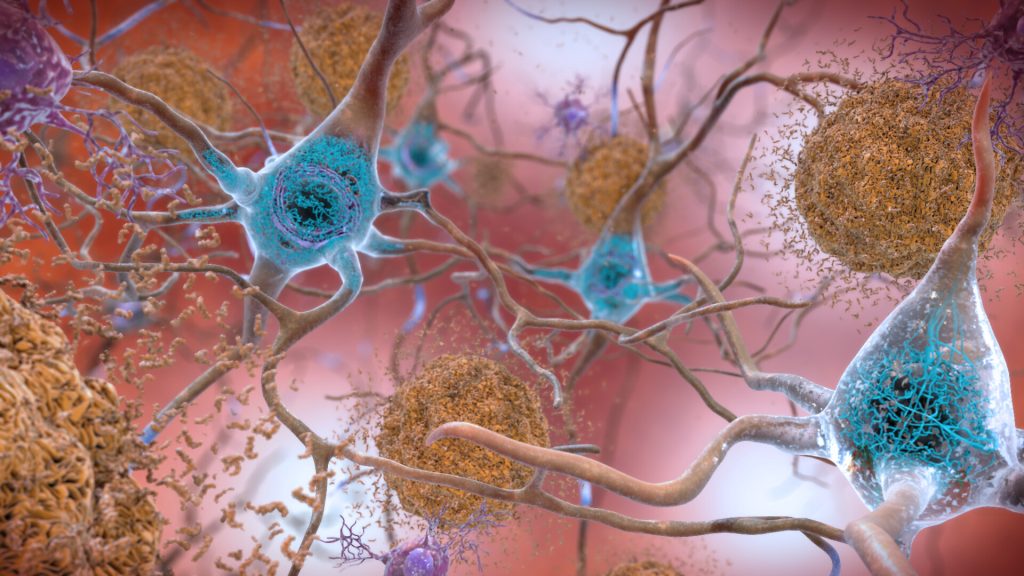
Neurons in the brain of an Alzheimer’s patient, with plaques caused by tau proteins. Credit: NIH

A new way to combat Alzheimer’s disease has been discovered by Takaomi Saido and his team at the RIKEN Center for Brain Science (CBS) in Japan. Using mouse models, the researchers found that treatment with dopamine could alleviate physical symptoms in the brain as well as improve memory. Published in Science Signaling, the study examines dopamine’s role in promoting the production of neprilysin, an enzyme that can break down the harmful plaques in the brain that are the hallmark of Alzheimer’s disease. If demonstrated in human clinical trials, it could lead to a fundamentally new way to treat the disease.

The formation of hardened plaques around neurons is one of the earliest signs of Alzheimer’s disease, often beginning decades before behavioural symptoms such as memory loss are detected. These plaques are formed from pieces of the peptide beta-amyloid that accumulate over time. In the new study, Saido’s team at RIKEN CBS focuses on the enzyme neprilysin because previous experiments showed that genetic manipulation that produces excess neprilysin in the brain (a process called upregulation) resulted in fewer beta-amyloid plaques and improved memory in mice.

Neprilysin by itself cannot be a medication as it cannot enter the brain from the blood stream, so the researchers screened molecules to determine which ones can naturally upregulate neprilysin in the correct parts of the brain. The team’s previous research led them to narrow down the search to hormones produced by the hypothalamus, and they discovered that applying dopamine to brain cells cultured in a dish yielded increased levels of neprilysin and reduced levels of free-floating beta-amyloid.

Now the serious experiments began. Using a DREADD system, they inserted tiny designer receptors into the dopamine producing neurons of the mouse ventral tegmental area. By adding a matching designer drug to the mice’s food, the researchers were able to continuously activate those neurons, and only those neurons, in the mouse brains. As in the dish, activation led to increased neprilysin and decreased levels of free-floating beta-amyloid, but only in the front part of the mouse brain. But could the treatment remove plaques? Yes. The researchers repeated the experiment using a special mouse model of Alzheimer’s disease in which the mice develop beta-amyloid plaques. Eight weeks of chronic treatment resulted in significantly fewer plaques in the prefrontal cortex of these mice.

The DREADD system is an incredible system for precise manipulation of specific neurons. But it is not very useful for human clinical settings. The final experiments tested the effects of L-DOPA treatment. L-DOPA is a dopamine precursor molecule often used to treat Parkinson’s disease because it can enter the brain from the blood, where it is then converted into dopamine. Treating the model mice with L-DOPA led to increased neprilysin and decreased beta-amyloid plaques in both frontal and posterior parts of the brain. Model mice treated with L-DOPA for three months also performed better on memory tests than untreated model mice.

Tests showed that neprilysin levels naturally decreased with age in normal mice, particularly in the frontal part of the brain, perhaps making it a good biomarker for preclinical or at-risk Alzheimer’s disease diagnoses. How dopamine causes neprilysin levels to increase remains unknown, and is the next research topic for Saido’s group.

“We have shown that L-DOPA treatment can help reduce harmful beta-amyloid plaques and improve memory function in a mouse model of Alzheimer’s disease,” explains Watamura Naoto, first author of the study. “But L-DOPA treatment is known to have serious side effects in patients with Parkinson’s disease. Therefore, our next step is to investigate how dopamine regulates neprilysin in the brain, which should yield a new preventive approach that can be initiated at the preclinical stage of Alzheimer’s disease.”

Source: RIKEN

New Paper Suggests that MS Protects Against Alzheimer’s Disease

Neurons in the brain of an Alzheimer’s patient, with plaques caused by tau proteins. Credit: NIH

People with multiple sclerosis (MS) are far less likely than those without the condition to have the molecular hallmarks of Alzheimer’s disease, according to a paper published in the Annals of Neurology.

The study from Washington University School of Medicine in St. Louis, suggests a new direction for researching Alzheimer’s treatments, said Matthew Brier, MD PhD, an assistant professor of neurology and radiology and the study’s first author.

“Our findings imply that some component of the biology of multiple sclerosis, or the genetics of MS patients, is protective against Alzheimer’s disease,” Brier said. “If we could identify what aspect is protective and apply it in a controlled way, that could inform therapeutic strategies for Alzheimer’s disease.”

A collaboration between WashU Medicine experts in Alzheimer’s and MS, the study was prompted by a suspicion Brier’s mentor and collaborator Anne Cross, MD, had developed over decades of treating patients with MS, an immune-mediated disease that attacks the central nervous system. Although her patients were living long enough to be at risk of Alzheimer’s or had a family history of the neurodegenerative disease, they weren’t developing the disease.

“I noticed that I couldn’t find a single MS patient of mine who had typical Alzheimer’s disease,” said Cross, the Manny and Rosalyn Rosenthal and Dr. John Trotter MS Center Chair in Neuroimmunology. “If they had cognitive problems, I would send them to the memory and aging specialists here at the School of Medicine for an Alzheimer’s assessment, and those doctors would always come back and tell me, ‘No, this is not due to Alzheimer’s disease.’”

Cognitive impairment caused by MS can be confused with symptoms of Alzheimer’s disease; Alzheimer’s can be confirmed with blood and other biological tests.

To confirm Cross’ observation, the research team used a new, FDA-approved blood test that was developed by Washington University researchers. Known as PrecivityAD2, the blood test is highly effective at predicting the presence of amyloid plaques in the brain. Such plaques are an indicator of Alzheimer’s disease and previously only could be verified with brain scans or spinal taps.

Brier, Cross and their colleagues recruited 100 patients with MS to take the blood test, 11 of whom also underwent PET scans at the School of Medicine’s Mallinckrodt Institute of Radiology. Their results were compared with the results from a control group of 300 individuals who did not have MS but were similar to those with MS in age, genetic risk for Alzheimer, and cognitive decline.

“We found that 50% fewer MS patients had amyloid pathology compared to their matched peers based on this blood test,” Brier said. This finding supported Cross’ observation that Alzheimer’s appeared to be less likely to develop among those with MS. It is not clear how amyloid accumulation is linked to the cognitive impairment typical of Alzheimer’s, but the accumulation of plaques is generally understood to be the first event in the biological cascade that leads to cognitive decline.

The researchers also found that the more typical the patient’s MS history was, in terms of age of onset, severity and overall disease progression, the less likely they were to have amyloid plaque accumulation in that patient’s brain compared with those with atypical presentations of MS. This suggests there is something about the nature of MS itself that is protective against Alzheimer’s disease, which Brier and Cross are planning to investigate.

MS patients generally have multiple flare-ups of the illness over the course of their lifetimes. During these flare-ups, the immune system attacks the central nervous system, including within the brain. It’s possible that this immune activity also reduces amyloid plaques, the researchers said.

“Perhaps when the Alzheimer’s disease amyloid pathology was developing, the patients with MS had some degree of inflammation in their brains that was spurred by their immune responses,” Brier said. Referring to work by co-author David M. Holtzman, MD, Brier noted that activated microglia, which are part of the brain’s immune response in MS, have been shown to clear amyloid from the brain in animal models.

Brier and Cross have begun the next steps of this research, both to tease out the possible human genetics involved, as well as to test amyloid plaque development in animal models representing MS.

Source: Washington University School of Medicine

Alzheimer’s Drug may Slow Cognitive Decline in Dementia with Lewy Bodies

Created with Gencraft. CC4.0

Dementia with Lewy bodies is a type of dementia that is similar to both Alzheimer’s disease and Parkinson’s disease but studies on long-term treatments are lacking. A new study from Karolinska Institutet, published in Alzheimer’s & Dementia: The Journal of the Alzheimer’s Association, highlights the potential cognitive benefits of cholinesterase inhibitor treatment.

Lewy body disease, which includes dementia with Lewy bodies (DLB) and Parkinson’s disease with and without dementia, is the second most common neurodegenerative disorder, following Alzheimer’s disease. 

DLB accounts for approximately 10–15% of dementia cases and is characterised by changes in sleep, behaviour, cognition, movement, and regulation of automatic bodily functions. 

“There are currently no approved treatments for DLB, so doctors often use drugs for Alzheimer’s disease, such as cholinesterase inhibitors and memantine, for symptom relief,” says Hong Xu, assistant professor at the Department of Neurobiology, Care Sciences and Society, Karolinska Institutet and first author of the paper. “However, the effectiveness of these treatments remains uncertain due to inconsistent trial results and limited long-term data.” 

In the current study, researchers have examined the long-term effects of cholinesterase inhibitors (ChEIs) and memantine compared with no treatment for up to ten years in 1,095 patients with DLB.

Slower cognitive decline

They found that ChEIs may slow down cognitive decline over five years compared to memantine or no treatment. ChEIs were also associated with a reduced risk of death in the first year after diagnosis. 

“Our results highlight the potential benefits of ChEIs for patients with DLB and support updating treatment guidelines,” says Maria Eriksdotter, professor at the Department of Neurobiology, Care Sciences and Society, Karolinska Institutet and last author of the paper.  

Due to the study’s observational nature, no conclusions can be drawn about causality. The researchers did not have data on patient lifestyle habits, frailty, blood pressure, and Alzheimer’s disease co-pathology, which may have influenced the findings. Another limitation of the study is that it remains challenging to diagnose DLB accurately. 

Source: Karolinska Institutet

Brain’s Support Cells Contribute to Alzheimer’s Disease by Producing Toxic Peptide

Targeting oligodendrocytes could help reduce amyloid beta production

Neurons in the brain of an Alzheimer’s patient, with plaques caused by tau proteins. Credit: NIH

Oligodendrocytes are an important source of amyloid beta (Aβ) and play a key role in promoting neuronal dysfunction in Alzheimer’s disease (AD), according to a study published July 23, 2024 in the open-access journal PLOS Biology by Rikesh Rajani and Marc Aurel Busche from the UK Dementia Research Institute at University College London, and colleagues.

AD is a devastating neurodegenerative disorder affecting millions of people worldwide. Accumulation of Aβ – peptides consisting of 36 to 43 amino acids – is an early critical hallmark of the disease. Recent clinical trials demonstrating a slowing of cognitive and functional decline in individuals with AD who are treated with anti-Aβ antibodies reinforce the important role of Aβ in the disease process. Despite the key cellular effects of Aβ and its essential role in AD, the traditional assumption that neurons are the primary source of toxic Aβ in the brain has remained untested.

In the study, Rajani and Busche showed that non-neuronal brain cells called oligodendrocytes produce Aβ. They further demonstrated that selectively suppressing Aβ production in oligodendrocytes in an AD mouse model is sufficient to rescue abnormal neuronal hyperactivity. The results provide evidence for a critical role of oligodendrocyte-derived Aβ for early neuronal dysfunction in AD. Collectively, the findings suggest that targeting oligodendrocyte Aβ production could be a promising therapeutic strategy for treating AD.

According to the authors, the functional rescue is remarkable given the relatively modest reduction in plaque load that results from blocking oligodendrocyte Aβ production, while blocking neuronal Aβ production leads to a near elimination of plaques – another hallmark of the disease. This small contribution of oligodendrocytes to plaque load could suggest that a main effect of oligodendrocyte-derived Aβ is to promote neuronal dysfunction.

Together with the data showing an increased number of Aβ-producing oligodendrocytes in deeper cortical layers of the brains of individuals with AD, these results indicate that oligodendrocyte-derived Aβ plays a pivotal role in the early impairment of neuronal circuits in AD, which has important implications for how the disease progresses and is treated. The increased number of oligodendrocytes in human AD brains also raises the intriguing possibility that these cells could potentially offset reduced Aβ production due to neuronal loss as the disease progresses.

The authors add, “Our study challenges the long-held belief that neurons are the exclusive source of amyloid beta in the brain, one of the key toxic proteins that builds up in Alzheimer’s Disease. In fact, we show that oligodendrocytes, the myelinating cells of the central nervous system, can also produce significant amounts of amyloid beta which impairs neuronal function, and suggests that targeting these cells may be a promising new strategy to treat Alzheimer’s Disease.”

Provided by PLOS

Those with Alzheimer’s Disease History on Mother’s Side have Increased Amyloid Proteins

Neurons in the brain of an Alzheimer’s patient, with plaques caused by tau proteins. Credit: NIH

A new study by investigators from Mass General Brigham suggests that whether a person inherits risk of Alzheimer’s disease from their mother or father influences risk of biological changes in the brain that lead to disease. By evaluating 4400 cognitively unimpaired adults ages 65–85, the team found those with a history of Alzheimer’s disease (AD) on either their mother’s side or both parents’ sides had increased amyloid in their brains. Their results are published in JAMA Neurology.

“Our study found if participants had a family history on their mother’s side, a higher amyloid level was observed,” said senior corresponding author Hyun-Sik Yang, MD, a neurologist at Mass General Brigham.

Yang said that previous smaller studies have investigated the role family history plays in Alzheimer’s disease. Some of those studies suggested maternal history represented a higher risk of developing Alzheimer’s, but the group wanted to revisit the question with cognitively normal participants and access to a larger clinical trial data set.

The team examined the family history of older adults from the Anti-Amyloid Treatment in Asymptomatic Alzheimer’s (A4) study, a randomized clinical trial aimed at AD prevention. Participants were asked about memory loss symptom onset of their parents. Researchers also asked if their parents were ever formally diagnosed or if there was autopsy confirmation of Alzheimer’s disease.

“Some people decide not to pursue a formal diagnosis and attribute memory loss to age, so we focused on a memory loss and dementia phenotype,” Yang said.

Researchers then compared those answers and measured amyloid in participants. They found maternal history of memory impairment at all ages and paternal history of early-onset memory impairment was associated with higher amyloid levels in the asymptomatic study participants. Researchers observed that having only a paternal history of late-onset memory impairment was not associated with higher amyloid levels.

“If your father had early onset symptoms, that is associated with elevated levels in the offspring,” said Mabel Seto, PhD, first author and a postdoctoral research fellow in the Department of Neurology at the Brigham. “However, it doesn’t matter when your mother started developing symptoms – if she did at all, it’s associated with elevated amyloid.”

Seto works on other projects related to sex differences in neurology. She said the results of the study are fascinating because Alzheimer’s tends to be more prevalent in women. “It’s really interesting from a genetic perspective to see one sex contributing something the other sex isn’t,” Seto said. She also noted the findings were not affected by whether study participants were biologically male or female.

Yang noted one limitation of the study is some participants’ parents died young, before they could potentially develop symptoms of cognitive impairment. He said social factors like access to resources and education may have also played a role in when someone acknowledged cognitive impairment and if they were ever formally diagnosed.

“It’s also important to note a majority of these participants are non-Hispanic white,” Seto added. “We might not see the same effect in other races and ethnicities.”

Seto said the next steps are to expand the study to look at other groups and examine how parental history affects cognitive decline and amyloid accumulation over time and why DNA from the mother plays a role.

Reisa Sperling, MD, a co-author on the paper, principal investigator of the A4 Study and a neurologist at Mass General Brigham, said the findings could be used soon in clinical translation.

“This work indicates that maternal inheritance of Alzheimer’s disease may be an important factor in identifying asymptomatic individuals for ongoing and future prevention trials,” Sperling said.

Source: Mass General Brigham

In Alzheimer’s, Bungled Instructions are Carried between Neurons

Neurons in the brain of an Alzheimer’s patient, with plaques caused by tau proteins. Credit: NIH

In findings published in Cell Reports, researchers discovered that the biological instructions within vesicles that communicate between cells differed significantly in postmortem brain samples donated from patients suffering from Alzheimer’s disease.

Small extracellular vesicles (sEVs) are tiny containers are produced by most cells in the body to ferry a wide variety of proteins, lipids and byproducts of cellular metabolism, as well as RNA nucleic acid codes used by recipient cells to construct new proteins.

Because this biologically active cargo can easily elicit changes in other cells, scientists are interested in brain sEVs as a medium for passing along normal as well as bungled instructions for misfolded proteins that accumulate in the brain as neurodegenerative diseases such as Alzheimer’s disease progress.

To be a potential contributor to the buildup of unwanted proteins, sEVs would have to carry blueprints with sufficient information to enable other cells to produce the problematic proteins. Most previous research had indicated that the messenger RNA (mRNA) carrying plans for proteins were chopped into too many shorter fragments to allow recipient cells to change their construction patterns.

“We found quite the opposite to be true in our study,” says senior author Jerold Chun, MD, PhD, professor in the Center for Genetic Disorders and Aging Research at Sanford Burnham Prebys. “We identified more than 10 000 full-length mRNAs through the use of a relatively newer DNA sequencing technique called PacBio long-read sequencing.”

The team isolated sEVs from the prefrontal cortex of 12 postmortem brain samples donated from patients diagnosed with Alzheimer’s disease and 12 from donors without Alzheimer’s disease (or any other known neurological disease). Nearly 80% of identified mRNAs were full-length, allowing them to be transcribed by recipient cells into viable proteins.

“To corroborate the results of long-read sequencing in the human samples, we also looked at vesicles isolated from mouse cells,” says first author Linnea Ransom, PhD, postdoctoral fellow. “We found similar averages of between 78% and 86% full-length transcripts in three brain cell types: astrocytes, microglia and neurons.”

The researchers also compared the sequence of genes reflected in the sEV mRNA transcriptome. In Alzheimer’s disease samples, 700 genes showed increased expression whereas nearly 1500 were found to have reduced activity.

The scientists determined that the 700 upregulated genes are associated with inflammation and immune system activation, which fits within known patterns of brain inflammation present in neurodegenerative diseases such as Alzheimer’s disease. The researchers also found many genes associated with Alzheimer’s disease in prior genome-wide association studies also were present in Alzheimer’s disease sEVs.

“The changes in gene expression contained in these vesicles reveal an inflammatory signature that may serve as a window into disease processes occurring in the brain as Alzheimer’s disease progresses,” says Chun.

Following this study, Chun and team will dig deeper into how cells package sEVs and how the enclosed mRNA codes lead to functional changes in other brain cells affected in Alzheimer’s disease. Better understanding of sEVs and their mRNA contents may enable the discovery of biomarkers that could be used to improve early detection of Alzheimer’s disease and potentially other neurological conditions, while identifying new disease mechanisms to provide new therapeutic targets.

“Additionally, sEVs naturally occur as a vehicle for transporting biologically active cargo between cells, so it also may be possible to leverage them as a targeted delivery system for future brain therapies” says Chun.

Source: Sanford-Burnham Prebys

Wide-ranging Animal Studies Link pH Changes to Cognitive and Psychiatric Disorders

Source: CC0

A global collaborative research group has identified brain energy metabolism dysfunction leading to altered pH and lactate levels as common hallmarks in numerous animal models of neuropsychiatric and neurodegenerative disorders. These include models of intellectual disability, autism spectrum disorders, schizophrenia, bipolar disorder, depressive disorders, and Alzheimer’s disease. The findings were published in eLife.

The research group, comprising 131 researchers from 105 laboratories across seven countries, sheds light on altered energy metabolism as a key factor in various neuropsychiatric and neurodegenerative disorders. While considered controversial, an elevated lactate level and the resulting decrease in pH is now also proposed as a potential primary component of these diseases. Unlike previous assumptions associating these changes with external factors like medicationa, the research group’s previous findings suggest that they may be intrinsic to the disorders. This conclusion was drawn from five animal models of schizophrenia/developmental disorders, bipolar disorder, and autism, which are exempt from such confounding factorsb. However, research on brain pH and lactate levels in animal models of other neuropsychiatric and neurological disorders has been limited. Until now, it was unclear whether such changes in the brain were a common phenomenon. Additionally, the relationship between alterations in brain pH and lactate levels and specific behavioural abnormalities had not been clearly established.

This study, encompassing 109 strains/conditions of mice, rats, and chicks, including animal models related to neuropsychiatric conditions, reveals that changes in brain pH and lactate levels are a common feature in a diverse range of animal models of conditions, including schizophrenia/developmental disorders, bipolar disorder, autism, as well as models of depression, epilepsy, and Alzheimer’s disease. This study’s significant insights include:

I. Common Phenomenon Across Disorders: About 30% of the 109 types of animal models exhibited significant changes in brain pH and lactate levels, emphasising the widespread occurrence of energy metabolism changes in the brain across various neuropsychiatric conditions.

II. Environmental Factors as a Cause: Models simulating depression through psychological stress, and those induced to develop diabetes or colitis, which have a high comorbidity risk for depression, showed decreased brain pH and increased lactate levels. Various acquired environmental factors could contribute to these changes.

III. Cognitive Impairment Link: A comprehensive analysis integrating behavioural test data revealed a predominant association between increased brain lactate levels and impaired working memory, illuminating an aspect of cognitive dysfunction.

IV. Confirmation in Independent Cohort: These associations, particularly between higher brain lactate levels and poor working memory performance, were validated in an independent cohort of animal models, reinforcing the initial findings.

V. Autism Spectrum Complexity: Variable responses were noted in autism models, with some showing increased pH and decreased lactate levels, suggesting subpopulations within the autism spectrum with diverse metabolic patterns.

“This is the first and largest systematic study evaluating brain pH and lactate levels across a range of animal models for neuropsychiatric and neurodegenerative disorders. Our findings may lay the groundwork for new approaches to develop the transdiagnostic characterisation of different disorders involving cognitive impairment,” states Dr Hideo Hagihara, the study’s lead author.

Professor Tsuyoshi Miyakawa, the corresponding author, explains, “This research could be a stepping stone towards identifying shared therapeutic targets in various neuropsychiatric disorders. Future studies will centre on uncovering treatment strategies that are effective across diverse animal models with brain pH changes. This could significantly contribute to developing tailored treatments for patient subgroups characterized by specific alterations in brain energy metabolism.”

The exact mechanism behind the reduction in pH and the increase in lactate levels remains elusive. But the authors suggest that, since lactate production increases in response to neural hyperactivity to meet the energy demand, this might be the underlying reason.

Source: Fujita Health University

Familial Alzheimer’s Disease Transferred via Bone Marrow Transplant in Mice Experiment

Photo by Mari Lezhava on Unsplash

Familial Alzheimer’s disease can be transferred via bone marrow transplant, researchers show in the journal Stem Cell Reports. When the team transplanted bone marrow stem cells from mice carrying a hereditary version of Alzheimer’s disease into normal lab mice, the recipients developed Alzheimer’s disease – and at an accelerated rate.

The study highlights the role of amyloid that originates outside of the brain in the development of Alzheimer’s disease, which changes the paradigm of Alzheimer’s from being a disease that is exclusively produced in the brain to a more systemic disease. Based on their findings, the researchers say that donors of blood, tissue, organ, and stem cells should be screened for Alzheimer’s disease to prevent its inadvertent transfer during blood product transfusions and cellular therapies.

“This supports the idea that Alzheimer’s is a systemic disease where amyloids that are expressed outside of the brain contribute to central nervous system pathology,” says senior author and immunologist Wilfred Jefferies, of the University of British Columbia. “As we continue to explore this mechanism, Alzheimer’s disease may be the tip of the iceberg and we need to have far better controls and screening of the donors used in blood, organ and tissue transplants as well as in the transfers of human derived stem cells or blood products.”

To test whether a peripheral source of amyloid could contribute to the development of Alzheimer’s in the brain, the researchers transplanted bone marrow containing stem cells from mice carrying a familial version of the disease — a variant of the human amyloid precursor protein (APP) gene, which, when cleaved, misfolded and aggregated, forms the amyloid plaques that are a hallmark of Alzheimer’s disease. They performed transplants into two different strains of recipient mice: APP-knockout mice that lacked an APP gene altogether, and mice that carried a normal APP gene.

In this model of heritable Alzheimer’s disease, mice usually begin developing plaques at 9 to 10 months of age, and behavioural signs of cognitive decline begin to appear at 11 to 12 months of age. Surprisingly, the transplant recipients began showing symptoms of cognitive decline much earlier – at 6 months post-transplant for the APP-knockout mice and at 9 months for the “normal” mice.

“The fact that we could see significant behavioural differences and cognitive decline in the APP-knockouts at 6 months was surprising but also intriguing because it just showed the appearance of the disease that was being accelerated after being transferred,” says first author Chaahat Singh of the University of British Columbia.

In mice, signs of cognitive decline present as an absence of normal fear and a loss of short and long-term memory. Both groups of recipient mice also showed clear molecular and cellular hallmarks of Alzheimer’s disease, including leaky blood-brain barriers and buildup of amyloid in the brain.

Observing the transfer of disease in APP-knockout mice that lacked an APP gene altogether, the team concluded that the mutated gene in the donor cells can cause the disease and observing that recipient animals that carried a normal APP gene are susceptible to the disease suggests that the disease can be transferred to health individuals.

Because the transplanted stem cells were hematopoietic cells, meaning that they could develop into blood and immune cells but not neurons, the researchers’ demonstration of amyloid in the brains of APP knockout mice shows definitively that Alzheimer’s disease can result from amyloid that is produced outside of the central nervous system.

Finally the source of the disease in mice is a human APP gene demonstrating the mutated human gene can transfer the disease in a different species.

In future studies, the researchers plan to test whether transplanting tissues from normal mice to mice with familial Alzheimer’s could mitigate the disease and to test whether the disease is also transferable via other types of transplants or transfusions and to expand the investigation of the transfer of disease between species.

“In this study, we examined bone marrow and stem cells transplantation. However, next it will be important to examine if inadvertent transmission of disease takes place during the application of other forms of cellular therapies, as well as to directly examine the transfer of disease from contaminated sources, independent from cellular mechanisms,” says Jefferies.

Source: Cell Press

Human Brains are Getting Larger, which may Protect against Dementia

Image: Pixabay CC0

A new study by researchers at UC Davis Health found human brains are getting larger. Study participants born in the 1970s had 6.6% larger brain volumes and almost 15% larger brain surface area than those born in the 1930s. The researchers hypothesise that the increased brain size may lead to an increased brain reserve, potentially reducing the overall risk of age-related dementias.

The findings were published in JAMA Neurology.

“The decade someone is born appears to impact brain size and potentially long-term brain health,” said first author Charles DeCarli, a distinguished professor of neurology and director of the UC Davis Alzheimer’s Disease Research Center.

“Genetics plays a major role in determining brain size, but our findings indicate external influences – such as health, social, cultural and educational factors – may also play a role.”

75-year study reveals brain changes between generations

The researchers used brain magnetic resonance imaging (MRIs) from participants in the Framingham Heart Study (FHS). The community-based study was launched in 1948 in Framingham, Massachusetts, to analyse patterns of cardiovascular and other diseases.

The original cohort consisted of 5209 men and women between the ages of 30 and 62. The research has continued for 75 years and now includes second and third generations of participants.

The MRIs were conducted between 1999 and 2019 with FHS participants born during the 1930s through the 1970s.

The brain study consisted of 3226 participants (53% female, 47% male) with an average age of about 57 at the time of the MRI.

The research led by UC Davis compared the MRIs of people born in the 1930s to those born in the 1970s.

It found gradual but consistent increases in several brain structures.

For example, a measure that looked at brain volume (intracranial volume) showed steady increases decade by decade.

For participants born in the 1930s, the average volume was 1234mL, but for those born in the 1970s, the volume was 1321 mL, or about 6.6% greater volume.

Cortical surface area showed an even greater increase over the decades.

Participants born in the 1970s had an average surface area of 2104cm2 compared to 2056cm2 for participants born in the 1930s — almost a 15% increase in volume.

The researchers found brain structures such as white matter, gray matter and hippocampus (a brain region involved in learning and memory) also increased in size when comparing participants born in the 1930s to those born in the 1970s.

Larger brains may mean lower incidence of dementia

Although the numbers are rising with America’s aging population, the incidence of Alzheimer’s – the percentage of the population affected by the disease – is decreasing.

A previous study found a 20% reduction in the incidence of dementia per decade since the 1970s.

Improved brain health and size may be one reason why.

“Larger brain structures like those observed in our study may reflect improved brain development and improved brain health,” DeCarli said.

“A larger brain structure represents a larger brain reserve and may buffer the late-life effects of age-related brain diseases like Alzheimer’s and related dementias.”

One of the study’s strengths is the design of the FHS study, which allows the researchers to examine brain imaging of three generations of participants with birthdates spanning almost 80 years.

A limitation is that non-Hispanic white participants make up the majority of the FHS cohort, which is not representative of the U.S. population.

Source: University of California – Davis Health