Tag: 8/12/25

‘It’s a great sign’: Innovative Cochlear Implant Trial Expands Earlier than Expected

The new cochlear implant is implanted invisibly under the skin, unlike this standard design. Photo by Brett Sayles

A highly sought-after clinical trial testing completely under-the-skin cochlear implants is expanding earlier than expected. Promising preliminary results showed no serious adverse events or unexpected device effects.

The Medical University of South Carolina, which has one of the larger cochlear implant programmes in the country, is one of several sites in the United States taking part in the Acclaim study. Three patients were implanted in the first wave of the trial and have been using their devices for at least six months. Now, MUSC has the chance to enrol more.

“New patients are coming this week, and we’re going to resume device placement as soon as possible. We have people flying in from all over the country to be part of the trial as well as South Carolinians,” said Teddy McRackan, MD He’s medical director of the MUSC Health Cochlear Implant Program.

Some participants are traveling to Charleston to get the experimental implants because slots in the 56-person national trial are limited, and they like the idea of cochlear implants without external parts.

The Acclaim implants would be the first such devices to hit the market if they obtain approval from the Food and Drug Administration. McRackan said they use the body’s natural hearing bone movements to detect sound instead of the external microphones used in traditional cochlear implants.

“The trial has made it clear that hidden cochlear implants appeal to a lot of people,” said audiologist Elizabeth Camposeo, AuD. She’s assistant director of the MUSC Health Cochlear Implant Program.

“Seeing our patients going through this trial just feels like such a massive opportunity. I didn’t know how hard we were struggling to overcome the physical stigma of visible implants. There were many patients we screened for the trial who we could help with a traditional implant but who did not want any part of it. These people are profoundly hearing impaired, like 10 out of 10 terrible hearing, and they absolutely would not consider a traditional implant.”

They have plenty of company. Just 5% of adults in the United States who could hear better with traditional cochlear implants have them, according to the American Cochlear Implant Alliance.

To measure the Acclaim implants’ effectiveness, participants will check in for testing at one month, three months, six months, one year and two years after their implants are activated. Implantation requires surgery and then one month for healing before doctors turn on the devices.

Once the implants are activated, Camposeo said researchers will start analysing data about how much sound they detect and how well patients understand speech. “Similar to when you have your eyes checked, how close are you to 20/20 vision, we check sound detection. More importantly, we test speech understanding. We play a word. You repeat it back. We play a sentence. You repeat it back in both quiet and noise, because the world is a noisy place.”

A noisy place, and a place where potentially groundbreaking devices can be developed quickly, McRackan said. “I don’t think anybody thought two years ago that the Acclaim device would be at this point now. I think it’s kind of amazing how fast things are progressing.”

Source: Medical University of Southern Carolina

Five Ways Microplastics May Harm the Brain

A new study highlights five ways microplastics can trigger inflammation and damage in the brain.

Photo by FLY:D on Unsplash

Microplastics could be fuelling neurodegenerative diseases like Alzheimer’s and Parkinson’s, with a new study highlighting five ways microplastics can trigger inflammation and damage in the brain.

More than 57 million people live with dementia, and cases of Alzheimer’s and Parkinson’s are projected to rise sharply. The possibility that microplastics could aggravate or accelerate these brain diseases is a major public health concern.

Pharmaceutical scientist Associate Professor Kamal Dua, from the University of Technology Sydney, said it is estimated that adults are consuming 250 grams of microplastics every year – enough to cover a dinner plate.

“We ingest microplastics from a wide range of sources including contaminated seafood, salt, processed foods, tea bags, plastic chopping boards, drinks in plastic bottles and food grown in contaminated soil, as well as plastic fibres from carpets, dust and synthetic clothing.”

“Common plastics include polyethylene, polypropylene, polystyrene and polyethylene terephthalate or PET. The majority of these microplastics are cleared from our bodies, however studies show they do accumulate in our organs, including our brains.”

The systematic review, recently published in Molecular and Cellular Biochemistry, was an international collaboration led by researchers from the University of Technology Sydney and Auburn University in the US.

The researchers highlighted five main pathways through which microplastics can cause harm to the brain, including triggering immune cell activity, generating oxidative stress, disrupting the blood–brain barrier, impairing mitochondria and damaging neurons.

“Microplastics actually weaken the blood–brain barrier, making it leaky. Once that happens, immune cells and inflammatory molecules are activated, which then causes even more damage to the barrier’s cells,” said Associate Professor Dua.

“The body treats microplastics as foreign intruders, which prompts the brain’s immune cells to attack them. When the brain is stressed by factors like toxins or environmental pollutants this also causes oxidative stress,” he said.

Microplastics cause oxidative stress in two main ways: they increase the amount of “reactive oxygen species” or unstable molecules that can damage cells, and they weaken the body’s antioxidant systems, which normally help keep those molecules in check.

“Microplastics also interfere with the way mitochondria produce energy, reducing the supply of ATP, or adenosine triphosphate, which is the fuel cells need to function. This energy shortfall weakens neuron activity and can ultimately damage brain cells,” said Associate Professor Dua.

“All these pathways interact with each other to increase damage in the brain.”

The paper also explores specific ways in which microplastics could contribute to Alzheimer’s, including triggering increased buildup of beta-amyloid and tau; and in Parkinson’s through aggregation of α-Synuclein and damage to dopaminergic neurons.

First author UTS Master of Pharmacy student Alexander Chi Wang Siu is a currently working in the lab of Professor Murali Dhanasekaran at Auburn University, in collaboration with Associate Professor Dua, Dr Keshav Raj Paudel and Distinguished Professor Brian Oliver from UTS, to better understand how microplastics affect brain cell function. 

Previous UTS research has examined how microplastics are inhaled and where they are deposited in the lungs. Dr Paudel, a visiting scholar in the UTS Faculty of Engineering, is also currently investigating the impact of microplastic inhalation on lung health.

While evidence suggests microplastics could worsen diseases like Alzheimer’s and Parkinson’s, the authors emphasise that more research is needed to prove a direct link. However, they recommend taking steps to reduce microplastic exposure.

“We need to change our habits and use less plastic. Steer clear of plastic containers and plastic cutting boards, don’t use the dryer, choose natural fibres instead of synthetic ones and eat less processed and packaged foods,” said Dr Paudel.

The researchers hope the current findings will help shape environmental policies to cut plastic production, improve waste management and reduce long-term public health risks posed by this ubiquitous environmental pollutant.

Source: University of Technology Sydney

Lower Doses of Immunotherapy for Skin Cancer Give Better Results

Photo by Bermix Studio on Unsplash

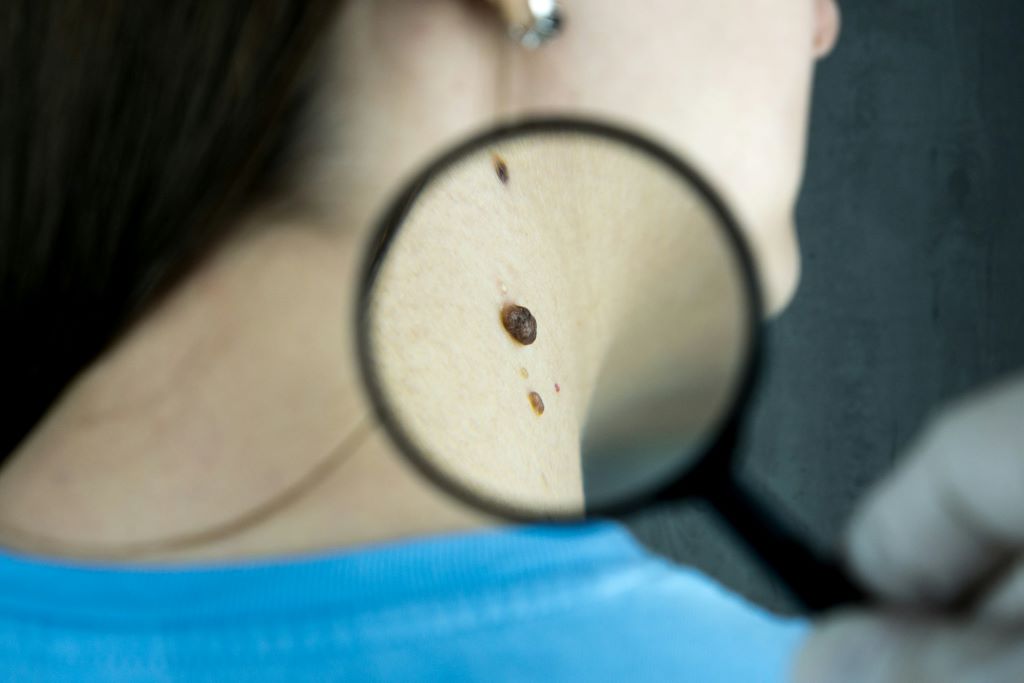
According to a new study, lower doses of approved immunotherapy for malignant melanoma can give better results against tumours, while reducing side effects. This is reported by researchers at Karolinska Institutet in the Journal of the National Cancer Institute.

“The results are highly interesting in oncology, as we show that a lower dose of an immunotherapy drug, in addition to causing significantly fewer side effects, actually gives better results against tumours and longer survival,” says last author Hildur Helgadottir, a researcher at the Department of Oncology-Pathology at Karolinska Institutet, who led the study.

The traditional dose of nivolumab and ipilimumab is the one that is approved and established. Due to the extensive side effects, Sweden has increasingly begun to use a treatment regimen with a lower dose of ipilimumab, which is both gentler and cheaper. Ipilimumab is the most expensive part of this immunotherapy and causes the most side effects.

“In Sweden, we have greater freedom to choose doses for patients, while in many other countries, due to reimbursement policies, they are restricted by the doses approved by the drug authorities,” says Hildur Helgadottir.

Lower dose is more effective

The study included nearly 400 patients with advanced, inoperable malignant melanoma, the most serious form of skin cancer. The study shows that the regimen with the lower dose of ipilimumab is more effective, with a higher proportion of patients responding to treatment, 49%, compared to the traditional dose, 37%.

Progression-free survival, the time the patient lives without the disease worsening, was a median of nine months for the lower dose, compared to three months for the traditional dose. Overall survival was also longer, 42 months compared to 14 months.

Serious side effects were seen in 31% of patients in the low-dose group, compared to 51% in the traditional group.

“The new immunotherapies are very valuable and effective, but at the same time they can cause serious side effects that are sometimes life-threatening or chronic. Our results suggest that this lower dosage may enable more patients to continue the treatment for a longer time, which is likely to contribute to the improved results and longer survival,” says Hildur Helgadottir.

There were some differences between the two treatment groups, but even after adjusting for several factors such as age and tumour stage, the better outcome for the lower dose of ipilimumab remained. The study is a retrospective observational study and therefore it is not possible to definitively establish a causal relationship.

Source: Karolinska Institutet

Use of Social Media Linked to ADHD-like Symptoms in Kids

Increased ADHD-related symptoms in children were linked to social media use, but not video games and television

Photo by Emily Wade on Unsplash

Children who spend a significant amount of time on social media tend to experience a gradual decline in their ability to concentrate. This is according to a comprehensive study from Karolinska Institutet, published in Pediatrics Open Science, where researchers followed more than 8000 children from around age 10 through age 14.

The use of screens and digital media has risen sharply in the past 15 years, coinciding with an increase in ADHD diagnoses in Sweden and elsewhere. Researchers at Karolinska Institutet in Sweden and Oregon Health & Science University in the USA have now investigated a possible link between screen habits and ADHD-related symptoms.

The study followed 8324 children aged 9–10 in the USA for four years, with the children reporting how much time they spent on social media, watching TV/videos and playing video games, and their parents assessing their levels of attention and hyperactivity/impulsiveness. 

Social media stands out

Children who spent a significant amount of time on social media platforms, such as Instagram, Snapchat, TikTok, Facebook, Twitter or Messenger, gradually developed inattention symptoms; there was no such association, however, for watching television or playing video games.

“Our study suggests that it is specifically social media that affects children’s ability to concentrate,” says Torkel Klingberg, professor of cognitive neuroscience at the Department of Neuroscience, Karolinska Institutet. “Social media entails constant distractions in the form of messages and notifications, and the mere thought of whether a message has arrived can act as a mental distraction. This affects the ability to stay focused and could explain the association.”

Significance at population level

The association was not influenced by socioeconomic background or a genetic predisposition towards ADHD. Additionally, children who already had symptoms of inattentiveness did not start to use social media more, which suggests that the association leads from use to symptoms and not vice versa.

The researchers found no increase in hyperactive/impulsive behaviour. The effect on concentration was small at the individual level. At a population level, however, it could have a significant impact.

“Greater consumption of social media might explain part of the increase we’re seeing in ADHD diagnoses, even if ADHD is also associated with hyperactivity, which didn’t increase in our study,” says Professor Klingberg.

Well-informed decisions

The researchers stress that the results do not imply that all children who use social media develop concentration difficulties, but there is reason to discuss age limits and platform design. In the study, the average time spent on social media rose from approximately 30 minutes a day for 9-year-olds to 2.5 hours for 13-year-olds, despite the fact that many platforms set their minimum age requirement at 13. 

“We hope that our findings will help parents and policymakers make well-informed decisions on healthy digital consumption that support children’s cognitive development,” says the study’s first author Samson Nivins, postdoctoral researcher at the Department of Women’s and Children’s Health, Karolinska Institutet.

The researchers now plan to follow the children after the age of 14 to see if this association holds. 

Source: Karolinska Institutet

Tough Enough to Save a Life? SA Athletes Challenge Men to Register as Stem Cell Donors

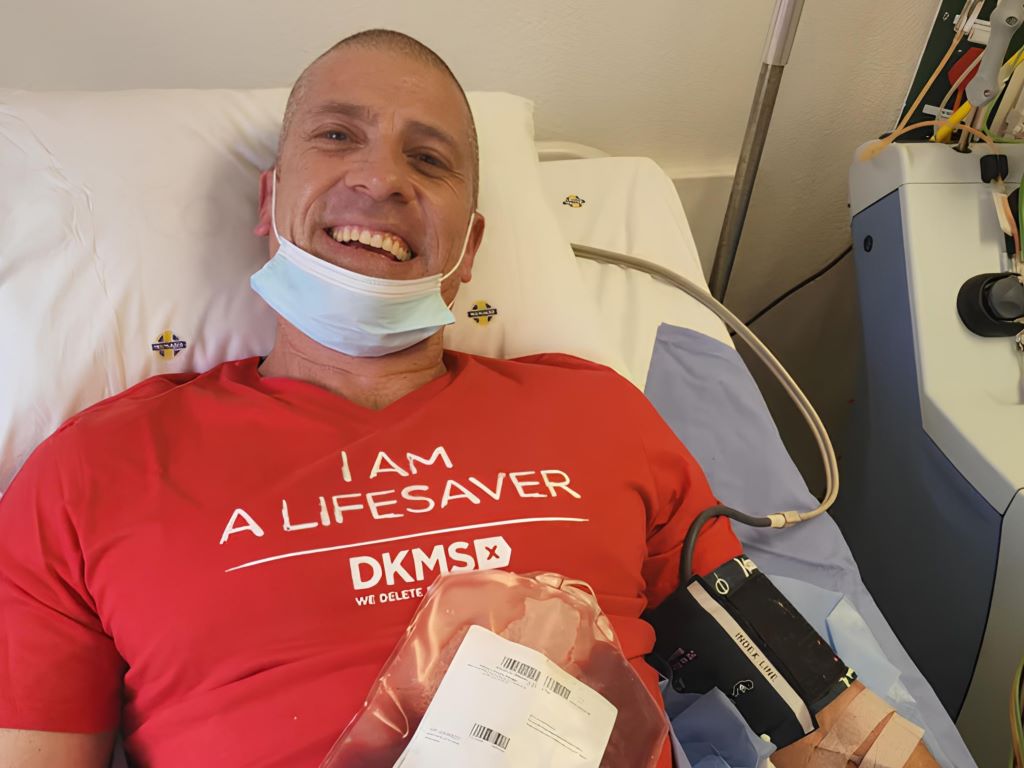
Jaco Pretorius was inspired by his best friend’s life being saved by a stem cell transplant.

With South African men having a 20-50% higher incidence rate of blood cancers than women, sports icons Jaco Pretorius, Seabelo Senatla, and Temba Bavuma are leveraging their platforms to challenge more men to join the stem cell registry and help rewrite the odds for patients in need.

The challenge confronts a widespread public disconnect from the issue. “Many people seem to be disinterested, until one of their own is diagnosed,” notes Senatla. “People tend to be nonchalant when things don’t pertain to them; they have this attitude of ‘not my problem’.”

Pretorius agrees that a lack of awareness is a major hurdle. “My experience is that people are not aware of the great need in our country and the simplicity of the process. But we’ve seen so many times how sport has the power to unite South Africa. When athletes from different backgrounds set an example, I believe people will follow, and together we can make a real difference.”

His advocacy is rooted in his own firsthand experience. Motivated to register after his best friend’s life was saved by a transplant, he was later called upon to donate. He hopes sharing his story will dismantle common fears. “The perception is that it is a painful procedure which carries personal risk. My experience was the complete opposite.”

A concern Bavuma often hears about is the time commitment, especially for those with demanding jobs or family responsibilities. “But if you do get the call to donate, those few days potentially add years, even decades, to someone else’s life. That’s a trade any of us should be willing to make.”

Tackling a common myth, Senatla says, “One of the biggest myths I’ve had to debunk is people having the notion that since stem cells are taken from them, they’ll be left with fewer stem cells. The body of a healthy person is constantly producing stem cells. You’re not in danger of having too little if you donate some to someone.”

For him, the motivation to act is deeply personal. “I grew up in an environment in which I was made to understand that your gifts are not only for you. Other people must benefit as well. That’s what’s in practice here.”

Addressing men who might be hesitant, Senatla points out that they aren’t losing anything by registering. “Rather, they’re affording someone who is ill a second chance at life.”

Bavuma challenges the passive mindset. “In cricket, you can’t field, thinking someone else will take the catch. The same goes for this. Too many people assume there are enough donors already, or that someone else will register.”

Pretorius adds, “I would encourage other people to immediately take action. The process is pain-free, professional, non-invasive, and there are no financial implications – only your time and commitment.”

The outcome of his simple act was profound. “I received communication from the stem cell recipient that the transplant was successful, and the person is healthy and well. That was one of the best feelings – to know that through such a simple action, someone else’s life was saved.”

Palesa Mokomele, Head of Community Engagement and Communications at DKMS Africa, highlights the impact of these role models. “While men currently make up the majority of registered donors in South Africa, the overall pool of donors is critically low compared to the national need. Having respected public figures like Jaco, Seabelo, and Temba lead this conversation is invaluable. When men see other men stepping up, it directly challenges hesitation, shifts perceptions, and ultimately helps save lives.”

Senatla offers a reminder of our shared humanity. “You’re never too important to help, and you should help because you can. Being in a position to help is an absolute privilege.”

“This isn’t a spectator sport; everyone who can help needs to get in the game,” concludes Bavuma.

South Africans aged 17 to 55 who are in good health can register as potential stem cell donors. The process is simple and starts with an online registration and a cheek swab.

Register today at https://www.dkms-africa.org/save-lives.