Tag: 27/2/26

Behind the Scenes: The Amazing People Driving a ‘Truly South African’ HIV Vaccine Study

Dr Sheetal Kassim, the site lead for the Desmond Tutu Health Foundation’s clinical trial site at Groote Schuur Hospital. (Photo: Nasief Manie/Spotlight)

By Elri Voigt

A cutting-edge, South African-led HIV vaccine trial built on decades of research recently kicked off in Cape Town. Spotlight unpacks what exactly is being studied, and how the resilience, tenacity and urgency of a group of dedicated South African researchers made it possible.   

Antiretroviral medicines can suppress HIV in the body and keep people healthy, but we do not yet have a viable cure for HIV or an effective vaccine. It is not for lack of trying. For decades now, researchers across the globe have been working hard to develop a vaccine against HIV. While there have been several major disappointments along the way with vaccines failing in large studies, a new clinical trial in South Africa might soon find vital answers that could reinvigorate the field.

The study was originally set to start in 2025, but researchers had to pivot and find new funders when the United States abruptly terminated much of its international research funding. After some scrambling, a stripped-down version of the study has now started. Rather than being cowed by having to delay, and reduce the size of the study, it seems that forging ahead without US support have sparked a pervasive sense of optimism.

“It feels like the most coherent, involved clinical trial I’ve ever been involved in – so that’s why I’m so excited. I feel like it’s going to lead to big things because it’s bringing so many people with it,” says Professor Penny Moore, a leading virologist who is heading up the laboratory work for the study.

That optimism is tangible at the clinical trial site in the Old Main Building at Groote Schuur Hospital in Cape Town. During our visit, one can’t help noticing how the Desmond Tutu Health Foundation’s signature rainbow logo and colourful walls and furniture breaks through the dark hospital corridors and ancient elevators.

The colourful waiting room at the Desmond Tutu Health Foundation’s clinical research site at Groote Schuur Hospital where a South African led HIV vaccine trial is taking place. (Photo: Nasief Manie/Spotlight)

Like the sugar coating on a Smartie

In the clinical trial, called BRILLIANT 011, researchers are testing two immunogens, says Dr Sheetal Kassim. She is the site lead for the Desmond Tutu Health Foundation’s clinical trial site at Groote Schuur Hospital and Principal Investigator for the trial. An immunogen is an engineered agent designed in a laboratory, she explains, to cause a specific immune response. The aim of this trial, Kassim says, is to see if these two immunogens are able to trigger the development of cells that have the potential to later become special immune cells called broadly neutralising antibodies.

Once HIV is in someone’s body, it is able to stick around mainly by taking over immune cells called CD4 cells. It evades the immune system by constantly mutating so the antibodies sent to find it don’t recognise it. Eventually the infected CD4 cells burst and die, but HIV keeps replicating, weakening the immune system.

Broadly neutralising antibodies are special antibodies that can recognise and fight a range of different HIV strains, no matter how much it has mutated, says Moore.

HIV is covered in something called glycans that make it hard for antibodies to reach it, she explains. Think of these glycans as the hard sugar coating around a Smartie. A broadly neutralising antibody can recognise the parts of the virus that won’t change when it mutates. This allows the broadly neutralising antibody to be able to reach through that hard outer coating, bind to the virus and destroy it.

Two immunogens, given at the same time

In late January, the researchers enrolled the first of an expected 20 healthy participants, who do not have HIV, and are at a low risk for getting HIV. By mid-February, seven participants had received their first shots.

It is a phase one study, which is to say it is still very early days. A phase one trial looks at the safety of a drug or vaccine in a small number of individuals, while a phase two trial looks at safety in slightly larger groups and gives some early indication of efficacy. A phase three trial is much larger and looks mainly at efficacy.

The researchers are testing the immunogenicity – essentially the ability to elicit an immune response against HIV – and safety of the two immunogens in humans for the first time.  A special adjuvant – known as SMNP – is being added to the agents to enhance their effect.

The hope is that the study results will help identify a potential vaccine candidate to test in future, larger studies, says Kassim. “We’re not going to come out of this study and say we have a vaccine that can prevent or cure HIV,” she says. “But we will have information on these immunogens that will help us in the future.”

It has already been shown that the two immunogens can target the type of antibody cells that have the potential to become broadly neutralising antibodies and essentially switch them on. Think of it as a talent finding agency, says Kassim, that can find the next “star” that can become an important broadly neutralising antibody.

The two shots are injected into the muscle of the arm on three separate visits, she says. The first is given after a rigorous health screening. The second is given one month later and the final dose is given three months later. Doing it this way, primes the immune system with the first shots and then the doses that follow boost the initial effects.

Putting ‘the puzzle pieces together’

Research studies like this one is still in the “experimental medicine” phase, Professor Linda-Gail Bekker, CEO of the Desmond Tutu Health Foundation, tells Spotlight. She says results from this study will help “put the puzzle pieces together” to get a clearer picture of which immunogens should eventually be tested in a phase three efficacy trial.

The trial is novel because of the use of two immunogens instead of one. Professor Glenda Gray, Chief Scientific Officer at the South African Medical Research Council (SAMRC), refers to it as an “ambitious and aggressive approach”. She tells Spotlight that usually researchers follow a sequential pattern, testing one immunogen, then another and eventually testing them together. The problem with this is that if they don’t work together, you’ve lost up to five years of research.

“We also have this philosophy of ‘failing fast’,” Gray says. “[I]nstead of wasting money and time and effort, we need to know whether our strategy is going to work or not in the beginning.”

A proudly South Africa trial

Beyond the cutting-edge science, it’s clear that what makes this trial so unique is the people involved.

Bekker describes the trial as “proudly South African”. She says: “It’s just terrific that we’re doing this end-to-end. We’re involving the community, the recruiters are people from the country, the people who are taking the blood are people from the country, the people who are doing the laboratory science are from the country, and we’re doing it for people in our country.”

Moore adds: “We’ve got so many people in the background working on these trials at the clinical sites and here in my lab…There’s this huge mass of people all working together on this trial.”

BRILLIANT 011 is one of 22 trials currently running at the Groote Schuur Hospital site, Henriette Kyepa the Unit Manager for the site, tells Spotlight. The doors open at 07:00 and the last participant leaves by 15:00, and since at least 40 participants are being seen each day, she describes the goings on as “bustling”.

The hospital has an illustrious medical history, with the first human heart transplant having been performed in the Old Main building – the Christiaan Barnard Heart Museum is just a few floors down.  The Desmond Tutu Foundation’s research site has been operating at the hospital for more than 10 years.

During a tour of the unit, Spotlight was led through a waiting area, pharmacy, and two nursing areas – where patient’s vitals are checked and data captured. Staff manning the different stations were busy, but friendly and took requests for photographs in their stride. There are four doctors’ rooms and a procedure room, equipped with things like a crash cart in case anyone has a bad reaction to a drug or device that’s being tested. The site also includes private counselling rooms and a purple, gender inclusive bathroom. Down the hall, there is a hospital ward and a small laboratory, which is shared with the University of Cape Town Clinical Research Unit, for patients that need timed blood draws for studies where drug levels are being monitored.

But before they come to the site, the first point of contact for many potential trial participants – for BRILLIANT 011 and other studies – are the community recruiters. This is a team of three outreach workers led by Amelia Mfiki, who is the community liaison officer for the Desmond Tutu Health Foundation and lead recruiter. Their job is to keep the local communities updated on what the site is doing, get their feedback and to find participants who fit the eligibility criteria for different studies.

If someone is interested in a study, Mfiki explains, they are sent to the site for an information session, where the trial, eligibility criteria and the commitment required to participate is clearly unpacked. If they meet the criteria and want to participate, they go through a further informed consent process and screening. With a big smile, she tells Spotlight there has been a lot of requests for information about the BRILLIANT 011 trial.

Once enrolled, clinical trial participants will spend a lot of time with the nursing staff. Among them is Viwe Soko, a senior nurse who says “making people smile” is part of his job.

How they’ll test if it works

The BRILLIANT 011 trial participants will need to come back roughly two weeks after each jab to have white blood cells – which contain the cells that can become broadly neutralising antibodies – extracted from their blood through a process called leukapheresis. This is how the researchers are looking for those “star” antibodies that have the potential to become broadly neutralising antibodies.

Basically, the leukapheresis machine draws a participant’s blood and runs it through a centrifuge that separates the white blood cells from all the other cells in the blood, explains Moore. The white blood cells are collected into a sterile blood bag, while the rest of the blood goes back into the participant. (Here’s a useful video showing how it works).

Hundreds of millions of white blood cells are collected each time a participant goes through this process, according to Moore. “The reason we need a crazy number [of cells] is because the responses that we’re looking for are rare as hen’s teeth,” she says.

The cells are then processed in the laboratory at Groote Schuur Hospital and sorted into different tubes containing 20, 50 and 100 million cells respectively, frozen, and then sent more than 1 000 km away to Moore’s laboratory at Wits University in Johannesburg.

Once there, the thawed antibodies are run through a special machine called a flow cytometer, which is able to spit out individual cells of interest via an ultra-thin stream. The cells are mixed with a dye to make them easy to spot, says Moore. Then a laser and computer, under the supervision of a highly trained scientist sorts the cells to isolate the types of antibodies they’re interested in.

These precursors of the broadly neutralising antibodies are “structurally weird”, said Moore, some of them have really long “arms” that can reach through HIV’s hard outer coating, or really short “arms” to get close to it.

At the end of the process, there might be 100 relevant cells which then go through a process called next generation sequencing. The researchers are looking for two specific genetic signatures that will show that the right antibody was produced. Moore likens this to a cell that has “a purple head and an orange arm” and is extremely rare. Once they find all the cells with these signatures, they count them.

At its core, Moore says, they’ll know the immunogens have worked if they find more “cells with purple heads and orange arms” than has been seen in other vaccine trials that only used one immunogen.

“I think this is some of the most important work I’ll ever do,” Moore says. “It feels like 20 years of basic science has finally paid off.”

She has been monitoring the antibody responses for the CAPRISA 002 cohort for the last two decades. It is within this cohort, that a handful of women living with HIV who had naturally produced broadly neutralising antibodies were discovered and since studied. This is part of the foundation on which the BRILLIANT 011 trial has been built.

Because of all the lab work and specialised equipment required, this kind of study is expensive to run. For the study period, it costs about R1 million for each participant to be in the trial, according to Gray. This trial has a budget of R25 million, the bulk of which has been supplied by the Gates Foundation. Some emergency funding from the SAMRC was used to make up the rest.

‘Nobody gets the urgency’ like South Africa

This amount is a far cry from the five-year USAID grant worth over $45 million, that was originally awarded to the BRILLIANT Consortium in 2023. This ambitious African-led Consortium, led by Gray and run out of the SAMRC, had big plans for HIV vaccine research and capacity development across Sub-Saharan Africa. As Spotlight previously reported, the Consortium planned to conduct three HIV vaccine trials, about one a year, and develop laboratory capacity for this kind of research across the African continent.

In the end, they only had the USAID grant for a year, just enough time to set everything up for BRILLIANT 001, a much flashier version of the trial that is currently running. It was set to take place at sites in Uganda, Kenya, Zimbabwe, South Africa and Nigeria, and recruit 60 participants, according to Gray.

“We were actually due to start it [BRILLIANT 001] in February of 2025. And then it was stopped,” Bekker says. “And so, we went through the five stages of grief and finally got to the point of acceptance. And with acceptance came a real sort of verve to try and find alternative funding.”

Essentially, the researchers were racing against the clock on multiple fronts.

The immunogens, which had been donated by labs in the Netherlands and the United States were already in the country and had expiration dates that meant the study could not be delayed indefinitely (in the end the study would start in time for this to no longer to be a concern).

But more importantly there was the roughly eight million people living with HIV in the country.

“I think nobody gets the urgency like a South African,” Bekker says. “It’s very real in our lives that this virus continues to devastate [and] change the lives of people we love and serve and work with. So that sense of urgency is very real within us.”

The team wrote up a new funding proposal and study protocol, which Bekker describes as a much lighter version, “pared down to the absolute bones”.  They presented this to the Gates Foundation, which agreed to provide funding for this leaner version, and the team pushed to get everything else in place.

Gray weighs in on how, just as the process was taking off again and the protocol had been submitted to the South African Health Products Regulatory Authority (SAHPRA), which has to review and approve all clinical trials conducted in the country, the adjuvant they had planned to use was recalled by the manufacturer. Luckily, they had had some warning this might happen and had a protocol using another adjuvant ready to go. And just a year after the original trial was meant to start, they were able to kick off BRILLIANT 011.

“No one works in these timelines,” says Gray, adding that part of the reason they were able to pull this off was because of how well the team works together. “Everyone puts in more than their pound of flesh, they work incredibly hard…everyone believes in the kind of programme that we’re trying to put together,” she adds.

‘I want to help my community’

Participants for the 011 trial are reimbursed for their time and travel using a SAHPRA approved model. However, Kassim says there appears to be a more altruistic motive among participants, with some sharing sentiments like: “I want to help people. I want to help my community.”

Bekker notes a similar theme that’s held true over the last two decades of HIV vaccine research. “It’s incredibly encouraging, but it’s also incredibly humbling that, in a country like ours, where people have so many other challenges, that they could … [have] an entirely altruistic motivation, that they are digging deep within themselves and saying: ‘I’m motivated because I want to see an end to the suffering’.”

“If we truly want to bring this epidemic to an end and eliminate transmission, we will need a vaccine,” says Bekker. “And imagine, a world where you could get your vaccination, at age 10 or even younger, and then not have to think about HIV ever again.”

Disclosure: The Gates Foundation is mentioned in this article. Spotlight receives funding from the Gates Foundation but is editorially independent – an independence that the editors guard jealously. Spotlight is a member of the South African Press Council.

Republished from Spotlight under a Creative Commons licence.

Read the original article.
Harnessing Gut Bacteria to Heal Traumatic Brain Injury

Houston Methodist researchers find antibiotics aid recovery from traumatic brain injury

Source: CC0

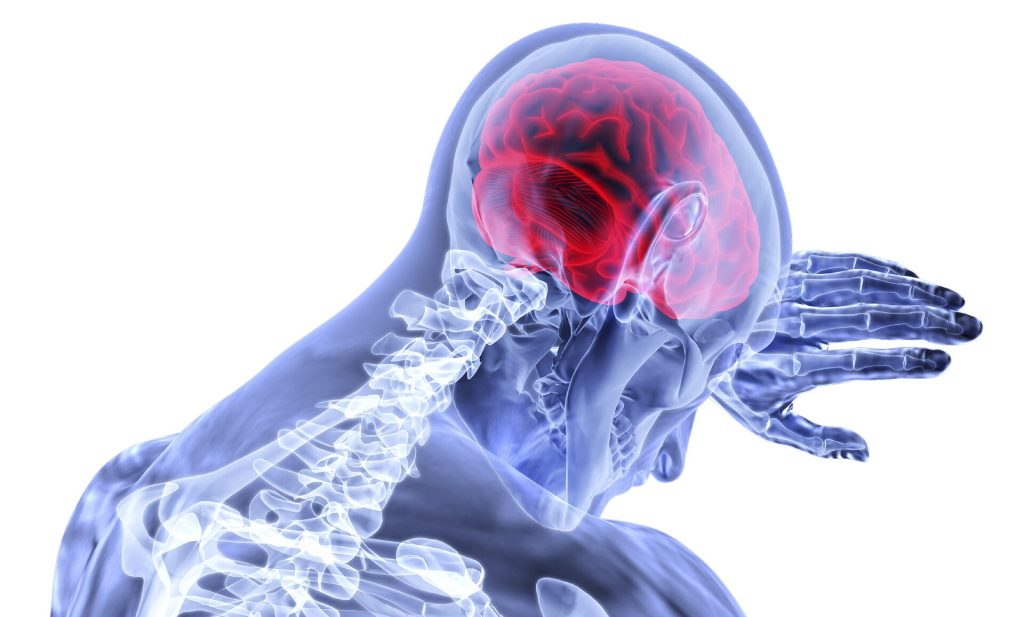
What if healing the brain after traumatic injury starts in the gut? In a new study published in Nature Communications BiologyHouston Methodist researchers led by Sonia Villapol, PhD, found that short-term antibiotic treatment significantly reduced neuroinflammation and neurodegeneration following traumatic brain injury (TBI) by altering the gut microbiome in animal models. 

“We found that antibiotic treatment following TBI can reduce harmful gut bacteria, decrease lesion size and limit cell death,” said Villapol, an associate professor in the Department of Neurosurgery at Houston Methodist. “Our results support a gut–brain mechanism in which microbiome changes influence peripheral immunity and, in turn, neuroinflammation after TBI.¨

Administering antibiotics cleans the gut of harmful bacteria, allowing beneficial bacteria to flourish. The study found that two helpful bacteria, Parasutterella excrementihominis and Lactobacillus johnsonii, are key to driving cell repair. According to Villapol, they could also be major regulators for peripheral inflammation in the body.

Notably, 70% of immune system regulation is generated by the gut microbiome. During gut imbalance, the bidirectional nature of the brain-gut axis can wreak havoc throughout the entire body. 

“Our brains are constantly sending signals to the rest of our bodies. Following a traumatic brain event, those signals can get scrambled and disrupt other organs, including our digestive system,” Villapol said. “If the gut stays out of balance, the brain may have a harder time healing.”

Recent studies indicate that TBI-induced gut microbiome imbalance may even contribute to the development of neurodegenerative diseases like Parkinson’s, Alzheimer’s and dementia. 

Villapol’s lab is focused on investigating and developing new neuroprotective treatments to fight inflammation linked with neurodegenerative disease. “If we can break neuroinflammation in the acute or chronic stage, we can reduce the risk of developing Alzheimer’s or dementia,” said Villapol. 

The next phase of the research will focus on bioengineering P. excrementihominis and L. johnsonii to further develop precision therapies to reduce neuroinflammation.

Source: Houston Methodist

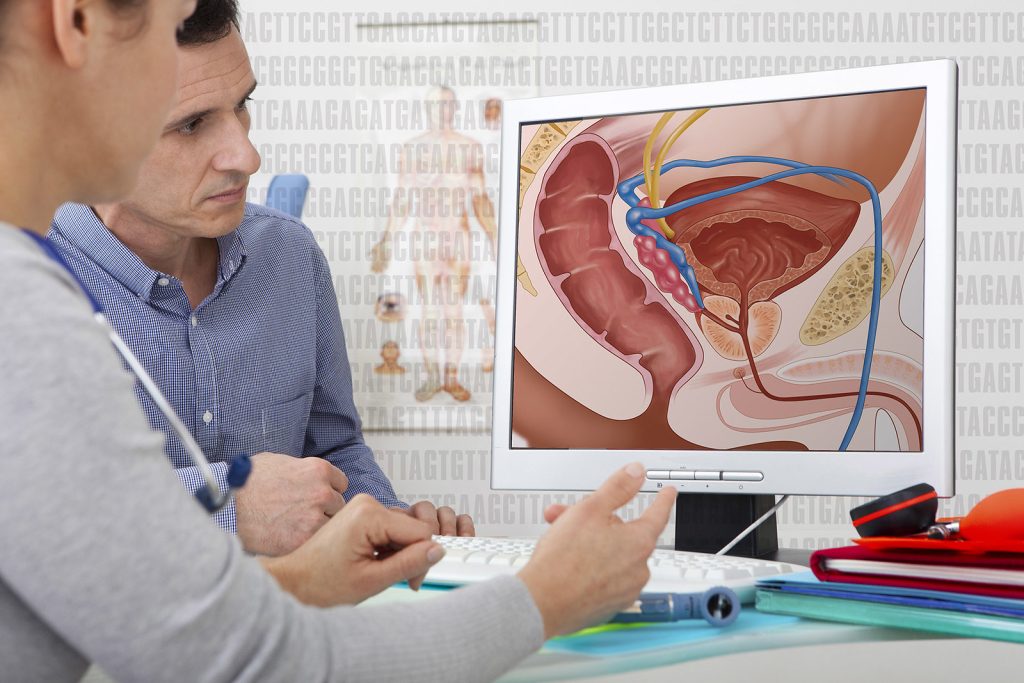
Hormone Therapy of Little Benefit with Radiotherapy after Prostate Surgery

Findings could help patients avoid side significant effects and improve quality of life

Credit: Darryl Leja National Human Genome Research Institute National Institutes Of Health

A new study led by UCLA Health investigators suggests that adding hormone therapy to post-operative radiotherapy may provide little survival benefit for most men with prostate cancer, especially for those with very low PSA levels before treatment. 

The researchers found that for men with low PSA levels prior to radiotherapy, adding hormone therapy, whether short-term or long-term, did not improve overall survival. Men with higher PSA levels before radiation may see modest improvements in survival and metastasis-free survival, suggesting hormone therapy may be beneficial primarily for this higher-risk group.

The results were published today in The Lancet and presented by Dr Amar Kishan, professor and executive vice chair of radiation oncology at the David Geffen School of Medicine at UCLA, during the plenary session of the American Society of Clinical Oncology Genitourinary Cancers Symposium in San Francisco. 

“Hormone therapy, which impacts the ability of testosterone to stimulate prostate cancer growth and repair, has been shown to improve outcomes when combined with radiotherapy in men whose prostates are still intact. However, whether it has a similar benefit for men receiving radiotherapy after prior surgery has remained unclear,” said Kishan, first author of the study and co-director of the cancer molecular imaging, nanotechnology and theranostics program at the UCLA Health Jonsson Comprehensive Cancer Center. “At the same time, hormone therapy carries significant side effects, including severe fatigue, hot flashes, sexual dysfunction, weight gain, bone loss and metabolic changes that can increase cardiovascular risk. Our findings show that for most men with detectable but low PSA levels (<0.5 ng/mL), after surgery to remove the prostate, post-operative radiotherapy is highly effective on its own. By safely omitting hormone therapy in these patients, we can potentially spare them months of treatment that may substantially affect their quality of life without extending survival.”

To better understand the impact of hormone therapy in this setting, the researchers conducted a large-scale, individual patient-level meta-analysis through the MARCAP Consortium, an international collaboration co-led by Kishan that is designed to evaluate long-term outcomes across randomized clinical trials.

The team analysed data from 6057 men enrolled in six randomised trials comparing post-operative radiotherapy alone to radiotherapy combined with either short-term (4-6 months) or long-term (24 months) hormone therapy. By pooling individual patient data rather than relying on summary trial results, investigators were able to examine outcomes in greater detail, including how pre-radiation PSA levels influenced treatment benefit.

Patients were followed for a median of nine years, allowing researchers to assess long-term overall survival, metastasis-free survival and recurrence outcomes. The analysis also enabled direct comparisons between short-term and long-term hormone therapy to determine whether extending treatment duration improved outcomes.

The researchers found that overall, 83.6% of men who received post-operative radiotherapy alone were alive after 10 years, compared with 84.3% for those who received post-operative radiotherapy plus hormone therapy.

Researchers found that pre-radiotherapy PSA levels, a measure of prostate-specific antigen in the blood after prostatectomy, played a crucial role. Men with low PSA levels before radiotherapy (≤0.5 ng/mL) saw no benefit from hormone therapy. In contrast, men with higher PSA levels showed modest improvements in survival, suggesting that hormone therapy may only be worthwhile for those with elevated PSA. 

The study also examined the duration of hormone therapy. Short-term therapy did not improve overall survival, though it slightly reduced the risk of cancer spreading. Long-term therapy showed a small survival benefit, particularly for men with higher PSA levels after prostatectomy. However, the team’s statistical analysis demonstrated that extending short-term therapy to long-term therapy did not further improve survival, although it did modestly lower the risk of metastasis.

“Our goal is always to treat the cancer while minimizing harm,” said Kishan. “This study helps us move toward more personalised care for men with prostate cancer. By better identifying who truly benefits from hormone therapy, we can make treatment smarter, reduce unnecessary interventions and focus on improving patients’ overall well-being.”

Building on those findings, ongoing research is working to further refine that approach. Trials such as the BALANCE Trial aim to pinpoint biomarkers that can identify which men are most likely to benefit from hormone therapy after surgery, helping tailor treatment decisions even more precisely.

Source: UCLA Health

Making Neurosurgeons Even Better at Removing Brain Tumours

In a leap for personalised medicine, scientists have discovered a simple and valuable way to improve brain cancer surgeries.

Taylor Furst, MD, observes a brain mapping procedure in progress at the University of Rochester’s Strong Memorial Hospital. Credit: Matt Wittmeyer

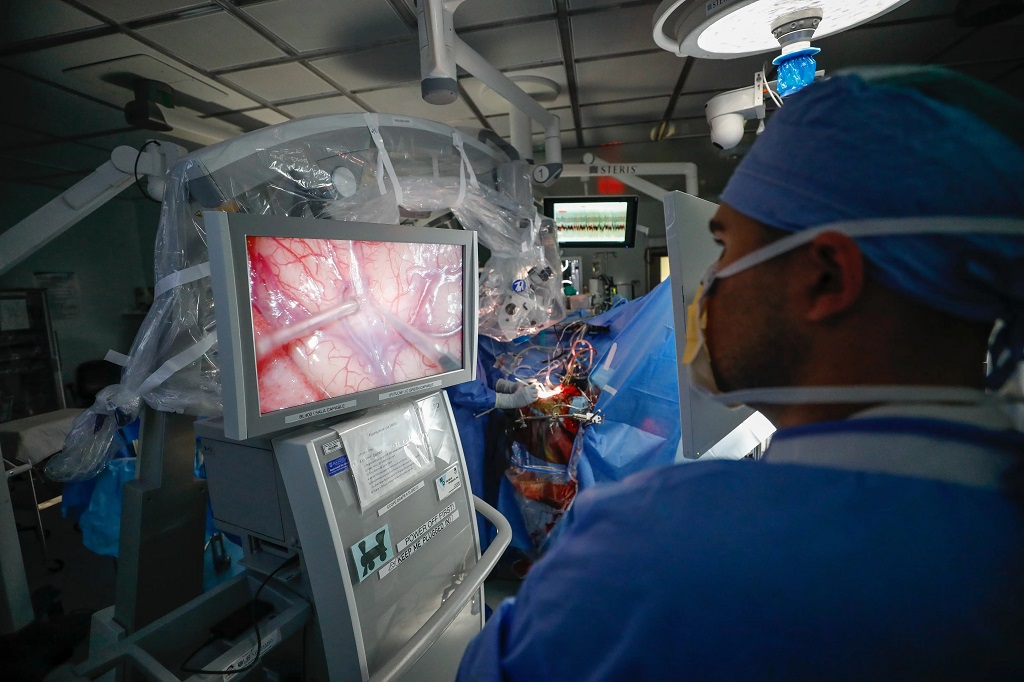
When removing cancerous tissue in the brain, neurosurgeons often use “awake brain mapping” to minimise the risk of causing unintended disruptions to a patient’s quality of life while removing as much tumour as possible. This practice, which has been used for decades, involves waking a patient up mid-surgery to test their neurocognitive functions in real time by stimulating the brain surface and assessing for functional changes.

A new study published in the journal Science Advances details a promising new avenue toward improving awake brain mapping results by investigating the tiny, nearly imperceptible variabilities in patient behaviour that occur during the procedure. This work, led by Carnegie Mellon University researchers, points to a future where brain surgeries are not just safer, but more precisely tailored to protect each patient’s speech, movement and quality of life.

How awake brain mapping works

As cancer grows in the brain, it rarely keeps to itself. Cancerous cells can be found in the seemingly healthy brain tissue surrounding a tumour, presenting neurosurgeons with a dilemma. They need to remove as much tissue infiltrated by cancer as possible, but they also need to avoid the removal of too much tissue since it can cause permanent harm to a patient’s ability to hold a fork or a conversation.

During awake brain mapping, surgeons gently stimulate the brain with small electrical impulses while the patient completes planned tasks. One of the most common applications of awake brain mapping is to identify where language is represented in a patient’s brain, which is done by having the patient name pictures or read words while their brain is being stimulated. If the patient can respond quickly and correctly, the clinicians know the part of the brain they stimulated can be safely removed. If the patient slurs or becomes unable to speak, then that part of the brain may be essential for language. Surgeons require a significant amount of experience to understand the nuances of this complex technique.  

While the method may sound extreme, the brain has no sensory nerves, so patients do not feel their brain surgery as it is happening. Recent research also shows that for some types of brain cancer, improving a patient’s quality of life after surgery extends their expected survival into the future. This means that anything that can make awake brain mapping even more effective will translate into improved outcomes for brain cancer patients.

New measures show how slight changes in procedure affect patient behaviour

Based on a decade of research, the study authors uncovered new insights from examining the answers patients get wrong – and right – while undergoing awake brain mapping.

“We found that if you measure both the types of errors that patients make, as well as how fast they respond even when they do not make errors, more granular inferences can be drawn about language organization from an awake brain mapping procedure,” said Bradford Mahon, a cognitive neuroscientist at CMU’s Neuroscience Institute and Department of Psychology and senior author of the study. “We also found that physical parameters of the direct electrical stimulation delivered to the patient’s brain – such as its duration, and when it started and stopped relative to the task the patient is performing – were tightly related to small changes in patient behaviour that we could measure.”

Mahon and his team don’t yet know exactly what combination of parameters should be used to maximise the effect of direct electrical stimulation mapping. But they have discovered an intriguing signal hidden inside of the data that, until now, has gone unnoticed.

“What we have measured and formalised in our study is how slight changes in the awake mapping procedure can cause slight changes in patient behaviour. This is exciting because it is a new and meaningful signal that can be extracted from the data already being generated during awake brain mapping procedures,” said Mahon.

A new level of personalised medicine

The new study suggests that awake brain mapping may offer more informative and more personalized guidance for surgery than has been possible in the past.

“Stimulation has traditionally been treated as a binary test – either it causes an error, or it doesn’t,” said Raouf Belkhir, lead author and a psycholinguist who is completing the University of Pittsburgh-Carnegie Mellon University Medical Scientist Training Program. “But in reality, these effects are often more continuous than binary.”

For example, stimulating a particular area of the brain might reliably cause an error, never affect behaviour at all, or – more subtly – slow a patient’s response without causing an obvious mistake. In some cases, stimulation may affect behaviour at one moment, but not when tested again just seconds later.

“In other words, brain mapping isn’t always black or white,” said Belkhir. “Sometimes the most important information lives in the grey area.”

The nuance matters because every brain is different, which means every surgery is different, too. Understanding why stimulation has variable effects across different patients, and even within the same patient from one part of the surgery to another part of the surgery, may be key to protecting outcomes for future patients.

“Surgeons are seeking to optimise the balance between removing all of the cancerous tissue while preserving critical functions that may be represented by nearby brain regions,” said Mahon. “This research shows that by measuring aspects of patient performance that were previously not considered relevant for awake brain mapping, even better predictive models of brain organisation can be developed.”  

If clinical teams have better predictive models personalised to each patient, then the consequences of different surgical approaches on postoperative neurocognitive function can be simulated. This allows for patients and their caregivers to personalise decisions to what is most important to the patient.

In other words, Mahon said, a business manager may consent to a surgery that may diminish their motor skills, but not their speech, whereas a concert violinist may prefer the opposite.

Bringing standardisation to awake brain mapping surgery

Another important development from this research is the startup company MindTrace, which has built an integrated software platform that supports neurocognitive testing before, during and after surgery. It is working to build a longitudinal dataset of patient outcomes that will be used to train forecasting models. 

Tyler Schmidt, MD, study co-author and neurosurgeon at the University of Rochester, has used MindTrace in over a dozen awake surgeries since its release this year.

“In the beginning of brain tumour surgery, it used to be, ‘Can we remove any of this tumour safely?’” said Schmidt. ”But now in some brain tumour cases it’s, ‘Can we get you back to work potentially? Can we keep your quality of life close to what it was prior to your diagnosis? Can we hone in on the things that are most important to you and then try and protect them while getting the same oncological outcome?’” said Schmidt. “I think it’s a positive paradigm shift in how we take care of this patient population.”

The options today are measurably better than they were even 20 years ago. Clinicians now understand how to maximise the likelihood that patients have the best possible outcomes from brain cancer surgery.

“Ultimately, we are contributing toward the set of tools that clinicians will have that will enable them to map the brain with even greater confidence and precision, and personalised to each patient,” said Mahon. “The big goal is to translate scientific insights into solutions that improve people’s lives. We will meet that goal by building tools that enable the best possible outcomes in neurosurgery patients, both in terms of neurocognitive function and quality of life, and ultimately, in terms of survival.”

Source: Carnegie Mellon University

Ivermectin Was Touted as a Cure for COVID, Now it’s Being Tested for Cancer. But what can it Actually Treat?

Photo by Halgatewood.com on Unsplash

Nial Wheate, Macquarie University

Ivermectin was originally celebrated as a revolutionary treatment for parasitic disease in humans and animals. It has since evolved into a focal point of misinformation and heated debate.

During the early part of the COVID pandemic, it was touted on social media as a miracle cure for the virus, despite a lack of robust evidence.

Now the United States National Cancer Institute is looking into the drug as a potential cancer treatment, with early human clinical studies underway.

But what can it successfully treat?

What is ivermectin?

The drug is a small organic chemical that can be extracted from the bacterium Streptomyces avermitilis. This bacterium grows in the soil, and was first found near the grounds of a Japanese golf course.

Ivermectin’s discovery in the 1970s was considered so important its discoverers were awarded the 2015 Nobel Prize in Physiology or Medicine.

It was first approved for use in animals in 1981 and in humans in 1987. It’s now available in various brands as tablets and creams you apply to the skin.

Assessing the evidence

Governments use human clinical trials to decide whether to approve a medicine for sale.

But clinical trials aren’t the highest level of evidence to inform best practice and guide decisions. For that, there are Cochrane reviews.

A Cochrane review brings together a panel of experts who collate and assess all the relevant evidence on a medication. It takes data from multiple clinical trials, and other studies, and evaluates it following clear and structured steps. It’s able to examine and critique study designs to identify bias and reject bad data.

Cochrane reviews are also regularly updated to take into account new information. The result is a summary that is considered the highest level of evidence to guide decision-making.

So what do Cochrane reviews say about ivermectin for different conditions?

What can and can’t ivermectin treat?

ConditionDoes it work?Notes
CancerUnclearStudies only just starting
COVIDNoDoes not prevent infection or treat
Gut and lymphatic wormsYesTreatment for various roundworms
MalariaUnclearNot enough evidence to decide
River blindnessUnclearNot enough evidence to decide
RosaceaYesUse the topical formulation
ScabiesYes, but with caveatsNot the most effective
Table: Nial Wheate Source: Cochrane reviews – variousGet the dataCreated with Datawrapper

Gut and lymphatic worms

Ivermectin is used to treat a variety of parasitic worm infections. These include the round worms Ascaris lumbricoides, Strongyloides stercoralis, Wuchereria bancrofti, and Brugia malayi.

The latter two worms cause the disease lymphatic filariasis (or elephantiasis) which causes severe swelling in the arms, legs, breasts and genitals.

When ivermectin is used to treat Strongyloides stercoralis, the Cochrane panel found it is better than albendazole and had fewer side effects than thiabendazole.

For Ascaris lumbricoides, the panel concluded ivermectin was as good as albendazole and mebendazole.

For treating lymphatic filariasis, a Cochrane review found ivermectin or diethylcarbamazine should be standard treatment in combination with albendazole.

Rosacea

The Cochrane review for rosacea evaluated 22 different treatments for this skin condition, including a variety of drugs, as well as light therapy, cosmetics and reducing the intake of spicy food.

It concluded that ivermectin applied to the skin was more effective than a placebo, and a bit better than the other standard medication, metronidazole.

Scabies

Cochrane has two reviews on the use of ivermectin for scabies. One specifically evaluated ivermectin and permethrin as treatments. The other evaluated all available treatments for scabies.

The first review concluded both permethrin and ivermectin were just as effective, regardless of whether the ivermectin was administered orally or directly onto the skin.

In contrast, the second review concluded ivermectin does work but topical permethrin appeared to be the most effective treatment.

Malaria

The Cochrane panel looked specifically at whether ivermectin could reduce transmission of the malaria parasite, rather than as a treatment.

Unfortunately there was just a single clinical trial to use as evidence. In that trial, residents of eight villages were given ivermectin and albendazole together, with follow up doses of just ivermectin. The researchers then looked at the rates of child infection over 18 weeks.

Even though the trial didn’t show ivermectin prevented infection, due to the high risk of bias in it, the Cochrane panel couldn’t conclude either way whether ivermectin worked or not.

River blindness

River blindness is caused by another parasitic worm called Onchocerca volvulus.

The Cochrane review concluded there was a lack of evidence either way to know whether it works to prevent infection-based visual impairment and blindness.

It evaluated the data from four clinical trials and two large community-based studies.

One of the reasons the panel was unable to make a firm conclusion was because it thought the drug may work differently against different strains of the parasite and in people of different ethnicity.

Cancer

There are no Cochrane reviews on ivermectin’s use for cancer because clinical interest in the drug for this condition is just starting.

There is a current clinical trial that is evaluating ivermectin in combination with antibody-based drugs for breast cancer.

Early results showed the combination of antibody drugs with ivermectin was safe to patients, but no efficacy data has been published.

COVID

The Cochrane panel rejected the data for seven clinical trials and included 11 other trials. Rejected trials included those which compared ivermectin against other drugs which were known to not be effective against COVID, such as hydroxychloroquine.

The review concluded there was no evidence to support the use of ivermectin for the treatment or prevention of COVID. In making that conclusion, it evaluated treatments that used invermectin or placebo in combination with standard care and whether treatment reduced death, illness, or the length of the infection.

Nial Wheate, Professor, School of Natural Sciences, Macquarie University

This article is republished from The Conversation under a Creative Commons license. Read the original article.