
Tag: 23/10/26

Figuring out How the BCG Vaccine Reduces Dementia Risk

Photo by Raghavendra V Konkathi on Unsplash

Bacillus Calmette-Guerin (BCG), a vaccine widely used to prevent tuberculosis and treat bladder cancer may also have properties that reduce the risk for dementia, according to new findings in a study of mice. BCG is a live, weakened vaccine made from an altered strain of the bacterium Mycobacterium bovis. The findings from this study, which was led by a team of Johns Hopkins Medicine researchers and funded by the National Institutes of Health, published today in Science Advances. 

The researchers found that mice genetically engineered to have biological symptoms of dementia and that received the BCG vaccine were less likely to show hallmark signs of the disease, such as neurofibrillary (tau) tangles in the brain, sustained immune cell activation and memory loss compared to mice that received no vaccine. 

“We’re hard at work trying to understand the detailed mechanism for how it works, but this research points to early clues that aspects of trained immunity are likely driving this response,” says William Bishai, MD, PhD, co-director of the Johns Hopkins Center for Tuberculosis Research. 

Bishai explains that trained immunity refers to the ability of mammals’ innate immune system cells to take on an expanded role. Following an initial stimulus, innate immune cells, often monocytes and macrophages, learn how to identify and respond to future threats that are different from the first. (Typically, other immune system cells, like T cells, take on this type of adaptive and learned response.)

In this case, Bishai believes that myeloid cells – innate immune cells – in the central nervous system and brain are using information from BCG to recognise and help the body respond to the formation of plaques and tangles characteristic of Alzheimer’s disease and related dementias. 

For this new study, Bishai and the researchers created a controlled experiment with mice with symptoms of dementia, specifically marked by tau pathology or a clumping of tau proteins in the brain representing late stages of the disease. 

They divided mice into those that received the BCG vaccine and those that received a saline injection. An additional comparison group included age-matched mice that did not have dementia and that also received the saline injection.Mice in the BCG treatment group received the vaccine at 3 months of age. Multiple assessments, based on brain imaging, memory recall (through an object recognition test) and indicators of disease, including neuroinflammation and the expression of genes linked to Alzheimer’s disease, were conducted eight to nine months later. 

The researchers found that mice who received BCG were about five times more likely to have signs of reduced tau deposits in their brain. They were also four times less likely to have markers of sustained inflammation – signalling that their immune cells had already likely responded to tau by clearing out some of the tangles and had created a stable or protective immune response. 

Untreated mice also showed activation of 716 genes connected to Alzheimer’s disease, cell death and neuroinflammation, and BCG normalised all but nine of these. Compared to untreated mice, the mice who received BCG were less likely to have signs of brain atrophy and also more likely to live longer and perform better on tasks related to remembering and identifying objects. 

BCG seems to be reducing the degree of hyperinflammation in the brain – which is a good thing – and it may be doing it through a trained immune cell mechanism,” says Bishai. “There are a number of other characteristics of trained immunity that we are studying in the lab now.” 

This research, Bishai says, is believed to be the first to study BCG and dementia in mouse models with tau pathology (specifically showing how immune cells may play a role in clearing neurofibrillary tangles). Others have found similar findings with BCG and improved cognition in amyloid mouse models – which represent earlier stages of the disease marked by plaque formation. 

These findings also follow observational studies in humans – those not designed to show cause and effect – that have linked off-target effects of vaccines to a reduced incidence of dementia. 

Several previous studies, which are cited in the paper, have found that BCG used as an immunotherapy for non-muscle invasive bladder cancer was linked to a 12% to 78% reduced risk of dementia throughout a three- to 15-year period. The shingles vaccine has also been linked to a 20% reduced incidence of dementia.

Source: Johns Hopkins Medicine

Alzheimer’s Treatment Trial Times Halved with New Approach

Photo by Kampus Production

A first-of-its-kind clinical trial has launched in the UK, which could cut years from the search for treatments that work for people with Alzheimer’s disease.

The national trial is called AD-SMART (Alzheimer’s disease Systematic Multi-arm Adaptive Randomised Trial). It is led by the UK Dementia Research Institute (UK DRI) and Alzheimer’s Research UK (ARUK), in partnership with the National Institute for Health and Care Research, the Medical Research Council (MRC) and Health Data Research UK, with ongoing UK government funding.

It will test multiple drugs simultaneously, starting with two repurposed medicines already used to treat type 2 diabetes and attention deficit hyperactivity disorder. Groups of participants will each begin treatment with a different drug. The study will examine whether these medicines can lessen symptoms such as memory and thinking problems, and help people maintain their quality of life as the disease progresses. Testing drugs that are already approved to treat other conditions and known to be safe means that, if successful, treatments can reach people living with Alzheimer’s much faster than a medicine developed from scratch. As well as repurposed drugs, the trial is designed to test new potential treatments coming through the research pipeline.

Heather Ransome, 67, from the Isle of Wight, was diagnosed with Alzheimer’s in 2024. She said: “Before my diagnosis, my partner and I were going on lots of cruises and coach holidays, enjoying retirement together. We still enjoy life, but I’m worried about my condition getting worse. I’m not the sort of person who gets upset, but being told you have Alzheimer’s is quite upsetting. There weren’t many treatment options available, and the one drug I was offered has been around for many years. Getting involved with AD-SMART has given me some hope for the future. It’s not too taxing, just some extra tablets to take every day. I don’t know whether I’m being given the active treatment, but if it helps me, or helps others in future, that feels positive. I would encourage anyone who thinks they might be eligible to sign up and speak to the team.”

The Prime Minister Andy Burnham said: “I know how it feels to lose a loved one to dementia and have seen first-hand the devastating impact this illness has on families. That’s why I’m proud to see this trial being launched in the UK, so that cutting edge treatments can reach patients here as soon as possible. I have made dementia research a national priority. I want Britain to be the leading nation, making the breakthroughs that change people’s lives.”

AD-SMART is a multi-arm, multi-stage platform trial. Several drugs are tested at the same time, and the results compared with one group of participants taking a dummy drug (placebo). This means more people receive an active treatment than would in a traditional trial. Results are checked at regular stages throughout the trial and any drug that isn’t showing benefit can be dropped quickly, with new drugs added in its place. Overall, this means fewer participants end up receiving ineffective drugs. Testing several drugs against one shared placebo group means that compared with a traditional trial, the time to evaluate treatments can be more than halved, which also reduces costs.

The trial is being delivered by a team at Imperial College London, the UCL Innovative Clinical Trials Unit and the MRC Centre of Research Excellence in Clinical Trial Innovation (UCL), the University of Oxford, and Dementias Platform UK. Leading Alzheimer’s experts from across the UK will be providing support.

Chief Investigator, Dr Paresh Malhotra, Group Leader at the UK Dementia Research Institute (UK DRI) Centre for Care Research and Technology at Imperial College London, said: “For too long, Alzheimer’s research has moved at the pace of one drug, one trial, one answer, sometimes taking a decade or more before we know if we’ve found something that works. We are applying advances from cancer and other conditions to accelerate testing of treatments for people with Alzheimer’s disease. The way AD-SMART is set up means we’re testing several treatments at the same time, and those that don’t show promise can be quickly stopped. Then we can start testing something else. That’s the best way to get effective treatments to patients as quickly as we can.”

The first trial participants have been recruited at Cambridgeshire and Peterborough NHS Foundation Trust and Surrey and Borders Partnership NHS Foundation Trust. Sites based at Imperial College Healthcare NHS Trust, Edinburgh and Southampton are also now open. Up to 20 NHS sites are expected to open across the UK over the next 12 to 18 months and more than 30 are planned overall. Researchers aim to recruit 1,200 participants across the UK to test these first two drugs. They expect to finish evaluating the first drugs in 2030, in around four years’ time. During this initial four-year period, the team expect additional drugs to be added into the trial for testing.

AD-SMART is the first trial of this kind for people living with Alzheimer’s, but the model has already proven itself in the UK. MND-SMART, a similar platform trial for motor neuron disease, also led by the UK DRI, concluded that its first drugs tested were ineffective in just over three years. This process would normally take at least eight years. The trial has now moved on to testing other promising drugs.

MRC Executive Chair Dr Patrick Chinnery said: “Innovative clinical trials like AD-SMART are crucial to accelerating progress in health research, generating robust evidence at pace and supporting faster translation of research into patient benefit. This is particularly important in dementia and Alzheimer’s disease research, where there is an urgent clinical need for new therapeutic options. This UK DRI-led trial draws on expertise across the MRC’s institutes, the MRC Centre of Research Excellence in Clinical Trial Innovation, and the Dementia Trials Accelerator, which speeds up recruitment into clinical trials, to evaluate promising interventions more rapidly, and hopefully bring new treatment options to the people who need them.”

Science Minister, Chris McDonald MP said: “Dementia has a devastating impact on millions of people, both for those living with the illness and for their friends and families. There is still so much we need to learn about how this disease works so we can then find the best ways to treat it, but this programme can help us bridge the gap. AD-SMART will help to uncover potential new treatments faster by exploring how existing drugs might be used to treat dementia, giving hope that we might be able to find ways to improve patients’ quality of life in the future.”

Source: UK Research and Innovation

AI Breast Diagnoses Need a Reliability Rating

Weighting for Uncertainty Helps Pitt Team Factor for Individual Patients, not just Populations

Photo by National Cancer Institute on Unsplash

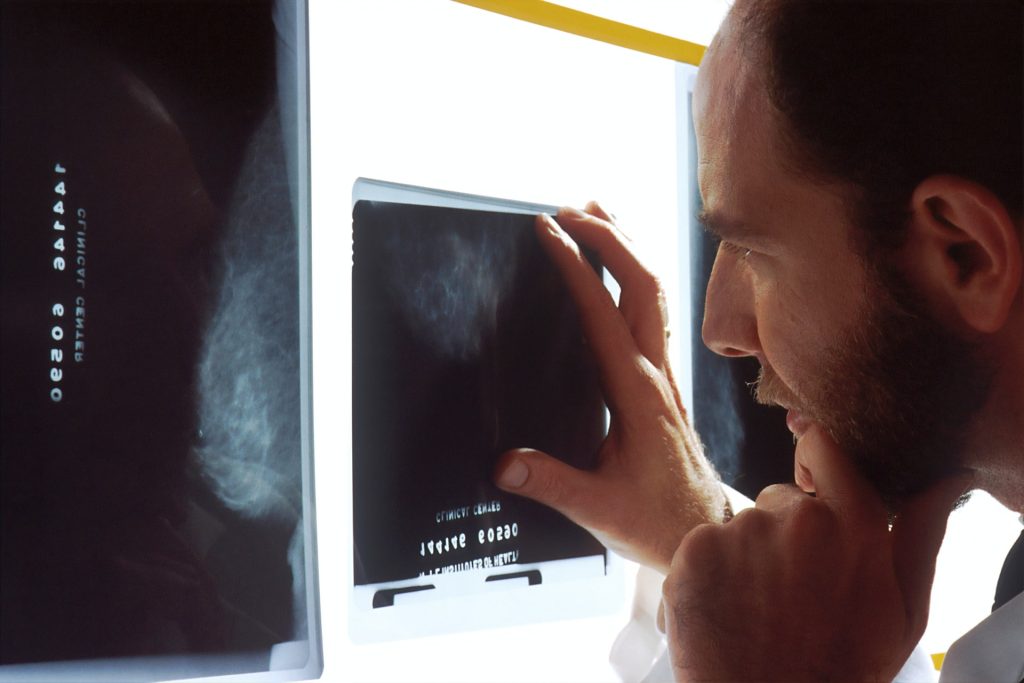
While AI offers the ability to improve human experts’ ability to diagnose and treat diseases like breast cancer, well-publicised errors across the broader AI field are cause for concern. A team from the University of Pittsburgh has used PSC’s flagship Bridges-2 supercomputer to design a deep neural network (DNN) that takes uncertainty into account in diagnosing breast scan images. By providing a gauge of how accurate the prediction is likely to be, their AI assesses confidence that the answer is right for an individual patient, not just on average in a population.

Why it’s important

It’s a time of uncertainty for the future of AI. On the one hand, AI now powers so much of the good things we take for granted, including online shopping, transportation and road navigation, and fraud prevention. On the other, we have AI-written books on AI spouting made-up quotes and facts, autodriving cars not recognising pedestrians, and AI “helpers” spinning off into racist behaviour.

AI clearly has the ability to make our lives better. But most of us agree that we need to be more cautious about its reliability – giving us right answers doesn’t help if it also gives us wrong answers with equal confidence.

“I’m trying to develop effective AI models or methodology that can make AI model development easier, make breast cancer diagnosis more accurate, [and] make this model, make medical imaging AI models in general, more trustworthy and thus more clinically useful.”

Shandong Wu, University of Pittsburgh

Shandong Wu, a professor of radiology at the University of Pittsburgh School of Medicine, has been studying the use of AI to help radiologists identify breast cancer earlier and more effectively, as well as to identify patients’ likely future treatment needs. But he’s also been thinking about that question of reliability – of how much confidence we can and should put in its output.

Jiren Li, a PhD student working with Wu and with another radiology faculty member, Dooman Arefan, a research assistant professor at Pitt, wondered whether a breast-cancer diagnosis AI could be designed from the beginning to take uncertainty into account. That way, it could provide valid estimates of confidence along with its predictions. To implement their AI, he turned to PSC’s NSF-funded Bridges-2 system, via an allocation from ACCESS, the NSF’s network of supercomputing sites.

How PSC helped

The problem, the Pitt scientists realised, is that it’s straightforward to design a DNN-based AI that gives you correct answers most of the time – even almost all of the time. DNNs, created to teach themselves from a training data set in which the “right answers” have been labelled by humans, are really good at telling you what the answer is likely to be across a population of patients. But they’re not so good at telling you how reliable a diagnosis is for an individual patient. And when you’re talking about an AI that guides treatment of a life-threatening disease, even a few wrong diagnoses are catastrophic for the patients they affect.

The team approached the problem with what they’ve called uncertainty-weighted learning, or UWL. In this approach, the DNN architecture was designed to provide both a diagnosis and an associated “uncertainty score” from analyzing breast mammogram images. The uncertainty score becomes part of the DNN’s learning process, guiding the model’s learning to more effectively deal with those uncertain samples during training.

Creating the UWL tool posed serious computational challenges. DNN learning works best on graphics-processing units (GPUs), which feature many computational paths rather than pure speed at computing a single task. Because breast mammograms are large, high-resolution images, the GPUs would need access to large, shared memory as they deconstructed and learned from each training image. That would prevent slow-downs from having to go back and forth to data storage during the computations. In addition, large data storage would also be needed to host the full library of imaging data for AI model training and testing.

“Bridges-2 is critical for the success of these studies, because as you can imagine, this is all using large-scale, high-resolution, heterogeneous radiology imaging data, and in order to build this AI model, we need GPUs, memory, and larger storage to make this possible. Bridges-2 has been the primary source of computational resources for my lab for many years, supporting us to be able to store our data there, build multiple AI models, and evaluate these models… So, it’s really enabled us to develop innovative AI models and store large medical datasets.”

Shandong Wu, University of Pittsburgh

Bridges-2 fit the bill, with 47 GPU nodes containing 384 late-model GPUs. Better, each node has between 128 and 2000 gigabytes of RAM per node compare that with 64 GB total in a high-end laptop. PSC’s active project data storage system, Ocean, was also up to the task, with 15 petabytes of usable data capacity at high retrieval speeds. Again, that hot laptop might have as much as 2 terabytes of data storage, or 7500 times less.

The results of the Pitt group’s first analysis using several different UWL-based DNNs were encouraging. One of the DNNs in particular provided good assessments of the uncertainty of its answer, cuing doctors and their patients when a given diagnosis might be less trustworthy at the level of a specific patient. Better, it did this without reducing its accuracy at the population level. The team reported their results at the annual meeting of the Society of Photo-Optical Instrumentation Engineers (SPIE) in February, 2026 at Vancouver, Canada.

The Pitt scientists’ work has applications beyond the already important goal of making breast cancer diagnosis more accurate and trustworthy. The approach can be applied to just about any critical use of AI where the uncertainty as well as the prediction are important to know. Future directions include extending these uncertainty-based approaches to AI systems that integrate images and other types of medical records data, and enabling better human–AI collaborations, in which the decision-making can be tailored according to the measured model confidence. These advances could help create more trustworthy and clinically useful AI systems that improve both diagnostic accuracy and personalised patient care.

Source: University of Pittsburgh