Tag: 15/9/26

Antiseizure Drug Levetiracetam has Potential Clot Risk Alongside Anticoagulants
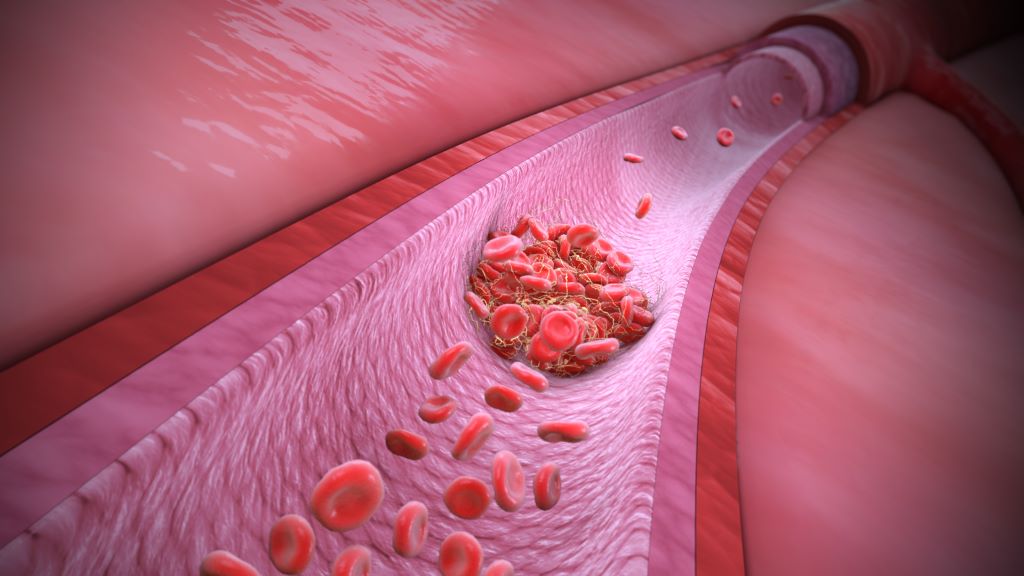
Thrombophilia. Credit: Scientific Animations CC4.0.

Researchers from the University of Liverpool and the University of Zurich have identified a potential safety consideration involving levetiracetam, one of the world’s most commonly prescribed antiseizure medications.

Some people with epilepsy also have conditions such as atrial fibrillation, an irregular heart rhythm that increases the risk of stroke and requires treatment with direct oral anticoagulants (DOACs), a widely used class of blood-thinning medicines. As a result, an estimated 6% of people with epilepsy receive concomitant treatment with an antiseizure medication and a DOAC.

A study published in JAMA Neurology found that people with epilepsy taking levetiracetam alongside a DOAC, including medicines such as apixaban and rivaroxaban, had almost twice the risk of stroke, heart attack or other serious blood clots compared with patients taking alternative antiseizure medications.

The international study also found that patients taking levetiracetam had a 60% higher risk of death, although there was no significant difference in the risk of major bleeding.

Some antiseizure medications are already known to reduce the effectiveness of blood thinners by increasing the breakdown of medicines in the liver. However, levetiracetam has generally been considered less likely to interact with other drugs and is frequently prescribed for patients requiring anticoagulation.

To investigate whether this assumption was justified, researchers analysed anonymised electronic health records from 165 healthcare organisations within the international TriNetX network. From more than 2.29 million adults with epilepsy, they identified 9529 patients who started an antiseizure medication while taking a DOAC.

Dr Gashirai Mbizvo, Senior Clinical Lecturer in Neurology at the University of Liverpool and Consultant Neurologist at The Walton Centre NHS Foundation Trust, said: “Levetiracetam is often favoured in people taking anticoagulants because it has generally been assumed not to interact significantly with these medications.

“Our findings challenge that assumption and suggest that patients taking levetiracetam alongside direct oral anticoagulants may face a substantially higher risk of serious blood clots and death than those taking alternative antiseizure medications.

“Importantly, this study identifies a safety signal rather than proving that levetiracetam directly causes these outcomes. Patients should not stop or change either their antiseizure medication or anticoagulant without medical advice.”

The researchers found that levetiracetam, which was taken by the majority (57%) of the study population, was associated with almost twice the risk of stroke, heart attack or other thromboembolic events compared with lamotrigine or lacosamide.

The study also confirmed concerns about older enzyme-inducing antiseizure medications, including carbamazepine and phenytoin, which were associated with a 55% higher risk of blood clots and a 38% lower risk of major bleeding, a pattern consistent with reduced anticoagulant effectiveness.

Professor Marian Galovic, from the University of Zurich, said: “This study demonstrates the value of international collaboration in addressing important questions that cannot easily be answered through conventional clinical trials.

“Further research is now needed to replicate these findings and better understand the mechanisms responsible for the increased risks we observed.”

Researchers emphasise that maintaining seizure control remains critically important and that alternative antiseizure medications will not be suitable for every patient.

The Medicines and Healthcare products Regulatory Agency (MHRA) has been notified of the findings.

The paper, ‘Safety of Antiseizure Medications During Direct Oral Anticoagulant Therapy in Epilepsy’ was published in JAMA Neurology (DOI: 10.1001/jamaneurol.2026.2712).

Source: University of Liverpool

Air Crew Have Greater Risk of Radiation-related Cancer Death

Findings support efforts to protect US aircrews from cosmic radiation exposure

Photo by Daniel Eledut on Unsplash

Of more than 500 occupations in the United States, flight attendants and pilots have the highest and second-highest proportion of radiation-related cancer deaths, a new study has found.

The results support considering occupational radiation protections for U.S. aircrew members commensurate with their level of exposure, said senior author Anupam Jena, the Joseph P. Newhouse Professor of Health Care Policy in the Blavatnik Institute at Harvard Medical School, and team.

It’s been known that aircrew members receive the largest annual effective dose of ionising radiation of any workforce in the United States, largely due to exposure to cosmic radiation at high altitudes. Members of the profession are also more likely to be diagnosed with certain cancers than the general population. But studies have been limited as to whether this translates to higher rates of cancer mortality.

The new research, published August 17 in JAMA Internal Medicine, studied this question using a larger dataset and more statistical power than were previously available.

The study, led by first author Vishal Patel, HMS clinical fellow in surgery at Brigham and Women’s Hospital, used a single population-based data source – the National Vital Statistics System – rather than individual occupational or cancer cohorts. Patel and colleagues looked at all U.S. death certificates from 2020 to 2024. These records have only recently been linked to the occupation of the decedent. The records yielded data from nearly 13 million decedents across 503 occupations, including 14000 pilots and 7000 flight attendants.

The team applied what’s known as a common adjustment approach, which accounted for several factors other than occupation that may affect mortality. These included age at death, sex, race, ethnicity, educational attainment, and marital status.

The researchers analysed radiation- and non-radiation-related cancers across occupations. They also compared flight crew members to ground-based aviation workers.

Radiation-related cancers analysed here included breast cancer, central nervous system cancers, multiple myeloma, leukaemia (except chronic lymphocytic leukaemia), lymphoma, thyroid cancer, prostate cancer, melanoma, and non-melanoma skin cancers. (The team excluded lung cancer to reduce potential confounding with smoking.)

The team found that pilots and flight attendants had statistically significantly higher rates of death from breast, central nervous system, and prostate cancers and melanoma. Pilots also had a higher rate of leukaemia deaths.

In all, about 6.9% of deaths among flight attendants and 6.7% of deaths among pilots were from radiation-related cancers, according to the analysis. These proportions were higher than for any of the other professions, including nuclear technologists, who are routinely exposed to radiation from non-cosmic sources yet placed 12th on the list, the authors said. Aircraft mechanics and assemblers did not have higher rates than other occupations.

Rates of non-radiation-related cancer deaths among aircrew members were similar to the general U.S. population.

Aircrew accrue an estimated 3 to 6 millisieverts per year of cosmic radiation (depending on flight paths), an order of magnitude above the estimated 0.4 millisieverts received annually by an average air traveller taking 10 cross-country round-trip flights per year, according to the CDC.

The Federal Aviation Administration formally recognises pilots and flight attendants as occupationally exposed to ionizing radiation, but unlike other radiation-exposed workers or aircrew in other countries, U.S. aircrew are not subject to federal dose limits or monitoring requirements.

Original written by Katie Brace

Source: Harvard Medical School

Stress May be Fuelling SA’s Metabolic Disease Risk

Photo by Samson Balogun on Unsplash

Chronic stress may be doing far more than affecting South Africans’ mental health – it could be contributing to the country’s growing burden of obesity, diabetes and other metabolic disorders, many of which are also major risk factors for cardiovascular disease (CVD).

While stress is often viewed as an unavoidable part of modern life, mounting scientific evidence suggests that prolonged psychological stress can trigger biological changes that increase the likelihood of developing obesity, type 2 diabetes (T2D) and CVD.

Prof Naidoo, CEO of the Heart and Stroke Foundation SA reminds us that day-to-day stressors has a cumulative effect affecting not just ones’ immune system, but also impacts eating, exercise and other vegetative signs, such as poor sleeping patterns. Ultimately, she says, the cardiovascular system has reduced capacity in the face of cumulative stressors.

This makes the stress-metabolism connection particularly relevant during Heart Awareness Month this September, when attention turns to the factors that can influence long-term heart-health.

The warning comes at a time when many South Africans are battling significant workplace and financial pressures. According to Gallup’s recent 2026 State of the Global Workplace report1, 36% of South African employees reported experiencing stress, while the 2025 Profmed Stress Index found that financial uncertainty and workplace pressure remain among the leading causes of stress among South African professionals.

The two-way relationship between stress and metabolic health (1)

“Most people understand that stress can affect their mood and sleep, but few realise that chronic stress can also disrupt the body’s metabolism,” says Nicole Jennings, spokesperson for Pharma Dynamics.

“When stress becomes chronic, the body remains in a prolonged state of alertness and continues producing elevated levels of cortisol, often referred to as the stress hormone. Over time, this can contribute to increased blood glucose levels, insulin resistance and the accumulation of harmful visceral fat around the abdominal organs in certain individuals.”

Research shows that prolonged activation of the body’s stress-response system may disrupt glucose metabolism, reduce insulin sensitivity and encourage fat storage, all of which are strongly associated with metabolic disease.

“But the relationship goes both ways. Long-term emotional or work-related stress can increase the likelihood of developing these conditions, while metabolic disorders can, in turn, alter the body’s stress-response systems, potentially increasing vulnerability to the effects of stress.

“Because metabolic disorders can disrupt the immune system and affect the brain’s chemical balance, they may intensify how the body reacts to pressure. The result is a vicious cycle where chronic stress contributes to metabolic dysfunction, and metabolic dysfunction may further impair the body’s ability to cope with stress. Prof Naidoo states that chronic stress has a negative effect on our health outcomes in ways that are not often obvious. An example of this is excessive eating during stressful episodes resulting in weight gain which is a potential driver for type 2 diabetes. Overweight and obesity is also, in turn, a driver for raised blood pressure and hypertension.

A growing metabolic health crisis

The concern is particularly relevant for South Africa, where metabolic disorders are becoming increasingly common.

According to the International Diabetes Federation (IDF), approximately 2.3 million South African adults are currently living with diabetes, representing a prevalence rate of 7.2% among adults. The country has the fourth-highest number of adults living with diabetes in Africa.

Obesity, another major risk factor for metabolic disease, remains a significant public health challenge. Approximately one in two South African adults is living with excess weight or obesity, placing millions at increased risk of diabetes, heart disease and other metabolic conditions (2).

“Many people focus on diet and exercise when discussing metabolic health, and rightly so,” says Jennings. “However, stress management is often the missing piece of the puzzle. You can be eating relatively well, but if you’re living in a constant state of stress, your body may still be experiencing metabolic consequences.” There is increasing evidence of the gut-brain connection where research is producing results that show that the type of diet you consume also plays a role in mental health and well-being says Prof Naidoo.

Why workplaces should pay attention

This highlights the important role employers can play in supporting both mental and physical health.

Studies have found that workplace stress is associated with a higher risk of developing metabolic syndrome, a cluster of conditions that includes elevated blood pressure, high blood sugar, excess abdominal fat and abnormal cholesterol levels. Together, these factors can significantly increase the risk of heart disease and stroke.

In South Africa, where economic uncertainty, job insecurity, rising living costs and demanding workloads contribute to stress levels, workplace wellness programmes could provide an important opportunity for prevention.

Small changes can make a big difference

Fortunately, Jennings says the stress-metabolism connection is not inevitable. Regular physical activity, sufficient sleep, a balanced diet, avoiding smoking, moderating alcohol intake and incorporating mindfulness practices – along with strong social support networks – have all been shown to help regulate the body’s stress response and support better metabolic health.

She encourages South Africans to view stress management not only as an essential component of mental health, but as part of a broader approach to protecting metabolic and heart health too.

“Managing stress isn’t a luxury – it’s an important part of preventing chronic disease. By recognising the impact stress has on the body and taking proactive steps to address it, individuals can improve both their mental well-being and long-term metabolic health.”

Prof Naidoo encourages those facing unmanageable stress to seek access to healthcare as there are specialist health care practitioners that are trained for stress management and mental health conditions.

Magnetic Pulses can Reprogram Immune Cells to Fight Breast Cancer

An innovative approach for breast cancer treatment uses localised and non-invasive pulsed electromagnetic fields to reprogram immune cells, turning them from tumour helpers to cancer killers

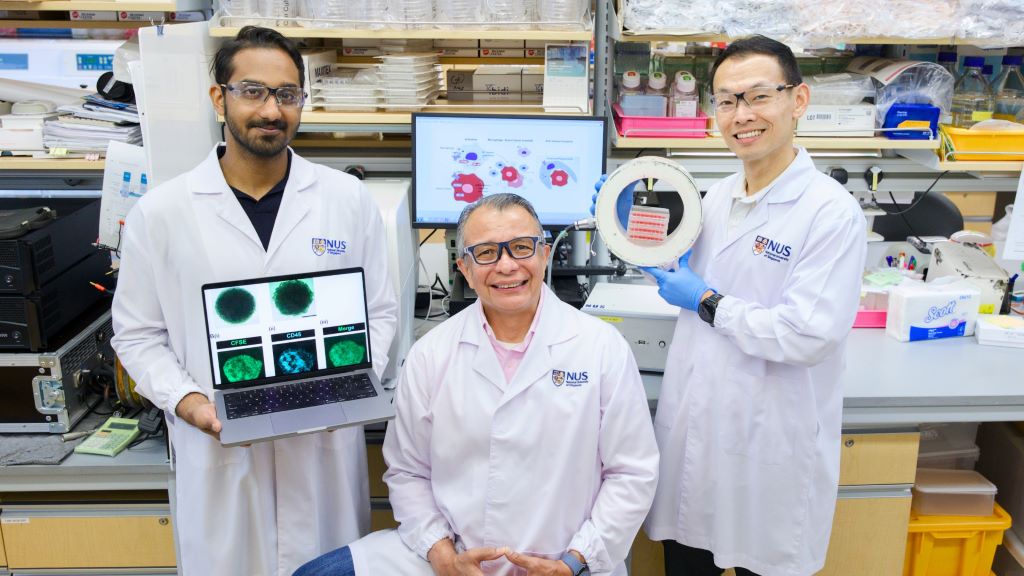
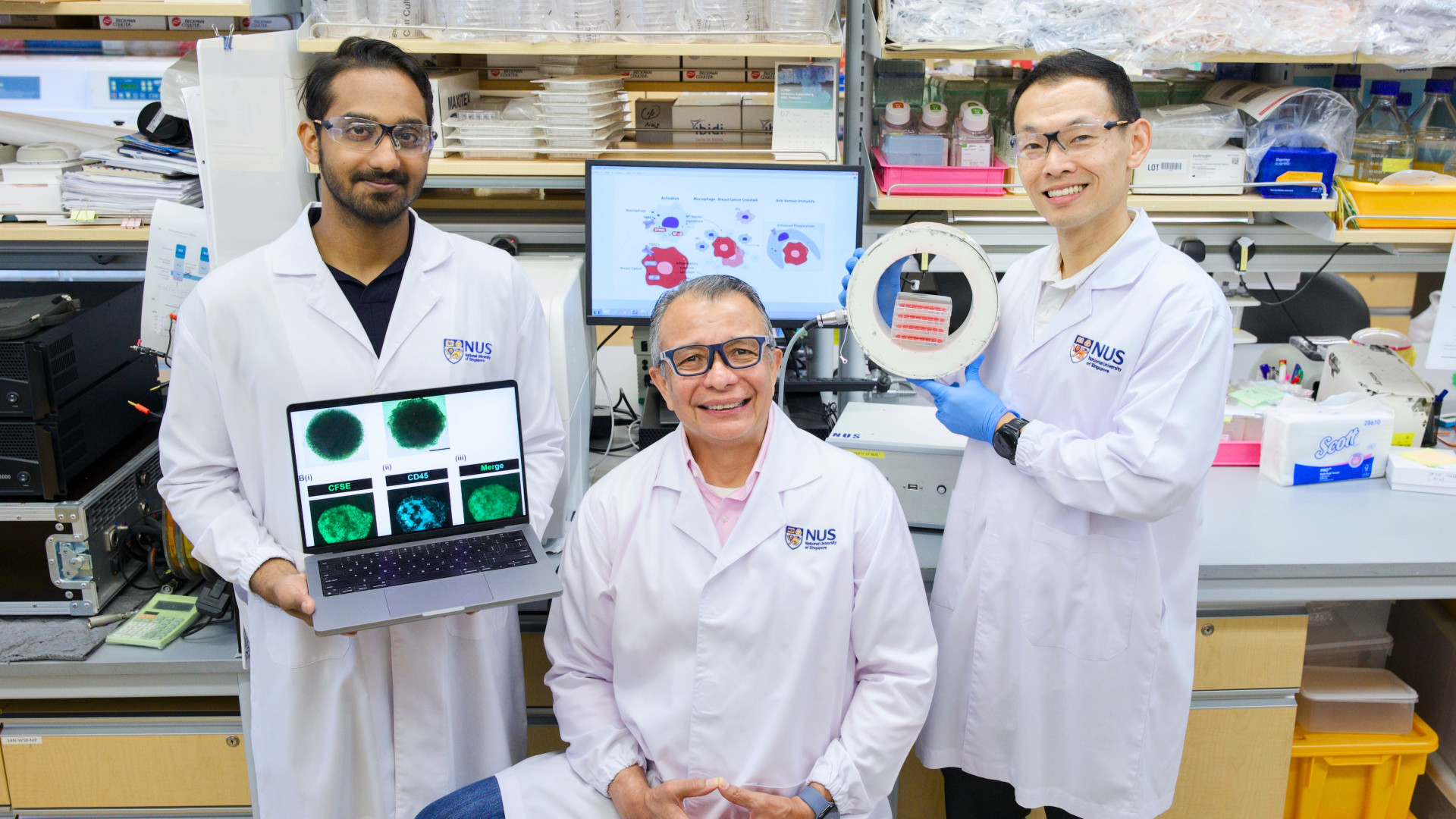
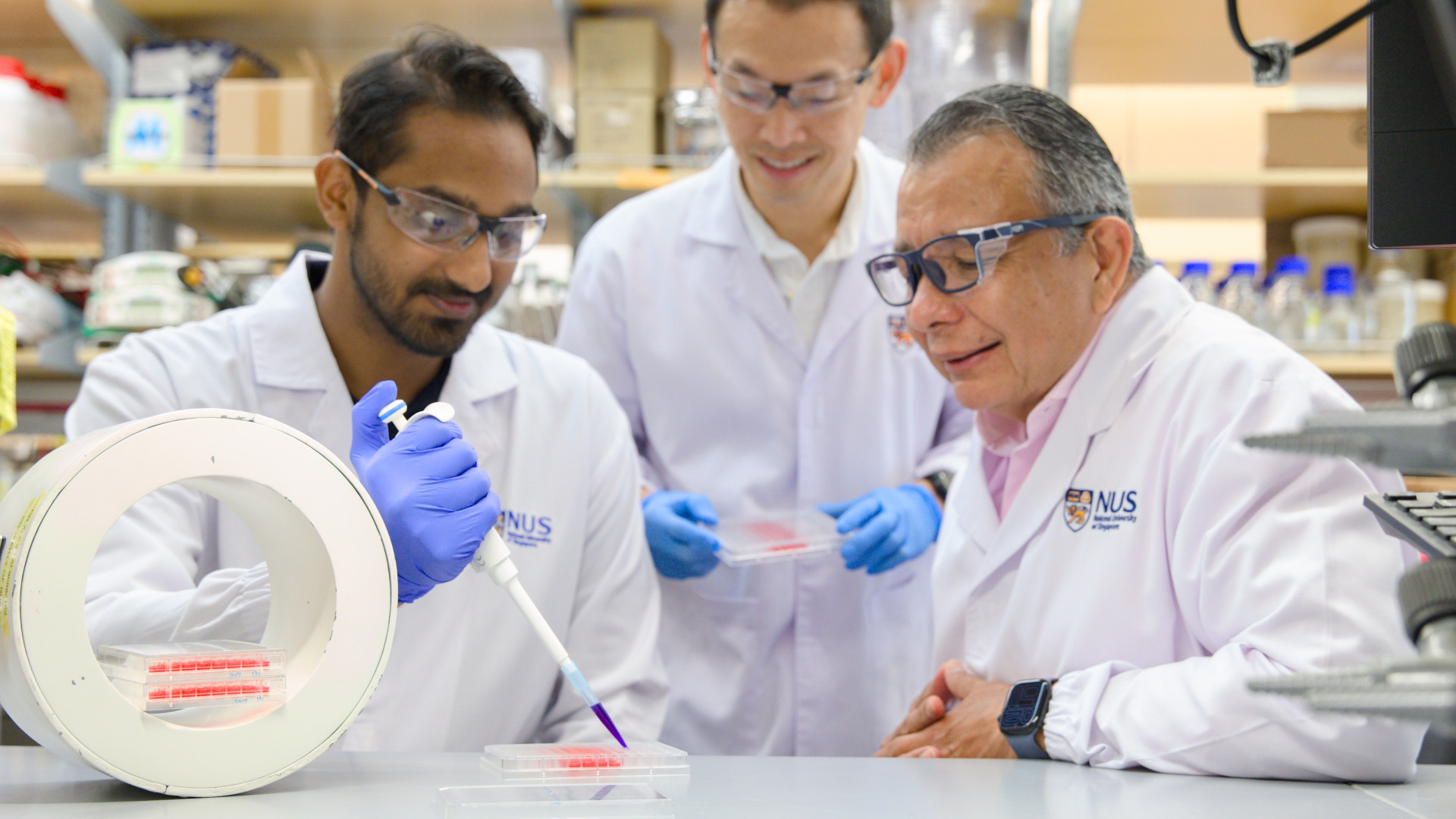
NUS researchers Mr Viresh Krishnan Sukumar (left), Associate Professor Alfredo Franco-Obregón (centre), and Dr Alex Tai (right) showed that the application of brief, intermittent and low intensity magnetic pulses can reprogram immune cells to eradicate breast cancer.

Researchers at the National University of Singapore (NUS) have demonstrated an innovative approach for targeted breast cancer therapy using pulsed electromagnetic fields (PEMFs). The NUS team successfully reprogrammed tumour-associated macrophages (TAMs), a corrupted class of immune cells that typically promote cancer growth, into an active anti-tumour state that attacks and destroys cancer cells.

The study, led by Associate Professor Alfredo Franco-Obregón from the Department of Surgery at the NUS Yong Loo Lin School of Medicine and the NUS Institute for Health Innovation & Technology, was published in the journal Smart Medicine on 4 June 2026. This discovery builds on their previous work, where they showed that brief PEMF exposure enhances uptake of doxorubicin (DOX), a chemotherapy drug, by breast cancer cells.

PEMF therapy applies intermittent, low-intensity magnetic pulses to targeted regions of the body over a short period of time. Assoc Prof Franco-Obregón has previously explored the effect of PEMFs on muscle development and oncology. In their latest study, the NUS team demonstrated that even without chemotherapy, PEMFs completely eradicated tumours in 75 per cent of tested preclinical models after just four 30-minute sessions.

“Our study represents a major advancement in breast cancer treatment by demonstrating the potential of PEMFs as a stand-alone, drug-free therapy, offering a possible future where patients could avoid chemotherapy and its debilitating side effects,” said Assoc Prof Franco-Obregón.

Breast cancer cases are projected to rise by a third, from 2.3 million in 2023 to more than 3.5 million by 2050, while annual deaths may nearly double from 764 000 to nearly 1.4 million. Cancer treatment faces challenges such as tumour heterogeneity, drug resistance, and treatment-related toxicities. Approaches targeting TAMs also faced difficulties such as off-target effects. The growing burden underscores the urgent need for innovative therapies to improve patient outcomes and save lives.

From cancer’s friends to foes

Breast cancer occurs when cells in the breast mutate and grow uncontrollably, forming a solid tumour. These cancer cells recruit and hijack nearby immune cells, corrupting them to protect the tumour, accelerate tumour growth, and encourage the spread of cancer (metastasis). Prominent among these recruited immune cells are TAMs, which are abundant in nearly all solid tumours.

There are two primary types of macrophages, M1 and M2. M1 macrophages are pro-inflammatory – the “soldiers” that eliminate threats like bacteria and viruses. M2 macrophages are anti-inflammatory – the “medics” that orchestrate wound healing and tissue repair once threats are cleared. Cancer cells corrupt most TAMs into adopting the M2 “medic” state, suppressing immune attacks against the tumour while facilitating tumour growth and metastasis.

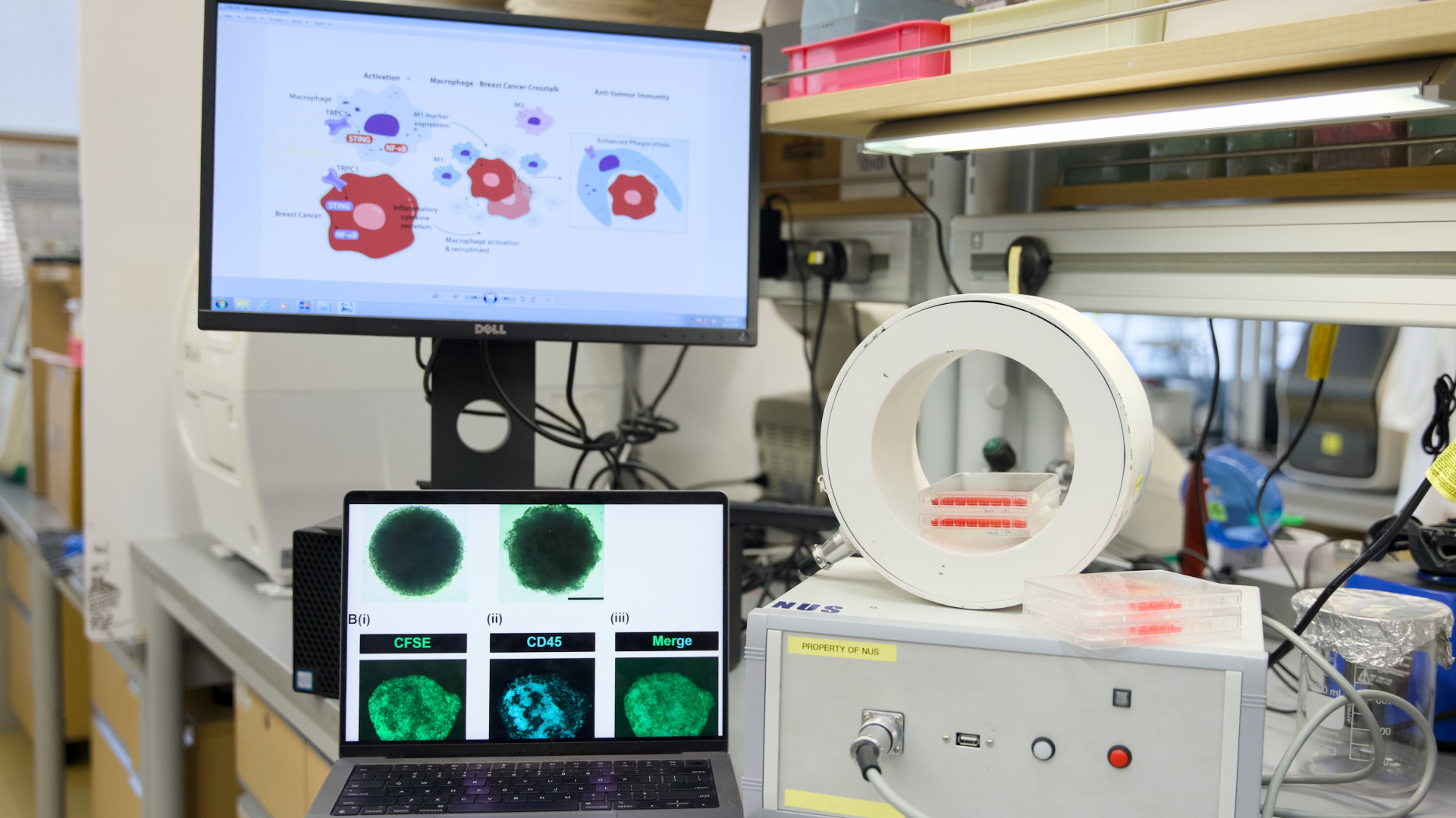
The key to this macrophage reprogramming lies in a protein called TRPC1 (Transient Receptor Potential Canonical 1), which regulates the M1 state. Crucially, TRPC1 also allows cells to sense and respond to magnetic fields. In their experiments, the NUS team confirmed that a brief 10-minute exposure to PEMFs activated TRPC1 channels on M2-like TAMs, setting off a signalling cascade that converted them to the M1 state – essentially turning TAMs from helpful “medics” to aggressive cancer-killing “soldiers”. These activated TAMs then selectively target cancer cells while sparing healthy tissue. Furthermore, the same magnetic signature disrupts cancer’s ability to hijack TAMs, altering the TAM-cancer communication loop in both directions.

“We have identified a molecular “switch”, the specific cell signalling pathway that allows us to reprogram TAMs. Once reprogrammed, these immune cells actively hunt and devour cancer cells, obliterating the tumour,” said Assoc Prof Franco-Obregón. “With the non-invasive and targeted nature of PEMF therapy, we hope to provide patients an effective and safe alternative treatment, with fewer undesirable side effects.”

The NUS team is optimistic that their PEMF therapy can be a potential complementary treatment for other cancers beyond breast cancer. The PEMF device has successfully completed Phase 1 clinical trials and will soon be embarking on Phase 2 efficacy trials.

Pulses of hope for cancer patients

Assoc Prof Franco-Obregón shared that the same PEMF device used in this study has just successfully completed Phase 1 clinical trials, demonstrating its safety in humans. The team is now seeking partners to conduct Phase 2 efficacy trials to evaluate how well the PEMF treatment works in patients and to further advance its development towards clinical use.

“Since we previously showed that PEMFs selectively increased the uptake of DOX in breast cancer cells, we will be evaluating if our PEMF immunotherapy can work synergistically with chemotherapy for better results,” added Assoc Prof Franco-Obregón. “As the immune cells we reprogram are commonly found in most solid tumours, we are optimistic that our PEMF therapy could potentially be a complementary treatment for other cancers beyond breast cancer.”

Source: National University of Singapore

Cancer Cells Release Antioxidants to Prevent Immune Cells from Destroying Them

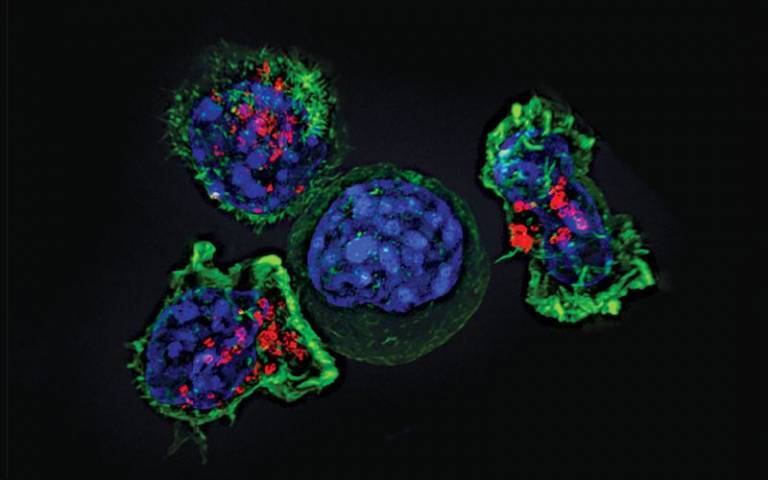
Killer T cells surround a cancer cell. Credit: Alex Ritter, Jennifer Lippincott Schwartz and Gillian Griffiths, National Institutes of Health (CC BY 2.0).

Molecules called reactive oxygen species, which include so-called ‘free radicals’, have long been viewed as damaging byproducts of our body’s metabolism – a reason why antioxidant supplements have been considered as a potential way of reducing cancer risk.

We’ve found a new way by which cancers shut down the immune system. When we block this process, tumours that don’t respond to some immunotherapies start responding to treatmentRahul Roychoudhuri

Now, scientists have discovered that certain immune cells depend on these very molecules to activate and destroy cancer cells, and that tumours exploit this dependency by releasing natural antioxidants to shut down the immune attack.

The findings, published today in Science, could help improve the effectiveness of cancer immunotherapies. 

Our immune system keeps us healthy by hunting down and destroying harmful material, including invading bacteria and viruses, but also cancer cells. It does so by deploying a number of different types of immune cells, including specialised cells known as T cells. These T cells hunt down and destroy tumour cells, but T cells need small amounts of reactive oxygen species to activate and switch on their killing ability.

A team at the University of Cambridge, UK, and Oregon Health & Science University, USA, analysed the fluid surrounding cells within tumours grown in mice and found that cancers chemically ‘smother’ T cells, stopping their activation and preventing them from destroying cancer cells. Tumours do this by releasing large amounts of a protein that is a natural antioxidant, Peroxiredoxin 1 (PRDX1), which mops up reactive oxygen species and deprives T cells of the activating signals they need to perform cancer killing. 

Next, the team used CRISPR gene-editing technology to create mouse cancer cells that could no longer make the antioxidant protein. They found that removing the capacity for the cancer cells to produce the antioxidant promoted immune-cell activity and limited tumour growth.

Finally, the team looked for the same mechanism in people. They analysed published data on the proteins released by human cancer cell lines, examined gene activity across thousands of human tumours, and isolated the fluid surrounding tumours removed from patients. All three approaches pointed the same way: human cancers also release PRDX1 into their surroundings, where it can strip away the reactive oxygen species that T cells depend on.

Dr Xan Wesolowski from the Department of Pathology at the University of Cambridge, one of the lead authors, said: “We tend to think of reactive oxygen species purely as damaging byproducts of metabolism. But we are increasingly understanding they have important functions within cells, and T cells need them to activate. Our study develops this picture, revealing that tumours can exploit this very dependency to evade elimination.”

The treatment of cancer is increasingly moving towards leveraging the immune system to eradicate the disease. However, while immunotherapies can be incredibly effective, they are only effective in some patients. Removing the ability of cancer cells to produce PRDX1 enhanced the cancer’s response to immunotherapy.

Professor Rahul Roychoudhuri, also from Cambridge’s Department of Pathology, said: “We’ve found a new way by which cancers shut down the immune system. When we block this process, tumours that don’t respond to some immunotherapies start responding to treatment. That tells us this is a pathway worth targeting therapeutically, and there are several ways we might be able to achieve this.”

Dr Robert Eil from the School of Medicine at Oregon Health & Science University said: “Our study suggests a possible way to boost T cell immunotherapies. Rather than using antioxidants, it could be that prooxidants can kickstart the T cells into action against tumour cells.”

The findings also carry broader implications. Several large randomised clinical trials have found that antioxidant supplements fail to reduce cancer risk, and in some cases worsen outcomes. The discovery that T cells depend on reactive oxygen species to fight tumours may help to explain why: antioxidants could inadvertently blunt the immune system’s ability to attack cancer. However, the team stresses that as its findings are in preclinical laboratory models, and people living with cancer should not change their treatment or diet without medical advice.

The research was largely funded by the Medical Research Council, European Research Council, Wellcome and the National Institutes of Health/National Cancer Institute.

Reference

Wesolowski, AJ, et al. Tumor-derived antioxidants suppress immunity by depriving T cells of reactive oxygen species. Science; 3 Sept 2026; DOI: 10.1126/science.adz8203

Republished from University of Cambridge under a Creative Commons licence. Read the original article.

Opinion Piece: South Africans are Bringing Healthcare Home – But are they Doing it Safely?

By Dianne Boyd – Chief Operating Officer Frail Care at Allmed

Photo by Kampus Production on Pexels

There is a quiet shift happening in homes across South Africa. As the population ages and hospitals grapple with packed wards and immense strain, families are looking closer to home for answers. More seniors are choosing to stay right where they are, surrounded by their own memories, familiar furniture, and beloved pets, rather than moving into frail care or assisted living facilities. At the same time, because hospitals are discharging patients much faster following surgery, strokes, or cancer treatments, expert recovery support right in the living room has never been more important.

For most people, the thought of healing or growing older in a familiar space brings an unmatched sense of comfort and dignity. But for someone navigating the fog of dementia or the daily weight of a chronic illness, holding onto familiar routines is life changing. It reduces anxiety, keeps confusion at bay, and gives patients a deep-seated feeling of control that a clinical institution simply cannot match.

The hidden trap of doing it alone

As the need for home care grows, it becomes easy to see why some families turn to online platforms or informal word-of-mouth recommendations to find help. On the surface, hiring a caregiver directly feels simpler, quicker, and perhaps cheaper. But it often masks a maze of hidden responsibilities and risks that families are rarely prepared for.

Society tends to think of home care as simple companionship or a helping hand with daily tasks. In reality, caring for a vulnerable loved one safely requires a tremendous amount of unseen work. When individuals hire someone independently, they suddenly step into the role of an employer. Managing contracts, payroll, UIF contributions, and leave becomes an immediate reality. Worse still, what happens when a caregiver wakes up sick or resigns unexpectedly? Without a reliable agency behind the household, finding cover at 4am in the morning falls entirely on the family.

Even more concerning are the clinical visibility gaps in such an arrangement. Without professional oversight, missing the subtle early warning signs of trouble is remarkably easy; a tiny pressure sore starting to form, the early stages of dehydration, a missed medication, or a silent infection.

Why professional care changes everything

Treating home-based care as a true healthcare partnership rather than a domestic arrangement completely changes the experience for a family. Reputable, registered providers shoulder the heavy burden of care, so relatives do not have to carry it alone.

Instead of crossing fingers and hoping for the best, a professional approach brings real clinical governance into the home. Experienced clinical facilitators step in to assess patient needs, create tailored daily care plans, and check in regularly. They ensure that caregivers are thoughtfully matched to the individual, such as pairing someone with specialised dementia training with a patient who needs calm, skilled behavioural guidance.

Partnering with an established provider also puts a safety net around the entire household. Professional agencies cover personnel with medical liability insurance while handling all statutory requirements like workmen’s compensation, keeping families legally and financially protected from unforeseen accidents.

Finding peace of mind and financial relief

One of the greatest barriers families face with home care can be the financial weight. This is where working with a registered provider can make a profound difference. Because established agencies hold an official practice number, families can often submit claims directly to their medical aid schemes, subject to scheme rules and a specialist’s clinical motivation. This can be a powerful way to ease the financial strain of long-term support.

Bringing care into the home should bring peace of mind rather than sleepless nights. Leaning on a professional team for the vetting, the legalities, and the clinical oversight allows relatives to step back from being managers and return to being sons, daughters, or partners. That leaves space to focus on what truly matters: sharing meaningful, comfortable moments with a loved one, right where they belong.