Tag: 15/4/26

Study Reveals Unseen Changes in Motor Control After Spinal Cord Injury
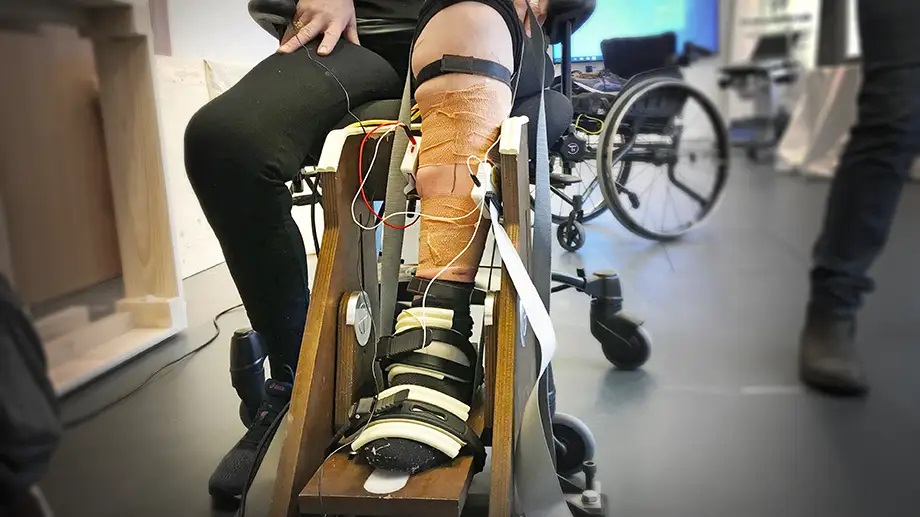
One of the study participants exerts force with their calf muscles while sensors measure electrical activity. (Photo: Ruoli Wang)

Even when people with incomplete spinal cord injuries can walk, everyday functions like standing, balancing or producing steady force may remain difficult. A new study shows why.

Using surface skin electrical sensors, a research team in Sweden identified previously unseen changes in motor coordination that result from incomplete spinal cord injuries (SCI). The study is the first to examine how individual motor units (nerve to muscle connections that create movement) work together in people with SCI.  

“Our study reveals, at the cellular level, how the central nervous system adapts to the injury to control movement,” says Ruoli Wang, associate professor in biomechanics at Promobilia MoveAbility Lab, KTH Royal Institute of Technology. She says the researchers’ approach was completely non-invasive.

The results were published in the Journal of NeuroEngineering and Rehabilitation.  

The study’s lead author, PhD student Zhihao Duan, says the researchers found the nervous system struggles to spread signals smoothly across muscles at low levels of exertion after the injury. And it appears to overcompensate at higher levels of exertion, sending “louder”, less refined signals.  

Effect on motor units

Muscles move through hundreds or thousands of motor units, each turning on and off precisely to create smooth force. Composed of a single motor neuron and its connecting muscle fibres, these motor units respond to shared signals from the nervous system, much like different sections of musicians led by an orchestra conductor. That shared input is what allows them to act in coordinated patterns. 

To explore how well these units coordinate under the control of the central nervous system, the team examined 25 people (including 10 control participants). They used high-density electromyography (HD-EMG) to measure electrical activity in the functionally similar calf muscles – soleus and gastrocnemius – while volunteers pushed lightly or moderately against a device.  

Duan says that at 20% effort, fewer of the motor units in the two calf muscles were working in a shared, coordinated way compared with people without injury. As a result, their movements were shaky and unstable. “They were much less being driven by the same coordinated signal from the nervous system.” he says. 

At a higher level of effort (50%) the SCI group showed stronger lowfrequency synchronization between the two muscles. The body loses flexibility and precision in control of the movement. “This could be a sign of the nervous system compensating by sending louder, less refined signals,” Duan says. 

Unique insights

“One interesting finding is that after spinal cord injury the nervous system becomes more rigid and less able to change its approach as the muscles work harder. A healthy nervous system on the other hand is able to adapt its strategy as force demands, to adjust the shared neural drive level,” Wang says. 

Although the study was limited by a small sample size and challenges in identifying enough motor units per muscle from the skin surface, Wang says the results offer unique insight into how SCI reshapes motor control.  

“This finding may open the door to a new rehabilitation biomarker, helping clinicians and researchers design new neurorehabilitation strategies to re-tune the spinal cord control and to restore coordinated neural input,” she says.  

David Callahan

Source: KTH Royal Institute of Technology

Half of Social Science Research Results Cannot Be Replicated

Photo by Pexels on Pixabay

A major international collaboration on scientific reliability has been completed and is now presented in three articles in Nature by researchers from institutions including Karolinska Institutet. Around half of previously published research results in the social and behavioural sciences could not be replicated in new experiments.

The research programme, known as SCORE, involved 865 researchers who analysed nearly 3900 scientific articles published between 2009 and 2018 in 62 journals in the fields of criminology, economics, educational science, health sciences, leadership, marketing, organisational behaviour, psychology, political science, public administration and sociology.

In three studies published in Nature, different methods were used to investigate whether the research results are reliable. The questions addressed were whether the results can be reproduced, whether they are robust, and whether they can be replicated.

Replication involves testing the same research question, but with new data. In the replication study, the researchers analysed 164 previously published results in the social and behavioural sciences. Of these, just under half, 49%, could be replicated with a similar result to that of the original study.

Open data is key

In the reproducibility study, the same analysis was carried out on the same data. Reproducibility was hampered by the fact that data was often unavailable; only just under a quarter of the articles studied had shared their data openly. Of the 143 articles analysed, 74% could be reproduced to an approximate degree, and 54% to an exact degree. When the original data and code were shared, these figures increased to 91 and 77%, respectively.

“This shows that transparency is key to achieving credible research results,” says Gustav Nilsonne, associate professor of neuroscience at Karolinska Institutet, who co-led the robustness study and is a co-author of all three papers. “Sharing research data enables outsiders to assess which results are reliable.”

In the robustness study, alternative analyses were tested on the same data in 100 different articles. For each article, at least five researchers analysed the same hypothesis using the same data, but with the analysis method they deemed to be the best.

Same conclusion in most cases

Only a third of the new analyses yielded results very close to those reported in the original study. However, three out of four analyses reached the same overall conclusion as the original article. But in about a quarter of the cases, no clear effects were found at all, and in a few cases (around two per cent), the results pointed in the opposite direction.

“This is the world’s largest research project to date investigating the reliability of reported scientific results, and an example of how large-scale collaborations can address questions that no single research group could answer alone,” concludes Gustav Nilsonne. “I hope we will see systematic replication attempts in more fields of research in the future.”

The collaboration was led by the Center for Open Science and researchers at Pennsylvania State University, TwoSix Technologies, the University of Southern California and Eötvös Loránd University. The programme was funded by the US research council DARPA.

Publications

“Investigating the reproducibility of the social and behavioural sciences”, Olivia Miske et al., Nature, online 1 April 2026, doi: 10.1038/s41586-026-10203-5.

“Investigating the analytical robustness of the social and behavioural sciences”, Balazs Aczel et al., Nature, online 1 April 2026, doi: 10.1038/s41586-025-09844-9.

“Investigating the replicability of the social and behavioural sciences”, Andrew Tyner et al., Nature, online 1 April 2026, doi: 10.1038/s41586-025-10078-y.

Source: Karolinska Institutet

Is it Safe to Have an MRI After Hip or Knee Replacement Surgery?

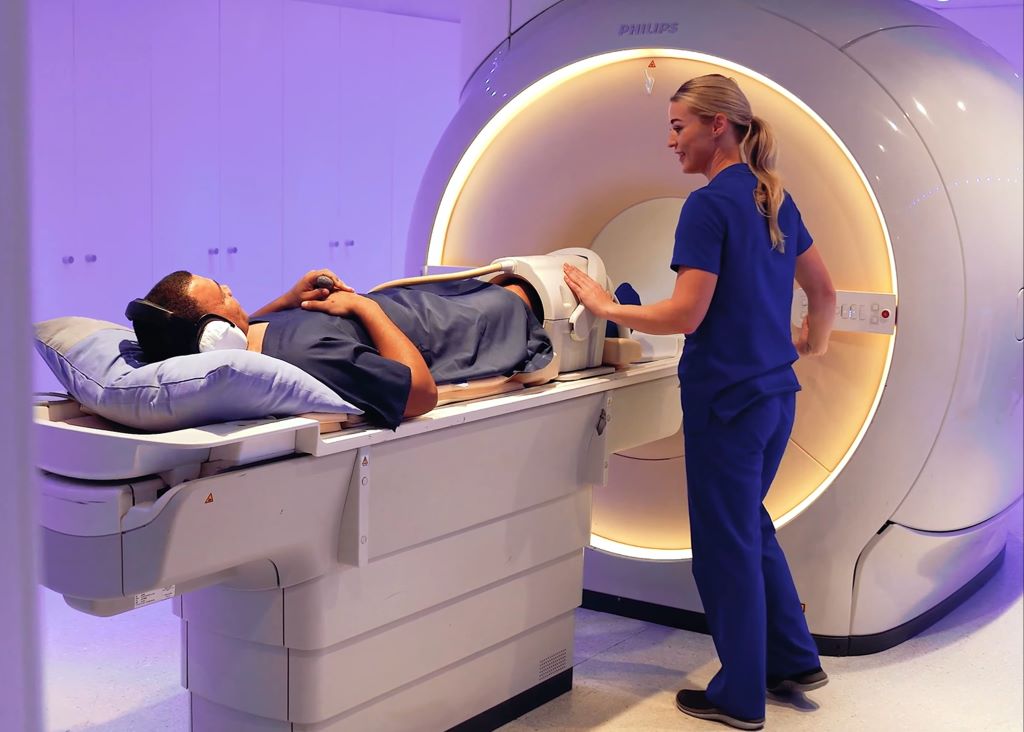
A patient with a knee replacement undergoing an MRI where modern technology reduces the distortions in the images.

It is a common concern for patients that metal implants, such as hip or knee replacements, may prevent them from having an MRI scan. In most cases, this is not true. Patients with modern joint replacements can safely undergo MRI, depending on the materials used in the implant. It is important to inform the radiology team about the implant before your scan.

Dr Jean de Villiers, a radiologist and director of SCP Radiology, answers some of the questions most frequently asked by patients, specifically around the process from referral to reporting in radiology imaging.

What is Magnetic Resonance Imaging (MRI)?

MRI is a non‑invasive imaging technique that uses powerful magnets and radio waves to create detailed images of the body’s internal structures. Unlike X‑rays or CT scans, MRI does not involve ionising radiation and is used extensively to diagnose a wide range of conditions.

Because MRI uses strong magnetic fields, many patients ask whether it is safe to have an MRI after a hip or knee replacement.

Can you have an MRI after a hip or knee replacement?

Yes, you can have an MRI scan on other parts of the body, as well as on the knee or hip where the implant is. Although some older MRI scanners may not be compatible with certain prostheses, the vast majority of MRI equipment in use today is safe and compatible with modern hip and knee implants.

How safe is MRI if the implant is made of metal?

Most implants are made from titanium or cobalt‑chromium alloys. Although these materials are metallic, they are not significantly affected by the magnetic field of an MRI scanner, nor do they heat up during the scan. Many implants also contain hard plastic components, all of which are designed to be compatible with MRI scanners. They are not attracted to the powerful magnet in the same way as older or highly magnetic materials.

Dr de Villiers explains, “The vast majority of joint replacements used today are MRI‑safe. The key is that we know about them in advance, so we can adjust the scan if needed.”

What is the main challenge with MRI and an implant?

The main challenge is image quality. Metal can sometimes cause image distortion, known as artefact, on MRI images. This may make it more difficult to assess structures close to the implant. However, modern MRI techniques have improved significantly and can often minimise these effects, allowing radiologists to assess surrounding tissues such as muscles and ligaments, and to detect complications such as infection or loosening. MRI is often the best imaging method for evaluating pain or complications after joint replacement surgery.

What happens if MRI does not produce clear diagnostic images?

In some cases, alternative imaging techniques such as CT or ultrasound may be recommended, depending on the clinical question. However, MRI remains safe and highly valuable for many patients with joint prostheses.

Are there implants that prevent you from having an MRI?

Certain implants and devices may be unsafe or require special precautions during MRI, including:

  • Implanted pacemakers
  • Intracranial aneurysm clips
  • Cochlear implants
  • Certain prosthetic devices
  • Implanted drug‑infusion pumps
  • Neurostimulators
  • Bone‑growth stimulators
  • Any other iron‑based metal implants

MRI is also contraindicated in the presence of some internal metallic objects such as bullets or shrapnel, as well as certain surgical clips, pins, plates, screws, metal sutures or wire mesh.

Having a hip or knee replacement does not automatically exclude you from having an MRI scan. With modern implants and appropriate planning, MRI is both a safe and important diagnostic tool. As technology continues to evolve, future developments are expected to further enhance MRI compatibility with hip and knee implants, making it an even more reliable tool for ongoing patient care.

It is crucial for patients to inform their healthcare providers about their joint replacement before undergoing an MRI. This allows the medical team to adjust the MRI settings and take appropriate precautions to ensure both safety and diagnostic accuracy.

Plastic Additives Tied to Millions of Preterm Births Worldwide

Photo by FLY:D on Unsplash

Exposure to a chemical commonly used to make plastic more flexible may have contributed to about 1.97 million preterm births in 2018 alone, or more than 8 percent of the world’s total, a new analysis of population surveys shows. The chemical was also linked to the deaths of 74 000 newborns, the researchers further estimate.

The toxin, di-2-ethylhexylphthalate (DEHP), is part of a group of chemicals called phthalates, which appear in cosmetics, detergents, bug repellents, and other household products. Experts have found that these substances can break down into microscopic particles and enter the body through food, air, and dust.

Led by NYU Langone Health researchers, the new study focused on preterm birth, which is a major risk factor for lasting learning and developmental issues and is a leading cause of infant death, according to the World Health Organization.

The new analysis provides the first global estimate of preterm births connected to exposure to DEHP and explores which parts of the world are most affected, according to the authors. A report on the findings published online March 31 in the journal eClinicalMedicine.

“By estimating how much phthalate exposure may contribute to preterm birth worldwide, our findings highlight that reducing exposure, especially in vulnerable regions, could help prevent early births and the health problems that often follow,” said study lead author Sara Hyman, MS.

Past studies have linked DEHP exposure to cancer, heart disease, and infertility, among many other health concerns, added Hyman, an associate research scientist at NYU Grossman School of Medicine. There is also a large body of research connecting the chemical to preterm birth.

According to the new work, DEHP exposure may have contributed to 1.2 million years lived with disability, a measure of all the years that people have lived or will live with illnesses, injuries, and other health issues caused by being born prematurely.

Hyman said that while the phthalate is in widespread use, certain regions are estimated to bear a much larger share of the health impacts than others, with the Middle East and South Asia representing 54 percent of estimated illness from preterm birth. These areas have rapidly growing plastics industries and high levels of global plastic waste.

Africa, which accounted for 26 percent of health problems from DEHP-linked preterm birth, has a disproportionate share of deaths compared with its share of overall premature cases. The researchers said this reflects the region’s higher underlying death toll from preterm birth.

For the study, the research team estimated DEHP exposure in 2018 across 200 countries and territories by pulling data from large national surveys in the United States, Europe, and Canada. They also used estimates from earlier investigations to fill in regions that did not have their own data.

The team then drew on earlier research that assessed how phthalate exposure may affect preterm birth and combined those findings with their global exposure estimates. Finally, they combined this information with worldwide figures on preterm births and deaths to gauge what share of these outcomes might be linked to DEHP.

The scientists repeated these steps for another phthalate called diisononyl phthalate (DiNP), a common replacement for DEHP. According to the results, DiNP may pose a similar risk as DEHP, having contributed to about 1.88 million preterm births around the world. The financial costs associated with newborn deaths ranged from millions to hundreds of billions of dollars for both phthalates.

“Our analysis makes clear that regulating phthalates one at a time and swapping in poorly understood replacements is unlikely to solve the larger problem,” said study senior author Leonardo Trasande, MD, MPP, Professor of Pediatrics at NYU Grossman School of Medicine. “We are playing a dangerous game of Whac-A-Mole with hazardous chemicals, and these findings highlight the urgent need for stronger, class-wide oversight of plastic additives to avoid repeating the same mistakes.”

Dr Trasande, who is also a professor in the Department of Population Health and director of the Division of Environmental Pediatrics and the Center for the Investigation of Environmental Hazards, cautions that the investigation was not designed to establish that DEHP and DiNP directly or alone cause preterm birth, nor did it take into account other types of phthalates.

In addition, because there is some uncertainty in the data, the researchers looked at a range of possible values rather than just one estimate. This uncertainty range showed that the true impact of DEHP could be up to four times smaller than the main estimate or slightly higher. Even under the most conservative estimates, the results point to a substantial health burden, said Hyman.

Despite the limits of this kind of global modelling, added Hyman, the work lays important groundwork for future studies to confirm and refine these results and begins to fill a major gap in understanding the extent to which plastic chemicals affect preterm birth worldwide.

Source: NYU Langone Health

Thesis on Impact of Treatment Choice in Anterior Cruciate Ligament Injury

Photo by Natanael Melchor on Unsplash

An anterior cruciate ligament injury is a serious knee injury that often affects young, physically active people. On April 30, Dzan Rizvanovic will defend his thesis “Anterior cruciate ligament reconstruction: rationale for graft choice and treatment of associated injuries” in which he has investigated how treatment choice affects outcomes after ACL reconstruction.

“An anterior cruciate ligament injury (ACL injury) is a serious knee injury that primarily affects young and physically active individuals and can have long-term consequences for knee function, work capacity, and quality of life. Each year, a large number of patients in Sweden undergo surgical reconstruction of the injured ligament (ACL reconstruction), and this is the focus of my thesis”, says Dzan Rizvanovic, doctoral student at the Sports Medicine research group at the Department of Molecular Medicine and Surgery, Karolinska Institutet and specialist in orthopaedic surgery at Capio Artro Clinic.

“Using data from the Swedish Knee Ligament Registry, we studied tens of thousands of patients to investigate which factors are associated with different treatment strategies, and how these in turn relate to patients’ perceived knee function and the need for further surgery (revision). The thesis also has a particular focus on how the surgical volume of both the surgeon and the clinic is associated with treatment choices and outcomes”.

Which are the most important results?

“The main findings show that treatment strategies in ACL reconstruction are not solely related to the patient’s injury, but also to organizational factors. Surgeons and clinics with higher surgical volume are more likely to use different types of grafts (tendons used to replace the injured ligament), which may increase the opportunity for individualized treatment. They also repair meniscal injuries more frequently, a strategy that has been shown to be beneficial for long-term knee health. The management of cartilage injuries is also partly influenced by surgical volume”.

“Patients operated on by high-volume surgeons report better knee function two years after surgery and experience shorter waiting times from injury to surgery as well as shorter operative times. In contrast, the need for additional ACL reconstruction in the same knee is more related to patient- and injury-factors than to surgical volume”.

“The thesis also shows that graft choice influences subjective knee function at two years after surgery, particularly among females, which is an important finding”. 

How can this new knowledge contribute to the improvement of people’s health?

“This knowledge can contribute to more equitable and individualised care. By clarifying how surgical experience and surgical volume are associated with treatment decisions and outcomes, healthcare systems can better organise resources and create conditions for strengthened competence and improved decision-making in ACL reconstruction”.

“The results can also be used in the dialogue between patient and surgeon to select the treatment that best matches the individual’s needs and circumstances, which in the long term may improve knee function and increase quality of life in this young and working-age population”.

“Furthermore, the results from this thesis highlight the need for discussion regarding clearer national guidelines for referral pathways, minimum surgical volume requirements, and follow-up of treatment outcomes. It is also important that reporting to national quality registers is complete and made mandatory in order to enable transparency and continuous quality improvement”.

What are your future ambitions? 

“I hope to continue combining research with my clinical work to drive development forward and contribute to ensuring that patients with knee and sports-related injuries receive the best possible treatment. I also aim to contribute to a more equitable organization of healthcare, in which access to the right expertise at the right time does not depend on where in the country a patient lives”, says Dzan Rizvanovic.

Dissertation

The dissertation seminar will be held on Thursday, April 30th 2026 at 09:00, CIFU, Capio Artro Clinic, Valhallavägen 91, lecture hall house R. The doctoral thesis has been supervised by Anders Stålman

Thesis

Rizvanovic, Dzan (2026). Anterior cruciate ligament reconstruction : rationale for graft choice and treatment of associated injuries. Karolinska Institutet. Thesis. https://doi.org/10.69622/31333828.v1

Source: Karolinska Institutet