This is a pseudo-colored image of high-resolution gradient-echo MRI scan of a fixed cerebral hemisphere from a person with multiple sclerosis.
Credit: Govind Bhagavatheeshwaran, Daniel Reich, National Institute of Neurological Disorders and Stroke, National Institutes of Health
The immune system’s reaction to the common Epstein-Barr virus can ultimately damage the brain and contribute to multiple sclerosis (MS). This is shown by new research from Karolinska Institutet, published in Cell. The study provides new insight into the long-suspected link between Epstein-Barr virus (EBV) and MS.
Multiple sclerosis is a chronic inflammatory disease in which the immune system attacks the central nervous system and causes nerve damage. It has long been known that everyone who develops MS has had an infection with the Epstein-Barr virus (EBV) – a common virus that often infects young people, sometimes causing glandular fever but often without any obvious symptoms.. Exactly how this virus contributes to MS has long been unclear.
The new study shows that when the immune system fights EBV, certain T cells – which normally attack the virus – can also react to a protein in the brain called Anoctamin-2 (ANO2). This phenomenon is called molecular mimicry – immune cells mistaking the body’s own proteins for those of the virus.
The researchers found that these cross-reactive T cells are significantly more common in people with MS than in healthy controls. The study builds on previous research showing that misdirected antibodies after EBV infection may play a role.
“Our results provide mechanistic evidence that immune responses to EBV can directly damage the brain in MS. It is a complex neurological disease, and it may be that the molecular mechanisms vary between patients,” says the study’s first author, Olivia Thomas, assistant professor at the Department of Clinical Neuroscience at Karolinska Institutet.
The study is based on analyses of blood samples from people with MS and compared with healthy controls. The researchers were able to isolate T cells that react to both the EBV protein EBNA1 and ANO2 from people with MS. In addition, experiments in a mouse model showed that these cells can exacerbate MS-like symptoms and cause damage to the brain.
According to the researchers, the results may help explain why some people develop MS after an EBV infection while others do not.
“The discovery opens up new treatments that target these cross-reactive immune cells. Since several EBV vaccines and antiviral drugs are now being tested in clinical trials, the results may be of great importance for future preventive and therapeutic efforts,” says Professor Tomas Olsson, who led the study together with Associate Professor Andre Ortlieb Guerreiro-Cacais at the same institution.
Rates of multiple myeloma (MM), the second most common blood cancer in the United States, are increasing and are twice as high in men than in women. A new study published by Wiley online in CANCER, a peer-reviewed journal of the American Cancer Society, provides insights that may help to explain this disparity.
To investigate the sex difference in MM, researchers analyzed data on 850 patients with newly diagnosed MM enrolled in the Integrative Molecular And Genetic Epidemiology (IMAGE) study at the University of Alabama at Birmingham.
Compared with female patients, male patients were more likely to have advanced (International Staging System stage III) disease at the time of diagnosis. Males were also more likely to have high myeloma load—serum monoclonal protein (an abnormal protein produced by cancerous blood cells), more organ failure (especially kidney failure), and bone damage. Men were less likely than women to have low bone mineral density, and myeloma-defining features tended to differ between the two sexes. These differences were apparent even after taking numerous factors into account – including race, age, body mass index, education, income, smoking, and alcohol use.
Analyses suggested that certain chromosomal abnormalities that lead to initiation of myeloma occurring more often in younger males may help to explain some of the differences seen in this study.
“This research suggests that sex-specific mechanisms promote multiple myeloma pathogenesis, which may account for the excess risk seen in men,” said lead author Krystle L. Ong, PhD, of the O’Neal Comprehensive Cancer Center at the University of Alabama at Birmingham. “These findings may be used to improve risk stratification, diagnosis, and tailored treatments for both men and women with newly diagnosed multiple myeloma or related early precursor conditions.”
Just five extra minutes of moderate intensity physical activity a day or sitting half an hour less could make a measurable difference for public health, according to a new study published in The Lancet.
Researchers analysed data from more than 135 000 adults in Norway, Sweden, USA, and the UK to understand how small, realistic changes in daily habits affect mortality. Using device-measured physical activity, the team estimated how many deaths could be prevented if people moved a little more or spent less time sitting.
The findings suggest that even modest changes matter. For the least active individuals, adding just five minutes of moderate-to-vigorous physical activity per day could prevent about 6% of deaths. When applied across the population – excluding the most active – this figure rises to 10%.
Reducing sedentary time also showed benefits, though smaller. Sitting 30 minutes less each day could prevent around three percent of deaths among the least active and seven percent across the population.
Maria Hagströmer, professor at the Department of Neurobiology, Care Sciences and Society. Photo: Ulf Sirborn.
“These results show that small steps can have a large impact,” says Maria Hagströmer, professor at the Department of Neurobiology, Care Sciences and Society and co-author of the study. “You don’t need to run marathons—just a few extra minutes of brisk walking each day can make a difference.”
Ing-Mari Dohrn, docent at the same department and also a co-author of the study, adds: “Our study focuses on realistic changes. For many people, reducing sitting time or adding short bouts of activity is more achievable than large lifestyle modifications.”
The researchers emphasise that these changes are not a substitute for regular exercise but highlight how small adjustments can contribute to better health at the population level.
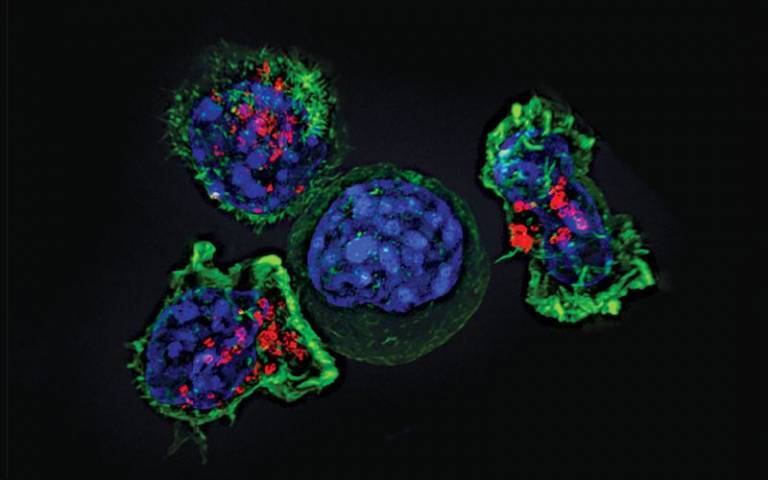
Killer T cells surround a cancer cell. Credit: Alex Ritter, Jennifer Lippincott Schwartz and Gillian Griffiths, National Institutes of Health (CC BY 2.0).
Adult patients with an aggressive form of leukaemia will be able to receive a breakthrough immunotherapy, which was invented by University College London researchers, on the NHS within weeks following approval for use by the UK’s National Institute for Health and Care Excellence (NICE).
The CAR T-cell therapy – known as ‘obe-cel’ and marketed as Aucatzyl – involves taking a patient’s immune cells and reprogramming them in a lab to identify and target their cancer, before returning them to the body as ‘living medicine’.
Obe-cel is a second-generation CAR T cell therapy invented by scientists from the UCL Cancer Institute, led by Dr Martin Pule, and has delivered promising results in treating patients with acute lymphoblastic leukaemia (ALL), an aggressive blood cancer.
The therapy has reduced immune toxicity and persists for longer in blood cancer patients, overcoming two common limitations of earlier CAR T cell therapies. Aucatzyl was taken through clinical trials and is manufactured by UCL spinout business Autolus, which was set up with the help of UCL Business, the commercialisation company of UCL.
The development of CAR T cell therapy has had long-standing support from the National Institute for Health and Care Research (NIHR) UCLH Biomedical Research Centre (BRC).
NHS England today announced that the personalised therapy would be available on the NHS within weeks through specialist centres.
Dr Claire Roddie, one of the team who developed the treatment from UCL Cancer Institute and UCLH consultant haematologist, said: “I am delighted to hear of NICE’s decision. Many more patients now stand to benefit from CAR-T cell therapy on the NHS.
“We have been working on proving the safety and efficacy of this drug since 2017 and it has brought together clinical and research teams from UCL and UCLH, with support from government and arm’s-length bodies like the NIHR and the BRC as well as the pharmaceutical industry.
“The many, many people involved in this work can feel immensely proud of this achievement which will help save the lives of many more patients.”
Eligible patients will receive two doses of CAR-T therapy intravenously, ten days apart, with the treatment being delivered at specialist CAR-T centres across the country.
The treatment will be available to people aged 26 and over with B-cell acute lymphoblastic leukaemia which has returned or not responded to previous treatment.
It is estimated that it could be administered to around 50 patients each year in England.
In a clinical trial, 77% of patients saw their cancer enter remission after treatment with obe-cel, with half of those showing no signs of detectable cancer after three and a half years.
The treatment – which has been researched, developed and manufactured in the UK – was also found to have lower toxicity and was less likely to cause serious side effects than other CAR (chimeric antigen receptor) T-cell therapies.
Dr Anne Lane, UCL Business CEO, said: “This cutting-edge personalised immunotherapy has been on a 10-year journey starting with research by clinical academics in UCL’s Cancer Institute who, with the support of UCL Business, established Autolus, a spinout company dedicated to developing, trialling and bringing AUCATZYL® to market. That journey has required vision, tenacity and over £800m. Today that has hugely paid off and will benefit people across the UK. It’s an inspiring demonstration of what can be achieved when university academics, NHS hospitals and investors work together.”
Professor Peter Johnson, NHS National Clinical Director for Cancer, said: “This cutting-edge therapy has shown real promise in trials and could give patients with this aggressive form of leukaemia a chance to live free from cancer for longer – and, for some, it could offer the hope of a cure.
“This ‘living medicine’ boosts a patient’s own immune system and then guides T-cells towards the cancer to kill it – it is fantastic to have another pioneering option available on the NHS, adding to our range of CAR-T therapies which are helping people with blood cancers live longer, healthier lives.”
Harry, a 19-year-old student from Harrogate, was treated with obe-cel for B-cell ALL as part of a clinical trial in 2024. He said: “I feel so lucky to have had access to such a wondrous treatment. Not only did it work better than my doctors thought it would, it worked without many of the horrible side effects you can get from other treatments.
“I think it’s brilliant obe-cel is now available on the NHS for people over the age of 26. The biggest thing it offers is hope. When you’re facing a situation like mine, hope is the most valuable thing you can have.”
Health Minister Ashley Dalton said: “This pioneering treatment is excellent news for patients and their families, demonstrating how the NHS is at the forefront of medical innovation.
“Our 10 Year Health Plan is about harnessing our world-leading life sciences sector to deliver treatments like this – innovative therapies that save lives.
“By supporting new treatments with fewer side effects and shorter hospital stays, we’re building an NHS fit for the future whilst cementing the UK’s position as a global leader in medical research.”
Fiona Bride, interim Chief Commercial Officer and Director of Medicines Value & Access at NHS England, said: “This is a success story that’s made in Britain, and shows how collaboratively we can bring to life the ambition of the 10 Year Health Plan, showcasing how the UK’s competitive edge in life sciences can translate to better outcomes and treatments for NHS patients.
“The journey of obe-cel from scientific research in a UK university to a safe, clinically and cost-effective treatment set to be delivered through the NHS specialist CAR-T network is a remarkable one and I am grateful to colleagues who have played their part along the way.”
Acute lymphoblastic leukaemia is an aggressive cancer in the blood and bone marrow, with around 800 people being diagnosed in the UK every year, around half of which are in adults.
Data shows patients with aggressive forms of the cancer receiving chemotherapy, the current routine standard of care, live for just 10 months on average after treatment.
The therapy will be fast tracked to patients more quickly than the standard 90-day implementation period thanks to interim funding from the NHS’s Cancer Drugs Fund.
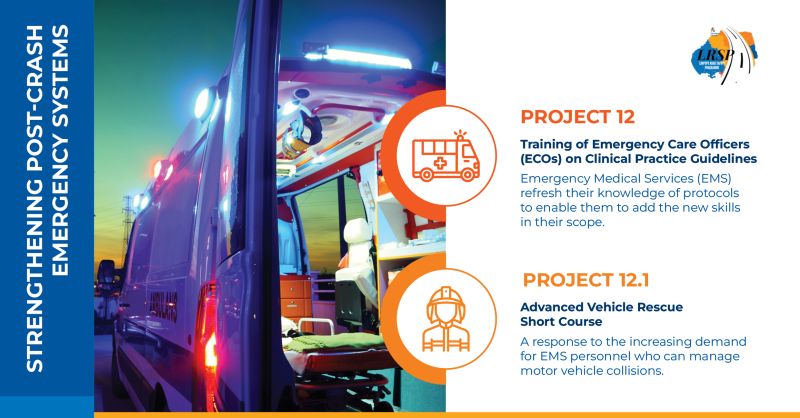
Strengthening Limpopo’s post-crash emergency response has been one of the most powerful achievements of the Limpopo Road Safety Programme (LRSP). Through a combined focus on updated clinical training, advanced rescue skills and improved operational systems, Projects 12 and 12.1 have reshaped how Emergency Medical Services (EMS) teams respond in the critical minutes after a crash – from the first emergency call to hospital handover.
Updating clinical skills to strengthen frontline emergency care
Across South Africa, the Clinical Practice Guidelines (CPGs) for emergency care have been substantially updated, including a major revision in 2018. These updates incorporated new evidence, improved patient outcomes, and standardised practice across the health system, shifting toward more user-friendly formats such as clinical decision-support tools. For Limpopo’s EMS, this presented both an opportunity and a challenge: although the guidelines were available, many personnel had not yet received training to apply them consistently in the realities of roadside emergencies. Project 12 addressed this need directly, rolling out comprehensive CPG training across all five districts. EMS practitioners were equipped with updated algorithms for trauma, medical, paediatric and obstetric emergencies, along with enhanced assessment, triage and stabilisation skills.
This clinical uplift aligned perfectly with major system improvements. In the 2023/2024 financial year, the Limpopo Department of Health procured more than 500 new, modern ambulances, significantly expanding the provincial fleet. The LRSP ensured this investment translated into real-world impact: EMS personnel were trained not only on updated CPGs but also to use the new vehicles and onboard equipment to their full potential; optimising monitoring, patient loading, scene workflow and en-route care. Modern ambulances combined with modern knowledge dramatically strengthened the quality of emergency care.
By 2025, the system advanced even further with the introduction of a Computer-Aided Dispatch (CAD) system, enabling more efficient call-taking, improved dispatch decision-making, clearer communication and better tracking of EMS resources across districts. The CAD system, together with updated CPGs and a modern ambulance fleet, created a tightly integrated platform for faster, smarter and more coordinated EMS response. For the first time, Limpopo could align clinical best practice, operational intelligence and fleet capacity into one cohesive system.
Introducing advanced rescue skills for high-severity crash scenes
Yet, while clinical updates and dispatch improvements strengthened core EMS response, Limpopo still faced a critical need for specialised capacity at high-severity crash scenes, especially those involving vehicle entrapment. Project 12.1 filled this gap by introducing the province’s first Advanced Vehicle Rescue Short Course, delivered by EPIC EM and the University of Johannesburg. Over seven intensive days, participants trained in vehicle stabilisation, extrication techniques, hydraulic tool use, and multi-casualty scene management, blending theory with realistic, high-pressure simulations. Many described the training as transformative, giving them the competence and confidence to manage complex incidents on Limpopo’s regional and mining routes.
Together, these interventions have created a step change in Limpopo’s post-crash care system. Today, EMS teams arrive at crash scenes equipped with modern ambulances, updated clinical guidance, advanced rescue skills and a CAD-supported operational network that ensures faster and more coordinated response. Patients benefit from safer extrication, quicker stabilisation and better continuity of care during the “golden hour”. Beyond improving skills, the programme has strengthened morale, professionalism and a culture of excellence within EMS.
Projects 12 and 12.1 have left a lasting legacy: a provincial emergency response system that is smarter, faster and better prepared to save lives on Limpopo’s roads.