High Blood Pressure Dementia Risk Found for Women
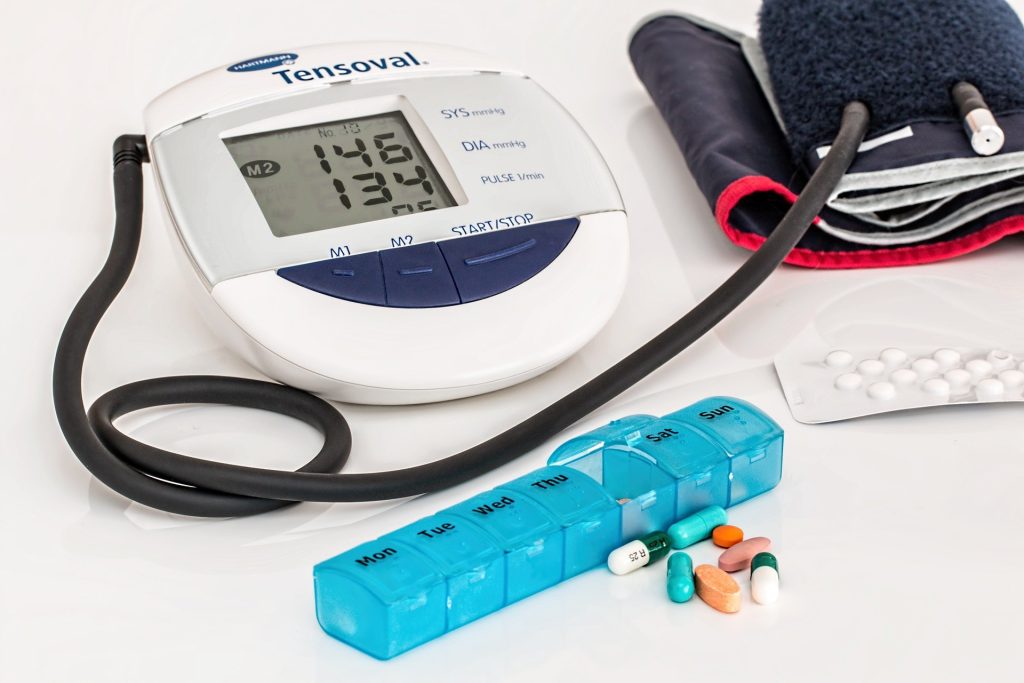
Image by Steve Buissinne from Pixabay

Differences in blood pressure’s influence on dementia risk in men and women may provide clues to help slow the rapid progress of the disease, according to new research.

In a study involving half a million people, researchers found that although the link between several mid-life cardiovascular risk factors and dementia was similar for both sexes, for blood pressure it was not. Low and high blood pressure were both shown to be associated with a greater risk of dementia in men, but for women the risk of dementia increased as blood pressure went up.

Lead author Jessica Gong said that while more research was needed to verify these findings, they may point to better ways of managing risk.

“Our results suggest a more tailored approach to treating high blood pressure could be more effective at preventing future cases of dementia,” she said.

Dementia is fast becoming a global epidemic, currently affecting an estimated 50 million people worldwide. This is projected to triple by 2050 – mainly driven by aging populations. Rates of dementia and associated deaths are both known to be higher in women than men.

In 2016 it overtook heart disease as the leading cause of death in Australian women and it is the second leading cause of death for all Australians.

With no treatment breakthroughs of any significance, the focus has therefore been on cutting the risk of developing the disease. Cardiovascular risk factors are increasingly recognised as contributors to different types of dementia.

To explore differences in major cardiovascular risk factors for dementia between the sexes, George Institute researchers accessed data from the UK Biobank, a large-scale biomedical database that recruited 502 489 dementia-free Britons 40-69 years old between 2006 and 2010.

They found that, to a similar degree in women and men, smoking , diabetes, high body fat levels, prior stroke history, and low socio-economic status were all linked to a greater risk of dementia.

But when it came to blood pressure, the relationship with dementia risk between the sexes was different. Although the reason for this wasn’t clear, the authors proposed some possible explanations.

“Biological differences between women and men may account for the sex differences we saw in the relationship between blood pressure and the risk of dementia,” said Ms Gong.

“But there may also be differences in medical treatment for hypertension. For example, women are less likely to take medication as prescribed by their healthcare provider than men and may be taking more medications and experiencing more side effects.”

While there are no effective treatments for dementia, trying to reduce the burden of the disease by encouraging healthier lifestyles is the priority, and the strongest evidence points to blood pressure management.

“Our study suggests that a more individualised approach to treating blood pressure in men compared to women may result in even greater protection against the development of dementia,” said study co-author Professor Mark Woodward.

“It also shows the importance of ensuring sufficient numbers of women and men are recruited into studies and that the data for women and men should be analysed separately,” he added.

Source: George Institute

Researchers Close in on Genetic Cure for Congenital Deafness

Researchers are a step closer in the quest to use gene therapy to enable people born deaf to hear, having uncovered a new role for a key protein.

The study, published in Molecular Biology of the Cell, focused on a large gene responsible for an inner-ear protein called otoferlin. Otoferlin mutations are linked to severe congenital hearing loss, a common type of deafness in which patients can hear almost nothing.

“For a long time otoferlin seemed to be a one-trick pony of a protein,” explained Colin Johnson, associate professor of biochemistry and biophysics in the Oregon State UniversityCollege of Science. “A lot of genes will find various things to do, but the otoferlin gene had appeared only to have one purpose and that was to encode sound in the sensory hair cells in the inner ear. Small mutations in otoferlin render people profoundly deaf.”

Because the otoferlin gene is too big as it normally is to package into a delivery vehicle for molecular therapy, Prof Johnson’s team explored the use of a shortened version.

Research led by graduate student Aayushi Manchanda showed the shortened version needed to have part of the gene known as the transmembrane domain, for a surprising reason: without it, the sensory cells matured slowly.

“That was surprising since otoferlin was known to help encode hearing information but had not been thought to be involved in sensory cell development,” Johnson said.

For years, scientists in Prof Johnson’s lab have been working with the otoferlin molecule and in 2017 they identified a shortened form of the gene that can function in the encoding of sound.

To find out if the transmembrane domain of otoferlin needed to be part of the shortened version of the gene, Manchanda shortened the transmembrane domain in zebrafish.

Zebrafish are a small freshwater species that is very popular as a research organism. They grow rapidly, from a cell to a swimming fish in about five days, and share a remarkable similarity to humans at the molecular, genetic and cellular levels due to the conservation of mammalian genes early in their evolution. Embryonic zebrafish are transparent and easily maintained, and are amenable to genetic manipulation.

“The transmembrane domain tethers otoferlin to the cell membrane and intracellular vesicles but it was not clear if this was essential and had to be included in a shortened form of otoferlin,” Manchanda said. “We found that the loss of the transmembrane domain results in the sensory hair cells producing less otoferlin as well as deficits in hair cell activity. The mutation also caused a delay in the maturation of the sensory cells, which was a surprise. Overall the results argue that the transmembrane domain must be included in any gene therapy construct.”

At the molecular level, Manchanda found that a lack of transmembrane domain led to otoferlin not properly linking the neurotransmitter-filled synaptic vesicles to the cell membrane, resulting in less neurotransmitter being released.

“Our study suggests otoferlin’s ability to tether the vesicles to the cell membrane is a key mechanistic step for neurotransmitter release during the encoding of sound,” Manchanda said.

Source: EurekaAlert!

Indian States Turn to Ivermectin Amid COVID Crisis

Image by Steve Buissinne from Pixabay

Two Indian states have decided to distribute the controversial anti-parasitic drug ivermectin as a preventative measure, MedPage Today reports.

Goa, on the west coast, and Uttarakhand, a northern state in the Himalayas, will give the anti-parasitic to wide swaths of their population as a preventative measure in hopes of preventing future outbreaks.

Leaders of both states insisted that their recommendations were evidence-based. “An expert medical panel has recommended this,” Om Prakash, chief secretary of Uttarakhand, told Reuters. Vishwajit Rane, health minister of Goa, also said an expert panel from Europe found the drug shortened recovery time and reduced the risk of death, the news agency reported.

Yet no large randomised controlled trial has proven the drug’s efficacy against COVID, and no prominent health group — the NIH and the WHO among them — has recommended the drug in treatment or prophylaxis.

The use of ivermectin for COVID has been the subject of bitter debate in South Africa, and human administration of ivermectin was approved for compassionate use with guidelines released in January. Following a court order, pharmacists and doctors in South Africa are allowed to make up small batches of medicines containing Ivermectin on prescription by a doctor and in small quantities, and can be used.

Madhu Pai, MD, PhD, professor of epidemiology and global health at McGill University in Montreal, tweeted a link to guidelines developed by collaborators in the UK and India, led by Cochrane and Christian Medical College Vellore in the southern state of Tamil Nadu.

On May 15, the group updated their guidance to state that it recommends “against using ivermectin for treatment of patients with any severity of COVID-19. Ivermectin should only be used in the context of a randomized controlled trial.”

Officials in Goa said the state will give ivermectin tablets to anyone aged 18 or over. Through most of the recent COVID surge, the popular tourist destination has remained open to holidaymakers, only imposing a 15-day lockdown last week.

Meanwhile, Uttarakhand plans to distribute the drug even more widely, giving it to anyone over age 2, with the exception of pregnant and lactating women, according. The state has been struggling with high caseloads, which rose from under 300 a day in early April to more than 7000 a day last week, Reuters reported.

The state recently hosted Kumbh Mela, a huge festival which drew millions of people from across the country for a two week long celebration including bathing in the river Ganges. Reports indicated many people did not wear masks and were closely packed. This became a massive superspreader event, with cases all over India being traced to it. Some districts of Madhya Pradesh reported that 20% of cases were festival returnees.

Goa and Uttarakhand’s moves have not gone unnoticed by ivermectin advocates. The Front Line COVID-19 Critical Care Alliance, a long time champion of the drug, paid scant attention to the difference between causation and correlation in a recent tweet on the issue: “Case counts and deaths are falling in India! A close look … shows that the declines occurred as the Health Ministry [sic] began its widespread distribution of #ivermectin.”

Source: MedPage Today

New Study Finds Genetic Switch Role in Melanoma

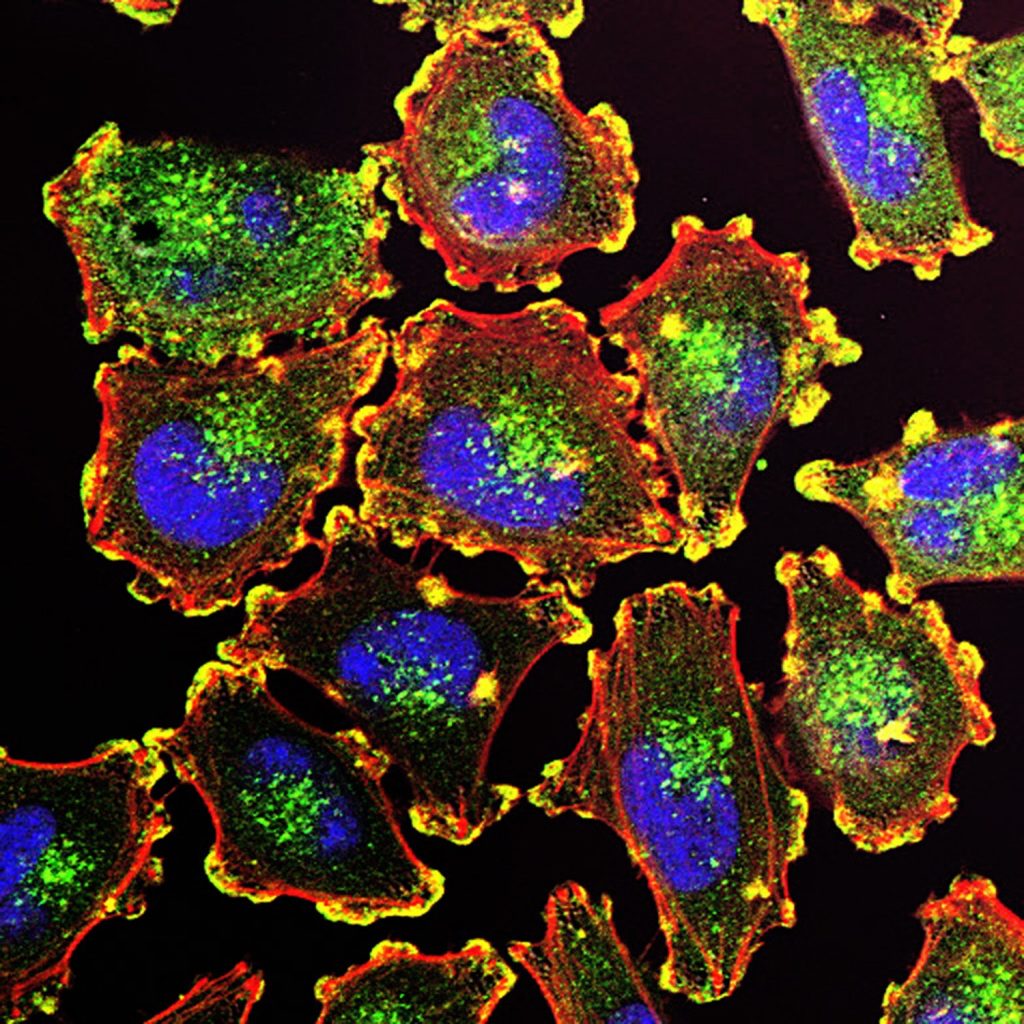
The ability of cancer cells to move and spread depends on actin-rich core structures such as the podosomes (yellow) shown here in melanoma cells. Cell nuclei (blue), actin (red), and an actin regulator (green) are also shown. Source: National Cancer Institute
Metastatic melanoma cells

A study published in the journal Cell Reports reveals that a genetic switch that could potentially be targeted to develop new treatments for melanoma by keeping the switch turned off.

Melanoma causes the majority of skin cancer-related deaths, despite only making up roughly 1 percent of skin cancers. The incidence of malignant melanoma is rapidly increasing around the world, and this increase is occurring at a faster rate than that of any other cancer except lung cancer in women. Treatments exist for this serious disease, but the effectiveness of these drugs can vary depending on the individual.

“We’ve been able to correlate the activity of this genetic switch to melanin production and cancer,” said Salk study corresponding author Marc Montminy, a professor in the Clayton Foundation Laboratories for Peptide Biology.

Melanoma develops when melanocytes, the pigment-producing skins in the cell, mutate and begin to multiply out of control. These mutations can cause proteins such as CRTC3 to prompt the cell to produce an abnormal amount of pigment, or to migrate and be more invasive.

While it was known that the CRTC family of proteins (CRTC1, CRTC2, and CRTC3) is involved in pigmentation and melanoma, obtaining precise details about the individual proteins has proven difficult. “This is a really interesting situation where different behaviours of these proteins, or genetic switches, can actually give us specificity when we start thinking about therapies down the road,” said first author Jelena Ostojic, a former Salk staff scientist and now a principal scientist at DermTech.

When the researchers deleted the CRTC3 gene in mice caused a color change in the animal’s coat color, demonstrating that the protein is needed for melanin production. They also found that when melanoma cells lacked the protein, they migrated and invaded less, meaning they were less aggressive, suggesting that inhibiting the protein could help treat the disease.

The team also described the connection between two cellular signalling systems that work on the CRTC3 protein in melanocytes. These two systems tell the cell to either proliferate or make the pigment melanin. Montminy likens this process to a relay race: essentially, a baton (chemical message) is passed from one protein to another until it reaches the CRTC3 switch, either turning it on or off.

“The fact that CRTC3 was an integration site for two signaling pathways—the relay race—was most surprising,” says Montminy, who holds the J.W. Kieckhefer Foundation Chair. “CRTC3 makes a point of contact between them that increases specificity of the signal.”

Next, the team plans to further investigate the mechanism of how CTRC3 impacts the balance of melanocyte differentiation to develop a better understanding of its role in cancer.

Source: Salk Institute

New Way to Compare Effectiveness of Tuberculosis Treatments

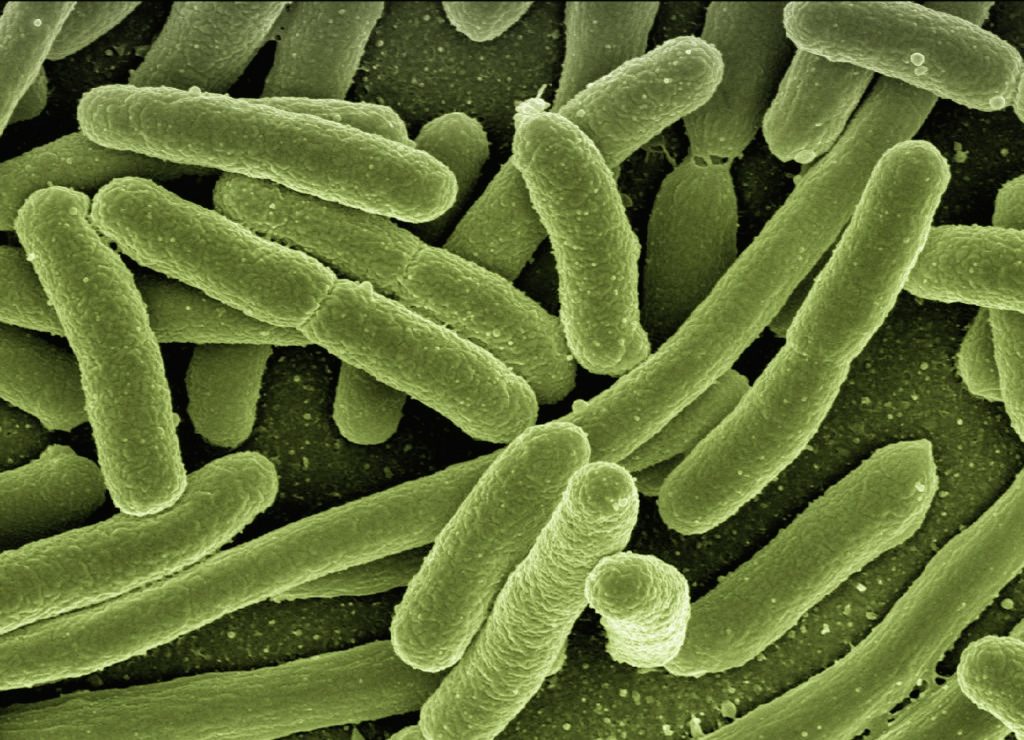
E. Coli bacteria. Image by CDC

A new study published in Nature Communications provides an important new basis for comparing the varying effectiveness of tuberculosis treatments.

Tuberculosis is a ancient disease caused by the bacterium Mycobacterium tuberculosis (Mtb) and aside from the COVID pandemic, is still the leading infectious cause of death globally, killing 1.2 million people each year. The availability of a new way to evaluate treatments can save lives.

In the study, the researchers aimed to provide a new perspective on assessing the effectiveness of tuberculosis drugs.

“A key roadblock that holds back new tuberculosis treatments is our current inability to accurately measure how effectively different treatments shorten the time needed to cure tuberculosis,” said lead author Nicholas Walter, MD, Ph.D., associate professor at the University of Colorado Anschutz Medical Campus. “Without improved tools to measure and compare the effectiveness of drug treatments, the evaluation and roll-out of new combination drug treatments will continue to proceed slowly.”

“In the past, the effectiveness of tuberculosis treatment has been judged by estimating the burden of the pathogen M. tuberculosis as enumerated via culture based approaches. This historical method correlates poorly with what we care about most, which is whether tuberculosis patients are durably cured,” added co-first author Gregory Robertson, PhD, assistant professor at Colorado State University.

By Vossman - Own work, CC BY-SA 3.0, https://commons.wikimedia.org/w/index.php?curid=6865434
Structure and shape of the E.coli 70S ribosome. The large 50S ribosomal subunit (red) and small 30S ribosomal subunit (blue) are shown with a 200 Ångstrom (20 nm) scale bar.

The researchers measured the extent to which drugs interrupt the synthesis of ribosomal RNA, which is needed for the protein-making machinery of the bacterium. They found that drugs and drug regimens that treat tuberculosis faster inhibit Mtb rRNA synthesis more than less potent drugs and regimens. Their resulting new measure, called the rRNA synthesis (RS) Ratio is a useful molecular metric of drug activity based on a key microbial physiologic property rather than a simple measure of reducing bacterial burden.

“The RS Ratio gives us a readout of drug effect that opens a new era in understanding antibiotics. Measuring a key physiologic property of pathogens provides an innovative way of thinking beyond conventional measures of bacterial burden,” said senior author Martin Voskuil, PhD, associate professor at the University of Colorado Anschutz Medical Campus.

“The RS Ratio can enable more intelligent design and evaluation of candidate drug combination regimens, accelerating the development of treatments that can cure tuberculosis faster. This has crucial implications for combatting the global tuberculosis epidemic,” addrf co-author Payam Nahid, MD, MPH, professor and director of the University of California San Francisco Center for Tuberculosis.

Source: Medical Xpress

Validity of Screen Time Studies Questioned

Photo by Tracy le Blanc from Pexels


In the largest study of its kind to date, a systematic review and meta-analysis of people’s perceptions of their screen time compares to their actual usage, estimates of usage were found to be accurate only in about five per cent of studies.

Multiple studies have linked increasing amounts of ‘screen time’, looking at and using devices such as computers, tablets and smartphones, to a wide range of negative health outcomes such as depression and inactivity.

The international team say their results cast doubt on the validity of research on the impact of screen time on mental health, and its influences on government policy, as the vast majority rely on participants’ self-reported estimates on the amount of time spent on digital devices, rather than logs of actual usage, or tracked time. This research was published in Nature Human Behaviour

For lead researcher Dr Doug Parry at Stellenbosch University, the studies highlight how much our current perceptions of technology are built up on long-lasting, unchallenged assumptions.

“For decades, researchers have relied on estimates of how we use various technologies to study how people use digital media and the potential outcomes this behaviour can lead to. Our findings suggest that much of this work may be on unstable footing.”

“The screen time discrepancies highlight that we simply do not know enough yet about the actual effects (both positive and negative) of our media use. Researchers, journalists, members of the public, and crucially policy makers need to question the quality of evidence when they consider research on media uses and effects. We can no longer simply take claims of harmful effects at face value.”

The researchers also investigated whether questionnaires and scales addressing ‘problematic’ media use, such as excessive or so-called ‘addictive’ media use, were suitable substitutes for logged usage. There was even less of an association with usage logs to these measures.

Exhaustive literature survey

The research identified every existing study that compares logged or tracked media use measures with equivalent self-reports. Screening more than 12 000 articles for inclusion, they found 47 studies that included both types of measures. From here they were able to identify and extract 106 comparisons, based on 50 000 individuals, to address the question of how closely self-report estimates relate to logs of actual usage.

“These highly flawed studies are over-inflating the relationships between digital media use and typically negative outcomes, such as mental health symptoms and cognitive impairments, which of course explains the pervading view that smartphones among other technologies are bad for us,” commented Dr Brit Davidson from the University of Bath’s School of Management.

“Media and technology use takes the blame for everything from increases in teenage depression and suicide to higher incidence of Attention Deficit Hyperactivity Disorder (ADHD) and violence. If we want to properly investigate harms, we must first tackle assumptions about screen time and disentangle how people are actually using their phones or other technologies of interest.

“Importantly, these questionable studies are also being used to influence policy. The UK and Canada both have forms of screen time guidelines based on poorly conducted research, which is clearly worrying and hard to reverse.”

The researchers hope that the findings will prompt a change in how technology use is measured, as well as how society regards technology use, leading to a better understanding of our relationship with technology.

Source: News-Medical.Net

Journal information: Parry, D. A., et al. (2021) A systematic review and meta-analysis of discrepancies between logged and self-reported digital media use. Nature Human Behaviour. doi.org/10.1038/s41562-021-01117-5.

Cells in the Centres of Kidney Tumours are The Most Aggressive

Researchers have found that cells from different parts of kidney tumours behave differently, and cells within the centre of a tumour are the most aggressive and most likely to spread around the body.

Metastasis, where cancer cells from tumours spread to other parts of the body, is the main cause of death in cancer patients. 

In this multidisciplinary study published in Nature Ecology and Evolution, scientists analysed 756 cancer biopsy samples from different regions within tumours from the TRACERx Renal study.

They discovered that, in contrast to the cells at the outside of tumours, the cells in the centres of tumours have more unstable genomes, and a higher potential for metastasis. The cells on the outside had lower growth rates and had less genetic damage.

“Cancer cells in the central zone of the tumour face harsh environmental conditions, as there’s a lack of blood supply and oxygen. They have to adapt to survive, which makes them stronger and more aggressive. This also means they are more likely to successfully evolve into cells that can disseminate and take hold in distant organs,” explained Kevin Litchfield, paper author and group leader at the UCL Cancer Institute.

These findings show that it is important to focus on the tumour centre for a better understanding of how cancer spreads, and identify the most dangerous cells. Also, in order to wipe out the most aggressive tumour cells, treatment development must target the unique environmental conditions found within the tumour core.

The scientists also examined how genetically different populations of cancer cells grow within a tumour. With a unique mapping tall that reconstructed the growth of tumour cells, they discovered that, while tumours tend to follow a pattern where populations of cells grow in the local area, in two cases, cells took hold in a new region of the tumour by seemingly ‘jumping’ over other populations of tumour cells.

For their next steps, the researchers aim to reconstruct 3D tumour maps, providing even better visualisation of the tumours’ internal structure.

Samra Turajlic, head of the Crick’s Cancer Dynamics Laboratory, Consultant Medical Oncologist at the Royal Marsden NHS Foundation Trust and the Chief Investigator of TRACERx Renal, said: “Cancer spread is one of the biggest barriers to improving survival rates. In the context of the TRACERx Renal study we previously resolved the genetic make up of different tumour areas, but until now, there has been no understanding of how these differences relate spatially. The most critical question is the part of the tumour from which cancer cells break away and migrate making cancer incurable.

“Using this unique clinical cohort and a multidisciplinary approach, including mathematical modeling, we identified with precision the place in the tumour where genetic chaos emerges to give rise to metastases. Our observations shed light on the sort of environmental conditions that would foster emergence of aggressive behaviour. These findings are a critical foundation for considering how we target or even prevent distinct populations of cells that pose the biggest threat.”

Source: Francis Crick Institute

Two-way Signalling Discovered in Certain Neurons

It was long thought that information travelled in a one-way direction, but a new study has revealed that information also travels in the opposite direction at a key synapse in the hippocampus, the brain region responsible for learning and memory. 

Now, Peter Jonas and his group at the Institute of Science and Technology Austria (IST Austria) have demonstrated that information can also travel in the opposite direction at a key synapse in the hippocampus. At the ‘mossy fibre synapse’, the post-synaptic CA3 neuron influences the firing of the post-synaptic ‘mossy fibre neuron’. Their work was published in Nature Communications.

“We have shown, for the first time, that a retrograde information flow is physiologically relevant for pre-synaptic plasticity,” said Yuji Okamoto, a postdoc in the group of Peter Jonas at IST Austria and co-first author of the paper published in Nature Communications.

In the neuronal network, the mossy fibre synapse play a key role in information storage. Synaptic transmission is plastic, meaning that a variable amount of neurotransmitter is released into the synapse. To understand the mechanism of plasticity at work in this synapse, Okamoto precisely stimulated the pre-synaptic terminal of the mossy fibre synapse in rats and at the same time recorded electrical properties at the post-synaptic neuron. “We need to know the synapse’s exact properties—with the numerical values, eg, for its conductance—to create an exact model of this synapse. With his exact measurements, Yuji managed to obtain these numbers,” added Peter Jonas, co-corresponding author with postdoc David Vandael.

Smart teacher balances student’s workload

The researchers found that, unexpectedly, the post-synaptic neuron has an influence on plasticity in the pre-synaptic neuron. Previously the assumption was that the mossy fibre was a ‘teacher synapse’, inducing firing in the post-synaptic neuron. “Instead, we find that this synapse acts like a ‘smart teacher’, who adapts the lessons when students are overloaded with information. Similarly, the pre-synaptic mossy fibre detects when the post-synaptic neuron can’t take more information: When activity increases in the post-synaptic neuron, the pre-synaptic neuron reduces the extent of plasticity,” explained Jonas.

This finding raises the question of how the post-synaptic neuron sends information about its activity status to the pre-synaptic neuron. Pharmacological evidence suggests a role for glutamate, one of the key neurotransmitters used by neurons to send signals to other cells. Glutamate is also the transmitter released from pre-synaptic mossy fibre terminals. When calcium levels increase in the post-synaptic neuron—a sign that the neuron is active—the post-synaptic neuron may release vesicles with glutamate into the synapse. The glutamate travels back to the pre-synaptic neuron, against the usual flow of neuronal information.

“This retrograde modulation of plasticity likely helps to improve information storage in the downstream hippocampal network,” said Jonas, adding: “Once again, exact measurements have shown that reality is more complex than a simplified model would suggest.”

Source: Institute of Science and Technology Austria

Journal information: David Vandael et al. Transsynaptic modulation of presynaptic short-term plasticity in hippocampal mossy fiber synapses, Nature Communications (2021). DOI: 10.1038/s41467-021-23153-5

Only Total Alcohol Bans Relieve Pressure on SA Hospitals

A new study found that alcohol bans could be a sensible policy to help South Africa through new health crises, according to a study published on Monday.

Based on local hospital admission data, the authors said that their work demonstrates that “alcohol prohibition correlates with a decrease in health seeking behaviour for injury”.

Several organisations in the liquor industry have started pre-emptive lobbying in the face of possible new alcohol bans as COVID infections are rising in a third wave. At the same time, The Southern African Alcohol Policy Alliance is pressuring the government to institute tougher alcohol controls to pre-empt the new wave of infections. 

The study was published in the journal Drug and Alcohol Review.

The authors, all associated with Stellenbosch University or the South African Medical Research Council, which helped fund their work, compared data from Worcester Regional Hospital for 2020 with the same from 2019, across trauma admissions, trauma operations, and stab wound admissions, “as a proxy for intentional injury”.

A pattern of decreased hospital use was observed in 2020 when there were bans and partial bans, and a resurgence following even the partial lifting of bans.

“Each time a complete ban was instituted, there was a significant drop in trauma volume which was lost by allowing alcohol (even partial sales),” the researchers wrote.

Specifically, there was a 59–69% decrease in trauma volume between pre-Covid-19 and the first complete ban period. When alcohol sales were partially rein-stated, trauma volume significantly increased by 83–90% then dropped again by 39–46% with the second alcohol ban.”

The study “demonstrates a clear trend of decreased trauma admissions and operations during complete alcohol prohibition compared to when alcohol sales were allowed or only partially restricted,” the authors wrote.

They concluded that an alcohol ban is an effective way to reduce strain on healthcare infrastructure.

“These findings suggest that temporary, complete bans on alcohol sales can be used to decrease health facility traffic during national emergencies.”

The authors considered the possibility other measures such as the curfew could have affected the result, but argued that it was unlikely.

Source: Business Insider

A Step Towards an Asthma Vaccine

Researchers have tested a newly developed vaccine that could confer long-term protection against allergic asthma, reducing the severity of its symptoms. 

Their research in animals has been published in the journal Nature Communications.

Asthma affects 340 million worldwide. It is a chronic disease of the air passages characterised by inflammation and narrowing of the airways in response to allergens such as dust mites. Symptoms of asthma include shortness of breath, cough, and wheezing. 

Exposure to dust mites and other allergens leads to the production of antibodies called immunoglobulin E (IgE) and type 2 cytokines (such as interleukin-4 (IL-4) and IL-13) in the airways. This leads to a cascade of reactions resulting in hyperresponsiveness of the respiratory tract, excessive mucus production, and eosinophilia (when there are too many eosinophils, a type of white blood cell, in the airways).

Currently, inhaled corticosteroids are the gold standard for controlling asthma — but in the case of severe asthma, this treatment is not enough. Then, it is necessary to use therapeutic monoclonal antibodies that target IgE or the IL-4 and IL-13 pathways. These are costly treatments, however, requiring long-term or even lifelong administration of injections.

To solve this, the researchers developed a conjugate vaccine, called a kinoid, by coupling the recombinant cytokines IL-4 and IL-13 with a carrier protein called CRM197 (a non-pathogenic mutated form of the diphtheria toxin, used in many conjugate vaccines).

The preclinical results from animal models demonstrate that this vaccine induces the sustained production of antibodies specifically directed against IL-4 and IL-13. The vaccine was so effective that six weeks after the first injection of the conjugate vaccine, 90% of the mice presented high levels of antibodies. Over one year after primary immunisation, 60% of them still had antibodies capable of neutralising IL-4 and IL-13 activity.

The vaccine was also shown to strongly reduce levels of IgE, eosinophilia, mucus production and airway hyperresponsiveness in a model of dust mite allergic asthma. This study therefore suggests both the prophylactic and therapeutic efficacy of the vaccine in this model of asthma and no adverse effects were observed in the animals. The next step for the researchers will be to test these findings in a clinical trial setting.

Source: Medical Xpress

Journal information: Eva Conde et al, Dual vaccination against IL-4 and IL-13 protects against chronic allergic asthma in mice, Nature Communications (2021). DOI: 10.1038/s41467-021-22834-5