Scientist Identify the Gene Responsible for Doubling Severe COVID Risk

Image source: Pixabay

Scientists at Oxford University have identified the gene responsible for doubling the risk of respiratory failure from COVID. Some 60% of people of South Asian descent carry the high-risk genetic signal, partly explaining the impact of COVID in the Indian subcontinent and the excess deaths seen in some UK communities.

Prior research already identified a stretch of DNA on chromosome 3 which doubled the COVID mortality risk of adults under 65. However, scientists did not know how this genetic signal worked to increase the risk, nor the exact genetic change that was responsible.

In a study published in Nature Genetics, an Oxford University team used cutting edge technology to work out which gene was causing the effect, and how it was doing so.

Study co-lead Jim Hughes, Professor of Gene Regulation, said: “The reason this has proved so difficult to work out, is that the previously identified genetic signal affects the ‘dark matter’ of the genome. We found that the increased risk is not because of a difference in gene coding for a protein, but because of a difference in the DNA that makes a switch to turn a gene on. It’s much harder to detect the gene which is affected by this kind of indirect switch effect.”

The team trained an artificial intelligence algorithm to analyse huge quantities of genetic data from hundreds of types of cells from all parts of the body, to show that the genetic signal is likely to affect cells in the lung. Then the researchers used a newly developed precision technique to zero in on the DNA at the genetic signal. This examines the way that the billions of DNA letters fold up to fit inside a cell to locate the specific gene that was being controlled by the sequence that increases severe COVID risk.

Dr Damien Downes, who led laboratory work, said: “Surprisingly, as several other genes were suspected, the data showed that a relatively unstudied gene called LZTFL1 causes the effect.”

The researchers found that the higher risk version of the gene probably prevents the cells lining airways and the lungs from responding to the virus properly. But importantly it doesn’t affect the immune system, so the researchers expect people carrying this version of the gene to respond normally to vaccines.

The researchers are also hopeful that drugs and other therapies could target the pathway preventing the lung lining from transforming to less specialised cells, raising the possibility of new treatments customised for those most likely to develop severe symptoms.

Study co-lead Professor James Davies, Associate Professor of Genomics at Oxford University, said: “The genetic factor we have found explains why some people get very seriously ill after coronavirus infection. It shows that the way in which the lung responds to the infection is critical. This is important because most treatments have focussed on changing the way in which the immune system reacts to the virus.”

About 60% of people with South Asian ancestry carried this higher-risk version of the gene compared to 15% of those with European ancestry – explaining in part the higher death rates and hospitalisations in the former group. The study also found that 2% of people with Afro-Caribbean ancestry carried the higher risk genotype, meaning that this genetic factor does not completely explain the higher death rates reported for black and minority ethnic communities.

Prof Davies explained: “The higher risk DNA code is found more commonly in some black and minority ethnic communities but not in others. Socioeconomic factors are also likely to be important in explaining why some communities have been particularly badly affected by the COVID pandemic.

“Although we cannot change our genetics, our results show that the people with the higher risk gene are likely to particularly benefit from vaccination. Since the genetic signal affects the lung rather than the immune system, it means that the increased risk should be cancelled out by the vaccine.”

Source: Oxford University

Better Outcomes with Earlier Adrenaline Treatment in Cardiac Arrest

Source: Mat Napo on Unsplash

Earlier adrenaline treatment during a cardiac arrest is linked to better recovery compared to later treatment, according to preliminary research to be presented at the American Heart Association’s Resuscitation Science Symposium (ReSS) 2021.

“Our study’s findings should guide emergency medical services professionals towards earlier administration of epinephrine [adrenaline] during out-of-hospital cardiac arrest management,” said lead study author Shengyuan Luo, MD, MHS, an internal medicine resident physician at Rush University Medical Center in Chicago.

Previous research found that only about 1 in 5 people survive a cardiac arrest outside of the hospital and those who do survive often have long-term impairment in the ability to perform daily living tasks.

During a cardiac arrest, immediate CPR (cardiopulmonary resuscitation) is critical. For some types of cardiac arrest, an AED (automated external defibrillator) also is used to deliver an electric shock through the chest to the heart to restore a heartbeat. For these ‘shockable’ cardiac arrests, adrenalineis injected to help restore blood flow. Previous research indicated that adrenaline should be given after three unsuccessful electric shocks with an AED, however, it was unclear whether it should be given even earlier – such as after the first electric shock.

To compare the effects of earlier versus later administration of adrenaline, the researchers examined medical records to compare epinephrine timing to patient recovery. Study subjects included 6416 multi-ethnic adults across North America who had an out of hospital cardiac arrest with shockable initial rhythm from 2011-2015. They were an average age of 64 years, and most were men.

Overall, adrenaline administration within four minutes after the first shock from an AED was associated with greater chances of recovery, while administration after four minutes was associated with reduced chances. Specifically, people who received adrenaline after four minutes were nearly half as likely to have heartbeat and blood flow restored before hospital admittance and half as likely to survive to hospital discharge or be able to perform daily tasks, as measured by a standard test, at discharge. Additionally, the risks of later adrenaline treatment rose with each minute of delayed treatment.

“It is crucial that whenever a cardiac arrest event is suspected, the emergency medical system be notified and activated immediately, so that people with cardiac arrest receive timely, life-saving medical care,” Dr Luo said.

These findings support the latest American Heart Association CPR and Emergency Cardiovascular Care Guidelines, which were released in October 2020. The guidelines indicate adrenaline should be administered as early as possible to maximise good resuscitation outcome chances. The guideline recommendation was based on previous observational data that suggest better outcomes when adrenaline is given sooner.

Source: EurekAlert!

Firefighters’ Blood Pressure Soars in an Emergency

Source: Pixabay CC0

When the emergency alarm sounds, blood pressure (BP) among firefighters often soars, according to preliminary research presented at the American Heart Association’s Scientific Sessions 2021.

“All emergency and first responders should be aware of their health. They should know what their typical blood pressure level is and be aware of how it fluctuates. Most important, if they have high blood pressure, they should make sure it is well-controlled,” said senio author Deborah Feairheller, PhD.

The study recruited 37 male and 4 female volunteer and municipal firefighters who wore ambulatory BP monitors during an on-call work shift lasting at least 12 consecutive hours. In addition to the automatic BP readings from the monitor, study participants were instructed to prompt the monitor to take a BP reading whenever a pager or emergency call sounded and whenever they felt they entered a stressful situation. Participants also logged activities and call types for each measurement. The firefighters’ average age was 41.2 years. Average body mass index (BMI) of all participants was 30.3, with BMI ≥ 25 defined as overweight, while BMI ≥ 30 is defined as obesity. The firefighters all had high blood pressure, defined as systolic BP as 130 mm Hg or higher, or a diastolic BP of 80 mm Hg or higher, as defined by the American Heart Association’s most recent guideline.

The findings were that:

  • Average BP and heart rate (HR) were 131/79.3 mmHg and 75.7 beats per minute (bpm) respectively.
  • Compared with the reading immediately preceding the call, systolic BPsurged an average of 19.2 mm Hg with fire calls and 18.7 mm Hg with medical calls.
  • Meanwhile, diastolic BP surged 10.5 mm Hg with fire calls and 16.5 mm Hg with medical calls.
  • Compared with the average BP during the entire 12-hour shift, systolic BP was 9% higher during fire calls, and diastolic BP was 9% higher during medical calls.
  • Average HR also increased during both types of calls: 10bpm with fire calls, and 15bpm for medical calls.
  • There were no significant differences in BP, HR or BP surge levels when comparing responses among fire calls, medical calls, riding an emergency vehicle or false alarms.

Surprising findings
“The public knows the value that emergency responders provide to communities. We hope to increase awareness that many firefighters have hypertension and that their blood pressure can increase to very dangerous levels when responding to emergency calls,” said Dr Feairheller.

“The current data show that almost 75% of firefighters have hypertension, and less than 25% have their blood pressure under control. I hope that our research can help identify occupational factors that affect blood pressure and increase awareness among this population,” Dr Feairheller added.

They were also surprised at the findings on diastolic BP increases. “We anticipated systolic blood pressure surges because that reading is usually more responsive to stimuli; however, the extent of the diastolic blood pressure surge was unexpected,” said Dr Feairheller.

The investigators are currently exploring whether diet and exercise regimens could help to lower the BP surge that firefighters experience during emergency calls.

Source: EurekAlert!

Cats and Dogs Develop Myocarditis from COVID

Photo by Snapwire on Pexels

A new study reveals that pets can be infected with the Alpha variant of SARS-CoV-2. Due to its increased transmissibility and infectivity, this variant rapidly outcompeted pre-existing variants in England, before being replaced by the Delta variant.

The study, which was published in Veterinary Record, describes the first identification of the SARS-CoV-2 Alpha variant in domestic pets; two cats and one dog were positive on PCR test, while two additional cats and one dog displayed antibodies two to six weeks after they developed signs of cardiac disease. Many owners of these pets had themselves developed respiratory symptoms several weeks before their pets became ill and had also tested positive for COVID.  

These pets all had experienced an acute onset of cardiac disease, including severe myocarditis. Humans also have a slight risk for myocarditis from COVID, particularly in children, for whom the risk is 37 times higher than without having contracted COVID, according to the US Centers for Disease Control.

“Our study reports the first cases of cats and dogs affected by the COVID alpha variant and highlights, more than ever, the risk that companion animals can become infected with SARS-CoV-2,” said lead author Luca Ferasin, DVM, PhD, of The Ralph Veterinary Referral Centre, in the UK. “We also reported the atypical clinical manifestations characterised by severe heart abnormalities, which is a well-recognised complication in people affected by COVID but has never described in pets before. However, COVID infection in pets remains a relatively rare condition and, based on our observations, it seems that the transmission occurs from humans to pets, rather than vice versa.”

Source: Wiley

No Risk of Developing Knee Osteoarthritis From Exercise

Photo by Ketut Subiyanto from Pexels

In an analysis of six global studies, investigators found no link between the amount and duration of physical activity with individuals’ risk of developing knee osteoarthritis.

The analysis, which is published in Arthritis & Rheumatology, included six global community-based studies which had a combined total of 5065 participants with and without knee osteoarthritis, who were followed for five to 12 years.
“Knowing that the amount of physical activity and time spent doing it is not associated with the development of knee osteoarthritis is important evidence for both clinicians and the public who may need to consider this when prescribing physical activity for health,” explained co–lead author Thomas Perry, BSc, PhD, at the University of Oxford.

As a next step, it will be important to understand the role of injury and specific types of activity within this association, noted co–lead author Lucy S. Gates, PhD, University of Southampton, and co–senior author Maria Sanchez-Santos, University of Oxford.

Source: Wiley

Discrepancies in Radiology Interpretation

Source: National Cancer Institute

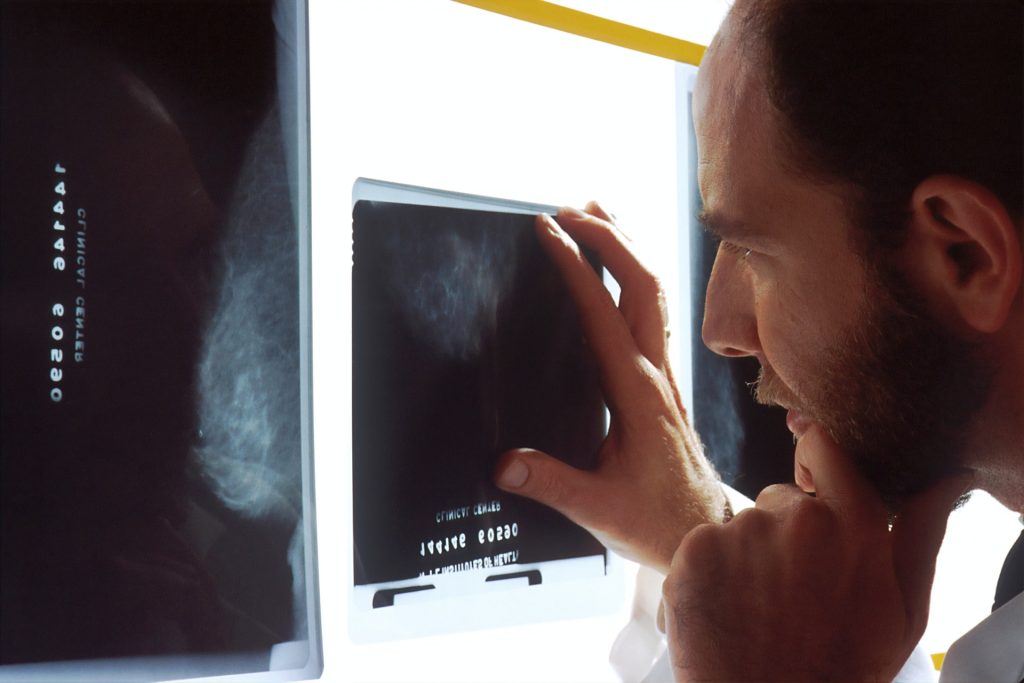
Researchers who conducted an analysis of nearly six million acute examinations suggest that leaders in imaging practice consider efforts to match interpretation of subspecialty examinations with radiologists’ fellowship training in the acute community setting.

Pointing out that major and minor discrepancy rates were not higher for acute community setting examinations outside of interpreting radiologists’ fellowship training, “discrepancy rates increased for advanced examinations,” acknowledged lead investigators Suzanne Chong from Indiana University in Indianapolis and Tarek Hanna of Emory University. The study was published in the American Journal of Roentgenology.

Using the databank of a large US teleradiology company, Chong, Hanna, and colleagues performed an analysis of 5 883 980 acute examinations that were preliminarily interpreted by 269 teleradiologists with a fellowship of neuroradiology, abdominal radiology, or musculoskeletal radiology. When providing final interpretations, client on-site radiologists voluntarily submitted quality assurance (QA) requests if preliminary and final interpretations were discrepant; the teleradiology company’s own QA committee categorised discrepancies as major (n=8444) or minor (n=17 208).

Among initial teleradiology interpretations of acute community setting examinations, common examinations’ major and minor discrepancies rates were not significantly different when concordant versus discordant with radiologists’ fellowship training. However, advanced examinations’ discrepancy rates were higher when concordant with radiologists’ fellowship (relative risk = 1.45 and 1.17, respectively).

Noting that their findings support multispecialty radiologist practice in acute community settings, “efforts to match examination and interpreting radiologist subspecialty may not reduce diagnostic discrepancies,” the article authors cautioned.

A supplement to the published article is available here [PDF].

Source: American Roentgen Ray Society

Uni Students’ Prescription Drugs Misuse Happens in the Week

Photo by Andrea Piacquadio from Pexels

Prescription drug misuse by university students happens more often during the week and when they are at home by themselves,  according to a recent study published in the journal Drug and Alcohol Dependence.

In the longitudinal study, university students at a large US university were surveyed, and asked about their prescription drug use and whether they used the medications not as intended by the doctor, such as changing the allowed dosage and frequency of when the medication was taken, or using someone else’s prescription medication.

Southern Methodist University associate professor Chrystyna D. Kouros said the study she co-authored revealed potential differences in the way university students misuse prescription drugs when compared to studies of how they use other substances. “Whereas other studies have shown that alcohol use, and to some extent marijuana use, is most likely to occur in social situations with peers and on the weekends, we found that the context of prescription drug misuse appears to be different,” Kouros said. “In our study, college students were more likely to endorse misusing prescription medication in moments when they were alone and at home. They were also more likely to misuse prescription medications during the week versus the weekend, and earlier in the day instead of the evening.”

The study focused on four classes of prescription drugs: pain relievers, stimulants, sedatives and tranquilisers. Researchers used a technique called ecological momentary assessment (EMA) to query the participating 297 students to record their behaviour in daily life. EMA involves repeated sampling of subjects’ current behaviours and experiences in real time, in their natural environments. Students were prompted by an iPod Touch four times a day to answer a brief survey. Students could also make a report if they were about to misuse a prescription.

The study suggests there might be different motivating factors underlying misuse of prescription drugs compared to other substances, Prof Kouros said.

“Current college-based prevention and intervention programs, thus, may need to be tailored or revised to also capture prescription drug misuse,” she added.

Source: Southern Methodist University

‘Extensive Network’ of Opaque Medical Industry Ties

Image: Pixabay CC0

A study published by the BMJ shines a light on an extensive network of financial and non-financial ties maintained by the medical product industry with all major healthcare parties and activities.

The researchers called for greater oversight and transparency for this largely opaque and unregulated network, “to shield patient care from commercial influence and to preserve public trust in healthcare.”
While the medical product industry is a critical partner in advancing healthcare, especially with the development of new tests and therapies, they have financial returns to shareholders as their main objective.

In a landmark 2009 report [PDF], the Institute of Medicine described a multifaceted healthcare ecosystem rife with industry influence.

To date most research into medical industry conflict of interests have focused on a single party (eg. healthcare professionals, hospitals, or journals) or a single activity (eg. research, education, or clinical care). Thus, the full extent of industry ties across the healthcare ecosystem remains uncertain.

To address this gap, a team of US researchers set out to identify all known ties between the medical product industry and the healthcare ecosystem.

They searched the medical literature for evidence of ties between pharmaceutical, medical device, and biotechnology companies and parties (including hospitals, prescribers and professional societies) and activities (including research, health professional education and guideline development) in the healthcare ecosystem.

The researchers drew in data in 538 articles from 37 countries, along with expert input, to create a map depicting these ties. These ties were then verified, catalogued, and characterised to ascertain types of industry ties (financial, non-financial), applicable policies on conflict of interests, and publicly available data sources.

The results show an extensive network of medical product industry ties – often unregulated and non-transparent – to all major activities and parties in the healthcare ecosystem.

Key activities include research, healthcare education, guideline development, formulary selection (prescription drugs that are covered by a health plan or stocked by a healthcare facility), and clinical care.

Parties include non-profit entities (eg foundations), the healthcare profession, the market supply chain (eg payers, purchasing and distribution agents), and government.

For example, the researchers describe how opioid manufacturers provided funding and other assets to prescribers, patients, public officials, advocacy organisations, and other healthcare parties, who, in turn, pressured regulators and public health agencies to stifle opioid related guidelines and regulations.

They also warned that harms from industry promoted products remain unexplored. All party types were found to have financial ties to medical product companies, with only payers and distribution agents lacking additional, non-financial ties.

They also show that policies for conflict of interests exist for some financial and a few non-financial ties, but publicly available data sources seldom describe or quantify these ties.

The researchers acknowledge that their findings are limited to known or documented industry ties, and that some data might have been missed. However, they say their strategy of systematic, duplicative searching and feedback from an international panel of experts is unlikely to have missed common or important ties.

In light of this, they conclude: “An extensive network of medical product industry ties to activities and parties exists in the healthcare ecosystem. Policies for conflict of interests and publicly available data are lacking, suggesting that enhanced oversight and transparency are needed to protect patients from commercial influence and to ensure public trust.”

Source: EurekAlert!

Pfizer’s Paxlovid Could Deliver Knockout Blow to COVID

Source: Pixabay CC0

Pharmaceutical giant Pfizer announced today that Paxlovid, its investigational novel COVID oral antiviral candidate, significantly reduced hospitalisation and death, based on an interim analysis of its phase II/III clinical trials showing an 89% reduction of risk of hospitalisation or death due to COVID. 

The phase II/III EPIC-HR (Evaluation of Protease Inhibition for COVID-19 in High-Risk Patients) randomised, double-blind study of non-hospitalised adult patients with COVID, who are at high risk of progressing to severe illness. The scheduled interim analysis showed an 89% reduction in risk of COVID-related hospitalisation or all-cause mortality compared to placebo in patients treated within three days of symptom onset (primary endpoint). Only 0.8% of patients who received Paxlovid were hospitalised through Day 28 with zero deaths, compared to 7.0% of patients who received placebo and were hospitalised or died. Similar reductions in COVID-related hospitalisation or mortality were seen in patients treated within five days of symptom onset; 1.0% of patients in the intervention arm were hospitalised through Day 28 with zero deaths, compared to 6.7% of placebo arm patients. In the overall study population through Day 28, no deaths were reported in intervention arm patients as compared to 10 (1.6%) deaths in placebo arm patients.

The results show such an overwhelming effectiveness that Pfizer, in consultation with the US Food and Drug Administration (FDA), will cease further enrollment into the study and will apply for Emergency Use Authorization (EUA) as soon as possible.

If it gets the green light, Pfizer’s Paxlovid, would be the first oral antiviral of its kind, a specifically designed SARS-CoV-2-3CL protease inhibitor. PF-07321332 inhibits viral replication at the proteolysis stage, before viral RNA replication. Co-administration with a low dose of ritonavir helps slow the metabolism of PF-07321332 in order for it to remain active in the body for longer at higher concentrations. It has shown effectiveness against multiple variants, and could have broad general effectiveness against coronaviruses.

“All of us at Pfizer are incredibly proud of our scientists, who designed and developed this molecule, working with the utmost urgency to help lessen the impact of this devastating disease on patients and their communities,” said Mikael Dolsten, MD, PhD, Chief Scientific Officer and President, Worldwide Research, Development and Medical of Pfizer. “We’re thankful to all of the patients, investigators, and sites around the world who participated in this clinical trial, all with the common goal of bringing forth a breakthrough oral therapy to help combat COVID.”

The review of safety data included a larger cohort of 1881 patients in EPIC-HR, whose data were available at the time of the analysis. Adverse events were comparable between paxlovid (19%) and placebo (21%), which were mostly mild.

Pfizer kicked off the EPIC-HR study in July 2021 after positive results from Phase I clinical trials, followed in August by the Phase II/III EPIC-SR (Evaluation of Protease Inhibition for COVID-19 in Standard-Risk Patients), to evaluate efficacy and safety in patients with a confirmed diagnosis of SARS-CoV-2 infection who are at standard (low) risk. This trial includes a cohort of vaccinated at-risk patients who have an acute breakthrough COVID infection. A further trial is investigating prophylaxis among household members of patients with a COVID infection. 

Source: Pfizer

Cannabis Use during Pregnancy is on the Rise

Source: Anna Hecker on Unsplash

As cannabis becomes increasingly legalised, for medical or recreational purposes, its use during pregnancy is increasing, along with the potential for abuse or dependence.

A new study, published in JAMA Psychiatry, explored the magnitude and nature of cannabis use disorders during pregnancy by examining hospital discharge codes. Most of those hospitalisations were for childbirth.

The study found that the proportion of hospitalised pregnant patients identified with cannabis use disorder (defined as cannabis use with clinically significant impairment or distress) rose 150% from 2010 to 2018.

Largest such study so far
“This is the largest study to document the scale of cannabis use disorder in prenatal hospitalisations,” said study co-author Claudia Lugo-Candelas, PhD, assistant professor of clinical medical psychology in Columbia University’s Department of Psychiatry. She notes the study found that pregnant patients with the condition had sharply higher levels of depression, anxiety, and nausea – results of clinical concern.  

“It’s a red flag that patients may not be getting the treatment they need,” Dr Lugo-Candelas said.

Some pregnant patients use cannabis instead of prescribed medications, thinking it’s a safer choice as cannabis legalisation has eased safety fears. However, both the American Academy of Pediatrics (AAP) and the American College of Obstetricians and Gynecologists (ACOG) have recommended against using cannabis while pregnant, chiefly because of known and unknown fetal effects. Concerns for maternal effects focus on smoking or vaping risks, not mental health.

The study identified 249 084 hospitalised pregnant patients with cannabis use disorder, who were classified into three sub-groups: those with cannabis use disorder only; those with use disorders for cannabis and other controlled substances; and those with cannabis use disorder and other non-controlled substances (alcohol, tobacco). Data was matched against equivalent patients without any substance use disorders.

Mood disorders more common
Researchers found that those with the cannabis condition were more likely to be younger (ages 15 to 24), Black non-Hispanic, and to not have private insurance.

Researchers analysed patients records for depression, anxiety, trauma, and ADHD, and a broader category of mood-related disorders. Medical conditions measured included chronic pain, epilepsy, multiple sclerosis, nausea, and vomiting.

All disorder sub-groups had elevated rates of nearly every factor studied. Patients with cannabis use disorder alone had triple the levels of depression and anxiety than patients with no use conditions. Mood-related disorders affected 58% of those with cannabis use disorder compared to 5% without.

“The least other substance use you have, the more that cannabis use makes a difference,” Dr Lugo-Candelas said. “That’s really striking.”

High levels of were also seen in the cannabis use disorder hospitalisations, but whether that was due to patients using cannabis to mitigate nausea, or due to cannabis use, which can cause a vomiting syndrome, or a symptom of pregnancy is unknown. Study co-author Angélica Meinhofer, PhD, assistant professor of population health sciences at Weill Cornell Medicine, noted that many states allow medical use of cannabis for nausea and vomiting.

While screening for cannabis during pregnancy could help, doctors could be reluctant to ask about use due to mandatory reporting rules. Patient education could help get them treatment earlier, especially with co-occurring psychiatric problems.

“Hopefully these findings will motivate better conversations between pregnant patients and their health care providers,” said Meinhofer.

The authors stress they aren’t arguing for or against cannabis use in pregnancy. Research on prenatal effects of the disorder is still largely lacking, though frequent use has been linked to low birth weight and other adverse outcomes. Their study, the researchers say, instead underscores the need to further explore the disorder and its links to psychiatric and medical conditions.

The increase of cannabis use by pregnant patients demands immediate investigation. “This is a population that’s showing a level of distress that is very, very high,” said Dr Lugo-Candelas. “Care and attention need to be rolled out.”

Source: Columbia University Irving Medical Center