New Easy Biomarker for Cardiovascular Risk

Image by Landon Arnold on Unsplash

A large study has shown that apolipoproteins apoB and apoA-1 together provide early and reliable cardiovascular risk information as well as levels of low-density lipoprotein (LDL) cholesterol. The researchers advocate introducing new guidelines for detecting cardiac risk and say the results, published in PLOS Medicine, may pave the way for early treatment, which could help lower morbidity and mortality rates.

Cardiovascular disease is the most common cause of death globally and includes a wide range of conditions, such as stroke and myocardial infarction with atherosclerosis in different organs of the body. In many cases the disease can be prevented and arrested with lifestyle changes and lipid-lowering treatments using statins and other methods.

The cardiac risk assessment usually uses reference values for the LDL cholesterol. Other types of fat particles can also be measured along with apolipoproteins, which transport cholesterol in the blood. International guidelines for cardiovascular disease recommend using apolipoprotein apoB, which transports LDL cholesterol, as an alternative risk marker for people with type 2 diabetes, overweight and very high levels of blood lipids.

Recent research has, however, indicated the importance of also factoring in the apolipoprotein apoA-1, which transports the protective and anti-inflammatory HDL cholesterol. Calculating the apoB/apoA-1 ratio gives a risk quotient reflecting the balance between the fat particles that expedite atherosclerosis and the “good” protective apoA-1 particles that arrest the process.

In this present study, the researchers have analysed the link between cardiovascular disease and apoB/apoA-1 values in more than 137 000 Swedish adults between the ages of 25 and 84. The individuals were followed for 30 years, during which time 22 000 suffered some form of cardiovascular event. The analysis methods are simple, inexpensive and safe, and do not require pre-test fasting, as is the case with LDL and non-HDL tests. Basing their study on a large database, the researchers linked the laboratory analyses to several clinical diagnosis registers.

“The results show that the higher the apoB/apoA-1 value, the greater the risk of myocardial infarction, stroke and need for coronary surgery,” says Göran Walldius, senior author and professor emeritus at the Institute of Environmental Medicine, Unit of Epidemiology, Karolinska Institutet. “The study also showed that the risk was amplified in the presence of low protective levels of apoA-1.”

Individuals with the highest apoB/apoA-1 values had a 70% higher risk of severe cardiovascular disease and almost triple the risk of non-fatal myocardial infarction compared with those with the lowest apoB/apoA-1 values. Individuals with the highest risk quotient were also more affected by severe cardiovascular diseases many years earlier than individuals with the lowest apoB/apoA-1 values.

The relationship was observed in both men and women and the elevated levels could be detected as early as 20 years before the onset of cardiovascular disease.

“Early preventive treatment and information about cardiovascular risk is, of course, important in enabling individuals to manage their risk situation,” Walldius says. “Early treatment can also reduce the cost burden on the public health services.”

Taken together, the results suggest that the apoB/apoA-1 ratio is a better marker for identifying at-risk individuals for cardiovascular disease compared to the apoB method alone.

“It should be possible to introduce cut-values for apoB, apoA-1 and the apoB/apoA-1 ratio into new guidelines as a complement to current guidance on the detection and treatment of dyslipidaemia,” said Walldius.

Source: Karolinska Institutet
HIV Prevalence Among Transgender People Remains High

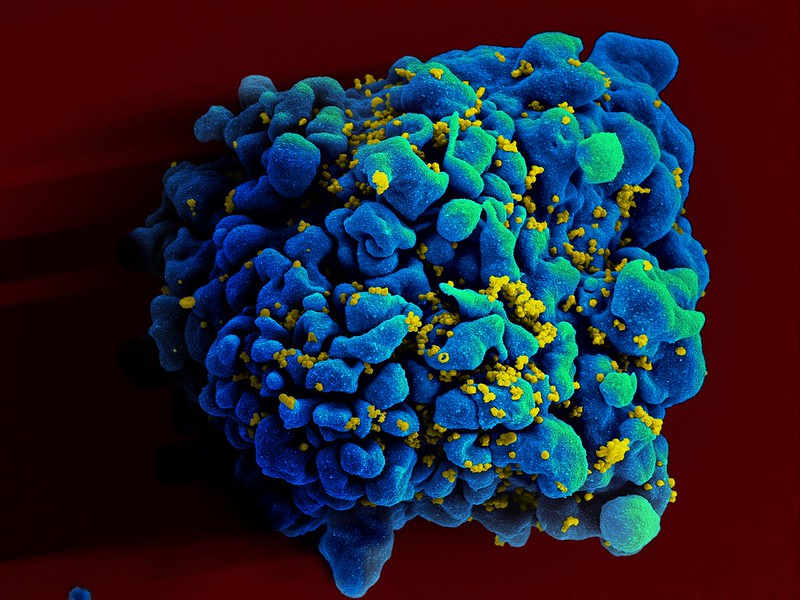
HIV Infecting a T9 Cell. Credit: NIH

A new analysis published in PLOS ONE highlights the worldwide prevalence of HIV among transgender people, demonstrating the need for continued prevention efforts. 

Transgender individuals have an increased risk of HIV infection,  due to factors which are numerous, complex, and dynamic. Recent years have seen updates in HIV prevention measures and so it is important to update knowledge of HIV among transgender individuals in order to inform further prevention efforts.

Applying a statistical method called random-effects modeling, the researchers conducted a meta-analysis of all 98 peer-reviewed publications on HIV prevalence among transgender individuals that appeared between January 2000 and January 2019.

The researchers found that, during the study period, 19.9% (confidence interval [CI] 14.7–25.1%) of trans feminine individuals were HIV positive, as were 2.56% (CI 0.0–5.9%) of trans masculine individuals. Compared with other individuals aged 15 and over, trans feminine people were 66 times more likely (51.4– 84.4) to have HIV, and trans masculine people were 6.8 times more likely (3.6–13.1).

The authors note that their findings counter presumptions that trans masculine individuals are not at risk for HIV. Meanwhile, they found, prevalence varied in different geographic regions, with Africa and Latin America appearing to be more impacted.

Overall, these findings reaffirm that transgender individuals face a disproportionate burden of HIV. The researchers call for increased efforts to meet the unique HIV prevention and care needs of this population.

Continued monitoring will require more data and research, especially to determine how prevalence is influenced by pre-exposure prophylaxis (PrEP)—medications that prevent HIV infection. Such research will be especially important considering that the new study only included data up to 2019, and PrEP treatment has expanded since then.

Source: MedicalXpress

Mechanism Behind AstraZeneca and J&J Vaccine Blood Clots Found

A cloud of platelet factor 4 proteins interacting with the electrostatic surface of the Oxford vaccine, as seen through the computational microscope.
Credit: Chun Kit Chan, Arizona State University

An international team of scientists believe they may have found a molecular mechanism behind the extremely rare blood clots linked to adenovirus vaccines.

Scientists led by a team from Arizona State University, Cardiff University and others worked with AstraZeneca to investigate vaccine-induced immune thrombotic thrombocytopenia (VITT), also known as thrombosis with thrombocytopenia syndrome (TTS), a life-threatening condition seen in a very small number of people after receiving the Oxford-AstraZeneca or Johnson & Johnson vaccines.

“The mechanism which results in this condition, termed vaccine-induced immune thrombotic thrombocytopenia (VITT), was unknown,” said Abhishek Singharoy, an Arizona State University scientist and corresponding author of the study who teamed up to lead an international effort to tease out the details. 

Together, the team worked to solve the structural biology of the vaccine, and see the molecular details that may be at play, utilising state-of-the cryo-EM technology to analyse the AstraZeneca vaccine in minute detail. They sought to understand whether the ultra-rare side effect could be linked to the viral vector which is used in many vaccines, including those from Oxford/AstraZeneca and Johnson & Johnson.

Their findings suggest it is the viral vector – in this case, an adenovirus used to shuttle the coronavirus’ genetic material into cells – and the way it binds to platelet factor 4 (PF4) once injected that could be the potential mechanism.

In very rare cases, the scientists suggest, the viral vector may enter the bloodstream and bind to PF4, where the immune system then views this complex as foreign. They believe this misplaced immunity could result in the release of antibodies against PF4, which bind to and activate platelets, leading to clustering and blood clotting.

“It’s really critical to fully investigate the vector-host interactions of the vaccine at a mechanistic level,” said Singharoy. “This will assist in understanding both how the vaccine generates immunity, and how it may lead to any rare adverse events, such as VITT.”

Their findings were published in Science Advances.

Adenovirus expert Professor Alan Parker said: “VITT only happens in extremely rare cases because a chain of complex events needs to take place to trigger this ultra-rare side effect. Our data confirms PF4 can bind to adenoviruses, an important step in unravelling the mechanism underlying VITT. Establishing a mechanism could help to prevent and treat this disorder.”

“We hope our findings can be used to better understand the rare side effects of these new vaccines – and potentially to design new and improved vaccines to turn the tide on this global pandemic.”

The AstraZeneca and Johnson & Johnson vaccines both use an adenovirus to carry SARS-CoV-2 Spike proteins to trigger an immune response.

Since VITT was seen in both vaccines, scientists wondered whether the viral vector was involved. Additionally, neither the Moderna nor Pfizer vaccines, both mRNA vaccines, showed this effect.

Using cryo-EM technology to flash-freeze preparations of ChAdOx1, the adenovirus used in the AstraZeneca vaccine, they produce microscopic images of the vaccine components.

They were then able to view the viral capsid structure and other critical proteins that allow entry of the virus into the cell.

In particular, the team outlined the details for the structure and receptor of ChAdOx1, which is adapted from chimpanzee adenovirus Y25 – and how it interacts with PF4. They believe it is this specific interaction – and how it is then presented to the immune system – that could cuase the immune system to see it as foreign and release antibodies against this self-protein.

The research team also used computational models to show that one of the ways the two molecules tightly bind is via electrostatic interactions. The group showed that ChAdOx1 is mostly electronegative, attracting other positively charged molecules to its surface.

First author Dr Alexander Baker said: “We found that ChAdOx1 has a strong negative charge. This means the viral vector can act like a magnet and attract proteins with the opposite, positive charge, like PF4.” Baker is a member of ASU’s Biodesign Center for Applied Structural Discovery and an Honorary Research Fellow at Cardiff University School of Medicine.

“We then found that PF4 is just the right size and shape that when it gets close to ChAdOx1 it could bind in between the negatively charged parts of ChAdOx1’s surface, called hexons.”

The research team are hopeful that armed with a better understanding of what may be causing rare VITT they can provide further insights into how vaccines and other therapies, which rely on the same technology, might be altered in the development of the next generation vaccines and therapies.

“With a better understanding of the mechanism by which PF4 and adenoviruses interact there is an opportunity to engineer the shell of the vaccine, the capsid, to prevent this interaction with PF4. Modifying ChAdOx1 to reduce the negative charge may reduce the chance of causing thrombosis with thrombocytopenia syndrome,” said Baker.

The team likened it to the ‘two birds, one stone’ effect. The key contacts of individual amino acids that are essential to the capsid protein’s proteins interaction with PF4 can removed or substituted.

“The modification of the ChAdOx1 hexons to reduce their electronegativity may solve two problems simultaneously: reduce the propensity to cause VITT to even lower levels, and reduce the levels of pre-existing immunity, thus helping to maximize the opportunity to induce robust immune responses, said Singharoy.”

Source: EurekAlert!

Bionic Eye Demonstration Paves the Way to Human Trials

The Phoenix99 Bionic Eye. Credit: University of Sydney

A bionic eye under development has shown to be safe and stable for long-term implantation in a three-month animal study, paving the way towards human trials.

The Phoenix99 Bionic Eye, being developed by University of Sydney and UNSW, is an implantable system, designed to restore a form of vision to patients living with severe vision impairment and blindness caused by degenerative diseases, such as retinitis pigmentosa. The device consists of two main implants: a stimulator attached to the eye and a communication module positioned under the skin behind the ear.

Published in Biomaterials, the researchers used a sheep model to observe how the body responds and heals when implanted with the device, with the results allowing for further refinement of the surgical procedure. The biomedical research team is now confident the device could be trialled in human patients and have applied for ethical approval.

The Phoenix99 Bionic Eye works by stimulating the retina which, in healthy eyes, the cells in one of the layers turn incoming light into electrical messages. In some retinal diseases, the cells responsible for this crucial conversion degenerate, causing vision impairment. The system bypasses these malfunctioning cells by stimulating the remaining cells directly, effectively tricking the brain into believing that light was sensed.

“Importantly, we found the device has a very low impact on the neurons required to ‘trick’ the brain. There were no unexpected reactions from the tissue around the device and we expect it could safely remain in place for many years,” said Mr Samuel Eggenberger, a biomedical engineer who is completing his doctorate with Head of School of Biomedical Engineering Professor Gregg Suaning.

“Our team is thrilled by this extraordinary result, which gives us confidence to push on towards human trials of the device. We hope that through this technology, people living with profound vision loss from degenerative retinal disorders may be able to regain a useful sense of vision,” said Mr Eggenberger.

Professor Gregg Suaning said the positive results are a significant milestone for the Phoenix99 Bionic Eye.

“This breakthrough comes from combining decades of experience and technological breakthroughs in the field of implantable electronics,” said Prof Suaning.

A patient is implanted with the Phoenix99, and a stimulator is positioned on the eye and a communication module implanted behind the ear. A tiny camera attached to glasses captures the visual scene in front of the wearer, and the images are processed into a set of stimulation instructions which are sent wirelessly through to the communication module of the prosthesis.

The implant then transfers the instructions to the stimulation module, which delivers electrical impulses to the neurons of the retina. The electrical impulses, delivered in patterns matching the images recorded by the camera, trigger neurons which forward the messages to the brain, which interprets the signals as seeing the scene.

Source: University of Sydney

Prunes Also Protect Bone Health in Men

Photo by Nino Liverani on Unsplash

New research published in the Journal of Food and Medicine reports that daily prunes consumption protects bone health in men over 50. This study is the first of its kind to examine the beneficial prune effect on bones in men. 

Some 2 million men are estimated to be battling osteoporosis and another 16.1 million men have osteopenia, or low bone mass. Despite these numbers, bone disease in men is often overlooked.

“We’ve already seen significant evidence that prunes have a positive effect on bone health in women, so it’s particularly exciting to find that prunes can also play a beneficial role in men’s bone health. We look forward to continuing to study the ‘prune effect’ on bone and other health outcomes in men,” said lead researcher Professor Shirin Hooshmand at San Diego State University.

In this study, 57 healthy men aged 50-79 years old were randomised to either consume 100 grams of prunes every day or no prunes for twelve months. After a year, the prune consumers showed significant decreases in biomarkers of bone breakdown, while no changes were observed in the control group. The study authors also reported the men who ate prunes showed improvements in bone geometry indicating greater bone strength.

Historically, research has focused on osteoporosis and bone health in women, already indicating a favorable bone response to prunes specifically among postmenopausal women. Several studies have suggested that eating 50 to 100 grams of prunes everyday could lead to increased bone mass and decreased bone breakdown. Moreover, a recent case study earlier this year reported that total bone mineral density increased in a postmenopausal woman with osteopenia after she consumed 50 grams of prunes daily for 16 months.

“Bone health is not just a concern for women. Men need to think about how to protect their bones as well,” said Leslie Bonci, MPH, RDN and consultant with the California Prune Board. “Prunes are a shelf-stable and nutrient-packed food that provide a preventive, proactive, palatable option for men to optimize their bone health.”

While San Diego State University’s newest research is an exciting addition to existing prune-focused literature, more work on the effect of prunes on human bone health is currently underway. An upcoming study from Pennsylvania State University examines how consuming different amounts of prunes affects health outcomes in postmenopausal women over a one-year period. The study not only explores the impact of prunes on bone health, but it will also look at the prune-effect on inflammation and gut health.

Source: PR Newswire

Paxlovid Ramped up and No ‘Red Flags’ for Omicron Yet

Image by Quicknews

In the face of a renewed global surge in COVID cases, Pfizer has ramped up production of Paxlovid, even while the efficacy of Merck’s molnupiravir appears to be less than believed.

Pfizer is now expecting to make 80 million courses of Paxlovid by the end of 2022, Pfizer CEO Albert Bourla told CNBC, a significant increase over its earlier planned capacity of 50 million courses.

This news came after Merck reported the risk reduction in hospitalisation and death from its COVID antiviral, molnupiravir, fell from 50% in the interim analysis to 30% in the final analysis. The reduction came after results were updated with participants that became evaluable after the interim analysis. This drop has led to predictions of increased demand for Paxlovid, which has shown an 89% risk reduction in outpatients.

The increase in production comes just in time to fight the Omicron variant, for which South Africa is now better prepared, according to experts.

‘No red flags’
According to Professor Salim Abdool Karim, director of the Centre for the Aids Programme of Research in South Africa, the numbers appear to be on the rise across all continents, but as yet there are “no red flags” he said.

Omicron has been identified by South African scientists as a major driver of the spike in cases in Gauteng.

“We have been amazed at how fast the numbers are going up,” he said. “But we were not caught with our pants down. We expected and prepared for a fourth wave. [The scientists] gave us the best fighting chance by giving us information early. We didn’t know exactly when it would come and what it would look like,” Prof Karim said, speaking to the Daily Maverick.

While a number of mutations enable the variant to escape immunity, a clear picture of Omicron’s nature won’t emerge for two to four weeks, he cautioned.

Speaking about travel bans imposed on South Africa by Mauritius, Rwanda, Egypt and the Seychelles, President Cyril Ramaphosa said ahead of a West African tour: “I am concerned. Out of due respect to them, they have their own reasons. We would like to have a discussion with them in a way we prefer that they do not react like our former colonisers who are very quick to close Africa down,” Ramaphosa told journalists.

EU accelerates child vaccinations
EU President von der Leyen has said that vaccines for children aged five to 11 will be available in the bloc by December 13, a week ahead of schedule and that she is pushing for the consideration of mandatory vaccination. This comes amidst news that Omicron was detected in the Netherlands before its first detection in South Africa. Meanwhile, in Asia, South Korea has reported its first five cases of Omicron.

How One Hospital Met the COVID Surge Head-on

Photo by Artem Podrez on Unsplash

Since March of 2020, the COVID pandemic has put an unprecedented strain on hospitals as large surges of intensive care unit patients overwhelmed hospitals. To meet this challenge, Beth Israel Deaconess Medical Center (BIDMC) expanded ICU capacity by 93% and maintained surge conditions during the nine weeks in the first quarter of 2020.

In a pair of papers and a guest editorial published in Dimensions of Critical Care Nursing, a team of nurse-scientists at Beth Israel Deaconess Medical Center (BIDMC) report on almost doubling the hospital’s ICU capacity; identifying, training and redeploying staff; and developing and implementing a proning team to manage patients with acute respiratory distress syndrome during the first COVID surge.

“As COVID was sweeping through the nation, we at BIDMC were preparing for the projected influx of highly infectious, critically ill patients,” said lead author Sharon C. O’Donoghue, DNP, RN, a nurse specialist in the medical intensive care units at BIDMC. “It rapidly became apparent that a plan for the arrival of highly infectious critically ill patients as well as a strategy for adequate staffing protecting employees and assuring the public that this could be managed successfully were needed.”

After setting up a hospital incident command structure to clearly define roles, open up lines of communication and develop surge plans, BIDMC’s leadership began planning for the impending influx of COVID patients in February 2020.

BIDMC – a 673 licensed bed teaching hospital affiliated with Harvard Medical School – has nine specialty ICUs located on two campuses for a total of 77 ICU beds. Informed by an epidemic surge drill conducted at BIDMC in 2012, it was determined that the trigger to open extra ICU space would be when 70 ICU beds were occupied. When this milestone was met on March 31, 2020, departmental personnel had a 12-hour window to convert two 36-bed medical-surgical units into additional ICU space, providing an additional 72 beds.

“Because the medical-surgical environment is not designed to deliver an ICU level of care, many modifications needed to be made and the need for distancing only added to the difficulties,” said senior author Susan DeSanto-Madeya, PhD, RN, FAAN, a Beth Israel Hospital Nurses Alumna Association endowed nurse scientist. “Many of these rooms were originally designed for patient privacy and quiet, but a key safety element in critical care is patient visibility, so we modified the spaces to accommodate ICU workflow.”

Modifications included putting windows in all patient room doors, and repositioning beds and monitors so patients and screens could be easily seen without entering the room. Lines of visibility were augmented with mirrors and baby monitor systems as necessary. Care providers were given two-way radios to decrease the number of staff required to enter a room when hands-on patient care was necessary. Mobile supply carts and workstations helped streamline workflow efficiency.

Besides stockpiling and managing medical equipment including PPE, ventilators and oxygen, increasing ICU capacity also required redeploying 150 staff trained in critical care. The hospital developed a recall list for former ICU nurses, as well as medical-surgical nurses that could care for critically ill patients on teams with veteran ICU nurses.

Education and support was provided from . In-person, socially-distanced workshops were developed for each group, after which nurses were assigned to shadow an ICU nurse to reduce anxiety, practice new skills and gain confidence.

“Staff identified the shadow experience as being most beneficial in preparing them for deployment during the COVID surge,” said O’Donoghue. “Historically, BIDMC has had strong collaborative relationships with staff from different areas and these relationships proved to be vital to the success of all the care teams. The social work department played a major role in fostering teams, especially during difficult situations.”

One of the redeployment teams was the ICU proning team. Proning is known to improve oxygenation in patients with acute respiratory distress syndrome is a complex intervention, takes time and is not without its potential dangers to the patient and staff alike. The coalition maximised resources and facilitated more than 160 interventions between March and May of 2020.

“Although the pandemic was an unprecedented occurrence, it has prepared us for potential future crises requiring the collaboration of multidisciplinary teams to ensure optimal outcomes in an overextended environment,” O’Donoghue said. “BIDMC’s staff rose to the challenge, and many positive lessons were learned from this difficult experience.”

“We must continue to be vigilant in our assessment of what worked and what did not work and look for ways to improve health care delivery in all our systems,” said DeSanto-Madeya, who is also an associate professor at the College of Nursing at the University of Rhode Island. “The memories from this past year and a half cannot be forgotten, and we can move forward confidently knowing we provided the best care possible despite all the hardships.”

Source: Beth Israel Deaconess Medical Center

Too Few Children with HIV are Virally Suppressed

Photo by sergey mikheev on Unsplash

Globally, less than two thirds of children and adolescents living with HIV who are receiving treatment are virally suppressed, according to new research published in The Lancet HIV.

Viral suppression [PDF] for HIV means that treatments are protecting health and preventing the transmission of HIV to others. UNAIDS has set a target of achieving 95% viral suppression among all people living with HIV on treatment by 2030.

“We estimate viral suppression one, two and three years after people start taking antiviral treatment, so that we can understand how well the treatments are working over time,” said Professor Matthew Law from the Kirby Institute.

“The data among adults on treatment in our studies show that viral suppression was achieved in an estimated 79% of adults at one year, and 65% at three years. However, viral suppression is poorer among children, at an estimated 64% at one year and 59% at three years.”

Senior study author, Dr Azar Kariminia from the Kirby Institute, said there are unique barriers to achieving viral suppression for children and adolescents. “It can be challenging for them to take treatment regularly, and children rely on caregivers who are often having to manage their own medical needs. There are also a range of factors that stem from stigma and discrimination, including a fear of disclosing the child’s HIV status.”

For this study, the researchers analysed data from 21 594 children/adolescents and 255 662 adults from 148 sites in 31 countries who initiated treatment between 2010 and 2019.

Dr Annette Sohn, from amfAR’s TREAT Asia program, is Co Principal Investigator for IeDEA Asia-Pacific (along with Prof. Law). She says that “while there has been substantial progress in the global response to HIV, the needs of children and adolescents often fall behind those of adults. Our efforts must extend beyond ensuring access to paediatric medicines to address the social and developmental challenges they face in growing up with HIV if we are to achieve the WHO targets by 2030.”

Viral load testing is essential to find out whether HIV treatments are working effectively. It is recommended by WHO at six and 12 months following the initiation of treatment, and then every 12 months thereafter. While viral load testing is common in high-income countries, scaling up accessible viral load testing in resource-limited settings remains a challenge.

With Australian government funding, the Kirby Institute and the Papua New Guinea Institute of Medical Research (PNGIMR) are partnering with the PNG government and a consortium of partners are implementing a program called ‘ACT-UP PNG’ which will scale up HIV viral load testing in two provinces with high HIV rates.

“Our work is ensuring that infants and children are afforded the same access to testing and treatment as other people with HIV,” says Dr Janet Gare from the PNGIMR and a Co-Principal Investigator on ACT-UP-PNG.

Instead of doing viral load testing in distant laboratories, ACT-UP PNG provides same-day molecular point-of-care testing in HIV clinics.

“This brings HIV viral load testing closer to patients, which currently includes children aged 10 and older, and adolescents,” says Dr Gare. “However, we are also pioneering the implementation of a diagnostic platform that will allow the same access to timely HIV viral load testing and results for infants six to eight weeks of age, and children up to nine years, who are currently unable to be included in point-of-care methods.”

Scientia Associate Professor Angela Kelly-Hanku says that these technologies will make testing for viral suppression in infants and children easier.

“We cannot end AIDS without addressing the inequalities that exist between paediatric and adult HIV programs. Projects like ACT-UP make a real difference and bring us closer to achieving the UNAIDS targets.”

Source: University of New South Wales

A Surprising Benefit of Dapagliflozin in Patients with Heart Failure

Photo by Artem Podrez from Pexels

Dapagliflozin, widely used to treat type 2 diabetes, was shown to improve symptoms and physical limitations in patients with heart failure with preserved ejection fraction, according to clinical trial results reported in Nature Medicine.

Heart failure with preserved ejection fraction (HFpEF) occurs when the heart’s lower left chamber is unable to fill with blood properly. The condition accounts for approximately half of all heart failure cases and disproportionally affects older individuals. Patients with HFpEF can experience a host of debilitating symptoms linked to cardiometabolic abnormalities, including physical limitations, impaired cognition and poor quality of life. Life expectancy is also reduced for patients with this diagnosis, with 50% of patients with the diagnosis not expected to survive more than five years.

Finding ways to improve patients’ health and developing or identifying therapeutic interventions that not only reduce hospitalisation but also improve patient survival is key, the researchers said, but at present there are no available treatments that improve patient survival for patients with HFpEF.

Previous studies have shown that sodium glucose cotransporter 2 (SGLT2) inhibitors – which inhibit SGLT2 receptor proteins produced by the kidneys and are used to treat type 2 diabetes – reduces risk of cardiovascular death and heart failure-related hospitalisation in patients with HFpEF.

For this trial, the researchers measured patient-reported symptoms, physical limitations and function in patients with HFpEF who were taking dapagliflozin, an SGLT2 inhibitor drug.

A total of 324 patients with HFpEF, 56.8% women, were randomised to receive either dapagliflozin or placebo for 12 weeks and at the end of the trial were evaluated using the Kansas City Cardiomyopathy Questionnaire Clinical Summary Score, a measure of heart failure-related health status.
“It’s important to note the percentage of women that were enrolled in this study because usually women are under-enrolled in clinical trials,” pointed out study co-author Professor Sadiya Khan.

Compared to the placebo group, an overall improvement in patient-reported symptoms, physical limitations and exercise function was seen in the dapagliflozin group. Adverse events were also similar between both groups, the authors reported.

“It was definitely surprising and very exciting to see such a stark difference between the treatment group and the placebo group, that there was this clear separation that happened even over a short period of time,” Prof Khan said, adding that next steps will be to investigate dapagliflozin’s precise molecular mechanisms that enable its effectiveness.

Source: Northwestern University

Improved Wound Healing with Platelet-rich Plasma

Image by Dian Polekhina on Unsplash

New research suggests that wound healing could be enhanced by replicating platelet-rich plasma from our blood to create implants introduced into the wound.

Platelet-rich plasma (PRP) is a natural healing substance in our blood. Researchers explored ways of enhancing the wound healing process by extracting PRP from the blood of a patient with a complex skin wound and manipulating it through 3D printing to form an implant for tissue repair which can be used to treat difficult-to-heal skin wounds in a single surgical procedure.

The results, which are reported in Advanced Functional Materials, showed that application of the 3D-printed PRP implant helped to speed up the healing of the wound by enabling efficient vascularisation and inhibiting fibrosis, which are both essential for effective wound healing.

Professor Fergal O’Brien, at RCSI University of Medicine and Health Sciences said: “Existing literature suggests that while the PRP already present in our blood helps to heal wounds, scarring can still occur. By 3D-printing PRP into a biomaterial scaffold, we can increase the formation of blood vessels while also avoiding the formation of scars, leading to more successful wound healing.

“As well as promising results for skin wound healing, this technology can potentially be used to regenerate different tissues, therefore dramatically influencing the ever-growing regenerative medicine, 3D printing and personalised medicine markets.”

Source: RCSI