
Fenofibrate Confers Modest Risk Reduction for Diabetic Retinal Disease
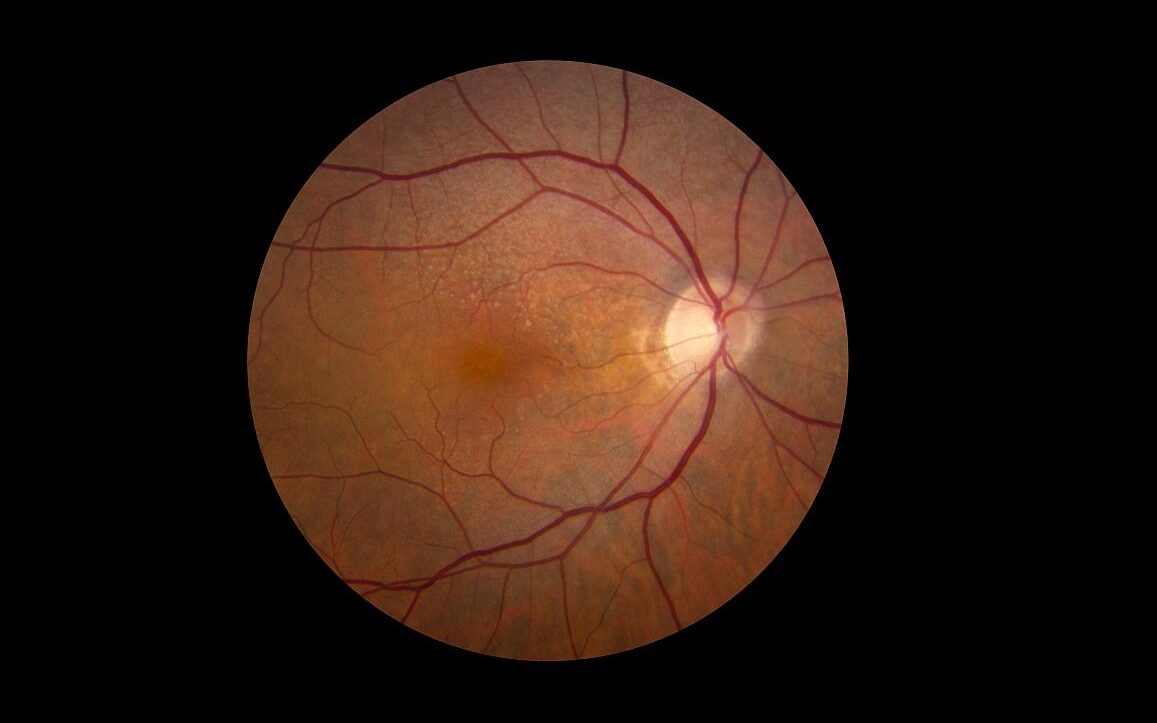
Retina showing reticular pseudodrusen. Credit: National Eye Institute

Taking the cholesterol-lowering drug fenofibrate had a modest but statistically significant association with reduced risk of vision-threatening diabetic retinopathy (VTDR), according to results of a large study published in JAMA Ophthalmology. In the study, fenofibrate use was associated with an 8% lower risk of progression compared to non-use.

Fenofibrate use had a greater effect on the risk of proliferative diabetic retinopathy, with a 24% decrease in progression (PDR) but did not significantly affect the risk of developing diabetic macular oedema (DME).

The researchers noted that these findings are in line with evidence showing fenofibrate may protect against diabetes-associated breakdown of the blood-retinal barrier, although ophthalmologists rarely use the drug to treat diabetic eye disease.

“Our positive association for progression to PDR coincides with results of previous clinical trials and adds new information with regards to the impact on DME,” the researchers stated.

Protection against progression to PDR “was found without regards to underlying NPDR [nonproliferative diabetic retinopathy] severity level, which is not well coded within the claims database,” the researchers continued. “Understanding this limitation and how the inclusion of NPDR severity levels that may not benefit from fenofibrates would bias our findings to the null means that the positive association seen in our study is actually an underestimate of the true association.”

While fenofibrate’s mechanism of action in diabetic retinopathy is not well understood, “interest in the use of this oral agent has become substantial,” noted Robert N. Frank, MD. author of an accompanying editorial.

“From the point of view of a clinician with a long-time interest in diabetic retinopathy, its causal mechanisms, and its evolving treatments, the possibility that an oral medication originally used for a different disease may be beneficial for the management of diabetic eye disease is exciting,” Dr Frank wrote.

“The evidence that fenofibrate can slow the progression of diabetic retinopathy is growing, but it has not yet become a widely accepted treatment,” he added. “It will be interesting to see how this large population analysis and the results from the ongoing DRCR Retina Network  randomised clinical trial will affect clinical practice in the years to come.”

Two clinical trials that evaluated fenofibrate’s effect on diabetic eye disease, the FIELD study and the ACCORD-Eye trial yielded conflicted findings regarding DME, PDR and progression of diabetic retinopathy. Both trials suggested that only patients with mild nonproliferative eye disease were likely to benefit.

To help inform decision-making on fenofibrate in eye disease, researchers drew on a large health insurer database for 150 252 adults who had NPDR-associated lab values from January 2002 through June 2019. The primary outcomes were a new diagnosis of VTDR (composite of PDR or DME) or DME and PDR individually.

The analysis showed 5835 (3.9%) used fenofibrate. During follow-up, 27 325 patients progressed to VTDR, including 4 086 to PDR and 22 750 to DME. While men accounted for a larger proportion of fenofibrate users (61.1% vs 51.0% of nonusers), patients had similar baseline characteristics.

Study limitations included lack of clinical applicability, not accounting for duration of fenofibrate use, and data being drawn from a single database.

Source: MedPage Today

Shift in Recommendations for Aspirin in CVD Prevention

Anatomical model of a human heart
Photo by Robina Weermeijer on Unsplash

The US Preventive Services Task Force (USPSTF) has issued a recommendation statement on the use of aspirin in the prevention of cardiovascular disease (CVD). The recommendation shifts the use of aspirin to an earlier window, and making it an individualised decision for people in their 40s to 50s with a > 10% 10-year CVD risk.

The previous recommendation from 2016 had called for low-dose aspirin for people in their 50s with a > 10% 10-year CVD risk and individualised decisions for those in their 60s with similar risk. The update comes after new evidence emerged in a number of randomised controlled trials.

For the update, which appears in JAMA Network, a systematic review was conducted on the effectiveness of aspirin to reduce the risk of CVD events (myocardial infarction and stroke), cardiovascular mortality, and all-cause mortality in persons without a history of CVD. The effect of aspirin use on colorectal cancer incidence and mortality was also investigated in primary CVD prevention populations, as well as the harms (particularly bleeding) associated with aspirin use.

The USPSTF concludes with moderate certainty that aspirin use for the primary prevention of CVD events in adults aged 40–59 years with a 10% or greater 10-year CVD risk has a small net benefit, and starting low-dose aspirin use for CVD prevention should be an individual decision for them. Those not at increased risk for bleeding and are willing to take low-dose aspirin daily are more likely to benefit. The USPSTF recommends against initiating low-dose aspirin use for the primary prevention of CVD in adults 60 years or older.

Aspirin’s mechanism of action in CVD protection is well known. Aspirin at low doses is an irreversible cyclooxygenase 1 (COX-1) enzyme inhibitor, and at higher doses, it also inhibits COX-2. By inhibiting platelet function through COX-1, aspirin reduces atherothrombosis risk, and has been used widely for the prevention of CVD events, particularly for secondary prevention. However the COX-1 is also involved with protection of the gastrointestinal mucosa, and inhibition of it can promote gastrointestinal bleeding. The mechanism for the possible antineoplastic effects of aspirin is not as well understood.

Older age is one of the strongest risk factors for CVD, and men have a higher overall CVD disease burden and tend to experience CVD events earlier in life. Race and ethnicity affects CVD burden, with Black persons having the highest prevalence of CVD.

Similar CVD benefits appear for a low aspirin dose (≤ 100mg/d) and for all doses that have been studied in CVD prevention trials (50 to 500mg/d). A pragmatic approach would be to use 81 mg/d, which is the most commonly prescribed dose in the US.

Because CVD risk estimation is imprecise and imperfect at the individual level, the USPSTF suggests using these risk estimates as a starting point to discuss with appropriate candidates their desire for daily aspirin use. The benefits of initiating aspirin use are greater for individuals at higher risk for CVD events (eg, those with > 15% or > 20% 10-year CVD risk).

In addition to age and estimated level of CVD risk, decisions about initiating aspirin use should be based on shared decision-making between clinicians and patients about the potential benefits and harms, based on the relative values the patient places on these (reduced CVD risk vs increased bleeding and stroke risk).

Annual bleeding events in individuals without risk factors for increased bleeding (eg, history of gastrointestinal bleeding risk, history of peptic ulcer disease, or use of nonsteroidal anti-inflammatory drugs or corticosteroids) are rare, but risk for bleeding increases modestly with advancing age. For persons who have initiated aspirin use, the net benefits continue to accrue over time in the absence of a bleeding event. However, benefits shrink with advancing age because of increased bleeding risk, with modelling data suggesting stopping aspirin use around age 75.

Genetics is Only Part of the Cancer Puzzle

Killer T cells about to destroy cancer cell
Killer T cells about to destroy cancer cell (centre). Credit: NIH

Though cancer is a genetic disease, the environment and metabolism must also be considered – and could narrow down avenues for cancer treatment, according to a research review by a leading expert which appears in Metabolites.

Nearly all the theories about the causes of cancer that have emerged over the past several centuries can be sorted into three larger groups, said Professor David Wishart at the University of Alberta. The first is cancer as a genetic disease, focusing on the genome. The second is cancer as an environmental disease, focusing on the exposome, which includes everything the body is exposed to throughout life. The third is cancer as a metabolic disease, focusing on the metabolome, which is all the chemical byproducts of the process of metabolism.

Until now, there has been little research on the metabolic perspective, but it’s gaining the interest of more scientists, who are beginning to understand the metabolome’s role in cancer.

The genome, exposome and metabolome operate together in a feedback loop as cancer develops and spreads.

According to the data, heritable cancers account for only 5–10%of all cancers, Wishart said. The remaining 90–95% are initiated by factors in the exposome, which in turn trigger genetic mutations.

“That’s an important thing to consider, because it says that cancer isn’t inevitable.”

The metabolome is a crucial part of the process, as those genetically mutated cancer cells are sustained by the cancer-specific metabolome.

“Cancer is genetic, but often the mutation itself isn’t enough,” said Wishart. As cancer develops and spreads in the body, it creates its own environment and introduces certain metabolites. “It becomes a self-fuelled disease. And that’s where cancer as a metabolic disorder becomes really important.”

The multi-omics perspective considers the genome, exposome and metabolome in unison when thinking about cancer. It is showing promise for finding treatments and for overcoming the limitations of looking at only one of these factors.

Researchers focusing only on the genetic perspective, for example, are looking to address particular mutations. The problem is, Prof Wishart said, is that there are around 1000 genes that can become cancerous when mutated, at least two different mutations within these cells are usually for cancer to grow. Thus, a there are a million possible mutation pairs, so “it becomes hopeless” to narrow down the possibilities when seeking new treatments.

From the metabolic perspective, there are just four major metabolic types, said Prof Wishart. Therefore instead of searching for a treatment plan for a one in a million mutation combination, determining the patient’s cancer metabolic type can immediately guide doctors in deciding on the best treatment for their specific cancer.

“It really doesn’t make a difference where the cancer is – it’s something you’ve got to get rid of. It’s how it thrives or grows that matters,” said Prof Wishart. “It becomes a question of, ‘What’s the fuel that powers this engine?'”

However, health-care providers still need a mix of therapeutics for cancer, and he noted that a deeper understanding of the metabolome and its role in the cancer feedback loop is also critical to preventing cancer.

“If we understand the causes of cancer, then we can start highlighting the known causes, the lifestyle issues that introduce or increase our risk,” he said.

“From the prevention side, changing our metabolism through lifestyle adjustments will make a huge difference in the incidence of cancer.”

Source: University of Alberta

Online Tool Helps Older Adults Decide When to Stop Driving

Older woman smiling
Photo by Ravi Patel on Unsplasj

A recent randomised controlled trial published in the Journal of the American Geriatrics Society found that an online decision aid may help older adults decide whether and when to stop driving.

Compared with older adults who viewed an educational website, those who viewed the decision aid, called Healthwise® DDA, had lower decisional conflict and higher knowledge about whether to stop or continue driving. The online aid has six sections: “Get the Facts,” “Compare Options,” “Your Feelings,” “Your Decision,” “Quiz Yourself,” and “Your Summary.”

In the National Institute on Aging–funded trial of 301 participants aged 70 years and older, 51.2% of whom identified as female,. the tool had high acceptability, with nearly all of those who used it saying that they would recommend it to others.

“The decision about when to stop driving is a difficult and emotional one – and also one most older adults eventually face,” explained lead author Marian Betz, MD, MPH, of the University of Colorado and the Rocky Mountain Regional VA Medical Center. “Tools like this one may help older adults make the decision and, hopefully, reduce negative feelings about the process.”

Source: Wiley

Nanoparticle Could Boost Polymyxin B for Gram-negative Sepsis

Patient's hand with IV drip
Photo by Anna Shvets on Pexels

To treat Gram-negative sepsis, Purdue University researchers are developing an injectable nanoparticle that can safely deliver Polymyxin B at high enough levels to inactivate endotoxins. Their research is published in Science Advances.

With an estimated annual mortality of between 30 and 50 deaths per 100 000 population,this condition ranks in the top 10 causes of death. One in three patients who die in a hospital has sepsis. Sepsis is a systemic illness caused by microbial invasion of normally sterile parts of the body, occurring when the body’s immune response to an infection or injury goes unchecked. The condition makes blood vessels leaky, leading to inflammation and blood clots, leading to impaired blood flow and possible death.

Professor Yoon Yeo leads a Purdue University team developing biocompatible nanoparticles that treat sepsis systemically through intravenous injection.

Prof Yeo said Polymyxin B, a traditional antibiotic, can inactivate endotoxins that cause a specific type of sepsis, but it may be too toxic for systemic application. For sepsis therapy, it mostly has been tested in extracorporeal blood cleaning, which is cumbersome and time consuming.

“Our nanoparticle formulations reduce dose-limiting toxicity of Polymyxin B without losing its ability to inactivate endotoxins,” Prof Yeo said.

In mouse models of sepsis, 100% treated with the Purdue nanoparticle were protected from excessive inflammation and survived.

“This technology holds promise as a safe, convenient option for patients and physicians,” Prof Yeo said.

Source: Purdue University

Montelukast Can Block Harmful SARS-CoV-2 Protein and Protect Immune Cells

Targeting Nsp1 with montelukast helps prevent shutdown of host protein synthesis Credit: Mohammad Afsar

Montelukast can bind to and block a crucial protein produced by SARS-CoV-2, reducing viral replication in human immune cells, according to a new study by researchers at the Indian Institute of Science (IISc).

Montelukast has been around for more than 20 years and is usually prescribed to reduce inflammation caused by conditions like asthma, hay fever and hives.

In the study, published in eLife, the researchers showed that the drug binds strongly to the C-terminal, which is one end of a SARS-CoV-2 protein called Nsp1, which is one of the first viral proteins unleashed inside human cells. NSp1 can bind to ribosomes inside immune cells, shutting down production of vital proteins that the immune system needs, thereby weakening it. Nsp1 could therefore be a target to reduce the virus’s damage.

“The mutation rate in this protein, especially the C-terminal region, is very low compared to the rest of the viral proteins,” explained IISc’s Assistant Professor Tanweer Hussain, senior author of the study. Since Nsp1 is unlikely to change in future variants, targeting it with drugs is a viable strategy, he added.

The researchers screened more than 1600 FDA-approved drugs with computational modelling to find the ones that bound strongly to Nsp1, coming up with a shortlist of drugs including montelukast and saquinavir, an anti-HIV drug. “The molecular dynamic simulations generate a lot of data, in the range of terabytes, and help to figure out the stability of the drug-bound protein molecule. To analyse these and identify which drugs may work inside the cell was a challenge,” said Mohammad Afsar, first author of the study.

The researchers then cultured human cells which produced Nsp1, treated them with montelukast and saquinavir separately, and found that only montelukast was able to rescue the inhibition of protein synthesis by Nsp1.

“There are two aspects [to consider]: one is affinity and the other is stability,” explained Afsar. This means that the drug needs to not only bind to the viral protein strongly, but also stay bound for a sufficiently long time to prevent the protein from affecting the host cell, he adds. “The anti-HIV drug (saquinavir) showed good affinity, but not good stability.” Montelukast, on the other hand, was found to bind strongly and stably to Nsp1, allowing the host cells to resume normal protein synthesis.

The researchers then tested the effect of the drug on live viruses and found that the drug was able to reduce viral numbers in infected cells in the culture.

“Clinicians have tried using the drug … and there are reports that said that montelukast reduced hospitalisation in COVID patients,” said A/Prof Hussain, adding that the exact mechanisms behind it still need to be fully understood. His team plans to work with chemists to see if they can modify the structure of the drug to increase its potency, and also plan to continue the hunt for more drugs.

Source: Indian Institute of Science

South Africa on Cusp of Fifth Wave as Public Apathy Mounts

Image by QuickNews

South Africa is now on the cusp of a fifth wave, experts warn, as indicators rise and new variants begin to circulate. Social media monitoring indicates a level of public apathy.

After a period of reduced cases, cases rose for three consecutive days, prompting concern. Health Department deputy director-general, Nicholas Crisp, noted possible explanations.

“It may be associated with one of the sub-variants of Omicron, certainly that is what’s dominant at the moment but it also might be just because we are all a bit lax at the moment, we don’t wear our masks so diligently,” he said.

Crisp said that they would be watching the data closely, before pronouncing on whether this was indeed the start of the fifth wave.

“We are not sure if this is the variant that’s going to do whatever is going to happen in the fifth wave, what we are seeing at the moment is what we call a flare-up,” Crisp said.

Wastewater monitoring has seen an uptick in coronavirus levels, according to the NICD’s weekly brief [PDF]. The BA.4 and BA.5 Omicron variants have been observed but it is not clear what impact they will have on the fifth wave. The Delta variant has been sequenced in wastewater, but the significance of this is still unclear.

Gauteng has reported the highest weekly incidence at 27.4 per 100 000 people, followed by Western Cape (23.4 per 100 000), and KwaZulu-Natal (13.4 per 100 000). However, testing rates are down in a number of provinces. The highest incidence is among young teenagers.

As of 25 April, 1954 new cases with a 19.3% positivity rate were recorded by the NICD.

The Health Department’s Vaccine Social Listening progamme has seen a significant drop in engagement across social media, down by 50% on Twitter, 60% on Facebook. Engagements with digital news articles are down 70%. Fears over a fifth wave have been dismissed on social media as “fear mongering” and there is a belief that “covid-19 is over”.

Business Leadership South Africa chief executive Busi Mavuso said the fifth wave will test the government’s new COVID regulations.

Writing in her weekly open letter, Mavuso noted South Africa is currently in the 30 day transition period from the end of the state of disaster on 5 April and the new National Health Act regulations.

She noted some risk, with mistakes from earlier regulations being built upon. However, increased background immunity levels was credited with the reduced impact of the Omicron wave in hospitalisation and deaths. Based on the assumption that the new wave will be less impactful, economically damaging measures can be avoided.

Mavuso added that the previous waves have proven that the country can find the best balance in managing the pandemic and the economy if there is full consultation so that the consequences of regulations can be understood and planned for. “I look forward to engaging our public sector counterparts to find that balance.”

Wits University’s Professor Shabir Madhi said that with a clear increase in cases, the country was on the cusp of a resurgence. The country will however be much better positioned with higher immunity levels and a demonstrated decoupling of infections and disease severity.

Further lockdowns would likely be unnecessary, given how past lockdowns have repeatedly failed.

Long COVID May be Due to Suppressed Immune System

Man wearing mask with headache
Source: Usman Yousaf on Unsplash

Scientists studying the effect of the monoclonal antibody Leronlimab on long COVID may have found a surprising clue to the baffling syndrome, one that contradicts their initial hypothesis. The cause may be down to an abnormally suppressed immune system, and not a persistently hyperactive one as they initially suspected.

The study was published in Clinical Infectious Diseases.

“While this was a small pilot study, it does suggest that some people with long COVID may actually have under-active immune systems after recovering from COVID, which means that boosting immunity in those individuals could be a treatment,” said senior author Professor Otto Yang.

COVID is known to be caused by hyperactive immune responses against SARS-CoV-2 resulting in damage to lungs and other organs, and sometimes a cytokine storm that overwhelms the individual, which could lead to severe illness and death.

For some who recover from COVID, various symptoms can persist for months, such as fatigue, mental haziness, and shortness of breath. Classified as long COVID, a limited understanding of the causes makes it difficult to develop treatments.

One suggested possibility is that persistence of immune hyperactivity after COVID is a major contributor. The researchers therefore ran a small exploratory trial of Leronlimab, an antibody that attaches to an immune receptor called CCR5 that is involved in inflammation, on 55 people with the syndrome. Leronlimab was originally being developed as an HIV treatment.

Participants were randomised to receiving either weekly injections of the antibody or a saline placebo for eight weeks, and changes in 24 symptoms associated with long COVID were tracked, including loss of smell and taste, muscle and joint pain, and brain fog.

Originally, the researchers believed that blocking CCR5 would calm an overactive immune system after COVID infection. Indeed, preliminary results from an earlier trial appeared to show an improvement with Leronlimab.

“But we found just the opposite,” Prof Yang said. “Patients who improved were those who started with low CCR5 on their T cells, suggesting their immune system was less active than normal, and levels of CCR5 actually increased in people who improved. This leads to the new hypothesis that long COVID in some persons is related to the immune system being suppressed and not hyperactive, and that while blocking its activity, the antibody can stabilize CCR5 expression on the cell surface leading to upregulation of other immune receptors or functions.”

The findings, the researchers wrote, “suggests a complex role for CCR5 in balancing inflammatory and anti-inflammatory effects, eg through T regulatory cells,” although the results need to be confirmed in a larger, more definitive study.

Source: University of California – Los Angeles Health Sciences

Dentures Could Worsen Nutritional Intake

Dentist checking teeth
Image by Caroline LM on Unsplash

Dentures could potentially worsen a person’s nutritional intake, according to new research in the Journal of Prosthodontics. The research team examined electronic dental and health records to gain a better understanding of how oral health treatments affect individuals’ overall health over time.

This is first known study to link lab values of nutritional biomarkers to dental records.

Thankam Thyvalikakath, DMD, MDS, PhD, senior author, explained the impact of dentures. “Dentures are a significant change for a person. They do not provide the same chewing efficiency, which may alter eating habits. Dentists need to be aware of this and provide advice or a referral for nutrition counselling. These patients need support during the transition and possible continued monitoring.”

The researchers matched the dental records of more than 10 000 patients which included lab test data, including malnutrition markers. The data included complete blood count, basic metabolic profile and lipid and thyroid panel tests. Comparing the lab results from two years before a patient received dentures to the two years after, the researchers found that people with dentures had a significant decline in certain nutrition markers over those two years.

People who did not wear dentures did not experience this decline. While marker levels were still within normal range, but the levels could potentially fall as more time passes, and the researchers urged dentists to be aware of this possibility.

Future research will look at other factors that may influence nutrition, including insurance status and dental clinic characteristics.

Source: Regenstrief Institute

Message Boards Showing Highway Death Toll Cause More Crashes

Driver at the wheel of a car
Photo by Why Kei on Unsplash

Displaying the highway death toll on message boards (eg, “1669 deaths this year on Texas roads”) is a common awareness campaign, but new research published in Science shows that it actually leads to more crashes.

Their study focuses on Texas, where officials chose to display these messages only one week each month. The researchers compared crash data from before the campaign to after it started as well as examined the weekly differences within each month during the campaign. They found:

  • There were more crashes during the week with fatality messaging compared to weeks without.
  • Displaying a fatality message caused a 4.5% in crashes in the 10km after the message boards. This increase is comparable to raising the speed limit 5–8kph or reducing highway police by 6–14%, according to previous research.
  • The researchers suggest this “in-your-face” messaging approach weighs down drivers’ “cognitive loads,” temporarily impacting their ability to respond to changes in traffic conditions.

“Driving on a busy highway [and] having to navigate lane changes is more cognitively demanding than driving down a straight stretch of empty highway,” said Assistant Professor Joshua Madsen. “People have limited attention. When a driver’s cognitive load is already maxed out, adding on an attention-grabbing, sobering reminder of highway deaths [can] become a dangerous distraction.”

Another finding was that the higher the number in the fatality message, the more harmful the effects. The number of additional crashes each month increased as the death toll accumulated throughout the year, with the most additional crashes occurring in January when the message stated the year’s total. Crashes were also found to increase in areas where drivers experienced higher cognitive loads, such as heavy traffic or driving past multiple message boards.

“The messages also increased the number of multi-vehicle crashes, but not single-vehicle crashes,” said Hall. “This is in line with drivers with increased cognitive loads making smaller errors due to distraction, like drifting out of a lane, rather than driving off the road.”

However, crashes were reduced when the displayed death tolls were low and when the message appeared where the highways were less complex. Madsen said this suggests that at times the messaging was not as taxing on drivers’ attention. However, alternative campaigns should be considered.

“Distracted driving is dangerous driving,” said Madsen. “Perhaps these campaigns can be reimagined to reach drivers in a safer way, such as when they are stopped at an intersection, so that their attention while driving remains focused on the roads.”

Source: University of Minnesota