What I Learned on My Journey through Breast Cancer

In Breast Cancer Awareness Month we can all do something to help

Photo by Angiola Harry on Unsplash

By Lee-Anne Bruce

I was diagnosed with breast cancer on an ordinary Thursday afternoon in February 2023. I was 34 years old. The December before, my GP had performed a breast exam as part of a general check-up and was concerned that with my dense breast tissue she might be missing something. She wanted me to have an ultrasound, but there was no rush. Her exact words to me were something like: “Don’t worry, it can wait until you have medical aid savings again in January.”

The ultrasound turned up a small shadow, just a centimetre in diameter – something that could be a cyst, but the radiologist thought we should do a mammogram “just in case”. Would I mind waiting? No, I wouldn’t mind. The mammogram was worrying enough that she got approval to do a biopsy the next day. “Just in case”. The results came in the following week.

I had none of the risk factors for breast cancer. I didn’t drink, didn’t smoke, didn’t have any family members with a history of breast cancer, was nowhere near the age of 50. A few months later, I would find out I had none of the genetic markers which can predict risk either – not only did I test negative for the genes associated with breast cancer called BRCA 1 and 2, I didn’t have any of the genes connected with any kind of cancer at all.

As I say, I was diagnosed on a Thursday afternoon. I had my first appointment with an oncologist that Friday morning. I had my first set of scans two days later on Monday and my initial surgery the following Friday. I started chemotherapy treatment within three weeks of first having the word “cancer” used in relation to my body. My doctors moved quickly because they had to. On a scale of 1 to 9 on something called the Bloom and Richardson classification, my cancer was a 9. So, even though I was only stage 1, I was also a grade 3. “Aggressive” doesn’t begin to cover it.

During this time, I held onto five facts. First, we had caught the tumour at exactly the right time. Had I gone in for screening any earlier, we might not have found the cancer yet. Had I gone any later, it likely would have grown and spread to my lymph nodes and other parts of my body and I might have needed more radical treatment and surgeries. Second, it was treatable. My particular kind of cancer ought to respond well to a combination of chemotherapy and radiation. Third, I was otherwise very healthy, aside from the cancer. Fourth, I had a medical aid which was covering almost everything I needed. And, most importantly, fifth, I had a wonderful support system of my partner and his family and our close friends to rely on.

From the beginning, I had an incredible standard of care. To the point where the doctors I saw had heated examination beds – they didn’t want their patients to experience any additional discomfort and distress during such a difficult time. And it was difficult. Chemotherapy and immunotherapy left me feeling battered and broken. Nausea, intense muscular pain, fatigue, vomiting, diarrhoea, constipation, weight gain, hair loss, brain fog, depression – some of the awful side effects it’s impossible to really prepare for. In fact, I had such a hard time mentally during treatment that at one point I had to be hospitalised.

The same day I received my diagnosis, I overheard a woman in my doctor’s office asking if it was possible to make a payment plan for her treatment. The administrators replied that treatment was likely to cost in excess of R300 000 at a minimum. I cannot even begin to imagine having to go into debt to fight off cancer. For treatment that makes you feel more than just sick, more like you’re dying. For treatment that may not necessarily work.

But this is the choice that faces most people with cancer in our country. With a relatively small number of people on comprehensive medical aids with screening benefits and prescribed minimum benefits, many face waiting for treatment in government facilities or running up huge bills at private clinics.

According to the most recent report by Statistics SA, breast cancer is the most commonly diagnosed cancer in women in South Africa, accounting for 23% of all cancers. It is also one of the most deadly, representing 17% of cancer deaths in women, just behind cervical cancer.

The Stats SA report lists “awareness of the symptoms and need for screening” as the main intervention to reduce the risk of death by breast cancer. The report also draws attention to the discrepancy in mortality rates in different population groups. For example, Coloured women have a relatively low incidence of breast cancer, but a high mortality rate – meaning that they are dying of breast cancer after being diagnosed too late. Stats SA points out that this is likely due to “poor access to cancer treatment facilities” as well as a lack of medical aid coverage. It is perhaps unsurprising that Black and Coloured women are the groups least likely to have medical aid in South Africa.

There are also some NGOs trying to step in to fill the gaps, like the aptly named I Love Boobies or the PinkDrive. These organisations make it their mission to give women a fighting chance to beat breast cancer. They provide free screenings to women around the country who would otherwise not be able to afford this necessary medical care.

I am one of the lucky ones. I officially went into remission on 30 August 2023 when I had a lumpectomy to remove the tumour in my right breast. Remission means that the cancer can no longer be detected in your body through scans and blood tests. It doesn’t mean you’re “cured”. There could still be cancerous cells in the body, which is why cancer is also often treated with radiation like mine was. Some people prefer not to use the term “survivor” until they have been in remission for over five years.

Five years is an important milestone for many people diagnosed with cancer. It’s often the period in which someone is most likely to suffer a relapse. I live with the possibility that my cancer will come back every day; I am reminded by my scars and by the fact that I am still recovering physically and mentally from a traumatic year. I still battle with periods of fatigue and depression and I will never be the same person I was before falling ill.

Still, remission is better than relapse. So far, so good. I continue to see my myriad of doctors every few months for scans and tests and examinations to check that nothing has come back yet and I feel like I’m getting stronger.

Almost a year to the day after I went into remission, my fiancé and I ran the Johannesburg Women’s Race in support of the PinkDrive. A mobile health unit was parked on the field in Mark’s Park offering free screenings all morning, which women were queuing up to access after the run. The festive atmosphere was bittersweet to me. Certainly, some of the women in that line would not know that they were starting on a long and painful journey, a journey which sometimes feels like it has no end. Hopefully, they would be starting early enough to be given a chance to become a survivor.

There’s another meaning of “remission” I wasn’t aware of until I looked it up. It can also be defined as “a cancellation of debt”. No-one with cancer should have to crowdfund in order to get treatment, but that is the reality we are faced with in our country. This October, I encourage everyone to contribute in whatever way they can to a cancer survivor’s remission. Join the Imagine Challenge, try a secret swim, pick up a pink bottle of milk or a scrunchie, support someone raising funds on GivenGain, get yourself examined. Every one of us can join the fight against breast cancer.

Republished from GroundUp under a Creative Commons Attribution-NoDerivatives 4.0 International Licence.
Read the original article

Rip and Tear: How a Key Immune Protein Defeats Bacterial Membranes

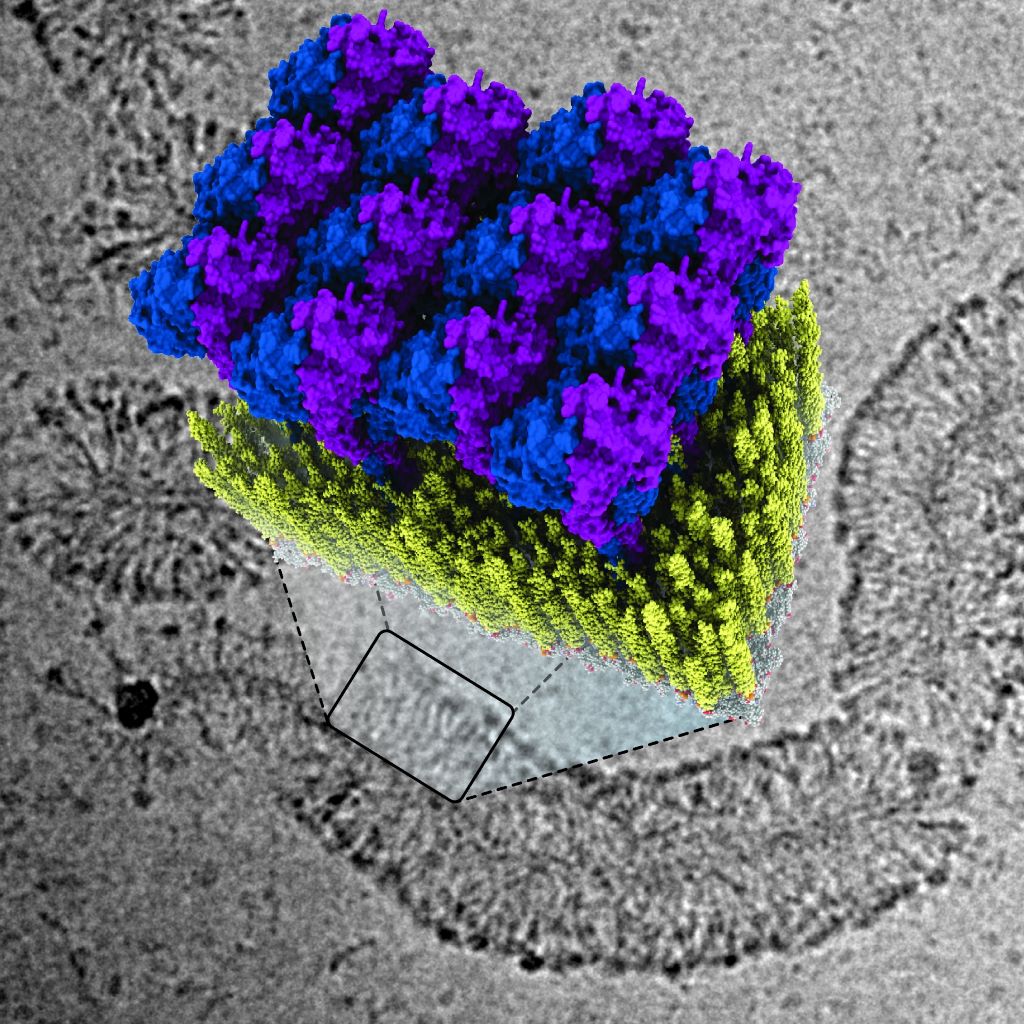
Illustration of how GBP1 proteins (blue and purple) attach to the membrane of a bacterium (yellow), zoomed in from an image taken with an electron microscope (in grayscale). Credit: Delft University

The protein GBP1 is a vital immune system component which fights against bacteria and parasites by enveloping them in a protein coat, but how the substance manages to do this has remained unknown until now. Researchers from Delft University of Technology report in Nature Structural & Molecular Biology how this protein operates – ripping and tearing until the bacterial membrane is undone. Their findings could aid in the development of medications and therapies for individuals with weakened immune systems.

So-called Guanylate Binding Proteins (GBPs) play a crucial role in our innate immune system, explains biophysicist Arjen Jakobi: “GBPs form the first line of defence against various infectious diseases caused by bacteria and parasites. Examples of such diseases include dysentery, typhoid fever caused by Salmonella bacteria, and tuberculosis. The protein also plays a significant role in the sexually transmitted infection chlamydia as well as in toxoplasmosis, which is particularly dangerous during pregnancy and for unborn children.”

Coat around bacteria

In their publication, Jakobi and his colleagues describe for the first time how the innate immune system fights against bacteria using GBP1 proteins. “The protein surrounds bacteria by forming a sort of coat around them,” explains Tanja Kuhm, PhD candidate in Jakobi’s research group and the lead author of the article. “By pulling this coat tighter, it breaks the membrane of the bacteria – the protective layer surrounding the intruder – after which immune cells can clear the infection.”

Deciphering the defence strategy

To decode the defence strategy of GBPs, the researchers examined how GBP1 proteins bind to bacterial membranes using a cryogenic electron microscope. This allowed them to see the process in great detail down to the molecular level. Jakobi: “We were able to obtain a detailed three-dimensional image of how the protein coat forms. Together with biophysical experiments conducted in Sander Tans’ research group at research institute AMOLF, which enabled us to manipulate the system precisely, we succeeded in deciphering the mechanism of the antibacterial function.”

Medications

According to Jakobi, this research helps us understand better how our body is capable of combating bacterial infections. “If we can grasp this well, and we can specifically activate or deactivate the involved proteins through medication, it may offer opportunities to speed up getting rid of certain infections.”

Source: Delft University

An Early Blood Test can Predict Survival in Patients with Metastatic Prostate Cancer

Credit: Darryl Leja National Human Genome Research Institute National Institutes Of Health

A blood test, performed when metastatic prostate cancer is first diagnosed, can predict which patients are likely to respond to treatment and survive the longest. It can help providers decide which patients should receive standard treatment versus who might stand to benefit from riskier, more aggressive new drug trials. The research, which forms part of a Phase III clinical trial, was just published in JAMA Network Open.

Once prostate cancer has metastasised and is no longer curable, systemic treatments are used to prolong survival as much as possible. Biomarkers that predict how patients will respond could allow for better personalisation of treatments, but they are few and far between.

A new study found that measuring circulating tumour cells (CTCs), rare cancer cells shed from tumours into the blood, is a reliable way to predict later treatment response and survival prospects. CTCs have been studied in prostate cancer before, but only in its later stages.

“No one, until now, has looked at whether CTC counts can be used right at the beginning, when a man first presents with metastatic prostate cancer, to tell us whether he’s going to live a long or short time, or whether or not he will progress with therapies,” said Amir Goldkorn, MD, lead author of the study and associate director of translational sciences at the USC Norris Comprehensive Cancer Center at the Keck School of Medicine of USC.

The research leveraged CellSearch (Menarini, Inc.), an FDA-cleared liquid biopsy technology at the Norris Comprehensive Cancer Center, to detect and measure CTCs in blood samples. Patients with more CTCs had shorter median survival lengths and a greater risk of death during the study period. Those with more CTCs also had less “progression-free survival,” which refers to the length of time when a patient’s disease is controlled by treatment without getting worse.

“You couldn’t tell these men apart when they walked through the door,” said Goldkorn, who is also a professor of medicine at the Keck School of Medicine. “All of their other variables and prognostic factors were seemingly the same, and yet they had very, very different outcomes over time.”

The researchers say that the CellSearch blood test, which is already widely available from commercial providers, can help quickly identify patients who are unlikely to respond to standard treatment options. Those men could benefit from a more intensive approach to therapy, including clinical trials of new drugs that may have more side effects but could improve survival in these high-risk patients.

Counting CTCs

The research was part of a phase 3 clinical trial of the NCI-funded SWOG Cancer Research Network, a group of more than 1300 institutions around the country that collaborate to study various cancers. Baseline blood samples from 503 patients with metastatic prostate cancer, who were participating in a new drug trial, were sent to the Keck School of Medicine team for analysis.

To analyze the blood samples, the researchers used the CellSearch platform at the Norris Comprehensive Cancer Center’s Liquid Biopsy Research Core, a facility that Goldkorn founded and directs. CellSearch uses immunomagnetic beads, antibodies attached to small magnetic particles, which bind to CTCs in the blood and pull them out to be detected and counted by specialised equipment.

Patients with five or more CTCs in their blood sample had the worst outcomes. Compared to patients with zero CTCs, they were 3.22 times as likely to die during the study period and 2.46 times as likely to have their cancer progress. They were only 0.26 times as likely to achieve a complete prostate-specific antigen (PSA) response, meaning they responded poorly to treatment.

Men with five or more CTCs had a median survival length of 27.9 months following the blood test, compared to 56.2 months for men with one to four CTCs and at least 78 months for men with zero CTCs. (Many patients in the latter group survived past the date of publication, so the median survival length could not yet be calculated.)

The bottom line: more CTCs meant that patients survived for less time, progressed much more quickly and were unlikely to respond to standard treatments.

Candidates for clinical trials

The new study shows that measuring CTC counts at the start of therapy can predict long-term survival rates, even in men who go on to receive many treatments for metastatic prostate cancer over a years-long period. That means the test can help identify men early on for trials of new and potentially more aggressive therapies.

“We want to enrich these clinical trials with men who need all that extra help – who really would benefit from three drugs versus just two, or from being on a new chemotherapy drug, even though it may have more side effects,” Goldkorn said.

Goldkorn and his team are now testing a new blood test that measures not just CTC counts, but also the molecular composition of CTCs and tumour DNA circulating in the blood, as well as other factors. Their goal is to create biomarkers with even more predictive power, which may ultimately help match patients with specific treatment options.

Source: Keck School of Medicine of USC

Research Reveals a New Target to Treat Anxiety

A healthy neuron. Credit: NIH

Scientists at Université de Montréal and its affiliated Montreal Clinical Research Institute (IRCM) have uncovered unique roles for a protein complex in the structural organisation and function of brain cell connectivity, as well as in specific cognitive behaviours.

The work by a team led by Hideto Takahashi, director of the IRCM’s synapse development and plasticity research unit, in collaboration with Steven Connor’s team at York University and Masanori Tachikawa’s team at Japan’s Tokushima University is published in The EMBO Journal.

Although defects in synapse organisation are linked to many neuropsychiatric conditions, the mechanisms responsible for this organisation are poorly understood. The new study’s findings could provide valuable therapeutic insights, the researchers believe.

Two goals are important to bear in mind with this research, said Takahashi, an associate research medical professor in molecular biology and neuroscience at UdeM.

“One is to uncover novel molecular mechanisms for brain cell communication,” he said. “The other is to develop a new unique animal model of anxiety disorders displaying panic disorder- and agoraphobia-like behaviours, which helps us develop new therapeutic strategies.”

Understanding the mechanisms

Synapses are essential for neuronal signal transmission and brain functions. Defects in excitatory synapses, which activate signal transmission to target neurons, and those in synaptic molecules predispose to many mental illnesses.

Takahashi’s team has previously discovered a new protein complex within the synaptic junction, called TrkC-PTPσ, which is only found in excitatory synapses. The genes coding for TrkC (NTRK3) and PTPσ (PTPRS) are associated with anxiety disorders and autism, respectively. However, the mechanisms by which this complex regulates synapse development and contributes to cognitive functions are unknown.

The work carried out in the new study by first author Husam Khaled, a doctoral student in Takahashi’s laboratory, showed that the TrkC-PTPσ complex regulates the structural and functional maturation of excitatory synapses by regulating the phosphorylation, a biochemical protein modification, of many synaptic proteins, while disruption of this complex causes specific behavioural defects in mice.

Building blocks of the brain

Neurons are the building blocks of the brain and the nervous system that are responsible for sending and receiving signals that control the brain and body functions. Neighbouring neurons communicate through synapses, which act like bridges that allow the passage of signals between them.

This process is essential for proper brain functions such as learning, memory and cognition. Defects in synapses or their components can disrupt communication between neurons, and lead to various brain disorders.

By generating mice with specific genetic mutations that disrupt the TrkC-PTPσ complex, Takahashi’s team uncovered the unique functions of this complex. They demonstrated that this complex regulates the phosphorylation of many proteins involved in synapse structure and organisation.

High-resolution imaging of the mutant mice brains revealed abnormal synapse organisation, and further study of their signaling properties showed an increase in inactive synapses with defects in signal transmission. Observing the behaviour of the mutant mice, the scientists saw that they exhibited elevated levels of anxiety, especially enhanced avoidance in unfamiliar conditions, and impaired social behaviours.

Source: University of Montreal

Quarter of Adults Suspect They Have Undiagnosed ADHD, Study Finds

Photo by Alex Green on Pexels

Attention deficit/hyperactivity disorder – also known as ADHD – is typically thought of as a childhood condition. But more adults are realising that their struggles with attention, focus and restlessness could in fact be undiagnosed ADHD, thanks in large part to trending social media videos racking up millions of views. 

A new national survey of 1000 American adults commissioned by The Ohio State University Wexner Medical Center and College of Medicine finds that 25% of adults now suspect they may have undiagnosed ADHD. But what worries mental health experts is that only 13% of survey respondents have shared their suspicions with their doctor. 

That’s raising concerns about the consequences of self-diagnosis leading to incorrect treatment.

“Anxiety, depression and ADHD – all these things can look a lot alike, but the wrong treatment can make things worse instead of helping that person feel better and improving their functioning,” said psychologist Justin Barterian, PhD, clinical assistant professor in Ohio State’s Department of Psychiatry and Behavioral Health.

An estimated 4.4% of people ages 18 to 44 have ADHD, and some people aren’t diagnosed until they’re older, Barterian said. 

“There’s definitely more awareness of how it can continue to affect folks into adulthood and a lot of people who are realising, once their kids have been diagnosed, that they fit these symptoms as well, given that it’s a genetic disorder,” Barterian said.

The survey found that younger adults are more likely to believe they have undiagnosed ADHD than older generations, and they’re also more likely to do something about it. 

Barterian said that should include seeing a medical professional, usually their primary care provider, to receive a referral to a mental health expert to be thoroughly evaluated, accurately diagnosed and effectively treated. 

“If you’re watching videos on social media and it makes you think that you may meet criteria for the disorder, I would encourage you to seek an evaluation from a psychologist or a psychiatrist or a physician to get it checked out,” Barterian said.

What is Adult ADHD?

Adults struggling with ADHD will have problems with paying attention, hyperactivity and impulsivity that are severe enough to cause ongoing challenges at school, work and home. These symptoms are persistent and disruptive and can often be traced back to childhood.

Adult ADHD occurs in:

  • Adults who were diagnosed as children, but symptoms continue into adulthood.
  • Adults who are diagnosed for the first time, despite experiencing symptoms since they were younger that had been ignored or misdiagnosed. 

Hyperactivity as a symptom is typically less present in adults than in children. Many adults with ADHD struggle with memory and concentration issues. Symptoms of ADHD often worsen with stress, conflict or increased demands in life.

What are common types of ADHD?

The three types of ADHD are:

  • Inattentive ADHD – Inability to pay attention and distractibility. This also is known as attention-deficit disorder (ADD).
  • Hyperactive and impulsive ADHD – Hyperactivity and impulsivity.
  • Combined ADHD – This type causes inattention, hyperactivity and impulsivity.

ADHD can be difficult to diagnose in adults, because some of the symptoms are similar to those in other mental health conditions, such as depression or anxiety.

“Symptoms of ADHD can look different between different people,” Barterian said. “Some people might have more difficulty focusing on lectures or with organisation, while others may have more social difficulties with impulsivity and trouble following along in conversations.”

Source: Ohio State University

Persistent Infection could Explain Some Long COVID Cases

Image by Fusion Medical on Unsplash

A persistent infection could explain why some people experience long COVID symptoms, according to a new study led by researchers at Brigham and Women’s Hospital. The team found evidence of persistent infection in 43% of participants with cardiopulmonary, musculoskeletal or neurologic symptoms of long COVID. The results are published in Clinical Microbiology and Infection.

“If we can identify a subset of people who have persistent viral symptoms because of a reservoir of virus in the body, we may be able to treat them with antivirals to alleviate their symptoms,” said lead author Zoe Swank, PhD, a postdoctoral research fellow in the Department of Pathology at Brigham and Women’s Hospital.

The study analysed 1569 blood samples collected from 706 people, including 392 participants from the National Institutes of Health-supported Researching COVID to Enhance Recovery (RECOVER) Initiative,  who had previously tested positive for a COVID infection. With a highly sensitive test they developed, researchers looked for whole and partial proteins from the SARS-CoV-2 virus. They also analysed data from the participants’ long COVID symptoms, using electronic medical chart information or surveys that were gathered at the same time as the blood samples were taken.

Compared to people who didn’t report long COVID symptoms, those who reported persisting symptoms many organ systems were approximately twice as likely to have SARS-CoV-2 proteins circulating in their blood. The research team was able to detect the spike protein and other components of the SARS-CoV-2 virus using Simoa, an ultrasensitive test for detecting single molecules. Commonly reported long COVID symptoms included fatigue, brain fog, muscle pain, joint pain, back pain, headache, sleep disturbance, loss of smell or taste, and gastrointestinal symptoms.

Specifically, 43% of those with long COVID symptoms affecting three major systems in the body, including cardiopulmonary, musculoskeletal, and neurologic systems, tested positive for viral proteins within 1 to 14 months of their positive COVID test. But only 21% of those who didn’t report any long COVID symptoms tested positive for the SARS-CoV-2 biomarkers in this same period.

It’s possible that a persistent infection explains some – but not all – of the long COVID sufferers’ symptoms. If this is the case, testing and treatment could aid in identifying patients who may benefit from treatments such as antiviral medications.

A Condition with More Than One Cause

One of the questions raised by the study is why more than half of patients with wide-ranging long COVID symptoms tested negative for persistent viral proteins.

“This finding suggests there is likely more than one cause of long COVID,” said David Walt, PhD, a professor of Pathology at Brigham and Women’s Hospital and Principal Investigator on the study. “For example, another possible cause of long-COVID symptoms could be that the virus harms the immune system, causing immune dysfunction to continue after the virus is cleared.”

To better understand whether an ongoing infection is behind some people’s long COVID symptoms, Swank, Walt and other researchers are currently conducting follow-up studies. They’re analyzing blood samples and symptom data in larger groups of patients, including people of wide age ranges and those with compromised immune symptoms. This way, they can also see if some people are more likely to have persistent virus in the body.

“There is still a lot that we don’t know about how this virus affects people,” said David C. Goff, MD, PhD, a senior scientific program director for the RECOVER Observational Consortium Steering Committee and director of the Division of Cardiovascular Sciences at the National Heart, Lung, and Blood Institute (NHLBI), part of NIH. “These types of studies are critical to help investigators better understand the mechanisms underlying long COVID – which will help bring us closer to identifying the right targets for treatment.”

Goff added that these results also support ongoing efforts to study antiviral treatments.  

The SARS-CoV-2 blood test developed by Brigham and Women’s researchers is also currently being used in a national study, called RECOVER-VITAL, that is testing whether an antiviral drug helps patients recover from long COVID. The RECOVER-VITAL trial will test the patients’ blood before and after treatment with an antiviral to see if treatment eliminates persistent viral proteins in the blood.

The idea that a virus can stay in the body and cause ongoing symptoms months after an infection isn’t unique to COVID. “Other viruses are associated with similar post-acute syndromes,” said Swank. She noted animal studies have found Ebola and Zika proteins in tissues post-infection, and these viruses have also been associated with post-infection illness.

Source: Brigham and Women’s Hospital

A Potential Stool Test for Endometriosis also Suggests an IBD Link

Photo by Sora Shimazaki on Pexels

Promising findings by researchers at Baylor College of Medicine and collaborating institutions could lead to the development of a non-invasive stool test and a new therapy for endometriosis, a painful condition that affects nearly 200 million women worldwide. The study appeared in the journal Med.

“Endometriosis develops when lining inside the womb grows outside its normal location, for instance attached to surrounding intestine or the membrane lining the abdominal cavity. This typically causes bleeding, pain, inflammation and infertility,” said corresponding author Dr Rama Kommagani, associate professor in the Department of Pathology and Immunology at Baylor. “Generally, it takes approximately seven years to detect endometriosis and is often diagnosed incorrectly as a bowel condition. Thus, delayed diagnosis, together with the current use of invasive diagnostic procedures and ineffective treatments underscore the need for improvements in the management of endometriosis.”

“Our previous studies in mice have shown that the microbiome, the communities of bacteria living in the body, or their metabolites, the products they produce, can contribute to endometriosis progression,” Kommagani said. “In the current study, we took a closer look at the role of the microbiome in endometriosis by comparing the bacteria and metabolites present in stools of women with the condition with those of healthy women. We discovered significant differences between them.”

The findings suggested that stool metabolites found in women with endometriosis could be the basis for a non-invasive diagnostic test as well as a potential strategy to reduce disease progression.

The researchers discovered a combination of bacterial metabolites that is unique to endometriosis. Among them is the metabolite called 4-hydroxyindole. “This compound is produced by ‘good bacteria,’ but there is less of it in women with endometriosis than in women without the condition,” said first author Dr Chandni Talwar, postdoctoral associate in Kommagani’s lab.

“These findings are very exciting,” Talwar said. “There are studies in animal models of the disease that have shown specific bacterial metabolite signatures associated with endometriosis. Our study is the first to discover a unique metabolite profile linked to human endometriosis, which brings us closer to better understanding the human condition and potentially identifying better ways to manage it.”

Furthermore, extensive studies also showed that administering 4-hydroxyindole to animal models of the disease prevented the initiation and progression of endometriosis-associated inflammation and pain. 

“Interestingly, our findings also may have implications for another condition. The metabolite profile we identified in endometriosis is similar to that observed in inflammatory bowel disease (IBD), revealing intriguing connections between these two conditions,” Kommagani said. “Our findings support a role for the microbiome in endometriosis and IBD.”

The researchers are continuing their work toward the development of a non-invasive stool test for endometriosis. They are also conducting the necessary studies to evaluate the safety and efficacy of 4-hydroxyindole as a potential treatment for this condition.

Source: Baylor College of Medicine

Skin Pigmentation May Affect Pharmacokinetics of Certain Drugs

Photo by ROCKETMANN TEAM

Skin pigmentation may act as a “sponge” for some medications ranging from antibiotics to nicotine patches, potentially influencing the speed with which active drugs reach their intended targets, a pair of scientists report in a perspective article published in the journal Human Genomics.

There has been a growing awareness of genetic susceptibility or tolerance to medications. Redheads for example had been shown to need more inhalational anaesthetic than dark-haired individuals. The researchers argue that a sizable proportion of drugs and other compounds can bind to melanin pigments in the skin, leading to differences in how bioavailable and efficacious these drugs and other compounds are in people with varying skin tones.

“Our review paper concludes that melanin, the pigment responsible for skin colour, shows a surprising affinity for certain drug compounds,” said paper coauthor Simon Groen, an assistant professor of evolutionary systems biology at the University of California, Riverside. “Melanin’s implications for drug safety and dosing have been largely overlooked, raising alarming questions about the efficacy of standard dosing since people vary a lot in skin tones.”

According to Groen and coauthor Sophie Zaaijer, a consultant and researcher affiliated with UC Riverside who specialises in diversity, equity, and inclusion (DEI) in preclinical R&D and clinical trials, current FDA guidelines for toxicity testing fail to adequately address the impact of skin pigmentation on drug interactions.

“This oversight is particularly concerning given the push for more diverse clinical trials, as outlined in the agency’s Diversity Action Plan,” Zaaijer said. “But current early-stage drug development practices still primarily focus on drug testing in white populations of Northern European descent.”

In one example, the researchers found evidence of nicotine affinity for skin pigments, potentially affecting smoking habits across people with a variety of skin tones and raising questions about the efficacy of skin-adhered nicotine patches for smoking cessation.

“Are we inadvertently shortchanging smokers with darker skin tones if they turn to these patches in their attempts to quit?” Groen said.

Groen and Zaaijer propose utilising a new workflow involving human 3D skin models with varying pigmentation levels that could offer pharmaceutical companies an efficient method to assess drug binding properties across different skin types.

“Skin pigmentation should be considered as a factor in safety and dosing estimates,” Zaaijer said. “We stand on the brink of a transformative era in the biomedical industry, where embracing inclusivity is not just an option anymore but a necessity.” 

According to the researchers, skin pigmentation is just one example. Genetic variations among minority groups can lead to starkly different drug responses across races and ethnicities, affecting up to 20% of all medications, they said. 

“Yet, our molecular understanding of these differences remains very limited,” Zaaijer said.

For example, a study on acetaminophen – a drug that binds melanin – found no difference in total plasma levels of acetaminophen between individuals of African- and European-American ancestries. Oxidation clearance of acetaminophen did however show ancestry-based differences and was 37% lower in African–versus European-Americans, which could have been partially explained by polymorphisms in CYP2E1.

The researchers point out that a shift towards inclusive drug development is set to take place as instigated by a new law, the Food and Drug Omnibus Reform Act, enacted in 2022, which will mandate considering patient diversity in R&D and clinical trials. 

The researchers hope to activate the pharmaceutical industry and academia to start doing systematic experimental evaluations in preclinical research in relation to skin pigmentation and drug kinetics. They also encourage patients and advocacy groups to start asking about ancestry-related testing and efficacy of drugs.

Source: University of California – Riverside

Tiny Magnetic Discs Offer Remote Brain Stimulation without Genetic Modifications

The magnetic core of the nanodisc is magnetostrictive, which means it changes shape when magnetised. The rainbow nanodisc on the right is changing shape, allowing for the pink brain neuron to be stimulated. Image: Courtesy of the researchers

Novel magnetic nanodiscs could provide a much less invasive way of stimulating parts of the brain, paving the way for stimulation therapies without implants or genetic modification, MIT researchers report in Nature Nanotechnology.

The scientists envision that the tiny discs – about 250nm across – would be injected directly into the chosen brain location. From there, they could be activated at any time simply by applying an external magnetic field. The new particles could quickly find applications in biomedical research, and eventually, after sufficient testing, might be applied to clinical uses.

The research is described in the paper by Polina Anikeeva, a professor in MIT’s departments of Materials Science and Engineering and Brain and Cognitive Sciences, graduate student Ye Ji Kim, and 17 others at MIT and in Germany.

Deep brain stimulation (DBS) uses electrodes implanted in the target brain regions to treat symptoms of neurological and psychiatric conditions such as Parkinson’s disease and obsessive-compulsive disorder. Despite its efficacy, the surgical difficulty and clinical complications associated with DBS limit the number of cases where such an invasive procedure is warranted. The new nanodiscs could provide a much more benign way of achieving the same results.

Over the past decade other implant-free methods of producing brain stimulation have been developed, but were limited by spatial resolution or access. Other magnetic approaches studied needed genetic modifications to work, ruling it out for humans.

Since all nerve cells are sensitive to electrical signals, Kim, a graduate student in Anikeeva’s group, hypothesised that a magnetoelectric nanomaterial that can efficiently convert magnetisation into electrical potential could offer a path toward remote magnetic brain stimulation.

To this end, the researchers created nanodiscs with a magnetic core and piezolectric shell. When the core was squeezed by a magnetic field, strain in the shell produces a varying electrical polarisation. This enables the particles to deliver electrical pulses to neurons. The disc shape enhances the magnetostriction effect more than 1000-fold compared to spherical particles used previously.

After testing the nanodiscs with neurons in vitro, the researchers then injected small droplets of nanodisc-bearing solution into specific regions of the brains of mice. With an electromagnet, they turned on and off the stimulation in that region. That electrical stimulation “had an impact on neuron activity and on behaviour,” Kim says.

The team found that the magnetoelectric nanodiscs could stimulate a deep brain region, the ventral tegmental area, that is associated with feelings of reward.

The team also stimulated another brain area, the subthalamic nucleus, associated with motor control. “This is the region where electrodes typically get implanted to manage Parkinson’s disease,” Kim explains. The researchers were able to successfully demonstrate the modulation of motor control through the particles. Specifically, by injecting nanodiscs only in one hemisphere, the researchers could induce rotations in healthy mice by applying magnetic field.

The nanodiscs could trigger the neuronal activity comparable with conventional implanted electrodes delivering mild electrical stimulation. The authors achieved subsecond temporal precision for neural stimulation with their method yet observed significantly reduced foreign body responses as compared to the electrodes, potentially allowing for even safer deep brain stimulation.

The multilayered chemical composition and physical shape and size of the new multilayered nanodiscs is what made precise stimulation possible.

While the researchers successfully increased the magnetostrictive effect, the second part of the process, converting the magnetic effect into an electrical output, still needs more work, Anikeeva says. While the magnetic response was a thousand times greater, the conversion to an electric impulse was only four times greater than with conventional spherical particles.

“This massive enhancement of a thousand times didn’t completely translate into the magnetoelectric enhancement,” says Kim. “That’s where a lot of the future work will be focused, on making sure that the thousand times amplification in magnetostriction can be converted into a thousand times amplification in the magnetoelectric coupling.”

Further work is need before studies involving humans can begin, Kim says.

Source: MIT

Evidence Builds for Near Infrared Treatment of TBI

Coup and contrecoup brain injury. Credit: Scientific Animations CC4.0

Birmingham scientists have shown light therapy delivered transcranially can aid tissue repair after mild traumatic brain injury (mTBI). Their research, published in Bioengineering & Translational Medicine, indicates that this novel method could result in a new treatment option in an area of medicine that currently has few, if any, treatment options.

Traumatic brain injury (mTBI) results when the initial trauma of head injury is magnified by a complex set of inflammatory changes that occur in the brain. These secondary processes, which take place from minutes to hours after head injury, can dramatically worsen outcomes for patients.

The method invented by scientists at the University of Birmingham, UK and patented by University of Birmingham Enterprise aims to protect against this secondary damage, and stimulate faster, and better recovery for patients.

We want to develop this method into a medical device that can be used to enhance recovery for patients with traumatic brain or spinal cord injury, with the aim of improving outcomes for patients.

Professor Zubair Ahmed, College of Medicine & Health

In the study, the Birmingham team, comprising researchers Professor Zubair Ahmed, Professor Will Palin, Dr Mohammed Hadis and surgeons Mr Andrew Stevens and Mr David Davies, examined the effect of two wavelengths of near infrared light (660nm and 810nm) on recovery following injury.

The study in preclinical models used daily two-minute bursts of infrared light, delivered by a laser, for three days post-injury.

The findings showed significant reductions in the activation of astrocytes and microglial cells, which are heavily implicated in the inflammatory processes in the brain that follow head trauma, and significant reductions in biochemical markers of apoptosis (cell death).

At four weeks, there were significant improvements in performance in functional tests involving balance and cognitive function. The red light therapy also accelerated recovery compared to controls, with superior outcomes for light with a wavelength of 810nm.

The study builds on research published earlier this year which showed near infrared light delivered directly to the site of spinal cord injury both improves survival of nerve cells and stimulates new nerve cell growth.

Professor Ahmed, who led the study, said: “We want to develop this method into a medical device that can be used to enhance recovery for patients with traumatic brain or spinal cord injury, with the aim of improving outcomes for patients.”

The researchers are seeking commercial partners to co-develop the device and take it to market.

Source: University of Birmingham