When Karina Ledesma’s kidneys failed in high school, she was told she’d need a transplant – and a lifetime of immunosuppressive drugs to keep it working. But thanks to an experimental UCLA clinical trial, she’s now living with a kidney donated by her sister and no longer needs daily medications to protect it.
“It was such a relief to finally throw all the drugs away,” said Ledesma, 26. “I didn’t need to keep them here. I didn’t need to see them every day as a reminder. Tossing them all out was just a really great feeling.”
For nearly a year after her transplant, and before enrolling in the trial, Ledesma experienced troubling side effects from the immunosuppressive medications – insomnia, burning sensations in her fingers and toes and the constant need to plan her day around taking pills at 8am and 8pm.
Now she’s finally free from those burdens. Ledesma has been off her medications for just over a month, and her sister Rosa Rivera, 28, who donated the kidney, supported her through every step of the journey.
More patients may soon have the same opportunity. UCLA’s Dr. Jeffrey Veale has received a $6.7 million grant from the California Institute for Regenerative Medicine to expand the clinical trial that helped Ledesma.
His study explores delayed immune tolerance, which involves infusing donor-derived blood stem cells months or even years after a kidney transplant to retrain the recipient’s immune system with the aim of eliminating the need for lifelong immunosuppressive drugs currently required to prevent organ rejection.
Veale and his team have already demonstrated early success with this approach, focusing solely on patients with a close-sibling match who had their transplant within the last five years. Starting in January 2026, the clinical trial will open to patients who have had kidney transplants up to 20 years ago.
Veale’s method works like this: After infusion, the donor stem cells integrate into the recipient’s bone marrow and immune system, creating a mixed population of donor and recipient immune cells — a state known as chimerism. This helps the recipient’s immune system recognize the transplanted kidney as “self,” reducing the risk of rejection and eliminating the need for ongoing immunosuppressive medications.
Of the six patients treated in the phase 1/2 trial to date, three are completely off immunosuppressive drugs, and the others are on a lower dose or successfully tapering.
“This could be the difference between managing end-stage renal disease as a chronic condition and actually curing it,” said Veale, professor of urology at the David Geffen School of Medicine at UCLA and a member of the UCLA Broad Stem Cell Research Center. “A kidney transplant takes recipients most of the way there, but patients say being able to get off immunosuppressive drugs feels like truly being cured.”
Expanding the trial
The new grant will fund the enrollment of 10 additional patients in the trial and support research into the science behind immune tolerance, helping Veale and his team identify the biological mechanisms that make tolerance possible and uncover biomarkers that could predict which patients are most likely to benefit.
The clinical trial is currently only open to patients who have received a kidney donation from a well-matched sibling. Veale hopes that by understanding how tolerance occurs, he and others can pinpoint ways to make it possible in a broader range of donor-recipient types — and in more kinds of organ transplant cases.
“Right now, only a select group of patients qualify for this therapy,” said Veale, who is also director of the UCLA Kidney Exchange Program. “But if we can understand why tolerance works at the cellular level, we may be able to offer it to patients with less well-matched donors – or even extend it to liver and other transplants. That’s what makes this research so exciting. It’s not just about improving outcomes – it’s about unlocking immune tolerance for many more patients.”
Freeing more patients from the burden of immune suppression
Immunosuppressive medications, while essential for transplant success, come with serious — and sometimes life-threatening — side effects including infections, cardiovascular disease, diabetes and cancer. Ironically, they can also cause damage to the very organ they’re meant to protect.
“These immunosuppressive drugs have not changed in decades,” Veale said. “They’re expensive, impair the recipient’s quality of life and decrease graft survival. Once patients start taking them, it’s just a matter of time until they’ll need another transplant.”
Approximately half of all kidney transplants fail within 15 years and many of the 90,000 people currently waiting for a kidney in the U.S. are heading for their second, third or fourth transplant.
Delayed tolerance could help turn the tide. Unlike earlier protocols that required simultaneous kidney and stem cell transplants, Veale’s method opens up immune tolerance for patients who received a kidney transplant years ago.
This not only makes it possible to treat patients who received their kidney transplant elsewhere but also enables the stem cell infusion to take place on an outpatient basis, without placing strain on hospital beds and resources.
Importantly, the delayed protocol opens the door for tolerance beyond kidney transplant, where the recipient can recover from their major surgery prior to receiving conditioning treatment and donor stem cell infusion.
“The beauty of doing it in a delayed fashion is that it takes all the pressure off the hospital,” said Veale. “The transplant has already occurred, whether it was done at UCLA or in another part of the world. Now the patient just comes in for an outpatient conditioning regimen and stem cell infusion. They get their treatment in the morning and are out and about in the afternoon. That’s what makes it so scalable.”
Understanding why tolerance works
Still, more research is needed to fully understand why delayed tolerance works and which patients are most likely to benefit.
Veale’s team will use the CIRM funding to analyse blood and tissue samples from trial participants to look for clues: changes in immune cell populations, cytokine profiles or signs of donor cells persisting in the organ itself. These insights could help researchers predict who will respond best to the protocol and guide the design of future trials involving mismatched pairs.
“With this funding, we can find out why tolerance works. We really don’t fully understand the immunology behind it,” Veale said. “For example, we’ve seen patients lose all signs of donor stem cells over time and yet remain tolerant and off their medications. That tells us something deeper is happening – maybe the donor stem cells re-educate the recipient’s immune system and leave a footprint we can’t yet detect. This grant gives us a chance to finally study what’s going on and learn how to replicate it in more patients.”
Ultimately, Veale hopes the research will help shift the transplant field’s focus from preserving organ function to preventing long-term harm – not just keeping donated kidneys working, but keeping recipients healthy and medication-free.
Patients who took herbal or dietary supplements found to have lowest likelihood of survival
Photo by Myriam Zilles on Unsplash
A newly developed tool, called the DILI-Inpt prognostic score, can predict patients with drug-induced liver injury who are unlikely to survive without a liver transplant.
In study results published in ClinicalGastroenterology and Hepatology, the DILI-Inpt prognostic score outperformed existing systems in identifying which hospitalised patients with severe idiosyncratic drug-induced liver injury were unlikely to recover on their own.
“We have struggled for many years to identify which patients with severe DILI may need to be evaluated for emergency liver transplantation, versus recovery with supportive care,” said Robert Fontana, MD, Michigan Medicine hepatologist, professor of internal medicine and the study’s senior author.
“The stakes are high. And it is made even more a difficult due to the small number of prior cases we have seen. This study provides important data for all of us to use and help manage our patients.”
The acronym DILI refers to idiosyncratic drug-induced liver injury, an uncommon condition caused by a variety of drugs and herbal and dietary supplements.
While most patients who experience such liver injuries recover after discontinuation of the culprit drugs, some advance to acute liver failure and may require liver transplantation.
The DILI-Inpt prognostic score aims to better assess such patients so that they can be more quickly sent to a liver transplant centre or placed on the waiting list.
This study used data from 305 adults from 1998 to 2019, enrolled in a national database of acute liver failure and acute liver injury patients. The drugs that induced liver injuries in these patients varied and included antimicrobials (42.6%), herbal-dietary supplements (16%) and psychoactive drugs (9.8%).
After 21 days, 110 patients (36%) spontaneously survived – ie, recovered on their own after discontinuing the drug – while 115 required liver transplant and 80 died. For these 305 patients, a variety of tests results were analysed, including total bilirubin, serum ALT and creatinine values.
Using multivariable logistic regression modeling, DILI-Inpt prognostic score was developed to predict which patients were mostly likely to require liver transplant and at highest risk of death. The Area Under the Receiver Operating Characteristic Curve for DILI-Inpt prognostic score was 0.86 and significantly higher than that of MELD (0.79 AUROC score) and King’s College Criteria (0.63).
These results suggest that the DILI-Inpt prognostic score, which is composed of two readily available blood tests (total bilirubin and INR values) and two clinical parameters (encephalopathy grade and use of herbal products), better predicts which patients will not spontaneously survive than these existing scoring systems.
Of note, the diagnosis of drug-induced liver injury is frequently delayed or missed by the need to exclude more common causes of liver injury and its low incidence.
Since DILI patients have a low likelihood of recovery, there is an urgent need to quickly identify which patients might require liver transplant.
“Another important finding in our study was that patients with herbal and dietary supplement hepatotoxicity had the lowest likelihood of survival and that the proportion of herbal cases was increasing over time in the United States,” Fontana said.
“Our data indicates that further research as to why and how botanical products may lead to potentially severe liver injury in otherwise healthy people is needed.”
New Northwestern Medicine study provides answers and drug targets
Photo by Natanael Melchor on Unsplash
More than 50% of lung-transplant recipients experience a rejection of their new lung within five years of receiving it, yet the reason why this is such a prevalent complication has remained a medical mystery.
Now, a new Northwestern Medicine study has found that, following transplant and in chronic disease states, abnormal cells emerge and “conversations” between them drives the development of lung damage and transplant rejection.
These findings not only help answer why rejection occurs, but they also have spurred immediate exploration of new drugs to treat transplant rejection and other lung-scarring diseases.
“Chronic lung-transplant rejection has been a ‘black box.’ We knew it happened but did not exactly know why,” said corresponding author Dr Ankit Bharat, professor of thoracic surgery at Northwestern University Feinberg School of Medicine and executive director of the Northwestern Medicine Canning Thoracic Institute. “Our study provides the first comprehensive cellular and molecular roadmap of the disease.”
The study was published in JCI Insight.
Leading cause of death after the first year of transplantation
Surgeons perform approximately 3000 to 3500 lung transplants each year in the U.S., and more than 69 000 have been performed worldwide to date. Chronic lung allograft dysfunction (CLAD), which encompasses several manifestations of chronic lung rejection, remains the leading cause of death after the first year of transplantation. There currently are no effective treatments for CLAD once it develops, leaving patients with only one option: re-transplantation.
In the new study, after evaluating almost 1.6 million cells, scientists distinguished between abnormal cells from the donor lung versus cells from the recipient’s own immune system. They discovered the donor-derived structural cells and recipient’s immune cells talk to each other in harmful ways that perpetuate lung damage. The findings could lead to new drug targets and provide insights that could help patients with various lung-scarring diseases, not just transplant recipients.
Comparing rejection to other scarring lung diseases
The scientists discovered a rogue cell type (KRT17 and KRT5 cells) that drives lung scarring across multiple diseases, including idiopathic pulmonary fibrosis, interstitial lung disease, COPD, COVID-19 lung damage and transplant rejection. By integrating data from this array of scarring lung diseases, the scientists created the first comprehensive reference map showing which molecular features are shared across conditions and which are unique to each disease.
“By comparing chronic rejection to other scarring lung diseases, we identified both shared and unique features,” said Bharat, who also is a member of the Robert H. Lurie Comprehensive Cancer Center of Northwestern University. “This means treatments developed for one condition might help others. The benefits extend far beyond transplant patients.”
The scientists also identified previously unrecognised cell populations in rejected lungs. These include “exhausted” T cells that remain activated but dysfunctional, and “super-activated” macrophages that promote inflammation and scarring.
Lastly, the scientists developed new computational methods to analyse data from multiple studies together, overcoming technical barriers that previously prevented this kind of comprehensive analysis, Bharat said.
New drug targets identified
The scientists pinpointed specific genes and signaling pathways (like PDGF, GDF15 and TWEAK) that drive scarring, which allows them to identify potential targets for new drugs, Bharat said. Some existing medications, such as nintedanib, and pirfenidone, which are approved (in the US) for other lung diseases, might be repurposed for transplant rejection, he said.
“The findings have immediate translational potential,” Bharat said. “We’re already exploring therapeutic strategies based on these discoveries.”
Broad impact on pulmonary fibrosis
While addressing CLAD was the main focus of the paper, this research has major implications for understanding and treating all forms of pulmonary fibrosis, Bharat said.
“The molecular pathways and cell types we identified are relevant to conditions affecting hundreds of thousands of patients with various lung-scarring diseases, not just transplant recipients,” Bharat said. “This work essentially provides a ‘Rosetta Stone’ for understanding lung scarring regardless of the initial trigger.”
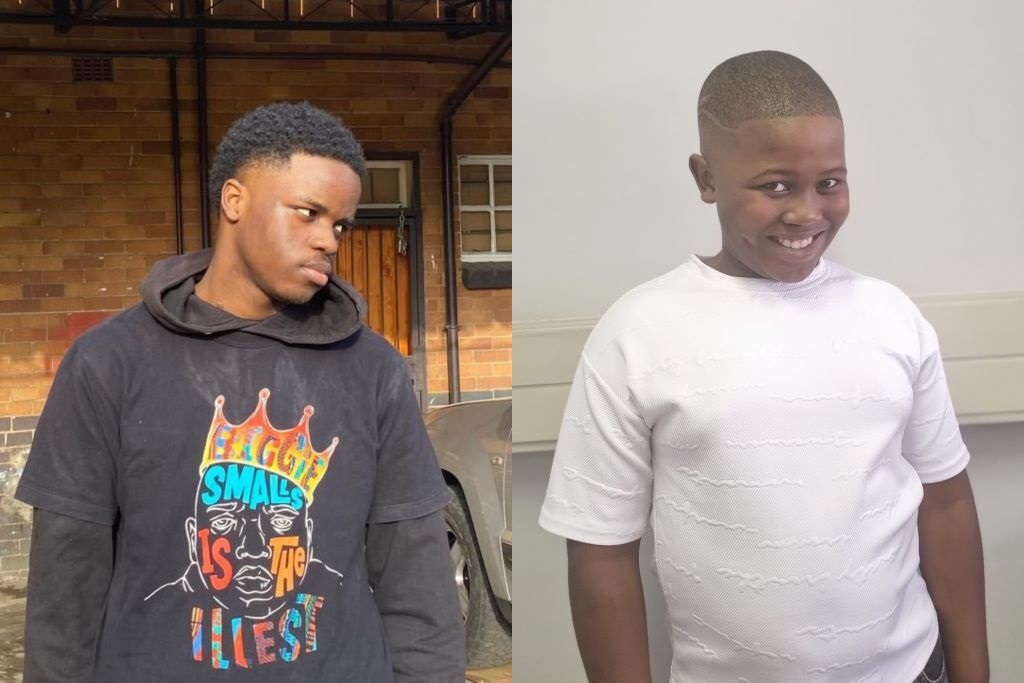
Both Leathan (L) and Godfrey (R) have aplastic anaemia, which can treated with a stem cell donation. Leathan received stem cells from his twin sister, who is a perfect match. But Godfrey must travels from KwaMhlanga to Pretoria for life-sustaining blood transfusions.
When aplastic anaemia struck two young South Africans, their fates diverged dramatically. While one received a life-saving stem cell transplant, the other continues to fight every day. The rare blood disease affects fewer than six people per million, but for Leathan and Godfrey, the statistics became deeply personal.
Understanding Aplastic Anaemia: When Hope Meets Science
Aplastic anaemia is a devastating condition where the bone marrow fails to produce sufficient blood cells, leaving patients vulnerable to infections, bleeding, and severe anaemia. Given this rare disease’s high mortality rates, prompt recognition and immediate action are critical for survival. “The challenge with aplastic anaemia is that early symptoms can be subtle,” explains Dr Gugulethu Jali, a Clinical Haematologist and Haematopathologist at the Department of Health Kwa-Zulu Natal. “However, advances in treatment, particularly hematopoietic stem cell transplantation (HSCT), have transformed the prognosis, with survival rates now exceeding 80% when matched donors are found.”
Leathan’s Journey: From Crisis to Recovery
Seventeen-year-old Leathan had his whole life mapped out. The passionate soccer player dreamed of becoming a criminal lawyer, balancing his love for the game with serious academic ambitions. But subtle symptoms began to appear, including weight loss and nosebleeds that seemed minor at first.
When he suddenly collapsed at home, his family rushed him to hospital where doctors discovered his blood levels were critically low. Tests revealed that his bone marrow had completely stopped producing blood cells. Without immediate intervention, he would need blood transfusions and platelets for the rest of his life.
But Leathan had something that changes everything in aplastic anaemia cases: a perfect genetic match. His twin sister, without hesitation, donated her stem cells , giving her brother the ultimate gift of life.
Today, Leathan represents the success story that medical advances have made possible. Since the transplant, he has not needed further transfusions, and his blood counts are steadily stabilising. However, he may still need additional stem cell support to fully restore his health.
Currently, he’s on the path back to his soccer dreams and law school aspirations, a living example of what’s achievable when the right match is found.
Godfrey’s Battle: The Same Disease, Different Circumstances
While Leathan’s recovery shows what’s possible, eleven-year-old Godfrey from KwaMhlanga, Mpumalanga, is still living with the daily reality of aplastic anaemia. Like Leathan, Godfrey was once full of energy and loved soccer.
Then the familiar pattern began to emerge: Godfrey started moving more slowly, struggling with everyday tasks that once came easily. When uncontrollable bleeding began, his family knew something was seriously wrong. After a long diagnostic journey that began in 2019, Godfrey received the same diagnosis Leathan had faced: aplastic anaemia.
Unlike Leathan, Godfrey doesn’t have a twin sister who’s a perfect match. Instead, every month, he travels from KwaMhlanga to Pretoria for life-sustaining blood transfusions. The physical and emotional toll has been devastating. He was unable to pass Grade 5 last year, not because he lacks ability, but because fighting for your life leaves little energy for schoolwork.
Your Role in Changing Godfrey’s Story
For Godfrey to follow the same path as Leathan, he needs his genetic match. That person could be you.
Compatible donors are often found within similar ethnic backgrounds, making diversity in donor registries crucial for patients like Godfrey. If you’re between 17 and 55 and in good health, registering as a stem cell donor takes minutes and costs nothing. Register today at https://www.dkms-africa.org/save-lives.
Research in the Journal of Hepatology demonstrates that genetically engineered porcine livers can support key hepatic functions in humans
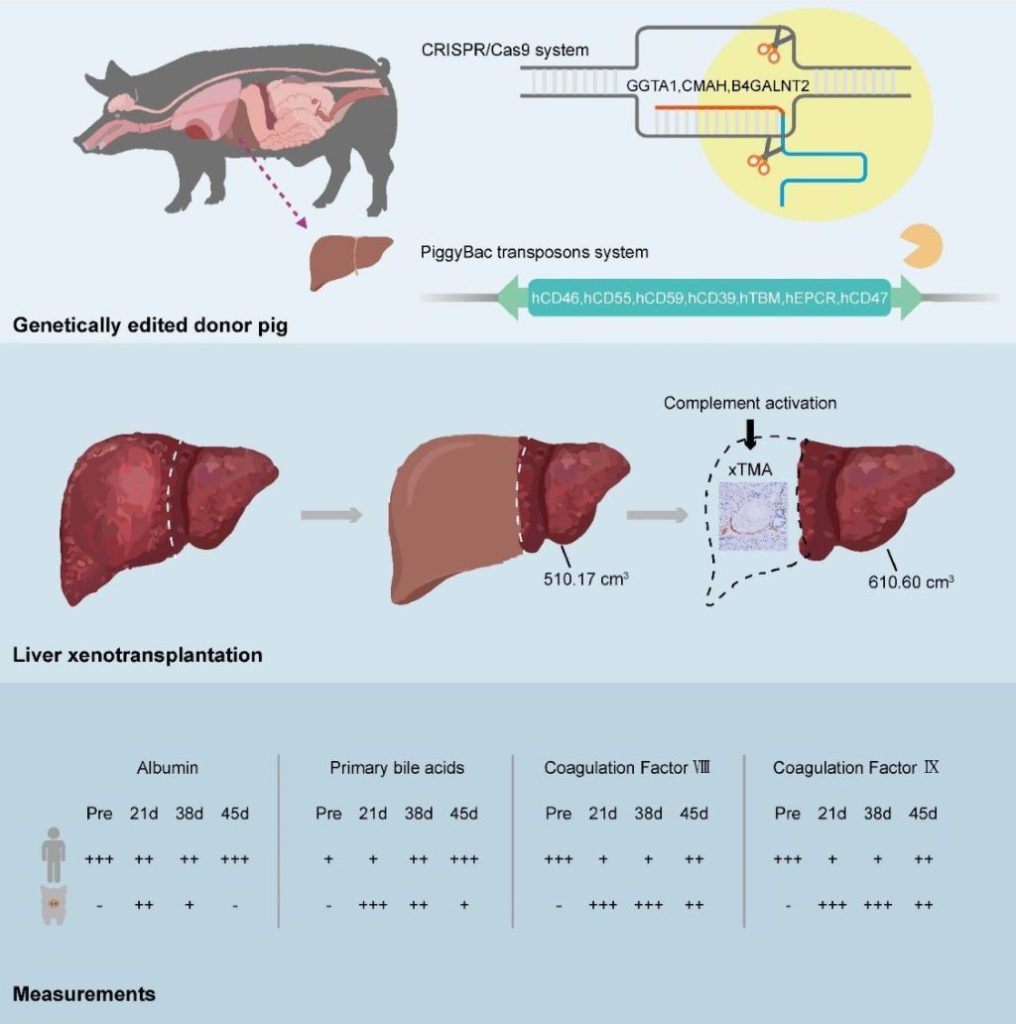
A landmark study in the Journal of Hepatology reports the world’s first auxiliary liver xenotransplant from a genetically engineered pig to a living human recipient. (Credit: Journal of Hepatology / Zhang et al.)
An important new study in the Journal of Hepatology, published by Elsevier, reports the world’s first auxiliary liver xenotransplant from a genetically engineered pig to a living human recipient. The patient survived for 171 days, offering proof-of-concept that genetically modified porcine livers can support key metabolic and synthetic functions in humans, while also underscoring the complications that currently limit long-term outcomes.
According to the World Health Organization, thousands of patients die every year while waiting for organ transplants due to the limited supply of human organs. In China alone, hundreds of thousands experience liver failure annually, yet only around 6000 people received a liver transplant in 2022. This pioneering case offers a potential new avenue to bridge the gap between organ demand and availability.
The case involved a 71-year-old man with hepatitis B-related cirrhosis and hepatocellular carcinoma who was not eligible for resection or human liver transplantation. Surgeons implanted an auxiliary graft from a genetically modified Diannan miniature pig with 10 gene edits, including xenoantigen knockouts and human transgenes to enhance immune and coagulation compatibility.
For the first month after surgery, the graft functioned effectively, producing bile and synthesising coagulation factors, with no evidence of hyperacute or acute rejection. However, on day 38, the graft was removed following the development of xenotransplantation-associated thrombotic microangiopathy (xTMA), a serious complication related to complement activation and endothelial injury. Treatment with the complement inhibitor eculizumab and plasma exchange successfully resolved the xTMA. Despite this, the patient later experienced repeated episodes of upper gastrointestinal haemorrhage and passed away on day 171.
“This case proves that a genetically engineered pig liver can function in a human for an extended period,” explained lead investigator Beicheng Sun, MD, PhD, Department of Hepatobiliary Surgery, and President of the First Affiliated Hospital of Anhui Medical University, Hefei, Anhui Province, China. “It is a pivotal step forward, demonstrating both the promise and the remaining hurdles, particularly regarding coagulation dysregulation and immune complications, that must be overcome.”
“This report is a landmark in hepatology,” commented Heiner Wedemeyer, MD, Co-Editor, Journal of Hepatology, and Department. of Gastroenterology, Hepatology, Infectious Diseases and Endocrinology, Hannover Medical School, Hannover, Germany, in an accompanying editorial. “It shows that a genetically modified porcine liver can engraft and deliver key hepatic functions in a human recipient. At the same time, it highlights the biological and ethical challenges that remain before such approaches can be translated into wider clinical use. Xenotransplantation may open completely new paths for patients with acute liver failure, acute-on-chronic liver failure, and hepatocellular carcinoma. A new era of transplant hepatology has started.”
“The publication of this case reaffirms the Journal of Hepatology as the world’s leading liver journal. We are committed to presenting cutting-edge translational discoveries that redefine what is possible in hepatology,” added Vlad Ratziu, MD, PhD, Editor in Chief, Journal of Hepatology, and Institute for Cardiometabolism and Nutrition, Sorbonne Université and Hospital Pitié Salpêtrière, Paris, France.
The country that performed the first successful heart transplant has very low organ donation rates. Now a student-run medical non-profit is hoping to make a difference. (Photo: Nasief Manie/Spotlight)
By Elri Voigt
Thousands of people in South Africa are waiting for a life-saving organ transplant, but our very low organ donation rates mean that many won’t get a transplant in time. Spotlight asks the experts why our donation rates are so low and what can be done about it.
Back in 2002, Rentia le Roux received a horrifying diagnosis that her kidneys were failing. “My kids still need me, they are still small, what are we going to do?” Le Roux recalls telling her doctor. After a long journey trying to manage her kidney failure, she would eventually get a kidney from her sister in 2011.
Le Roux, now the chairperson of the Western Cape Transplant Sports Association, is one of the lucky ones. She spoke to Spotlight ahead of a trip to Germany to take part in the 2025 World Transplant Games.
“There are so many people that are on the list waiting for an organ and the waiting period, it can take many years,” she says.
Incomplete data
While there isn’t a coordinated, centralised database of everyone in South Africa who needs a lifesaving organ transplant, various groups do collect data. This is according to Professor David Thomson, an abdominal transplant surgeon and a critical care sub-specialist. Thomson is also the head of the Transplant Centre of Excellence Project at Groote Schuur Hospital in Cape Town.
“Various entities do collect levels of data, but it’s not very centralised and coordinated, and it could be better…we do have the renal registry that’s trying to track the number of people on dialysis, that’s a good source of information,” Thomson says. The Renal registry is a not-for-profit database that collects and publishes data on dialysis and transplant patients in the country. The database itself is an initiative of the South African Nephrology Society, an NPO that aims to further the field of nephrology and improve patient care.
The society estimates that in 2022, just over 9000 people across the public and private healthcare system were receiving “kidney replacement therapy” – which were either medications to help kidney function, dialysis or a kidney transplant.
A report by the South African Transplant society, an NPO that seeks to advance tissue and organ donation and transplantation, estimated that in 2021, across South Africa’s private and public hospitals, 2 586 people were on a waitlist for a lifesaving organ. Of those, 2382 people were waiting for a kidney, 52 needed a liver, 108 needed a heart transplant, and 44 were waiting for a lung.
But in the same year, the report recorded only 229 transplants done across the country.
South Africa does not have a good organ donation culture, says Professor Mignon McCulloch, the head of paediatric nephrology and solid organ transplant at the Red Cross War Memorial Children’s Hospital. In fact, according to McCulloch, and other experts we spoke to, South Africa has some of the lowest transplantation rates in the world.
While we couldn’t find any straightforward ranking system of organ donation rates, reports by the Global Observatory on Donation and Transplantation (GODT) do provide some insight into how some countries compare to one other. In 2017, according to data from the GODT cited in this 2020 study published in the South African Medical Journal, South Africa had 91 deceased donors, which is a rate of 1.6 per million. By contrast, Spain, which is regarded as having one of the highest rates of organ donation in the world, had 2183 deceased donors, a rate of 47.05 per million.
How it works
Organ donation is broadly classified into living donation and deceased donation.
There are two scenarios where someone can become an organ donor. The first, Thomson explains, is when a healthy person donates an organ without which they can live a normal life, like one of their kidneys. The second is when someone has been declared brain dead and is on a mechanical ventilator or when someone has experienced circulatory death -meaning their heart has stopped beating and “futile non-beneficial treatments have been stopped”. The latter is less common in South Africa.
For deceased donation from a brain-dead patient to take place, the potential donor needs to be in an ICU facility on a mechanical ventilator and referred by their clinical team to a transplant coordinator, says Thomson. If that person is eligible, then the transplant team has to get permission from the next of kin who ultimately have the final say even if the potential donor is registered as an organ donor.
“Organ donation can only happen if someone is on a mechanical ventilator in the end-of-life care pathway, so that is always a complicated and emotional discussion,” he says. “Tissue donations such as corneas, bones, skin, that can happen at the mortuary afterwards and there’s a slightly longer period for when these can be successfully recovered but all donation still requires you to have conversations with and get permission from grieving families.”
Juggling resources
McCulloch describes organ donation as being a bit like “a silent Cinderella”, until someone needs a lifesaving transplant, “and then people suddenly start asking questions about why, why don’t we have more transplantation?”
One reason for this is the allocation of resources and competing priorities within the healthcare system.
Thomson says that organ transplants are a “health intensive resource”, and it’s important to acknowledge that it exists in the context of an already overburdened healthcare system. There is a Deputy Director of dialysis and transplantation within the National Department of Health, Thomson explains, but there isn’t an “overarching central coordinating authority supporting deceased donation”. Instead, he says it is driven by hospital groups and within the provincial healthcare departments by healthcare workers
Adding to this, McCulloch says that doctors are always having to “juggle resources” and if there is only one bed available in an ICU, weighing up whether to give it to someone who will potentially become an organ donor or someone with pneumonia and will likely have a good outcome, is difficult.
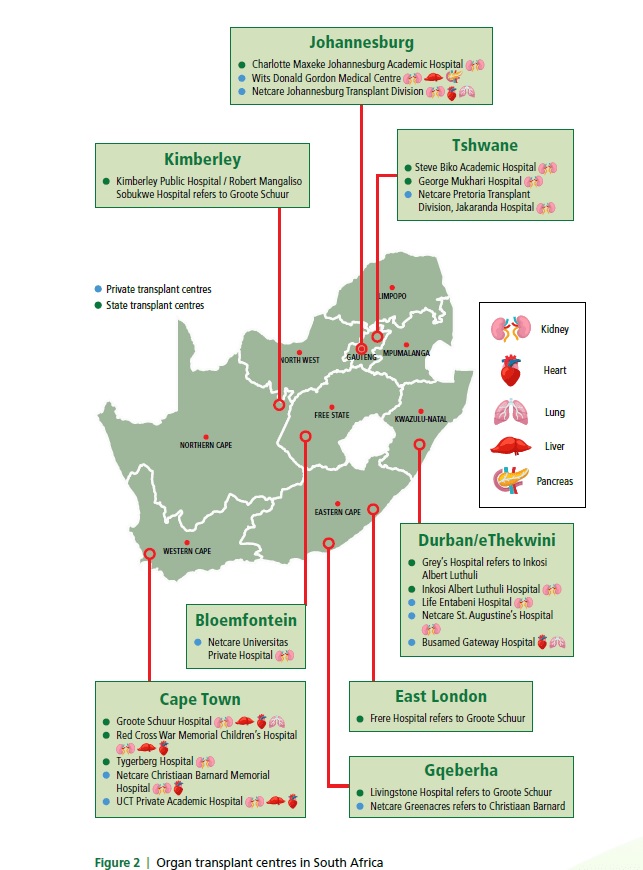
Another challenge is the limited number of surgeons, physicians, and hospitals with the skill and equipment to perform an organ transplant. This strategy roadmap document by the South African Transplant Society list 21 transplants centres across the whole country – 14 of them offer kidney transplants, six offer heart transplants, four offer lung transplants, four offer liver transplants, and only one offers pancreas transplants.
Graphic of transplant centres in South Africa. (Source: Organ and Tissue Donation in South Africa – Creating a National Strategy Roadmap)
One can save seven
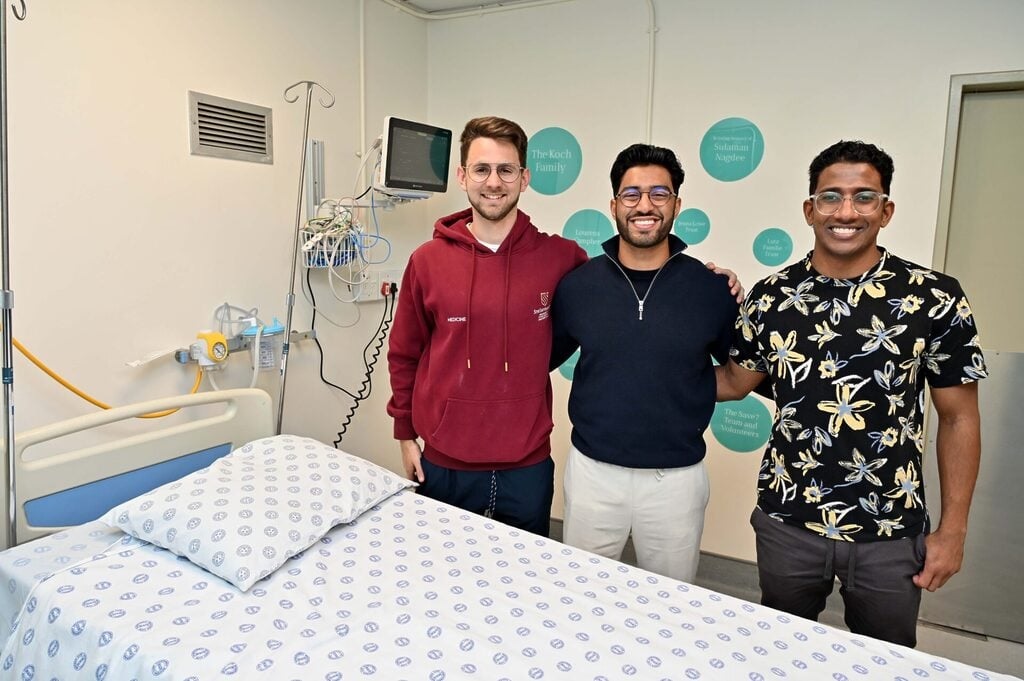
Earlier this year, an unused room in Tygerberg Hospital got a face-lift and a new purpose from a student-run medical non-profit. The initiative called Save7 was kickstarted by a conversation on kidney donation on Stellenbosch University’s Medical Campus. Its initial goal was to raise awareness, particularly among students, that one donor can save up to seven lives. And if tissue like corneas, heart valves, bone and skin are donated, one person can improve the lives of around 50 people.
Jonty Wright, who cofounded Save7, tells Spotlight that the organisation’s founding group of four has now grown to over 200 across multiple universities countrywide. Among others, the group created a Lifepod to solve a transplant-related problem at Tygerberg Hospital. Doctors and staff involved in transplantation at the hospital were citing competing resources as the reason behind low referral rates of potential organ donors by healthcare providers.
The solution posed by Save7, professors on the campus and some of the doctors involved with transplantation was to create a designated bed space for patients who are brain dead and are potential organ donors. The hope was that referrals for potential organ donations would be increased.
The room, Wright says, was an old minor operating theatre and storeroom that belonged to the orthopaedic surgery department and was situated in an ideal spot – in a corridor between the emergency medicine and trauma admissions.
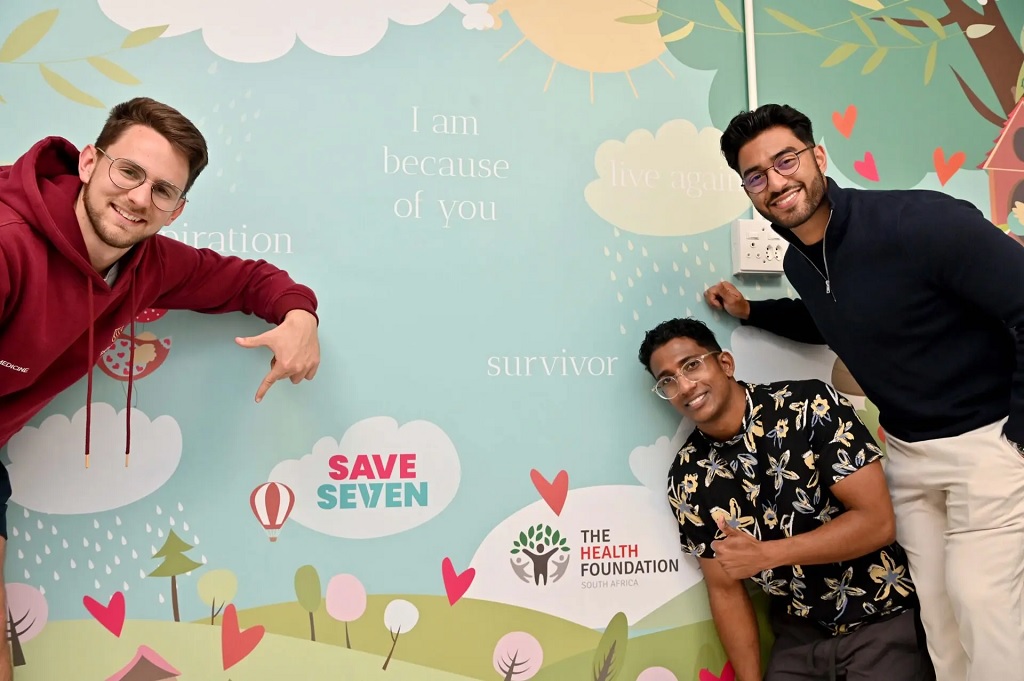
Three of the Save7 co-founders, from left to right Jonty Wright, Suhayl Khalfey and Sachen Naidu. (Photo: Nasief Manie/Spotlight)
About three months ago, after fundraising efforts and backing by the Health Foundation and other partners, the Lifepod opened. The room currently holds a hospital bed, a ventilator on lease from the surgical department, vitals monitor, cardiac monitor, infusion pumps, emergency trolley, fridge, and crash cart. All the things needed to keep someone who is brain dead’s body comfortable and allow the doctors to counsel their loved ones about potentially donating their organs.
So far, according to Wright, referrals of potential candidates for organ donation at Tygerberg have gone up by 500%, but at the time of the interview none of the next of kin have consented to donating their loved one’s organs. (Data on this has not yet been published).
This ties onto another layer of complexity around organ donation, the reasons why next of kin don’t always give permission.
Need for better education
Samantha Nichols, the executive director of operations for the Organ Donor Foundation, an NGO advocating for organ donations, tells Spotlight that the problem isn’t so much a lack of awareness of organ donation, as a lack of good education around it. She says this affects everyone, including healthcare workers.
Nichols says that “it’s almost like the stars have to align” for a deceased donor to donate their organs, because of how many steps and doctors are involved in the process.
“[W]hen a person is sent to an ICU or trauma unit, the team of doctors that work on that person to save their life is a totally different team to the transplant team,” she says. A transplant team is only ever called in if a potential donor has been declared brain dead by two different doctors who aren’t part of or affiliated with a transplant team.
“[O]nly then can they start the process of talking to the family, and then they still need to get consent from the family before the organs are removed,” she says.
The Opt-in versus Opt-out debate
When it comes to consent for organ donation, South Africa has what is referred to as an opt-in system. An opt-in system means that someone must provide explicit consent of their desire to donate an organ. While an opt-out system means all adults are automatically considered organ donors after death, unless they explicitly withdraw consent beforehand.
There has been some debate about whether switching to opt-out systems would improve organ donation rates. One recent study, in which researchers analysed deceased donor rates in five countries that had switched from an opt-in to an opt-out system, did not find an increase in organ donation rates.
“Unless flanked by investments in healthcare, public awareness campaigns, and efforts to address the concerns of the deceased’s relatives, a shift to an opt-out default is unlikely to increase organ donations,” the researchers concluded.
A 2024 editorial in the Lancet medical journal made a similar point, saying “a simplistic switch to the ‘opt-out’ model is alone not sufficient to boost donation”. Instead, it lists the three components that makes Spain’s transplant programme so successful. “A solid legislative framework, strong clinical leadership, and a highly organised logistics network overseen by the National Transplant Organization.” An opt-out system is also unlikely to work well in South Africa from a legislative perspective, since it might be seen by some to impinge upon an “individual’s rights to personal autonomy and bodily and psychological integrity”, as argued in this article in the Conversation.
The experts Spotlight spoke to instead point to several other changes that could be made to improve donation rates.
‘Everyone can do a bit better’
The responsibility around improving organ transplantation rests on us as society and as a coordinated healthcare system, according to Thomson.
“[E]veryone can do a bit better…and I don’t think you want to make it one person’s responsibility for the performance. It’s actually a collective and how we work together,” Thomson says. “…a lot of things like supporting donation actually links into good palliative care services, and that should be something we’re offering to everyone.”
Thomson advocates for upskilling healthcare workers to be able to better counsel families during end-of-life care, not necessarily just around organ donation but around “engaging humanely with “families and end of life and navigating that complexity with them as the healthcare team”.
He recommends making counselling of grieving families and palliative care discussion a hospital system issue, instead of an individual responsibility by adding it to institutional operating standards. “And then you actually need to audit it, measure it, reflect on it and monitor the outcomes,” he says.
Suhayl Khalfey, a Save7 cofounder, says now that the Lifepod is ready to use, their focus is shifting to educate people about the importance of organ donation. As part of its education efforts, Khalfey says Save7 is putting together a database of different religious leaders to help counsel families uncertain about their faith’s stance on organ donation.
Nichols stresses that transplant teams will honour different religious beliefs and funeral practises and that a donor’s body will not appear disfigured in any way after they’ve donated their organs.
Start by having the conversation
Anyone can register as an organ donor with the Organ Donor Foundation, says Nichols. The process is free and will take less than a minute (see their website here). If a situation arises where you are brain dead and you are a candidate for organ donation your family will still need to give permission.
This is why it is so important to have the conversation with your loved ones about what your wishes are, says Khalfey.
Sachen Naidu, another cofounder of Save7, adds to this saying that often with the students they’ve spoken to, organ donation is viewed as something to think about in the distant future. He encourages young people to reconsider this mindset.
Even children can learn about organ donation.
The non-profit organisation Transplant Education for Living Legacies (TELL) recently launched an educational campaign in South Africa aimed at children in the 5 to 11 age group. The initiative, called the Orgamites Mighty Education Programme, is an international child health education programme originating from Canada. At its heart, the programme is a conversation starter, says Thomson who spoke on a TELL webinar.
“All we want is for people to be having educated conversations about it [organ donations],” he says. “Children need transplants too.”
For McCulloch, organ donation goes beyond impacting just the recipients. She uses the example of families who have lost a child in a tragic accident.
“You had a completely well child five minutes ago and then something terrible happened, and now you’ve got a child who’s died and you’re going to go home with a gap in your heart. Whereas at least when you donate [the] organs to another child, something good can come of out of a really hopeless, tragic situation,” she says.
Thomson adds to this saying: “And that’s a memory that lives with that family for a long time afterwards …not just that time point. That’s what they’re going to remember as part of that event, and it really does offer them a degree of solace for a tragedy.”
And the difference to those receiving organs can obviously be life changing. Receiving a kidney gave Le Roux the chance to see her children grow up. “So, every [milestone] when they wrote matric, when they got their degrees, everything. It’s like a step forward, something I can tick off, I’m still here. I’m able, I’m healthy,” she says.
The method, rapid recovery with extended ultra-oxygenated preservation, involves flushing the donor heart with a cold oxygenated preservation solution after death.
Photo by Natanael Melchor on Unsplash
Vanderbilt University Medical Center researchers have developed a groundbreaking new method for the recovery of hearts from deceased organ donors after circulatory death (DCD).
The method, rapid recovery with extended ultra-oxygenated preservation (REUP), involves flushing the donor heart with a cold oxygenated preservation solution after death. This avoids the disadvantages of two existing preservation methods, both of which reanimate the heart, one that has ethical questions and another that is expensive.
The former method known as normothermic regional perfusion (NRP) involves reanimating the heart in the deceased donor’s body, which raises ethical concerns for some and is not allowed in all states or countries. The latter uses ex situ perfusion systems that are costly and laborious, and provide an imperfect and less physiologic reanimation of the heart.
The new method has similar outcomes to existing methods but is simpler and much less expensive, said first author Aaron Williams, MD, in an article just published in the New England Journal of Medicine. He said the technique has great potential to expand the number of donor hearts available by making organ preservation technology more widely available worldwide and expanding the use of DCD hearts.
“It’s something that has never been done in the field of heart transplantation with success,” he said. “I think this is really going to be a game changer. This is going to be a technique that’s going to essentially have worldwide applicability.”
The VUMC team was successful in deploying the method in donor hearts used in three transplants, starting in November 2024. The technique consists of the use of a flush circuit to oxygenate two litres of cold preservation solution that includes packed red cells, del Nido cardioplegia and other additives. To date, VUMC has used the method for 20 transplants, Williams said, with excellent outcomes – similar to, if not better than, the existing techniques.
“This arose out of the problems with the other two methods; the ethical issues with the one and the cost with the other,” Williams said. “We have all been thinking about these issues for some time now. We, as a team, came up with this cardiac preservation solution and technique that helps to resuscitate and protect these DCD hearts well so they can be used for transplantation.”
Williams said the technique has been successful in preserving hearts for more than four hours and to as many as eight.
The use of DCD hearts has changed the transplant field significantly. Over the last five years, Vanderbilt’s heart transplant program has been a leader in utilising hearts from DCD donors, hearts that were previously discarded because they were determined to be too injured and too high risk for subsequent problems. Special preservation techniques that Vanderbilt uses have made it possible to recover DCD hearts and support them for up to 10 hours prior to transplantation. This allows Vanderbilt thoracic organ recovery teams to travel farther in search of organs and add hundreds of organs to the donor pool.
Prior to 2020, Vanderbilt only transplanted organs from DBD (donation after brain death) donors. Like DCD donors, DBD donors have sustained devastating, non-recoverable neurologic injury. Unlike DBD donors, however, DCD donors don’t yet meet formal brain death criteria – as such, the methods that are used for withdrawal of donor life support and surgical retrieval of DCD versus DBD organs differs.
Williams said the new technique described in the paper has only been used on donor hearts, and further study is needed to see if it can be applied to other donor organs, such as livers, kidneys, pancreas and lungs. The technique could also be applied to paediatric transplants. All told, it could increase the pool of available donors and save lives through transplantation.
Current treatments to prevent organ transplant rejection focus mainly on suppressing T cells, part of the adaptive immune system. However, the innate immune system – the body’s first line of defence that triggers early inflammation after transplantation – has largely remained untargeted by modern therapies.
In a new study, researchers from Mass General Brigham identified a natural “brake” within the innate immune system: the inhibitory receptor Siglec-E (SigE) and its human counterparts, Siglec-7 and Siglec-9. This receptor helps prevent overactivation of immune cells that drive rejection. When this brake is missing, inflammation worsens, leading to faster rejection in preclinical models. Importantly, transplant patients with higher levels of Siglec-7 and Siglec-9 showed better graft survival, highlighting this pathway as a promising target for new therapies. Results are published in Science Translational Medicine.
“For decades, we’ve focused almost exclusively on controlling T cells to prevent rejection,” said Leonardo Riella, MD, PhD, medical director of Kidney Transplantation at Massachusetts General Hospital (MGH). Riella is also the Chair in Transplantation at Harvard Medical School. “Our research shows that the innate immune system plays a pivotal role. By harnessing natural inhibitory pathways like Siglec-E, we can develop safer, more precise therapies that protect transplanted organs without compromising overall immune health.”
To conduct their studies, the researchers, led by first author Thiago J. Borges, PhD, of the Center for Transplantation Sciences at MGH, used mouse models of heart, kidney, and skin transplantation to study the roles of SigE, the murine equivalent of Siglec-7 and Siglec-9. Recipients deficient in SigE had accelerated acute rejection and increased inflammation. The researchers also looked at the levels of the receptors in samples from human transplant biopsies, finding that higher levels of the receptors were associated with improved allograft survival, suggesting that the findings in mice will be translatable to organ transplants in humans.
“This discovery paves the way for next-generation treatments that address both arms of the immune system, offering hope for longer-lasting transplant success and reducing the need for lifelong immunosuppression,” said Riella.
The world’s first partial face and whole eye transplant has yielded important insights towards the development of functional eye transplants.
Over one year ago, a surgical team at NYU Langone Health transplanted part of a donor face onto a 46-year old power line worker who had suffered extensive facial injuries and the loss of his left eye. They also transplanted a complete eye into the patient, connecting it up to blood vessels and nerves, to see whether it was possible for an eye to survive. Now, findings on the health of the transplanted eye published in JAMA reveal that the eye is healthy but no light has been seen from it.
For the roughly 40 million people around the world without sight in either eye, stem cell research has been the most recent hope for regaining vision in many cases of trauma and disease.
In the eye transplant, the optic nerve was attached and immunosuppression used. Fluorescein angiography showed that perfusion of the globe and retinal were maintained throughout the immediate postoperative period. Optical coherence tomography revealed atrophy of inner retinal layers and attenuation and disruption of the ellipsoid zone.
Crucially, the retina of the transplanted eye responded to light as confirmed by serial electroretinography. MRI scans demonstrated the integrity of the transplanted visual pathways and potential occipital cortical response to light stimulation of the transplanted eye. However, after one year, no light in the eye was observed by the patient.
As discussed in an accompanying editorial published in JAMA Network, whole eye transplantation (WET) has been regarded as one of the most difficult yet important transplant procedures to attempt developing. In 1978, a report from the National Eye Institute advisory stated that “[a]t present, any effort to transplant a mammalian eye is doomed to failure by the ganglion cell axon’s inability to withstand cutting, by the difficulty of insuring adequate circulation of blood to the transplanted eye during or shortly after operation, and lastly by immune rejection of foreign tissue.”
With this transplant case, the issues of adequate circulation and immune rejection have now been shown to be surmountable, the authors point out. Other issues to address concern connecting the cranial nerves to enable opening of the eyelid.
Human colon cancer cells. Credit: National Cancer Institute
Colorectal cancer often metastasises to the liver, and for some patients, surgical removal of their liver tumours is not an option. A new study led by researchers at the Wilmot Cancer Institute and University of Rochester Medical Center (URMC) shows that a select group of patients with colorectal cancer that has spread to the liver tend to fare better if they receive a liver transplant as opposed to other common therapies.
In the study, published in JAMA Surgery, patients who had liver transplants tended to live longer without cancer progression than patients who opted for other treatments. While previous studies have shown the benefits of liver transplants for these patients, this is the first study to compare liver transplants to other treatment options.
“In any cancer treatment, it’s very easy to describe the outcomes of the patients who received the intervention, but similar patients that did not undergo the intervention can serve as a good comparison,” said Matthew Byrne, MD, a surgery resident at URMC and author of the study. “Without randomised, controlled trial data, this study offers the best evidence that is available to understand whether liver transplant provides better outcomes over other treatments.”
The study followed 33 patients whose colorectal cancer was under control, but who had liver tumours that could not be surgically removed. All 33 patients were eligible for liver transplantation, but only 20 chose to have a transplant, while 13 opted for other classical therapies, like removal of part of the liver, chemotherapy, or liver-directed therapies.
Compared to the classical therapy group, the liver transplant group had significantly higher progression-free survival rates across three years of follow-up. One year after liver transplant, 90% of patients showed no signs of cancer progression. That number dropped to 73% after two years and to 36% at three years. On the other hand, only 42% of patients who opted for other therapies were cancer-progression-free after one year, which dropped to roughly 10% after two and three years.
The transplant group also had higher overall survival rates than the standard therapy group, though the difference wasn’t statistically significant. At the three-year follow-up, 90% of transplant patients had survived, compared to 73% of patients who received other therapies.
Though this study provides solid evidence, larger clinical trials will be needed to fully understand the added benefit of liver transplant compared to other treatments for these patients, and to better refine which patients benefit most.