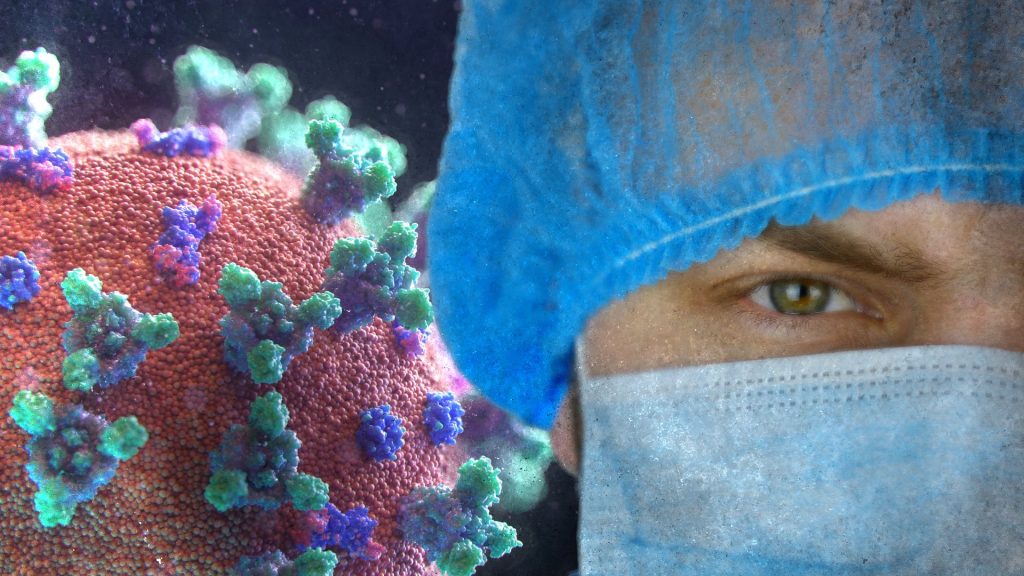
In research published in Physics of Fluids, researchers used computer modelling investigate mask fit and found that face shape, especially natural facial asymmetry, influences the most ideal fit. The findings suggested that double masking with improperly fitted masks may not greatly improve mask efficiency and produces a false sense of security.
Using more layers results in a less porous face covering, leading to more flow forced out the sides, top, and bottom of masks with a less secure fit. Double layers increase filtering efficiency only with good mask fit, however they could also lead to difficulties in breathing.
The researchers modelled a moderate cough jet from a mouth of an adult male wearing a cloth mask over the nose and mouth with elastic bands wrapped around the ears. They calculated the maximum volume flow rates through the front of mask and peripheral gaps at different material porosity levels.
To create a more realistic 3D face shape and size, the researchers used head scan data for 100 adult male and 100 adult female heads.
Their model showed how the slight asymmetry typical in all facial structures can affect proper mask fitting. For example, a mask can have a tighter fit on the left side of the face than on the right side.
“Facial asymmetry is almost imperceivable to the eye but is made obvious by the cough flow through the mask,” explained co-author Tomas Solano, from Florida State University. “For this particular case, the only unfiltered leakage observed is through the top. However, for different face shapes, leakage through the bottom and sides of the mask is also possible.”
Producing individually customised ‘designer masks’ is not practical at large scales. Still, better masks can be designed for different populations by revealing general differences between male and female or child versus elderly facial structures and the associated air flow through masks.
Carbon monoxide (CO) is an odourless and colourless gas is produced from incomplete burning, and is a silent killer, binding to haemoglobin with few treatments available other than administering oxygen. Now, research published in Chemical Communications suggests a path to a possible antidote.
In the US, more than 400 deaths and 20 000 emergency room visits are attributable to carbon monoxide (CO) poisoning every year. While CO detectors and making sure fireplace and heaters work correctly can help prevent exposure, there are limited treatment options for those suffering from CO poisoning.
To address this, Tim Johnstone, an assistant professor of chemistry and biochemistry at UC Santa Cruz, has been working to develop an easy-to-administer antidote.
“If you are exposed to carbon monoxide, the primary treatment right now is fresh air,” said A/Prof Johnstone. “It is a question of time. In fresh air, you need four to six hours for the level of CO in your blood to be cut in half. With 100 percent oxygen or hyperbaric oxygen, the half-life shortens further. Even then, the high blood levels of CO can persist long enough to lead to long-term deficits and neurological problems.”
A/Prof Johnstone has been studying the chemistry of carbon monoxide. In a biological context, CO binds to metal centres such as the iron in haemoglobin, preventing this protein from carrying out its oxygen carrying function.
To mitigate this, A/Prof Johnstone has designed small molecules that possess many of the features of the active site of haemoglobin but can bind CO much more tightly than the protein. In his most recent study, his group described the ability of one such molecule to bind CO, sequester CO that is already bonded to haemoglobin, and rescue red blood cells exposed to CO: all promising signs for a future antidote.
These are early results, said A/Prof Johnstone, but the hope is to create a point-of-care treatment that can be administered quickly. The most common carbon monoxide poisoning symptoms are headache, dizziness, weakness, upset stomach, vomiting, chest pain, and confusion. Because it mimics the flu, people may experience symptoms without realizing the danger and delay seeking treatment.
Having to cope with the strain of COVID on an already fragile healthcare system, a few hospitals in the Western Cape have been introducing robotics for specialised tasks – but are they worth the hype?
Robotics was able to fill an unprecedented need during the COVID pandemic – the ability to remotely conduct ward rounds from remote locations. Tygerberg Hospital made use of ‘Quintin’, a robot that is essentially a tablet on a mobile stand that allows users to remotely communicate and inspect the area, but it can’t physically interact with its environment.
Robotics offers greater surgical precision, which may translate into reduced healthcare load. IOL reported that the provincial Department of Health plans to use a pair of new robotic surgery machines installed at the Groote Schuur and Tygerberg hospitals to fast-track surgeries and address the province’s surgical backlogs caused by COVID. These robotic surgery units will be used for procedures on colorectal, liver, prostate, kidney and bladder cancers, and women with severe endometriosis. In the province’s private sector, Netcare Christiaan Barnard Memorial Hospital also makes use of robotic-assisted surgery.
Robotic surgery has a number of advantages. The small robotic arms allow for smaller incisions and faster recovery times, reducing the strain on hospitals. A liver resection that would have a patient in hospital for a week can be reduced to one or two days with robotic surgery. More complex surgery becomes possible, eg in difficult to access areas or in patients with obesity. Robotic surgery allows surgeons to be off their feet, easing an extremely fatiguing job, and the software automatically compensates for any tremor in the surgeon’s hands.
However, robotic surgery still has drawbacks – chief among them is cost and the need to have trained personnel to operate them. There is also some latency between the surgeon’s hands movements and the corresponding movement of the robot, leading to possible errors. Shorting of the electrical current running through the robotic arms can also cause burns to the patient’s tissue, and there is also the possibility of nerve compression injuries due to the positioning of the patient. Furthermore, operator errors, especially when operators are inexperienced or robotic surgery is performed in lower volumes, is always a possibility.
Robotics have promising applications in sanitation – they can easily disinfect areas using UV light, for example – and can also assist nurses with certain tasks, such as making a 3D vein map prior to a venipuncture. Some robots can even assist the elderly, conversing with them and can perform simple tasks like calling a nurse. Other applications include the much simpler technology of exoskeletons, a wearable frame which amplify users’ strength (though nowhere near that of the fictional Iron Man) and are useful in rehabilitation and for enhancing mobility in the elderly. Other applications include increasing strength of care staff for assisting patients, freeing up other staff.
Some exoskeletons are even purely mechanical, merely readjusting loads without any sophisticated electronics or motors. Yet even these are prohibitively expensive: the Phoenix Medical Exoskeleton goes for about US$30 000 each.
While promising, robotic systems are at present still hugely expensive, limited in function and can only assist with a small fraction of the tasks that healthcare workers perform. Even if the cost could be reduced enough to help ease healthcare worker burden in South Africa to help, that still leaves the problem of enough experienced and motivated healthcare workers, beds and neglected rural areas.
Phage therapy is a long-standing technique which makes use of bacteriophage viruses to kill bacteria, but poses the challenge of some strains working in vitro but failing in vivo. Scientists have now found that gut bacteria alter their gene expression to avoid attack by bacteriophages. This research, published in Cell Host & Microbe, helps explains the difference in bacteriophage efficacy.
Phage therapy is a medical approach that involves treating bacterial infectious diseases using the natural ability of certain viruses, known as bacteriophages, to kill bacteria that they specifically recognise. Following the development of antibiotics, the West saw a significant decline in the use of this century-old therapeutic strategy. In the face of the growing threat of antibiotic resistance, scientists are returning to bacteriophages and to understand their mechanism of action.
Bacteria and bacteriophages are the most abundant entities in the human gut microbiota. Although bacteriophages kill bacteria, the two antagonist populations coexist in a balance in the gut.
To date, there has been little data on how phage therapy works in vivo. Interactions between bacteria and bacteriophages have, in contrast, been extensively studied in vitro. In these conditions, bacteriophages quickly infect bacteria, replicate, and destroy bacteria, while releasing new viruses capable of infecting other bacteria. However, the dynamics observed between these two microorganisms are very different in mammalian guts. Some bacteriophages that are effective in culture medium are totally ineffective in the gut environment.
In order to understand this difference, scientists decided to compare the gene expression profile, or transcriptome, of the bacterium Escherichia coli in both contexts: culture media and the gut. Using this method, they revealed genetic regulations that characterise the bacterium’s adaptation to the gut environment.
By closely examining the genes involved in this adaptation, they revealed four genes that modulate the bacterium’s susceptibility to bacteriophages. “We observed that certain genes required for infection by bacteriophages are expressed less in the gut than in vitro, thus protecting bacteria from bacteriophages,” commented Laurent Debarbieux, last author of the study.
The scientists verified their theory by eliminating the expression of one particular gene. They observed that bacterial susceptibility to a bacteriophage was significantly reduced. As a result, bacteria in the gut are able to resist predation by bacteriophages by modulating the expression of certain genes rather than mutating their genome.
This study therefore demonstrates that environment plays a predominant role in interactions between bacteria and bacteriophages. These findings pave the way for improved use of bacteriophages for therapeutic purposes.
This normal human skin cell was treated with a growth factor that triggered the formation of specialised protein structures that enable the cell to move. Credit: Torsten Wittmann, University of California, San Francisco
In a finding which could revolutionise regenerative medicine, researchers have found a way to reverse the age of human skin cells by 30 years, reversing genetic ageing measures for cells without losing their specialised function. The function of older cells was partly restored, as well as rejuvenating the molecular measures of biological age. The research was published in the journal eLife.
One of the ways regenerative medicine aims to replace damaged or old cells is by creating ‘induced’ stem cells, which differentiate into specialised cells. Currently the process is not reversible.
The new method, based on stem cell production, overcomes the problem of entirely erasing cell identity by halting reprogramming part of the way through the process. This let researchers find the precise balance between reprogramming cells, making them biologically younger, while still being able to regain their specialised cell function.
Currently, cell reprogramming takes around 50 days using four key molecules called the Yamanaka factors. The new method, called ‘maturation phase transient reprogramming’, exposes cells to Yamanaka factors for just 13 days. At this point, age-related changes are removed and the cells have temporarily lost their identity. The partly reprogrammed cells were given time to grow under normal conditions, to observe whether their specific skin cell function returned. Genome analysis showed that cells had regained markers characteristic of skin cells (fibroblasts), and this was confirmed by observing collagen production in the reprogrammed cells.
To show that the cells had been rejuvenated, the researchers looked for changes in ageing indicators. Dr Diljeet Gill, who conducted the work as a PhD student explained: “Our understanding of ageing on a molecular level has progressed over the last decade, giving rise to techniques that allow researchers to measure age-related biological changes in human cells. We were able to apply this to our experiment to determine the extent of reprogramming our new method achieved.”
Cellular ages examined included the epigenetic clock, where chemical tags present throughout the genome indicate age. Another is the transcriptome, all the gene readouts produced by the cell. According to these two measures, the reprogrammed cells matched the profile of cells that were 30 years younger compared to reference data sets.
However, ‘rejuvenated’ cells need to function as if they were younger as well as looking younger. The rejuvenated fibroblasts were able to produce more collagen proteins compared to control cells that did not undergo the reprogramming process. Fibroblasts also move into areas that need repairing. Researchers tested the partially rejuvenated cells in vitro, and the treated fibroblasts moved into the gap faster than older cells – a sign that these could be used to improve wound healing,
The method also had an effect on other genes linked to age-related diseases and symptoms, the researchers saw, indicating possible future therapies. The APBA2 gene, associated with Alzheimer’s disease, and the MAF gene with a role in the development of cataracts, both showed changes towards youthful levels of transcription.
The researchers plan to explore the mechanism behind the successful transient programming, which is not yet completely understood. It is speculated that key areas of the genome involved in shaping cell identity might escape the reprogramming process.
Dr Diljeet concluded: “Our results represent a big step forward in our understanding of cell reprogramming. We have proved that cells can be rejuvenated without losing their function and that rejuvenation looks to restore some function to old cells. The fact that we also saw a reverse of ageing indicators in genes associated with diseases is particularly promising for the future of this work.”
Professor Wolf Reik, a group leader in the Epigenetics research programme who has recently moved to lead the Altos Labs Cambridge Institute, said: “This work has very exciting implications. Eventually, we may be able to identify genes that rejuvenate without reprogramming, and specifically target those to reduce the effects of ageing. This approach holds promise for valuable discoveries that could open up an amazing therapeutic horizon.”
The data underpinning a controversial study of the use as vitamin C as a sepsis treatment may in fact be fraudulent, according to an analysis by an Australian physician and statistician, reports MedPage Today.
PhD student Kyle Sheldrick, MBBS, alleges that the pre- and post- comparison groups involved in the 94-patient study were too similar to be realistic.
In an interview with MedPage Today, Sheldrick said the case is “extreme”, stating that “This is probably the most obviously fake data I have seen. … These groups are more similar than would be probable.”
The paper, led by Paul Marik, MD – who led another COVID protocol study that has since been retracted – has been the subject of much debate in the intensive care community since it was published in 2017. The so-called HAT protocol was a simple regimen of hydrocortisone, ascorbic acid (vitamin C), and thiamine which could have saved many lives easily if it indeed worked. Obviously, there was much excitement worldwide about the significance of the findings – but not all were convinced.
“The effect size seemed just impossible,” said Nick Mark, MD, an ICU physician at Swedish Medical Center. “It seemed too good to be true.”
The trial was followed by larger studies, and so far none have shown shown a similar reduction in mortality, raising suspicions even further, Dr Mark said. With Sheldrick’s analysis, the penny dropped: “This was under our noses for 5 years,” Mark said. “This isn’t just a mistake. We know things can be done unethically, but to actually fake it? That it’s not just flawed, but perhaps actually fraudulent?”
Sheldrick told MedPage Today the key problem with the Marik paper is “probably the most common sign of fraud that we see, which is overly similar groups at baseline.” That is, people tend to fake data which do not vary enough from the average.
Sheldrick said he first looked at the study methods, which noted a pre- and post- comparison design, rather than a randomised or matched case-control design. With such a design, one would expect a more random distribution of baseline characteristics, but that wasn’t the case for the Marik paper, he said.
A further analysis with Fisher’s test showed that most P-values were 1, meaning they were distributed perfectly evenly across two time periods – and only one fell below 0.5. Instead, an even spread should be expected with an overall value of 0.5.
Sheldrick sent his findings to the journal CHEST and to Marik’s former employer Sentara Norfolk General Hospital, but had not heard back from either.
While Sentara Norfolk General Hospital did not respond to comment, and the journal CHEST could not confirm whether an investigation was underway but that it did take ethical concerns very seriously.
A spokesperson for Dr Marik emailed a statement to MedPage Today, claiming that the conclusions had been validated in several meta-analyses, and recommended the source examine “this and other research on the data before making false allegations on social media. Such claims are harmful and do not add to the public discourse.”
This wouldn’t be the first time concerns have been raised about data in a paper that Dr Marik co-authored. In November 2021, the Journal of Intensive Care Medicine (JICM) retracted an article by Marik and others on their MATH+ protocol for COVID. The retraction followed a communication that raised concerns about the accuracy of COVID mortality data from the hospital used in the article.
“It seems a bit improbable for someone to discover two miracle cures in three years,” Dr Mark commented to MedPage Today.
Dr Mark noted that the 2017 paper is widely cited, and even if the intervention was not directly harmful, the resources invested in subsequent large, high-quality trials of vitamin C and sepsis could have been better spent.
“While I’m really glad we did high-quality studies and had brilliant people working on this, it’s kind of a shame,” he said. “Instead of studying vitamin C based on a faulty premise, we could have spent our efforts elsewhere.”
On Thursday, March the 10th, the South African Medical Research Council (SAMRC) honoured a selection of leading SA medical scientists and researchers at its 8th SAMRC Scientific Merit Awards at a hybrid event.
This year’s Presidential Award, which is awarded to scientists who have made exceptional lifelong contributions to medical research and public health, was bestowed upon Professor Koleka Mlisana, the country’s first black microbiologist. With over 40 years’ experience in health sciences, Prof Mlisana is the current executive manager of academic affairs, research, and quality assurance at the National Health Laboratory Service (NHLS) and Co-Chair of the COVID-19 Ministerial Advisory Committee (MAC). In the 1990s, she was one of the scientists investigating the unknowns of HIV. Her research focused on understanding the body’s response to acute HIV infection.
The Platinum Medal, for South Africans who have made seminal scientific contributions and who have also made an impact on health, especially for those living in developing countries, was awarded to Professor Andre Pascal Kengne. As a physician and an internationally renowned non-communicable diseases epidemiologist, his work focuses on cardiovascular disease, diabetes, and chronic kidney disease. He is the current Director of the SAMRC’s Non-Communicable Diseases Research Unit and holds conjoint appointments as Professor of Medicine at the University of Cape Town, as well as Extraordinary Professor of Global Health at Stellenbosch University.
In the Gold Medal category, which is for researchers who have made substantial and influential contributions that have impacted on health especially in the developing world, the awardees are Professors Tulio de Oliveira, Ntobeko Ntusi, Ambroise Wonkam and Grant Theron.
Silver Medals are conferred to emerging and upcoming scientists and those committed to capacity development. This year, the medal recipients are Professors Diane Gray, Marlo Moller, Rabia Johnson, and Dr Nasheeta Peer.
SAMRC President and CEO, Prof Glenda Gray said that scientific research remains fundamental for reducing the nation’s burden of disease and preventing mortality. “The knowledge produced by these exceptional scientists will carry our country’s legacy of science forward and continue to improve the lives of citizens as it is evident with COVID-19.” Their work shows the country’s ingenuity, she added, noting that “it was scientists in South Africa who first discovered and sounded the alarm on Omicron, which rapidly became the dominant variant of concern.”
Researchers have uncovered new clues about the cellular processes that can lead to androgen deficiencies, in which high leptin levels appear to play a role. The findings are published in the journal Cell Death & Disease.
Symptoms of testosterone deficiency include low sex drive, erectile dysfunction, depression, and fatigue. TD afflicts approximately 30% of men aged 40-79 years, with an increase in prevalence strongly associated with ageing and common medical conditions including obesity, diabetes, and hypertension.
“Although testosterone deficiency may be present in one in five men 40 years or older, the driving factors remain largely unknown,” said Himanshu Arora, PhD, assistant professor of urology.
Dr Arora’s lab examined the effect of different concentrations of leptin on the microenvironment of the testes. The research builds on prior studies of how Sertoli and peritubular myoid cells (PMC) in the testicular microenvironment help drive Leydig stem cell differentiation via the cellular desert hedgehog signalling pathway, which transmits information to embryonic cells that guides proper cell differentiation.
The researchers extracted cellular samples from men undergoing testes biopsies for sperm retrieval. When the testes microenvironment secreted leptin in low doses, they found that Leydig stem cells differentiated into adult Leydig cells producing normal levels of testosterone. Higher doses of leptin were observed to depress testosterone levels.
“Our findings identify leptin as a key factor within the testes microenvironment,” said Dr Arora, adding that the insight “holds important implications for androgen deficiency and could have further application in prostate cancer research.”
Noting that leptin is already used in treating patients for obesity, “Preclinical studies could indicate whether adjusting levels of this hormone would be helpful in patients with testosterone deficiency,” said Ranjith Ramasamy, MD, study co-author and associate professor and director of the Miller School’s Reproductive Urology Program.
A new scintillation material developed by KAUST scientists can bring significant improvements to X-ray imaging in medicine, industry and security. Credit: KAUST
Scientists have successfully produced an exceptionally efficient, robust and flexible scintillation film to bring significant improvements in X-ray imaging, enabling much lower radiation doses to be used.
Scintillation materials release visible light, or “scintillate,” in response to absorbing high-energy X-ray photons, enabling an image to be captured.
Researchers are continually exploring ways to make scintillation technology more sensitive, efficient and readily adaptable. The researchers, led by Omar F Mohammed, Associate Professor of Chemical Sciences at King Abdullah University of Science and Technology (KAUST), sought to come up with an improved scintillation screen.
“Currently used materials suffer from several drawbacks, including complex and high-cost fabrication processes, radioluminescence afterglow and nontunable scintillation,” said Yang Zhou, a postdoc in Prof Mohammed’s lab.
Materials called lead halide perovskites have attracted considerable attention and shown significant promise. Novel perovskites are a category of materials that share the same crystal structure as the natural perovskite mineral calcium titanium oxide, but they include a variety of different atoms that replace all or some of those found in natural perovskite. To avoid toxicity problems and reduce cost, the researchers explored the use of elements besides lead. The newly developed screens are described in ACS Energy Letters.
The flexible scintillation screens the team developed can detect X-rays at ultralow levels, “approximately 113 times lower than a typical standard dose for X-ray medical imaging,” said Omar Mohammed, leader of the research group.
“Another vital advance is that the X-ray spatial resolution reported in this study is the highest achieved to date for powder-based screens,” said Dr Zhou.
“The physical flexibility of our films is also very important,” added Prof Mohammed. He explains that highly efficient flexible scintillation screens are urgently needed for using X-rays to better analyse awkward shapes.
The team plans to commercialise their advance, and to hope to refine their fabrication techniques.
Sanofi’s rare disease database that helps healthcare practitioners tackle their unique challenges – and knowing that treatments are available directly improves patients’ wellbeing. This comprehensive database has also aided rare disease research.
Johannesburg, 28 February 2022: Patients with rare diseases present unique challenges to healthcare practitioners (HCPs). Obstacles to caring for them include diagnostic delays and a lack of information, expertise, and treatment options for many rare diseases. HCPs play a vital role in enhancing the quality of life for patients and families living with a rare disease by making appropriate referrals to specialists, helping to coordinate care, and assisting patients in obtaining the proper support.1,2
A disease is defined as ‘rare’ when it affects fewer than 1 in 2000 people.3
Over 7000 rare diseases have been described to date, affecting over 350 million people worldwide.3,4 While most (70-80%) of rare diseases are genetic and inherited, some may be acquired, and 70% are exclusively paediatric in onset.5
Recent surveys showed that those living with rare diseases had a significantly higher prevalence of anxiety and depression compared to the general population.5,6 Levels of high stress can become even worse for carers when the person they are supporting has a diagnosis with no available treatment option.5,6
Monique Nel, Medical Advisor – Rare Diseases at Sanofi says: “Sanofi has been dedicated to researching and developing innovative treatments for rare diseases for 40 years. Currently, Sanofi has one of the largest rare diseases pipelines in the industry, across multiple diseases and modalities.7”
“Our rare disease patient registries have grown to represent one of the largest collections of real-world data for rare diseases collected over the past 30 years. We have a presence in 68 countries worldwide, with more than 920 participating sites and more than 17 800 patients enrolled.”
These registries have helped researchers to publish studies describing the underlying biology of disease, identify risk factors impacting treatment outcomes, and share guidelines for monitoring and treatment.
A further useful resource for HCPs and patients is the list of rare diseases maintained by the Genetic and Rare Diseases Information Center (GARD) of the US National Institutes of Health.8
Says Nel: “We understand the difficulty that healthcare professionals face when it comes to patient diagnosis of a rare disease, and that a coordinated approach to diagnosis and care for people living with rare diseases is needed. Rare diseases deserve the same amount of time, resources and dedication to finding effective treatments and therapies as any other conditions, which is a mission that Sanofi strives to promote every day, to help HCPs to improve diagnosis.”
Dudding-Byth T. A powerful team: the family physician advocating for patients with a rare disease. Aust Fam Physician. 2015 Sep;44(9):634. http://www.ncbi.nlm.nih.gov/pubmed/264880401. NIH.
Bogart KR, Irvin VL. Health-related quality of life among adults with diverse rare disorders. Orphanet J Rare Dis. 2017 Dec 7;12(1):177. doi: 10.1186/s13023-017-0730-1. PMID: 29212508; PMCID: PMC5719717.
Nguengang Wakap S, Lambert DM, Olry A, et al. Estimating cumulative point prevalence of rare diseases: analysis of the Orphanet database. Eur J Hum Genet 2020;28:165–173. https://doi.org/10.1038/s41431-019-0508-0