A first-in-human trial of deep brain stimulation (DBS) for post-stroke rehabilitation patients has shown that using DBS to target the dentate nucleus – which regulates fine-control of voluntary movements, cognition, language, and sensory functions in the brain – is safe and feasible.
The EDEN trial (Electrical Stimulation of the Dentate Nucleus for Upper Extremity Hemiparesis Due to Ischemic Stroke) also shows that the majority of participants (9 of 12) demonstrated improvements in both motor impairment and function. Importantly, the study found that participants with at least minimal preservation of distal motor function at enrolment showed gains that almost tripled their initial scores.
Published in Nature Medicine, these findings build on more than a decade of preclinical work led by principal investigators Andre Machado, MD, PhD, and Kenneth Baker, PhD, at Cleveland Clinic.
“These are reassuring for patients as the participants in the study had been disabled for more than a year and, in some cases, three years after stroke. This gives us a potential opportunity for much needed improvements in rehabilitation in the chronic phases of stroke recovery,” said Dr Machado, patented the DBS method in stroke recovery. “The quality-of-life implications for study participants who responded to therapy have been significant.”
“We saw patients in the study regain levels of function and independence they did not have before enrolling in the research,” Dr Machado said. “This was a smaller study and we look forward to expanding as we have begun the next phase.”
The completed EDEN trial enrolled 12 individuals with chronic, moderate-to-severe hemiparesis of the upper extremity as a result of a unilateral middle cerebral artery stroke 12-to-36 months prior. There were no major complications throughout the study. Nine of the 12 participants improved to a degree that is considered meaningful in stroke rehabilitation.
Study participant Gert-Jan Oskam walking with the brain-spine interface. Credit: Swiss Federal Institute of Technology in Lausanne
A 40 year-old man, Gert-Jan Oskam, has regained the ability to walk independently after being paralysed from a spinal cord injury with the use of a new brain-spine interface. The ‘digital bridging’ technology, developed at the Swiss Federal Institute of Technology in Lausanne and described in Nature, consists of implants and a computer to translate brain signals of the intention to move into stimulations that move the legs accordingly..
This BSI system could be calibrated in minutes, and remained stable for one year, including use at home. The BSI enabled the participant to exert natural control over the movements of his legs to stand, walk, climb stairs and even traverse complex terrains.
In addition to the digital bridging, neurorehabilitation supported by the BSI improved neurological recovery. The participant regained the ability to walk with crutches overground even when the BSI was switched off. This digital bridge establishes a framework to restore natural control of movement after paralysis.
The system consists of a pair cortical of sensors, each an array with 64 electrodes housed in 5cm-diameter titanium discs. These discs are implanted snugly in the skull to pick up brain activity. They transmit the data wirelessly to a personalised headset, which also provides power for the sensors. The headset then sends the data to a portable processing unit (which may be carried in a backpack). Using specialised software, it uses this brain signal data to generates real-time predictions of motor intentions. These decoded intentions are translated into stimulation commands and sent on to another implant, a paddle array of 16 electrodes implanted next to the spinal cord, delivering current to the targeted dorsal root entry zones.
Neurosurgical implantation procedure
Oskam had sustained an incomplete cervical (C5/C6) spinal cord injury during a biking accident 10 years previously. He had already participated in a neurological recovery programme, the STIMO trial, which had used neurostimulation to get him to the stage where he could walk with the aid of a front-wheel walker. The neurorehabilitation from the trial also enabled him to use his hip flexors and lift his legs against gravity, but recovery had plateaued for the three years prior to his participation in the present study.
For the BSI to function, the researchers needed to locate neural features related to the intention to move the legs. To pinpoint the cortical regions associated with the intention to move, they used CT scans and magnetoencephalography. Taking into account anatomical restraints, they then decided on the positions of the implants.
Under general anaesthesia, surgeons performed a bicoronal incision of the scalp to allow two circular-shaped craniotomies over the planned locations of the left and right hemispheres. They then replaced the bone flaps with the two implantable recording devices, before closing the scalp.
The paddle lead had already been emplaced over the dorsal root entry zones of the lumbar spinal cord during the STIMO clinical trial. Its optimal positioning was identified using high-resolution structural imaging of the spine, and its final position was decided during the surgery based on electrophysiological recordings. The implantable pulse generator was inserted subcutaneously in the abdomen. Oskam was able to return home 24 hours after each procedure.
Elon Musk’s company Neuralink had finally received approval for human testing of its brain-computer interface (BCI). After initially rejecting the application, the US Food and Drug Administration finally gave the company the go-ahead on Thursday.
Neuralink, which aims to develop an implant that would allow humans to interface directly with computers as well as enabling medical applications such as controlling prostheses. Last year, the company showed off a monkey that was able to play the simple video game Pong on a monitor using its mind.
Neuralink is by no means the first company to try to achieve these goals. Many other institutions have made advances over the past decades, but the field is a difficult one and progress is slow. In its previous rejection, the FDA cited concerns such as the devices using lithium for their batteries, migration of the wires inside the brain and the difficulty of extracting the devices without harming brain tissue.
The company’s use of animals to develop the technology has infuriated activists, but this is a standard practice in development of BCI technology. Last year, whistleblowers accused the company of killing 1500 animals since its inception.
In a guidance document, the FDA says that, “The field of implanted BCI devices is progressing rapidly from fundamental neuroscience discoveries to translational applications and market access. Implanted BCI devices have the potential to bring benefit to people with severe disabilities by increasing their ability to interact with their environment, and consequently, providing new independence in daily life.”
China is also aggressively pursuing the development of BCIs as part of their ‘China Brain Project’, as discussed in the journal Neuron. It has a significant advantage as it has a large population of macaques to draw on, along with fewer ethical concerns and policies expediting biotech research.
Researchers report recreating a sense of temperature for amputees, by heating or cooling a part of their residual limb. The results of their tests are published in Science.
Researchers Silvestro Micera and Solaiman Shokur have been keen on incorporating new sensory feedback into prosthetic limbs for providing more realistic touch to amputees, and their latest study focuses on temperature. They stumbled upon a discovery about temperature feedback that far exceeds their expectations.
“When I touch the stump with my hand, I feel tingling in my missing hand, my phantom hand. But feeling the temperature variation is a different thing, something important… something beautiful,” says Francesca Rossi.
Rossi is an amputee from Bologna, Italy. She recently participated in a study to test the effects of temperature feedback directly to the skin on her residual arm. She is one of 17 patients to have felt her phantom, missing hand, change in temperature thanks to new EPFL technology. More importantly, she reports feeling reconnected to her missing hand.
“Temperature feedback is a nice sensation because you feel the limb, the phantom limb, entirely. It does not feel phantom anymore because your limb is back,” Rossi continues.
Placing a hot or cold object on the forearm of an intact individual, will result in that person feeling the temperature where it was placed. But in amputees, that temperature sensation on the residual arm may be felt in the phantom, missing hand.
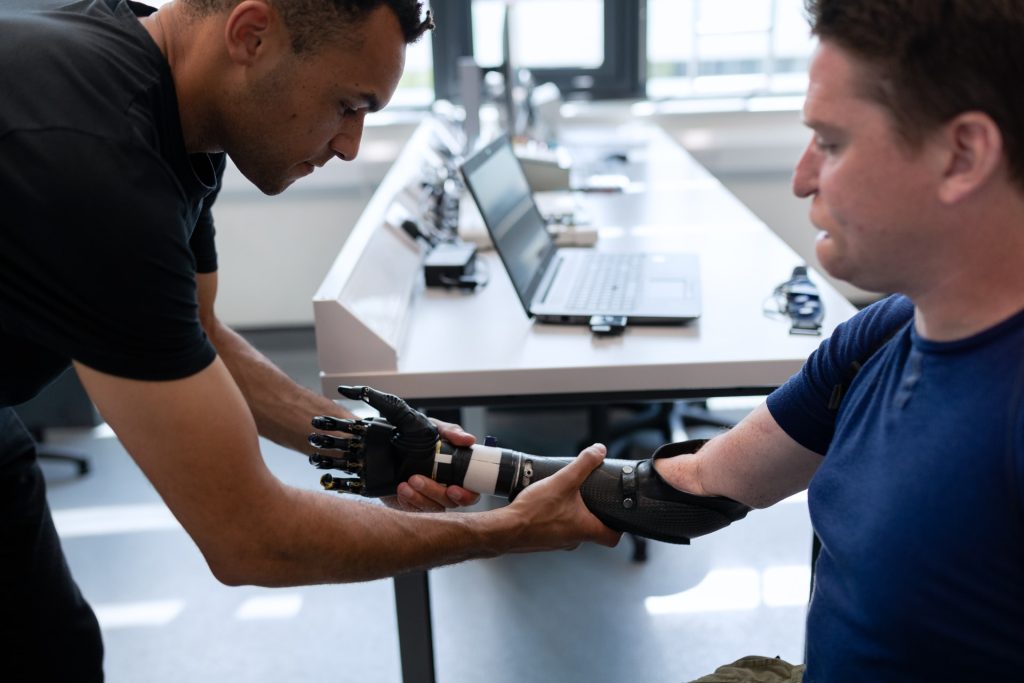
By providing temperature feedback non-invasively, via thermal electrodes (aka thermodes) placed against the skin on the residual arm, amputees like Rossi report feeling temperature in their phantom limb. They can feel if an object is hot or cold, and can tell if they are touching copper, plastic or glass. In a collaboration between EPFL, Sant’Anna School of Advanced Studies (SSSA) and Centro Protesi Inail, the technology was successfully tested in 17 out of 27 patients.
“Of particular importance is that phantom thermal sensations are perceived by the patient as similar to the thermal sensations experienced by their intact hand,” explains Shokur, EPFL senior scientist neuroengineer who co-led the study.
Towards realistic bionic touch
The projection of temperature sensations into the phantom limb has led to the development of new bionic technology, one that equips prosthetics with non-invasive temperature feedback that allows amputees to discern what they’re touching.
“Temperature feedback is essential for relaying information that goes beyond touch, it leads to feelings of affection. We are social beings and warmth is an important part of that,” says Micera, Bertarelli Foundation Chair in Translational Neuroengineering, professor at EPFL and SSSA who also co-led the study. “For the first time, after many years of research in my laboratory showing that touch and position information can be successfully delivered, we envisage the possibility of restoring all of the rich sensations that one’s natural hand can provide.”
Temperature feedback, from well-being to prosthetics
Metaphysiks has been developing neuro-haptic technology, MetaTouch, which connects the body with digital worlds. MetaTouch combines touch and temperature feedback to augment physical products for well-being.
“This breakthrough highlights the power of haptics to improve medical conditions and enhance the quality of life for people with disabilities,” says Simon Gallo, Co-founder and Head of Technology at Metaphysiks.
The EPFL neuroengineers borrowed MetaTouch that provides thermal feedback directly to a user’s skin. With this device, they discovered the thermal phantom sensations and subsequently tested it in 27 amputees.
The Minitouch prototype and tests
For the study, Shokur and Micera developed the MiniTouch, a device that provides thermal feedback and specifically built for integration into wearable devices like prosthetics. The MiniTouch consists of a thin, wearable sensor that can be placed over an amputee’s prosthetic finger. The finger sensor detects thermal information about the object being touched, more specifically, the object’s heat conductivity. If the object is metallic, it will naturally conduct more heat or cold than, for instance, a plastic one. A thermode, one that is in contact with the skin on the amputee’s residual arm, heats up or cools down, relaying the temperature profile of the object being touched by the finger sensor.
“When we presented the possibility to get back temperature sensation on the phantom limb or the possibility to feel the contact with different materials, we obtained a lot of positive feedback. And eventually, we were able to recruit more than 25 volunteers in less than two years,” says Federico Morosato who was responsible for organizing the clinical aspect of the trials at Centro Protesi Inail.
The scientists found that small areas of skin on the residual arm project to specific parts of the phantom hand, like the thumb, or the tip of an index finger. As expected, they discovered that the mapping of temperature sensations between the residual arm and the entire projected phantom one is unique to each patient.
Bionic prosthetics for repairing the human body
Almost a decade ago, Micera and colleagues provided real-time sensory feedback about objects being grasped. They went on to improve touch resolution by providing feedback about an object’s texture and position information in a reliable way. Moreover, they discovered that amputees begin to embody their prosthetic hand if provided with sensory feedback directly into their intact nervous system. The added sensation of temperature feedback is yet another step towards building bionic prosthetics for repairing the human body. Fine-tuning temperature sensations and integrating these into a wearable device that can be mapped out to each patient are part of the next steps.
Combat-related injuries to bone are common in military personnel and can lead to pain and disability. Results from a new study in the Journal of Bone and Mineral Research suggest that amputations for such injuries may negatively affect bone mass.
Traumatic amputation from combat injuries has the potential to lead to osteoporosis through not only systemic inflammation and hormonal changes but also altered loading. Although a documented long-term complication of lower limb amputation is osteoporosis, this is often observed in older less active subjects with comorbidities, thus it is unknown whether this is secondary to systemic changes or changes to the loading environment.
In the study of 575 male adult UK military personnel with combat-related traumatic injuries and 562 without such injuries, veterans who sustained traumatic amputations often had low bone density in the hip region. Changes in bone health appeared to be mechanically driven rather than systemic and were only evident in those with lower limb amputations.
“We hope these results will drive further research into ways to reverse bone mineral density changes,” said co-author Group Captain Alex Bennett, Defence Professor of Rehabilitation, Defence Medical Rehabilitation Centre. “We need to investigate the role of prosthetics and exercise in reversing bone mineral density loss to reduce the longer-term risk of hip fracture. Because systemic treatments like bisphosphonates are not indicated in this young population with bone mineral density loss, it is important to understand other ways to reduce their hip fracture risk.”
For people with paralysis caused by neurologic injury or disease, brain-computer interfaces (BCIs) can potentially restore mobility and function by transmitting neural data to external devices such as mobility aids, which have already shown promise in trials.
Although implanted brain sensors, the core component of many brain-computer interfaces, have been used in neuroscientific studies with animals for decades and have been approved for short term use (< 30 days) in humans, the long-term safety of this technology in humans is unknown.
New results published in Neurology from the BrainGate feasibility study, the largest and longest-running clinical trial of an implanted BCI, suggest that these sensors’ safety is similar to other chronically implanted neurologic devices, with skin irritation around the implant interface.
This new report from a Massachusetts General Hospital (MGH)-led team, examined data from 14 adults with quadriparesis from spinal cord injury, brainstem stroke, or ALS who were enrolled in the BrainGate trial from 2004 to 2021 through seven clinical sites in the United States.
Participants underwent surgical implantation of one or two microelectrode arrays in a part of the brain responsible for generating the electrical signals that control limb movement. With these “Utah” microelectrode arrays, the brain signals associated with the intent to move a limb can then be sent to a nearby computer that decodes the signal in real-time and allows the user to control an external device simply by thinking about moving a part of their body.
The authors of the study report that across the 14 enrolled research participants, the average duration of device implantation was 872 days, yielding a total of 12 203 days for safety analyses. There were 68 device-related adverse events, including 6 device-related serious adverse events.
The most common device-related adverse event was skin irritation around the portion of the device that connects the implanted sensor to the external computer system. Importantly, they report that there were no safety events that required removal of the device, no infections of the brain or nervous system, and no adverse events resulting in permanently increased disability related to the investigational device.
“This interim report demonstrates that the investigational BrainGate Neural Interface system, which is still in ongoing clinical trials, thus far has a safety profile comparable to that of many approved implanted neurologic devices, such as deep brain stimulators and responsive neurostimulators,” says lead author Daniel Rubin, MD, PhD.
“Given the rapid recent advances in this technology and continued performance gains, these data suggest a favorable risk/benefit ratio in appropriately selected individuals to support ongoing research and development,.” said Rubin.
Leigh Hochberg, MD, PhD, director of the BrainGate consortium and clinical trials and the article’s senior author emphasised the importance of ongoing safety analyses as surgically placed brain-computer interfaces advance through clinical studies.
“While our consortium has published more than 60 articles detailing the ever-advancing ability to harness neural signals for the intuitive control of devices for communication and mobility, safety is the sine qua non of any potentially useful medical technology,” says Hochberg.
“The extraordinary people who enroll in our ongoing BrainGate clinical trials, and in early trials of any neurotechnology, deserve tremendous credit. They are enrolling not to gain personal benefit, but because they want to help,” said Hochberg.
Cambridge scientists have successfully trialled an artificial pancreas for use by patients living with type 2 diabetes. They report in Nature Medicine that the device doubled the amount of time patients were in the target range for glucose compared to standard treatment and halved the time spent experiencing high glucose levels.
The artificial pancreas developed by University of Cambridge researchers combines an off-the-shelf glucose monitor and insulin pump with an app developed by the team, known as CamAPS HX. This app is run by an algorithm that predicts how much insulin is required to maintain glucose levels in the target range.
The researchers have previously shown that an artificial pancreas run by a similar algorithm is effective for patients living with type 1 diabetes, from adults through to very young children. They have also successfully trialled the device in patients with type 2 diabetes who require kidney dialysis.
Today, in Nature Medicine, the team report the first trial of the device in a wider population living with type 2 diabetes (not requiring kidney dialysis). Unlike the artificial pancreas used for type 1 diabetes, this new version is a fully closed loop system, whereas patients with type 1 diabetes need to tell their artificial pancreas that they are about to eat to allow adjustment of insulin, for example, with this version they can leave the device to function entirely automatically.
The researchers recruited 26 patients who were randomised to one of two groups – the first group would trial the artificial pancreas for eight weeks and then switch to the standard therapy of multiple daily insulin injections; the second group would take this control therapy first and then switch to the artificial pancreas after eight weeks.
The team used several measures to assess how effectively the artificial pancreas worked. The first was the proportion of time that patients spent with their glucose levels within a target range of between 3.9 and 10.0mmol/L. On average, patients using the artificial pancreas spent two-thirds (66%) of their time within the target range, compared to control (32%).
A second measure was the proportion of time spent with glucose levels above 10.0mmol/L. Over time, high glucose levels raise the risk of potentially serious complications. Patients taking the control therapy spent two-thirds (67%) of their time with high glucose levels — this was halved to 33% when using the artificial pancreas.
Average glucose levels fell from 12.6mmol/L when taking the control therapy to 9.2mmol/L while using the artificial pancreas.
The app also reduced levels of a molecule known as glycated haemoglobin, or HbA1c. Glycated haemoglobin develops when haemoglobin, a protein within red blood cells that carries oxygen throughout the body, joins with glucose in the blood, becoming ‘glycated’. By measuring HbA1c, clinicians are able to get an overall picture of what a person’s average blood sugar levels have been over a period of weeks or months. For people with diabetes, the higher the HbA1c, the greater the risk of developing diabetes-related complications. After the control therapy, average HbA1c levels were 8.7%, while after using the artificial pancreas they were 7.3%.
No patients experienced dangerously-low blood sugar levels (hypoglycaemia) during the study. One patient was admitted to hospital while using the artificial pancreas, due to an abscess at the site of the pump cannula.
Dr Charlotte Boughton from the Wellcome-MRC Institute of Metabolic Science at the University of Cambridge, who co-led the study, said: “Many people with type 2 diabetes struggle to manage their blood sugar levels using the currently available treatments, such as insulin injections. The artificial pancreas can provide a safe and effective approach to help them, and the technology is simple to use and can be implemented safely at home.”
Dr Aideen Daly, also from the Wellcome-MRC Institute of Metabolic Science, said: “One of the barriers to widespread use of insulin therapy has been concern over the risk of severe ‘hypos’ — dangerously low blood sugar levels. But we found that no patients on our trial experienced these and patients spent very little time with blood sugar levels lower than the target levels.”
Feedback from participants suggested that participants were happy to have their glucose levels controlled automatically by the system, and nine out of ten (89%) reported spending less time managing their diabetes overall. Users highlighted the elimination of the need for injections or fingerprick testing, and increased confidence in managing blood glucose as key benefits. Downsides included increased anxiety about the risk of hypoglycaemia, which the researchers say may reflect increased awareness and monitoring of glucose levels, and practical annoyances with wearing of devices.
The team now plan to carry out a much larger multicentre study to build on their findings and have submitted the device for regulatory approval with a view to making it commercially available for outpatients with type 2 diabetes.
In APL Bioengineering, researchers report on an injectable hydrogel that treats infections around hip and knee replacement prosthetics without the problems caused by current treatments. Testing showed that the gel inhibits common bacteria and promotes tissue regrowth.
After hip and knee replacement surgeries, pathogenic bacteria can adhere to the surface of the joint prosthesis and form a dangerous biofilm. Gold standard clinical methods use potent antibiotics and further surgery, including removal of infected tissue and transplantation of new tissue, to treat these infections. However, these strategies run into problems with hyper-resistant bacteria caused by the abuse of antibiotics, persistent damage caused by tissue removal, difficulties in obtaining tissue donors, and toxicity and immune system complications.
A team from Shanghai Jiao Tong University School of Medicine created ablack phosphorus-enhanced antibacterial injectable hydrogel to re-establish biological barriers in soft tissue and suppress persistent infections. The gel has a porous structure, excellent injectability, and rapid self-healing properties.
“It is important to explore a new strategy for treatment of infected soft tissue wounds because it is directly related to prognosis,” said author Ruixin Lin. “We aspire to develop a simpler, safer method to help more patients avoid suffering and help more doctors make the right choices.”
In vitro tests showed the hydrogel had good stability and low toxicity to tissue cells. Irradiating the gel with near infrared light causes it to release silver ions. This process was highly efficient at inhibiting the common bacteria S. aureus.
“Furthermore, an in vivo infected wound model showed that the hydrogel could not only inhibit the persistent infection of the wound, but also accelerate the deposition of collagen fibres and angiogenesis, thereby realizing the repair of the natural barrier of soft tissue,” said Lin.
The novel hydrogel provides a safe and feasible synergistic antibacterial strategy for infected soft tissue healing. The team believes that it solves current clinical problems, such as stubborn infections caused by antibiotic resistance, and provides new ideas for minimally invasive treatment. They hope to see it used in the clinic after conducting sufficient studies on its underlying mechanisms.
A comparison of spinal cord stimulators (SCS) revealed that the implants only offer a notable benefit within the first year of use, while also being associated with a high risk of adverse effects – nearly one in five, and a similar number requiring device revision or removal.
In this propensity-matched comparative effectiveness research analysis of 7560 insured individuals published in JAMA Neurology, treatment with SCS was not associated with a reduction in use of opioids, pain injections, radiofrequency ablation, or spine surgery at two years.
The study used administrative claims data, including longitudinal medical and pharmacy claims, from 2020–2021. Patients with incident diagnosis codes for failed back surgery syndrome, complex regional pain syndrome, chronic pain syndrome, and other chronic postsurgical back and extremity pain were included in this study.
Patients were an average age of 63.5 years and 59.3% were female. Among matched patients, during the first year, patients treated with SCSs had higher odds of chronic opioid use (adjusted odds ratio [aOR], 1.14) compared with patients treated with CMM but lower odds of epidural and facet corticosteroid injections (aOR, 0.44), radiofrequency ablation (aOR, 0.57), and spine surgery (aOR, 0.72).
During the second year, these beneficial effects disappeared. Compared to CMM there were no significant differences with SCS use in:
chronic opioid use (aOR, 1.06),
epidural and facet corticosteroid injections (aOR, 1.00)
radiofrequency ablation (aOR, 0.84)
spine surgery (aOR, 0.91)
Overall, 226 of 1260 patients (17.9%) treated with SCS experienced SCS-related complications within 2 years, and 279 of 1260 patients (22.1%) had device revisions and/or removals, which were not always for complications. Total costs of care in the first year were $39 000 higher with SCS than CMM and similar between SCS and CMM in the second year.
In an accompanying editorial, Prasad Shirvalkar, MD, PhD, and Lawrence Poree. MD, PhD, MPH conclude: “The findings appear to belie the popular belief that SCS may result in reduced opioid medication usage or overall fewer physician visits in the years immediately following device implant.”
They continue: “Notably, a formal cost-utility analysis was not done, and therefore caution is advised not to interpret these results as an argument against the therapeutic effectiveness of SCS for reducing symptoms or improving daily function. After all, there is surely some intrinsic social value to alleviating symptoms and improving individual function that may justify health care costs for chronic pain, just as in the practical treatment of cancer or heart disease.”
By taking advantage of a phenomenon that is usually an engineering headache, MIT researchers have designed a liquid metal to safely disintegrate metal medical implants and drug depots when they are not needed anymore.
In their work published in Advanced Materials, the researchers showed that aluminium biomedical devices can be disintegrated by exposing them to a liquid metal known as eutectic gallium-indium (EGaIn). In practice, this might work by painting the liquid onto staples used to hold skin together, for example, or by administering EGaIn microparticles to patients.
According to the researchers, disintegrating metal devices in this way could eliminate the need for surgical or endoscopic removal procedures.
“It’s a really dramatic phenomenon that can be applied to several settings,” says senior author Giovanni Traverso, assistant professor of mechanical engineering at MIT and a gastroenterologist at Brigham and Women’s Hospital. “What this enables, potentially, is the ability to have systems that don’t require an intervention such as an endoscopy or surgical procedure for removal of devices.”
Breaking down metals
For several years, Traverso’s lab has been working on ingestible devices that could remain in the digestive tract for days or weeks, releasing drugs on a specific schedule.
Most of those devices are made from polymers, but recently the researchers have been exploring the possibility of using metals, which are stronger and more durable. However, one of the challenges of delivering metal devices is finding a way to remove them once they’re no longer needed.
Right now, removing the staples can actually induce more tissue damage
Vivian Feig, MIT POSTDOC & First Author
To create devices that could be broken down on demand inside the body, the MIT turned to liquid metal embrittlement. This process has been well-studied as a source of failure in metal structures, including those made from zinc and stainless steel. It is why metal liquids such as mercury are not allowed on aircraft.
“It’s known that certain combinations of liquid metals can actually get into the grain boundaries of solid metals and cause them to dramatically weaken and fail,” says first author Vivian Feig, an MIT postdoc. “We wanted to see if we could harness that known failure mechanism in a productive way to build these biomedical devices.”
One room-temperature liquid metal that can induce embrittlement is gallium. For this study, the researchers used eutectic gallium-indium, an alloy of gallium that scientists have explored for a variety of applications in biomedicine as well as energy and flexible electronics.
For the devices themselves, the researchers chose to use aluminium, which is known to be susceptible to embrittlement when exposed to gallium.
Gallium weakens solid metals such as aluminium in two ways. First, it can diffuse through the grain boundaries of the metal – border lines between the crystals that make up the metal – causing pieces of the metal to break off. The MIT team showed that they could harness this phenomenon by designing metals with different types of grain structures, allowing the metals to break into small pieces or to fracture at a given point.
Gallium also prevents aluminium from forming a protective oxide layer on its surface, which increases the metal’s exposure to water and enhances its degradation.
The MIT team showed that after they painted gallium-indium onto aluminium devices, the metals would disintegrate within minutes. The researchers also created nanoparticles and microparticles of gallium-indium and showed that these particles, suspended in fluid, could also break down aluminium structures.
On-demand disintegration
While the researchers began this effort as a way to create devices that could be broken down in the gastrointestinal tract, they soon realised that it could also be applied to other biomedical devices such as staples and stents.
To demonstrate GI applications, the researchers designed a star-shaped device, with arms attached to a central elastomer by a hollow aluminium tube. Drugs can be carried in the arms, and the shape of the device helps it be retained in the GI tract for an extended period of time. In a study in animals, the researchers showed that this kind of device could be broken down in the GI tract upon treatment with gallium-indium.
The researchers then created aluminium staples and showed that they could be used to hold tissue together, then dissolved with a coating of gallium-indium.
“Right now, removing the staples can actually induce more tissue damage,” Feig says. “We showed that with our gallium formulation we can just paint it on the staples and get them to disintegrate on-demand instead.”
The researchers also showed that an aluminium stent they designed could be implanted in oesophageal tissue, then broken down by gallium-indium.
Currently, oesophageal stents are either left in the body permanently or endoscopically removed when no longer needed. Such stents are often made from metals such as nitinol, an alloy of nickel and titanium. The researchers are now working to see if they could create dissolvable devices from nitinol and other metals.
“An exciting thing to explore from a materials science perspective is: Can we take other metals that are more commonly used in the clinic and modify them so that they can become actively triggerable as well?” Feig says.
Initial toxicity studies in rodents showed that gallium-indium was non-toxic even at high doses. However, more study would be needed to ensure it would be safe to administer to patients, the researchers say.