Category: Implants and Prostheses

Implant Helps Patient with Neurodegenerative Disease to Walk Again

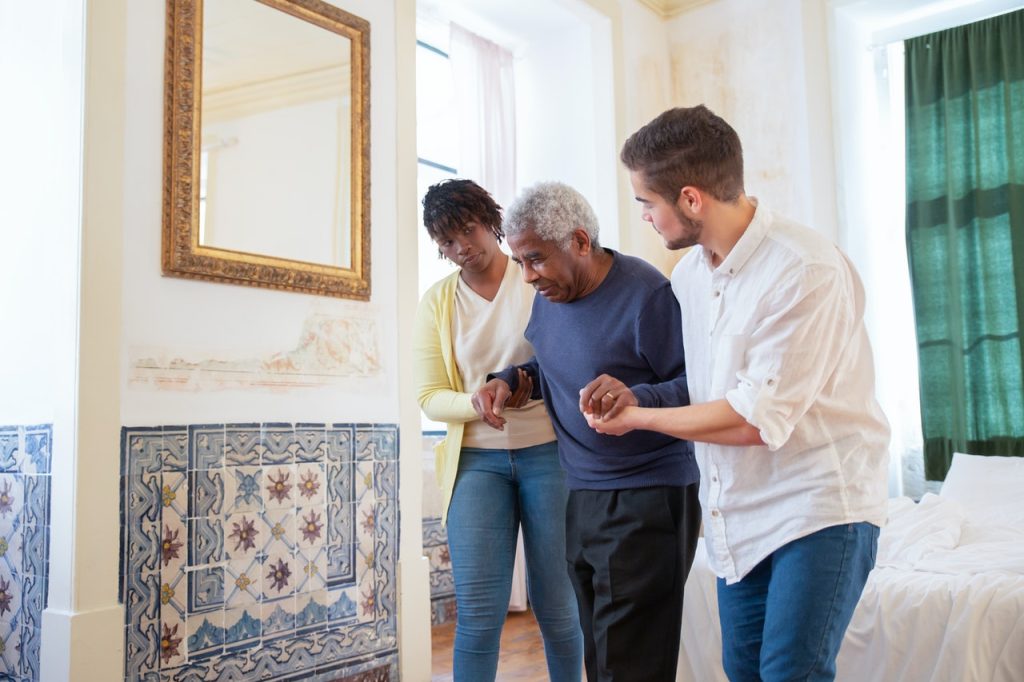
Patient takes steps with the help of an assistant. Credit: Jmmy Ravier & NeuroRestore

A woman bedridden for over a year due to a debilitating neurodegenerative disease was able to get up and walk again, thanks to an innovative electrical stimulation system which was able to raise her blood pressure on standing and prevent her fainting. The system was developed by a team headed by Professors Jocelyne Bloch and Grégoire Courtine, and was detailed in The New England Journal of Medicine.

Their system includes electronics implanted directly on the spinal cord to reactivate the neurons that regulate blood pressure, thereby preventing the patient from losing consciousness every time she’s in an upright position. This type of implant was already in use for the treatment of low blood pressure in tetraplegic patients.

The female patient in the study suffers from multiple system atrophy-parkinsonian type (MSA-P), a neurodegenerative disease that afflicts several parts of the nervous system, including the sympathetic nervous system. 

MSA-P leads to the loss of sympathetic neurons regulating blood pressure, which results in orthostatic hypotension, a dramatic blood pressure drop when patients are in an upright position, which in some cases results in fainting. This increases fall risks, limits mobility, and can eventually shorten life expectancy. Having to remain in a reclined position to avoid passing out severely impacts patients’ quality of life.

The implant consists of a set of electrodes connected to an electrical-impulse generator typically used to treat chronic pain. After implanting their device directly on the patient’s spinal cord, the researchers found an improvement in the body’s capacity to regulate blood pressure, enabling the patient to remain conscious for longer periods in an upright position and to begin physical therapy to walk again. After being bedridden for 18 months, the patient is now able to walk as far as 250 metres.

For Jocelyne Bloch, this marks an important step toward the treatment of degenerative diseases: “We’ve already seen how this type of therapy can be applied to patients with a spinal-cord injury. But now, we can explore applications in treating deficiencies resulting from neurodegeneration. This is the first time we’ve been able to improve blood-pressure regulation in people suffering from MSA.”

Grégoire Courtine added that “this technology was initially intended for pain relief, not for this kind of application. Going forward, we and our company Onward Medical plan to develop a system targeted specifically to orthostatic hypotension that can help people around the world struggling with this disorder.”

Source: Ecole Polytechnique Federale de Lausanne

Tiny Implantable Electrodes to Treat Drug-resistant Neuropathic Pain

Woman holding her wrist in pain
Credit: Pixabay CC0

Using a rice-grain sized wireless implant to stimulate peripheral nerves from within blood vessels could potentially treat drug-resistant neuropathic pain, according to a study published in Nature Biomedical Engineering.

After receiving a grant, a team set out to create implantable, wirelessly powered nerve stimulators that can be used in place of opioids for pain management. The 1-millimetre large implants are small enough to be placed on stents and delivered within blood vessels adjacent to specific areas of the central and peripheral nervous system.

Co-principal investigator of the study, Sunil A. Sheth, MD, explained: “We’re getting more and more data showing that neuromodulation, or technology that acts directly upon nerves, is effective for a huge range of disorders—depression, migraine, Parkinson’s disease, epilepsy, dementia, etc. – but there’s a barrier to using these techniques because of the risks associated with doing surgery to implant the device, such as the risk of infection. If you can lower that bar and dramatically reduce those risks by using a wireless, endovascular method, there are a lot of people who could benefit from neuromodulation.”

Neuropathic pain can be a disabling disorder that accounts for nearly 40% of chronic pain sufferers, often leading to anxiety, depression, and opioid addiction. Previous studies showed that electrical stimulation is an effective treatment for reducing pain when doctors target the spinal cord and dorsal root ganglia (DRG), a bundle of nerves that carry sensory information to the spinal cord. However, existing DRG stimulators require invasive surgery to implant a battery pack and pulse generator.

According to the researchers, this new type of technology offers a way to perform minimally invasive bioelectronic therapy that helps with more precise placement of the implant and more predictable outcomes. The team are hoping to move forward with regulatory approval, which Dr Sheth estimates may take a few years.

Source: The University of Texas Health Science Center

‘An Alien Knee’: Discomfort with Total Knee Replacement

Photo by Kampus Production from Pexels

A study interviewing patients who received total knee replacement for osteoarthritis find that, despite the welcome pain relief, some also experience less pleasant psychological impacts.

For their study published in Arthritis Care & Research, UK researchers sought to bridge a knowledge gap of where people were dissatisfied with their total knee replacements even though they reported less pain and better function.

Using semi-structured interviews, researchers elicited comments from 34 patients, meant to explore patients’ thoughts about their knee implants. They received a lot of feedback about non-pain discomfort and feelings of dissonance.

“My leg feels like it’s made of lead,” one patient told researchers.

“It feels like someone is holding your knees, when you move, it’s like someone is … putting pressure there,” said another.

A third said: “I know it’s not my knee. It’s an alien knee in there. I don’t really feel connected to it.”

“Typically, the assessment of patient-reported outcomes after joint replacement focuses on functional outcome and pain relief as the main determinant of satisfaction,” the researchers explained. “This narrow perspective is compounded by poor definitions of satisfaction after surgery, and there is little research on how and why some patients express dissatisfaction with joint replacement and what they are dissatisfied about.”

Citing a study of hand surgery patients in which patients “spoke about their hand as if it were an object separate from their self,” the researchers argued that a psychological concept called embodiment could help explain the patients’ feelings of dissonance.

They wrote: “Embodiment refers to the experience of the body as both subject and object, such that this idea impacts the way in which a person sees and interacts with the world, and vice versa. Embodiment provides a way of understanding how one experiences limits of possible action, a sense of control, and empowerment over physical action.”

Initially, the researchers weren’t planning to focus on embodiment, but, they explained, “by the third interview we noted that some participants described sensations of discomfort such as heaviness or numbness when discussing pain and some described their knee as ‘alien,’ ‘foreign,’ or ‘not part of’ themselves. In response to these findings, the interviewer sought to elicit views about any such sensations in subsequent interviews, if this topic was not broached first by the participant.”

Their study emerged from an earlier one focusing on reasons for avoiding healthcare encounters post-surgery and involved the same participants, who had lingering pain and discomfort. The semi-structured interview covered pain as well as how patients managed it. After a third interview, patients who reported feelings of alienation from their implant were asked about it in more detail.

Participants reflected the general knee-replacement population – most in their 60 and 70s, and just over half were women. Of the 34 patients, 24 were between 2 and 4 years out from their surgery.

Physical types of non-pain discomfort were commonly reported, such as feelings of numbness and/or heaviness, as well as sensations of pressure applied externally. One man said it felt like the skin over his knee was stretched tight. Separate from these sensations were reports that the limb no longer felt like a part of them but something foreign, like an external prosthesis. Some patients complained of a lack of control. “That knee just wouldn’t do what it’s told to do,” one told the interviewer.

Others said they hadn’t regained trust in the knee, with one man still using a cane for fear of falling.

Overall, the researchers found that the patients’ experience were quite similar to those of amputees getting used to their prosthetic limbs. This could be partly explained by often experiencing years of pain and loss of function before the joint replacement.

“Presurgical chronic pain, instability, and untrustworthiness might continue to influence [mental] incorporation of the prosthesis afterwards,” the researchers suggested.

And there is a potential clinical implication for the findings: “Our study suggests that the interest for rehabilitation becomes not only strengthening the joint and promoting full recovery to tasks, but also modifying a person’s relationship with the new joint to achieve full incorporation or re-embodiment.”

The researchers proposed that other programmes developed for other conditions could be helpful, such as external prosthesis use as well as complex regional pain syndromes.

“Our focus should not be on the absence or loss of embodiment,” the researchers added, “but on employing a multidisciplinary approach to using the concept to guide the development of pre-rehabilitative strategies and appropriate outcome measures.”

Source: MedPage Today

Recipients of Bionic Eyes Blindsided by Obsolescence

Source: Daniil Kuzelev on Unsplash

After the manufacturer of a bionic eye ended support, hundreds of recipients of the vision-improving implants have been left without support – “literally in the dark”, as one of them put it.

IEEE Spectrum, which first broke the story, reported that Second Sight discontinued its retinal implants in 2019. The retinal implants serve as the source of artificial vision for the users.

The publication wrote that the firm’s focus is currently on developing a brain implant known as the Orion, which also provides artificial vision. However, it only offers very limited support to the 350 or so who have the now-obsolete Argus II implants.

The system consists of a camera mounted on glasses worn by the user, which transmits video to a video processing unit (VPU), which then encodes the images into arrays of black and white pixels. The VPU then relays the pixel to an electrode array behind the retina, which creates flashes of light corresponding to the white pixels. The technology has had a long and costly road from experiment to product, starting with a lab experiment in the 1990s where stimulation of a single electrode in the retina was discovered to create a visible flash of light perceived by a blind patient. It is hugely expensive, with an estimated cost of $150,000 (R2.25 million) even before the surgery and post-surgery training. 

Implantation surgery typically takes a few hours, followed by training to help users interpret the new optical input from their implants. It is not a replacement for sight; rather it is more like a new sense. Users of the system see fleeting changes of grey which some can then use to assist with basic locomotion. However, the technology is still crude and not all benefit to the same degree. While some can make out the stripes on a pedestrian crossing, others never achieve that level of ability.

The technology also comes with some risk. In the postapproval period, 17% experienced adverse events, though this was an improvement over the 40% in the preapproval period. Since the implant can interfere with MRI scans, some have had to consider removal.

IEEE Spectrum contacted a number of patients, who voiced concern over their future. One patient, Ross Doer, said he was delighted when Second Sight told him in 2020 he was eligible for software upgrades. Yet, he heard troubling rumours. When he called his Second Sight vision-rehab therapist, “She said, ‘Well, funny you should call. We all just got laid off,’ ” he recalled. “She said, ‘By the way, you’re not getting your upgrades.’ ”

“Those of us with this implant are figuratively and literally in the dark,” he said.

Second Sight, when contacted by the publication, said that it had to reduce its workforce because of financial difficulties, and though it attempted to provide “virtual support” was unable to assist with repairs or replacements.
Benjamin Spencer, one of the six patients to receive the new Orion implant, said that it was “amazing” and he was able to see his wife for the first time. But knowing what he does now about Second Sight makes him apprehensive, and plans to have his implant removed at the end of the study period.

Speaking to the BBC, Elizabeth M. Renieris, professor of technology ethics at the University of Notre Dame, in the US, described the development as a cautionary tale.

“This is a prime example of our increasing vulnerability in the face of high-tech, smart and connected devices which are proliferating in the healthcare and biomedical sectors,” she said.

“These are not like off-the-shelf products or services that we can actually own or control. Instead we are dependent on software upgrades, proprietary methods and parts, and the commercial drivers and success or failure of for-profit ventures.”

She added that in future, ethical considerations concerning such technology should include “autonomy, dignity, and accountability”.

Source: IEEE Spectrum

Implant Enables Man With Severed Spinal Cord to Walk

Michel Rocatti walking using the spinal stimulation system. ©NeuroRestore-Jimmy Ravier

In a world first, Michel Roccati, a man with a completely severed spinal cord was able to walk again outside the lab with the help of a portable electrical stimulation system that causes his legs to take a step in conjunction with his intention to move and a walker to steady him.

This was a further development of a technology that in 2018 helped David M’zee, who had been left paralysed by a partial spinal cord injury suffered in a sports accident, to walk again. A research team led by Professors Grégoire Courtine, at École Polytechnique Fédérale de Lausanne (EPFL) and Jocelyne Bloch, at Lausanne University Hospital (CHUV) had developed an electrical stimulation system to help people with spinal cord injuries walk again.

They had wanted to see if electrodes could stimulate movement in the parts of the spine damaged so badly that signals no longer reach the nervous system from the brain. That pioneering study was detailed in Nature and Nature NeuroscienceThanks to the electrodes making up for the weakness of the signals in his damaged spinal cord, M’zee was able to voluntarily move his legs and could walk several hundred metres at a time, sometimes without the aid of the rails on the treadmill.

Now a new milestone has just been reached with the technology, and the research team enhanced their system with more sophisticated implants controlled by advanced software. These implants can stimulate the region of the spinal cord that activates the trunk and leg muscles. Thanks to this new technology, three patients with complete spinal cord injury were able to walk again outside the lab. “Our stimulation algorithms are still based on imitating nature,” said Prof Courtine. “And our new, soft implanted leads are designed to be placed underneath the vertebrae, directly on the spinal cord. They can modulate the neurons regulating specific muscle groups. By controlling these implants, we can activate the spinal cord like the brain would do naturally to have the patient stand, walk, swim or ride a bike, for example.”

On a cold, snowy day last December, Michel Roccati – an Italian man who became paralysed after a motorcycle accident four years earlier – braved the icy wind to try out the system outdoors, in central Lausanne. He had recently undergone the surgical procedure in which Prof Bloch placed the new, implanted lead on his spinal cord.

Scientists attached two small remote controls to Michel’s walker and connected them wirelessly to a tablet that forwards the signals to a pacemaker in Michel’s abdomen. The pacemaker in turn relays the signals to the implanted spinal lead that stimulates specific neurons, causing Michel to move. Grasping the walker, Michel pressed a button corresponding to either the left or right leg with the firm intention of taking a step forward, and his feet rose and fell in short steps.

“The first few steps were incredible – a dream come true!” he says. “I’ve been through some pretty intense training in the past few months, and I’ve set myself a series of goals. For instance, I can now go up and down stairs, and I hope to be able to walk one kilometre by this spring.”

Two other patients have also successfully tested the new system, which is described in Nature Medicine. “Our breakthrough here is the longer, wider implanted leads with electrodes arranged in a way that corresponds exactly to the spinal nerve roots,” said Bloch. “That gives us precise control over the neurons regulating specific muscles.” Ultimately, it allows for greater selectivity and accuracy in controlling the motor sequences for a given activity.

While extensive training is necessary for patients to get comfortable using the device, the speed and scope of rehabilitation is amazing. “All three patients were able to stand, walk, pedal, swim and control their torso movements in just one day, after their implants were activated!” said Prof Courtine. “That’s thanks to the specific stimulation programs we wrote for each type of activity. Patients can select the desired activity on the tablet, and the corresponding protocols are relayed to the pacemaker in the abdomen.”

While the progress achievable in a single day is astonishing, the gains after several months are even more impressive. The three patients followed a training regimen based on the stimulation programs and were able to regain muscle mass, move around more independently, and take part in social activities like having a drink standing at a bar. What’s more, because the technology is miniaturized, the patients can perform their training exercises outdoors and not only inside a lab.

Presently there is one key limitation, Prof Bloch said: “We need at least six centimetres of healthy spinal cord under the lesion. That’s where we implant our electrodes.”

As for Roccati, after nine months of Lausanne-based rehab, he now lives independently in Italy. “I continued rehab at home, working alone, with all the devices,” he said. “And I see improvements every day.”

Source: École Polytechnique Fédérale de Lausanne

Bionic Eye Demonstration Paves the Way to Human Trials

The Phoenix99 Bionic Eye. Credit: University of Sydney

A bionic eye under development has shown to be safe and stable for long-term implantation in a three-month animal study, paving the way towards human trials.

The Phoenix99 Bionic Eye, being developed by University of Sydney and UNSW, is an implantable system, designed to restore a form of vision to patients living with severe vision impairment and blindness caused by degenerative diseases, such as retinitis pigmentosa. The device consists of two main implants: a stimulator attached to the eye and a communication module positioned under the skin behind the ear.

Published in Biomaterials, the researchers used a sheep model to observe how the body responds and heals when implanted with the device, with the results allowing for further refinement of the surgical procedure. The biomedical research team is now confident the device could be trialled in human patients and have applied for ethical approval.

The Phoenix99 Bionic Eye works by stimulating the retina which, in healthy eyes, the cells in one of the layers turn incoming light into electrical messages. In some retinal diseases, the cells responsible for this crucial conversion degenerate, causing vision impairment. The system bypasses these malfunctioning cells by stimulating the remaining cells directly, effectively tricking the brain into believing that light was sensed.

“Importantly, we found the device has a very low impact on the neurons required to ‘trick’ the brain. There were no unexpected reactions from the tissue around the device and we expect it could safely remain in place for many years,” said Mr Samuel Eggenberger, a biomedical engineer who is completing his doctorate with Head of School of Biomedical Engineering Professor Gregg Suaning.

“Our team is thrilled by this extraordinary result, which gives us confidence to push on towards human trials of the device. We hope that through this technology, people living with profound vision loss from degenerative retinal disorders may be able to regain a useful sense of vision,” said Mr Eggenberger.

Professor Gregg Suaning said the positive results are a significant milestone for the Phoenix99 Bionic Eye.

“This breakthrough comes from combining decades of experience and technological breakthroughs in the field of implantable electronics,” said Prof Suaning.

A patient is implanted with the Phoenix99, and a stimulator is positioned on the eye and a communication module implanted behind the ear. A tiny camera attached to glasses captures the visual scene in front of the wearer, and the images are processed into a set of stimulation instructions which are sent wirelessly through to the communication module of the prosthesis.

The implant then transfers the instructions to the stimulation module, which delivers electrical impulses to the neurons of the retina. The electrical impulses, delivered in patterns matching the images recorded by the camera, trigger neurons which forward the messages to the brain, which interprets the signals as seeing the scene.

Source: University of Sydney

UK Man to Receive World’s First 3D-printed Eye

Photo by Victor Freita on Pexels

Moorfields Eye Hospital patient in the UK will be the first to benefit solely from a fully digital 3D printed prosthetic eye. Steve Verze, an engineer, will go home from the Old Street hospital with only a printed eye fitted that day. He first tried his eye on November 11 alongside a traditional acrylic prosthetic.

This new 3D printing process avoids the invasive process of making a mould of the eye socket: a procedure so difficult that in children it can require putting them under general anaesthetic.

Steve said: “I’ve needed a prosthetic since I was 20, and I’ve always felt self-conscious about it. When I leave my home I often take a second glance in the mirror, and I’ve not liked what I’ve seen. This new eye looks fantastic and, being based on 3D digital printing technology, it’s only going to be better and better.”

Professor Mandeep Sagoo, consultant ophthalmologist at Moorfields and professor of ophthalmology at the NIHR Biomedical Research Centre at Moorfields Eye Hospital UCL and Institute of Ophthalmology, said: “We are excited about the potential for this fully digital prosthetic eye.

“We hope the forthcoming clinical trial will provide us with robust evidence about the value of this new technology, showing what a difference it makes for patients. It clearly has the potential to reduce waiting lists.”

The printed eye is more realistic, with clearer definition and giving real depth to the pupil. The way light travels through the full depth of the printed eye is more natural than current prosthetics, which simply have the iris hand-painted onto a black disc embedded in the eye, with no light passage through the eye.

The current process can take six weeks but 3D printing halves that time, and the scanning ensures a precise fit. 

Source: Islington Gazette

A Novel Brain Implant Relieves Treatment-resistant Depression

Image by Falkurian Design on Unsplash

A proof-of-principle trial has shown that an electrical implant wired into the brain can detect and treat depression, thanks to positive results for the first patient to be fitted with the device.

The patient, Sarah (36), says the matchbox-sized implant in her skull has turned her life around since it was fitted a year ago. Her depression persisted despite anti-depressants and electroconvulsive therapy.

Sarah said that “any kind of relief” was better than her suffering. “My daily life had become so restricted. I felt tortured each day. I barely moved or did anything.”

The device, including its battery, was inserted into her skull beneath the scalp and holes were drilled for wires into her brain.

 Recalling how the implant changed her life, she said: “When the implant was first turned on, my life took an immediate upward turn. My life was pleasant again.

“Within a few weeks, the suicidal thoughts disappeared. When I was in the depths of depression all I saw is what was ugly.”

After 15 months, she has so far experienced no side effects from the device.

“In the early few months, the lessening of the depression was so abrupt, and I wasn’t sure if it would last,” she said. “But it has lasted. And I’ve come to realise that the device really augments the therapy and self-care I’ve learned while being a patient here at UCSF.”

The treatment however has to be personalised to the individual and their unique brain circuitry. Researcher Dr Katherine Scangos, a psychiatrist at University of California, San Francisco, said locating the ‘depression circuits’ in Sarah’s brain was what made the innovation possible.
“We found one location, which is an area called the ventral striatum, where stimulation consistently eliminated her feelings of depression.

“And we also found a brain activity area in the amygdala that could predict when her symptoms were most severe.”

Dr Scangos, who has enrolled two other patients in the trial and hopes to recruit nine more, said they need to repeat the work, looking for any changes in biomarkers or brain circuits. 
She said, “We didn’t know if we were going to be able to treat her depression at all because it was so severe. So in that sense we are really excited about this. It’s so needed in the field right now.”

However, the researchers stress that much more research is needed to see if this novel treatment is effective in other patients, and if it can be applied to other disorders.

The study is reported in Nature Medicine.

Source: BBC News

Deaths From Medical Devices Are Underreported in the US

Photo by Vidal Balielo Jr. from Pexels

Researchers have found that a number of deaths related to medical device adverse events were improperly categorised in the FDA’s Manufacturer and User Facility Device Experience (MAUDE) database, according to a new study.

Flagging terms commonly associated with death, the study investigators used a natural language processing algorithm to identify 290 141 reports where serious injury or death was reported; 52.1% of these events were reported as deaths, and 47.9% were classified as either malfunction, injury, or missing (report was uncategorised), reported Christina Lalani, MD, of the University of California San Francisco, and colleagues, in JAMA Internal Medicine.

Overall, 23% of reports with a death were not placed in the death category, amounting to some 31 552 reports filed from December 31, 1991, to April 30, 2020.

Whether to classify the event as a malfunction, injury, death, or ‘other’ is up to the physician or manufacturer. According to the FDA, the reporter is required to categorise an adverse event as an official death if the cause of death is unknown, or if the device “may have caused or contributed to a death.”

The three most common product codes among the adverse event reports were for ventricular assist bypass devices (38 708 reports), dialysate concentrate for haemodialysis (25 261 reports), and transcervical contraceptive tubal occlusion devices (14 387 reports).

The natural language processing algorithm scanned through reports, identifying terms such as “patient died,” “patient expired,” “could not be resuscitated,” and “time of death.” Of the 70 terms that were associated with a death, 62 (88.6%) were found among miscategorised adverse event reports involving a patient death. And, out of all 62, there were 17 terms that had an estimated percentage of 100%, meaning that “every time that term was used, the patient had died, even though the reporter had not classified the report as death,” the team wrote.

Only 18 terms had sample sizes large enough for researchers to calculate confidence intervals; among them, the words “death” or “deaths” were linked to 12% of adverse event reports in which a patient died, but were classified as malfunction, other, or missing — the highest rate of all the analysed terms.

The researchers acknowledged a major limitation in that only reports with at least one death-associated term were included, in contrast to all the reports from the MAUDE database. Improperly categorised deaths likely contribute to an underestimate.

“The classification chosen by the reporter is vital, as the FDA must review all adverse events reported as deaths, which is not the case for other reporting categories,” the authors wrote. Improving the reports’ accuracy is crucial, since patient death frequency can prompt the FDA to pursue investigations into the device’s safety, they added.

The researchers pointed out an inherent conflict of interest as 95.9% of the reports evaluated in the study were submitted by manufacturers.

“It may not be in their interest to facilitate identification of serious problems with their own devices in a timely manner,” they wrote. “There have been multiple instances of delays by manufacturers in reporting serious malfunctions and deaths that were associated with medical devices, as well as complete failures to report.”

Therefore, it’s likely that a significant number of patients have been unknowingly treated with devices that were later revealed to be dangerous, Dr Lalani and colleagues noted. For example, they referenced the reporting failures that occurred from 2002 to 2013, when 32 000 women reported adverse events associated with the permanent birth control device Essure while the FDA only received 1023 adverse event reports from the manufacturer.

They concluded that patients and care providers should submit reports directly to the FDA as well as or instead of the manufacturer.

Source: MedPage Today

Journal information: Lalani C, et al “Reporting of death in US Food and Drug Administration medical device adverse event reports in categories other than death” JAMA Intern Med 2021; DOI: 10.1001/jamainternmed.2021.3942.

Liquid Metal Sensors Recreate a Sense of Touch

Photo by ThisisEngineering RAEng on Unsplash

To recreate a sense of ‘touch’, researchers have incorporated stretchable tactile sensors using liquid metal on the fingertips of a prosthetic hand. 

When manipulating an object, humans are heavily reliant on sensation in their fingertips, each of which has over 3000 pressure-sensitive touch receptors. While there are many high-tech, dexterous prosthetics available today, they all lack the sensation of ‘touch‘, resulting in objects inadvertently being dropped or crushed by a prosthetic hand.
To make a prosthetic hand interface that feels more natural and intuitive, researchers from Florida Atlantic University’s College of Engineering and Computer Science and collaborators incorporated stretchable tactile sensors using liquid metal on a prosthetic hand’s fingertips. Encapsulated within silicone-based elastomers, this technology provides key advantages over traditional sensors, including high conductivity, compliance, flexibility and stretchability.

For the study, published in the journal Sensors, researchers used individual fingertips on the prosthesis to distinguish between different speeds of a sliding motion along different textured surfaces. The four different textures had one variation: the distance between the ridges. To detect the textures and speeds, researchers trained four machine learning algorithms. For each of the ten surfaces, 20 trials were performed to test the ability of the machine learning algorithms to distinguish between the different textured surfaces.

Results showed that integrating tactile information from the fingertip sensors simultaneously distinguished between complex, multi-textured surfaces – demonstrating a new form of hierarchical intelligence. The algorithms could accurately distinguish between the fingertip speeds. This new technology could improve prosthetic hand control and provide haptic feedback for amputees to restore a sense of touch.

“Significant research has been done on tactile sensors for artificial hands, but there is still a need for advances in lightweight, low-cost, robust multimodal tactile sensors,” said senior author Erik Engeberg, PhD, an associate professor in the Department of Ocean and Mechanical Engineering. “The tactile information from all the individual fingertips in our study provided the foundation for a higher hand-level of perception enabling the distinction between ten complex, multi-textured surfaces that would not have been possible using purely local information from an individual fingertip. We believe that these tactile details could be useful in the future to afford a more realistic experience for prosthetic hand users through an advanced haptic display, which could enrich the amputee-prosthesis interface and prevent amputees from abandoning their prosthetic hand.”

Researchers compared four different machine learning algorithms for their successful classification capabilities. The time-frequency features of the liquid metal sensors were extracted to train and test the machine learning algorithms. Of these, a neural network algorithm generally performed the best at the speed and texture detection with a single finger and had a 99.2 percent accuracy to distinguish between ten different multi-textured surfaces using four liquid metal sensors from four fingers simultaneously.

“The loss of an upper limb can be a daunting challenge for an individual who is trying to seamlessly engage in regular activities,” said Stella Batalama, Ph.D., dean, College of Engineering and Computer Science. “Although advances in prosthetic limbs have been beneficial and allow amputees to better perform their daily duties, they do not provide them with sensory information such as touch. They also don’t enable them to control the prosthetic limb naturally with their minds. With this latest technology from our research team, we are one step closer to providing people all over the world with a more natural prosthetic device that can ‘feel’ and respond to its environment.”

Source: Florida Atlantic University

Journal information: Abd, M.A., et al. (2021) Hierarchical Tactile Sensation Integration from Prosthetic Fingertips Enables Multi-Texture Surface Recognition. Sensors. doi.org/10.3390/s21134324.