Category: Gastrointestinal

Plant-based Diets Must Also Be Healthy to Reduce IBD Risk

Irritable bowel syndrome. Credit: Scientific Animations CC4.0

A large prospective study published in Molecular Nutrition and Food Research reveals that a healthy plant-based diet is linked with a reduced risk of inflammatory bowel disease (IBD).

For the study, 143 434 individuals in the UK reported on their dietary intake. During an average follow-up of 14.5 years, 1117 participants developed inflammatory bowel disease – 795 cases of ulcerative colitis and 322 cases of Crohn’s disease.

A healthy plant-based diet was associated with an 8% lower risk of ulcerative colitis, and a 14% lower risk of Crohn’s disease. An unhealthy plant-based diet was associated with a 15% higher risk of Crohn’s disease, with results suggesting that this was in part due to higher intake of vegetable oils and animal fats. Fruits and vegetables were identified as protective factors against inflammatory bowel disease.

Blood analyses suggested that the benefits seen in this study might be explained by the anti-inflammatory properties of plant-based foods.

“Our research indicates that a healthy plant-based diet may protect against inflammatory bowel disease, with its anti-inflammatory properties playing a key role,” said corresponding author Zhe Shen, MD, of the Zhejiang University School of Medicine, in China.

Source: Wiley

Could Strawberry Tree Extract Prevent and Treat Ulcerative Colitis?

Irritable bowel syndrome. Credit: Scientific Animations CC4.0

New research in rats indicates that a Mediterranean plant may be an effective treatment for ulcerative colitis, a type of inflammatory bowel disease. The findings are published in the Journal of the Science of Food and Agriculture.

Various antioxidant and anti-inflammatory medications are used to treat ulcerative colitis, but they can cause numerous side effects. To test the potential of the Arbutus unedo plant (often referred to as the strawberry tree) that is native to the Mediterranean region, investigators gave rats doses of an extract from the plant before exposing the animals to acetic acid, a chemical that induces ulcerative colitis.

The pretreatment prevented changes in the colon’s lining and led to fewer colonic lesions compared with no pretreatment. The pretreatment also caused decreased expression of various proteins that promote oxidative stress and inflammation.

“Our findings suggest that Arbutus unedo should be studied further in preventative and therapeutic approaches to gastrointestinal disorders,” said corresponding author Soumaya Wahabi, PhD, of the University of Jendouba, in Tunisia.

Source: Wiley

Genetic Link Found Between Iron Deficiency & Crohn’s Disease

Source: Pixabay CC0

A study led by biomedical scientists at the University of California, Riverside School of Medicine shows how a genetic mutation associated with Crohn’s disease can worsen iron deficiency and anaemia — one of the most common complications experienced by patients with inflammatory bowel disease, or IBD. The research is published in the International Journal of Molecular Sciences.

While IBD — a group of chronic inflammatory disorders that includes Crohn’s disease and ulcerative colitis — primarily affects the intestines, it can have effects beyond the gut. Iron deficient anaemia is the most prevalent of these effects, contributing to chronic fatigue and reduced quality of life, particularly during disease flare-ups.

The study, performed on serum samples from IBD patients, reports that patients carrying a loss-of-function mutation in the gene PTPN2 (protein tyrosine phosphatase non-receptor type 2) exhibit significant disruption in blood proteins that regulate iron levels. This mutation is found in 14-16% of the general population and 19-20% of the IBD population. A loss-of-function mutation is a genetic change that reduces or eliminates the normal function of a gene or its product, a protein.

“This discovery sheds light on a critical mechanism that links a patient’s genetics to their ability to absorb and regulate iron, which is essential for maintaining healthy blood and energy levels,” said Declan McCole, a professor of biomedical sciences at UCR who led the study. “Our findings offer an explanation for why some IBD patients remain iron-deficient despite oral supplementation.”

When the researchers deleted the PTPN2 gene in mice, the animals developed anaemia and were unable to absorb iron effectively. The team found this was due to reduced levels of a key iron-absorbing protein located in the intestinal epithelial cells — the cells responsible for taking up dietary nutrients.

“The only way the body can obtain iron is through intestinal absorption from food, making this discovery particularly significant,” said first author Hillmin Lei, a doctoral student in McCole’s lab. “Disruption of this pathway by genetic variants like those in PTPN2 could help explain why some IBD patients fail to respond to oral iron therapy, a commonly prescribed treatment for anaemia.”

McCole stressed that the study is a vital step toward understanding how genetic risk factors for IBD can compound patient symptoms by interfering with nutrient absorption.

“It opens new avenues for targeted therapies that go beyond inflammation control to address systemic complications like anaemia,” he said. “This includes prioritising patients who carry loss-of-function PTPN2 variants to be treated for anaemia with systemic intravenous iron supplementation rather than oral iron, which may be poorly absorbed.”

The study, , was performed in collaboration with researchers at the City of Hope, University Hospital Zurich, and the Swiss IBD Cohort.

Source: University of California, Riverside

No Evidence that Common Medications Trigger Microscopic Colitis in Older Adults

Study suggests that patients with the condition do not need to stop taking important medications.

Photo by Kampus Production

Microscopic colitis (MC) is a chronic inflammatory bowel disease that severely reduces quality of life. MC is responsible for over 30% of all chronic diarrhoea cases in people over 65 years of age, and its prevalence is rising worldwide. Although little is known about what causes MC, previous studies have suggested that a range of common medications could trigger the condition, including non-steroidal anti-inflammatory drugs (NSAIDs), blood pressure medications, and selective serotonin reuptake inhibitors (SSRIs).

However, according to a new large-scale, longitudinal study of older adults in Sweden from Mass General Brigham, Broad Institute of MIT and Harvard, and Karolinska Institutet researchers, most of these medications are not associated with increased risk of MC. Results are published in Annals of Internal Medicine.

“Our study demonstrated that, contrary to the previous belief, it’s unlikely that medications are the primary triggers for microscopic colitis,” said corresponding author Hamed Khalili, MD MPH, associate director of the Clinical and Translational Epidemiology Unit and director of Clinical Research at the Crohn’s and Colitis Center at Massachusetts General Hospital, a founding member of the Mass General Brigham health care system. “Clinicians should carefully balance the intended benefits of these medications against the very low likelihood that they cause microscopic colitis.”

To look for associations between medication use and MC diagnosis, the researchers analyzed data for over 2.8 million individuals aged 65 years and older in Sweden. The data included information on prescribed medications, hospitalizations, medical diagnoses, and gastrointestinal biopsy results.

Overall, they found that the risk of developing MC was less than 0.5%. There was no association between NSAIDs, angiotensin converting enzyme (ACE-I) inhibitors, angiotensin II receptor blockers (ARBs), proton pump inhibitors (PPIs), or statins and the risk of developing MC, but individuals prescribed SSRIs had a 0.04% higher risk of developing MC. However, the researchers also showed that individuals prescribed SSRIs were also more likely to receive a colonoscopy, which is necessary to diagnose MC.

“Our analyses suggest that surveillance bias is a likely explanation for earlier findings that implicated medications in the pathogenesis of microscopic colitis and may also explain the continued association with SSRIs,” said senior author Jonas F. Ludvigsson, MD PhD, paediatrician at Örebro University Hospital and Professor at the Department of Medical Epidemiology and Biostatistics, Karolinska Institutet in Sweden.

The study did not include data on primary care visits, which could impact the likelihood of colonoscopy, or lifestyle factors such as diet and smoking status.

Source: Mass General Brigham

New Findings Reveal Immune Molecules that Drive Inflammatory Bowel Disease

Irritable bowel syndrome. Credit: Scientific Animations CC4.0

Chronic inflammatory bowel disease is challenging to treat and carries a risk of complications, including the development of bowel cancer. Young people are particularly affected: when genetic predisposition and certain factors coincide, diseases such as ulcerative colitis or Crohn’s disease usually manifest between the ages of 15 and 29 – a critical period for education and early career development. Prompt diagnosis and treatment are crucial. Researchers at Charité – Universitätsmedizin Berlin have now discovered a therapeutic target that significantly contributes to halting the ongoing inflammatory processes. Their findings are published in the current issue of the journal Nature Immunology*.

Sometimes gradually, sometimes in flare-ups – accompanied by severe abdominal cramps, diarrhoea, weight loss, fatigue and a high level of emotional stress – this is how the two most common chronic inflammatory bowel diseases, Crohn’s disease and ulcerative colitis, often begin. While ulcerative colitis only affects the inner lining of the large intestine, Crohn’s disease can involve the entire thickness of the intestinal wall, most commonly in the small intestine, but sometimes also the stomach and oesophagus. Ongoing inflammation can cause lasting tissue damage and increase the risk of cancer. While traditional treatments aim to suppress the immune system as a whole, newer therapies are more targeted: they interrupt the inflammatory process by blocking specific messenger substances that drive inflammation in the body.

The exact causes of severe systemic diseases are still not fully understood. In addition to genetic factors, environmental influences are also believed to play an important role in their development. Prof Ahmed Hegazy has been studying inflammatory processes in the gut and the immune system’s defence mechanisms at Charité’s Department of Gastroenterology, Infectiology and Rheumatology for several years. Together with his team, he has now succeeded in identifying the interaction between two messenger substances of the immune system as the driving force behind chronic intestinal inflammation: Interleukin-22, a protein that supports the cells lining the inside of the gut and helps maintain the protective barrier, and oncostatin M, a signalling molecule that plays a significant role in tissue repair and cell differentiation.

Uncontrolled chain reaction

“At the clinic, we mainly see young patients who just beginning their professional lives. So far, we have only been able to slow down the progression of the disease and alleviate symptoms. But not all patients respond well to existing treatments, so new therapeutic approaches are urgently needed,” says Ahmed Hegazy. In previous work, the research team closely examined the effects of oncostatin M, an inflammation-promoting messenger molecule. This protein, produced by certain immune cells, activates other inflammatory factors – setting off a chain reaction that triggers an excessive immune response. “It was especially interesting for us to see that patients with high levels of oncostatin M do not respond to several common therapies,” Ahmed Hegazy explains. “This means that Oncostatin M levels could help predict treatment failure and may serve as a biomarker for more severe disease. That’s exactly where we focused our efforts: we wanted to understand this signaling pathway better and find ways to block it with targeted treatments.”

The research team spent five years uncovering how the immune messenger oncostatin M triggers inflammatory responses. They began by using animal models, and later studies tissue samples from patients, to examine the different stages of chronic intestinal diseases, State-of-the-art single-cell sequencing showed that – compared to healthy tissue – a much larger number of unexpected cell types in the inflamed gut have receptors for oncostatin M. At the same time, additional immune cells start producing the inflammatory protein. Interestingly, interleukin-22, which normally protects tissue, also makes the gut lining more sensitive to oncostatin M by increasing the number of its receptors. “These two immune messengers work together and amplify the inflammation, drawing more immune cells into the intestine, like a fire that keeps getting more fuel and spreads,” as Ahmed Hegazy relates. “In our models, we specifically blocked the binding sites for oncostatin M and saw a clear reduction in both chronic inflammation and the associated of cancer.”

Targeted therapy for high-risk patients in sight

The researchers found a particularly high number of receptors for the messenger molecule oncostatin M around the tumours in tissue samples from patients with colorectal cancer caused by chronic intestinal inflammation, but not in the surrounding healthy tissue. This observation suggests that this signalling pathway may help promote cancer development. But chronic inflammation does not always lead to bowel cancer, and not every patient is affected in the same way, making treatment and prognosis difficult. With an understanding of oncostatin M’s amplifying effect on interleukin-22, new therapies may be possible.

The team’s experimental findings may soon translate into a real-world therapy: by specifically disrupting the harmful interaction between the immune messengers interleukin-22 and oncostatin M. “Our results provide a strong scientific basis for developing targeted treatments against this inflammation-promoting mechanism in chronic inflammatory bowel disease — particularly in patients with more severe forms of the illness,” explains Ahmed Hegazy. A clinical trial is already underway to test an antibody that blocks the receptors for Oncostatin M.

Source: Charité – Universitätsmedizin Berlin

Pilot IBS Study Suggests Mediterranean Diet May be an Alternative to Low FODMAP

Source: CC0

A pilot study from Michigan Medicine researchers found that the Mediterranean diet may provide symptom relief for people with irritable bowel syndrome. For the study, which was published in Neurogastroenterology & Motility, participants were randomised into two groups, one following the Mediterranean diet and the other following the low FODMAP diet, a common restrictive diet for IBS.

In the Mediterranean diet group, 73% of the patients met the primary endpoint for symptom improvement, versus 81.8% in the low FODMAP group.

Irritable bowel syndrome affects an estimated 4-11% of all people, and a majority of patients prefer dietary interventions to medication. The low FODMAP diet leads to symptom improvement in more than half of patients, but is restrictive and hard to follow.

Previous investigations from Michigan Medicine researchers into more accessible alternative diets led to a proposed “FODMAP simple,” which attempted to only restrict the food groups in the FODMAP acronym that are most likely to cause symptoms.

“Restrictive diets, such as low FODMAP, can be difficult for patients to adopt,” said Prashant Singh, MBBS, Michigan Medicine gastroenterologist and lead author on the paper.

“In addition to the issue of being costly and time-consuming, there are concerns about nutrient deficiencies and disordered eating when trying a low FODMAP diet. The Mediterranean diet interested us as an alternative that is not an elimination diet and overcomes several of these limitations related to a low FODMAP diet.”

The Mediterranean diet is already popular among physicians for its benefits to cardiovascular, cognitive, and general health. Previous research on the effect of the Mediterranean diet on IBS, however, had yielded conflicting results.

In this pilot study, two groups of patients, diagnosed with either IBS-D (diarrhoea) or IBS-M (mixed symptoms of constipation or diarrhoea), were provided with either a Mediterranean diet or the restriction phase of a low FODMAP diet for four weeks.

The primary endpoint was an FDA-standard 30% reduction in abdominal pain intensity after four weeks.

This study was the first randomised controlled trial to compare the Mediterranean diet to another potential diet. While the Mediterranean diet did provide symptom relief, the low FODMAP group experienced a greater improvement measured by both abdominal pain intensity and IBS symptom severity score.

Researchers found the results of this pilot study, which 20 patients completed, sufficiently encouraging to warrant future, larger controlled trials to investigate the potential of the Mediterranean diet as an effective intervention for patients with IBS.

“This study adds to a growing body of evidence which suggests that a Mediterranean diet might be a useful addition to the menu of evidence-based dietary interventions for patients with IBS,” said William Chey, MD, chief of Gastroenterology at the University of Michigan, president-elect of the American College of Gastroenterology, and senior author on the paper.

The researchers believe studies comparing long-term efficacy of the Mediterranean diet with long-term outcomes following the reintroduction and personalisation phases of low FODMAP are needed.

Source: Michigan Medicine – University of Michigan

Gut Microbes may Play a Role Linking Sugary Drinks and Diabetes Risk

Photo by Breakingpic on Pexels

It is well known that consuming sugary drinks increases the risk of diabetes, but the mechanism behind this relationship is unclear. Now, in a paper published in the Cell Press journal Cell Metabolism, researchers show that metabolites produced by gut microbes might play a role.

In a long-term cohort of US Hispanic/Latino adults, the researchers identified differences in the gut microbiota and blood metabolites of individuals with a high intake of sugar-sweetened beverages. The altered metabolite profile seen in sugary beverage drinkers was associated with a higher risk of developing diabetes in the subsequent 10 years. Since some of these metabolites are produced by gut microbes, this suggests that the microbiome might mediate the association between sugary beverages and diabetes.

“Our study suggests a potential mechanism to explain why sugar-sweetened beverages are bad for your metabolism,” says senior author Qibin Qi, an epidemiologist at Albert Einstein College of Medicine. “Although our findings are observational, they provide insights for potential diabetes prevention or management strategies using the gut microbiome.”

Sugar-sweetened beverages are the main source of added sugar in the diets of US adults – in 2017 and 2018, US adults consumed an average of 34.8g of added sugar each day from sugary beverages such as soda and sweetened fruit juice. Compared to added sugars in solid foods, added sugar in beverages “might be more easily absorbed, and they have a really high energy density because they’re just sugar and water,” says Qi.

Previous studies in Europe and China have shown that sugar-sweetened beverages alter gut microbiome composition, but this is the first study to investigate whether this microbial change impacts host metabolism and diabetes risk. It’s also the first study to investigate the issue in US-based Hispanic/Latino population — a group that experiences high rates of diabetes and is known to consume high volumes of sugar-sweetened beverages.

The team used data from the ongoing Hispanic Community Health Study/Study of Latinos (HCHS/SOL), a large-scale cohort study with data from over 16 000 participants living in San Diego, Chicago, Miami, and the Bronx. At an initial visit, participants were asked to recall their diet from the past 24 hours and had blood drawn to characterise their serum metabolites. The researchers collected faecal samples and characterized the gut microbiomes of a subset of the participants (n = 3035) at a follow-up visit and used these data to identify association between sugar-sweetened beverage intake, gut microbiome composition, and serum metabolites.

They found that high sugary beverage intake, defined as two or more sugary beverages per day, was associated with changes in the abundance of nine species of bacteria. Four of these species are known to produce short-chain fatty acids: molecules that are produced when bacteria digest fibre and that are known to positively impact glucose metabolism. In general, bacterial species that were positively associated with sugary beverage intake correlated with worse metabolic traits. Interestingly, these bacteria were not associated with sugar ingested from non-beverage sources.

The researchers also found associations between sugary beverage consumption and 56 serum metabolites, including several metabolites that are produced by gut microbiota or are derivatives of gut-microbiota-produced metabolites. These sugar-associated metabolites were associated with worse metabolic traits, including higher levels of fasting blood glucose and insulin, higher BMIs and waist-to-hip ratios, and lower levels of high-density lipoprotein cholesterol (“good” cholesterol). Notably, individuals with higher levels of these metabolites had a higher likelihood of developing diabetes in the 10 years following their initial visit.

“We found that several microbiota-related metabolites are associated with the risk of diabetes,” says Qi. “In other words, these metabolites may predict future diabetes.”

Because gut microbiome samples were only collected from a subset of the participants, the researchers had an insufficient sample size to determine whether any species of gut microbes were directly associated with diabetes risk, but this is something they plan to study further.

“In the future, we want to test whether the bacteria and metabolites can mediate or at least partially mediate the association between sugar-sweetened beverages and risk of diabetes,” says Qi.

The team plans to validate their findings in other populations and to extend their analysis to investigate whether microbial metabolites are involved in other chronic health issues linked to sugar consumption, such as cardiovascular disease.

Source: Science Direct

Low-carb Diet’s Colorectal Cancer Risk is Mediated by the Gut Microbiome

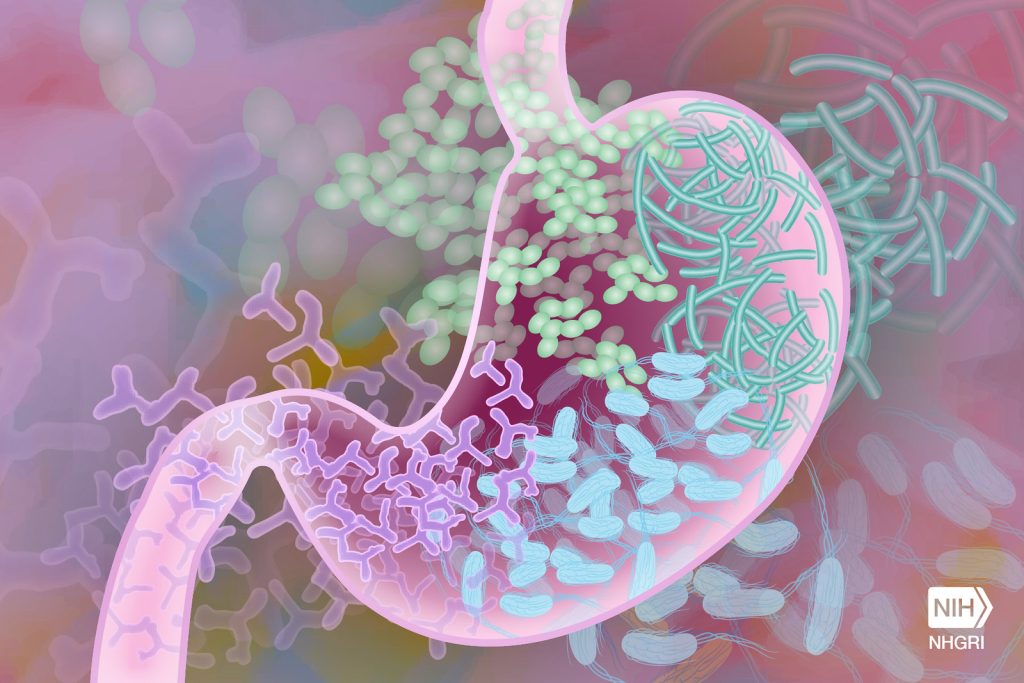
Gut Microbiome. Credit Darryl Leja National Human Genome Research Institute National Institutes Of Health

Researchers from the University of Toronto have shown how a low-carbohydrate diet can worsen the DNA-damaging effects of some gut microbes to cause colorectal cancer.

The study, published in the journal Nature Microbiology, compared the effects of three different diets: normal, low-carb, or Western-style with high fat and high sugar, each in combination with specific gut bacteria on colorectal cancer development in mice.

They found that a unique strain of E. coli bacteria, when paired with a diet low in carbs and soluble fibre, drives the growth of polyps in the colon, which can be a precursor to cancer.

“Colorectal cancer has always been thought of as being caused by a number of different factors including diet, gut microbiome, environment and genetics,” says senior author Alberto Martin, a professor of immunology at U of T’.

“Our question was, does diet influence the ability of specific bacteria to cause cancer?”

To answer this question, the researchers, led by postdoctoral fellow Bhupesh Thakur, examined mice that were colonized with one of three bacterial species that had been previously linked to colorectal cancer and fed either a normal, low-carb or Western-style diet.

Only one combination, a low-carb diet paired with a strain of E. coli that produces the DNA-damaging compound colibactin, led to the development of colorectal cancer.

The researchers found that a diet deficient in fibre increased inflammation in the gut and altered the community of microbes that typically reside there, creating an environment that allowed the colibactin-producing E. coli to thrive.

They also showed that the mice fed a low-carb diet had a thinner layer of mucus separating the gut microbes from the colon epithelial cells. The mucus layer acts as a protective shield between the bacteria in the gut and the cells underneath. With a weakened barrier, more colibactin could reach the colon cells to cause genetic damage and drive tumour growth. These effects were especially strong in mice with genetic mutations in the mismatch repair pathway that hindered their ability to fix damaged DNA.

While both Thakur and Martin emphasize the need to confirm these findings in humans, they are also excited about the numerous ways in which their research can be applied to prevent cancer.

Defects in DNA mismatch repair are frequently found in colorectal cancer, which is the fourth most commonly diagnosed cancer in Canada. An estimated 15 per cent of these tumours having mutations in mismatch repair genes. Mutations in these genes also underlie Lynch syndrome, a genetic condition that significantly increases a person’s risk of developing certain cancers, including colorectal cancer.

“Can we identify which Lynch syndrome patients harbour these colibactin-producing microbes?” asks Martin. He notes that for these individuals, their findings suggest that avoiding a low-carb diet or taking a specific antibiotic treatment to get rid of the colibactin-producing bacteria could help reduce their risk of colorectal cancer.

Martin points out that a strain of E. coli called Nissle, which is commonly found in probiotics, also produces colibactin. Ongoing work in his lab is exploring whether long-term use of this probiotic is safe for people with Lynch syndrome or those who are on a low-carb diet.

Thakur is keen to follow up on an interesting result from their study showing that the addition of soluble fibre to the low-carb diet led to lower levels of the cancer-causing E. coli, less DNA damage and fewer tumours.

“We supplemented fibre and saw that it reduced the effects of the low-carb diet,” he says. “Now we are trying to find out which fibre sources are more beneficial, and which are less beneficial.”

To do this, Thakur and Martin are teaming up with Heather Armstrong, a researcher at the University of Alberta, to test whether supplementation with a soluble fibre called inulin can reduce colibactin-producing E. coli and improve gut health in high-risk individuals, like people with inflammatory bowel disease.

 “Our study highlights the potential dangers associated with long-term use of a low-carb, low-fibre diet, which is a common weight-reducing diet,” says Martin.

“More work is needed but we hope that it at least raises awareness.”

Source: University of Toronto

Gut Microbes also Feed on Sugar to Produce Crucial Short-chain Fatty Acids

Source: CC0

Gut microbes that were thought to feed exclusively on dietary fibre also get fed sugar from our guts, from which they produce short-chain fatty acids that are crucial to many body functions. The Kobe University discovery of this symbiotic relationship also points the way to developing novel therapeutics.

Gut microbes produce many substances that our body needs but cannot produce itself. Among them are short-chain fatty acids that are the primary energy source for the cells lining our guts but have other important roles, too, and that are thought to be produced by bacteria who feed on undigested fibre. However, in a previous study, the Kobe University endocrinologist Ogawa Wataru found that people who take the diabetes drug metformin excrete the sugar glucose to the inside of their guts. He says: “If glucose is indeed excreted into the gut, it is conceivable that this could affect the symbiotic relationship between the gut microbiome and the host.”

Ogawa and his team set out to learn more about the details of the glucose excretion and its relationship with the gut microbiota. “We had to develop unprecedented bioimaging methods and establish novel analytical techniques for the products of the gut microbial metabolism,” he says. They used their new methods to not only see where and how much glucose enters the guts, but also used mouse experiments to find out how the sugar is transformed after that. In addition, they also checked how the diabetes drug metformin influences these results both in humans and in mice.

The Kobe University team now published their results in the journal Communications Medicine. They found that, first, glucose is excreted in the jejunum and is transported from there inside the gut to the large intestine and the rectum. “It was surprising to find that even individuals not taking metformin exhibited a certain level of glucose excretion into the intestine. This finding suggests that intestinal glucose excretion is a universal physiological phenomenon in animals, with metformin acting to enhance this process,” Ogawa explains. In both humans and mice, irrespective of whether they were diabetic or not, metformin increased the excretion by a factor of almost four.

And second, on the way down, the glucose gets transformed into short-chain fatty acids. Ogawa says: “The production of short-chain fatty acids from the excreted glucose is a huge discovery. While these compounds are traditionally thought to be produced through the fermentation of indigestible dietary fibres by gut microbiota, this newly identified mechanism highlights a novel symbiotic relationship between the host and its microbiota.”

Ogawa and his team are now conducting further studies with the aim of understanding how metformin and other diabetes drugs affect glucose excretion, the gut microbiome and their metabolic products. He says: “Intestinal glucose excretion represents a previously unrecognised physiological phenomenon. Understanding the underlying molecular mechanisms and how drugs interfere with this process could lead to the development of novel therapeutics aimed at the regulation of gut microbiota and their metabolites.”

Source: Kobe University

Compound in Ginger might be a Treatment for Inflammatory Bowel Disease

Irritable bowel syndrome. Credit: Scientific Animations CC4.0

An international team led by researchers at the University of Toronto has found a compound in ginger, called furanodienone (FDN), that selectively binds to and regulates a nuclear receptor involved in inflammatory bowel disease (IBD).

Through a screen to identify chemical components of ginger that bind to receptors associated with IBD, the team observed a strong interaction between FDN and the pregnane X receptor (PXR). FDN reduces inflammation in the colon by activating PXR’s ability to suppress the production of pro-inflammatory cytokines in the body. While researchers have been aware of FDN for decades, they had not determined its functions or targets in the body until now.

“We found that we could reduce inflammation in the colons of mice through oral injections of FDN,” said research associate Jiabao Liu. “Our discovery of FDN’s target nuclear receptor highlights the potential of complementary and integrative medicine for IBD treatment. We believe natural products may be able to regulate nuclear receptors with more precision than synthetic compounds, which could lead to alternative therapeutics that are cost-effective and widely accessible.”

The study was published recently in the journal Nature Communications.

IBD patients typically start to experience symptoms early in life; around 25% of patients are diagnosed before the age of 20. There is currently no cure for IBD, so patients must adhere to life-long treatments to manage their symptoms, including abdominal pain and diarrhoea, enduring significant psychological and economic consequences.

While patients with IBD have found some relief through changes to their diet and herbal supplements, it is not clear which chemical compounds in food and supplements are responsible for alleviating intestinal inflammation. With FDN now identified as a compound with potential to treat IBD, this specific component of ginger can be extracted to develop more effective therapies.

An additional benefit of FDN is that it can increase the production of tight junction proteins that repair damage to the gut lining caused by inflammation. The effects of FDN were demonstrated in the study to be restricted to the colon, preventing harmful side effects to other areas of the body.

Nuclear receptors serve as sensors within the body for a wide range of molecules, including those involved in metabolism and inflammation. PXR specifically plays a role in the metabolism of foreign substances, like dietary toxins and pharmaceuticals. Binding between FDN and PXR needs to be carefully regulated because over-activating the receptor can lead to an increase in the metabolism and potency of other drugs and signaling metabolites in the body.

FDN is a relatively small molecule that only fills a portion of the PXR binding pocket. The study shows that this allows for an additional compound to bind simultaneously, thereby increasing the overall strength of the bond and its anti-inflammatory effects in a controlled manner.

“The number of people diagnosed with IBD in both developed and developing countries is on the rise due to a shift towards diets that are more processed and are high in fat and sugar,” said Henry Krause, principal investigator on the study and professor of molecular genetics. “A natural product derived from ginger is a better option for treating IBD than current therapies because it does not suppress the immune system or affect liver function, which can lead to major side effects. FDN can form the basis of a treatment that is more effective while also being safer and cheaper.”

Source: University of Toronto