Category: Gastrointestinal

Do Hormones Explain Why Women Experience More Gut Pain?

UCSF researchers discover that oestrogen can turn on pain signals associated with conditions like irritable bowel syndrome.
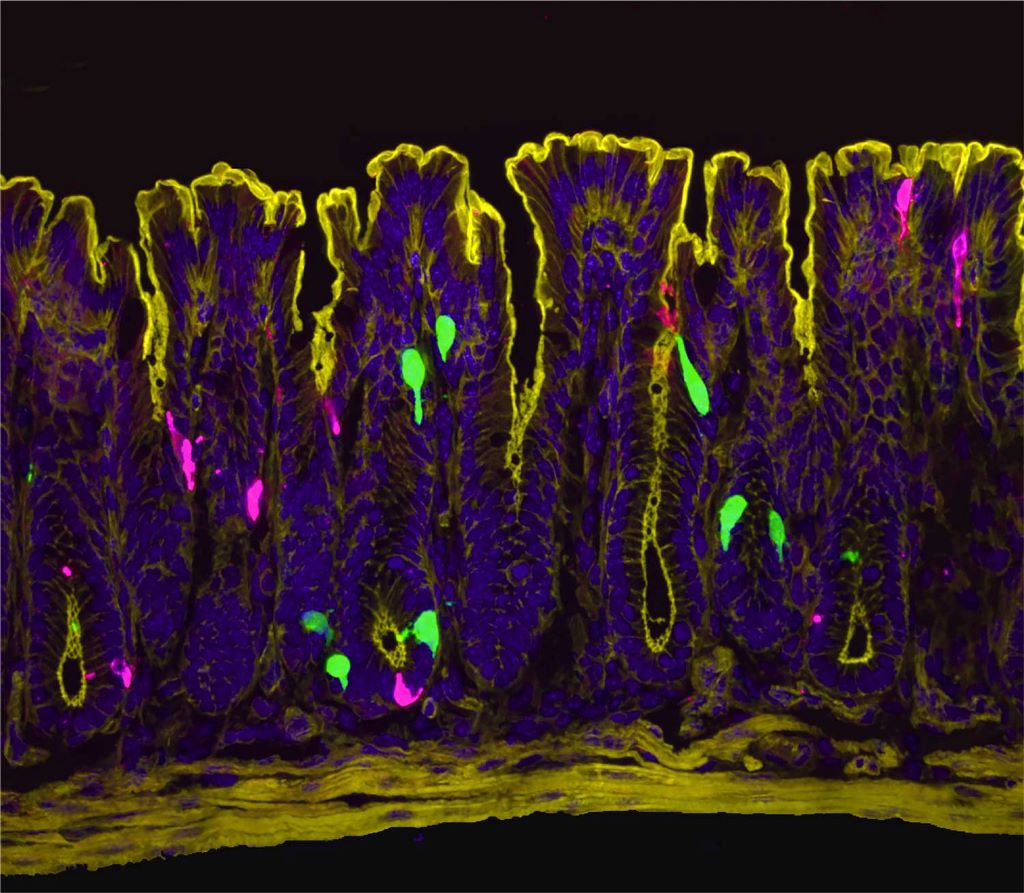
A zoomed in image of the lining of the colon. Cells that produce the hormone  PYY (peptide YY) are in green. Cells that produce the neurotransmitter serotonin are in magenta. PYY triggers the release of serotonin, which activates pain-sensing nerve fibers. Image by Archana Venkataraman/UCSF

Women are dramatically more likely than men to suffer from irritable bowel syndrome (IBS), a chronic condition causing abdominal pain, bloating, and digestive discomfort. Now, scientists at UC San Francisco have discovered why.

Oestrogen, the researchers report in Science, activates previously unknown pathways in the colon that can trigger pain and make the female gut more sensitive to certain foods and their breakdown products. When male mice were given oestrogen to mimic the levels found in females, their gut pain sensitivity increased to match that of females.

The findings not only explain the female predominance in gut pain disorders but also point to potential new ways to treat the conditions.

“Instead of just saying young women suffer from IBS, we wanted rigorous science explaining why,” said Holly Ingraham, PhD, professor UCSF and co-senior author of the study. “We’ve answered that question, and in the process identified new potential drug targets.”

The research also suggests why low-FODMAP diets – which eliminate certain fermentable foods, such as onions, garlic, honey, wheat, and beans – help some IBS patients, and why women’s gut symptoms often fluctuate with their menstrual cycles.

“We knew the gut has a sophisticated pain-sensing system, but this study reveals how hormones can dial that sensitivity up by tapping into this system through an interesting and potent cellular connection,” said co-senior author David Julius, PhD. Julius won the 2021 Nobel Prize for Physiology or Medicine for his work on pain sensation.

Search for oestrogen

Previous research had hinted that oestrogen was to blame for higher rates of IBS in females, but not why. To understand how oestrogen might be involved, Ingraham’s and Julius’s teams first needed to see exactly where the hormone was working in the gut.

“At the time I started this project, we didn’t know where and how oestrogen signalling is set up in the female intestine,” said Archana Venkataraman, PhD, a postdoc in Ingraham’s lab and co-first author of the research. “So, our initial step was to visualise the oestrogen receptor along the length of the female gut.”

The team expected to see oestrogen receptors in enterochromaffin (EC) cells, which were already known to send pain signals from the gut to the spinal cord. Instead, they got a surprise: oestrogen receptors were clustered in the lower part of the colon and in a different cell type known as L-cells.

The scientists pieced together a complex chain reaction that occurs when oestrogen binds to the L-cells. First, oestrogen causes L-cells to release a hormone called PYY (peptide YY). PYY then acts on neighbouring EC cells, triggering them to release the neurotransmitter serotonin, which activates pain-sensing nerve fibres. In female mice, removing the ovaries or blocking oestrogen, serotonin, or PYY dramatically reduced the high gut pain observed in females.

For decades, scientists believed PYY primarily suppressed appetite – drug companies even tried developing it as a weight-loss medication. But those clinical trials failed due to a troubling side effect that was never fully explained; participants experienced severe gut distress. The new findings mesh with this observation and suggest a completely new role for PYY.

“PYY had never been directly described as a pain signal in the past,” said co-first author Eric Figueroa, PhD, a postdoc in Julius’ lab. “Establishing this new role for PYY in gut pain reframes our thinking about this hormone and its local effects in the colon.”

This video shows what happens to the enterochromaffin (EC) cells in the colon when they are treated with PYY. Upon PYY treatment, calcium activity increases in the EC cell, causing it to fluoresce more brightly as it releases serotonin that is detected by nearby pain-sensing nerve fibres. Video by Eric Figueroa/UCSF

A link between IBS and diet

Increased PYY wasn’t the only way that L-cells responded to oestrogen. Levels of another molecule, called Olfr78, also went up in response to the hormone. Olfr78 detects short-chain fatty acids – metabolites produced when gut bacteria digest certain foods. With more Olfr78 receptors, L-cells become hypersensitive to these fatty acids and are more easily triggered to become active, releasing more PYY.

“It means that oestrogen is really leading to this double hit,” said Venkataraman. “First it’s increasing the baseline sensitivity of the gut by increasing PYY, and then it’s also making L-cells more sensitive to these metabolites that are floating around in the colon.”

The observation may explain why low-FODMAP diets help some IBS patients. FODMAPs (fermentable oligosaccharides, disaccharides, monosaccharides, and polyols) are carbohydrates that gut bacteria ferment into those same fatty acids sensed by Olfr78. By eating fewer FODMAPs, patients may be preventing the activation of Olfr78, and, in turn, keeping L-cells from churning out more of the pain signalling PYY.

While men have this same cellular pathway, their lower oestrogen levels keep it relatively quiet. However, the pathway could engage in men taking androgen-blocking medications, which block the effects of testosterone and can elevate oestrogen in some cases, potentially leading to digestive side-effects.

The new work suggests potential ways to treat IBS in women and men alike.

“Even for patients who see success with a low-FODMAP diet, it’s nearly impossible to stick to long term,” Ingraham said. “But the pathways we’ve identified here might be leveraged as new drug targets.”

The researchers are now studying how such drugs might work, as well as asking questions about what other hormones, such as progesterone, might play a role in gut sensitivity and how pregnancy, lactation, and normal menstrual cycles affect intestinal function.

By Sarah C.P. Williams
Source: University of California – San Francisco

New Optical Tool Lights up IBD Biomarkers

A test that rapidly detects signs of inflammatory bowel disease (IBD) in stool samples could improve future diagnosis and monitoring of the condition, a study suggests.

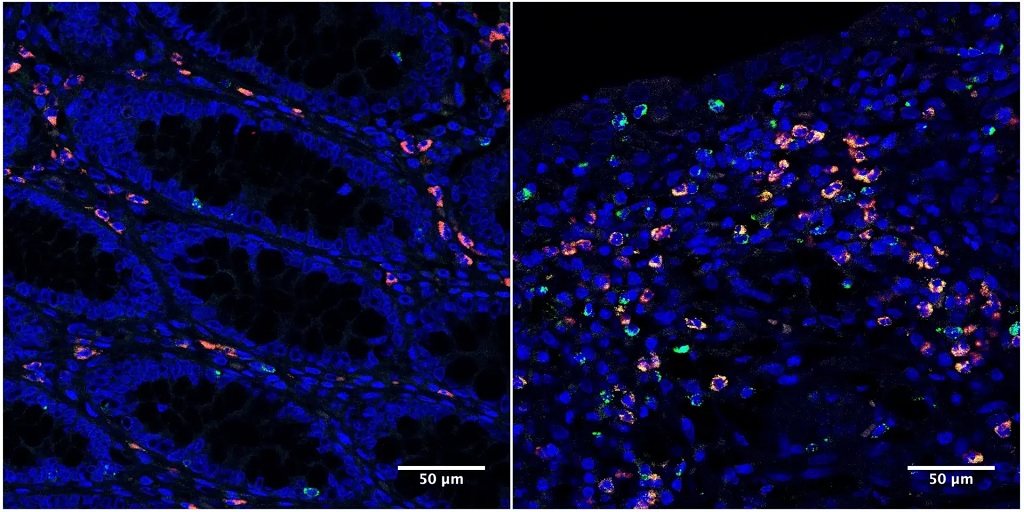
Microscopy images of colon tissue samples from IBD patients under remission (left) and with active disease (right). Granzyme A, indicated by green fluorescence, is elevated in the intestinal tract of IBD patients with active disease. Credit: Emily Thompson.

Scientists have developed a tool to measure the activity of a molecule linked to gut inflammation within faecal samples. The optical tool, known as a luminescent reporter, lights up when it detects the molecule, with higher readouts indicating increased activity and inflammation.

The new technique could boost the accuracy of stool sample tests for IBD, reducing the need for invasive, expensive procedures, experts say.

Gut inflammation

IBD is a chronic illness where the body’s immune system mistakenly attacks the digestive tract, leading to long-lasting inflammation. Diagnosis and monitoring of the condition often rely on colonoscopies, where a small camera is used to examine the gut.

Current IBD stool tests measure general markers of inflammation, such as the protein calprotectin, so a positive result requires further investigation to confirm the source. 

University of Edinburgh researchers studied gut tissue from IBD patients and identified high levels of an enzyme – a molecule that speeds up chemical reactions in cells – called granzyme A (GzmA) in inflamed gut tissue compared with non-inflamed tissues. 

Enzyme activity

GzmA is released by T cells; in IBD, T cells mistakenly see the gut as a threat and become overactive, which can lead to tissue damage and inflammation.

The research team developed a luminescent reporter to measure the activity of GzmA in stool samples. The reporter tool was tested on 150 samples from both IBD and healthy patients. 

Combining the new reporting tool with the current common testing of faecal calprotectin levels was more successful in identifying IBD in patients than using faecal calprotectin scores alone.

Researchers say the ability to identify gut-specific inflammation is a step forward for IBD diagnosis, but caution further research is needed before it can be used in a clinical setting.

Spin-out company

The tool will form part of the assets of a new company in the process of spinning out of the University of Edinburgh, called IDXSense, supported by Edinburgh Innovations, the University’s commercialisation service. 

The technique could also support the development of personalised IBD treatments in the future, with the ability to rapidly and accurately monitor gut inflammation levels in response to different therapies, experts say.

Source: The University of Edinburgh

New Insights on Gut Microbes that Prevent Formation of Cancer-causing Compounds

Gut Microbiome. Credit Darryl Leja National Human Genome Research Institute National Institutes Of Health

Nitrogen metabolism of gut bacteria can provide health benefits. Specifically, gut microbes metabolise dietary nitrates and nitrites and prevent the formation of cancer-causing compounds called nitrosamines. New research published in The FEBS Journal sheds light on these processes and pinpoints which types of bacteria are most important.

Investigators found that Escherichia coli – and to a lesser extent, species of the genera Lactobacillus, Bacteroides and Phocaeicola – can efficiently metabolise different forms of nitrogen, thus preventing carcinogenic nitrosamine formation. They also demonstrated that this bacterial processing is critical to enable microorganisms to survive and colonise the intestinal tract, likely preventing harmful changes in the composition of the gut microbiota.

The findings highlight the importance of the gut microbiota in preventing the formation of harmful nitrogen metabolites, potentially decreasing the risk of certain cancers. The study also illustrates how the microbiota facilitates crosstalk between our diet and the gut, thus having important implications for both health and disease.

“The discovery that specific gut bacteria rapidly metabolise nitrite suggests a protective mechanism through which the microbiota contributes to the maintenance of intestinal and systemic health,” said corresponding author Prof Uwe Deppenmeier, of the University of Bonn, in Germany.

Source: Wiley

Inexpensive Drug Could Prevent GI Bleeding and Slash ICU Costs

Photo by engin akyurt on Unsplash

A study led by McMaster University researchers shows that a widely available and inexpensive medication not only prevents potentially serious stomach bleeding in critically ill patients, but also saves hospitals thousands of dollars.

Published in JAMA Network Open on Dec. 1, 2025, the study is the first to demonstrate the economic benefits of the medication, pantoprazole, when prescribed in hospital for mechanically ventilated patients in the intensive care unit (ICU). These patients on life support are at high risk of upper gastrointestinal bleeding, a complication caused by stress-induced ulcers in the stomach that can prolong hospital stays and increase costs.

“In an era of rising health-care costs, interventions that are both clinically effective and cost-saving are rare. Pantoprazole checks both boxes,” said Feng Xie, lead author of the study and a professor in the Department of Health Research Methods, Evidence and Impact at McMaster.

The findings build on the landmark Re-evaluating the Inhibition of Stress Erosions (REVISE) Trial led by McMaster, which established pantoprazole’s clinical effectiveness in preventing bleeding. The trial was run in 68 centres in eight countries and over 4800 patients were enrolled.

Until now, the economic impact of prescribing pantoprazole each day for patients on breathing machines had been unclear. The researchers conducted a cost-effectiveness analysis using international data from the REVISE trial, comparing outcomes and resource use between patients who received pantoprazole daily and those who did not. The results have significant implications for critical care practitioners, pharmacy departments, and policymakers.

“Pantoprazole costs between 50 cents and two dollars per dose across the country, yet our analysis showed how prescribing it to invasively ventilated patients can save healthcare resources by reducing bleeding events and reducing length of stay in the intensive care unit  and hospital,” said senior author Deborah Cook, a professor in the Department of Medicine at McMaster.

“In the expensive, high-technology ICU setting, this is a simple, low-cost intervention that improves outcomes and reduces health-care costs,” adds Cook, a critical care physician practising at St. Joseph’s Healthcare Hamilton.

Source: McMasters University

New Research May Help Doctors Identify Coeliac Disease Earlier in Kids with T1D

Photo by cottonbro studio

Children diagnosed with type 1 diabetes (T1D) face more than just managing their blood sugar. They are also at a higher lifelong risk of developing coeliac disease. Because of this, regular screening is recommended to catch coeliac disease early in kids with T1D.

A new article published in Clinical Chemistry takes a closer look at how blood tests for coeliac disease can be used more effectively in this group of patients. In celiac disease, elevated TTG-IgA antibodies are often the first step in the diagnostic process. If blood levels of TTG-IgA are elevated, patients are typically sent for a biopsy to confirm coeliac disease. In kids with T1D, this can be a bit more complicated. In children with T1D, TTG-IgA antibody levels can fluctuate, and there hasn’t been a clear cutoff for when a biopsy is truly necessary.

Researchers studied nearly 600 children with T1D and found that using a cutoff of six times the normal limit gave the best balance of accuracy, which performed better than the older cutoff of 11 times the normal limit. The study also showed that kids who developed celiac disease soon after being diagnosed with T1D often had higher antibody levels right away, while those who developed celiac disease later had lower levels in the beginning. This highlights the importance of testing at the time of T1D diagnosis and continuing to monitor regularly, even if early test results aren’t extremely high.

“Our article looked at recent work investigating serologic assays’ efficacies in pediatric patients with type 1 diabetes. We found that recent data such as those seen in Muller et al.’s study (2025) suggest that lower transglutaminase elevations can portend coeliac disease in this population than previously thought, and the disease remains considerably prevalent among patients with T1d. As such it is crucial to actively evaluate for CeD in T1d patients, and the serologies provide an excellent tool for doing so,” said study author Dr Andrew M. Ford.

For families, the key takeaway is that regular screening matters, and doctors are working to fine-tune how these tests are used so children with both T1D and coeliac disease can be diagnosed as early and accurately as possible.

Source: Celiac Disease Foundation

No Evidence of a Link Between Gut Microbiome and Autism

Photo by Peter Burdon on Unsplash

There’s no scientific evidence that the gut microbiome causes autism, a group of scientists argue in an opinion paper published in the international Cell Press journal Neuron.

They say conclusions from past research that supported this hypothesis – including observational studies, mouse models of autism, and human clinical trials – are undermined by flawed assumptions, small sample sizes, and inappropriate statistical methods. 

“Despite what you’ve heard, read, or watched on Netflix, there is no evidence that the microbiome causally contributes to autism,” says first author and developmental neurobiologist Prof Kevin Mitchell from Trinity. 

The hypothesis that autism is caused, at least partially, by the gut microbiome stems from the fact that many people with autism suffer from gastrointestinal symptoms. 

In addition, the recent rise in autism diagnoses has led some to believe that environmental or behavioural changes are driving an increase in autism, though the authors note there is strong evidence that the rise in diagnoses reflects increased awareness and broadened diagnostic criteria rather than a biological mechanism.

Nevertheless, researchers have pursued the microbiome-autism hypothesis by comparing the gut microbiomes of people with and without autism, by studying mouse models of autism, and by conducting clinical trials involving people with autism. The authors argue that in all of these studies, the results are flawed and unconvincing.

“There’s variability in all three of those areas, and the studies just don’t form a coherent story at all,” says senior author and developmental neuropsychologist Dorothy Bishop of the University of Oxford. 

In the most highly cited studies comparing the gut microbiomes of people with and without autism, researchers used sample sizes ranging from 7 to 43 individuals per group, whereas statistical recommendations call for sample sizes in the thousands.

“Autism is not rare, so there’s no reason to be having studies with only 20, 30, or 40 participants,” says co-author and biostatistician Darren Dahly of the University College Cork.

These studies also used varying methods to characterise microbiome composition, which makes their results difficult to compare. And although some studies found differences between the microbiomes of people with autism and controls, these differences were often contradictory—for example, some studies found lower microbial diversity in the guts of people with autism, while others found the opposite.

These differences also disappeared when the studies accounted for other variables, such as diet, or when they compared the microbiomes of children with autism with their neurotypical siblings. 

“If anything, there is stronger evidence for a reverse causal effect, in that having autism can affect someone’s diet, which can affect their microbiome,” says Prof Mitchell.

Mouse models of autism that have claimed to show a link between the gut microbiome and autism are also unconvincing, the researchers say, because of behavioural, cognitive, and physiological differences between humans and mice. 

“There’s no evidence that ‘autistic-like’ behaviours in mice models have any relevance to autism, and the experiments themselves had methodological and statistical flaws that undermine their claims,” says Prof Mitchell.

Several human clinical trials have tested the microbiome-autism hypothesis by performing faecal transplants or by administering probiotic therapies to people with autism and then monitoring changes in their characteristics. Again, the researchers say that most of these studies used inadequate sample sizes and inappropriate statistical methods that undermine their findings, and many didn’t use a control group or randomisation.

 “The consensus across the studies that we surveyed is that when you do the trials properly, you don’t see anything,” says Dahly.

Based on the lack of convincing evidence, and the lack of progress in the field, the researchers argue the hypothesis that the microbiome causes autism has reached a dead end.

“If you accept our message, there’s two ways you can go. One is to just stop working on this area, which is something that we would be quite happy to see,” says Bishop. “But given that realistically, people are not going to stop, they need to at least start doing these studies in a much more rigorous way.” 

Source: Trinity College Dublin

‘Synbiotic’ Offers Superior Anti-inflammatory Benefits to Omega-3 or Prebiotic Alone

Photo by Aleksander Saks on Unsplash

A new study, led by experts at the University of Nottingham, has found that combining certain types of dietary supplements is more effective than single prebiotics or omega-3 in supporting immune and metabolic health, which could lower the risk of conditions linked to chronic inflammation.

The findings of the study, which are published in the Journal of Translational Medicineshow that a synbiotic – a combination of naturally fermented kefir and a diverse prebiotic fibre mix – produces the most powerful anti-inflammatory effects among the three common dietary supplements tested.

The kefir and prebiotic mix contains a mx of naturally occurring probiotic bacteria and yeasts, which form during the traditional fermentation of goat’s milk with live kefir grains. These grains are living cultures that house dozens of beneficial microbial species.

When you combine kefir (rich in live beneficial microbes) with a diverse prebiotic fibre (which feeds them), there is a synbiotic effect – the fibre nourishes the microbes, helping them thrive and produce beneficial metabolites like butyrate, which has anti-inflammatory and immune-modulating effects throughout the body.

Over six weeks, healthy participants taking the synbiotic saw the broadest reduction in inflammation-related proteins compared to those taking omega-3 or fibre alone. The findings suggest that pairing beneficial microbes with prebiotic fibre could help support immune and metabolic health more effectively than single supplements.

Systemic inflammatory markers are signals in the blood that show how much inflammation is happening throughout the body, not just in one specific area like the gut or an infection. The findings of the study showed that the participants’ overall levels of inflammation across their whole body went down, suggesting an improvement in general immune balance and lower risk for conditions linked to chronic inflammation (like heart disease or other metabolic conditions).

The next stage of the research would be to test the supplements on people with certain conditions to see the effectiveness.

The study was led by Dr Amrita Vijay in the School of Medicine at the University of Nottingham. 

Our study shows that while all three dietary approaches reduced inflammation, the synbiotic – combining fermented kefir with a diverse prebiotic fibre mix – had the most powerful and wide-ranging effects. This suggests that the interaction between beneficial microbes and dietary fibre may be key to supporting immune balance and metabolic health.

Dr Amrita Vijay

Source: University of Nottingham

New Expanding Pill for Weight Loss Reduces Hunger Cravings

An illustration showing how Sirona works. Image credit: Oxford Medical Products

An innovative new pill could soon offer a new and affordable weight management treatment, following a successful clinical trial involving University of Bristol researchers and supported by the National Institute for Health and Care Research (NIHR). The results are published in the journal Obesity.

Sirona by Oxford Medical Products is a hydrogel-based pill that is designed to aid weight loss by reducing hunger.  After it is swallowed, the pill expands in the stomach, leading to faster satiety. This helps individuals to eat less without needing strong medications or injections.

Thirty-nine participants in Southampton took part at the NIHR Southampton Clinical Research Facility.

In the trial, funded by Innovate UK, participants lost up to 13.5% of their body weight in just six months. On average, people with class 1 obesity (BMI 30-35) lost 6.4% of their body weight.

Participants also ate on average 400 fewer calories per day compared to those taking a placebo. For context, recent Government-led research suggests that even a 216-calorie daily reduction could cut the UK’s obesity rate in half.

The trial was led by chief investigator Professor James Byrne in the NIHR Southampton Biomedical Research Centre.

Mr Byrne, a consultant surgeon at University Hospital Southampton, said: “Obesity is a chronic and often progressive disease. With obesity rates continuing to rise, these results are an important step towards providing a different treatment option.

“This trial demonstrated Sirona could be a safe, affordable, and non-pharmacological treatment to support long-term weight management.”

Sirona will be accessible to anyone with a BMI 25-40, which means Sirona is particularly well-suited to help two key patient types. Firstly, for patients with an overweight BMI (25–30), allowing them to proactively manage their weight and to avoid progressing into obesity and the serious health problems it can bring. Secondly, it is suitable for use as an ‘off-ramp’ for GLP-1 users looking to come off treatment but prevent weight regain, which often occurs once GLP-1 medication ceases.

GLP-1 medications have become very popular for weight loss, with around 1.5 million users in the UK. However, a significant proportion of users pay out of pocket and prices have recently doubled in the UK for some doses of Mounjaro.

Camilla Easter, CEO of Oxford Medical Products, added: “GLP-1 medications perform an important role in helping those with a BMI in the obese range to lose weight and reduce weight-related health risks. There is, however, a real opportunity for a new style of treatment to work in a complementary way to GLP-1s, in a format that is significantly less expensive, and with better tolerability and therefore more accessible for the majority.

“Sirona has demonstrated amazing results during testing with UK hospitals, which have now been externally peer-reviewed. Next, we are setting sights on commercial UK release plans, targeting 2027 to make Sirona available.”

Sirona is a dual-polymer hydrogel pill. That means it’s made from two types of safe materials that expand in the stomach. It doesn’t use drugs or chemicals to change how your body works.

The pill was well tolerated during the 24-week study. There were no serious adverse events. Participants lost up to 13.5% of their body weight in just 24 weeks, and individuals with class 1 obesity (BMI 30-35) lost 6.4% of their body weight on average.

Importantly, no serious adverse events were reported during the trial. Sirona was well tolerated (95 percent of patients adhered to the dosing regimen at 12 weeks) and demonstrated a fantastic safety and side effect profile. This makes Sirona appropriate for patients who have struggled with adverse side effects when using GLP-1 medications. 

OMP is planning a pivotal study in the UK and USA to further assess the effectiveness of Sirona and confirm these results. The novel weight loss treatment will aim for a 2027 UK commercial launch.

Source: University of Bristol

…er/weight-loss-pill.html↗

New Swedish Study Challenges Early Surgery for Crohn’s Disease

Photo by cottonbro studio

A new study from Karolinska Institutet challenges previous findings that suggested early surgery is more beneficial in the long term than medical treatment for patients with Crohn’s disease. The study replicates a Danish registry study using Swedish data and finds that the results are not comparable. The study was published in Clinical Gastroenterology and Hepatology.

A few years ago, a randomised controlled trial showed that early ileocecal resection – removal of the junction between the small and large intestine – could be a reasonable alternative to advanced drug therapy for patients with Crohn’s disease. This study gained significant attention and was widely discussed around the world. Recently, a Danish research group published a registry-based study in the journal Gastroenterology, concluding that real-world data showed that early ileocecal resection was clearly superior to medical treatment in the long term.

In the new Swedish study, researchers attempted to replicate the Danish study using nationwide  Swedish registry data. They found that it is impossible to identify comparable populations in current observational data, as patients who underwent surgery or received medication during the study period differ according to existing treatment guidelines.

“It’s a comparison of apples and oranges,” says Ola Olén, professor at the Department of Medicine, Solna, Karolinska Institutet, who led the study.

The Danish researchers made several design choices that further reduced the comparability between the groups. When the Swedish researchers applied the same definitions as the Danish study, they obtained similar results. However, when they used stricter definitions that more closely resembled the original randomized study, they no longer found a significant difference between the groups.

“We argue that the Danish study cannot be interpreted as proof that early surgery is better. That may very well be the case, but the data we currently have simply cannot answer that question,” says Ola Olén.

Source: Karolinska Institutet

Special Lactic Acids Reduce Antibiotic Resistance in Infants

Photo by William Fortunato on Pexels

Infants with high levels of antibiotic-resistant bacteria face a greater risk to their health if they need to be treated with antibiotics when they contract infectious diseases during their first year of life. Now, researchers at the Technical University of Denmark have discovered a way to combat antibiotic-resistant bacteria by nourishing a special subgroup of bifidobacteria found in the gut.

The research project, recently published in the renowned journal Nature Communications, points to a new, natural strategy for combating antibiotic resistance: supporting the good bacteria in the gut from the very first months of life.

“We document that special lactic acids produced by bifidobacteria play a key role in keeping antibiotic-resistant bacteria at bay, which is important for reducing the risk of resistance genes being transferred to other bacteria in the gut. Resistance genes can jump from one type of bacteria to another, and the more bacteria with resistance that are present in the gut, the greater the chance that they will encounter other bacteria and transfer resistance genes to them,” says postdoc Ioanna Chatzigiannidou from DTU Bioengineering, who participated in the research project.

The study of gut bacteria is based on 547 stool samples from 56 children and their mothers, who were followed over a five-year period.

A matter of life and death for infants

Professor Susanne Brix Pedersen from DTU Bioengineering is the head of the research project and explains that the new knowledge about bifidobacteria can be better utilized in society when researchers have developed a rapid test for use in the first weeks of a child’s life, so that parents can check whether their child already has these bifidobacteria naturally or would benefit from receiving a supplement containing them.

“It will be very important if we can strengthen their ability to handle antibiotic-resistant bacteria from the first weeks of a child’s life. This is especially true in the first year of life where infants are exposed to many infectious diseases due to an immature immune system, and when it is a matter of life and death if they have many antibiotic-resistant bacteria, for instance the pneumonia bacteria Klebsiella pneumoniae, making it difficult to treat pneumonia with certain antibiotics,” says Susanne Brix Pedersen.

There is a lot of research into antibiotic resistance, and Susanne Brix Pedersen is also involved in another study, BEGIN, which is based in the paediatric department at Aarhus University Hospital, where researchers are investigating whether a dietary supplement containing beneficial bifidobacteria can strengthen the immune system of newborn babies. So far, the trial has involved 300 women and their newborn babies, who are given either a placebo or a dietary supplement containing the special bifidobacteria.

Source: Technical University of Denmark