A new publication in Nature Communications explains how T cell protection against tuberculosis is controlled by their oxygen responses.
In 2021, 10 million people fell ill and 1.5 million died of Tuberculosis (TB), caused by infection with the intracellular Mycobacterium tuberculosis bacteria. Proper CD4 T cell responses are critical for the control of M. tuberculosis infection by activating intracellular bacterial killing.
Professor Martin Rottenberg and PhD student Ruining Liu at the Karolinska Institutet, explained how they discovered that hypoxia-inducible factors (HIF-1 and HIF-2) control T cell metabolism as well as activation and differentiation in response to hypoxia or during inflammation.
“We showed that genetically modified mice, in which HIF-1 expression T cells was stabilised by genetic manipulation, were highly susceptible to the infection with M. tuberculosis and did not respond to vaccination. CD4 T cells from these mice were profoundly weakened in their early responses to mycobacteria-specific antigens, said Prof Rottenberg. “By impairing and or controlling HIF-1 stabilisation in T cells, responses to vaccines and protection against infections might be improved”.
The studies were carried out on mouse models of M. tuberculosis infection. The mice used were genetically modified to either lack or overexpress HIF-1 in T cells.
“The infection with M. tuberculosis, and the immune responses it generates in man, is fairly mimicked in the mouse infection. Our next step is to identify the molecular targets HIF-1 in T cells that account for their impaired activation, which could be targeted for improving T cell responses,” Prof Rottenberg concluded.
Colourised scanning electron micrograph of red blood cell infected with malaria parasites, which are colourised in blue. The infected cell is in the centre of the image area. To the left are uninfected cells with a smooth red surface.
Credit: National Institute of Allergy and Infectious Diseases, NIH
A recent study published in PNAS revealed that endothelial cells in the brain are able to sense the infection by the malaria parasite at an early phase, triggering the inflammation underlying cerebral malaria. This discovery identified new targets for adjuvant therapies that could restrain brain damage in initial phases of the disease and avoid neurological sequelae.
Cerebral malaria is a severe complication of infection with Plasmodium falciparum, the most lethal of the parasites causing malaria. This form of the disease manifests through impaired consciousness and coma and affects mainly children under 5, being one of the main causes of death in this age group in countries of Sub-Saharan Africa. Survivors are frequently affected by debilitating neurological sequelae, such as motor deficits, paralysis, and speech, hearing, and visual impairment.
To prevent certain molecules and cells from reaching the brain, which would disturb its normal functioning, endothelial cells forming a tight barrier between the blood and this organ. Cerebral malaria results from an unrestrained inflammatory response to infection which leads to significant alterations in this barrier and, consequently, neurological complications.
Over the last years, specialists in this field have turned their attention to a molecule, named interferon-β, which seems to be associated with this pathological process. So called for interfering with viral replication, this highly inflammatory molecule has two sides: it can either be protecting or cause tissue destruction. It is known, for example, that despite its antiviral role in COVID-19, at a given concentration and phase of infection, it can cause lung damage. A similar dynamic is thought to occur in cerebral malaria. However, we still don’t know what leads to the secretion of interferon-β, nor the main cells involved.
The present study revealed that endothelial cells in the brain play a crucial role, being able to sense the infection by the malaria parasite at an early phase. These detect the infection through an internal sensor which triggers a cascade of events, starting with the production of interferon-β. Next, they release a signalling molecule that attracts cells of the immune system to the brain, initiating the inflammatory process.
To reach these conclusions, researchers used mice that mimic several symptoms described in human malaria and a genetic manipulation system that allowed them to delete this sensor in several types of cells. When they deleted this sensor in brain endothelial cells, the animals’ symptoms were not as severe with lower mortality. They then realised these brain cells contributed greatly to the pathology of cerebral malaria. “We thought brain endothelial cells acted in a later phase, but we ended up realising that they are participants from the very beginning”, explained Teresa Pais, a post-doctoral researcher at the IGC and first author of the study. “Normally we associate this initial phase of the response to infection with cells of the immune system. These are already known to respond, but cells of the brain, and maybe other organs, also have this ability to sense the infection because they have the same sensors.”
But what really surprised the researchers was the factor activating the sensor and triggering this cell response. This factor is nothing more nothing less than a by-product of the activity of the parasite. Once in the blood, the parasite invades the host’s red blood cells, where it multiplies. Here, it digests haemoglobin, a protein that transports oxygen, to get nutrients. During this process, a molecule named haeme is formed and it can be transported in tiny particles in the blood that are internalised by endothelial cells. When this happens, haeme acts as an alarm for the immune system. “We weren’t expecting that haeme could enter cells this way and activate this response involving interferon-β in endothelial cells”, the researcher confessed.
This six-year project allowed the researchers to identify a molecular mechanism that is critical for the destruction of brain tissue during infection with the malaria parasite and, with that, new therapeutic targets. “The next step will be to try to inhibit the activity of this sensor inside the endothelial cells and understand if we can act on the host’s response and stop brain pathology in an initial phase,” explained principal investigator Carlos Penha Gonçalves. “If we could use inhibitors of the sensor in parallel with antiparasitic drugs maybe we could stop the loss of neuronal function and avoid sequelae which are a major problem for children surviving cerebral malaria.”
An international research effort has developed a new strategy to treat Huntington disease, which demonstrated that converting the disease-causing protein to its disease-free form results in it still retaining its original function. This discovery, published in the Journal of Clinical Investigation Insight, provides new avenues to approach Huntington disease.
Huntington disease is a rare neurodegenerative disorder with a worldwide prevalence of 2.7 per 100 000. Huntington’s disease is a dominantly inherited neurodegenerative disease and is caused by a mutation in a protein called ‘huntingtin’, which adds a distinctive feature of an expanded stretch of glutamine amino acids called polyglutamine to the protein. The patients would suffer a decade of regression before death, and, thus far, there is no known cure for the disease.
The cleavage near the stretched polyglutamine in mutated huntingtin is known to be the cause of the Huntington disease. However, as huntingtin protein is required for the development and normal function of the brain, it is critical to specifically eliminate the disease-causing protein while maintaining the ones that are still normally functioning. The research team showed that huntingtin delta 12 – the converted form of huntingtin that is resistant to developing cleavages at the ends of the protein, known to be the cause of Huntington disease – alleviated the disease’s symptoms while maintaining the functions of normal huntingtin.
A new epidemiological study published in The Lancet shows that patients with autoimmune disease have a substantially higher risk (between 1.4 and 3.6 times depending on which autoimmune condition) of developing cardiovascular disease (CVD) than people without an autoimmune disorder. This excess risk is comparable to that of type 2 diabetes, a well-known risk factor for cardiovascular disease.
Although earlier research has suggested associations between various different autoimmune disorders and a higher risk of cardiovascular disease, these studies were often too small and limited to selected autoimmune or selected cardiovascular conditions to draw conclusive evidence on the necessity of CVD prevention among patients with autoimmune disease.
At the annual congress of the European Society of Cardiology, researchers presented the outcome of a thorough epidemiological investigation into possible links between 19 of the most common autoimmune disorders and CVD. The research shows for the first time that cardiovascular risks affect autoimmune disease as a group of disorders, rather than selected disorders individually.
The whole cardiovascular disease spectrum
In the study, the authors show that the group of 19 autoimmune disorders they have studied accounts for about 6% of cardiovascular events. Importantly, excess cardiovascular risk was visible across the whole cardiovascular disease spectrum, beyond classical coronary heart disease, including infection-related heart disorders, heart inflammation, as well as thromboembolic and degenerative heart disorders, suggesting the implications of autoimmunity on cardiovascular health are likely to be much broader than originally thought. Furthermore, the excess risk was not explained by traditional cardiovascular risk factors such as age, sex or smoking. Another noteworthy finding: the excess risk is particularly high among patients with autoimmune disorders under 55 years and suggests that autoimmune disease is particularly important in causing premature cardiovascular disease, with the potential to result in a disproportionate loss of life years and disability.
The study was based on UK electronic health with data from about one-fifth of the current UK population. The researchers assembled a cohort of patients newly diagnosed with any of the nineteen autoimmune disorders. They then looked at the incidence of twelve cardiovascular outcomes – an unprecedented granularity that was made possible by the very large size of the dataset – in the following years, and they compared it to a matched control group. The risk of developing CVD for patients with one or more autoimmune disorders was on average 1.56 times higher than in those without autoimmune disease. The excess risk also rose with the number of different autoimmune disorders in individual patients. Among the disorders with the highest excess risk were systemic sclerosis, Addison’s disease, lupus and type I diabetes.
Need for targeted prevention measures
The results show that action is needed, said Nathalie Conrad, lead author of the study. “We see that the excess risk is comparable to that of type 2 diabetes. But although we have specific measures targeted at diabetes patients to lower their risk of developing cardiovascular disease (in terms of prevention and follow-up), we don’t have any similar measures for patients with autoimmune disorders.” Conrad also noted that the European Society of Cardiology guidelines on the prevention of cardiovascular diseases, do not yet mention autoimmunity as a cardiovascular risk factor, only mentioning specific disorders such as lupus, nor do they list any specific prevention measures for patients with autoimmune disease.
Conrad hopes the study will raise awareness among patients with autoimmune disease and clinicians involved in the care of these patients, which will include many different specialties such as cardiologists, rheumatologists, or general practitioners. ‘We need to develop targeted prevention measures for these patients. And we need to do further research that helps us understand why patients with an autoimmune disorder develop more cardiovascular diseases than others, and how we can prevent this from happening.’
The underlying mechanisms are still poorly understood. Conrad said: “The general hypothesis is that chronic and systemic inflammation, which is a common denominator in autoimmune disorders, can trigger all sorts of cardiovascular disease. Effects of autoimmune disease on connective tissues, small vessels, and cardiomyocytes, and possibly some of the treatments commonly used to treat autoimmunity are also likely to contribute to patients’ cardiovascular risk. This really needs to be investigated thoroughly.”
An outbreak of a pandrug-resistant nosocomial pathogen was interrupted by not using hospital sinks during COVID, according to Basma Mnif, Professor of Microbiology at Habib Bourguiba University Hospital of Sfax, Tunisia. In her presentation at the 14th SAFHE Southern African Healthcare Conference, she said that infection control methods to eradicate the pathogen failed and that other research indicated it was necessary to replace the sinks entirely.
Multidrug-resistant organisms (MDRO) are a growing threat in hospitals, especially to critically ill patients.
Over 2017 to 2021, 90 critically ICU patients in a Tunisian hospital were infected with pandrug-resistant Proteus mirabilis strains. This is the first known long-term outbreak by pandrug-resistant P. mirabilis strains.
P. mirabilis is an uncommon nosocomial pathogen causing opportunistic infections. P. mirabilis survives well in the natural environment and is increasingly implicated in nosocomial outbreaks worldwide.
The all-cause mortality rate in the infected was 47%, with patients ranging in age from 16 to 78 years. The average length of stay before infection was 23.56 days.
An outbreak was recognised in April 2017, and IDC measures were taken to contain it. The outbreak was suppressed but reoccurred in July and December. Analysis revealed overlapping ICU stays of infected patients, suggesting horizontal, intra-ICU transmission. Lab analysis of phenotypes revealed two clones, A and B, both with drug resistance genes, to which a third clone was added in 2018. This Clone C proved to have resistance to all known antibiotics.
During the COVID pandemic in 2020, hospital sinks were not used and enhanced infection prevention interventions were deployed. This period coincided with a complete absence of P. mirabilis infections. The outbreak resumed in 2021, with the same three clones causing infections in patients.
“The outbreak intermission during COVID could be related to the enhanced protection measures implemented during this period,” Prof Mnif noted, “but we think that the sinks are in fact the reservoirs of these MDRO, and must in fact be removed and replaced, and the chemical disinfection that we had performed was not sufficient to control the outbreak.”
The outbreak highlighted the need for proper infection control protocols. Hospital wastewater is a major source of outbreaks, Prof Mnif pointed out. A study found that “over the past 20 years, there have been 32 reports of carbapenem-resistant organisms in the hospital water environment.”
She said when it came to replacing the sinks, hospitals should “respect FGI guidelines, especially in having sufficient depths of the sink, deep enough to prevent splashing.” Having sufficient pressure and splash reduction measures such as splash guards are also important, Prof Mnif added.
Although there are CDC guidelines to help prevent colonisation, there is no clear strategy for eradication for when a sink is colonised. There is likely genetic interchange between organisms in biofilms, something which needs to be investigated further, as well as means of eradication.
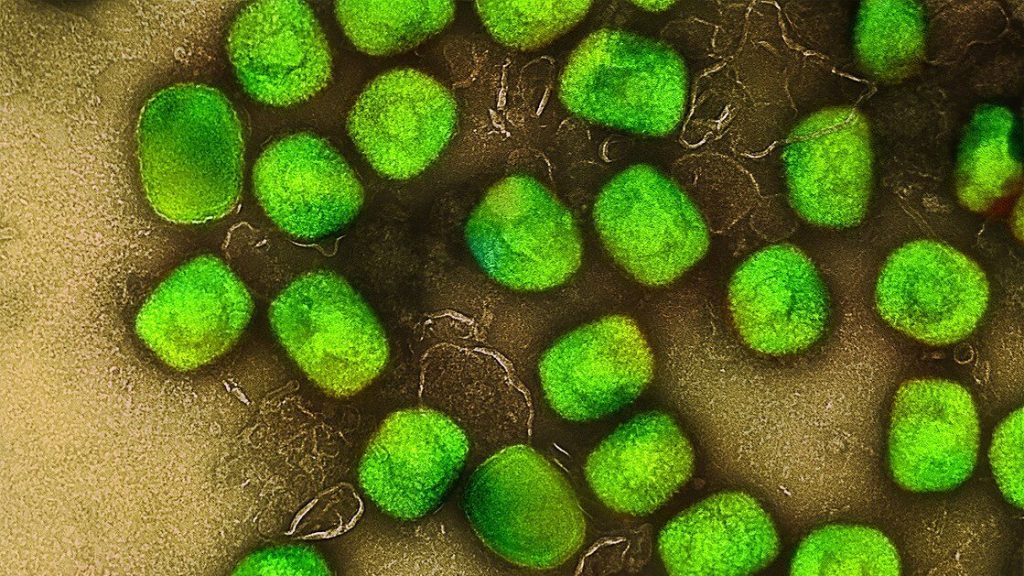
Colourised transmission electron micrograph of monkeypox virus particles (green) cultivated and purified from cell culture. Image captured at the NIAID Integrated Research Facility (IRF) in Fort Detrick, Maryland. Credit: NIAID
In a research letter published in JAMA, infectious disease experts reported on 25 monkeypox patients given tecovirimat therapy, with data showing that it is safe and effective for the treatment of monkeypox symptoms and skin lesions.
The recent global outbreak of monkeypox has led to more than 45 500 cases as of August 22, 2022. While symptoms usually resolve on their own in 2–4 weeks, a recent study showed that 13% of patients needed hospitalisation.
Tecovirimat (TPOXX) is an FDA-approved antiviral drug for the treatment of smallpox which limits viral spread in the body by inhibiting the release of the enveloped virus. Recently, the Centers for Disease Control and Prevention (CDC) allowed physicians to prescribe tecovirimat on a compassionate use basis to treat adults and children with orthopoxvirus infections, including monkeypox.
“We have very limited clinical data on the use of tecovirimat for monkeypox infection. There is much to learn about the natural progression of the disease and how tecovirimat and other antivirals may affect it,” said lead author Angel Desai, an adult infectious disease specialist.
The new study included patients referred to UC Davis Medical Center, between June 3 and August 13, 2022.
Patients with skin lesions in multiple body parts or in sensitive areas such as the face or genital region were offered oral tecovirimat treatment. The treatment was weight-based, given every 8 or 12 hours, and was taken within 30 minutes of a high-fat meal.
The researchers collected clinical data on evaluation for treatment and on day 7 and day 21 following the beginning of therapy.
In total, 25 male patients (ages 27–76 years) with confirmed monkeypox infection completed a course of tecovirimat therapy. Nine patients had HIV.
Only one patient had the smallpox vaccine (taken more than 25 years ago) and four others received a dose of JYNNEOS vaccination after symptoms started.
The study found that 92% of patients had lesions in their genital or anal area. While all patients had painful lesions, around half had fewer than 10 lesions over their entire body.
On average, the patients had symptoms or lesions for 12 days before they started their antiviral treatment. Fever was the most common symptom (76% of the patients), followed by fatigue (32%), sore throat (20%) and chills (20%). Other symptoms included backache (12%), muscle pain (8%), nausea (4%) and diarrhoea (4%).
All patients completed the tecovirimat therapy and tolerated their treatment well. They were treated for two weeks, except for one patient who was treated for 21 days.
On day 7 of therapy, 40% of patients had healed from their lesions. By day 21, 92% had healed and were pain-free.
The most reported adverse events on day 7 of therapy included: fatigue (28%), headache (20%), nausea (16%), itching (8%) and diarrhoea (8%).
“We have to be very careful in how we interpret the data. It is hard to differentiate the side effects due to therapy from those caused by the infection,” cautioned infectious diseases expert and co-author George Thompson.
This small study lacked a control group, limiting assessment of antiviral efficacy in terms of symptom duration and severity. Also, the time from symptom onset to starting the antiviral therapy varied among the patients.
The researchers called for large-scale studies to explore antiviral efficacy dosing and adverse events.
Differences in vitamin D exposure have been thought to explain why people who live farther from the equator are more likely to develop multiple sclerosis (MS). But countries farther from the equator are also more likely to be wealthier. A new analysis published in Neurology shows that the amount a country spends on health care may help explain this relationship between MS and latitude.
According to study author Deanna Saylor, MD, MHS, the results suggest that MS rates may be greatly underestimated in low-income countries with lower health care spending, which means that people have less access to neurologists who have the expertise to diagnose MS and MRI scanners that are needed to make the diagnosis.
Researchers analysed data from scientific studies and databases to determine current rates of MS in 203 countries and territories. Countries were then grouped into world regions and by income levels.
Rates of MS varied by region and income level. For example, in high-income countries an average of 46 of every 100 000 people had MS, compared to 10 people per 100 000 in low-income countries. Health care spending per capita was $2805 for high-income countries, compared to $45 in low-income countries.
For each location, researchers examined gross domestic product per capita, current health expenditure per capita, income levels, the availability of brain scans to diagnose MS, the number of neurologists per capita and universal health care. They also reviewed lifestyle factors such as obesity and tobacco use.
Once the researchers adjusted the data for other factors that could affect the risk of MS, such as age and sex, they found that health care spending and latitude were strongly associated with MS rates. The research showed that, with every increase of one standard deviation in health expenditure per capita, a country’s MS prevalence increased by 0.49. Alternatively, with every increase of one standard deviation in latitude, a country’s MS prevalence increased by 0.65.
Researchers also found that health care spending explained some, but not all, of the link between latitude and MS. After adjusting for other factors, the link between latitude and MS decreased by more than 20% when health care expenditure per capita was considered.
The availability of universal health care was associated with rates of MS in all world regions, except Southeast Asia, with universal health care tied to higher rates of MS.
In high-income countries, rates of MS were linked to most factors, including gross domestic product per capita, current health expenditure per capita, and the number of neurologists, but not tobacco use and obesity or the number of MRI units per capita. However, in low-income countries, there were no associations with any of these factors, which may be explained by a lack of significant variation in data from these countries, Saylor said.
According to Dr Saylor, the finding that current health expenditure per capita was very strongly linked with national rates of MS further supports the hypothesis that greater investment in health care leads to more robust reporting of rates of MS. She also said the minimal links between rates of MS and lifestyle factors such as tobacco use and obesity run counter to prior assumptions that lifestyle and consumption behaviours explain the large portions of regional differences in reported rates of MS.
Dr Saylor said strategies are urgently needed for the accurate assessment of the burden of MS in low-income countries, and these lower reported MS can obscure the need for training and funding regarding MS.
A limitation of the study is that different data sources may have collected information during different time periods or used different methods, which could affect the accuracy of estimates.
A Japanese study published in Frontiers in Immunology shows that a traditional herbal mix called daikenchuto reduced the severity of colitis in lab mice by preventing the loss of important gut bacteria and by raisin levels of anti-inflammatory immune cells in the colon.
Colitis is a chronic inflammation of the colon, characterised by an imbalance in gut bacteria and an abnormal immune response. Its prevalence has doubled over the last 20 years and although there are many treatments, they are only partially effective. This has led some researchers to take a closer look at traditional Asian herbal medicines.
Daikenchuto (DKT) is a formula containing specific amounts of ginger, pepper, ginseng, and maltose, and is one of 148 herbal medicines called Kampo, which have been developed in Japan and are often prescribed by doctors to treat a variety of illnesses. Numerous studies conducted in Japan and the United States have provided clinical evidence of DKT’s effect on colonic transit and postoperative ileus.
DKT was shown by previous research to have possible use in colitis treatment, but molecular level evidence has been lacking. Researchers at the RIKEN Center for Integrative Medical Sciences (IMS) in Japan conducted a detailed examination of its effects on a mouse model of colitis.
Colitis was induced in mice using dextran sodium sulfate, which is toxic to the cells that line the colon. When these mice were given DKT, their body weights remained normal, and they had lower clinical scores for colitis. Additional analysis revealed much less damage to the cells lining the colon. Having thus shown that DKT does indeed help protect against colitis, the researchers proceeded to analyze the gut microbiome of the mice and expression levels of anti-inflammatory immune cells.
Colitis is associated with an imbalance in gut microbiota, and analysis showed that a family of lactic acid bacteria were depleted in the colitic mice of this study. Also depleted was one of their metabolites, a short-chain fatty acid called propionate. Treating the model mice with DKT restored much of these missing bacteria – particularly Lactobacillus – and levels of propionate were normal.
Colitis is also associated with an abnormal immune response that causes the characteristic intestinal inflammation. When the team looked at innate intestinal immune cells, they found that levels ILC3 cells were lower in the untreated colitic mice than in the DKT-treated colonic mice, and that mice engineered to lack ILC3 suffered more and could not benefit from DKT treatment. This means that ILC3s are critical for protecting against colitis and that DKT works by interacting with them. Lastly, qPCR analysis indicated that these important immune cells had receptors for propionate, called GPR43, on their surface.
“Daikenchuto is commonly prescribed to prevent and treat gastrointestinal diseases, as well as for reducing intestinal obstruction after colorectal cancer surgery,” said Naoko Satoh-Takayama. “Here we have shown that it can also alleviate intestinal diseases like colitis by rebalancing Lactobacillus levels in the gut microbiome. This likely helps reduce inflammatory immune responses by promoting the activity of type 3 innate lymphoid cells.”
Chemical peels are a common treatment for acne scars, but a study published in the Journal of Clinical and Aesthetic Dermatology finds that, for patients with dark skin, microneedling is a significantly more effective treatment.
Researchers randomly assigned 60 patients with acne scars and dark skin (Fitzpatrick Skin Phototype IV to VI) to treatment with either 35% glycolic acid chemical peels or microneedling, both administered every two weeks for 12 weeks.
Microneedling therapy is a controlled skin injury that utilises instruments containing rows of thin needles that penetrate the dermis to a uniform depth. This induces rapidly-healing micropunctures with subsequent stimulation of collagen and elastin fibre production, resulting in skin remodelling.
Microneedling was initially developed as a tool for skin rejuvenation. However, it is now being used for a number of indications, which include: various forms of scars, alopecias, drug delivery, hyperhidrosis, stretch marks, and more. It is occasionally combined with delivery of radiofrequency energy, which is thought to enhance dermal remodelling and clinical effects. Despite its widespread use, data on the efficacy of microneedling are lacking.
Chemical peels involve applying a solution to the skin that removes the top layers.
Treatment produced an improvement of two points or more on the Goodman and Baron Scarring Grading System in 33% of patients who received chemical peels and 73% of patients who underwent microneedling.
“Based on the results of this study, patients whose darker skin precludes the use of stronger chemical peels, which can permanently discolour darker skin, should treat acne scars with microneedling,” said the study’s senior author Babar Rao, a professor of dermatology and pathology at Robert Wood Johnson Medical School. “For patients with lighter skin who can use stronger peels without risk of discoloration, chemical peels might still be the best option for some.”
The autoimmune disease lupus has no cure, and current treatment is limited in its effectiveness in reducing symptoms and controlling damage to the body. Now, scientists report they have begun phase 2 clinical trials with a compound that, in mice, not only prevents lupus-like symptoms, but also reverses signs of organ damage caused by the disease and prevents death.
“Few new therapies have succeeded, but we believe our compound could be an effective treatment for lupus,” says Alaric Dyckman, PhD. The disease affects 5 million people worldwide, according to the Lupus Foundation of America. Symptoms include rashes, extreme fatigue, pain, inflammation and deterioration of organs, such as the kidneys and heart, which can lead to death.
The researchers will present their results at the fall meeting of the American Chemical Society (ACS). ACS Fall 2022 is a hybrid meeting being held virtually and in-person Aug. 21–25, with on-demand access available Aug. 26–Sept. 9.
Lupus develops when the immune system attacks the body’s tissues. Years ago, researchers began suspecting that this process involved toll-like receptors (TLRs) 7 and 8, which are cellular proteins that activate the immune system when they detect viral RNA or mistakenly identify a person’s own RNA as a threat.
“Genetic data and evaluations of injectable treatments suggested TLR7 and 8 could be drug targets for lupus. What was missing was an ability to directly block these receptors with small molecules that could be taken orally,” explained Dr Dyckman. So in 2010, he and other scientists at Bristol Myers Squibb (BMS) set out to develop such compounds.
New options would be welcome, since many patients don’t respond fully to current medications. The two approved therapies that were specifically developed for lupus reduce activity of specific immune system components: AstraZeneca’s anifrolumab blocks an interferon receptor, while GlaxoSmithKline’s belimumab reduces the survival of B cells. Other treatments include steroids and other general immune suppressants, anti-malarials, anti-inflammatories and anticoagulants. However, anifrolumab and belimumab must be given by injection or infusion, Dr Dyckman noted, while steroids and general immune suppressants are associated with safety concerns and were not originally designed to treat lupus.
The BMS researchers started by screening the company’s compound collection for molecules that could block TLR7/8 signalling. The team refined the search further to improve interaction with other receptors, and potency, and enablee oral dosing. The resulting compound, afimetoran, binds to the target TLRs, inhibiting their operation to achieve beneficial activity. Like anifrolumab, it interferes with interferon, and like belimumab, it controls damage from overactive B cells. It also inhibits the production of multiple proinflammatory cytokines that cause a lot of tissue damage in lupus.
“With afimetoran, not only could we prevent the development of lupus-like symptoms in mice before their disease onset, but we could actually reverse the symptoms and prevent death in animals that were days or weeks away from succumbing to the disease,” Dr Dyckman said. “We hadn’t seen that reversal with other mechanisms we had evaluated, so we were particularly excited about that finding.” Dr Dyckman said that he believes afimetoran effects together may let it control lupus as well as or better than existing treatments, doing it through an oral route.
Afimetoran also combined well with corticosteroid treatments in mice, so patients might be able to use lower doses of steroids and reducing associated side effects.
Phase 1 clinical trials of afimetoran have been completed. The trials showed that a low, once-daily oral dose was safe in healthy patients and could almost completely block signalling through TLR7/8. And now, a phase 2 trial to test its effectiveness in lupus patients is underway. Because of its mode of action, Dr Dyckman said, it may also work in other autoimmune disorders, such as psoriasis or arthritis.
BMS is testing other compounds against lupus, such as deucravacitinib, an oral, selective tyrosine kinase 2 (TYK2) inhibitor that is moving into phase 3 studies. Other companies are also making progress. Merck, for instance, is evaluating its own oral TLR7/8 blocker, enpatoran, in phase 2 trials.
Despite intensive efforts to develop new therapies over the past several decades, few have succeeded. “So getting a lot of shots on goal is important,” Dr Dyckman said. “Also, lupus is such a heterogeneous disease that it’s unlikely that any single approach will provide relief for all of the patients out there.”