Category: COVID

Mechanism of AstraZeneca Blood Clotting Detailed in Study

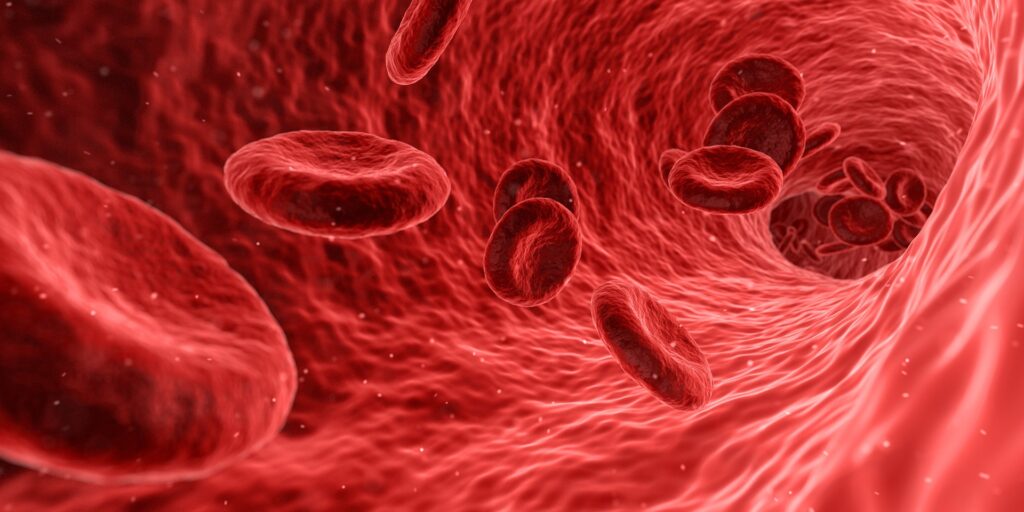
Red blood cells. CC0 Creative Commons

A new study into rare cases of blood clots in the brain with low platelets seen in some patients after vaccination has been published in the New England Journal of Medicine.

The research team behind the study were the first clinicians in the UK to spot the link between the Oxford/AstraZeneca vaccine and rare cases of blood clotting along with a low platelet count, before identifying the correct diagnostic test for the syndrome. They recommended the treatment approach which avoids the use of heparin, an anticoagulant typically used to treat normal blood clots.

The researchers detailed the cases of 23 patients, who all presented with thrombosis and thrombocytopenia after receiving the AstraZeneca vaccine, and none of whom had underlying conditions which would predispose them to blood clots.

The presence of the PF4 antibody (platelet factor 4) was detected in almost all cases (21 out of 23). In rare instances, these antibodies are triggered by the blood-thinning drug heparin, a syndrome known as heparin-induced thrombocytopenia (HIT). However, HIT was ruled out because none of the patients in this study received heparin.

The investigators therefore concluded that they were seeing a heparin-independent PF4-dependent syndrome in the setting of the AstraZeneca vaccine. They cautioned that this syndrome needs to be identified quickly if present, because its treatment is very different to that of blood clots with low platelet counts.

Co-author Professor Tom Solomon commented: “Although it is a very rare side effect, this issue of clots in the brain and elsewhere combined with blood abnormalities following COVID-19 immunization is extremely important. It is critical we understand the disease mechanisms so we can provide the best treatment for patients. Here at the University we are part of a national program collecting information on such patients.”

The researchers stressed that vaccination is still the key means to end the pandemic, and everyone should continue to receive a vaccine when offered one.

Source: Medical Xpress

Journal information: Marie Scully et al. Pathologic Antibodies to Platelet Factor 4 after ChAdOx1 nCoV-19 Vaccination, New England Journal of Medicine (2021). DOI: 10.1056/NEJMoa2105385

SA’s Phase 2 Vaccination Rollout to Commence Soon

South Africa’s Health Department said that it was preparing to vaccinate 5.5 million people over the age of 60 by October.

Phase two will commence from mid-May to the end of October, and Health Minister Zweli Mkhize visited hospitals in Mitchells Plain to assess its readiness for the expanded rollout. The Health Department is aiming to vaccinate as many people before a possible third wave.

Dr Mkhize said that plans to inoculate 16 million people during phase two remained on track.

“After that, after October of course everybody else who has not been vaccinated will have to come in, starting with those who will be in congregate settings and risk and so on.”

Dr Mkhize said that all the paperwork and contracts with Johnson & Johnson and Pfizer had been concluded. However, the use of the J&J vaccine is still waiting on an ethics committee’s signoff for the South African Health Products Regulatory Authority’s (Sahpra) recommendation to allow resumption of that vaccine’s trial.

Last week, the SA trial was temporarily stopped after regulators in the US paused the J&J vaccine rollout in that country after six women developed a rare blood clot. Sahpra has now recommended a conditional lifting of the suspension, although its US counterpart is expected to take two weeks to assess the clot problem.

Dr Boitumelo Semete-Makokotlela at Saphra said that the protocol would now have to be altered and safety regulations tightened.

“The screening and monitoring of the participants, particularly those with high risks of blood clotting,” Dr Semete-Makokotlela said. “Secondly, the safe management and immediate management of any participants who may present with any vaccine-induced thrombosis.”

Source: Eyewitness News

Brazil P.1 Variant May Be Twice as Transmissible

Researchers have found evidence suggesting that the P.1 COVID variant could be twice as transmissible as prior strains. The findings were published in the Journal Science.

The P.1 SARS-CoV-2 variant was first detected in four travellers from Brazil during a routine screening at Haneda airport, Tokyo. Manaus, the capital of the state of Amazonas in Brazil was the origin of the variant. According to preliminary investigations, the virus emerged late in 2020, beginning to spread in November and then quickly became the dominant strain. This prompted many to believe that it could reinfect those infected with the initial strain.

Some 70% of the residents in the city were believed to have been infected during the initial infection period. After variant infections rose in Manaus, the P.1 variant soon spread throughout Brazil, and then to other countries—thus far, it has been detected in at least 37 countries.

The researchers used molecular clock analysis to determine that the virus had 17 identifiable mutations and that three spike protein mutations (N501Y, E484K and K417T) allowed the virus to bind more effectively to host cells. These also may help in evading antibodies, and the researchers also found that P.1 can evade immunity granted by prior strains.

In simulations, P.1 was 1.7 to 2.4 times more transmissible than the prior virus baseline, but whether this was due to longer persistence in the body or increased viral load could not be determined. Additionally, it could not be established if it increased disease severity or raised mortality rates. Though people inffected with the variant were 1.2 to 1.9 times as likely to die, this could have been a result of the severe strain the overburdened healthcare systems were experiencing in the city.

More work is needed to find out whether the P.1 strain can infect those infected with prior strains or have been vaccinated, the researchers said.

Source: Medical Xpress

Journal information: Nuno R. Faria et al. Genomics and epidemiology of the P.1 SARS-CoV-2 lineage in Manaus, Brazil, Science (2021). DOI: 10.1126/science.abh2644

Human to Pet Transmission of COVID Virus Common

Girl in a park, wearing mask with two pet dogs. Photo by Helena Lopes from Pexels


A US study uploaded onto the bioRxiv preprint server showed that pets with SARS-CoV-2 likely acquired the virus from humans. 

This suggests that human-animal infection may actually occur much more frequently than previously thought – implying that infected individuals should limit their contact with animals. The paper is currently available on the bioRxiv* preprint server.

Both natural and experimental infections with SARS-CoV-2 have been demonstrated in various species of pets, which includes dogs, cats, hamsters, rabbits, and ferrets. Hamsters, cats and ferrets have been shown to transmit the virus to each other, and dogs are still weakly susceptible to the virus. However, natural infections of pets have almost always resulted from contact with a COVID-infected person.

Since pets share so much space with humans, this is a good use of the One Health approach, a transdisciplinary collaboration aiming for health outcomes through awareness of the interconnectedness between people, animals, plants and their mutual environment.

As part of a COVID household transmission investigation, researchers in the US conducted a One Health appraisal of SARS-CoV-2 infection in pet cohabitants as one of the earliest research endeavours in assessing risk and behavioral factors shared between people and pets.

The study was conducted between April and May of 2020, and mammalian pets from households with at least one individual with confirmed COVID were eligible for inclusion. Detailed descriptions of each animal’s residence were made.

Demographic and exposure information was obtained from all household members. At the same time, the pets were tested with the use of real-time reverse transcription-polymerase chain reaction (rRT-PCR) and neutralisation assays from oropharyngeal, nasal, rectal, fur, faecal, and blood samples.

The small sample size of this study made it difficult to analyse prevention measures in the home, so additional investigations are needed in order to determine the best methods to prevent human-pet COVID transmission.

All oropharyngeal, nasal, and rectal swabs from the tested animals tested negative when rRT-PCR was conducted; however, fur swabs from the one dog tested positive with the use of this molecular method at the first animal sampling. This is actually the first study to detect RNA of a virus from an animal’s fur.

Furthermore, in households where owners withs COVID lived with their pets, 20% had pets with serological evidence of prior SARS-CoV-2 infection, implying some secondary viral transmission. Four dogs and four cats from six households were found to have detectable neutralising antibodies against the virus.

In households with higher rates of human COVID infections, SARS-CoV-2 was more likely to be seen in pets, while much less common when owners limited interactions with their pets after they had developed COVID symptoms.

The authors stressed that it is still important for decision-makers to understand the role of animals in the epidemiology of the pandemic

“Our findings add to the growing body of evidence demonstrating SARS-CoV-2 transmission can occur between people and pets – most often from people to pets – and suggest this transmission may occur more frequently than previously recognized”, wrote the authors of the bioRxiv paper.

Source: News-Medical.Net

Journal information: Goryoka, G.W. et al. (2021). One Health Investigation of SARS-CoV-2 Infection and Seropositivity among Pets in Households with Confirmed Human COVID-19 Cases — Utah and Wisconsin, 2020. bioRxiv. https://doi.org/10.1101/2021.04.11.439379, https://www.biorxiv.org/content/10.1101/2021.04.11.439379v1

Experts Urge a Re-think on Olympic Games

With 100 days remaining until the Tokyo Olympic and Paralympic games, experts urge that the organisers must urgently reconsider plans to hold the games this summer.

Writing in The BMJ, Kazuki Shimizu at the London School of Economics and Political Science and colleagues said that the trajectory of the pandemic is still highly uncertain, warning that international mass gathering events such as Tokyo 2020 “are still neither safe nor secure”.

They say instead that “we must accelerate efforts towards containing and ending the pandemic by maintaining public health and social measures, promoting behavior change, disseminating vaccines widely, and strengthening health systems.”

While considerable scientific advancements have taken place over the past year, they said that vaccine roll-out has been inequitable, with many low and middle income countries having reduced access.

While a special scheme for vaccinating athletes orchestrated by the Olympics Organising Committee may help save lives, they argued that “it could also encourage vaccine diplomacy, undermine global solidarity (including the Covax global access scheme), and promote vaccine nationalism.”

Another concern that they highlighted was the fact that Japan, unlike neighbouring countries in the Asia-Pacific region, still has not achieved COVID containment.

“Even healthcare workers and other high risk populations will not have access to vaccines before Tokyo 2020, to say nothing of the general population,” they write.

In order to effectively protect participants from COVID, “Japan must develop and implement a clear strategy to eliminate community transmission within its borders, as Australia did before the Australian Open tennis tournament.”

Japan and the International Olympic Committee must also agree to operational plans based on robust science and share them with the international community, they added.

Waiving quarantine for incoming athletes, officials, broadcasters, press, and marketing partners “risks importing and spreading covid-19 variants of concern” and while international spectators will be excluded from the games, “cases could rise across Japan and be exported globally because of increased domestic travel – as encouraged by Japan’s official campaigns in 2020.”
However, a recent survey indicated that 70% of Japanese would not want to attend the Olympic Games, due to COVID.

An overwhelmed healthcare system combined with an ineffective test trace and isolate scheme “could seriously undermine Japan’s ability to manage Tokyo 2020 safely and contain any outbreak caused by mass mobilization,” they write.

They also highlight the fact that there has been very little about the Paralympic games through official channels, and how the health and rights of disabled people will be protected during international competition.
“The whole global community recognizes the need to contain the pandemic and save lives. Holding Tokyo 2020 for domestic political and economic purposes – ignoring scientific and moral imperatives – is contradictory to Japan’s commitment to global health and human security,” they argued.

“We must reconsider this summer’s games and instead collaborate internationally to agree a set of global and domestic conditions under which international multisport events can be held in the years ahead. These conditions must embody both Olympic and Paralympic values and adhere to international principles of public health,” they concluded.

Source: News-Medical.Net

Journal information: Shimizu, K., et al. (2021) Reconsider this summer’s Olympic and Paralympic games. BMJ. doi.org/10.1136/bmj.n962.

Department of Health COVID Vaccine Rollout Phase 2 Outlined

The Department of Health’s COVID vaccine rollout has been fleshed out in a presentation, including details on how the vaccines will be distributed, and the jobs earmarked for the shots.

A presentation from the department indicates that the government has secured around 51 million vaccine doses, with 20 million from Pfizer and 30 million from Johnson & Johnson (J&J). However, it is unclear how the current pause in J&J administration in South Africa due to concerns about rare blood clots will affect immunisation schedules.

However, health minister Dr Zweli Mkhize announced that South Africa has secured a further 10 million Pfizer vaccines.

“We can now guarantee that the number of people that will be vaccinated with Pfizer has increased from 10 to 15 million,” he said.

With the 30 million of the single-dose shots from J&J, the current planned rollout will cover about 45 million South Africans.

Dr Mkhize said that both the Pfizer and J&J agreements cost around $10 (R145) per vaccine, with non-refundable clauses.

“The agreements state that down-payments that have been made in advance by the department shall not be refundable by the manufacturer to us in any circumstances. This is another onerous term that we had to settle for,” Dr Mkhize told the committee.

Meanwhile, government was sent an email from J&J, which stated that the company will not sign off the 20 million doses until they receive a letter from the Trade, Industry and Competition Minister, expressing support for the local investment that they made in Aspen Pharmacare.

“We’ve been taken aback by this, as there are clauses in the agreement that express this support and acknowledge that this production will not just be limited to South Africa and the continent, but also targeted for the global market,” said Dr Mkhize.

The department indicated that the Pfizer vaccine will likely go to major metropolitans due to its larger pack size and refrigeration requirements, while the J&J vaccine with its less stringent refrigeration needs would be allocated to rural areas.

South Africa’s Phase 2 of the vaccine rollout is planned to begin in May and run until October, with essential workers over 40 and the elderly to be targeted in the programme. This is to include a focus on old age homes and care facilities, plus identifying those with co-morbidities.

The department provided an overview of occupations covered under the vaccine rollout, to include, among others, the police, army, social and municipal workers, and faith and traditional leaders. Private sectors could include mining, retail, transport, and manufacturing.

Source: BusinessTech

FDA and CDC Justify J&J Vaccine Pause

FDA and CDC officials recommended pausing administration of the Johnson & Johnson COVID vaccine “out of an abundance of caution,” and mainly for the benefit of clinicians to respond to associated serious events.

This comes after six cases of cerebral venous sinus thrombosis (CVST) combined with thrombocytopenia were reported in the US, all among women ages 18-48. With approximately 6.8 million doses administered in the U.S., it suggests a one-in-a-million risk. 

J&J has halted distribution of its vaccine in Europe, reportedly taking officials there by surprise. South Africa has also paused the vaccine rollout.

At a media briefing, when asked whether pausing administration of the vaccine was an “overreaction,” Acting FDA Commissioner Janet Woodcock, MD, said the aim was to provide “time for the healthcare community to learn what they needed about how to diagnose, treat, and report” such events.

FDA’s director for the Center for Biologics Evaluation and Research, Peter Marks, MD, PhD, noted that the condition involves a rare blood clot for which heparin or related anticoagulants is not the standard treatment.

“The issue with these types of blood clots is if one administered standard treatment, one can actually cause tremendous harm or the outcome can be fatal,” he said. “One needs to make sure providers are aware if they see people with low blood platelets or blood clots, to inquire about recent vaccination and act accordingly.”

The background rate of CVST is 2-14 per million in the setting of a normal platelet count, but thrombocytopenia together with abnormal clotting makes it a “pattern.” CVST symptoms also include severe headache, abdominal pain, leg pain, and shortness of breath.

Marks noted that vaccination-related headaches tend to resolve within a few days, whereas CVST symptoms could manifest over a week post-vaccination, and closer to a patient presenting to the emergency department with severe headache. No such rare events have been seen more than 3 weeks post-vaccination.

Dr Marks also said that this pause is a recommendation but does not prevent healthcare providers from providing the J&J vaccine to their patients should benefits of vaccination outweigh the risks.

“We’re not going to stop a provider from administering a vaccine,” he added. “The benefit/risk will be beneficial overall to that individual in a large majority of cases.”

Dr Marks said that while they don’t have a “definitive cause” for the adverse reactions, data from AstraZeneca on similar events in Europe, it is likely a “similar mechanism” with the J&J vaccine. An autoantibody against platelet factor 4 has recently been identified as the trigger for the reaction.
“The immune response occurs rarely after some people receive the vaccine, and that immune response leads to the activation of platelets and extremely rare blood clots,” he said.

However, Marks stopped short of calling it a “class effect,” meaning it was related to the viral vector vaccine itself. He said he wasn’t ready to make a “broad statement yet,” but “obviously it’s from the same general class of viral vectors.”

The AstraZeneca, J&J and Sputnik V vaccines all use adenovirus vectors to deliver antigens. The rate CVST for AstraZeneca was estimated by European officials to be about 5 per million doses. Though Sputnik V has no confirmed CVST cases, a recent report suggests a possibility.

Besides these, the Ebola vaccines are the only other ones to use adenovirus vectors.
Woodcock said that all US cases were in women of reproductive age, with one death and one hospitalisation, but Marks said it was not clear there was any association with hormonal contraception, which also carries a small thrombosis risk. The cases did not have any preexisting conditions which could have explained the events.

The American College of Obstetricians and Gynecologists (ACOG) noted there is no “clear phenotype” for women who may experience this complication.

“Until there is a better understanding of the frequency and impact of this finding, it will be important to encourage pregnant and postpartum women who wish to be vaccinated to receive the mRNA vaccines: Pfizer or Moderna,” said Christopher Zahn, MD, vice president for practice activities at ACOG, in a statement.

“If venous thrombosis is noted in the setting of thrombocytopenia, treatment includes intravenous immunoglobulin and other supportive care,” Dr Zahn added.

Source: MedPage Today

US Hits Pause on J&J Vaccine

Reacting to reports of potentially dangerous blood clots, the US is recommending a “pause” in immunisations with the single-dose Johnson & Johnson COVID vaccine in order to perform investigations.

The Centers for Disease Control and Prevention and the Food and Drug Administration said in a joint statement that they were investigating blood clots in six women that occurred 6 to 13 days after vaccination. The clots, seen in the sinuses of the brain, also had lowered platelet counts. This renders the use of heparin, the standard treatment for blood clots, potentially dangerous.

Out of 183.5 million vaccine doses administered in the US, over 6.8 million doses are the J&J vaccine — the overwhelming majority without serious side effects. The rest is made up by the two other authorised vaccines, from Moderna and Pfizer.

Use of the J&J shot will be paused in US federal distribution channels, including mass vaccination sites, with states and other providers being expected to follow.

CDC’s Advisory Committee on Immunization Practices will meet Wednesday to discuss the cases and the FDA has also launched an investigation into the cause of the clots and low platelet counts.

“Until that process is complete, we are recommending a pause in the use of this vaccine out of an abundance of caution,” Dr Anne Schuchat, principal deputy director of the CDC, and Dr Peter Marks, director of the FDA’s Center for Biologics Evaluation and Research, said in a joint statement.

They recommend that people who received the J&J vaccine and are experiencing severe headache, abdominal pain, leg pain, or shortness of breath within three weeks after receiving the jab contact their health care provider.

Officials say that they want to bring healthcare providers up to speed on the blood clot’s “unique treatment” .

Meanwhile, Johnson & Johnson had said it was aware of the blood clot reports, but no association with its vaccine had been established.

“We are aware that thromboembolic events including those with thrombocytopenia have been reported with Covid-19 vaccines,” the company said in a statement. “At present, no clear causal relationship has been established between these rare events and the Janssen Covid-19 vaccine.”

In late February, the FDA  granted emergency use authorisation to the J&J vaccine, with hopes that its single-dose and relatively simple storage requirements would speed vaccinations across the country. However, only a fraction of the vaccines administered in the US are the J&J shot. The company has been beset by production delays and manufacturing errors at a contractor’s plant. 

The pharmaceutical company took over the facility to ramp up production to make good on its promise to the US government of 100 million doses by the end of May. Only about 9 million of the company’s doses have been delivered to states and are awaiting administration, according to CDC data.
Previously, concern over the blood clots was confined to AstraZeneca’s vaccine, with European regulators saying last week they found a possible link between the shots and an exceedingly rare type of blood clot presenting with low platelets, a situation found more commonly in young people.

Nevertheless, the European Medicines Agency emphasised that the benefits for the vaccine outweigh the risks. Despite this, several countries imposed restrictions on vaccine eligibility and some such as Britain and Greece recommending that people under a certain age be offered alternatives.

Unlike the Pfizer/BioNTech and Moderna vaccines which use mRNA to train the immune system to recognise the SARS-CoV-2 spike protein, the J&J and AstraZeneca vaccines use an adapted adenovirus to introduce the spike protein antigen into the body. Adenoviruses were first identified in the 1950s as a family of similar disease-causing viruses. AstraZeneca’s vaccine uses a chimpanzee adenovirus while the J&J uses a human one.

Source: Medical Xpress

Blood Clotting Concerns Resulting in Vaccination Delays

Vaccination programmes are facing increasing delays because of concerns over AstraZeneca’s very rare blood clotting incidents.

Australia and Greece are the latest governments deciding to offer young people alternatives to AstraZeneca’s vaccine. This will delay inoculation campaigns by around a month in Australia, France and Britain. Meanwhile, the World Health Organization said most countries lacked vaccines to cover health workers and others at high risk from exposure to the virus.

WHO Director-General Tedros Adhanom Ghebreyesus said high income countries had on average vaccinated one in four people whilst low income countries the figure was one in over 500.

“There remains a shocking imbalance in the distribution of vaccines,” he told a press briefing on Friday.

The WHO and GAVI vaccine alliance’s COVAX mechanism seeks to secure vaccines for poorer nations. GAVI alliance head Seth Berkley said AstraZeneca’s supply chain had in fact “picked up” when asked whether the vaccine was being shunned.

“As countries decide they are going to prioritise one vaccine or another, that may free up doses, and in so doing we will try to make sure those doses are made available without delay, if countries are willing to make that happen,” he said.

Australia doubled its orders for Pfizer after its health body recommended that people under 50 receive an alternative vaccine. Greece followed Britain’s example in recommending that people under 30 seek an alternative jab.

AstraZeneca said it was working with regulators “to understand the individual cases, epidemiology and possible mechanisms that could explain these extremely rare events”.

Sabine Straus, chair of the EMA’s safety committee, said that the European Medicines Agency (EMA) received reports of 169 cases of the rare brain blood clot by early April, after 34 million doses had been administered.

Most of the cases reported had occurred in women under 60.

On Friday, the EMA said that if a causal relationship is confirmed or considered likely, regulatory action will be needed to minimise risk. It is also investigating Johnson & Johnson’s (J&J) vaccine over reports of blood clots. US infectious disease expert Anthony Fauci however said there were no red flags reported for the J&J vaccine.

The AstraZeneca vaccine is the cheapest and most high-volume vaccine to date to curb the pandemic and avert damaging lockdowns, but supplies have been beset by delays.

However, new data in the EU, beset by delays, showed that the pace of vaccine deliveries was picking up. Germany said it was accelerating inoculations but needed a new lockdown as well.

“Every day in which we don’t act, we lose lives,” Lothar Wieler, president of the Robert Koch Institute, said.

Hong Kong Health Secretary Sophia Chan said the city would defer its order of the AstraZeneca vaccine this year “so as not to cause a waste when the vaccine is still in short supply globally”, adding that the government was considering buying a new, more effective type of vaccine.

All the countries recommending age limits for the AstraZeneca shot have emphasised that its benefits far outweigh the risks of catching COVID for older people. Even so, some people have been put off; in Madrid half of over 60s meant to receive the AstraZeneca vaccine turned up, a day after Spain’s recommendation that younger people get a different shot.

In France, where vaccine hesitancy is high, the top health body recommended that those over 55 who had received a first dose of the AstraZeneca shot get a new-style messenger-RNA vaccine for the second one: either the Pfizer/BioNTech one or Moderna’s.

Source: Reuters

South African Variant Escapes Pfizer Vaccine More Easily

The South African variant escapes protection of the Pfizer/BioNTech vaccine better than other forms of the virus, Israeli experts said Sunday.

The study by Tel Aviv University and Clalit Health Services, Israel’s largest healthcare provider, compared patients with COVID, 400 unvaccinated patients to 400 partially or fully vaccinated ones.

Less than one percent of COVID cases in Israel were due to the South African variant. However, among the 150 people who were fully vaccinated yet had developed COVID, “the prevalence rate [of the B.1.351 variant] was eight times higher than the rate in the unvaccinated [individuals],” the authors wrote.

“This means that the Pfizer-BioNtech vaccine, though highly protective, probably does not provide the same level of protection against the South African (B.1.351) variant of the coronavirus,” the authors added.

“The South African variant is able, to some extent, to break through the vaccine’s protection,” said professor Adi Stern of Tel Aviv University’s Shmunis School of Biomedicine and Cancer Research, one of the study’s authors.

Prof Stern said that the study did not assess whether the eight people infected with the South African developed severe COVID.
“Since we found a very small number of vaccinees infected with B.1.351, it is statistically meaningless to report disease outcomes,” he said.

The possibility of reduced protection was already hinted at in two studies conducted by principal vaccine manufacturers Pfizer/BioNTech and Moderna, showing that the presence of antibodies after vaccination was less pronounced in people exposed to the B.1.351 variant. This marked the first real-world assessment of B.1.351’s ability to bypass a vaccine.

Israel’s vaccination campaign has seen 5.3 million people receive a first dose, while 4.9 million, or 53 percent of the population, have had two shots. 

Clalit’s earlier study on 1.2 million Israelis found that the Pfizer/BioNTech jab gave 94 percent protection against COVID.

Israel has eased many of its restrictions since its vaccine rollout, but various measures remain in place including mask-wearing and a “green passport” system that allows vaccinated people access to certain locations. With cases down 97% since January, Israel may have achieved “herd immunity”, according to Eran Segal, a computational biologist at the Weizmann Institute of Science.

Ran Balicer of Clalit said inoculations, plus mask-wearing and other safety measures had likely helped contain the B.1.351 variant, despite its apparent ability to break through the Pfizer/BioNTech vaccine.

A combination of all these factors “are most likely… preventing the virus strains, including the South African one, from spreading” significantly in Israel, he said.

“As we taper down the non-pharmaceutical interventions, we must do so gradually to ensure we do not cross a threshold that would enable these variants to spread.”

Source: Medical Xpress