Category: COVID

Pfizer Vaccine Fully Approved in US

Photo by Mat Napo on Unsplash

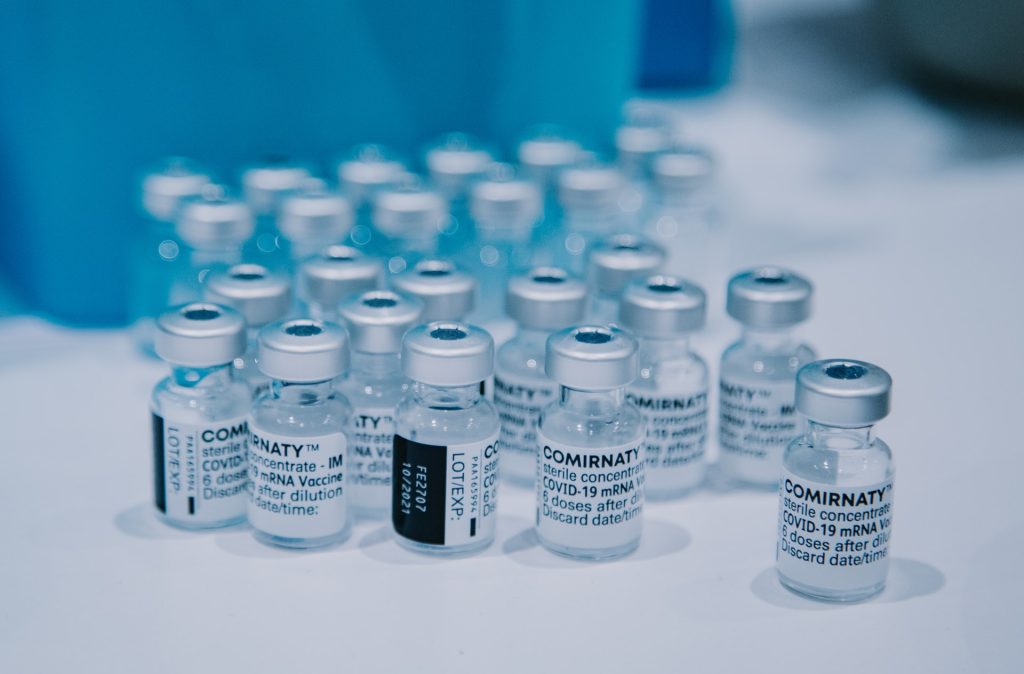
On Monday, the US Food and Drug administration approved the Pfizer/BioNTech COVID vaccine, the first vaccine against the novel coronavirus to receive full approval.

The vaccine, which will be marketed as Comirnaty, can be used for individuals ages 16 and older for COVID prevention. However, the vaccine is still under emergency use authorisation (EUA) for adolescents ages 12-15, the agency said.

FDA Acting Commissioner, Janet Woodcock, MD, said in a statement: “While this and other vaccines have met the FDA’s rigorous, scientific standards for emergency use authorisation, as the first FDA-approved COVID vaccine, the public can be very confident that this vaccine meets the high standards for safety, effectiveness, and manufacturing quality the FDA requires of an approved product.”

At a media briefing, Peter Marks, MD, PhD, the director for the Center for Biologics Evaluation and Research at FDA, detailed the meticulous process used for conducting a review of a biologics license application for full approval, including invidivual analysis of adverse events.

Since 11 December, 2020, the vaccine has been under an EUA for individuals ages 16 and older. Evidence for the full approval comes from expanded phase III trial safety and efficacy data released by the manufacturer this April. An analysis of 927 confirmed cases in the trial’s 44 000 participants found that 7 days after the second dose, Comirnaty had a 91.3% efficacy against symptomatic COVID through 6 months.

More than half of the participants had over 4 months of safety data, including 12 000 people who were followed up through 6 months. Injection site pain, fatigue, headache, muscle or joint pain, and fever were the most common adverse events. A slight increase in risk for myocarditis and pericarditis up to 7 days after the second dose was noted, particularly in males under 40 (peaking in ages 12-17), but symptoms resolved completely.

Trial data was collected before the Delta variant became the dominant strain in the US, Dr Marks noted, Israeli “real world” suggest the vaccine still retains effectiveness but wanes. This is something the agency will follow. 

Former FDA commissioner Dr. Mark McClellan, who now directs the Duke-Margolis Center for Health Policy, spoke to the media about the approval, saying surveys showed that it will help sway vaccine holdouts.

“I do think it will make a difference. Maybe not a large number of people running out and getting a vaccine today. At this point we’ve got a little bit over 70 percent of Americans who are eligible for the vaccine have gotten at least one dose. That’s about 87 million Americans who are eligible who haven’t. Out of those, according to some recent surveys, about 30 percent say the full approval of the Pfizer vaccine would make a difference in their decisions.”

Source: MedPage Today

Anticoagulation Improves Survival Odds of Moderately Ill COVID Patients

Credit: CC0

If treated with therapeutic-dose anticoagulation, moderately ill patients hospitalised with COVID have better odds of survival, according to an international study published in The New England Journal of Medicine.

COVID patients frequently develop a pro-coagulative state caused by virus-induced endothelial dysfunction, cytokine storm and complement cascade hyperactivation. Thrombotic risk appears directly related to disease severity and worsens patients’ prognosis.

Moderately ill COVID patients treated with therapeutic-dose anticoagulation with unfractionated or low molecular-weight heparin were 27% less likely to need cardiovascular respiratory organ support such as intubation, said Ambarish Pandey, MD, Assistant Professor of Internal Medicine at UT Southwestern, who served as site investigator and . Moderately ill patients had a 4% increased chance of survival until discharge without requiring organ support with anticoagulants, according to the study involving 2200 patients.

“The 4% increase in survival to discharge without needing organ support represents a very meaningful clinical improvement in these patients,” said Dr Pandey, a Texas Health Resources Clinical Scholar specialising in preventive cardiology and heart failure with preserved ejection fraction. “If we treat 1,000 patients who are hospitalized with COVID with moderate illness, an additional 40 patients would have meaningful improvement in clinical status.”

Moderately ill patients were defined as those who did not need intensive care unit-level support. The participating platforms for the study, included Antithrombotic Therapy to Ameliorate Complications of COVID-19 (ATTACC); A Multicenter, Adaptive, Randomized Controlled Platform Trial of the Safety and Efficacy of Antithrombotic Strategies in Hospitalized Adults with COVID-19 (ACTIV-4a); and Randomized, Embedded, Multifactorial Adaptive Platform Trial for Community-Acquired Pneumonia (REMAP-CAP). 

A parallel study reported in The New England Journal of Medicine found however that therapeutic-dose anticoagulation did not help severely ill patients.

Source: UT Southwestern Medical Center

After Anti-vaxx Protest, Western Cape Government Speaks Out

Photo by Marisol Benitez on Unsplash

After a group of anti-vaxxer demonstrators gathered outside Groote Schuur Hospital (GSH), Western Cape Health authorities have slammed anti-vaxxers for inflaming vaccine hesitancy. Even so, there was a record vaccination turnout on Friday when inoculations were offered to over 18s.

“I just don’t understand why people don’t believe us when we say that the vaccines are safe,” Western Cape Health Department’s Dr Saadiq Kariem said, warning of the damage that misinformation can do.

“There’s no 3G in the vaccine. There’s certainly no conspiracy theory. All we’re trying to do is help by making sure that the population is as protected as possible against coronavirus,” Dr Kariem said, adding that it was even more dangerous when medical professionals were against the shots.

“It just baffles my mind how other medical professionals can, in fact, be anti-vaccination because people will believe professionals, you know, and take their word as they’ve studied this field,” he added. Some of the protesters were carrying signs in support of controversial anti-vaxxer doctors.

IOL reports that one man who was employed by the hospital and chose not to be named, stood alone in the street and faced down the protesters with a sign saying “Covidiots”. He said the pandemic had been happening for 18 months, and that the ignorance of the crowd was disgraceful.

Just before the protests got underway, the University of Cape Town had released a statement in support of GSH. “The Faculty stands in solidarity with the staff (including cleaners, security, admin staff, drivers etc) of GSH. We stand in support of their work and the herculean efforts they have taken across the era of this pandemic under extremely challenging circumstances and often at personal risk. We salute the work of our partners in delivering the best possible care in responding to the world’s greatest human tragedy.”

Source: Eyewitness News

Bacterial Superinfections in COVID Rarer Than Expected

Only 21 percent of patients with severe pneumonia caused by SARS-CoV-2 have a documented bacterial superinfection at the time of intubation, resulting in potential overuse of antibiotics, according to new research.

Superinfection occurs when another, usually different, infection is superimposed on the initial infection. In this case, it is bacterial pneumonia during severe viral pneumonia.

Dr Wunderink and co-authors reported their findings in a study published online in the Journal of Respiratory and Critical Care Medicine, which shows that the usual clinical criteria used to diagnose bacterial pneumonia could not distinguish between those with bacterial superinfection and those with severe SARS-CoV-2 infection only.

According to the authors, there is weak evidence behind current guidelines recommending that patients with SARS-CoV-2 pneumonia receive empirical antibiotics on hospital admission for suspected bacterial superinfection. In other published clinical trials of patients with SARS-CoV-2 pneumonia, rates of superinfection pneumonia are unexpectedly low.
“More accurate assessment other than just reviewing clinical parameters is needed to enable clinicians to avoid using antibiotics in the majority of these patients, but appropriately use antibiotics in the 20-25 percent who have a bacterial infection as well,” said Dr Wunderink.

The team conducted an observational study to determine the prevalence and cause of bacterial superinfection at the time of initial intubation and the incidence and cause of subsequent bacterial ventilator-associated pneumonia (VAP) in 179 patients with severe SARS-CoV-2 pneumonia which required mechanical ventilation.

The researchers analysed 386 bronchoscopic bronchoalveolar lavage fluid samples from patients, and actual antibiotic use was compared with guideline-recommended therapy. Bacterial superinfection within 48 hours of intubation was detected in 21 percent of patients; 72 patients (44.4 percent) developed at least one VAP episode; and 15 (20.8 percent) of initial VAPs were caused by difficult-to-treat bacteria.

The authors found that in patients with severe SARS-CoV-2 pneumonia, bacterial superinfection at the time of intubation occurred in less than 25 percent of patients. Guideline-based empirical antibiotic management at the time of intubation would have resulted in antibiotic overuse.

The researchers believe that their findings have multiple implications for antibiotic guidelines: “Rapid diagnostic tests are important for helping identify suspected pneumonia in intubated patients. This can have major clinical implications because the current approach of using clinically defined risk factors for suspected methicillin-resistant staphylococcus aureus (MRSA) or pseudomonas bacteria as the cause of pneumonia still grossly overestimate the true incidence of these pathogens. In addition, the recommendation for empirical antibiotic treatment of worsening viral community-acquired pneumonia (now requiring intubation) may need to be revisited. This is not only true for SARS-CoV-2 but potentially for severe influenza as well.”

“An accurate diagnosis of suspected pneumonia allows clinicians to safely avoid or use narrow spectrum antibiotics for many patients,” Dr Wunderink added.  “While multiple interventions impact mortality in these critically ill patients, the low mortality in our study with more limited antibiotic treatment suggests that our approach was safe.”

Source: American Thoracic Society

Some Cognitive Abilities Improve With Age

Image by Mar Lezhava on Unsplash

While it has long been held that all cognitive abilities decline with age, new research shows that some of these abilities can actually improve over a lifetime.

The findings, published in Nature Human Behavior, show that two key brain functions, focusing and attending to new information, can in fact improve in older individuals. These functions underlie key aspects of cognition including memory, decision making, and self-control, and even navigation, math, language and reading.

“These results are amazing, and have important consequences for how we should view aging,” said senior investigator, Michael T Ullman, PhD, a professor in the Department of Neuroscience and director of Georgetown’s Brain and Language Lab.

“People have widely assumed that attention and executive functions decline with age, despite intriguing hints from some smaller-scale studies that raised questions about these assumptions,” he said. “But the results from our large study indicate that critical elements of these abilities actually improve during aging, likely because we simply practice these skills throughout our life.”

“This is all the more important because of the rapidly aging population, both in the U.S. and around the world,” Ullman said, adding that with further research, it may be possible to deliberately improve these skills to protect against cognitive decline.

The research team explored three separate components of attention and executive function in a group of 702 participants aged 58 to 98. This age range was chosen since this is when cognition often changes the most during aging.

The components they studied are the brain networks involved in alerting, orienting and executive inhibition. Each has different characteristics and relies on different brain areas and different neurochemicals and genes. Therefore, Ullman and Veríssimo reasoned, the networks may also show different aging patterns.

Alerting is characterised by a state of enhanced vigilance and preparedness, while orienting involves shifting brain resources to a particular location in space. The executive network inhibits distracting or conflicting information, allowing us to focus on what’s important.

“We use all three processes constantly,” Veríssimo explains. “For example, when you are driving a car, alerting is your increased preparedness when you approach an intersection. Orienting occurs when you shift your attention to an unexpected movement, such as a pedestrian. And executive function allows you to inhibit distractions such as birds or billboards so you can stay focused on driving.”

Surprisingly, only alerting abilities declined with age while both orienting and executive inhibition actually improved.

The researchers hypothesis is that because orienting and inhibition are simply skills that allow selective attention, these skills can improve with lifelong practice. Ullman and Veríssimo suggest that these gains can be large enough to outweigh the underlying neural declines. Alerting declines, they believe, because this basic state of vigilance and preparedness cannot improve with practice.  
“Because of the relatively large number of participants, and because we ruled out numerous alternative explanations, the findings should be reliable and so may apply quite broadly,” Veríssimo said, adding that “because orienting and inhibitory skills underlie numerous behaviors, the results have wide-ranging implications.”

“The findings not only change our view of how aging affects the mind, but may also lead to clinical improvements, including for patients with aging disorders such as Alzheimer’s disease,” said Ullman. 

Source: Georgetown University Medical Center

Antibody COVID Prophylactic Cocktail Performs Well in Trials

Source: NCI on Unsplash

A COVID prophylactic cocktail of long-acting antibodies cut the risk of developing symptomatic disease in a high-risk unvaccinated patient population, AstraZeneca announced on Friday.

Initial phase III trial data showed that AZD7442 (tixagevimab and cilgavimab) as pre-exposure prophylaxis significantly reduced the risk of developing COVID symptoms by 77% versus placebo, meeting the trial’s primary endpoint.
AstraZeneca further noted there were no cases of severe COVID or COVID-related deaths in the intervention group, while there were three cases of severe COVID and two deaths in the placebo group.

No safety concerns were noted by the manufacturer, as the treatment was well-tolerated and adverse events were balanced between groups.

A key feature of the trial was that 75% of participants had comorbidities, including being “at risk of an inadequate response to active [immunisation],” such as older adults and those with immunosuppressive disease or on immunosuppressive medication.

“With these exciting results, AZD7442 could be an important tool in our arsenal to help people who may need more than a vaccine to return to their normal lives,” the trial’s principal investigator, Myron Levin, MD, of the University of Colorado School of Medicine, said in a statement.

AZD7442 was derived from the B cells of convalescent patients. PROVENT was a phase III randomised trial conducted in the US and Europe. Participants were 5197 adults “who would benefit from prevention” with the long-acting antibody, were unvaccinated at the time of enrollment, and tested negative for SARS-CoV-2.
Participants were randomised 2:1 to receive a single 300 mg dose of AZD7442 or placebo. AstraZeneca noted that 43% of participants were ages 60 and older. The company noted that the drug is active in lab studies against emerging strains, including the Delta variant.

Patients were followed for 183 days, though subjects are slated to be followed for 15 months, AstraZeneca said. Data will be submitted for peer-reviewed publication while the company seeks approval for AZD7442.

Source: MedPage Today

Non-respiratory Antibiotic Prescriptions Unchanged by COVID Lockdown

Source: Unsplash

A study found that antibiotic prescriptions for non-respiratory ailments were unchanged by COVID lockdown in Australia, which had comparatively few COVID cases. 

In regions with high levels of COVID transmission, such as Europe and the United States, prescriptions for antibiotics in the community fell dramatically after COVID restrictions were introduced in early 2020. A study published in the British Journal of Clinical Pharmacology looked at antibiotic prescribing in Australia, which has so far had low COVID rates.

Analysing national claims data, researchers observed that COVID restrictions in Australia were associated with substantial reductions in community dispensing of antibiotics primarily used to treat respiratory infections, but found that antibiotics for non-respiratory infections did not change.

“The issue is that antibiotics should rarely be prescribed for common viral respiratory infections in the first place. These big reductions show how low general practitioners’ antibiotic prescribing could go if guidelines were followed more closely,” said co–senior Helga Zoega, PhD, of UNSW Sydney, in Australia.

Source: Wiley

Delta-infected Vaccinated Adults Have Similar Virus Levels to Unvaccinated

Source: Raghavendra V Konkathi on Unsplash

If infected with the Delta variant, virus levels in fully vaccinated adults are as high as unvaccinated people, according to a UK analysis. This adds to evidence indicating that achieving herd immunity is unlikely.

While COVID vaccination has been shown to protect against hospitalisation and death, recent data shows that fully vaccinated people, when infected, carry the same levels of virus as those unvaccinated.

How this affects transmission remains unclear, the researchers have cautioned. “We don’t yet know how much transmission can happen from people who get COVID after being vaccinated – for example, they may have high levels of virus for shorter periods of time,” said Sarah Walker, a professor of medical statistics and epidemiology at the University of Oxford.

“But the fact that they can have high levels of virus suggests that people who aren’t yet vaccinated may not be as protected from the Delta variant as we hoped.”

Recently in the UK, positive tests, hospitalisations and deaths linked to COVID have been rising slowly. In South Africa, the third wave has still not yet abated, with a slight uptick in test positivity rates as noted by Ridhwaan Suliman at the CSIR.

https://twitter.com/rid1tweets/status/1428050053508239364?s=20

The study, awaiting peer review, found vaccine effectiveness fell against Delta compared to Alpha.

The analysis did not directly investigate whether the lower level of vaccine protection against Delta affected jabs’ ability to prevent severe disease, but low rates of hospitalisation shows it is conferring protection.

The study compared the results of swabs taken from more than 384,500 adults between December 2020 and mid-May 2021, against those from 358,983 adults between mid-May and 1 August 2021 (when Delta became dominant).

The UK findings on peak virus levels after Delta infections in vaccinated people echoed data from a small study cited by the US Centers for Disease Control and Prevention (CDC) last month which prompted the agency to recommend continued mask wearing.

These datasets highlight that vaccinated individuals could still transmit COVID, and testing and self-isolation are still important to cut transmission, said Dr Koen Pouwels, a senior Oxford University researcher. This potential for transmission makes achieving herd immunity even more challenging, he suggested.

It had been hoped the vaccinated would protect the unvaccinated, added Prof Walker. “I suspect that, partly, the higher levels of virus that we’re seeing in these [Delta] infections in vaccinated people are consistent with the fact that unvaccinated people are just going to be at higher risk.”

Compared with AstraZeneca, two doses of the Pfizer vaccine has about 15% greater initial effectiveness against new infections, but its protection declines faster compared with two doses of AstraZeneca. Four to five months after being fully vaccinated, the vaccines’ effectiveness is the same, said Prof Walker.

“Even with these slight declines in protection against all infections and infections with high viral burden, it’s important to note that overall effectiveness is still very high because we were starting at such a high level of protection,” added Dr Pouwels.

Source: The Guardian

Keeping an Eye on B.1.621’s Immune Escape Potential

Source: Viktor Forgacs on Unsplash

First detected in Colombia in January, the SARS-CoV-2 variant B.1.621 was recently named a ‘variant of interest’ by the European Centre for Disease Prevention and Control, reports MedPage Today. So far, neither the World Health Organization nor the CDC has elevated it to this status and it hasn’t received a greek letter designation yet.

B.1.621 has been detected in the US, though it (along with version B.1.621.1) currently accounts for just about 1% of all cases in the country. In the state of Florida, though, recent data from the University of Miami showed that 9% of cases in the Jackson Memorial Health System were B.1.621 as of the second week of July.

Last week, seven residents in a Belgian nursing home died after being infected with B.1.621, despite the fact that all of them had been vaccinated (though which vaccine was not disclosed. All of the deceased were in their 80s or 90s, and some were in poor health already, according to virologist Marc Van Ranst, who conducted tests on the virus found in the nursing home, Reuters reported. A total of 21 residents had been infected with the variant, along with several staff members. However, infected staff only had mild symptoms. B.1.621 makes up less than 1% of known cases in Belgium overall, according to Reuters.

Public Health England said that as of 2 August, there have been 32 cases (PDF) of the variant in England, with the majority (19%) being detected in London. This new variant has E484K and K417N mutations, making it similar to the Beta variant (B.1.351), prompting concern that B.1.621 could have similar immune escape properties, the agency noted.

In a recent risk assessment (PDF), Public Health England said that there is lab evidence of a reduction in pseudovirus neutralisation in the serum of vaccinated or previously Delta-infected individuals.
However, the agency noted that the trajectory of this new variant depends on its growth and expansion, and currently there’s no sign that it’s outcompeting Delta and it also seems unlikely that it’s more contagious. Still, its immune escape properties could contribute to future changes in growth, they warned, and other epidemiological events could influence whether it becomes established in the UK.

A recent paper in Lancet Infectious Diseases found two cases of B.1.621 involving community transmission, at a time when 99% of cases were due to the Delta variant. Both of these cases however occurred among unvaccinated individuals.

However, the dominance of Delta seems to be keeping other variants at bay, at least for now.

Source: MedPage Today

SA’s Department of Tourism Aims to Join Vaccine Passport System

Image by Quicknews

The Department of Tourism says that it wants to introduce a vaccine passport for South Africa, but a number of international and legislative obstacles have to be overcome.

A lack of standardisation around vaccine passports worldwide is a key issue, said tourism director-general Nkhumeleni Victor Tharage in a briefing to Parliament on 17 August.

“Even in some jurisdictions that have opted to apply this (passport), there isn’t yet a sense of uniformity. When we don’t have a single, standardised specimen, it is a little bit difficult to say which one is which.

“If South Africa introduces (a passport), and there is access to information from the National Institute for Communicable Diseases (NICD) that confirms that a person has been vaccinated, the question is if that person arrives Lagos (Nigeria), what resources will they use to verify this information that is stored on a database in South Africa?”

South Africa has the same problem when it comes to verification of incoming tourists, Tharage said. The government was also cautious about introducing a vaccine passport system that is discriminatory against certain groups of people, he noted.

“When we reopen, and when everyone is starting to travel, it should not be discriminatory. And that principle has been reiterated time and time again.”

The vaccine passport could be a requirement for events, and Tharage said he was confident that this is something that the government could introduce with ease on short notice.

“At the end of the day, it’s about being able to get the necessary confidence from consumers, tourists and trade. If we don’t do that, then there will be a negative impact on our recovery.”

However, Department of Health spokesperson Foster Mohale affirmed that South Africa has no immediate plans to require proof of vaccination for any purpose.

Open for tourism
Transport minister Fikile Mbalula has said that his department is working with businesses to ensure that South Africa successfully reopens for international travel. Presenting his departmental budget speech at the end of May, Mbalula said that South Africa must ensure that it joins the increasing number of countries which accept the International Air Transport Association’s (IATA) mobile travel pass.

The travel pass is a mobile app that helps travellers store and manage their verified certifications for COVID tests or vaccines, and is more secure and efficient than current paper processes, IATA said. This is important given the potentially enormous scale of testing or vaccine verifications that the group must securely manage. IATA said it is looking to introduce further changes, such as QR code scanning by immigration officials.

Source: BusinessTech