Category: COVID

About 1% of Hospitalised COVID Patients Develop Neurological Complications

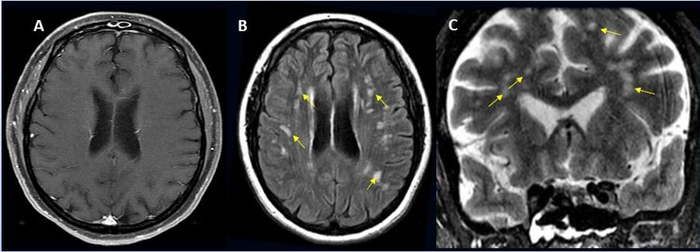
49-year-old female with past medical history of mitral valve disease and tricuspid valve regurgitation who developed headache followed by cough and fever presented to the ER with right upper eyelid ptosis (drooping). Credit: Radiological Society of North America and Scott H. Faro, M.D.

Approximately one in 100 patients hospitalised with COVID will likely develop complications of the central nervous system, according to a large international study. These can include stroke, haemorrhage, and other potentially fatal complications. The study was presented at the annual meeting of the Radiological Society of North America (RSNA).

“Much has been written about the overall pulmonary problems related to COVID, but we do not often talk about the other organs that can be affected,” said study lead author Scott H. Faro, MD, FASFNR, professor of radiology and neurology at Thomas Jefferson University. “Our study shows that central nervous system complications represent a significant cause of morbidity and mortality in this devastating pandemic.”

Dr Faro initiated the study after finding that only a small number of cases informed existing literature on central nervous system complications in hospitalised COVID patients.

To build a more complete picture, he and his colleagues analysed nearly 40 000 cases of hospitalised COVID patients, admitted between September 2019 and June 2020. Their average age was 66 years old, and two thirds were men.

Confusion and altered mental status were the most common causes of admission followed by fever. Comorbidities such as hypertension, cardiac disease and diabetes were common.

There were 442 acute neuroimaging findings most likely associated with the viral infection, with central nervous system complications in 1.2% of this large patient group.

“Of all the inpatients who had imaging such as MRI or a CT scan of the brain, the exam was positive approximately 10% of the time,” Dr Faro said. “The incidence of 1.2% means that a little more than one in 100 patients admitted to the hospital with COVID are going to have a brain problem of some sort.”

Ischaemic stroke, with an incidence of 6.2%, was the most common complication, followed by intracranial haemorrhage (3.72%) and encephalitis (0.47%).

A small percentage of unusual findings was uncovered, such as acute disseminating encephalomyelitis, an inflammation of the brain and spinal cord, and posterior reversible encephalopathy syndrome, a syndrome that mimics many of the symptoms of a stroke.

“It is important to know an accurate incidence of all the major central nervous system complications,” Dr Faro said. “There should probably be a low threshold to order brain imaging for patients with COVID.”

Source: EurekAlert!

WHO Criticises Omicron Travel Bans as SA Stays at Level 1

Image by Quicknews

The emergence of the Omicron SARS-CoV-2 variant which has resulted in renewed lockdowns and travel bans around the world, which have been criticised by the WHO. In contrast, South Africa will stick to an adjusted Level 1 lockdown for the time being, though pushing for mandatory vaccinations. Business and civil society groups had warned that increasing restrictions would have provoked backlash as recent election campaign events had effectively ignored them.

Many nations around the world have reacted quickly to the new variant, which has a large number of mutations compared to the Delta variant. The UK’s decision to suspend flights from South Africa as well as nine other African countries has provoked criticism from a number of quarters, including President Cyril Ramaphosa. The sudden move has caught many travellers by surprise, including a Welsh rugby team which had two members test positive, one of which was for Omicron. They will have to self-isolate before they are able to return, depending on flight availability.

Japan and Israel have taken the more extreme steps of closing their borders to foreigners. The first cases of Omicron that were recorded in Botswana were revealed to be in visiting diplomats, although which country they came from has not been revealed. 

The World Health Organization criticised the imposition of travel restrictions, acknowledging that although they may play a role in slightly reducing the spread of COVID, they still place a heavy burden on lives and livelihoods. It pointed out that if restrictions are implemented, they should not be unnecessarily invasive or intrusive, and should be scientifically based, under international law, the International Health Regulations. It notes South Africa followed International Health Regulations, and informed WHO as soon as its national laboratory identified the Omicron variant. 

“The speed and transparency of the South African and Botswana governments in informing the world of the new variant is to be commended. WHO stands with African countries which had the courage to boldly share life-saving public health information, helping protect the world against the spread of COVID,” said Dr Matshidiso Moeti, WHO Regional Director for Africa. “On the eve of a special session on pandemic preparedness I urge all countries to respect their legal obligations and implement scientifically based public health actions. It is critical that countries which are open with their data are supported as this is the only way to ensure we receive important data in a timely manner.”

Although a full picture of the new variant’s severity is still two or three weeks away, Angelique Coetzee, chair of the South African Medical Association, told the AFP she had recently seen around 30 patients at her Pretoria practice who tested positive for COVID but had unfamiliar symptoms.

“What brought them to the surgery was this extreme tiredness,” she said, something she said was unusual for younger patients. Most were men under 40, and just under half were vaccinated. Other symptoms included mild muscle aches, a “scratchy throat” and dry cough, she said. Just a few had a slightly high temperature. These very mild symptoms stand in contrast to other variants, which typically result in more severe symptoms.

Viral RNA Levels Can Predict COVID Mortality

Photo by Mufid Majnun on Unsplash

Viral RNA levels in the blood is a reliable indicator in predicting COVID mortality, according to a study published in Science Advances.

“In our study, we were able to determine which biomarkers are predictors of mortality in the 60 days following the onset of symptoms,” said Université de Montréal medical professor Dr. Daniel Kaufmann, the study’s co-lead author alongside colleagues Nicolas Chomont and Andrés Finzi.

“Thanks to our data, we have successfully developed and validated a statistical model based on one blood biomarker,” viral RNA, Prof Kaufmann said.

Despite advances in COVID management, identifying patients at greater risk of dying of the disease has been difficult. Other studies identified various biomarkers, but assessing so many parameters is not possible in a clinical setting and gets in the way of doctors’ quick clinical decision-making ability.

Using blood samples from 279 patients hospitalised for COVID of differing severity, Kaufmann’s team measured amounts of inflammatory proteins, looking for any that stood out.

At the same time, Chomont’s team measured the amounts of viral RNA and in Finzi’s the levels of antibodies targeting the virus. Samples were collected 11 days after the onset of symptoms and patients were monitored for a minimum of 60 days after that.

The goal: to test the hypothesis that immunological indicators were associated with increased mortality.

“Among all of the biomarkers we evaluated, we showed that the amount of viral RNA in the blood was directly associated with mortality and provided the best predictive response, once our model was adjusted for the age and sex of the patient,” said Elsa Brunet-Ratnasingham, a doctoral student in Kaufmann’s lab and co-first author of the study.

“We even found that including additional biomarkers did not improve predictive quality,” she added.

Prof Kaufmann and Brunet-Ratnasingham tested the model on two independent cohorts of infected patients from Montreal’s Jewish General Hospital (recruited during the first wave of the pandemic) and the CHUM (recruited during the second and third waves).

No matter which hospital the patients were treated at, nor which period of the pandemic they fell into: in all cases, the predictive model worked. Now Prof Kaufmann and his colleagues want to put it to practical use.

“It would be interesting to use the model to monitor patients,” he said, “with the following question in mind: when you administer new treatments that have proven effective, is viral load still a predictive marker of mortality?” 

Source: University of Montreal

A New Variant, B.1.1.529, Emerges in South Africa

Image by Quicknews

The National Institute for Communicable Diseases (NICD), yesterday confirmed that a new COVID variant, B.1.1.529, has been detected in South Africa. Initially detected in Botswana, 22 cases of variant B.1.1.529 have been recorded in the country following genomic sequencing. More cases are being confirmed as sequencing results come out. 

Detected cases and positivity rates are increasing quickly, particularly in Gauteng, North West and Limpopo. The UK government has acted rapidly to temporarily suspend all inbound flights from South Africa and neighbouring countries, and impose quarantines for recent arrivals.

“It is not surprising that a new variant has been detected in South Africa,” commented Prof Adrian Puren, NICD Acting Executive Director, adding that, “Although the data are limited, our experts are working overtime with all the established surveillance systems to understand the new variant and what the potential implications could be. Developments are occurring at a rapid pace and the public has our assurance that we will keep them up to date.”

‘Warp speed’ effort to track and understand variant
Dr Michelle Groome, Head of the Division of Public Health Surveillance and Response at the NICD said that provincial health authorities remain on high alert and are prioritising the sequencing of COVID positive samples.  A top priority is to track the variant more closely as it spreads: it was first identified in Botswana this month and has turned up in travellers to Hong Kong from South Africa. Scientists are also trying to determine the variant’s properties such as vaccine evasion and disease severity.

“We’re flying at warp speed,” said Penny Moore, Wits University virologist, whose lab is gauging the variant’s immunity evasion ability. While there are anecdotal reports of reinfections and cases in vaccinated individuals, “at this stage it’s too early to tell anything,” Moore cautioned.

“There’s a lot we don’t understand about this variant,” Richard Lessells, an infectious disease physician at the University of KwaZulu-Natal, said at a press briefing organised by South Africa’s health department on 25 November. “The mutation profile gives us concern, but now we need to do the work to understand the significance of this variant and what it means for the response to the pandemic.”

The variant’s apparent sharp rise in Gauteng is cause for alarm. Cases increased rapidly in the province in November, particularly in schools and among young people, according to Lessells. Genome sequencing and other genetic analysis found that the B.1.1.529 variant was responsible for all of 77 of the virus samples they analysed from Gauteng, collected between 12 and 20 November. Analysis of hundreds more samples are in the works. A previous variant, C.1.2, appeared in South Africa and had concerning mutations, but ultimately failed to replace Delta over the winter.

Fortunately, the variant has a spike mutation easily detected by fast genotyping tests as opposed to genome sequencing, according to Lessells. Preliminary data from these tests suggest that B.1.1.529 is spreading much wider than Gauteng. “It gives us concern that this variant may already be circulating quite widely in the country,” Lessells said.

Are vaccines effective against it?
As happened with the Beta variant, a similar effort is starting to study B.1.1.529. Moore’s team, which provided some of the initial data on Beta’s immunity-dodging, has begun work on B.1.1.529. They plan to test the virus’s ability to evade infection-blocking antibodies, as well as other immune responses. The variant harbours a high number of mutations in regions of the spike protein that antibodies recognise, potentially dampening their potency.

“Many mutations we know are problematic, but many more look like they are likely contributing to further evasion,” said Moore. There are even hints from computer modelling that B.1.1.529 could evade immunity conferred by T cells, Moore added. Her team hopes to have its first results in two weeks.

“A burning question is does it reduce vaccine effectiveness, because it has so many changes,” said Aris Katzourakis, who studies virus evolution at the University of Oxford, UK.

Researchers in South Africa will also study the disease severity of B.1.1.529, Lessells said, which is “the really key question”.

Sources: NICD, Nature

South Africa Faces Vaccine Glut as Uptake Slows

Photo by Mat Napo on Unsplash

South Africa has asked Johnson & Johnson and Pfizer to delay delivery of COVID vaccines as it has too much stock now, health ministry officials said, as vaccine hesitancy continues to slow the immunisation campaign.

About 35% of South Africans are fully vaccinated, still only half the government’s target of 70% by year end. In the past 15 days, an average of 106 000 doses a day have been administered. At the beginning of the year, the programme had been beset by a lack of doses for a wide range of reasons, from AstraZeneca’s ineffectiveness against the Beta variant to overseas production delays. 

Deputy director-general of the Health Department, Nicholas Crisp, told Reuters that South Africa had 16.8 million doses in stock and said that deliveries had been deferred.

A spokesman for the Health Ministry said: “We have 158 days’ stock in the country at current use. We have deferred some deliveries.”

Stavros Nicolaou, chief executive of Aspen Pharmacare, which is packaging 25 million doses a month of J&J vaccines in South Africa, said most of the vaccines bound for South Africa would now be diverted to the rest of Africa, and deliveries would likely be deferred until the first quarter of next year.

A Pfizer spokesperson said: “We remain adaptable to individual country’s vaccine requirements whilst continuing to meet our quarterly commitments as per the South Africa supply agreement.”

The government has been trying to boost the rate of daily administered doses, such as with R100 ‘Vooma vouchers’ for registering to vaccinate, but even these have failed to sufficiently stoke uptake.

“There is a fair amount of apathy and hesitancy,” said Wits University’s Professor Shabir Madhi.

On Twitter, he further suggested using the excess stock for booster shots, which would “provide all single dose JJ adult recipients a JJ or Pfizer boost, and  those > 65 or immunosuppressive conditions an additional Pfizer dose if received 2 doses > 5 months ago.” 

Source: U.S. News

Immunity to Other Coronaviruses Confers COVID Protection

Transmission electron micrograph of SARS-CoV-2 virus particles (gold) within endosomes of a heavily infected nasal Olfactory Epithelial Cell. Image captured at the NIAID Integrated Research Facility (IRF) in Fort Detrick, Maryland. Credit: NIAID

Researchers have discovered another component beside previous infection or vaccination that contributes to SARS-CoV-2 immunity – previous antibody responses to other, harmless coronaviruses. “People who have had strong immune responses to other human coronaviruses also have some protection against SARS-CoV-2 infection,” said Alexandra Trkola, head of the Institute of Medical Virology at University of Zurich.

The study, published in Nature Communication, used a specially developed assay to analyse antibody levels against four other human coronaviruses in 825 serum samples taken before  the emergence of SARS-CoV-2, as well as 389 samples from donors infected with the virus. Combining these analyses with computer-based models enabled the team to precisely predict how well the antibodies would bind to and neutralise invading viruses.

The researchers were able to demonstrate that people who caught SARS-CoV-2 had lower levels of antibodies against coronaviruses that cause common colds compared to uninfected people. In addition, people with high levels of antibodies against harmless coronaviruses were less likely to have been hospitalized after catching SARS-CoV-2. “Our study shows that a strong antibody response to human coronaviruses increases the level of antibodies against SARS-CoV-2. So someone who has gained immunity to harmless coronaviruses is therefore also better protected against severe SARS-CoV-2 infections,” says Trkola. This type of immune response is referred to as cross-reactivity, and it also occurs with T cell responses,  the additional line of the immune system in the defense against infections.

People are only fully protected against SARS-CoV-2 shortly after they have recovered from an infection or have received an effective vaccination. This is when antibody levels against the virus are still very high. As these levels drop over time, infection is no longer prevented, but the immunological memory quickly reactivates the body’s defenses, the production of antibodies as well as the T cell defense. “Of course, immune responses targeting SARS-CoV-2 that are mounted by the memory cells are far more effective than cross-reactive responses. But even though the protection isn’t absolute, cross-reactive immune responses shorten the infection and reduce its severity. And this is exactly what is also achieved through vaccination, just much, much more efficiently,” said Trkola.

Whether cross-reactivity also works in the opposite direction is not yet known. “If SARS-CoV-2 immunity also offers some degree of protection from infection with other coronaviruses, we would be a significant step closer to achieving comprehensive protection against other coronaviruses, including any new variants,” the virologist explains. This idea is also supported by the fact that cross-reactive protection is not only based on antibodies, but very likely also on T cells.

Source: University of Zurich

NICD Issues COVID Increase Warning

Image by Quicknews

Over the past week, an increase in the 7-day moving average for new COVID cases and the percentage testing positive in Gauteng has been observed by the National Institute for Communicable Diseases (NICD), particularly in Tshwane amongst 10–29 year olds.

Additionally, the NICD has recently identified a cluster amongst the 20–44 age group at an institute of higher education in Tshwane. “We are monitoring these trends to see if these increases persist,” comments NICD Acting Executive Director, Prof Adrian Puren. He continued, “Localised increases in case numbers (clusters) are not unexpected, however, it is hard to say whether the increases indicate the start of a widespread resurgence.”

The emergence of new SARS-CoV-2 variants to a large extent drove previous waves: Beta in the second wave and Delta in the third wave. “Genomic sequencing in South Africa has, to date, not yet detected the emergence of any new variants which are making up an increasing proportion of the sequences,” Dr Puren added. Molecular sequencing has some inherent delays in processing, due to transport of samples and the time taken to process them. In spite of any possible new variants emerging in the future, the importance of non-pharmaceutical interventions remains unchanged and individuals are encouraged to wear masks, practice hand hygiene, maintain social distancing and to gather in well ventilated spaces.

At present the National Department of Health reports that 41% of adults in South Africa have received at least one dose of a COVID vaccine, with 35% fully vaccinated. “It is difficult to predict the magnitude and timing of a potential COVID resurgence, however, we implore the unvaccinated to get the COVID vaccine, especially the elderly and those with comorbidities,” urged Dr Michelle Groome, Head of the Division of Public Health Surveillance and Response. She added that vaccination and prior infection confer good protection against developing severe disease, and while there might be an increase in future case numbers, the number of hospitalisations and deaths are expected to be less severe compared to prior waves.

“As the endemic endures, I would like to reassure the public that the NICD continues to acutely monitor trends in case numbers, positivity rates and hospitalisations,” Dr Puren concluded.

Source: NICD

Is Malaria Behind Low COVID Burden in Sub-Saharan Africa?

Mosquito
Photo by Егор Камелев on Unsplash

In both rural and urban areas of Mali, there was a high seroprevalence of COVID, but a low burden of symptomatic disease, a researcher said in a presentation at the American Society of Tropical Medicine & Hygiene (ASTMH) virtual meeting. This could be tentatively attributable to the prevalence of malaria.

From spring to autumn (northern hemisphere) 2020, the seropositivity rate among those with self-reported symptoms jumped from 20.8% to 48.6%, while those reporting symptoms but were seronegative also increased from 9.8% to 49.3% in the cohort, reported John Woodford, MD, of the National Institute of Allergy and Infectious Diseases (NIAID).

However, he said that during March to July, the COVID-attributable fraction was 11%, and from August to December, the COVID-attributable fraction was 0%.

In addition, the percentage of seropositive people with symptomatic illness over the background illness reporting rate was 0%-11%, well below the age-adjusted 33% of cases expected, based on the US case rate.

Only three hospitalisations occurred throughout spring and autumn 2020, also far below the expected 11-30 hospitalisations, and no deaths.

Dr Woodford pointed to “a lot of anecdotal reports that there was a limited disease burden in Mali.”

“It was repeated over and over again for a variety of sub-Saharan African settings, but there’s very limited data to back this up,” he clarified.

His group performed a serosurvey of urban and rural areas of Mali, using two-antigen ELISA qualified for use in that country. Participants were also given a questionnaire asking about self-reported symptoms, medical, and social history.

Overall, they obtained serosurvey data from 3671 participants at four sites, who were a median age of 15. They noted the dates of the symptom questionnaires were March to July 2020 and August to December 2020.

No symptoms were independently associated with seropositivity, Dr Woodford said. There was no greater change of seropositive people being absent from work, seeking medical care, or being hospitalised compared to seronegative people in the cohort during spring. However they were more likely to seek medical care in the autumn than seronegative people (63.4% vs 45.9%, respectively).
The second follow-up visit was during the malaria season, when there was a high percentage of seropositivity, but the proportion of those with self-reported symptoms was comparable with background illness. MedPage Today asked Dr Woodford as to whether malaria infection might have a protective effect, to which he responded: “That is a question much larger than me, and much larger than COVID.” He added that the rural areas in their study had higher rates of malaria than the urban sites, while the reverse was true for COVID.

“What that means, I’m not sure, but there’s certainly a blunt association there,” Dr Woodford noted.

He referenced a recent study of hospitalised patients in Uganda, which found that patients with low previous malaria exposure had higher risk of severe or critical COVID clinical presentation compared to those with high previous exposure, even among patients with no comorbidities.

However, Dr Woodford explained that without a much larger sample size and more accurate tests such as PCR, there was no way to tease out asymptomatic versus symptomatic infections.
“You’d need a very large population to look at symptomatic versus asymptomatic in seropositive patients,” he said. “Logistically, it’s a very challenging study to put together.”

Source: MedPage Today

Vaccine Hesitancy Among Caregivers of Childhood Cancer Survivors

Photo by Priscilla du Preez on Unsplash

In a study published in Pediatric Blood & Cancerresearchers reported that caregivers of childhood cancer survivors expressed high rates of vaccine hesitancy, especially if they lacked confidence in governmental COVID response.

The researchers conducted a survey of 130 caregivers of childhood cancer survivors, 21% of caregivers expressed hesitancy to vaccinate themselves and 29% expressed hesitancy to vaccinate their children who had survived cancer.  

Caregivers who expressed confidence in the US government’s response to COVID were six times more likely to express willingness to self-vaccinate and were three times more likely to express willingness to vaccinate their children.  

Caregivers who reported that they were hesitant to vaccinate cited concerns about the speed of COVID vaccine development and a lack of safety and efficacy data in children, particularly children with cancer.

“Results suggest that COVID vaccination outreach to hesitant caregivers might be more effective when delivered by non-governmental organisations, including paediatric oncology care teams,” said senior author Kyle Walsh, PhD, of the Duke Cancer Institute. “Such providers are well-positioned to discuss potential risks and benefits of vaccination and to update families as longer-term outcomes data emerge from vaccine trials and registries.”

Source: Wiley

A Smaller Fourth Wave Predicted for South Africa as Flu Cases Spike

Image by Quicknews

A fourth wave of infections is likely for South Africa but its impact probably won’t be as severe as during earlier surges, as shown by new modelling, according to BusinessTech.

Factoring in sero-prevalence surveys and other data, it appears that an estimated 60% to 70% of the population has already contracted COVID, which along with vaccinations will provide protection from severe disease, the South African COVID-19 Modelling Consortium said in an online presentation on Wednesday.

Even in its worst-case scenario, deaths and hospitalisations during a fourth wave were projected to be substantially lower than during previous surges.

Though current caseload for the country is “incredibly low”, it is still “very hard to commit to say South Africa is over the worst” of the COVID pandemic, said Harry Moultrie, a senior epidemiologist at the National Institute for Communicable Diseases, which coordinated the modelling.

“It’s going to be a bumpy ride,” he said. “We don’t know where this virus is going to take us. We will still be seeing hospital admissions and deaths related to Covid for years to come.”

South Africa;s seven-day rolling average of new infections has fallen below 300, much reduced from a third-wave peak which hit nearly 20 000 in July.

To date, South Africa has had 2.93 million confirmed cases of COVID, with 89 504 deaths, although excess death numbers indicate the true toll may be much higher. About 34% of the nation’s 39.8 million adults have been fully vaccinated.

While some countries in the northern hemisphere such as Germany are seeing severe fourth and even fifth waves of infection driven by the spread of the delta variant, that’s not a good indicator South Africa will follow a similar path because the strain has already spread widely in the country, explained Gesine Meyer-Rath, a member of the modelling consortium.
“We have paid in a way with high deaths and a lot of destruction” during previous waves, Meyer-Rath said. “We don’t think we will have a super-fast case increase again” unless a highly transmissible new variant emerges, she said.

While the outlook for the fourth wave is brighter, the past few weeks has seen a sharp rise of influenza cases, the National Institute for Communicable Diseases (NICD) reported.

A high number of cases had been seen from the beginning of the month, including influenza-like illness and pneumonia hospitalised cases at surveillance sentinel sites.

The NICD added that there had been clusters of influenza cases reported in schools and workplaces.

The NICD’s Cheryl Cohen said: “The increase in influenza this summer, which is not the typical time for the influenza season in South Africa, is likely the result of the relaxation of non-pharmaceutical interventions to control COVID combined with other factors such as reduced immunity because flu has not circulated since 2020 and 2021.”

Sources: Eyewitness News; BusinessTech