With the Omicron variant now dominating, a local study showed that, if confirmed, testing for COVID could be more accurate with much easier saliva sampling.
University of Cape Town researchers reported in a paper uploaded to medRxiv[PDF] that in Omicron cases, saliva samples yielded more accurate results in PCR analyses compared to nasal swabs.
With the Delta variant, on the other hand, nasal swabs were more accurate, according to the group, led by Diana Hardie, MBChB, MMedPath, who also heads the diagnostic virology laboratory at Groote Schuur Hospital.
The findings came from an analysis of 382 patients tested at Groote Schuur from August through this month, with viral whole-genome sequencing performed on isolates from those with positive results.
All patients had both saliva and mid-turbinate nasal samples taken for RT-PCR analysis. The ‘gold standard’ for positivity in the study was detection of SARS-CoV-2 RNA with either swab.
For the Delta variant, the positive percent agreement for each sampling method, in comparison with this ‘gold standard’, was 71% for saliva and 100% for the nasal swabs. But Omicron reversed the trend, with 100% agreement between saliva samples and the gold standard, but only 86% for nasal swabs.
COVID testing has used nasal swabs as standard since the discovery of the virus, but that may no longer be appropriate in an Omicron-dominated pandemic landscape, the authors concluded.
“These findings suggest that the pattern of viral shedding during the course of infection is altered for Omicron with higher viral shedding in saliva relative to nasal samples resulting in improved diagnostic performance of saliva swabs,” Hardie and colleagues wrote.
They noted, as have others, that Omicron is distinguished by “more than 50 distinct mutations.” While these increased infectivity, they could also have other effects, including the tissues it may prefer to infect.
The researchers cited a recent unpublished lab study from Hong Kong indicating that Omicron preferentially infects the upper airway. Not only does it suggest Omicron is less lethal, but also that the many mutations confer “altered tissue tropism.”
However, saliva sampling is not as simple as it sounds. At Groote Schuur, patients were instructed to swab the inside of the mouth for a total of at least 30 seconds. They were also told not to eat, drink, smoke, or chew anything for at least 30 minutes beforehand.
While most of the COVID testing kits in the US and elsewhere rely on nasal swabs, any change to saliva sampling would take months – by which time Omicron may have been displaced by another variant.
South Africa’s easing of COVID regulations at the end of 2021 set a new trend in how countries are choosing to manage the pandemic. In an article for The Conversation, Wits University’s Professor Shabir Madhi and colleagues reflect on the boldness – and the risks.
In a significant departure, the government is choosing a new, more pragmatic approach while keeping an eye on severe COVID and threats to health systems. This reflects a willingness to “live with the virus” without causing further damage to the economy and livelihoods, especially in a resource-constrained country.
Prof Madhi and colleagues hope that “the government continues to pursue this approach and doesn’t blindly follow policies that are not feasible in the local context, and ultimately yield nominal benefit.”
This more nuanced approach is a stark contrast to reflexive restrictions in response to rising case rates, suggesting the government has listened to commentary saying that the focus should be on whether health systems are under threat.
A high level of population immunity guides this approach. A sero-survey in Gauteng, just prior to the onset of the Omicron wave indicated that 72% of people had been infected over the course of the first three waves. Sero-positivity was 79% and 93% in COVID unvaccinated and vaccinated people aged over 50: a group that had previously made up a high percentage of hospitalisations and deaths.
The sero-survey data show that immunity against severe COVID in the country has largely evolved through natural infection over the course of the first three waves and prior to the advent of vaccination. This has, however, come at the massive cost of 268 813 deaths based on excess mortality attributable to COVID
Antibody presence is a proxy for underlying T-cell immunity which appears to play an important role in reducing the risk of infection progressing to severe COVID. Current evidence indicates that such T cell immunity, which has multiple targets and even more so when induced by natural infection, is relatively unaffected even by Omicron’s many mutations and likely lasts more than a year. This sort of underpinning T-cell immunity protecting against severe disease should provide breathing space for at least the next 6–12 months, and possibly further.
Despite Omicron’s anti-spike evasion, vaccine and natural infection induced T-cell immunity has been relatively preserved. This could explain the uncoupling of case rate to hospitalisation and death rates. Omicron’s mutations also appear to make it predisposed to infecting the upper rather than the lower airway, reducing the likelihood of progressing to severe disease.
In the meantime, they stress that greater vaccine uptake is ensured, along with boosters for high-risk groups.
Additionally, since low test rates mean only 10% of infections are actually documented in SA , isolation and quarantine are ineffective and a more pragmatic approach is necessary, the authors argued.
As the average person in South Africa could have 20 close contacts per day, contact tracing is of little value, and even symptomatic cases are most infectious in the pre-symptomatic and early symptomatic phase. The fact that three quarters of the SA population were infected over the course of the first three waves demonstrates how ineffective contact tracing and quarantine is. They recommend that certain non-pharmacological interventions should be gradually dropped, especially hand hygiene and superficial thermal screening, while outdoor events should be allowed. Rather, government focus should remain on masking in poorly ventilated spaces and ensuring proper ventilation.
Mandatory vaccinations are still on the radar, since as well as the added risk to others that unvaccinated pose, there is the greater pressure they place on the health systems when they are hospitalised for COVID.
Attention also needs to be given to the management of incidental COVID infections in hospitals. The Department of Health guidance needs to be adapted to manage these patients with the appropriate level of care for the primary reason they were admitted. And patients with severe COVID disease require additional care and expertise to improve their outcomes.
Finally, an evaluation of both vaccination status and underlying immune deficiency needs to become a key element of the workup of hospitalised patients with severe COVID.
The authors stressed the need to minimise hospitalisations and deaths, without damaging livelihoods. SA’s Omicron wave death rate is about a tenth that of Delta, on par with pre-COVID seasonal influenza deaths – 10 000 to 11 000 per annum. TB caused an estimated 58 000 deaths in 2019.
While future variants are unpredictable, there is a trend towards lower rates of hospitalisation and death, especially if vaccine coverage can be increased to 90%, particularly in the over-50 age group. Omicron’s high infection rate will likely also contribute to future protection against COVID.
They note that while there is a risk of new variants, failure to change the pandemic mindset is another risk, as Omicron signals the end of COVID’s epidemic phase.
Past practices have had little effect, the authors concluded, and it is something that the SA government appears to have realised. Despite all the severe lockdowns, SA still suffered a high COVID death rate of 481 per 100 000.
Administering a booster shot of Johnson & Johnson’s COVID vaccine was found to be 85% effective in preventing serious illness in Omicron-dominated areas, preliminary results from a South African trial study show.
The South African Medical Research Council performed the study on health workers from 15 November to 20 December, but has not yet been peer-reviewed. It found the booster was effective in largely protecting staff as Omicron came to dominate the country.
“The increase in CD8+ T-cells generated by the Johnson & Johnson vaccine may be key to explaining the high levels of effectiveness against severe COVID disease and hospitalisation in the Sisonke 2 study, as the Omicron variant has been shown to escape neutralising antibodies,” Johnson & Johnson reported in a statement. That data showed that the booster jab “provides 85 percent effectiveness against hospitalisation in areas where Omicron is dominant/”
“This adds to our growing body of evidence which shows that the effectiveness of the Johnson & Johnson Covid vaccine remains strong and stable over time, including against circulating variants such as Omicron and Delta,” it continued.
Around half a million South African health staff have received Johnson jabs as part of clinical trials. South Africa has recorded more than 3.5 million cases and 94 000 deaths since the start of the pandemic.
An earlier South African study in December found the Pfizer/BioNTech vaccine to be less effective overall against Omicron, but still reduced hospital admissions by up to 70%.
SARS-CoV-2 is a “predatory virus” that appears to have multiplied the risk of death by a similar amount for most adults in the UK regardless of their underlying health status, according to new research published in PLOS Medicine.
The London School of Hygiene & Tropical Medicine (LSHTM)-led research team estimated excess mortality in the UK during Wave 1 of the COVID pandemic in nearly 10 million adults aged 40 and over. They then estimated and compared relative rates of all-cause mortality in people with and without more than 50 health and socio-demographic characteristics before the pandemic and during Wave 1.
The rate of death during Wave 1 increased on average by a factor of just over 40% (x1.4) for the study population compared to before the pandemic. This relative increase in the rate of death was surprisingly consistent across much of the population, regardless of health conditions and other characteristics.
However, before the pandemic, those with pre-existing health conditions such as heart disease or asthma had a higher mortality rate than those without a further mortality rate increase of 40% had a bigger absolute impact on them.
Exceptions included those with dementia and learning difficulties; both groups had approximately 3x the rate of death compared to people without the condition before the pandemic but approximately 5x the rate of death compared to people without the condition during Wave 1.
Non-white ethnicities were another exception: black people had 20% reduced rate of death compared to white people before the pandemic but a 50% increase in relative rate of death compared to white people during Wave 1. Also, those living in London also had a lower rate of death before the pandemic compared to people living outside of London, but substantially elevated relative rate during Wave 1.
Researcher co-leader, LSHTM’s Dr Helen Strongman, said: “Our work has shown that the threat posed by COVID increases evenly with frailty or ill health caused by ageing and a wide range of respiratory and non-respiratory medical conditions. This compares to flu, which also tends to be more dangerous in the elderly but also affects young children and is more strongly associated with respiratory conditions such as asthma, COPD and smoking.”
Whilst the health and demographic factors studied are known to be associated both with mortality in non-pandemic years and mortality due to COVID during the pandemic, this is the first time the two have been linked – analysing all-cause mortality rather than COVID-specific mortality.
Dr Strongman said: “As we learn to live with COVID, we all need to be aware of and manage our own risk and that of others around us. Our study shows that SARS-CoV-2 is a predatory virus, amplifying mortality rates across the board, and having the biggest impact on those with existing ill health or who are frail. This emphasises how important it is for everyone to protect themselves and the most vulnerable in society through measures such as vaccination and wearing face masks. However, more basic research about why and how the virus exploits any vulnerability is needed.”
Dr Helena Carreira from LSHTM and co-lead author, added: “While we saw increases in the rate of death during the first wave of the pandemic across the population, our study also reinforced how COVID has disproportionately affected some groups, including people with dementia and learning disabilities, possibly through higher levels of exposure due to institutional or home-based care or occupation.”
Further research is needed to clarify whether there were differences across waves in the UK, especially for ethnicity, deprivation and other factors, and independent effects of individual health and demographic risk factors should be investigated.
Limitations include possible misclassification of the date of death for some individuals and the misclassification of health factors through incomplete information. However, the similarity of the results obtained from sensitivity analyses suggest only a minor impact on their findings.
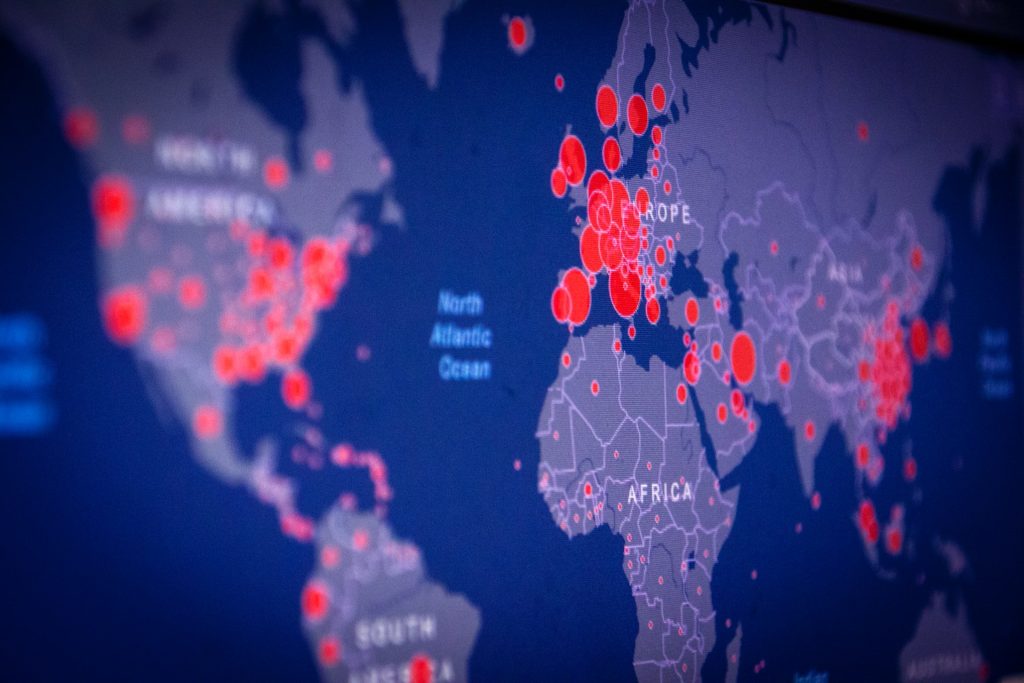
COVID heat map. Photo by Giacomo Carra on Unsplash
South Africa may have gotten off more lightly from Omicron due to widespread immunity from previous infection combined with vaccine coverage, researchers think, which may not bode well for other countries which have not completed their vaccination nor seen the worst COVID surges.
The South African Medical Research Council in collaboration with Discovery Health on Tuesday last week presented data from a large study showing that South Africans infected with Omicron are, on average, less likely to be hospitalised, and recover faster, compared to the other variants.
Their study looked at more than 200 000 COVID cases in South Africa during a Delta-driven surge in September and October, and the start of the Omicron-driven surge in November, as that variant began increasing rapidly. About a quarter of the people in the study already have a chronic illness, putting them at higher risk of severe COVID.
The researchers found a hopeful trend: The risk of hospitalisation for adults dropped 30% during the early days of the Omicron surge from the levels seen there in September and October.
“The hospital admissions during omicron, standing at 58 per 1000 infections, are the lowest of the four COVID waves, and one-third of what we experienced during the delta surge,” said Discovery Health CEO Ryan Noach.
Why was this so? One explanation could be the immunity from COVID recovery present in the population. South Africa had experienced three huge COVID surges with low vaccination rates compared to the US and Europe.
When the Omicron variant appeared, only about a quarter of the population were vaccinated but the vast majority of residents had likely already been infected with previous variants of SARS-CoV-2. This was based on the excess mortality rate observed in the country through the pandemic, and so it is thought that South Africans likely had some immunity granted by infection.
“Thus, Omicron enters a South African population with considerably more immunity than any prior SARS-CoV-2 variant,” concluded Dr Roby Bhattacharyya, an infectious disease specialist, and epidemiologist William Hanage in a recent working paper. This means that most Omicron cases are likely to be reinfections, rather than first infections. Other countries will not have as broad a ‘coverage’ of vaccination and previous infection as South Africa. Around 125 million Americans are unvaccinated, and a recent study estimated that about 20% of Americans had been infected with COVID from the start of the pandemic, up to August, 2021.
The data therefore suggest that a minimum of 20% of Americans who are completely ‘naive’, as scientists term it, when it comes to exposure to SARS-CoV-2.
Convalescent plasma from COVID patients was likely of benefit to patients early on in the pandemic, before the introduction of remdesivir and corticosteroids as treatments, according to results of a landmark study published in JAMA Internal Medicine.
The randomised clinical trial, CONTAIN COVID-19, was established to evaluate the safety and efficacy of convalescent plasma in hospitalised coronavirus patients. Overall, the trial showed that convalescent plasma was safe and well tolerated. It worked best in the early days of the pandemic, when plasma had higher antibody levels, when it was given early in the disease, and particularly for immunosuppressed people.
“This landmark study shows once and for all that convalescent plasma is an important countermeasure early in a pandemic when no other therapies are available. It was an important finding that lays the foundation for the rapid response to future pandemics,” said Luis Ostrosky, MD, professor and director of the Division of Infectious Diseases at McGovern Medical School at UTHealth Houston. “This trial, the largest of its kind, also showed that with proper funding and structure, researchers across the country were able to come together quickly in the middle of a global crisis to explore this therapeutic intervention.”
Trial results also showed a drop in efficacy after the introduction of remdesivir and corticosteroids, and by the end of the 11-month trial, there was no difference in outcome between plasma and placebo in patients at 14 and 28 days. However, patients on corticosteroids, but not remdesivir, appeared to benefit from convalescent plasma at day 14.
Since the patient characteristics, available treatments, and the virus, all changed over time, subgroup analyses were done, which showed a possible benefit for patients in the first quarter of the trial, a period from April to June 2020.
Participants in that first quarter were older, less severely ill, had a longer duration of symptoms, and received high-titer plasma. Shorter symptom duration can indicate a more severe case of the viral infection.
“Convalescent plasma could be an important early treatment tool in places that don’t have access to monoclonal antibodies, corticosteroids, remdesivir, or other therapies,” said the study’s co-investigator, Professor Bela Patel, MD. “It should also be considered for patients who are immunosuppressed and those whose B cell function is compromised.”
The researchers also suggested that, in addition to the introduction of corticosteroids and remdesivir, the decrease in efficacy over time may have been due to using convalescent plasma that originated from New York City before the emergence of other SARS-Co-V-2 variants .
Researchers working with ‘humanised mice’ have found why some mild cases of COVID tip over into more severe and life-threatening disease.
An estimated 80 to 90% of people infected with COVID experience only mild cases while 10 to 20% face more severe or life-threatening symptoms.
Yale University researchers working with mice they have engineered to possess human-like immune systems may have found why this is so. Their findings, published in Nature Biotechnologyrevealed that the causes of severe COVID may lie in our own antiviral inflammatory response to the virus.
The study also showed that two well-known therapies, monoclonal antibodies and the steroid dexamethasone, can help treat COVID infections. But in the case of the antibodies, treatment is only effective if administered early in the course of disease. In the case of steroids, it’s only effective if administered during later stages of the disease.
Standard laboratory animals and humans have different immune responses, which has made it difficult for scientists to pinpoint the tipping point between mild and severe cases of COVID, so mice engineered to have a human-like immune system, were able to offer an answer.
“If you infect a standard laboratory mouse with SARS-CoV-2 they will get infected, but not get seriously ill,” said Flavell, Sterling Professor of Immunobiology at Yale and senior author of the paper. “But our humanised mice get sick and just don’t get better. Their whole immune system is on fire.”
The research team introduced SARS-CoV-2 virus taken from seriously ill human patients into the nasal passages of their humanised mice and then followed the course of the disease.
They found that the infected mice exhibited the same symptoms as severely ill human patients, such as lung damage, weight loss, and a heightened, persistent inflammatory immune response that damages tissues. They then treated the mice with monoclonal antibodies which specifically target the virus, and were found to be effective if given before or very early after infection but did little to stifle symptoms if administered in later stages of infections.
Conversely, during the early stages of infection the immune suppressant dexamethasone was fatal to mice when it suppressed the initial immune response that was crucial to combat the virus. However, during later stages of disease, it helped clear infection by suppressing the inflammatory response that had begun damaging organs.
“Early in the course of disease, a strong immune response is crucial for survival,” said first author Esen Sefik. “Later in the disease, it can be fatal.”
The humanised mice models might also reveal strong clues to the causes and potential treatments of so-called long and severe COVID, the scientists said.
Wastewater monitoringhas shown that COVID infections are falling in Gauteng, indicating that the Omicron wave may have peaked, while the World Health Organization warns that the variant should not be taken lightly despite its mildness.
The findings align with comments by Health Minister Joe Phaahla on Friday that the Omicron-driven wave may be peaking in the province.
Despite Gauteng’s peaking, cases are on the rise in seven of the nine provinces and last week the country saw a new high in cases. Of the infections confirmed on Thursday, Gauteng accounted for 27%, down from 72% of new infections on December 3.
However, the surge of Omicron will likely not be confined to Gauteng. “Early indications are that we might have reached the peak in Gauteng,” Dr Phaahla said in an online media briefing. “But there is a corresponding, rapid increase of cases in the other big provinces.”
He also noted a 70% increase in hospitalisations, though he stressed that this was off of a low base rate. Meanwhile, the WHO has warned that countries should not take the Omicron variant likely in spite of its apparent low severity.
“Countries can – and must – prevent the spread of Omicron with the proven health and social measures. Our focus must continue to be to protect the least protected and those at high risk,” said Dr Poonam Khetrapal Singh, Regional Director of the WHO South-East Asia Region.
Omicron should not be dismissed as mild, she cautioned, adding that even if it does cause less severe disease, the sheer number of cases could once again overwhelm health systems. Hence, health care capacity including ICU beds, oxygen availability, adequate health care staff and surge capacity need to be reviewed and strengthened at all levels.
The overall threat posed by Omicron largely depends on three key questions – its transmissibility; how well the vaccines and prior SARS-CoV-2 infection protect against it, and how virulent the variant is as compared to other variants.
From what we know so far, Omicron appears to spread faster than the Delta variant which has been attributed to the surge in cases across the world in the last several months, Dr Singh said.
She added that emerging data from South Africa suggests increased risk of re-infection with Omicron, and said that there is still limited data on Omicron’s limited severity. Further information is needed to fully understand the clinical picture of those infected with Omicron, and more information is expected in the coming weeks.
Her statements echo those of WHO chief Tedros Adhanom Ghebreyesus, who earlier last week warned that health systems could still be overwhelmed by cases.
While two doses of a COVID vaccine offered less protection against Omicron, a booster shot restored immunity back to high levels, according to real-world data from the UK.
Two doses of Pfizer vaccine provided just under 40% protection against symptomatic infection with the Omicron variant about 25 weeks after the second dose compared with around 60% protection against Delta, according to a technical briefing released by the UK Health Security Agency. [PDF]
“These early estimates suggest that vaccine effectiveness against symptomatic disease with the Omicron variant is significantly lower than compared to the Delta variant,” the agency noted in the report. However, “moderate to high” vaccine effectiveness was observed in the early period after a booster shot, they added.
The agency found that a Pfizer booster increased vaccine effectiveness to 76%. Among people who received the AstraZeneca series for their initial immunisation (which offered almost no protection against Omicron), vaccine effectiveness jumped to 71% after a Pfizer booster.
The reportcompared vaccine effectiveness against Omicron versus Delta, including 581 people who were infected with the new strain and more than 56 000 infected with Delta from the end of November to December 6.
Omicron’s reinfection rate was also much higher than Delta’s. Of 329 individuals infected with Omicron, 7% had a previous infection, compared with 0.4% of the approximately 85 000 people infected with Delta.
After adjustments for age and area, the risk ratio of reinfection for Omicron was 5.2 (95% CI 3.4-7.6).
The report also found a 20- to 40-fold reduction in neutralising antibody activity compared with the viruses used to develop the vaccines. However, a booster dose significantly improved neutralising antibodies, regardless of which vaccine was given in the initial immunisation.
Katelyn Jetelina, PhD, an epidemiologist at the University of Texas Health Science Center at Houston, said that the study data confirm what researchers have already discovered in lab research: vaccines offer significantly less protection against Omicron, and reinfection rates are expected to be high.
Dr Jetelina noted that it was reassuring to see that “we can curb infection still with a booster, which is really quite phenomenal.” However, she said that cases were likely to increase.
“I think all this data is showing us that we’re going to have a lot of infections with Omicron,” Jetelina told MedPage Today. While a high rate of infection does not necessarily translate to severe illness, Dr Jetelina said that she is concerned about population-level outcomes resulting from a flood of new cases.
“That’s where I get a bit more nervous,” she said. She pointed out that “even if the rate of severe disease is low […] those numbers start adding up real quickly.”
The UK Health Security Agency advised interpreting the results with caution, due to the low number of Omicron cases. Additionally, more data are needed before scientists can determine how well vaccines will work against severe illness, hospitalisation, and death from the Omicron strain.
“It will be a few weeks before effectiveness against severe disease with Omicron can be estimated,” the agency stated. “However, based on this experience, this is likely to be substantially higher than the estimates against symptomatic disease.”
A highly anticipated clinical trial in eight sub-Saharan countries is the first to specifically evaluate the efficacy of a COVID vaccine in people living with HIV, including those with poorly controlled infections. It also is the first study to evaluate the efficacy of vaccines – in this case, Moderna mRNA-1273 – against the Omicron variant of SARS-CoV-2.
In addition to examining the efficacy of COVID mRNA vaccines in people living with HIV, the study investigators seek to identify the optimal regimen for this population and how it might vary based on whether an individual has previously had COVID-19 or not.
The trial will be conducted in East and Southern Africa – regions of the world that have been highly impacted by HIV. It is expected to enrol about 14,000 volunteers at 54 clinical research sites in South Africa, Botswana, Zimbabwe, Eswatini, Malawi, Zambia, Uganda and Kenya, where adult HIV prevalence ranges from 4.5% to 27%.
“Sub-Saharan Africa has been hit hard by the COVID pandemic, but access to effective vaccines, especially mRNA technology, has been very limited,” said Dr. Nigel Garrett, co-chair of the study and head of Vaccine and HIV Pathogenesis Research at the Center for the AIDS Program of Research in South Africa (CAPRISA). “The Ubuntu trial will provide safety data to regulators and assess correlates of protection from COVID-19, and it will answer important questions on mRNA vaccine dosage regimens among people living with HIV.”
About 12 600 people living with HIV and about 1400 who are HIV-negative are expected to be enrolled in the study. About 5000 will have previously had COVID, confirmed by an antibody blood test done at initial enrollment. All participants will receive the Moderna vaccine, but dosages and schedules will vary depending on previous SARS-CoV-2 infection. Participants living with HIV will get access to optimal HIV treatment throughout the trial.
“This region faces a huge HIV burden,” said Dr Glenda Gray, Ubuntu study protocol lead adviser and president of the South African Medical Research Council (SAMRC). “Although safe and effective vaccines have been developed for COVID-, HIV and COVID are on a collision course,” she added. “The impact of COVID-19 on people living with HIV is a concern for the continent, particularly in light of the recently-sequenced omicron variant set to drive South Africa’s fourth wave and further infections globally.”
Dr Philip Kotzé, one of the lead study investigators, said the Ubuntu study would not be possible without the crucial participation of rural communities across Southern and East Africa. “These communities have been disproportionately impacted by the twin pandemics of HIV and COVID-19, and they now have an unprecedented opportunity to help advance science and improve our understanding of the immune response to SARS-CoV-2 in the context of HIV.”
Dr Larry Corey, principal investigator of both the HIV Vaccine Trials Network (HVTN) and the COVID-19 Prevention Network (CoVPN), and co-leader of the network’s vaccine testing pipeline, said this study seeks to address the knowledge gap around HIV status and COVID vaccination.
“Vaccination and treatment are critical for those who face the dual threat of HIV and COVID, as they remain at high risk of acquisition and transmission and potentially can be the origin of future variants,” Dr Corey said. “It is imperative that we as scientists and as society double-down on global efforts to find and make available effective vaccines and treatments. This study represents an important step forward in our efforts to reduce the burden of COVID among HIV-infected persons and understand whether current dosage regimens are adequate.”