Author: ModernMedia

A New Era of Treating Neurological Diseases at the Blood-brain-immune Interface

This is a pseudo-colored image of high-resolution gradient-echo MRI scan of a fixed cerebral hemisphere from a person with multiple sclerosis. Credit: Govind Bhagavatheeshwaran, Daniel Reich, National Institute of Neurological Disorders and Stroke, National Institutes of Health

The question of what causes complex neurological diseases such as Alzheimer’s or multiple sclerosis continues to confound scientists and doctors, with the unknowns standing in the way of early diagnoses and effective treatments.

Even among identical twins who share the same genetic risk factors, one may develop a particular neurological disease while the other does not.

That’s because unlike diseases such as cystic fibrosis or sickle-cell anaemia, which are caused by a single gene, most neurological disorders are associated with many, sometimes hundreds, of rare genetic variants. And on their own, these variants can’t predict who will develop disease, as neurological conditions are also strongly influenced by environmental factors and vascular risks such as high blood pressure, aging, heart disease, or obesity.

But there’s one often-overlooked thread that connects most neurological diseases, says Katerina Akassoglou, PhD, a senior investigator at Gladstone Institutes: They’re marked by a toxic immune reaction caused by blood that leaks into the brain through damaged blood vessels.

“Interactions between the brain, blood vessels, and the immune system are a common thread in the development and progression of many neurological diseases that have been traditionally viewed as very different conditions,” says Akassoglou. “Knowing that leaked blood is a key driver of brain inflammation, we can now approach these diseases from a different angle.”

She and her collaborators share their insights on this topic in a commentary article published in Cell’s 50th anniversary “Focus on Neuroscience” issue. 

Neutralising the Culprit

Akassoglou and her lab have long investigated how blood that leaks into the brain triggers neurologic diseases, essentially by hijacking the brain’s immune system and setting off a cascade of harmful often-irreversible effects that result in damaged neurons.

One blood protein in particular, fibrin, normally involved in blood coagulation, is responsible for setting off this detrimental cascade. The process has been observed in conditions as diverse as Alzheimer’s, traumatic brain injury, multiple sclerosis, premature birth, and even COVID-19. However, Akassoglou and her team found that the process could be prevented or interrupted by “neutralising” fibrin to deactivate its toxic properties – an approach that appears to protect against many neurological diseases when tested in animal models.

“As a first step, we know that neutralizing fibrin reduces the burden posed by vascular dysfunction,” Akassoglou says. Regardless of what initially caused the blood leaks, be it a head injury, autoimmunity, genetic mutations, brain amyloid or infection, neutralizing fibrin appears to be protective in multiple animal models of disease.

The scientists previously developed a drug, a therapeutic monoclonal antibody, that specifically targets fibrin’s inflammatory properties without affecting its essential role in blood coagulation. This fibrin-targeting immunotherapy has shown, in mice, to protect from multiple sclerosis and Alzheimer’s, and to treat neurological effects of COVID-19. A humanized version of this first-in-class fibrin immunotherapy is already in Phase 1 safety clinical trials by Therini Bio, a biotech company launched to advance discoveries from Akassoglou’s lab.

A New Era of Brain Research

In the Cell commentary, Akassoglou and her colleagues make the case that seemingly disparate neurological diseases must be viewed differently in light of new research on the blood-brain-immune interface.

They say that in the coming decade, scientific breakthroughs will emerge from collaborative networks of immunologists, neuroscientists, haematologists, geneticists, computer scientists, physicists, bioengineers, drug developers, and clinical researchers. These partnerships, forged across academia, industry, and foundations, will catalyse innovation in drug discovery and transform medical practice for neurological diseases.

“This is a new opportunity for drug discovery that goes beyond addressing genes alone or environmental factors alone,” Akassoglou says. “To usher in this new era, we must leverage new technologies and embrace an interdisciplinary approach that accounts for the important roles of immune and vascular systems in neurodegeneration.”

Source: Gladstone Institutes

Extra Year of Education does Not Protect the Brain

Photo by Andrea Piacquadio on Pexels

Thanks to a ‘natural experiment’ involving 30 000 people, researchers at Radboud university medical centre were able to very precisely determine the effect of an extra year of education to the brain in the long term. To their surprise, they found no effect on brain structure and no protective benefit of additional education against brain ageing. Their findings appear in eLife.

It is well-known that education has many positive effects. People who spend more time in school are generally healthier, smarter, and have better jobs and higher incomes than those with less education. However, whether prolonged education actually causes changes in brain structure over the long term and protects against brain ageing, was still unknown.

It is challenging to study this, because alongside education, many other factors influence brain structure, such as the conditions under which someone grows up, DNA traits, and environmental pollution. Nonetheless, researchers Rogier Kievit (PI of the Lifespan Cognitive Dynamics lab) and Nicholas Judd from Radboudumc and the Donders Institute found a unique opportunity to very precisely examine the effects of an extra year of education.

Ageing

In 1972, a change in the law in the UK raised the number of mandatory school years from 15 to 16, while all other circumstances remained constant. This created an interesting ‘natural experiment’, an event not under the control of researchers which divides people into an exposed and unexposed group. Data from approximately 30 000 people who attended school around that time, including MRI scans taken much later (46 years after), is available. This dataset is the world’s largest collection of brain imaging data.

The researchers examined the MRI scans for the structure of various brain regions, but they found no differences between those who attended school longer and those who did not. ‘This surprised us’, says Judd. ‘We know that education is beneficial, and we had expected education to provide protection against brain aging. Aging shows up in all of our MRI measures, for instance we see a decline in total volume, surface area, cortical thickness, and worse water diffusion in the brain. However, the extra year of education appears to have no effect here.’

Brain structure

It’s possible that the brain looked different immediately after the extra year of education, but that wasn’t measured. “Maybe education temporarily increases brain size, but it returns to normal later. After all, it has to fit in your head,” explains Kievit. “It could be like sports: if you train hard for a year at sixteen, you’ll see a positive effect on your muscles, but fifty years later, that effect is gone.” It’s also possible that extra education only produces microscopic changes in the brain, which are not visible with MRI.

Both in this study and in other, smaller studies, links have been found between more education and brain benefits. For example, people who receive more education have stronger cognitive abilities, better health, and a higher likelihood of employment. However, this is not visible in brain structure via MRI. Kievit notes: “Our study shows that one should be cautious about assigning causation when only a correlation is observed. Although we also see correlations between education and the brain, we see no evidence of this in brain structure.”

Source: Radboud University Medical Centre

Defibrillation Using 1/1000th the Energy could be Possible

Photo by Mikhail Nilov

Researchers from Sergio Arboleda University in Colombia and the Georgia Institute of Technology in the US used an electrophysiological computer model of the heart’s electrical circuits to examine the effect of the applied voltage field in multiple fibrillation-defibrillation scenarios. Their research, published in the interdisciplinary journal Chaos, discovered that far less energy is needed than is currently used in state-of-the-art defibrillation techniques.

“The results were not at all what we expected. We learned the mechanism for ultra-low-energy defibrillation is not related to synchronisation of the excitation waves like we thought, but is instead related to whether the waves manage to propagate across regions of the tissue which have not had the time to fully recover from a previous excitation,” author Roman Grigoriev said. “Our focus was on finding the optimal variation in time of the applied electric field over an extended time interval. Since the length of the time interval is not known a priori, it was incremented until a defibrillating protocol was found.”

The authors applied an adjoint optimization method, which aims to achieve a desired result, defibrillation in this case, by solving the electrophysiologic model for a given voltage input and looping backward through time to determine the correction to the voltage profile that will successfully defibrillate irregular heart activity while reducing the energy the most.

Energy reduction in defibrillation devices is an active area of research. While defibrillators are often successful at ending dangerous arrhythmias in patients, they are painful and cause damage to the cardiac tissue.

“Existing low-energy defibrillation protocols yield only a moderate reduction in tissue damage and pain,” Grigoriev said. “Our study shows these can be completely eliminated. Conventional protocols require substantial power for implantable defibrillators-cardioverters (ICDs), and replacement surgeries carry substantial health risks.”

In a normal rhythm, electrochemical waves triggered by pacemaker cells at the top of the atria propagate through the heart, causing synchronised contractions. During arrhythmias, such as fibrillation, the excitation waves start to quickly rotate instead of propagating through and leaving the tissue, as in normal rhythm.

“Under some conditions, an excitation wave may or may not be able to propagate through the tissue. This is called the ‘vulnerable window,’” Grigoriev said. “The outcome depends on very small changes in the timing of the excitation wave or very small external perturbations.

“The mechanism of ultra-low-energy defibrillation we uncovered exploits this sensitivity. Varying the electrical field profile over a relatively long time interval allows blocking the propagation of the rotating excitation waves through the ‘sensitive’ regions of tissue, successfully terminating the irregular electric activity in the heart.”

Source: American Institute of Physics

CRISPR ‘Molecular Scissors’ can Leave Gaping Holes in the Chromosome

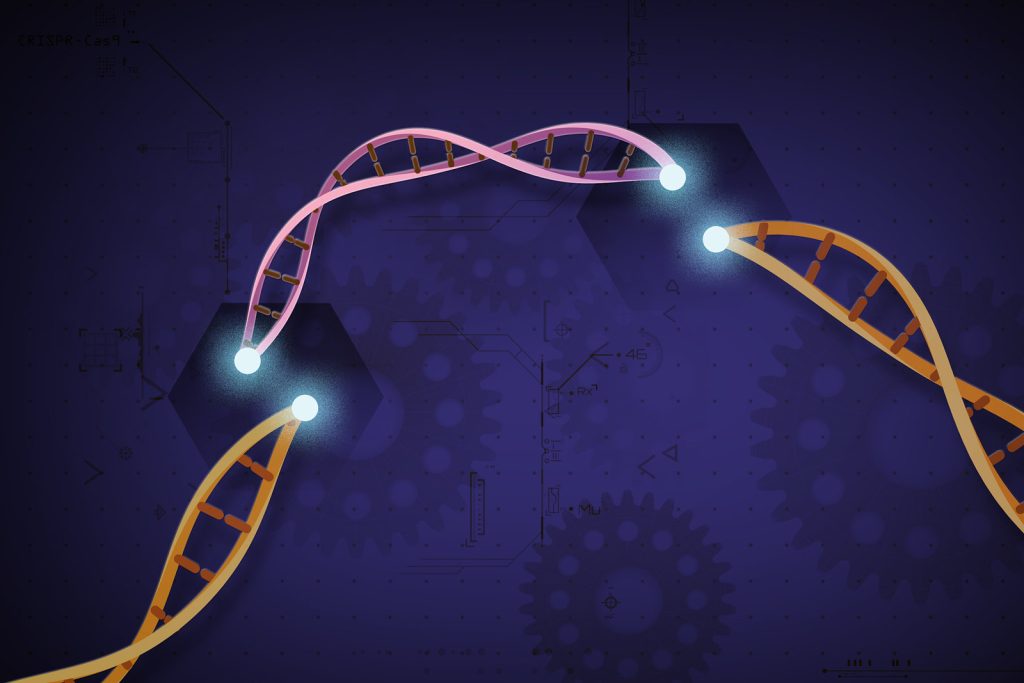
CRISPR-Cas9 is a customisable tool that lets scientists cut and insert small pieces of DNA at precise areas along a DNA strand. This lets scientists study our genes in a specific, targeted way. Credit: Ernesto del Aguila III, National Human Genome Research Institute, NIH

The CRISPR molecular scissors have the potential to revolutionise the treatment of genetic diseases. This is because they can be used to correct specific defective sections of the genome. Unfortunately, there is a catch: under certain conditions, the repair can lead to new genetic defects – as in the case of chronic granulomatous disease. This was reported in the journal Communications Biology by a team from the University of Zurich (UZH).

Chronic granulomatous disease is a rare hereditary disease that affects about one in 120 000 people. The disease impairs the immune system, making patients susceptible to serious and even life-threatening infections. It is caused by the absence of two letters, called bases, in the DNA sequence of the NCF1 gene. This error results in the inability to produce an enzyme complex that plays an important role in the immune defence against bacteria and moulds.

The CRISPR tool works…

The research team has now succeeded in using the CRISPR system to insert the missing letters in the right place. They performed the experiments in cell cultures of immune cells that had the same genetic defect as people with chronic granulomatous disease. “This is a promising result for the use of CRISPR technology to correct the mutation underlying this disease,” says team leader Janine Reichenbach, professor of somatic gene therapy at the University Children’s Hospital Zurich and the Institute for Regenerative Medicine at UZH.

… but unfortunately, it’s not perfect

Interestingly however, some of the repaired cells now showed new defects. Entire sections of the chromosome where the repair had taken place were missing. The reason for this is the special genetic constellation of the NCF1 gene: it is present three times on the same chromosome, once as an active gene and twice in the form of pseudogenes. These have the same sequence as the defective NCF1 and are not normally used to form the enzyme complex.

CRISPR’s molecular scissors cannot distinguish between the different versions of the gene and therefore occasionally cut the DNA strand at multiple locations on the chromosome – at the active NCF1 gene as well as at the pseudogenes. When the sections are subsequently rejoined, entire gene segments may be misaligned or missing. The medical consequences are unpredictable and, in the worst case, contribute to the development of leukaemia. “This calls for caution when using CRISPR technology in a clinical setting,” says Reichenbach.

Safer method sought

To minimise the risk, the team tested a number of alternative approaches, including modified versions of CRISPR components. They also looked at using protective elements that reduce the likelihood of the genetic scissors cutting the chromosome at multiple sites simultaneously. Unfortunately, none of these measures were able to completely prevent the unwanted side effects.

“This study highlights both the promising and challenging aspects of CRISPR-based therapies,” says co-author Martin Jinek, a professor at the UZH Department of Biochemistry. He says the study provides valuable insights for the development of gene-editing therapies for chronic granulomatous disease and other inherited disorders. “However, further technological advances are needed to make the method safer and more effective in the future.”

Source: University of Zurich

An Extra Five Minutes of Exercise a Day could Reduce Blood Pressure

Photo by Teona Swift on Unsplash

New research suggests that adding a small amount of daily physical activity, such as uphill walking or stair-climbing, may help to lower blood pressure. The findings were published in Circulation

Just five minutes of activity a day was estimated to potentially reduce blood pressure, while replacing sedentary behaviours with 20–27 minutes of exercise per day, including uphill walking, stair-climbing, running and cycling, was also estimated to lead to a clinically meaningful reduction in blood pressure. The study was done by experts from the ProPASS (Prospective Physical Activity, Sitting and Sleep) Consortium, an international academic collaboration led by the University of Sydney and University College London (UCL)

Joint senior author Professor Emmanuel Stamatakis, Director of the ProPASS Consortium said: “High blood pressure is one of the biggest health issues globally, but unlike some major causes of cardiovascular mortality there may be relatively accessible ways to tackle the problem in addition to medication.”

“The finding that doing as little as five extra minutes of exercise per day could be associated with measurably lower blood pressure readings emphasises how powerful short bouts of higher intensity movement could be for blood pressure management.”

The research team analysed health data from 14 761 volunteers in five countries to see how replacing one type of movement behaviour with another across the day is associated with blood pressure.

Each participant used a wearable accelerometer device on their thigh to measure their activity and blood pressure throughout the day and night. 

Daily activity was split into six categories: sleep, sedentary behaviour (such as sitting), slow walking, fast walking, standing, and more vigorous exercise such as running, cycling or stair climbing.

The team modelled statistically what would happen if an individual changed various amounts of one behaviour for another in order to estimate the effect on blood pressure for each scenario and found that replacing sedentary behaviour with 20-27 minutes of exercise per day could potentially reduce cardiovascular disease by up to 28 percent at a population level.

First author Dr Jo Blodgett from UCL said: “Our findings suggest that, for most people, exercise is key to reducing blood pressure, rather than less strenuous forms of movement such as walking.

“The good news is that whatever your physical ability, it doesn’t take long to have a positive effect on blood pressure. What’s unique about our exercise variable is that it includes all exercise-like activities, from running for a bus or a short cycling errand, many of which can be integrated into daily routines.

“For those who don’t do a lot of exercise, walking did still have some positive benefits for blood pressure. But if you want to change your blood pressure, putting more demand on the cardiovascular system through exercise will have the greatest effect.”

Professor Mark Hamer, joint senior author of the study and ProPASS Deputy Director from UCL, said: “Our findings show how powerful research platforms like the ProPASS consortium are for identifying relatively subtle patterns of exercise, sleep, and sedentary behaviour, that have  significant clinical and public health importance.”

Source: University of Sydney

SAHPRA Encourages the Safe Use of Medicines and Reporting of Suspected Side Effects This #MedSafetyWeek

The South African Health Products Regulatory Authority (SAHPRA) encourages members of the public to always report any suspected side effects they may experience from taking medicines, vaccines and/or using medical devices, to help make medicines safer for everyone.  While humanity benefits greatly from medicines in the treatment of illness and management of certain conditions, medicines may at times cause side effects. However, the risk of side effects and severe harm can be drastically reduced by taking medicines correctly and following the advice of a healthcare practitioner.

SAHPRA, together with over 90 other medicines and health products regulators as well as healthcare organisations globally, is participating in the annual #MedSafetyWeek awareness initiative, which takes place between 4 and 10 November 2024, under the theme “the importance of using medicines in the right way to prevent side effects, and to report side effects when they do occur”.

The awareness initiative is spearheaded by the Uppsala Monitoring Centre under the auspices of the World Health Organisation (WHO) Programme for International Drug Monitoring, a programme whose member organisations work nationally and collaborate internationally to monitor and identify adverse effects of medicines and vaccines, to reduce risks to patients, and to establish worldwide pharmacovigilance standards and systems.

During this #MedSafetyWeek and beyond, SAHPRA is calling upon patients, caregivers and healthcare professionals to utilise its reporting tools to report all suspected side effects and adverse reactions.

SAHPRA Chief Executive Officer, Dr Boitumelo Semete-Makokotlela, indicates that handling and storing as well as taking medicines as directed by a healthcare professional is key in reducing the incidence of adverse reactions. “Research shows that about half of all side effects are preventable. Patient safety is our top priority and during #MedSafetyWeek, we wish to remind patients to take their medicines as instructed and healthcare professionals to review therapies as well as each patient’s unique health conditions before prescribing or dispensing medicines,” says Dr Semete-Makokotlela.

SAHPRA calls upon the South African public and healthcare professionals to use either the MedSafety App or the eReporting portal both accessible on the SAHPRA website to report suspected side effects from health products. All reports are assessed and examined by SAHPRA to determine the correct steps to protect medicine users in South Africa from harm. The purpose is to gain better knowledge about known side effects and to discover new ones. This can result in warnings and changes to how a medicine is used. SAHPRA’s MedSafety App and eReporting portal can be used for reporting suspected adverse drug reactions from medicines, vaccines, herbal products, biological medicines and any quality issues relating to health products.

Source: SAHPRA

Standing on One Leg is a Good Indicator of Ageing

Photo by RDNE Stock project

How long a person can stand on one leg is a more tell-tale measure of ageing than changes in strength or gait, according to new Mayo Clinic research published in the journal PLOS ONE.

Good balance, muscle strength and an efficient gait contribute to people’s independence and well-being as they age. How these factors change, and at what rate, can help clinicians develop programs to ensure healthy ageing. Individually, people can train their balance without special equipment and work on maintaining it over time.

In this study, 40 healthy, independent people over 50 underwent walking, balance, grip strength and knee strength tests. Half of the participants were under 65; the other half were 65 and older.

In the balance tests, participants stood on force plates in different situations: on both feet with eyes open, on both feet with eyes closed, on the non-dominant leg with eyes open, and on the dominant leg with eyes open. In the one-legged tests, participants could hold the leg they weren’t standing on where they wanted. The tests were 30 seconds each.

Standing on one leg, specifically the nondominant leg, showed the highest rate of decline with age.

“Balance is an important measure because, in addition to muscle strength, it requires input from vision, the vestibular system and the somatosensory systems,” says Kenton Kaufman, PhD, senior author of the study and director of the Motion Analysis Laboratory at Mayo Clinic. “Changes in balance are noteworthy. If you have poor balance, you’re at risk of falling, whether or not you’re moving. Falls are a severe health risk with serious consequences.”

Unintentional falls are the leading cause of injuries among adults who are 65 and older. Most falls among older adults result from a loss of balance.

In the other tests:

  • Researchers used a custom-made device to measure participants’ grip. For the knee strength test, participants were in a seated position and instructed to extend their knee as forcefully as possible. Both the grip and knee strength tests were on the dominant side. Grip and knee strength showed significant declines by decade but not as much as balance. Grip strength decreased at a faster rate than knee strength, making it better at predicting aging than other strength measures.
  • For the gait test, participants walked back and forth on an 8-metre, level walkway at their own pace and speed. Gait parameters didn’t change with age. This was not a surprising result since participants were walking at their normal pace, not their maximum pace, Dr Kaufman says.
  • There were no age-related declines in the strength tests that were specific to sex. This indicates that participants’ grip and knee strength declined at a similar rate. Researchers did not identify sex differences in the gait and balance tests, which suggests that male and female subjects were equally affected by age.

Dr Kaufman says that people can take steps to train their balance. For example, by standing on one leg, you can train yourself to coordinate your muscle and vestibular responses to maintain correct balance. If you can stand on one leg for 30 seconds, you are doing well, he says.

“If you don’t use it, you lose it. If you use it, you maintain it,” Dr Kaufman says. “It’s easy to do. It doesn’t require special equipment, and you can do it every day.”

Source: Mayo Clinic

New Anti-cancer Agent Works Without Oxygen

Human colon cancer cells. Credit: National Cancer Institute

Tumours often contain areas of oxygen-deficient tissue that frequently withstand conventional therapies. This is because the drugs applied in tumours require oxygen to be effective. An international research team has developed a novel mechanism of action that works without oxygen: polymeric incorporated nanocatalysts target the tumour tissue selectively and switch off the glutathione that the cells need to survive. The team published their findings in the journal Nature Communications.

Why tumours shrink but don’t disappear

Study leader Dr Johannes Karges from Ruhr University Bochum, Germany, explained: “As tumours grow very quickly, consume a lot of oxygen and their vascular growth can’t necessarily keep pace, they often contain areas that are poorly supplied with oxygen.” These areas, often in the centre of the tumour, frequently survive treatment with conventional drugs, so that the tumour initially shrinks but doesn’t disappear completely. This is because the therapeutic agents require oxygen to be effective. 

The mechanism of action developed by Karges’ team works without oxygen. “It’s a catalyst based on the element ruthenium, which oxidises the naturally present glutathione in the cancer cells and switches it off,” explains Karges. Glutathione is essential for the survival of cells and protects them from a wide range of different factors. If it ceases to be effective, the cell deteriorates. 

Compound accumulates in tumour tissue

All cells of the body need and contain glutathione. However, the catalyst has a selective effect on cancer cells as it is packaged in polymeric nanoparticles that accumulate specifically in the tumour tissue. Experiments on cancer cells and on mice with human tumours, that were considered incurable, proved successful. “These are encouraging results that need to be confirmed in further studies,” concludes Johannes Karges. “Still, there’s a lot of research work to be done before it can be used in humans.”

Source: Ruhr-University Bochum

Researchers Find Persistent Problems with AI-assisted Genomic Studies

Photo by Sangharsh Lohakare on Unsplash

In a paper published in Nature Genetics, researchers are warning that artificial intelligence tools gaining popularity in the fields of genetics and medicine can lead to flawed conclusions about the connection between genes and physical characteristics, including risk factors for diseases like diabetes.

The faulty predictions are linked to researchers’ use of AI to assist genome-wide association studies, according to the University of Wisconsin–Madison researchers. Such studies scan through hundreds of thousands of genetic variations across many people to hunt for links between genes and physical traits. Of particular interest are possible connections between genetic variations and certain diseases.

Genetics’ link to disease not always straightforward

Genetics play a role in the development of many health conditions. While changes in some individual genes are directly connected to an increased risk for diseases like cystic fibrosis, the relationship between genetics and physical traits is often more complicated.

Genome-wide association studies have helped to untangle some of these complexities, often using large databases of individuals’ genetic profiles and health characteristics, such as the National Institutes of Health’s All of Us project and the UK Biobank. However, these databases are often missing data about health conditions that researchers are trying to study.

“Some characteristics are either very expensive or labour-intensive to measure, so you simply don’t have enough samples to make meaningful statistical conclusions about their association with genetics,” says Qiongshi Lu, an associate professor in the UW–Madison Department of Biostatistics and Medical Informatics and an expert on genome-wide association studies.

The risks of bridging data gaps with AI

Researchers are increasingly attempting to work around this problem by bridging data gaps with ever more sophisticated AI tools.

“It has become very popular in recent years to leverage advances in machine learning, so we now have these advanced machine-learning AI models that researchers use to predict complex traits and disease risks with even limited data,” Lu says.

Now, Lu and his colleagues have demonstrated the peril of relying on these models without also guarding against biases they may introduce. In their paper, they show that a common type of machine learning algorithm employed in genome-wide association studies can mistakenly link several genetic variations with an individual’s risk for developing Type 2 diabetes.

“The problem is if you trust the machine learning-predicted diabetes risk as the actual risk, you would think all those genetic variations are correlated with actual diabetes even though they aren’t,” says Lu.

These “false positives” are not limited to these specific variations and diabetes risk, Lu adds, but are a pervasive bias in AI-assisted studies.

New statistical method can reduce false positives

In addition to identifying the problem with overreliance on AI tools, Lu and his colleagues propose a statistical method that researchers can use to guarantee the reliability of their AI-assisted genome-wide association studies. The method helps remove bias that machine learning algorithms can introduce when they’re making inferences based on incomplete information.

“This new strategy is statistically optimal,” Lu says, noting that the team used it to better pinpoint genetic associations with individuals’ bone mineral density.

AI not the only problem with some genome-wide association studies

While the group’s proposed statistical method could help improve the accuracy of AI-assisted studies, Lu and his colleagues also recently identified problems with similar studies that fill data gaps with proxy information rather than algorithms.

In another recently published paper appearing in Nature Genetics, the researchers sound the alarm about studies that over-rely on proxy information in an attempt to establish connections between genetics and certain diseases.

For instance, large health databases like the UK Biobank have a ton of genetic information about large populations, but they don’t have very much data regarding the incidence of diseases that tend to crop up later in life, like most neurodegenerative diseases.

For Alzheimer’s disease specifically, some researchers have attempted to bridge that gap with proxy data gathered through family health history surveys, where individuals can report a parent’s Alzheimer’s diagnosis.

The UW–Madison team found that such proxy-information studies can produce “highly misleading genetic correlation” between Alzheimer’s risk and higher cognitive abilities.

“These days, genomic scientists routinely work with biobank datasets that have hundreds of thousands of individuals; however, as statistical power goes up, biases and the probability of errors are also amplified in these massive datasets,” says Lu. “Our group’s recent studies provide humbling examples and highlight the importance of statistical rigor in biobank-scale research studies.”

Source: University of Wisconsin-Madison

Study Suggests that High-intensity Exercise Suppresses Appetite – Especially in Women

Photo by Ketut Subiyanto on Unsplash

A vigorous workout does more to suppress hunger levels in healthy adults than does moderate exercise, and females may be especially susceptible to this response, according to a small study published in the Journal of the Endocrine Society.

The study examines the effects of exercise intensity on ghrelin levels and appetite between men and women. Ghrelin is known as the “hunger hormone” and is associated with perceptions of hunger.

“We found that high intensity exercise suppressed ghrelin levels more than moderate intensity exercise,” said lead author Kara Anderson, PhD, of the University of Virginia. “In addition, we found that individuals felt ‘less hungry’ after high intensity exercise compared to moderate intensity exercise.”

Ghrelin circulates in acylated (AG) and deacylated (DAG) forms, which are known to affect appetite. Data on the impact of exercise intensity on AG and DAG levels, and their effects on appetite, is sparse and primarily limited to males, the study noted.

To address this shortfall, the study examined eight males and six females. Participants fasted overnight and then completed exercises of varying intensity levels, determined by measurements of blood lactate, followed by self-reported measurements of appetite.

Females had higher levels of total ghrelin at baseline compared with males, the study noted. But only females demonstrated “significantly reduced AG” following the intense exercise, according to the findings.

“We found that moderate intensity either did not change ghrelin levels or led to a net increase,” the study noted. These findings suggest that exercise above the lactate threshold “may be necessary to elicit a suppression in ghrelin.”

Researchers also acknowledged that more work is needed to determine the extent to which the effects of exercise differ by sex. Ghrelin has been shown to have wide-ranging biological effects in areas including energy balance, appetite, glucose homeostasis, immune function, sleep, and memory.

“Exercise should be thought of as a ‘drug,’ where the ‘dose’ should be customised based on an individual’s personal goals,” Anderson said. “Our research suggests that high-intensity exercise may be important for appetite suppression, which can be particularly useful as part of a weight loss program.”

Source: The Endocrine Society