

Day: October 9, 2026

Every Unit has a Story: SANBS Documentary Reveals why Blood Matters as Stocks Drop to 4.2 Days’ Cover
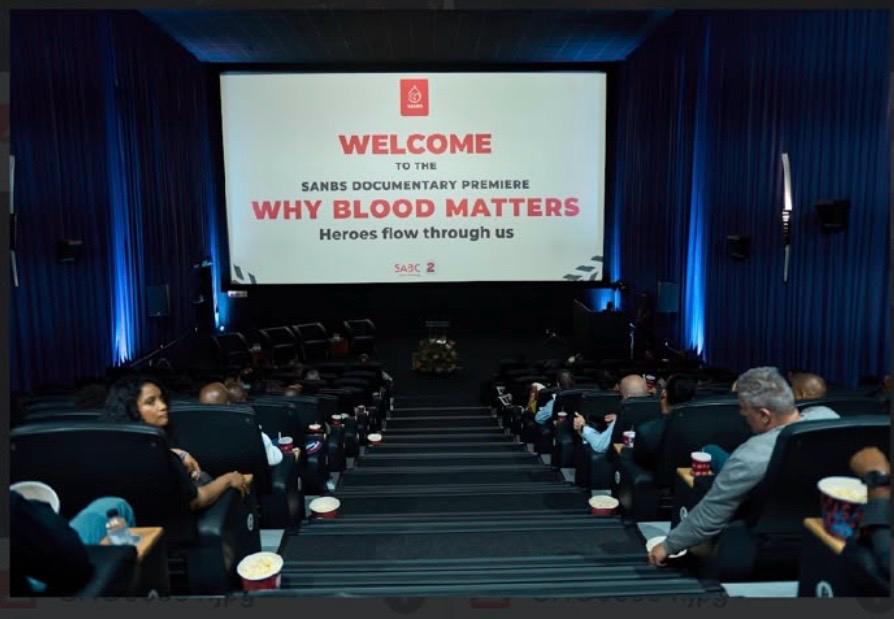
Johannesburg, 9 October 2026 – What happens to a unit of blood after someone rolls up their sleeve and donates? Who receives it? What does that blood mean to a person fighting for their life? And what would happen if the blood needed in an emergency simply wasn’t available?

These are some of the questions explored in the South African National Blood Service’s (SANBS) new documentary, Why Blood Matters, which premiered in Johannesburg on Thursday, 8 October, and will be broadcast on SABC 2 on Sunday, 11 October 2026, at 9pm.

The premiere brought together the people whose stories bring the documentary to life, highlighting the profound impact of blood donation and the people, science and processes that make safe blood available to patients across South Africa.

The screening comes at a critical time for the country’s blood supply, with SANBS blood stocks having dropped to 4.2 days’ cover. SANBS is urging eligible donors to donate blood as soon as possible to help replenish stocks and ensure that blood is available for patients who need it. South Africans are encouraged to watch Why Blood Matters on Sunday and, just as importantly, donate blood. Behind every unit is a patient who may be relying on the generosity of a stranger.

Watch the documentary trailer

Every unit has a human story

The documentary takes viewers behind the scenes of South Africa’s blood supply system, bringing together the voices of donors, recipients, healthcare professionals and SANBS experts to tell the story of what happens between the moment blood is donated and the moment it becomes a lifeline for someone in need.

At the heart of the documentary are the people whose lives have been touched by blood donation. For some recipients, blood is needed because of an accident or medical emergency. For others, it forms part of a long and complex treatment journey.

One of the stories featured is that of Marie Bontjes, who was diagnosed with anaemia at just one year old. Her story highlights how blood transfusion can become part of a person’s life from childhood, and the difference a readily available blood supply can make.

Another recipient, Meena Singh, experienced liver failure and required a liver transplant. Her journey involved receiving multiple units of blood – an intervention she describes as giving her an opportunity at life.

The documentary also follows Gregory Naidoo, whose experience illustrates the unpredictability of medical emergencies and the vital role blood can play when a person’s body is under immense strain.

For donors, the motivation can be equally personal.

Mario Ferreira, who has been donating blood since he was 19, speaks about the deeply personal reward of knowing that his donation could help save another person’s life.

“Knowing that I can save a life makes me happy.”

Another donor featured in the documentary is Boitumelo Masiu, who began donating while still at school. Her experience demonstrates how a culture of blood donation can begin early and become a lifelong commitment.

For Siyabonga Malinga, donating blood has become part of a community of people who understand that, in an emergency, there may be no time to wait.

More than blood: understanding what happens behind the scenes.

While the documentary centres on personal stories, it also seeks to answer questions and address misconceptions surrounding the blood supply system. Blood donation is voluntary, and donated blood is given freely. However, once blood has been donated, it must undergo a rigorous process that includes testing, processing, storage and distribution before it can safely reach a patient.

This requires specialised infrastructure, equipment, skilled people and logistics – all of which form part of the complex system needed to ensure safe blood is available when and where it is required. With SANBS aiming to collect approximately 3 500 units of blood every day, the scale of the operation is significant.

However, maintaining an adequate blood supply depends on the continued commitment of donors. Blood has a limited shelf life, with red blood cells lasting up to 42 days, making regular donations essential to keeping stocks replenished.

For SANBS, this is ultimately about much more than numbers. It is about ensuring that patients undergoing emergency treatment, surgery, cancer care, transplants and other medical procedures have access to the blood they need.

Simphiwe Cele, Marketing and Branding Manager at SANBS, says the documentary provides an opportunity for South Africans to see the full human impact of blood donation.

“We often talk about blood in terms of units, blood groups, stock levels and statistics, but behind every unit is a human story. A donor chose to give, people work tirelessly to ensure the blood is safe, and a patient’s life may depend on receiving it. Why Blood Matters brings those stories together and reminds us why this work matters so deeply.”

He adds that one of the most important messages for viewers is that blood cannot simply be replaced when it is needed.

“Nothing does what blood does. It cannot be manufactured, and it cannot be taken for granted. The only reason we can provide blood to patients when they need it is because ordinary South Africans make the extraordinary decision to donate.”

The documentary also highlights the science, infrastructure and people behind South Africa’s blood supply, including the extensive processes involved in ensuring that every unit collected can be safely used.

Watch on Sunday. Donate today.

For SANBS, Why Blood Matters is more than a documentary. It is an invitation to South Africans to understand their role in a system that touches thousands of lives – and to recognise that the decision to donate blood can make the difference between a patient receiving the treatment they need and a critical shortage standing in the way.

With blood stocks currently at only 4.2 days’ cover, the need for donations is urgent. SANBS is calling on eligible donors to visit their nearest donor centre or mobile blood drive and donate as soon as possible.

South Africans are also encouraged to tune in to Why Blood Matters on SABC 2 on Sunday, 11 October 2026, at 9pm to discover the stories, science and people behind one of the country’s most essential healthcare services.

A single donation can help support emergency treatment, surgery, cancer care, transplant journeys and ongoing medical treatment. The donor and recipient may never meet, but their lives are connected through an act of generosity that can give someone another chance.

For more information or to find your nearest donor centre or mobile blood drive, contact SANBS on 0800 11 90 31 or visit SANBS.
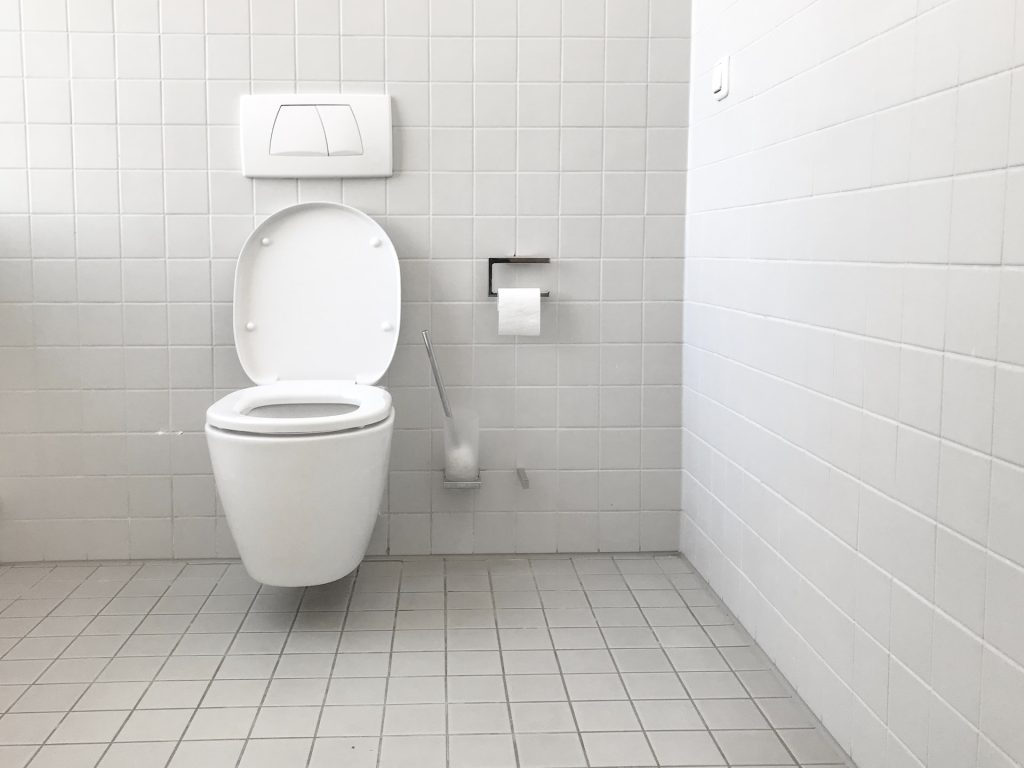
Flushing the Toilet can Send Aerosols to Face Height

Photo by Jan Antonin Kolar on Unsplash

Researchers from Flinders University have found that flushing toilets can release aerosols and bioaerosols into the surrounding air, with some studies detecting particles at heights corresponding to the breathing zone of adults.

The new study, published in Science of the Total Environment, systematically reviewed research into aerosol and bioaerosol that is generated during toilet flushing, and examined the factors that influence how much aerosol is produced and how it disperses.

Lead author Lira Adiyani, a PhD student at Flinders University, says the findings highlight the potential for exposure to disease-causing microbes contained in toilet-generated aerosols.

“Toilet flushing creates turbulence that can release aerosols into the surrounding air. Some studies detected these aerosols at adult breathing height, indicating a potential pathway for inhalation exposure,” says Ms Adiyani.

“The microbes can originate both from contamination of the toilet bowl during use, or from the water used for flushing. The more microbes present in the toilet, the more bioaerosols may be released. Therefore, larger flush volumes generally produce more aerosols.”

The review analysed 22 studies of toilet-generated aerosols, including studies using microorganisms or surrogate organisms seeded into toilet water as well as studies conducted under normal, unseeded conditions.

The researchers found that aerosol concentrations varied considerably between studies, depending on experimental conditions, toilet characteristics and sampling methods.

Among experiments where microorganisms were deliberately introduced into toilet water, higher microbial concentrations in the water were associated with higher concentrations detected in aerosols. Higher aerosol concentrations were also commonly reported closer to the toilet, particularly around seat height.

Together, these findings suggest that maintaining good toilet hygiene, including regular cleaning of the toilet and surrounding surfaces, and handwashing after use may help minimise microbial contamination and potential exposure to microbial disease.

Flush volume was also identified as an important factor influencing aerosol generation, suggesting that choosing toilets designed with lower flush volumes, or using the lower-volume option on dual-flush toilets where appropriate, may help minimise aerosol production.

Aerosols were also reported to remain suspended in the air for at least 20 seconds after flushing. Although ventilation and lid position were not significantly associated with aerosol concentrations in the review, they may still influence how aerosols disperse within the bathroom.

Adequate ventilation may help disperse and remove suspended airborne particles, while evidence from individual studies suggests that closing the lid can alter the direction of aerosol dispersion, with aerosols escaping through gaps between the lid and toilet bowl rather than travelling directly upwards.

“Based on the available evidence, I would recommend closing the toilet lid before flushing, where a lid is available, as a precautionary measure to minimise potential inhalation exposure – while recognising that it does not completely prevent aerosols from escaping,” says Ms Adiyani.

Research co-author Professor Harriet Whiley, from Flinders University’s College of Science and Engineering, says the findings identify important research gaps and priorities for future investigation.

“Further research is needed to develop design and engineering interventions that reduce toilet-generated bioaerosols, particularly in high-risk settings such as hospitals,” says Professor Whiley.

Adequate bathroom ventilation and closing the toilet lid before flushing may be simple precautionary measures to help minimise potential exposure. However, further research is needed to determine how effectively these measures reduce aerosol dispersion and inhalation exposure.

The study – “Aerosol and Bioaerosol Generation from Toilet Flushing: A Systematic Review and Risk Factor Analysis,” by Lira Adiyani, Kirstin Ross, Ben Van den Akker and Harriet Whiley – is published in Science of the Total Environment. DOI: 10.1016/j.scitotenv.2026.182111

Source: Flinders University

Optogenetic Therapy for Retina Pigmentosa Shows Safety and Signs of Improvement

Photoreceptor cells in the healthy retina. Credit: Scientific Animations

Scientists have taken another important step toward vision restoration in people with certain inherited forms of blindness. In a study published Oct. 7 in the New England Journal of Medicine, researchers at the University of Pittsburgh School of Medicine and international collaborators showed that an experimental, optogenetics-based treatment was safely administered to 10 patients and improved visual function in some participants when used in combination with a specially designed visual stimulation device.

The retina is limited in its ability to repair itself. Retinitis pigmentosa (RP), which destroys light-sensing cells in the retina, affects more than 1.5 million people worldwide. At onset, patients first notice impaired night vision, then impaired peripheral vision that gradually worsens over time, which can ultimately lead to severe vision loss or blindness.

“Retinitis pigmentosa can result from a mutation in any one of more than 100 distinct genes, so it presents an extraordinary challenge,” said UPMC Professor José-Alain Sahel, director of the UPMC Vision Institute; and first and co-corresponding author of the study. While in recent years Sahel and others have made strides in stopping and even reversing other progressive blinding diseases using gene therapies that target specific disease-causing mutations, RP requires an outside-of-the-box approach.

“Developing a separate treatment for every genetic cause of retinitis pigmentosa is proving tremendously difficult and costly. While we continue working on correcting specific gene defects, our goal is to develop a way to restore visual function regardless of which gene caused the disease,” said Sahel.

In optogenetics, scientists alter cells to produce light-sensing proteins, which they are working to modulate for a variety of experimental uses. In this study, the team delivered a gene that produces a light-sensing protein known as ChrimsonR into surviving retinal ganglion cells, via a single injection into the eye.

The protein is then put into action with a visual prosthetic system. The user wears specialized goggles with a built-in camera that sends visual information to a portable processor. The processor, in turn, converts the information into patterns of light. A projector within the glasses sends back to the eye these patterns of light, which are of specific wavelengths designed to activate ChrimsonR in the modified retinal cells.

The researchers administered the optogenetic treatment to 10 people with advanced retinitis pigmentosa who were legally blind with little or no remaining vision. In this small, early-stage trial, the team found encouraging results in tests of the treatment’s safety.

Most eye-related side effects were mild or moderate and included temporary inflammation and short-lived increases in eye pressure.

After treatment, seven of the 10 participants had improved light sensitivity, and six made gains large enough to be considered clinically meaningful. While the treatment did not restore normal vision or the ability to read, some participants became better able to detect when an object was present, determine where it was located and reach toward it accurately while using the goggles.

The team also tested whether visual information was reaching the brain. Using electroencephalography, researchers led by Marlene Behrmann, John and Clelia Sheppard Professor of Ophthalmology at Pitt, found evidence that visual signals reached and were processed by the visual cortex when participants viewed objects. Four participants showed consistent improvements across multiple real-world visual tasks over months to years of testing.

“These results show that even in people with profound vision loss, the visual system retains a remarkable capacity to process new information,” said Sahel. “Potentially, the approach could also help patients with other blinding diseases in which the eye’s light-sensing cells have been lost, but other retinal cells – especially retinal ganglion cells – remain viable. Many of these patients currently have few or no treatment options.”

The study builds on a landmark Nature Medicine paper published in 2021, the first report of partial recovery of visual function in a blind patient following optogenetic therapy and the first ever clinical application of optogenetics in medicine. Last month, Sahel and his longtime collaborator, Botond Roska, of the Institute of Molecular and Clinical Ophthalmology Basel, who is also corresponding author of the current study, received the António Champalimaud Vision Award, the largest award in the field, for their contribution to vision restoration research.

The findings of the new study highlight one of several promising and complementary strategies the team is pursuing to restore vision in patients with end-stage retinal disease. Last year, Sahel was senior author of a New England Journal of Medicine article describing the ability to restore vision using an implanted prosthetic in patients affected with end-stage, age-related macular degeneration. The technology, known as PRIMA, has since received permission from the European Union to be marketed for clinical use within many European countries.

Source: University of Pittsburgh