New Emory University research suggests that higher vitamin D supplement intake may be associated with better cognitive function in adults with an elevated risk of dementia.
In a study of 54 adults with sleep disturbances and mild cognitive impairments (MCI), two hallmarks of early dementia, participants taking at least 5000 IU of vitamin D daily showed better cognitive function compared to those who didn’t.
The study, recently published in Sleep Medicine, found that participants who reported taking 5000 IU or more of vitamin D daily scored more than 13% higher on the Montreal Cognitive Assessment (MoCA) than those who didn’t, even after accounting for other factors.A screening tool to detect risk of developing dementia, MoCA is widely used to assess memory and thinking skills. In this study, lower daily doses of vitamin D were not associated with higher cognitive scores.
The study also emphasises the significance of timing. MCI is an intermediate stage between normal cognitive aging and dementia.
“In older adults experiencing both sleep disturbance and mild cognitive impairment, this may represent a critical window for intervention, when cognitive changes are emerging, but opportunities to support brain health may remain,” says Victoria Pak, senior author of the study.
“Identifying accessible and modifiable factors, such as vitamin D supplement intake, during the earlier stages of cognitive decline may become increasingly important, particularly as rates of Alzheimer’s disease continue to rise,” adds Pak, associate professor at Emory University’s Nell Hodgson Woodruff School of Nursing.
In addition to the timing of the intervention, the study also found that cognitive performance did not differ based on the form of vitamin D – D2, typically derived from plants or fungi, or D3, produced after sun exposure or consuming animal-based foods.
Vitamin D, an essential nutrient, is not only necessary for muscle and nerve function, but also influences sleep quality and sleep-wake cycles. Additionally, 50% of those with moderate to severe Alzheimer’s disease report having sleep disturbances, indicating a bidirectional relationship between sleep deprivation and cognitive decline.
While vitamin D deficiencies have been implicated in sleep disorders, such as insomnia and more nighttime awakenings, this preliminary study is the first to assess the relationship between vitamin D supplement intake and cognitive function in a high-risk population with both MCI and sleep disturbances.
In the study, investigators analysed 2003–2018 data from 1044 US women participating in the National Health and Examination Survey: 174 with and 870 without cervical cancer. With these data, the team looked for an association between cervical cancer and the Composite Dietary Antioxidant Index (CDAI) – a validated composite score that reflects an individual’s intake level of dietary antioxidants, based on dietary recall interviews.
After adjusting for other factors that might affect cancer risk, the researchers found that each 1-unit increase in the CDAI was associated with a 11.4% lower prevalence of cervical cancer. Participants in the highest CDAI tertile had a 55.8% lower prevalence of cervical cancer than those in the lowest tertile. Additional analyses indicated a linear inverse association between the CDAI and the prevalence of cervical cancer.
“These findings suggest that dietary antioxidant intake may play a potential role in the prevention of cervical cancer. However, further prospective studies are needed to confirm this association and clarify the underlying mechanisms,” the authors wrote.
An overlooked factor can limit sweat’s cooling effect, ASU researchers discover
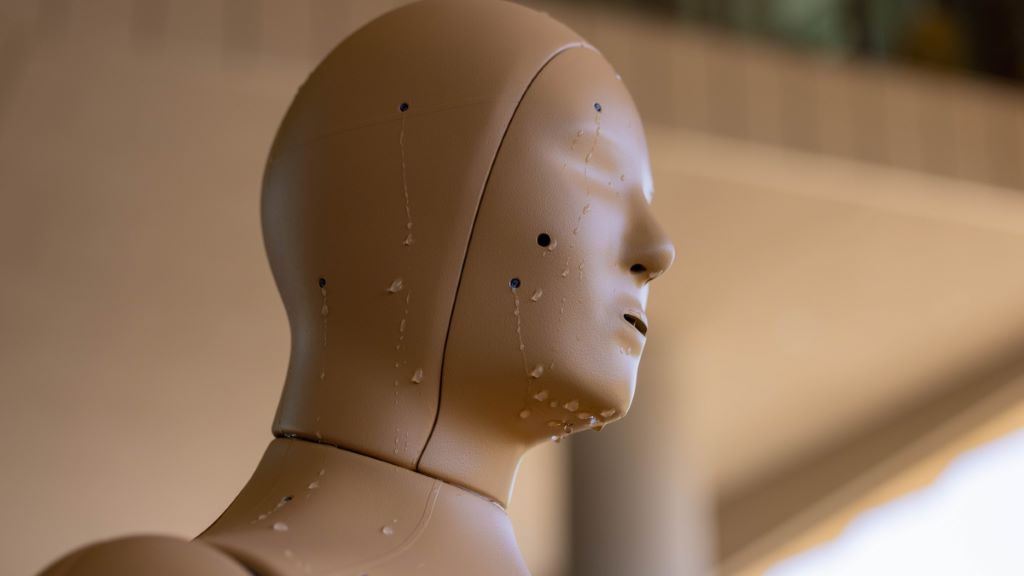
ANDI the sweating manikin helps ASU researchers discover the secrets of sweating. Photo by Samantha Chow/Arizona State University
The purpose of perspiration was a mystery in 1775, when English physician Charles Brian Blagden and a few inquisitive friends experimented on themselves by spending time in rooms heated to over 230 degrees Fahrenheit (110°C).
Although the temperatures were hot enough to cook raw meat placed in those rooms, Blagden noted how human bodies resisted the heat. Their core body temperatures remained nearly constant as the sweat poured out and evaporated.
The science of sweating has come a long way in 250 years. Yet a surprising amount remains unexplored, according to Konrad Rykaczewski, an associate professor of engineering at Arizona State University.
In a new study, Rykaczewski and colleagues have uncovered an unrecognised physical process that can dramatically change how effectively sweat cools the body in hot, dry and windless weather.
“It turns out that the impact is huge,” Rykaczewski said. “It can change how much sweat evaporates from your skin by over 50%.”
Why this research matters
Research is the invisible hand that powers America’s progress. It unlocks discoveries and creates opportunity. It develops new technologies and new ways of doing things.
Learn more about ASU discoveries that are contributing to changing the world and making America the world’s leading economic power at researchmatters.asu.edu.
Understanding the mechanics of sweating is vital to accurately predict heat strain and cooling efficiency in different situations. Scientists use this knowledge to guide recommendations for heat-stressed workers and to design cooling clothing and heat-management systems for first responders, soldiers and athletes.
Unlike Blagden’s crew in 1775, the ASU researchers didn’t subject anyone to oven-like conditions in their experiments. Instead, they used ANDI, a customised manikin rigged throughout its body with sensors to measure heat loss and heat gain and covered with pores that drip simulated sweat in response to rising heat.
The evaporation of sweat into water vapor is what cools the body. Air movement speeds evaporation and enhances cooling. The ASU researchers focused on an overlooked aspect of the cooling process: how temperature and humidity change the buoyancy of air near the skin.
When the outside temperature is hotter than a person’s skin, the air very close to the skin cools, becomes denser and drifts downward. But when the weather is hot and dry, humidity from evaporating sweat creates an opposing upward flow because humid air is lighter than dry air.
Experiments showed that at temperatures around 105 F with low humidity and no wind, the opposing currents near the skin can completely cancel each other, stopping airflow that could help sweat evaporate. In the absence of wind, this phenomenon leads to increased body heat storage and significantly elevated skin and core temperatures. Commonly used human heat-balance models don’t take this into account and will underestimate how hot the body becomes in hot, arid environments with little airflow.
The researchers measured the impact using models of sweat evaporation combined with simulations of the human body working to control its temperature. Neglecting humidity-driven buoyancy effects led to an underprediction of core body temperature rise by nearly 2 F for a person at rest in still air after two hours of heat exposure.
“This is really important for indoor settings or places with very little air movement,” Rykaczewski said. “Think about a tent, or a partially enclosed worksite or an unfinished building.”
Rykaczewski published the findings in Science Advances on Aug 19 with first author Shri Viswanathan, who completed his PhD at ASU in May, and eight others at the university.
The competing buoyancy effect is familiar to engineers working on heat exchange problems in electronics, “but it’s been overlooked in terms of the human body,” Rykaczewski said. “I think the reason is that most people working in this area don’t come from an engineering background. It really shows the benefit of having engineers and physiologists working together in interdisciplinary research.”
Breaking a sweat for research
Proving how the effect applies to sweating human bodies was no easy task. The ASU researchers performed dozens of experiments using ANDI. They developed a computer model and ran about 100 sweating simulations representing a wide range of conditions.
“There are multiple heat-transfer pathways involved, so isolating each one, making sure we could replicate it computationally and then combining them all into one model took a tremendous amount of effort,” Rykaczewski said.
Last year, the ASU researchers uncovered hidden details about how sweat rises and spreads over the skin. Those experiments required volunteers to don a bodysuit lined with tubes that circulate hot or cold water to warm or cool the wearer. The researchers observed how sweat first saturated the skin’s outermost layer, then collected in shallow pools around pores and spread into a thin, connected film. After a first round of sweat evaporated, it left a light salt residue. When the volunteers were heated again, that residue helped new sweat wick across the surface more rapidly, allowing a film to form without the earlier pooling stage.
A thin film can expose more sweat to the air, potentially making evaporation more efficient. The findings also suggest that sweating may behave differently across the body, where hair, sweat-gland density and skin structure vary.
Plenty of perspiration questions remain unanswered. The ASU team is exploring how sweat can either cling to the body and evaporate or run and drip off before it can evaporate and how that effects body cooling. The researchers are planning studies of the interactions between skin, sweat and clothing textiles. They see opportunities to improve clothing design so that it cools people more effectively by improving sweat evaporation.
“The bigger question is how you manage that sweat and what kinds of materials you can put next to the skin to optimise cooling,” Rykaczewski said.
In field studies across Arizona, the researchers are measuring how different populations experience and respond to extreme heat using advanced environmental sensing platforms combined with their improved models of sweat evaporation and thermoregulation. Their insights are supporting the design of heat adaptation measures and safer buildings and outdoor spaces.
The science of sweating was not a specialty Rykaczewski envisioned when he began his research career.
“It’s funny because it’s kind of an icky topic, but it’s also fascinating. You can spend your entire career doing highly specialised research that only 20 experts care about. But not sweating, because everybody sweats.”
An international study led by King’s College London has found that proposed new obesity definitions give greater insight into the ill health of metabolic bariatric surgery candidates compared with Body Mass Index (BMI).
The study, published in Jama Open Network, found that people considered for metabolic bariatric surgery had marked variation in disease burden – the number and severity of diseases – and operation-related risks, despite having similar BMI.
However, by reviewing clinical data from thousands of bariatric surgery candidates and applying new obesity definitions, the researchers were able to better understand their underlying health – which could have important implications for patient treatment and surgery prioritisation in the future.
Led by Professor Francesco Rubino, Chair of Metabolic and Bariatric Surgery at King’s College London, the researchers reviewed retrospective clinical data from 2,316 surgical candidates across four specialist centres – King’s College Hospital in the UK, and centres in France, Spain and Brazil.
They applied the new obesity definitions: clinical obesity, where there is clear evidence that excess fat, or adiposity, is causing organ damage, and preclinical obesity, where organ function is preserved despite excess adiposity.
From the surgical candidates, 73.8% had clinical obesity and 26.2% had preclinical obesity. Despite both groups of patients having similar BMI, patients with clinical obesity had far greater surgery-related and cardiovascular risks. They also had an overall high chance of death.
These findings suggest that distinguishing between clinical and preclinical obesity reveals key information about the health status and risks to surgery candidates that BMI alone cannot capture.
This study shows that the distinction between clinical and pre-clinical obesity is clinically meaningful even among surgical candidates with very high BMI levels, because BMI alone cannot tell us who has active disease.”Professor Francesco Rubino, senior author and Chair of Metabolic and Bariatric Surgery at King’s College London
He continued: “It is now essential that future surgical studies and registries systematically report patients’ clinical or pre-clinical obesity status, so that surgical safety, effectiveness and cost-effectiveness can be interpreted in the appropriate clinical context.”
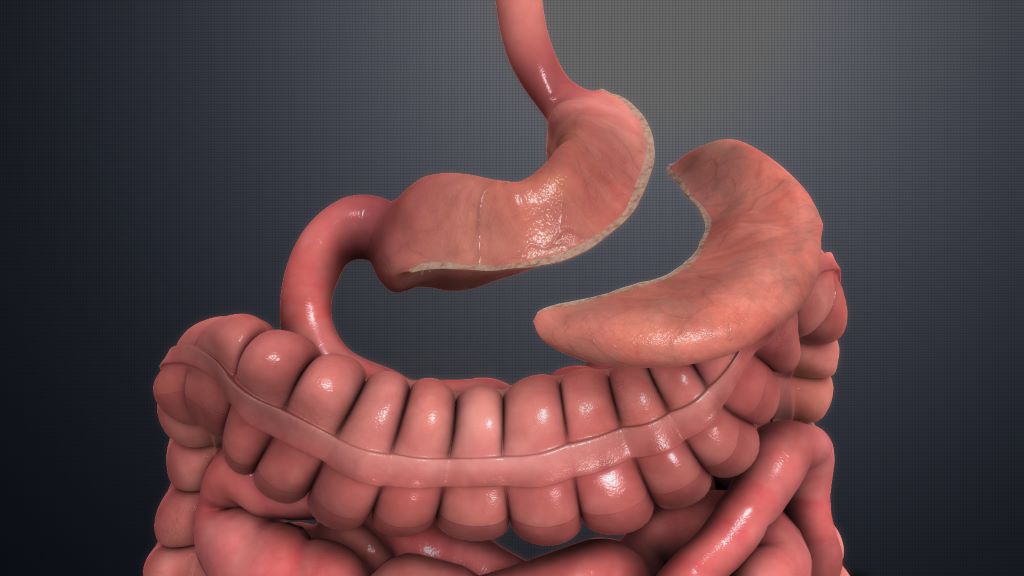
Traditionally, obesity has been classified primarily using BMI, a measure of weight relative to height that provides limited information about whether excess fat is actually affecting a person’s health. BMI levels have historically played a central role in determining eligibility and priority for metabolic bariatric surgery – operations of the stomach that help people lose weight and fix health issues, such as type 2 diabetes.
In 2025, the Lancet Diabetes & Endocrinology Commission on Clinical Obesity proposed a new diagnostic framework. This distinguished between clinical obesity, where there is clear evidence that excess fat, or adiposity, is leading to organ dysfunction, from preclinical obesity, where organ function is preserved but future health risk is increased.
In the latest study, the researchers found that these differences in disease status were not reflected in BMI. In the UK centre, for example, BMI was roughly 47.5 among patients with clinical obesity and 48.5 among those with preclinical obesity. Yet those with clinical obesity were approximately 10 years older and had substantially higher risk of death, cardiovascular risk and operation-related risk.
The researchers argue that for patients with clinical obesity, surgery primarily represents treatment of established disease. On the other hand, for those with preclinical obesity, its key goal may instead be to reduce future health risk. Recognising this distinction could help clinicians plan surgery, as well as select and prioritise surgical candidates.
It also saves around 44 units of blood products for every 100 patients treated
Photo by Charliehelen Robinson on Pexels
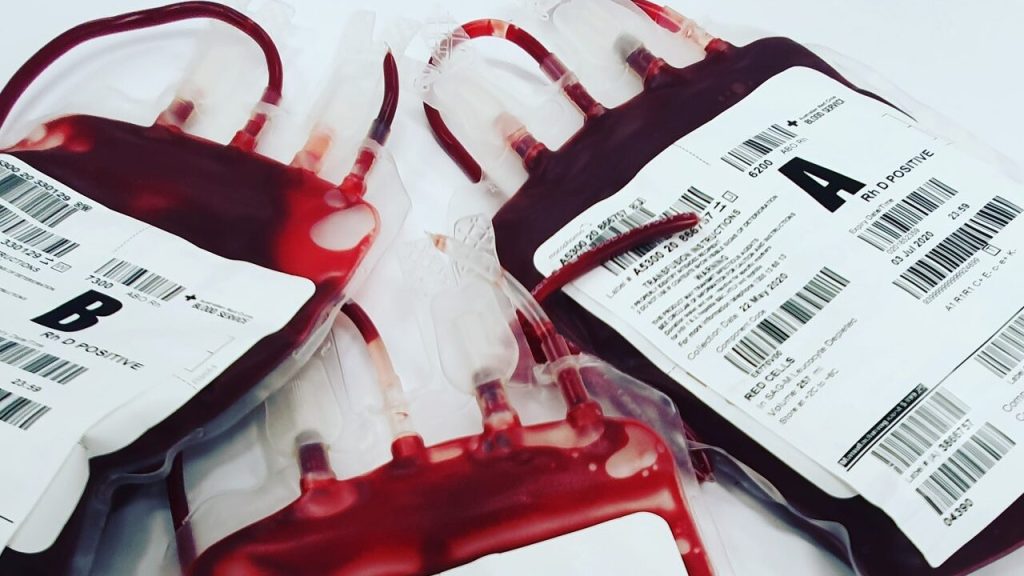
Giving intravenous iron to patients with anaemia before heart surgery reduces the need for a red blood transfusion and results in an extra day at home in the first 90 days after surgery, finds a clinical trial published by The BMJ today.
Intravenous iron also saved approximately 44 units of blood products for every 100 patients treated.
A third of patients undergoing cardiac surgery are anaemic and 20-50% receive a blood transfusion after surgery, which is linked to increased risks of complications, longer hospital stays, and death after surgery.
Previous studies suggest that intravenous iron before surgery boosts haemoglobin levels (the protein in red blood cells that carries oxygen around the body) and may reduce the need for transfusion, but there is currently no evidence to show that this improves outcomes that matter to patients.
To address this gap, researchers enrolled 955 adults with anaemia (average age 66 years; 60% male) undergoing elective cardiac surgery across 33 hospitals in 10 countries between 15 July 2016 and 15 December 2023.
Patients with inherited blood disorders, those having kidney dialysis or who had intravenous iron given in the previous four weeks were excluded. Other factors such as age, sex, ethnicity, and pre-existing conditions were also taken into account.
Participants were randomly assigned to either intravenous iron or placebo 1-26 weeks before surgery and the number of days alive and at home up to 90 days after surgery was recorded. Other outcomes included red cell transfusion and postoperative complications.
Of 921 patients assessed, the average number of days alive and at home up to 90 days after surgery in patients assigned to intravenous iron was 81 and in patients receiving placebo was 80.
Red blood cell transfusions were given to 262 patients (61%) in the iron group and 302 patients (68%) in the placebo group during their hospital stay. There were no differences in major complications or length of hospital stay.
The researchers acknowledge several limitations. For example, they enrolled patients with anaemia but did not require confirmation of absolute iron deficiency and say a one day difference in a 90 day recovery period is in itself a very small treatment effect.
However, study strengths included a low drop-out rate and measurement of patient-centred outcomes such as quality of recovery, days at home, and quality of life. Findings were also consistent after further analyses, suggesting they are robust.
As such, they conclude: “This study shows that intravenous iron repletion in patients with anaemia before cardiac surgery increased preoperative haemoglobin concentration, reduced the need for red cell transfusion, and resulted in an extra day at home in the first 90 days after surgery.”
Intravenous iron also saved approximately 44 units of blood products for every 100 patients treated, they add.