
Day: February 5, 2026

Active Ingredient from Red Foxglove Helps with Heart Failure
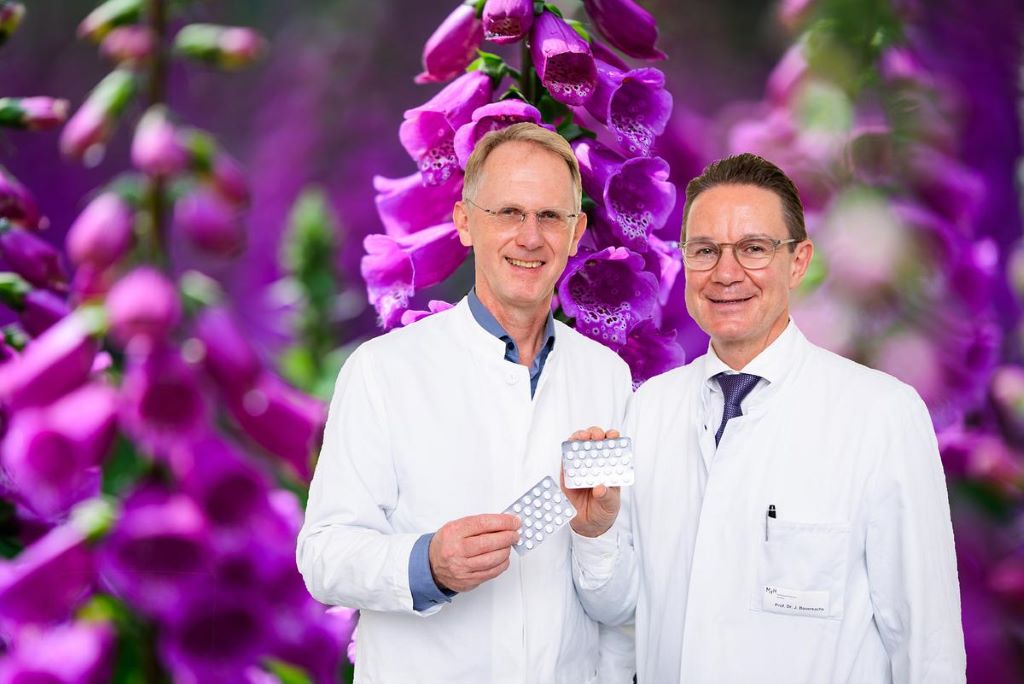
Foxglove helps with heart failure: Cardiologists Professor Dr Udo Bavendiek (left) and Professor Dr Johann Bauersachs have scientifically proven the life-prolonging effect of digitoxin for the first time. Copyright: pixabay, Karin Kaiser/MHH

A multicentre study has demonstrated a clear positive effect of digitoxin in heart failure, which is derived from the red foxglove plant. Results from ten years of research involving more than 1200 participants have clearly confirmed the safety and efficacy of the cardiac glycoside in people diagnosed with heart failure with reduced ejection fraction.

Digitalis has been used to treat heart failure for more than 200 years. The drug digitoxin also belongs to this group of active ingredients known as cardiac glycosides. Although there were indications that digitalis was beneficial in heart failure, it has only now been scientifically proven that digitoxin has a significant positive effect in heart failure due to reduced pumping function and insufficient emptying of the left ventricle – known in medical terms as HFrEF (heart failure with reduced ejection fraction). For ten years, researchers led by Professor Dr Johann Bauersachs, Director of the Department of Cardiology and Angiology at Hanover Medical School (MHH), and senior physician Professor Dr Udo Bavendiek thoroughly investigated the safety and efficacy of the active ingredient in a clinical study involving more than 1200 participants.

The large-scale DIGIT-HF study coordinated by them, involving more than 50 centres in Germany, Austria and Serbia, has now been completed and delivers a clear result: adjunctive therapy with digitoxin reduces mortality and the number of hospitalisations for heart failure in patients with advanced HFrEF. The results have been published in the New England Journal of Medicine. At the same time, they were presented at the end of August 2025 at the European Society of Cardiology Congress in Madrid in the so-called Hot Line Session, where new clinical studies that promise significant changes in patient outcomes are presented.

No proof of effectiveness according to scientific standards to date

Our heart is a high-performance engine. It beats around 70 times per minute, pumping around five litres of blood through our vessels. In doing so, it supplies the body with vital oxygen and nutrients. If this pumping capacity is permanently reduced, physicians refer to this as chronic heart failure or cardiac insufficiency. Around four million people in Germany are affected. Symptoms include shortness of breath, low exercise tolerance, water retention, immobility and severe arrhythmia. The condition is one of the most common reasons for hospitalisation and even death. Until around 2020, digitalis preparations were still on the production list of major pharmaceutical companies. Currently, digitoxin is only produced as a generic drug. ‘However, it remains the most commonly used digitalis preparation in Germany – so far, however, without any scientifically proven evidence of its effectiveness,’ notes Professor Bavendiek.

Can also be used in cases of impaired kidney function

This has now been proven. ‘In the DIGIT-HF study, we examined patients who had exhausted all conventional treatment options,’ says Professor Bauersachs. ‘We were surprised ourselves that we were able to achieve such a significant improvement with the additional digitoxin treatment in these very well-treated study participants.’ The usual medications for heart failure include beta blockers and inhibitors of the renin-angiotensin-aldosterone system, which inhibit excessively activated hormone cascades and thus relieve the heart, as well as diuretics. Defibrillators, which are implanted in the patient’s body, also help against acute arrhythmias. Since 2021, so-called SGLT-2 inhibitors have also been used in Germany. These were originally approved for the treatment of type 2 diabetes, but also have positive effects in all forms of heart failure. Thanks to the DIGIT-HF study, digitoxin could now become another mainstay in the treatment of people diagnosed with HFrEF.

Previous clinical studies have been conducted almost exclusively with digoxin, another cardiac glycoside. However, digoxin can only be used to a limited extent in patients with impaired kidney function, which is often the case in patients with advanced heart failure, as it is excreted almost exclusively via the kidneys. ‘With digitoxin, however, the situation is different,’ explains Professor Bavendiek. This is because digitoxin is excreted via the liver and intestines to a greater extent in patients with impaired kidney function. The already approved drug is therefore also suitable for use in patients with pre-existing kidney weakness.

Safe and cost-effective

In addition, the results of the DIGIT-HF study dispelled fears that digitoxin is dangerous for certain groups of patients with heart failure and could lead to death. ‘When dosed correctly, digitoxin is a safe treatment for heart failure and is also suitable for controlling heart rate in atrial fibrillation when beta blockers alone are not sufficient,’ emphasises Professor Bavendiek. Another advantage of the drug sounds trivial, but is certainly interesting in view of rising healthcare costs: digitoxin costs just a few pence and is drastically cheaper than other drugs for heart failure. Based on the study data available to date, heart specialists have already developed recommendations for simple and safe dosing. Whereas 0.1 milligrams of digitoxin were often prescribed in the past, the current recommendations are 0.07 milligrams per day or even less. The DIGIT-HF study showed that this dosage reduced mortality and hospital admissions due to heart failure without any safety issues.

Source: Hannover Medical School (in German)

Rates of Autism in Girls and Boys May Be More Equal than Previously Thought

Study raises questions around why female individuals are diagnosed later than males

Photo by Ben Wicks on Unsplash

Autism has long been viewed as a condition that predominantly affects male individuals, but a study from Sweden published by The BMJ shows that autism may actually occur at comparable rates among male and female individuals.

The results show a clear female catch-up effect during adolescence, which the researchers say highlights the need to investigate why female individuals receive diagnoses later than male individuals.

The prevalence of autism spectrum disorder (ASD) has increased over the past three decades, with a high male-to-female diagnosis ratio of around 4:1.

The increase in prevalence is thought to be linked to factors including wider diagnostic criteria and societal changes (eg, parental age), whilst the high male to female ratio has been attributed to better social and communication skills among girls, making autism more difficult to spot. However so far no large study has examined these trends over the life course.

To address this, researchers used national registers to analyse diagnosis rates of autism for 2.7 million individuals born in Sweden between 1985 and 2022 who were tracked from birth to a maximum of 37 years of age.

During this follow-up period of more than 35 years, autism was diagnosed in 78,522 (2.8%) of individuals at an average age of 14.3 years.

Diagnosis rates increased with each five year age interval throughout childhood, peaking at 645.5 per 100,000 person years for male individuals at age 10-14 years and 602.6 for female individuals at age 15-19 years.

However, while male individuals were more likely to have a diagnosis of autism in childhood, female individuals caught up during adolescence, giving a male to female ratio approaching 1:1 by age 20 years.

This is an observational study and the authors acknowledge that they did not consider other conditions associated with autism, such as ADHD and intellectual disability. Nor were they able to control for shared genetic and environmental conditions like parental mental health.

However, they say the study size and duration enabled them to link data for a whole population and disentangle the effects of three different time scales: age, calendar period and birth cohort.

As such, they write: “These findings indicate that the male to female ratio for autism has decreased over time and with increasing age at diagnosis. This male to female ratio may therefore be substantially lower than previously thought, to the extent that, in Sweden, it may no longer be distinguishable by adulthood.”

“These observations highlight the need to investigate why female individuals receive diagnoses later than male individuals,” they conclude.

These findings align with recent research and seem to support the argument that current practices may be failing to recognise autism in many women until later in life, if at all, says Anne Cary, patient and patient advocate, in a linked editorial.

She notes that studies like this are essential to changing the assumption that autism is more prevalent in male individuals than in female individuals, but points out that as autistic female individuals await proper diagnosis, “they are likely to be (mis)diagnosed with psychiatric conditions, especially mood and personality disorders, and they are forced to self-advocate to be seen and treated appropriately: as autistic patients, just as autistic as their male counterparts.”

Source: BMJ Group

Could a Living Implant End Daily Insulin Injections?

The development of a self-regulating, implantable living technology that could offer hope for millions with diabetes and other chronic diseases

The crystal capsules developed by the researchers. They made the cover of Science Translational Medicine.

A pioneering study marks a major step toward eliminating the need for daily insulin injections for people with diabetes. The research introduces a living, cell-based implant that can function as an autonomous artificial pancreas, essentially a living drug that is long-term, thanks to a novel crystalline shield technology.

Once implanted, the system operates entirely on its own: it continuously senses blood-glucose levels, produces insulin within the implant itself, and releases the exact amount needed – precisely when it is needed. In effect, the implant becomes a self-regulating, drug-manufacturing organ inside the body, requiring no external pumps, injections, or patient intervention.

One of the study’s most significant breakthroughs addresses the longstanding challenge of immune rejection, which has limited the success of cell-based therapies for decades. The researchers developed engineered therapeutic crystals that shield the implant from the immune system, preventing it from being recognised as a foreign object. This protective strategy enables the implant to function reliably and continuously for several years.

The technology has already been successfully tested in a mouse model for effective and long-term regulation of glucose levels and in non-human primates for cell viability and functionality. These results represent a critical milestone and strongly support the potential for future translation to human patients.

From Postdoctoral Insight to Global Collaboration

The study was led by Assistant Professor Shady Farah of the Faculty of Chemical Engineering at the Technion – Israel Institute of Technology, in co-correspondence with MIT, and in collaboration with Harvard University, Johns Hopkins University, and the University of Massachusetts. Asst Prof Farah began developing the concept with colleagues in 2018 during his postdoctoral fellowship at MIT and Boston Children’s Hospital/Harvard Medical School, under the supervision of Prof Daniel Anderson and Prof Robert (Bob) Langer, a world leader in tissue engineering and co-founder of Moderna.

Today, the research continues in Asst Prof Farah’s laboratory at the Technion, in close collaboration with leading US institutions, including MIT, Harvard, the University of Massachusetts, Boston Children’s Hospital, and the Johns Hopkins University School of Medicine.

A Platform with Far-Reaching Potential

While the immediate focus is diabetes, the researchers emphasise that this implantable, closed-loop platform could be adapted to treat a wide range of chronic conditions requiring continuous delivery of biological therapeutics – including haemophilia and other metabolic or genetic diseases.

If successfully translated to the clinic, this technology could redefine how chronic diseases are treated, shifting from repeated drug administration to living, self-regulating therapies that work seamlessly from within.

To read the full article, click here

Source: TECHNION Israel Institute of Technology

Researchers Quantify How Much Obesity Reduction Prevents Common Conditions

Source: Pixabay CC0

A University of Exeter-led study has quantified the role of obesity in common long-term conditions, showing for the first time the effect of losing weight in preventing multiple diseases.  

Conditions that often occur together may share an underlying cause, which can be key to prevention or treatment. The picture of which conditions co-occur is complex, so researchers paired them together, to allow them to identify shared causes more simply. The study found that obesity is the main shared cause between ten pairs of commonly occurring conditions.   

The research specifically measured how much weight reduction would reduce the risk of the next diagnosis.  In the largest study of its kind, published in Communications Medicine – Nature, the team studied 71 conditions which often occur together, such as type 2 diabetes and osteoarthritis, or kidney disease and chronic obstructive pulmonary disease (COPD).  

The GEMINI study, funded by the UKRI Medical Research Council and supported by the National Institute for Health and Care Research (NIHR), used genetics and healthcare data drawn from a number of large datasets internationally. They found that obesity was part of the cause for  61 of the 71 conditions. They also found that obesity explained all of the genetic overlap in ten pairs of conditions, suggesting it is the main driver for why they frequently occur together.  

Body mass index, or BMI, is a scaled measure of weight – a number over 30 units indicates obesity, while less than 25 indicates “normal” weight. The study quantified how much a reduction in BMI would reduce the risk of both conditions at a population level for people overweight or living with obesity. For example, for every thousand people who have both chronic kidney disease and osteoarthritis, a BMI reduction of 4.5 units would have prevented 17 of them developing both conditions or nine people per thousand with type 2 diabetes and osteoarthritis.  

The team also established the pairs of conditions where obesity is not the main cause and are now investigating other mechanisms.  

Study lead Professor Jack Bowden, at the University of Exeter Medical School: “We’ve long known that certain diseases often occur together, and also that obesity increases the risk of many diseases. This largescale study is the first to use genetics to quantify the role of obesity in causing diseases to occur in the same individuals. We found that for some disease pairings, obesity is the major driving force. Our research provides much more detail about the links between obesity and disease, which will help clinicians target specific advice to patients going forward.”  

Study author Professor Jane Masoli, of the University of Exeter Medical School, who is a Consultant Geriatrician and regional NIHR Ageing lead, said: “Currently nine million people in the UK live with two or more long-term conditions.  Understanding how to prevent diseases accumulating is a key national research and healthcare priority.  This study further strengthens the case to tackle obesity through public health programmes, reinforcing the importance of lifelong obesity management in the NHS strategy on prevention. Our work shows that this could reduce the risk of accumulating multiple health conditions, supporting people to live longer, healthier lives.”  

This research represents another important publication from the GEMINI (Genetic Evaluation of Multimorbidity towards INdividualisation of Interventions) collaborative. Led by the University of Exeter, GEMINI includes people with multimorbidity, health care professionals including those in primary care and experts in statistics and genetics, and was one of six programmes funded by the UKRI strategic priorities fund, an £830 million investment in multimorbidity research. 

The GEMINI team are working to further understand why some conditions more frequently co-occur in the same patients. The team are quantifying the role of other, known modifiable risk factors beyond obesity, and are finding novel genes and pathways that could point to new ways to intervene and improve health. GEMINI data, results, and code are free to download (https://github.com/GEMINI-multimorbidity), and the pairwise genetic and observational correlations can be viewed interactively (https://gemini-multimorbidity.shinyapps.io/atlas/).   

By Louise Vennells

Source: University of Exeter

Research Links High Doses of Antioxidants to Offspring Birth Defects

Photo by Nataliya Vaitkevich

Antioxidants have been marketed as miracle supplements, touted for preventing chronic diseases and cancers; treating COPD and dementia; and slowing aging. While antioxidant therapies are widely used to treat male infertility, a new study from the Texas A&M College of Veterinary Medicine and Biomedical Sciences (VMBS) found that regularly consuming high doses of antioxidants negatively influences sperm DNA and may lead to offspring born with differences in craniofacial development.

In a study, published in the journal Frontiers in Cell and Developmental Biology, a team of researchers led by Dr Michael Golding examined the effects of N-acetyl-L-cysteine (NAC) and selenium (Se) – two widely used antioxidants – in mouse models.

They found that offspring of male mice exposed to antioxidants for six weeks exhibited skull and facial shape differences, even while the father’s health didn’t change.

These findings suggest that men should exercise caution when consuming high doses of antioxidants, especially if they’re planning to have children in the near future.   

When good goes too far

Antioxidants like NAC — which is a key ingredient in many nutritional supplements, including multivitamins — are often used to treat oxidative stress, which can be caused by excessive alcohol consumption.

Because Golding’s lab has been studying the effects of parental alcohol consumption on offspring – and has successfully correlated this consumption to a whole host of issues in children born to males who consumed excessive amounts of alcohol, including craniofacial abnormalities – his team was interested in the impacts of adding NAC or Se to a male mouse’s diet.

“We know alcohol causes oxidative stress and we were looking to push back on it by adding a supplement known to lower oxidative stress,” said Golding, a professor in the VMBS’ Department of Veterinary Physiology and Pharmacology. “When we realised that offspring born to males that had only been given NAC were displaying skull and facial differences, it was a surprise because this molecule is universally thought to be good.

“When we sat down to think it through, we realised that it makes sense – you take a multivitamin to ensure that you’re in balance, but if the thing that you’re taking to ensure you’re in balance is unbalanced (the dose of antioxidants is too high), then you’re not doing a good thing.”

It is well established that high doses of antioxidants can have negative impacts; research has proven that antioxidants can diminish the effects of exercise in endurance athletes, for example, and, in the case of professional athletes, can lead to negative outcomes in performance metrics.

“Sperm health is another performance metric; it’s just not one that we think about in everyday life,” Golding said. “If you’re taking a high dose antioxidant, you could be diminishing your reproductive fitness and part of the journey toward the bad outcome is going to be the effects on the offspring.”

What the face reveals about the brain

Among their unanticipated findings was that female offspring, in particular, exhibited significantly closer-set eyes and smaller skulls, which are also symptoms of foetal alcohol syndrome.

“There’s a very commonly accepted truism in paediatric medicine that the face mirrors the brain, because the brain and the face form at the same time,” Golding said. “When your face migrates (during gestation), it’s using cues from your brain to know where to go, and if the two things are not aligned, there’s either a delay or some kind of abnormality in brain development.

“So, if you see abnormalities in the midline of the face, you’re probably going to see midline abnormalities in the brain,” he said. “People with these abnormalities typically have problems with impulse control, neurological conditions like epilepsy, and other developmental issues.”

Whether the offspring in this project will exhibit central nervous system dysfunction will require further study.

The dose makes the difference

While the lab continues to research this “unexplored frontier,” Golding says in the case of antioxidants, too much of a good thing can, in fact, be too much, especially in the absence of a medical reason to take an antioxidant supplement.

Because many men regularly take high doses of these supplements – including products that contain antioxidant-rich ingredients – it’s important to pay attention to how much of these compounds are listed on the label. This includes NAC, which is one of the key ingredients in many multivitamins and is often found in high doses in these pills.

“The larger message here is that there’s a balance,” Golding said. “Think of yourself as a plant — if you stick your plant out in the sun too long, it’s going to get dehydrated. If you overwater your plant, it gets root rot. But if you have the right balance of sunshine and water, that’s when growth occurs. Health is in that domain.

“If your vitamins are providing 1,000% of the recommended daily amount, you should be cautious,” he said. “If you stick to the 100% range, then you should be OK.”