Year: 2025

Nausea and Vomiting of Pregnancy Caused by a Complex Inflammatory Response

Source: Pixabay CC0

UCLA researchers have uncovered a link between “morning sickness” symptoms and the body’s natural, but complex, inflammatory response to biological and bodily changes during pregnancy.

According to the National Institutes of Health, up to 80% of early-stage pregnant mothers experience some nausea, vomiting and aversions to certain foods and smells. While uncomfortable, these symptoms are not typically a sign that anything is wrong with the health of the mother or the developing fetus, but rather an indication of a delicate balance unique to pregnant women. 

“During pregnancy, a mother’s immune system faces a tricky challenge: it has to protect both her and the foetus from infection, but without accidentally attacking the foetus, whose genetic identity is half-foreign because it is half derived from the father. Normally, the immune system attacks anything that seems foreign, so in pregnancy, it has to carefully adjust to keep the foetus safe while still defending against infection,” said UCLA anthropology professor Molly Fox, corresponding author of the study published in Evolution, Medicine and Public Health.

The researchers believe that this delicate balance, which protects mother and foetus, is achieved by a unique mix of inflammatory responses. They function to prevent the mother’s body from rejecting the foetus, alongside adaptive behavioural mechanisms, like nausea, that encourage the mother to avoid foods that are potentially harmful, especially in the first and second trimesters when the foetus is most vulnerable.

“Nausea, vomiting or aversions to foods or smells are not indications that something is going wrong for the mother or the foetus. It’s likely an indication that everything is moving along normally, and a reflection of the body’s healthy and helpful immune response,” said UCLA anthropology professor and paper co-author Daniel Fessler.

Methodology and findings

For the study, the UCLA-led team of anthropologists and epidemiologists collected and analysed blood samples to measure immune system molecules called cytokines. Cytokines are proteins that send signals to help the body launch a quick defence against sickness and regulate inflammation. Participants also filled out questionnaires that asked about morning sickness-related symptoms and food and smell aversions during the early stages of pregnancy. The participants were 58 Latina women in Southern California who were followed beginning in early pregnancy through the postpartum.

Sixty-four percent of study participants experienced odour or food aversions, primarily to tobacco smoke and meat. Sixty-seven percent reported nausea and 66% experienced vomiting.

The study team measured pro-inflammatory cytokines as well as anti-inflammatory cytokines. They found that women who experienced an aversion to tobacco smoke showed a noticeable shift toward a more inflammatory response. Food aversions, nausea and vomiting were also associated with a more pro-inflammatory immune balance.

An evolutionary process?

The correlation is consistent with researchers’ theory that these symptoms may be part of an evolutionary adaptation that helps pregnant mothers’ bodies minimize exposure to harmful substances, though the study’s authors caution that the evidence is not definitive and more research is needed. 

They emphasised that the study allowed the team to look at both human biological and behavioural responses during pregnancy.

“In many mammals, the foetal compartment has barriers separating it from the mother’s blood supply, where her immune cells are. But in humans, we have a unique setup – foetal cells are bathed in maternal blood. Humans have the most invasive of all placentas, burrowing deep into maternal tissue. So humans need unique strategies to prevent the mother’s immune system from attacking the foetus,” said Fox.

These immunological changes may induce nausea, which in turn encourages food avoidance that might act as an additional layer of protection, according to the researchers

“Nowadays, you will see labels on packages of ground beef or soft cheese that warn pregnant women to be cautious about these products because of the risks of foodborne illness during pregnancy. Aversions to certain odours and foods, and nausea and even vomiting, appear to be evolution’s way of achieving that same objective,” said Fessler.

Practical implications

The researchers, including first author Dayoon Kwon, who just completed her PhD in epidemiology at UCLA (and is now a postdoctoral fellow at Stanford), said that the study could help bolster recognition that nausea and vomiting are normal symptoms with biological underpinnings associated with healthy pregnancies. The study’s results could help in paving the way for common-sense workplace accommodations, such as more efficient deployment of health care benefits and other helpful resources to reduce stigma, excessive absences and lost productivity.

They also encourage other researchers to continue to look into the questions raised by the study, to not only explore the evolutionary questions, but to work toward providing clinicians with non- or low-invasive measures of prognoses.


Source: University of California – Los Angeles

Care for Women and Harm Reduction Services Under the Spotlight

Facing off a dual burden of high disease risk and low service access

Photo by Sydney Sims on Unsplash

CAPE TOWN, 08 OCTOBER 2025: South African and international leaders in public health will gather on Friday, 10 October 2025 at the University of Cape Town to convene an in-person scientific seminar: Agents of change and women who use drugs. Women who use drugs (WWUD) in South Africa face compounded health and social vulnerabilities that leave them disproportionately excluded from essential health services. Compared to men, women experience heightened stigma, intimate partner violence, reproductive health challenges, and structural barriers such as childcare responsibilities and lack of women-centred care.1,2 Scientific discussions among academics will focus on how women can be supported through access to harm reduction programming and drug policy reform.  

 Seminar: Agents of change and women who use drugs

·        Date    : 10 October 2025

·        Time    : 13:30 – 15:30 (SAST)

·        Venue  : Neurosciences Institute Auditorium, UCT/Groote Schuur Hospital, Cape Town

·        Registration

Recent evidence highlights both the scale of drug use and the urgent need for tailored harm reduction. National estimates suggest there are approximately 82 500 people who inject drugs (PWID) in South Africa, with women comprising between 16% and 27% of this population.3 Led by TB HIV Care, a 2023 bio-behavioural survey across four South African sites documented extremely high HIV prevalence among PWID: 72.1% in Tshwane, 49.3% in eThekwini, 45.4% in Mashishing, and 30.3% in Mbombela. Hepatitis C (HCV) prevalence was similarly alarming, reaching 89% in Tshwane and over 75% in multiple sites.3

“The evidence consistently shows that harm reduction works,” says Dr Andrew Scheibe, medical doctor and technical advisor with TB HIV Care in Cape Town, INHSU board member, and fellow co-convener of the upcoming INHSU 2025 conference. “Harm reduction reduces infections, prevents overdose, and connects people to healthcare, yet access across Africa remains the exception rather than the rule.”

Sex-based disparities are stark. While HIV prevalence among PWID overall has ranged from 14% to over 70%, women consistently show higher prevalence rates than men. One multi-city study found 18% HIV prevalence among female PWID, compared to 13% among males.4 More recent research in Durban confirmed that women face greater barriers to accessing sexual and reproductive health, harm reduction, and HIV services, often due to fear of arrest, intimate partner control, and lack of programming designed for women.5

“Everyone in our communities deserve health, dignity, and care,” says Mfezi Mcingana, Programme Director: Key Populations at TB HIV Care. “People who use drugs are part of our communities and supporting their access to healthcare, not punishment, builds a safer, healthier society for all”, Mcingana concludes.

Despite the magnitude of risk, women remain underrepresented in harm reduction programmes. In opioid agonist therapy (OAT), fewer than 10% of participants are women.6 Needle and syringe programmes (NSPs) and OAT are limited in coverage, mostly urban-based, and not designed with women’s needs in mind. The absence of services aimed at women perpetuates cycles of preventable morbidity, mortality, and infectious disease transmission.

“While the scale of the challenge is undeniable, pioneering efforts by a few African governments show what harm reduction leadership can look like,” says Angela McBride, Executive Director of the South African Network of People Who Use Drugs (SANPUD), INHSU board member, and co-convener of INHSU 2025. “Harm reduction means putting health and human rights before punishment, shifting away from criminalisation and towards evidence-based, rights-affirming policies.”

To address this gap, investment in women-centred harm reduction is essential. Priorities include scaling up OAT and NSPs with women-specific entry points, integrating sexual and reproductive health services into harm reduction sites, providing childcare support, and ensuring protection from intimate partner violence. Without these interventions, WWUD in South Africa will continue to be excluded from public health progress and national HIV/HCV response goals.

References:

  1. Shirley-Beavan, S., Roig, A., Burke-Shyne, N., Daniels, C. and Csak, R. (2020). Women and barriers to harm reduction services: a literature review. Harm Reduction Journal, 17(74). Available here.
  2. Harm Reduction International & South African Network of People Who Use Drugs (SANPUD) (2020). Barriers to harm reduction for women who use drugs in South Africa. London: Harm Reduction International. Available here.
  3. SANPUD (2023). South African bio-behavioural survey and population size estimation among people who inject drugs. Johannesburg: South African Network of People Who Use Drugs. Available here.
  4. Scheibe, A., Young, K., Moses, L., Basson, R., Versfeld, A., Spearman, C.W. and Sonderup, M.W. (2016). HIV prevalence and risk among people who inject drugs in South Africa. International Journal of Drug Policy, 30, pp.107–113. Available here.
  5. Milford, C., Cavanagh, T., Bosman, S., Chetty, T. and Rambally, G. (2024). Access to and acceptability of sexual and reproductive health, harm reduction and other essential health services among people who inject drugs in Durban, South Africa. Harm Reduction Journal, 21(123). Available here.
  6. INHSU (2021). Gender and opioid substitution therapy access in Tshwane, South Africa. International Network on Health and Hepatitis in Substance Users. Available here.

A Hidden Risk Behind a Common Hair Loss Drug

Photo by Brett Sayles on Unsplash

For over two decades, finasteride – a prescription drug taken by millions of men to treat hair loss – has carried troubling signals of deeper harm: depression, anxiety, and in some cases, suicide.

A new review by Prof Mayer Brezis of the Hebrew University of Jerusalem argues that the medical and regulatory community failed the public by repeatedly overlooking evidence of finasteride’s potentially psychiatric effects.

The review, published in The Journal of Clinical Psychiatry, compiles data from eight major studies conducted between 2017 and 2023, showing a consistent pattern: users of finasteride were significantly more likely to experience mood disorders and suicidal thoughts than those not taking the drug. Findings come from multiple countries and data systems, including the US FDA, as well as national health records in Sweden, Canada, and Israel.

“The evidence is no longer anecdotal,” said Prof. Brezis, professor emeritus of medicine and public health. “We now see consistent patterns across diverse populations. And the consequences may have been tragic.”

According to the paper, hundreds of thousands of people may have suffered from depression related to finasteride, and hundreds – possibly more – may have died by suicide. 

A Delayed Response, With a High Cost

While the FDA acknowledged depression as a potential side effect in 2011 and added suicidality in 2022, concerns had already been raised as early as 2002. Internal FDA documents from 2010, cited in Prof Brezis’ paper, reveal large portions blacked out as “confidential” – including estimates of how many users could have been affected.

By 2011, the FDA had recorded just 18 suicides linked to finasteride. Based on global usage, he argues, the number should have been ranged in the thousands. “It wasn’t just underreporting,” he wrote. “It was a systemic failure of pharmacovigilance.”

Unlike weight-loss or psychiatric medications, which receive intense post-marketing scrutiny, finasteride’s “cosmetic” status may have shielded it from investigation. Notably, none of the studies cited in Brezis’ review were initiated by Merck, the original manufacturer, or requested by regulators.

A Cosmetic Drug With Life-Altering Risks

Finasteride works by blocking the conversion of testosterone into dihydrotestosterone (DHT). In the process, it may also disrupt neurosteroids like allopregnanolone, which are linked to mood regulation in the brain. Animal studies show long-term effects on neuroinflammation and even structural changes in the hippocampus.

For some patients, the harm does not end when the drug is stopped. Reports of “post-finasteride syndrome” describe lingering symptoms – insomnia, panic attacks, cognitive dysfunction, and suicidal thoughts – that persist months or years after discontinuation.

Regulatory Gaps and Corporate Silence

The report is particularly critical of the FDA and Merck. Despite having access to millions of patient records, neither acted in time. Brezis suggests that industry silence was strategic, motivated by market pressures and legal liability -echoing past controversies like Merck’s handling of Vioxx.

“Nothing is more important to Organon than the safety of our medicines,” the company recently stated. Yet none of the safety studies cited were initiated by the manufacturer.

The FDA, meanwhile, took five years to respond to a citizen petition calling for a black-box warning. Its final decision was to add suicidal ideation to the label – but not as a formal warning.

What Now?

Brezis is calling for immediate changes in how drugs like finasteride are approved, monitored, and prescribed. His recommendations include:

  • Suspending marketing of the drug for cosmetic purposes until safety is re-established.
  • Rquiring mandatory post-approval studies with strict enforcement.
  • Systematically recording drug histories in suicide investigations.

For many patients, those reforms will come too late.

The paper, “Failing Public Health Again? Analytical Review of Depression and Suicidality from Finasteride” was published in The Journal of Clinical Psychiatry and is available here

Source: Hebrew University of Jerusalem

The HIV Dormancy Mystery Could Unlock the Path to a Cure

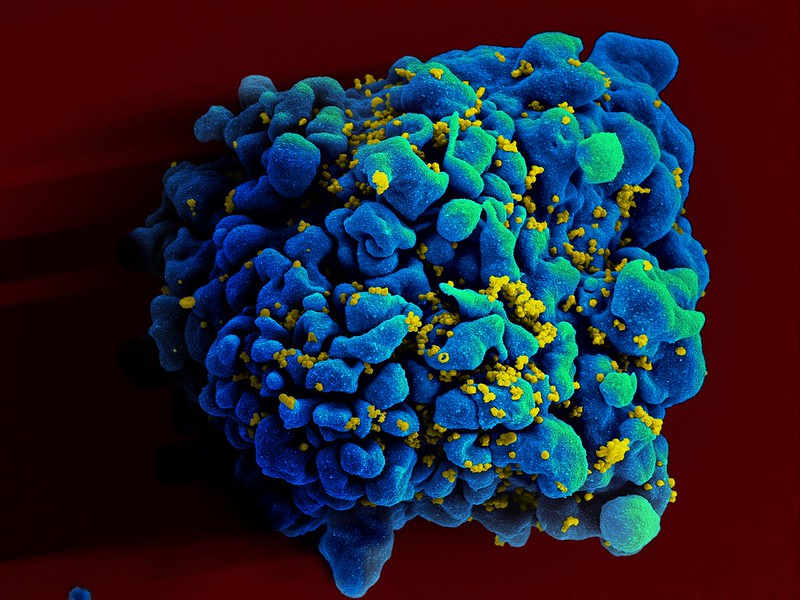
Colourised scanning electron micrograph of HIV (yellow) infecting a human T9 cell (blue). Credit: NIH

For over three decades, HIV has played an elaborate game of hide-and-seek with researchers, making treating – and possibly even curing – the disease a seemingly insurmountable obstacle to achieve.

But scientists at Case Western Reserve University have made a breakthrough discovery that could fundamentally change strategies for treating HIV.

The team identified for the first time how HIV enters a dormant state in infected cells that allows the virus to “hide” from the immune system and current treatments. 

The researchers believe the finding, just published in Nature Microbiology, challenges decades of scientific assumptions and opens a new approach to possibly eliminating the deadly virus. 

“This discovery rewrites what we thought we knew about how HIV goes into this stealth mode in the human body,” said study lead Saba Valadkhan, an associate professor in the Department of Molecular Biology and Microbiology at the Case Western Reserve School of Medicine. “We’ve shown that HIV actually orchestrates its own survival by reprogramming host cells to create the perfect hiding place.”

The team discovered that HIV uses a clever survival trick that explains why it’s been impossible to cure. After HIV invades a cell, it sneaks its genetic code into the cell’s DNA, then tricks the cell into going to sleep, which also puts the virus to sleep, making both completely invisible. This tactic makes the infected cell invisible to the immune system and unreachable by even today’s most advanced HIV drugs. The virus stays hidden in these dormant cells until the right moment to “wake up” and spread again, creating an undetectable reservoir that ensures HIV never goes away completely.

“What we’ve uncovered is that HIV doesn’t just randomly go dormant – it actively manipulates the host cell to create conditions for its own survival,” said study collaborator Jonathan Karn, Distinguished University Professor and chair of the Department of Molecular Biology and Microbiology. “This gives us specific targets to attack.”

The findings may extend far beyond HIV treatment. The researchers believe similar dormancy actions could be triggered by other viruses – including herpes, hepatitis and other retroviruses – potentially leading to new therapies for many viral diseases. 

“We may have uncovered new tactic viruses use to trick the host cells to do their bidding,” Valadkhan said.

This discovery is also important for protecting public health worldwide because viruses like HIV – which can permanently insert themselves into a person’s DNA – could potentially be used as future viral threats and pandemic preparedness.

Source: Case Western Reserve University

Poor Sleep May Accelerate Brain Ageing

Poor sleep may accelerate brain ageing, a new study shows. Photo by Andrea Piacquadio

People who sleep poorly are more likely than others to have brains that appear older than they actually are. This is according to a comprehensive brain imaging study from Karolinska Institutet, published in the journal eBioMedicine. Increased inflammation in the body may partly explain the association.

Poor sleep has been linked to dementia, but it is unclear whether unhealthy sleep habits contribute to the development of dementia or whether they are rather early symptoms of the disease. In a new study, researchers at Karolinska Institutet have investigated the link between sleep characteristics and how old the brain appears in relation to its chronological age. 

The study includes 27 500 middle-aged and older people from the UK Biobank who underwent magnetic resonance imaging (MRI) of the brain. Using machine learning, the researchers estimated the biological age of the brain based on over a thousand brain MRI phenotypes. 

Low-grade inflammation 

The participants’ sleep quality was scored based on five self-reported factors: chronotype (being a morning/evening person), sleep duration, insomnia, snoring, and daytime sleepiness. They were then divided into three groups: healthy (≥ 4 points), intermediate (2-3 points), or poor (≤ 1 point) sleep. 

“The gap between brain age and chronological age widened by about six months for every 1-point decrease in healthy sleep score,” explains Abigail Dove, researcher at the Department of Neurobiology, Care Sciences and Society, Karolinska Institutet, who led the study. “People with poor sleep had brains that appeared on average one year older than their actual age.” 

To understand how poor sleep can affect the brain, the researchers also examined levels of low-grade inflammation in the body. They found that inflammation could explain just over ten per cent of the link between poor sleep and older brain age. 

“Our findings provide evidence that poor sleep may contribute to accelerated brain ageing and point to inflammation as one of the underlying mechanisms,” says Abigail Dove. “Since sleep is modifiable, it may be possible to prevent accelerated brain ageing and perhaps even cognitive decline through healthier sleep.” 

Several possible explanations 

Other possible mechanisms that could explain the association are negative effects on the brain’s waste clearance system, which is active mainly during sleep, or that poor sleep affects cardiovascular health, which in turn can have a negative impact on the brain. 

Participants in the UK Biobank are healthier than the general UK population, which could limit the generalisability of the findings. Another limitation of the study is that the results are based on self-reported sleep. 

The study was conducted in collaboration with researchers from the Swedish School of Sport and Health Sciences, and Tianjin Medical University and Sichuan University in China, among others. It was funded by the Alzheimer’s Foundation, the Dementia Foundation, the Swedish Research Council, the Loo and Hans Osterman Foundation for Medical Research, and the Knowledge Foundation. The researchers report no conflicts of interest. 

Source: Karolinska Institutet

Pancreatic Alpha Cells also Secretly Produce Significant Amounts of GLP-1

New study uncovers natural hormone shift that could transform type 2 diabetes treatment

A 3D map of the islet density routes throughout the healthy human pancreas. Source: Wikimedia CC0

A new study from Duke University School of Medicine is challenging long-standing views on blood sugar regulation — and pointing to a surprising new ally in the fight against type 2 diabetes. 

Published in Science Advances, the research reveals that pancreatic alpha cells, once thought to only produce glucagon – a hormone that raises blood sugar to maintain energy when fasting or exercising – also generate GLP-1, a powerful hormone that boosts insulin release from beta cells and helps regulate glucose. GLP-1 is the same hormone mimicked by blockbuster drugs like semaglutide. 

Using mass spectrometry, Duke researchers found that human alpha cells may naturally produce far more bioactive GLP-1 than previously believed. 

Led by Duke scientist Jonathan Campbell, PhD, the team of obesity and diabetes researchers analysed pancreatic tissue from mice and from humans across a range of ages, body weights, and diabetes statuses. They found that human pancreatic tissue produces much higher levels of bioactive GLP-1 and that this production is directly linked to insulin secretion. 

“Alpha cells are more flexible than we imagined,” said Campbell, an associate professor in the Division of Endocrinology in the Department of Medicine and a member of the Duke Molecular Physiology Institute. “They can adjust their hormone output to support beta cells and maintain blood sugar balance.” 

This flexibility could change the approach to treating type 2 diabetes, where beta cells in the pancreas can’t make enough insulin to keep blood sugar at a healthy level. By boosting the body’s own GLP-1 production, it may offer a more natural way to support insulin and manage blood sugar.  

Switching gears 

In mouse studies, when scientists blocked glucagon production, they expected insulin levels to drop. Instead, alpha cells switched gears – ramping up GLP-1 production, improving glucose control, and triggering stronger insulin release.  

“We thought that removing glucagon would impair insulin secretion by disrupting alpha-to-beta cell signaling,” Campbell said. “Instead, it improved it. GLP-1 took over, and it turns out, it’s an even better stimulator of insulin than glucagon.” 

To test this further, researchers manipulated two enzymes: PC2, which drives glucagon production, and PC1, which produces GLP-1. Blocking PC2 boosted PC1 activity and improved glucose control. But when both enzymes were removed, insulin secretion dropped and blood sugar spiked – confirming the critical role of GLP-1. 

Implications for diabetes treatment 

While GLP-1 is typically made in the gut, the study confirms that alpha cells in the pancreas can also release GLP-1 into the bloodstream after eating. This helps to lower blood sugar by increasing insulin and reducing glucagon levels. 

Common metabolic stressors, like a high-fat diet, can increase GLP-1 production in alpha cells – but only modestly. That opens the door to future research: If scientists can find ways to safely boost GLP-1 output from alpha cells they may be able to naturally enhance insulin secretion in people with diabetes.  

But measuring GLP-1 accurately hasn’t been easy. The team developed a high-specificity mass spectrometry assay that detects only the bioactive form of GLP-1 – the version that actually stimulates insulin — not the inactive fragments that often muddy results. 

“This discovery shows that the body has a built-in backup plan,” Campbell said. “GLP-1 is simply a much more powerful signal for beta cells than glucagon. The ability to switch from glucagon to GLP-1 in times of metabolic stress may be a critical way the body maintains blood sugar control.” 

Source: Duke University

Innovative UK Project to Test Drones for Cardiac Arrest Response

Credit: University of Surrey

A project to test how drones can be integrated into the UK’s 999 emergency response system to rapidly deliver defibrillators to patients experiencing out-of-hospital cardiac arrest (OHCA) has been launched by the University of Surrey, Air Ambulance Charity Kent Surrey Sussex, South East Coast Ambulance Service NHS Foundation Trust. 

With survival rates for OHCA in the UK currently below 10%, a key challenge is the delay in delivering life-saving defibrillation. While public Automated External Defibrillators (AEDs) are widely available, getting them to a patient in time is often difficult. This 16-month project will explore using drones to rapidly deliver AEDs to the scene of an emergency. 

This research is the first step towards integrating drone technology into our emergency response systems. Our ultimate goal is to develop and test the procedures needed to seamlessly introduce drone delivery of AEDs into the 999-emergency system 

Dr Scott Munro, Lecturer in Paramedic Practice at the University of Surrey and co-lead on the project

The initiative, which has been funded by the National Institute for Health and Care Research (NIHR), will be divided into two sections: in the first, researchers will develop and refine the drone delivery process through a series of simulations, coordinating 999 call taking, Air Traffic Control, ambulance dispatch and drone operators.  

In the second part, interviews will be conducted with a diverse group of people -including OHCA survivors, family members, responders and members of the public – to understand the public’s perception of drone technology, including any barriers or concerns, and to ensure ease of use for responders. 

This project is a great example of how NIHR’s RfPB programme supports life-saving innovation. Using drones to deliver defibrillators could help emergency teams reach patients faster, improve survival after cardiac arrest, and bring cutting-edge technology directly to the NHS frontline, while working with the public to ensure it’s used safely and effectively. 

Professor Kevin Munro, Director of the NIHR Research for Patient Benefit (RfPB) Programme

Rapid intervention is vital in managing out-of-hospital cardiac arrests. As demand continues to grow, the opportunity to integrate this technology into future healthcare systems represents real progress in ensuring ambulance services can work with the communities they serve to strengthen the chain of survival and give patients the best chance of a positive outcome Being a partner in this research, we are eager to explore how this new initiative could strengthen our cardiac arrest care pathway. 

Dr Craig Mortimer, Research Manager at South East Coast Ambulance Service NHS Foundation Trust (SECAmb)

Source: University of Surrey

Webber Wentzel Secures Landmark Constitutional Court Ruling Reforming South Africa’s Parental Leave Laws

Photograph by Drew Hays on Unsplash

Webber Wentzel’s Pro Bono team represented Mr and Mrs van Wyk in a landmark case that has resulted in the Constitutional Court confirming that South Africa’s statutory four months of parental leave may be shared between both parents. The ruling marks a significant step toward gender equality in the workplace and family law.

The case challenged the unequal parental leave provisions under section 25 of the Basic Conditions of Employment Act (BCEA), which granted birthing mothers up to four months of maternity leave while limiting fathers to only 10 days.

Webber Wentzel argued that section 25 of the BCEA unfairly discriminated against fathers and placed an undue burden on birthing mothers by not allowing families to decide who should be the primary caregiver. The court agreed and criticised the 10-day leave for fathers by rejecting the cultural norms that reinforce gendered parenting roles as inconsistent with constitutional values.

The application was supported by the Commission for Gender Equality (CGE) and Sonke Gender Justice (Sonke). CGE advocated for equal parental leave for adoptive and surrogacy-commissioning parents, which the court partially granted. Sonke’s request for an equal 16-week leave for both parents was not granted.

The Constitutional Court, in a unanimous judgment delivered by the Honourable Justice Tshiqi, confirmed that sections 25, 25A, 25B and 25C of the BCEA, along with corresponding provisions of the Unemployment Insurance Fund Act (UIF Act), are unconstitutional. The Court held that these provisions violate the rights to equality and human dignity under sections 9 and 10 of the Constitution.

The Minister of Employment and Labour accepted that differentiation exists between birthing mothers and other categories of parents is automatically unfair as it is based on grounds specified in section 9(3) of the Constitution. Further, the Minister acknowledges that there is a need for reform in the current legislation pertaining to the parental leave regime contained in the BCEA.

As a result of the ruling in the Constitutional Court, the 4 months of maternal and the 10 days of parental leave will be combined into a total of 4 months and 10 days, which parents may now share as they choose. If no agreement is reached, the leave will be split equally. Where only one parent is employed, that parent will be entitled to the 4 consecutive months of parental leave.

The Constitutional Court also confirmed that the same parental leave provisions apply to adoptive parents and commissioning parents in a surrogacy arrangement.

The Constitutional Court has suspended the declaration of invalidity of the relevant BCEA and UIF Act provisions for a period of 36 months, to allow the legislature to remedy the necessary constitutional defects.  In the interim, the following principles will apply:

  • A single parent or a parent who is the only employed parent is entitled to four months’ consecutive parental leave.
  • Parents who are both employed may share the allocated parental leave of four months and 10 days between them, concurrently or consecutively.
  • An adoptive parent of a child younger than two years is entitled to four months’ consecutive parental leave.
  • If an adoption order is granted in respect of two parents, they may share the allocated parental leave of four months and 10 days between them, concurrently or consecutively.
  • A commissioning parent is entitled to four months’ consecutive parental leave.
  • Where there are two commissioning parents, they may share the allocated parental leave of four months and 10 days between them, concurrently or consecutively.

Employers are encouraged to review and, where necessary, update their leave policies and employment contracts to reflect the new parental leave framework.

“This judgment is a powerful affirmation of the constitutional rights to equality and dignity,” said Nkosinathi Thema, senior associate, Webber Wentzel. “It recognises that caregiving is not the exclusive responsibility of mothers and that both parents should have the freedom to decide how best to care for their child.”

The Webber Wentzel team comprised Ayanda Khumalo, Nkosinathi Thema and Lize-Mari Doubell. Counsel Nasreen Rajab-Budlender SC, Liam Minné and Sanan Mirzoyev appeared on a pro bono basis.

The judgment can be read here.

Ends…

Founded in 1868, Webber Wentzel is a leading full-service law firm providing clients with innovative solutions to their most complex legal and tax issues across Sub-Saharan Africa. With over 450 lawyers, their multi-disciplinary expertise is consistently ranked top tier in leading directories and awards, both in South Africa and on the African continent. Their collaborative alliance with Linklaters and their deep relationships with outstanding law firms across Africa provide clients with market-leading support wherever they do business.

Improvements in Mental Health Best Predict Life Satisfaction

A new model for evaluating changes to life satisfaction can be used to inform public health measures to improve people’s sense of wellbeing.

Photo by Ketut Subiyanto on Unsplash

 On October 2 in the open-access journal PLOS Global Public Health, Steve Haake from Sheffield Hallam University and colleagues published a model for evaluating life satisfaction. They demonstrate their model using participants in a weekly running event as a case study, finding that increases in health, especially mental health, most strongly predict improvements in life satisfaction.  

 In the UK, where the study was conducted, the average life satisfaction on a scale of 0 to 10 is 7.5, as last measured in 2024. Personality is the most significant factor for a person’s life satisfaction, but many other factors that are more variable over time—such as relationship status or economic conditions—also influence how people feel about their lives. Health is another major contributor to a person’s general feelings of wellbeing, and thus the researchers aimed to evaluate how regularly participating in communal physical activity increases ratings of life satisfaction. 

The study focused on participants of a free, weekly 5k event called Parkrun, over 78,000 of whom responded to a survey about their life satisfaction. The survey included questions about other factors that can influence someone’s sense of fulfillment, including general health status and activity levels both before and throughout their participation in Parkrun events. The researchers matched these survey responses to almost a million participants who had done at least one parkrun in the previous 12 months. 

 A sense of improved health was most closely tied to increases in life satisfaction. The majority of Parkrun participants were already highly active and rated their health as “good” or “very good.” However, when the researchers looked at individuals who rated their health as “very bad” at the start of their participation in Parkrun, they found that these people had much greater capacity to improve their increases in life satisfaction compared to people who initially viewed their health as “good.” 

While physical health also had significant effects, the biggest changes in life satisfaction were related to mental health. The survey asked participants about their happiness, general mental wellbeing, and feelings of personal achievement and fun. Higher ratings of these responses were most closely related to growing life satisfaction. 

 The researchers were also able to measure differences for variables not affected by participation in the activity, such as age and gender. Age has a non-linear relationship with life satisfaction, being the lowest in early middle age, and older people were more likely to report a sense of improvement in life satisfaction. This was also true of women compared to men. 

In addition to the health and life satisfaction benefits, the estimated economic benefits of parkrun to the UK economy were estimated to be £668m. This included £75m for the number of runs or walks completed (£1.92 per run or walk per person), £132m for the increase in activity after participation, and £463m for an estimated improvement to health status of 3% (found in a previous study).

 Not only can these data inform public health measures, such as organized physical activity, but this study presents a model for evaluating changes to life satisfaction that can be more broadly applied.

The authors add: “Our previous paper showed that life satisfaction increased for those participating in parkrun – what we didn’t know was how parkrun ‘worked’.  This new paper has given us an answer to this question: health status, increases in activity level and the pleasure from cumulative parkruns.  Rather than the physical aspects of parkrun, it is the improvements to mental health that are most important, things like happiness, a sense of personal achievement and having fun.  Importantly, we now have a model that we can use for any public health initiative, even if it’s not related to health.  In a world of limited resources, the model is a useful way of working out which initiatives are most effective.”

Provided by PLOS

e-Cigarettes Could Unravel Decades of Tobacco Control

New research finds that UK teens who vape are 33% more likely to smoke cigarettes

Photo by Nery Zarate on Unsplash

Teens who regularly use e-cigarettes are equally as likely as their peers from the 1970s to take up cigarette smoking, despite a substantial reduction in the prevalence of teenage cigarette use over the last 50 years, according to a study co-led by the University of Michigan.

U-M researchers, in collaboration with Penn State University and Purdue University, concluded that teenagers who had never used e-cigarettes had an approximately less than 1 in 50 chance of weekly cigarette use, whereas those who had previously used e-cigarettes had more than a 1 in 10 chance. More importantly, teenagers who reported consistent e-cigarette use had nearly a 1 in 3 chance of also reporting current conventional cigarette use.

The study illustrates shifts in the likelihood of youth cigarette use over time and the impacts of e-cigarettes on this trend. The results were derived from three longitudinal studies collected by the Centre for Longitudinal Studies at the University College of London, following teens from three different U.K. birth cohorts.

The research was published in the journal Tobacco Control and was supported by the National Cancer Institute, part of the National Institutes of Health, and a seed grant from the Criminal Justice Research Center at Penn State University, while data collection by the Centre for Longitudinal Studies was supported by funding from the Economic and Social Research Council.

“The use of e-cigarettes and the proliferation of e-cigarettes have really disrupted those awesome trends and improvements. For kids who have never used e-cigarettes, we do see those historic declines in risk,” said Jessica Mongilio, a research fellow at the U-M School of Nursing and one of the lead researchers on the study. “But for kids who do use e-cigarettes, it’s almost as if all of those policies and all of those perceptions have done nothing, and they’ve got a really high risk of smoking cigarettes.”

Over the past few decades, cigarette smoking has evolved from a once glamorous status symbol to an unhealthy and socially discouraged practice, according to the researchers. This evolution was, in large part, driven by aggressive campaigning that labeled cigarette smoking as a public health risk.

By the late 1990s and into the early 2000s, cigarette smoking was structurally and socially stigmatized, embedded in national federal regulations and health policy. In recent years, cigarette smoking in youths dropped to an all-time low, according to research from the Centers for Disease Control.

E-cigarettes, colloquially known as vapes, often sold in bright colorways and in fruity flavors, have quickly emerged as a perceived “safer” alternative to the conventional cigarette. They stand to threaten decades of advocacy, health policy and cultural aversion toward smoking in both the U.K. and United States, the researchers say.

The Millennium Cohort Study, or MCS, tracked teens born in England, Scotland, Wales and Northern Ireland in 2000 and 2001 and who were children when e-cigarettes were first commercialised. The British Cohort Study tracked individuals born in 1970, who were teenagers during the 1980s when cigarette use was fairly common and in their 40s when e-cigarettes were commercially available. Finally, the National Child Development Study tracked individuals born in 1958, who were young children when cigarette use was at its cultural peak.

“We took data from different cohorts, essentially different generations of people who live in the U.K., and looked at their probability of smoking cigarettes at least once a week, based on some well-known risk and protective factors,” Mongilio said. “For the most recent cohort, we also examined how use of e-cigarettes changed those probabilities.”

According to Mongilio and her collaborators, it’s not entirely clear whether e-cigarette use directly caused cigarette use, but it’s clear their incidences are strongly related. Still, the MCS cohort will be continuously surveyed over time to further understand how the use of e-cigarettes during the critical developmental teen years will affect their health in the long term.

Ultimately, with the findings of this study, the researchers hope to demonstrate the profound impact of e-cigarettes on today’s youth in an attempt to exact meaningful legislative, social and economic change.

“The more you can build evidence – the bigger the pile of support – the harder you can make it to ignore. This will lead toward policy changes and toward increased regulations for e-cigarettes and for producers of e-cigarettes,” Mongilio said. “I think we’re in a place where change is possible and to have increased regulations and enforcement of those regulations for companies that are producing e-cigarettes.”

Source: University of Michigan