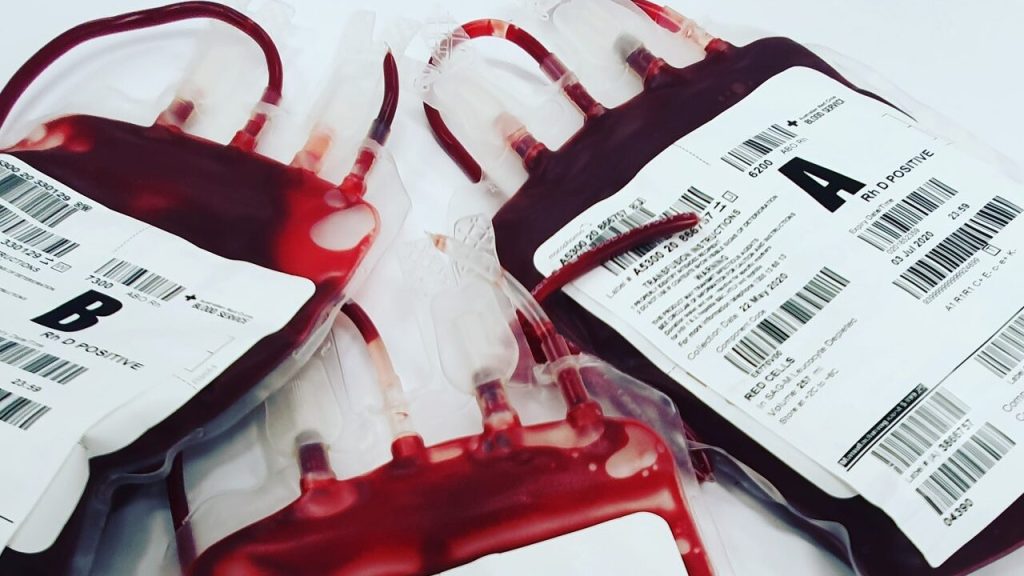
Increased use of blood transfusions after major traumatic brain injury could help patients in intensive care units to regain greater functional independence and a better quality of life.
Six months after a major traumatic brain injury (TBI), patients who benefited from this approach regained more functional independence and had a better quality of life than those subjected to a more restrictive approach, even though the combined incidence of death and major disability was not significantly different between the two treatment groups.
This is the conclusion of an international research team led by Alexis Turgeon, professor at Université Laval, Canada Research Chair in Neurological Critical Care and Trauma, critical care physician and researcher at CHU de Québec-Université Laval, whose work is published today in the New England Journal of Medicine.
“This randomized clinical trial, initiated in 2017, was carried out in 34 hospital centres in Canada, the United Kingdom, France and Brazil. Its aim was to compare two blood transfusion strategies – one so-called restrictive and the other liberal – employed to care for people hospitalized in an intensive care unit following a TBI. These approaches differ in the degree of anemia, or the minimum hemoglobin concentration that must be present in patients’ blood before a blood transfusion can be given,” explains Professor Turgeon.
“Most patients hospitalised after a TBI suffer from anemia, defined as low haemoglobin concentration, which could reduce oxygen transport to the brain during a period when it is most vulnerable,” points out François Lauzier, also a professor at Université Laval and who co-led the study with Professor Dean Fergusson of the Ottawa Hospital Research Institute.
The restrictive approach consists in tolerating a low haemoglobin level before giving a transfusion, while a liberal approach aims to maintain high haemoglobin levels, thus giving more blood transfusion.
“By improving oxygen transport to the brain during the acute phase of care, it may be possible to save more nerve cells in the days following a TBI, thereby preventing additional brain damage,” says Professor Turgeon.
To conduct the study, the research team recruited 742 critically ill patients with moderate or severe TBI and anaemia defined as a haemoglobin level of 10g/dL or less during hospitalisation. Randomly divided into two groups, these individuals were subjected to one or other of the transfusion strategies during their stay in the intensive care unit. To maintain these thresholds, the care teams administered blood transfusions whenever necessary.
Six months after TBI, the research team assessed the level of overall recovery for each group, including neurovegetative status, dependence on activities of daily living and impairments preventing resumption of activities that had been performed prior to TBI. “The combined incidence of death and major disability was not statistically different between the two groups, but seemed favouring the liberal strategy in all analyses,” says Professor Turgeon. What’s more, those treated using the liberal approach showed a higher functional independence measure and quality of life index than those treated using the restrictive approach.
“In light of the overall results of our study and considering the safety of current blood transfusions, the liberal strategy is probably the option that should be preferred in the acute phase of care to improve long-term prognosis following TBI,” concludes Professor Turgeon.
Knee osteoarthritis (OA) is a common cause of pain and joint stiffness. And while physical activity is known to ease symptoms, only one in 10 people regularly exercise. Understanding what contributes to patients’ inactivity is the focus of a world first study from the University of South Australia. Here, researchers have found that people with knee OA unconsciously believe that activity may be dangerous to their condition, despite medical advice telling them otherwise.
The study, published in PAIN, found that of those surveyed, 69% of people with knee pain had stronger implicit (unconscious) beliefs that exercise was dangerous than the average person without pain. It’s an interesting finding that not only highlights the conflicted nature of pain and exercise, but also that what people say and what people think, deep down, may be entirely different things.
Lead researcher, and UniSA PhD candidate based at SAHMRI, Brian Pulling, says the research provides valuable insights for clinicians treating people with knee OA.
“Research shows that physical activity is good for people with knee OA, but most people with this condition do not move enough to support joint or general health,” Pulling says.
“To understand why people with OA might not be active, research studies typically use questionnaires to assess fear of moving. But unfortunately, questionnaires are limited – what we feel deep down (and how our system naturally reacts to something that is threatening) may be different to what we report. And we still know that many people are avoiding exercise, so we wanted to know why.”
To assess this, the researchers developed a tool that can detect and evaluate people’s implicit beliefs about exercise; that is, whether they unconsciously think activity is dangerous for their condition.
“We found that that even among those who said they were not fearful about exercise, they held unconscious beliefs that movement was dangerous,” Pulling says.
“Our research shows that people have complicated beliefs about exercise, and that they sometimes say one thing if asked directly yet hold a completely different implicit belief.
“People are not aware that what they say doesn’t match what they choose on the new task; they are not misrepresenting their beliefs.
“This research suggests that to fully understand how someone feels about an activity, we must go beyond just asking directly, because their implicit beliefs can sometimes be a better predictor of actual behaviour than what people report. That’s where our tool is useful.”
The online implicit association test presents a series of words and images to which a participant must quickly associate with being either safe or dangerous. The tool intentionally promotes instant responses to avoid deliberation and other influencing factors (such as responding how they think they should respond).
Associate Professor Tasha Stanton says that the new tool has the potential to identify a group of people who may have challenges increasing their activity levels and undertaking exercise.
“What people say and what people do are often two different things, Assoc Prof Stanton says.
“Having access to more accurate and insightful information will help health professionals better support their patients to engage with activity and exercise. It may also open opportunities for pain science education, exposure-based therapy, or cognitive functional therapy…things that would not usually be considered for someone who said that they were not scared to exercise.”
Researchers are now looking to see if implicit beliefs are directly associated with behaviour and are asking for people to complete the Implicit Association Test (takes seven minutes). At the end of the test participants are given their results in comparison to the rest of the population.
As space travel becomes more frequent, a new biomarker tool was developed by an international team of researchers to help improve the growing field of aerospace medicine and the health of astronauts.
Dr Guy Trudel (Professor in the Faculty of Medicine), Odette Laneuville (Associate Professor, Faculty of Science, and Director of the Biomedical Sciences) and Dr Martin Pelchat (Associate Professor in the Department of Biochemistry, Microbiology and Immunology) are among the contributors to an international study led by Eliah Overbey of Weill Cornell Medicine and the University of Austin. Published today in Nature it introduces the Space Omics and Medical Atlas (SOMA), a database of integrated data and sample repository from a diverse range of space missions, including from SpaceX and NASA.
Space travel creates cellular, molecular, and physiological shifts in astronauts. SOMA is expected to provide a much necessary biomedical profiling that can help tease out the short and long-term health impacts of spaceflight. This will bring needed health monitoring, risk mitigation, and countermeasures baseline data for upcoming lunar, Mars, and exploration-class missions. It is meant to help keep astronauts and space travellers alive and healthy.
It may also have some intended use here on Earth.
“This represents a breakthrough in the study of human adaptation and life in space. Since many of the changes in astronaut in space resemble those of people who are immobile in bed, these studies can be clinically relevant. The data are therefore important for future space exploration while also providing a correlation to people on Earth with limited mobility or who are bedridden before their rehabilitation,” says Dr Trudel, a rehabilitation physician and researcher at The Ottawa Hospital who has focused on space travel and its effects on the human immune system.
Highlights of the study, include:
The Atlas includes extensive molecular and physiological profiles encompassing genomics, epigenomics, transcriptomics, proteomics, metabolomics, and microbiome data sets, which reveal some consistent features across missions.
Samples were taken pre-flight, during, post-flight and throughout the recovery period.
Comprehensive profile of the physiological changes of the I4 crew (ages 29, 38, 42, 51) and 13 unique biospecimen sample types were collected and processed.
2911 samples were banked with over 1000 samples processed for sequencing, imaging, and biochemical analysis creating the first-ever aerospace medicine biobank.
The SOMA resource represents an over 10-fold increase in total publicly available human space omics data.
“The University of Ottawa’s Faculty of Medicine, its Faculty of Science, and The Ottawa Hospital’s Bone and Joint Research laboratory have a long history of contributions and successes in studying human adaptation to space. They also involve students from different programs, providing a unique learning experience in both bone and joint health, and in the rapidly developing field of aerospace medicine,” adds Dr Trudel.
Despite the promise of Universal Health Coverage (UHC) for all, the recent signing of the NHI Bill has brought with it several misconceptions around medical schemes that undermine the very foundation of our healthcare system, writes Dr Katlego Mothudi, Managing Director at the Board of Healthcare Funders (BHF).
In a historic move aimed at transforming the South African healthcare landscape, President Cyril Ramaphosa signed the National Health Insurance (NHI) Bill into law. This landmark decision promises to move South Africa towards Universal Health Coverage (UHC) for all citizens, regardless of socio-economic status.
While the goal of UHC is commendable, the rhetoric leading up to the NHI Act’s announcement has created misconceptions about the role of medical schemes.
With many believing that they should cancel their memberships immediately to enjoy free health services for the foreseeable future. However, Dr Katlego Mothudi clarifies that the implementation of NHI will take several years, dispelling this misconception.
The NHI Act introduces a single-payer system, central to the idea is that healthcare is a ‘public good’, suggesting all healthcare funding should exclude medical schemes, and should be government-funded. Dr Mothudi counters that healthcare is more accurately described as a social good. A public good, like military services, is one that the government must provide and from which no one can be excluded, regardless of payment. While healthcare is essential, it is not feasible to provide it as a public good.
The Board of Healthcare Funders (BHF), concerned about the numerous misconceptions propagated by government representatives since 2009, commissioned Professor Alex van den Heever, Chair of Social Security Systems Administration and Management Studies at Wits Health Consortium, to investigate these claims. Despite their hyperbolic nature and lack of systematic research, these statements have significant weight due to their endorsement by influential individuals. Prof van den Heever’s report identified frequently repeated assertions that he concluded were unsubstantiated and untrue.
Key Findings from the Report:
1. Medical Schemes are Unsustainable – False
In 2009, claims suggested that many medical schemes were headed for collapse due to unsustainable financing models, with 18 schemes reportedly nearing insolvency. Prof van den Heever’s report refutes this, showing stability in medical schemes from 2005 to 2022. The number of beneficiaries increased by over one million from 2009 to 2022, with consolidated reserves of R114 billion in 2022, far exceeding the required 25% reserve ratio. Broker costs have not been a systemic concern, and total non-health costs per average beneficiary per month for all medical schemes decreased by 34.7% in real terms from 2005 to 2020.
2. Health Services are a Public Good – False
In 2011, Health Minister Aaron Motsoaledi claimed that private healthcare was a “brutal system” due to commercialisation. However, Prof. van den Heever clarified that healthcare is not a public good in the economic sense, as it does not meet the criteria of being jointly consumed without exclusion. Healthcare is a crucial service but providing it as a public good is not feasible.
3. Most Medical Scheme Beneficiaries are White – False
Last year, Prof Olive Shisana, an honorary professor at the University of Cape Town and special advisor to President Ramaphosa, stated that the private sector predominantly serves the privileged white population. However, Statistics South Africa’s 2021 research indicates that of the total population utilising private healthcare services, 50.2% are Black African, 32.3% are White, 9.8% are Coloured, and 7.6% are Indian/Asian.
Need for Balanced Perspectives
While the BHF supports healthcare reform, it raises concerns about the NHI Act’s constitutionality and calls for a factual review of claims about medical schemes. It is crucial to present both sides of the debate to understand the implications fully. Including government perspectives and addressing how the NHI will affect individual citizens would provide a more comprehensive view.
Medical schemes remain a valuable national asset that plays a crucial role in ensuring the long-term viability of South Africa’s healthcare ecosystem. BHF advocates for a balanced approach to healthcare reform that considers both public and private sectors’ strengths and weaknesses.
The Gauteng Department of Social Development has decided to defund more than half of its existing capacity for inpatient drug rehabilitation in the province.
The department funded 571 beds in 13 non-profit organisations in the 2023/24 financial year, but at least five organisations, with 246 of these beds, will not be funded in the 2024/25 financial year.
The five organisations to be defunded – Westview Clinic Empilweni Treatment Centre, Golden Harvest Treatment Centre, Freedom Recovery Centre and Jamela Rehabilitation Centre – have been providing inpatient treatment for several years, but they have not received subsidies since the end of the last financial year.
Organisations GroundUp spoke to said they received letters from the department in the past few weeks informing them that they would not receive funding due to ongoing investigations. But they had not been told why they are under investigation, they said.
Representatives of FSG Africa, a forensic auditing firm appointed by the department, briefly visited some of the centres earlier this year, but the centres received no feedback on the progress or outcome of these investigations.
The auditors spent less than two hours at most of the facilities, asking only a few questions before leaving, the organisations said.
The organisations said they are yet to receive a report on the findings of the investigations. Queries they sent to the department have gone unanswered.
In previous years, the funding process was managed at a regional level, but this financial year it was centralised, cutting out the regional officials who would usually be in direct contact with the organisations. This has caused catastrophic delays.
Several of the organisations have been operating without departmental funding since March, depleting their savings and taking on debt, and having to short-pay staff salaries.
The department’s spokesperson Themba Gadebe confirmed to GroundUp that the organisations are under investigation, but did not provide details on the allegations.
In October 2022, Premier Panyaza Lesufi said treatment for substance abuse disorder was a priority. Yet the department has decided to defund beds in treatment centres without a clear plan to replace the lost capacity.
Gadebe said the department’s state-owned facility in Cullinan, near Pretoria, which has 288 beds, is undergoing renovation to increase its capacity. But he did not provide further details or timelines for completion.
Sedibeng’s only inpatient centres face closure
The only two drug rehabilitation centres with an inpatient programme in the Sedibeng region of Gauteng, with 116 funded beds between them, will be defunded this financial year.
One of these, Freedom Recovery Centre, was funded last year for 52 of its 94 beds (the remainder are for private patients). CEO Derick Matthews says when they received the department’s letter on 23 May “our world came crashing down”. What shocked him most was that there had been no warning that funding would stop.
Freedom Recovery Centre received a visit from the forensic auditors in March, who spent just two hours at the centre. They asked to see vehicles that the centre had supposedly received from the department.
“I was shocked by this request because we have never received vehicles from the department. But the auditor said that, according to their list, we had received vehicles from the department,” said Matthews.
“We are being punished for something. But we don’t even know what our transgression is,” he said.
On Monday, Freedom Recovery Centre began the process of discharging patients who were nearing the end of their treatment plans, as they can no longer afford to care for or feed them.
“We’ve had to take out loans for the past few months because of the delays in finalising service-level agreements and paying subsidies,” said Matthews. The centre has racked up more than R2-million in debt.
“Our staff are entering the third month of working without pay. Eskom is going to cut our electricity some time this week, because we are in arrears, and then we won’t even have water, because we rely on electricity to pump our boreholes. There are no funds left to keep the centre going,” said Matthews.
He said the centre will have no choice but to close completely in the coming weeks.
The other inpatient programme in the Sedibeng region, Jamela Recovery Centre, funded for 64 beds in 2023/24, faces a similar fate. CEO George Sibanda said they were relying on food donations from community members to feed their patients.
“We have been fully funded by the department since 2018 and our services are offered at no cost,” Sibanda said.
“We always had a backlog of patients. Our waiting list is sitting at 60 people so we were relieved when the department informed us that we would be getting additional beds in March this year. But what we don’t understand is how we must now provide a service to those patients if the department is not funding us this year?” said Sibanda.
Jamela also received a visit from the forensic auditors in March.
Despite not receiving any subsidies this financial year, Sibanda said the centre has been operating at full capacity.
“The department continued to refer people to us and we couldn’t turn them away,” he said.
Social workers at the centre have had to use their own money to pay for petrol for the centre’s car, which they use for outreach programmes.
Department spokesperson Themba Gadebe said that the closure of both centres in Sedibeng was not a concern as “the department prefers the placement of individuals within inpatient facilities far from where they reside, to limit the risk of them checking out or being contacted by those within their substance use networks.”
Researchers have identified inherited genetic variants that may predict the loss of one copy of a woman’s two X chromosomes as she ages, a phenomenon known as mosaic loss of chromosome X, or mLOX. These genetic variants may play a role in promoting abnormal blood cells (that have only a single copy of chromosome X) to multiply, which may lead to several health conditions, including cancer. The study, co-led by researchers at the National Cancer Institute, part of the National Institutes of Health, was published in Nature.
To better understand the causes and effects of mLOX, researchers analysed circulating white blood cells from nearly 900 000 women across eight biobanks, of whom 12% had the condition. The researchers identified 56 common genetic variants – located near genes associated with autoimmune diseases and cancer susceptibility – that influenced whether mLOX developed. In addition, rare variants in a gene known as FBXO10 were associated with a doubling in the risk of mLOX.
In women with mLOX, the investigators also identified a set of inherited genetic variants on the X chromosome that were more frequently observed on the retained X chromosome than on the one that was lost. These variants could one day be used to predict which copy of the X chromosome is retained when mLOX occurs. This is important because the copy of the X chromosome with these variants may have a growth advantage that could elevate the woman’s risk for blood cancer.
The researchers also looked for associations of mLOX with more than 1,200 diseases and confirmed previous findings of an association with increased risk of leukemia and susceptibility to infections that cause pneumonia.
The scientists suggest that future research should focus on how mLOX interacts with other types of genetic variation and age-related changes to potentially alter disease risk.
The South African Medical Association has for years raised concerns about the criminalisation of medical errors, stressing that current legal practices may undermine patient safety and deter doctors from performing high-risk procedures.
Individual healthcare workers or teams of healthcare workers, like all other people, sometimes make unintentional errors. Though public recognition of the problem may be lacking, there is substantial scientific literature recording and describing the issue. In its landmark “To err is human” report published in 1999, the United States Institutes of Medicine wrote that “the problem is not bad people in health care – it is that good people are working in bad systems that need to be made safer”.
Medical errors can take many forms – from diagnostic and surgical, to medication and device and equipment. Pinning down a definition is hard although two formulations in academic literature are: “the failure of a planned action to be completed as intended or the use of a wrong plan to achieve an aim” and “unintentional deviation from safe practice”. Some argue against the use of the term “errors”, given that it stigmatises those who make “errors”.
A variety of approaches have been used to reduce medical errors. One of the most striking is the use of aeroplane-style checklists before and during surgery – with one such checklist having been backed by the World Health Organization. A review of such checklists published in the British Medical Journal in 2012 concluded that “surgical checklists represent a relatively simple and promising strategy for addressing surgical patient safety worldwide”.
Error v negligence
While the terms medical errors and medical negligence are often used interchangeably, they are in fact quite distinct, explains Professor Ames Dhai, SAMA’s vice chairperson and former director of the Steve Biko Centre for Bioethics at Wits University, in an interview with Spotlight.
“Medicine is exceedingly complex and errors do unfortunately occur from time to time (in most instances no harm comes from them). In most instances, the error cannot be attributed to the ‘fault’ of a person and is just a consequence of the procedure or other systemic factors.” The element of “fault”, Dhai says, is what distinguishes errors from medical negligence. Medical negligence occurs, she says, when the standard of care fails to meet the expected standard of the reasonable doctor in that discipline under the prevailing circumstances, leading to the patient suffering harm.
“If the ‘fault’ is deemed to be intentional, one is no longer negligent, and [therefore] potentially guilty of murder (the distinction being negligence vs intent),” Dhai explains.
“To be clear, doctors who are grossly negligent or reckless need to be held accountable. However, nearly all doctors don’t fall into this category. They are ethical, caring, and only want the best for their patients,” she says.
According to SAMA, due to a lack of proper, transparent structures to investigate, explain, account, and resolve instances of medical errors, families understandably turn to the criminal justice system for answers and accountability. This means some cases end up in court.
One high-profile case is that of paediatric surgeon Professor Peter Beale, who faces multiple charges, including three counts of murder and two of fraud, linked to the deaths of three children between 2012 and 2019. The state claims the deaths were caused by wrongful and negligent actions and unnecessary procedures by Beale.
But SAMA argues that the criminal justice system, designed for addressing criminal acts, is not the most suitable mechanism to navigate the complexities of medical practice. They stress that their concerns about charging, prosecuting, and convicting doctors in no way seek to minimise the impact of such devastating events on the families and loved ones involved.
“Instead, we are worried that criminalisation of bona fide medical errors and adverse events is an unsuitable response that would do little to prevent future tragedies and may in fact lead to other unwanted consequences that would be detrimental to both the profession and patients,” explains SAMA chairperson Dr Mvuyisi Mzukwa. He argues that criminalising errors would potentially ensure that they will be concealed and unreported, adding that “by hindering disclosure and reporting, one stifles opportunities to learn from errors and improve the system”.
But not everyone agrees. Dr Siraaj Khan, a lecturer at the Steve Biko Centre for Bioethics, describes the relevant law as straight-forward and says it is not in need of reform. “I think we need to differentiate being charged with medical negligence in a criminal court and being held liable or found guilty at the end of the day. And you’ll see that there are very few instances where a medical practitioner is actually found guilty,” he says. “So in my opinion, the law as it stands doesn’t require any intervention.”
Khan points out that if a medical doctor makes an error, it doesn’t automatically mean that they are negligent. The error has to be one that a reasonable doctor in the position of that particular medical doctor would not have made. Only if the standard falls short of the reasonable expert in that position will the conduct be criminalised, and that needs to be proven beyond a reasonable doubt in a criminal court. “So it’s a higher standard than that used in a civil court,” says Khan. “In a civil court, if there’s an action for medical negligence, it just needs to be proven on a balance of probabilities. Whereas if you charge a doctor with culpable homicide, for example, the standard of negligence needs to be proven beyond a reasonable doubt in a criminal court.”
But Dhai is critical of the status quo. She argues that the law, as it stands and as it is applied, may hamper patient safety and the achievement of a safety culture (where systems thinking, rather than individual blame, is applied to learn from incidents to create better systems and provide safer care). “The criminal justice system often ignores systemic factors to instead target the individual who happened to hold the scalpel when the incident occurred,” she says.
“The environment of fear and the threat of litigation and criminal proceedings may also disincentivise doctors from practicing in high-risk specialties or operating on complex and difficult cases, thereby impeding access to much-needed care,” Dhai adds. Khan acknowledges the argument that criminalising medical errors encourages defensive medicine, but, “on the other hand”, he says, “the counter-argument is that if we do criminalise this, it sets the standard and it would require doctors to act with more prudence when performing these operations”.
Gross negligence
SAMA’s position is that the threshold for criminal proceedings should be elevated from negligence to gross negligence and recklessness. As pointed out by Larisse Prinsen, a senior law lecturer at the University of the Free State, in an article published by The Conversation, gross negligence is the standard in countries such as New Zealand, Australia, and England. SAMA also says that investigators and the National Prosecuting Authority (NPA) should be specially trained to fully appreciate the complexities involved in medical errors and adverse events. The NPA is responsible for criminal prosecutions in South Africa.
Photo by Tingey Injury Law Firm on Unsplash
In addition to increasing the threshold for prosecution from negligence to gross negligence or recklessness, Dhai argues that there is much more that needs to be done. This includes better application of the law, including better complaint management, alternative dispute resolution, and support for affected patients and health practitioners.
Changes to the relevant laws might well be on the way.
The South African Law Reform Commission (SALRC) has confirmed to Spotlight that they “received a request from a coalition of various healthcare-related bodies asking that the SALRC conduct an investigation to review the law of culpable homicide and the application thereof in a healthcare setting”. According to the SALRC, the request was approved by the Minister of Justice and Correctional Services on 27 June 2023 and the research is underway as “Project 152 Criminal Liability of Healthcare Professionals”.
Though much of SAMA’s current spotlight is on criminalisation of medical errors, South Africa does also have a much wider challenge of medico-legal claims against provincial health departments. Most of these claims are for alleged medical negligence relating to birth-related complications, particularly cerebral palsy. Though amounts paid out are a small fraction of total claims, they nevertheless amount to hundreds of millions per year and are a severe strain on provincial health budgets. A bill aimed at addressing state liability in such cases was introduced in the last parliament, but has not been passed. The SALRC has for several years also been looking at the issue of medico-legal claims and published a discussion paper on the matter in November 2021, though more than two years later, their final report on the matter has not yet been published.
What about the HPCSA?
The Health Professions Council of South Africa (HPCSA) regulates health professions in the country. This involves, among others, managing the licensing of doctors.
As explained in an article by the Medical Protection Society’s Dr Yash Naidoo, less serious complaints made to the HPCSA are handled through a process of mediation. If complaints are more serious, or if mediation fails, a formal complaints process kicks in. In some cases, this can turn into a formal professional conduct inquiry.
“When a matter proceeds to a formal inquiry, that is when costs – money and time – start to escalate,” writes Naidoo.
“Think of the inquiry as you would a typical courtroom matter on television. The complainant is represented by the HPCSA’s pro forma complainant, and the practitioner is the respondent who may have their own legal representation. Each party can call witnesses and the inquiry itself can take a day or more – depending on the number of witnesses and the complexity of the matter.”
As Naidoo explains, penalties can range from a caution or reprimand to large fines or removal from the register (which amounts to the person no longer being allowed to work as a health professional).
Speaking to Spotlight, HPCSA’s Acting Head of Division Corporate Affairs, Priscilla Sekhonyana, says that the HPCSA has a dedicated line for lodging complaints and investigating authority and committees for adjudication of matters. “The HPCSA has committees of experts in place to adjudicate on matters and all rules of natural justice inclusive of fairness are observed.”
She says the council has engaged with various parties on the criminalisation of medical errors. The HPCSA respects the laws of the country, Sekhonyana says, but she also notes that practitioners are starting to be discouraged from engaging in what may be perceived as risky procedures. “The HPCSA has had engagements with the National Prosecuting Authority on the matter and unfortunately, the situation has remained the same. However, should there be activities aimed at legal reform, the HPCSA will participate in that process and make its views known at that juncture,” she says.
Spotlight made several attempts to get comment from the National Department of Health on the criminalisation of medical errors. The department had not provided a response by the time of publishing.
A lifesaving package including early detection and bundled treatment for women who have post-partum haemorrhage has been found to incur minimal additional cost according to new analysis from 78 hospitals around the world.
In a paper published in Nature Medicine, a team of researchers working on the E-MOTIVE trial conducted an economic analysis to establish whether a package of interventions to objectively identify and treat post-partum haemorrhage (PPH) was cost effective.
Over 200 000 women from hospitals in Kenya, Nigeria, Tanzania and South Africa were included in the economic analysis of E-MOTIVE, with hospitals being randomly assigned to either the intervention or usual care groups. The intervention resulted in more than 1000 fewer PPH cases compared to the usual care group. The additional cost for E-MOTIVE was estimated to be, on average, an extra $0.30 per patient after adjustments for clinical factors including the proportion of patients with a clinical primary outcome event at each hospital, as well as for cluster and time-period considerations.
The economic analysis explored a range of costs for a key component of the E-MOTIVE package which is a calibrated blood collection drape, used for all women in the intervention group used to objectively measure blood loss. The analysis found that when the cost of the drape is around 1 USD, the average cost per patient could be comparable to usual care.
The cost of delivering the E-MOTIVE intervention could then be, on average, equivalent to usual care, which would represent a significant health benefit for women around the world
Professor Tracy Roberts
Tracy Roberts, Professor of Health Economics at the University of Birmingham and corresponding author of the study said:
“E-MOTIVE is clearly a cost-effective intervention for what is a lifesaving treatment for thousands of women around the world who may experience severe bleeding in childbirth. Our analysis of the E-MOTIVE trial shows that the costs incurred in delivering the package of treatments and the drape are on average minimal and represent really good value for money”.
“The drape forms a key part of the E-MOTIVE package, and should E-MOTIVE be widely adopted and the cost of drapes reduced to below $1, the economic benefits could be even more apparent. The cost of delivering the E-MOTIVE intervention could then be, on average, equivalent to usual care, which would represent a significant health benefit for women around the world.”
60% reduction in heavy bleeding
E-MOTIVE being found cost-effective comes after the publication of a landmark study published that found a 60% reduction in heavy bleeding for women experiencing PPH.
Postpartum haemorrhage (PPH) – defined as the loss of more than 500 mL of blood within 24 hours after birth – is the leading cause of maternal mortality worldwide. It affects an estimated 14 million women each year and results in around 70 000 deaths – mostly in low and middle-income countries – equivalent to 1 death every 6 minutes.
The study found that objectively measuring blood loss using a simple, low-cost collection device called a ‘drape’ and bundling together WHO-recommended treatments – rather than offering them sequentially – resulted in dramatic improvements in outcomes for women. Severe bleeding – when a woman loses more than a litre of blood after birth – was reduced by 60%, and they were less likely to lose their life.
There was also a substantial reduction in the rate of blood transfusions for bleeding, which is of particular importance in low-income countries where blood is a scarce and expensive resource.
Professor Arri Coomarasamy, who led the E-MOTIVE trial and is the Co-Director of the WHO Collaborating Centre on Global Women’s Health at the University of Birmingham said:
“This new approach to treating postpartum haemorrhage could radically improve women’s chances of surviving childbirth globally, helping them get the treatment they need when they need it.
“Time is of the essence when responding to postpartum bleeding, so interventions that eliminate delays in diagnosis or treatment should be gamechangers for maternal health. With this latest study showing that E-MOTIVE is extremely cost effective, and following WHO recommending the treatment bundle we hope that the intervention can quickly become the standard of care that will save many lives around the world.
As financial pressures continue to mount globally, it’s imperative to acknowledge the profound impact that financial stress can have on mental health. Whether it’s struggling to pay bills, dealing with debt, or worrying about job security, these are all real-life examples of financial stressors that can significantly impact our mental well-being. Recent studies conducted by reputable organisations such as the South African Depression and Anxiety Group (SADAG) and Sanlam shed light on the alarming correlation between these financial strains and mental wellness. In light of this, we aim to provide insights and guidance to help you manage financial stress and improve your overall well-being.
According to SADAG’s online survey, conducted to assess the impact of the pandemic on South Africans’ mental well-being, a staggering 46% of respondents identified financial stress and pressure as significant contributors to their mental health challenges. Similarly, Sanlam’s report revealed that 57% of respondents cited financial stress as the primary factor affecting their mental well-being, with young individuals aged 18-24 being particularly vulnerable.
In light of these findings, it’s important to recognise the empowering role of proactive financial management in safeguarding mental wellness. Effective financial management can significantly reduce the stress associated with financial uncertainties, contributing to better mental health. By making use of available tools and resources, individuals can gain valuable insights and guidance to manage their finances and budgets more effectively, ultimately supporting their overall well-being.
Speaking on the importance of financial tools and resources, Lerato Thwane, Head of e-Commerce, shares her insights. “Amidst the challenges posed by financial stress, it’s essential for individuals to have access to tools and resources that can provide clarity and support. Through XDS, we empower consumers, giving them the control they need to navigate their financial journey confidently, ultimately promoting financial stability and mental well-being. XDS offers a comprehensive range of products and services to support individuals at every stage of their financial lifecycle. These include credit reports and financial guidance.”
Thwane continues: “Research has shown that financial stability is closely linked to mental well-being. When individuals have control over their finances and feel secure about their future, they experience lower levels of stress and anxiety. This, in turn, can lead to improved overall mental health, better relationships, and increased productivity in other areas of life. Financial literacy is an important part of achieving financial security. A clear understanding of how to manage money and the basics of budgeting can help individuals gain control over their finances and feel more empowered.”
To improve your financial management skills and overall well-being, consider seeking professional help such as financial counselling. Additionally, accessing your XDS credit profile and score on Splendi can help you better understand your financial status. These resources offer valuable guidance to boost financial literacy, develop healthier money habits, and secure your financial future.
About Mettus
Mettus is a collective of intelligence companies offering end-to-end data solutions. Established in August 2022 through a private equity-backed management buyout, Mettus is home to three established brands across the fast-growing and in-demand data and technology markets. Our specialities include credit bureau services, background screening and vetting, data platforms and analytics.
At XDS, customer value and lifecycle management have largely replaced old-fashioned credit management as tools to minimise risk and improve profitability within a business.
With this in mind, we are committed to providing smarter and more technologically advanced information solutions to credit grantors and other data users so that they can make better decisions regarding the granting of credit to new customers. We maintain the highest standards of integrity relating to data privacy, confidentiality, and information quality, and we comply fully with all relevant legislation, such as the National Credit Act. We seek to build long-term partnerships with our customers as we help them to grow their businesses.
A clinical trial on a two-drug therapy for methamphetamine use disorder reduced use of the highly addictive drug for up to 12 weeks after initiation of treatment.
Participants in the ADAPT-2 clinical trial who received a combination of injectable naltrexone plus extended-release oral bupropion (NTX+BUPN) had a 27% increase in methamphetamine-negative urine tests, indicating reduced usage. By contrast, the placebo group had an 11% increase in negative tests.
“These findings have important implications for pharmacological treatment for methamphetamine use disorder. There is no FDA-approved medication for it, yet methamphetamine-involved overdoses have greatly increased over the past decade,” said Michael Li, assistant professor-in-residence of family medicine at UCLA and the study’s lead author.
Methamphetamine use has continued growing over the years around the world, increasing from 33 million people in 2010 to 34 million in 2020. Overdose deaths from the drug have jumped fivefold in the US from 2012 to 2018, and are followed by Canada and Australia in increases.
To curb the ongoing crisis, the National Institute on Drug Abuse (NIDA) Clinical Trials Network has supported various trials, including the ADAPT-2 trial, to test the effects of different pharmacological treatments for methamphetamine use disorder. ADAPT-2 was carried out from May 23, 2017 to July 25, 2019 across the eight trial sites that included UCLA. It included 403 participants, with 109 assigned to the drug combo group and the rest to the placebo group in the first stage.
The latest findings are the second stage of the multi-site trial. The earlier stage had demonstrated that the two-drug combination worked at six weeks, but the unanswered question was whether the intervention remained efficacious over a longer period.
In the second stage, the researchers conducted urine tests on the participants at weeks seven and 12, and again post-treatment at weeks 13 and 16 comparing the group on NTX+BUPN with the placebo group.
There is a need for further research to determine whether the drug treatment effect lasts longer than 12 weeks and yields further methamphetamine use reductions, the researchers write.
“Prior stimulant use disorder treatment trials suggest that change in use is gradual (consistent with our findings), unlikely to result in sustained abstinence in a typical 12-week trial, and dependent on treatment duration,” they write. “This warrants future clinical trials to quantify changes in MA use beyond 12 weeks and to identify the optimal duration of treatment with this medication.”